010-6097 4119Book a Demo


The enterprise already has a large model platform but does not know how to implement it? Kailing Technology AI digital employees enable agents to upgrade from single-point applications to complete job replacementPublished: 2026-06-15 16:56 I. Why does "having built a large model" still fail to land?Over the past two years, a large number of group enterprises have completed private deployment of large models, built MaaS platforms and agent repositories, and implemented several 1.0-stage AI agents, validating the application value of AI in key areas such as Q&A, retrieval, and summarization. But enterprises quickly discovered a common bottleneck: these capabilities are "point-like"—each agent solves only a small step in the process, and users still have to manually connect multiple systems and tools, trapping the value of AI in isolated points. The root cause is the lack of an "AI entry layer."Enterprises lack neither AI platforms, nor business systems, nor real needs; what they lack is the layer that connects the three and enables AI to truly "act on people's behalf." Without an entry layer, AI can only remain at "can chat" and cannot upgrade to "can act."
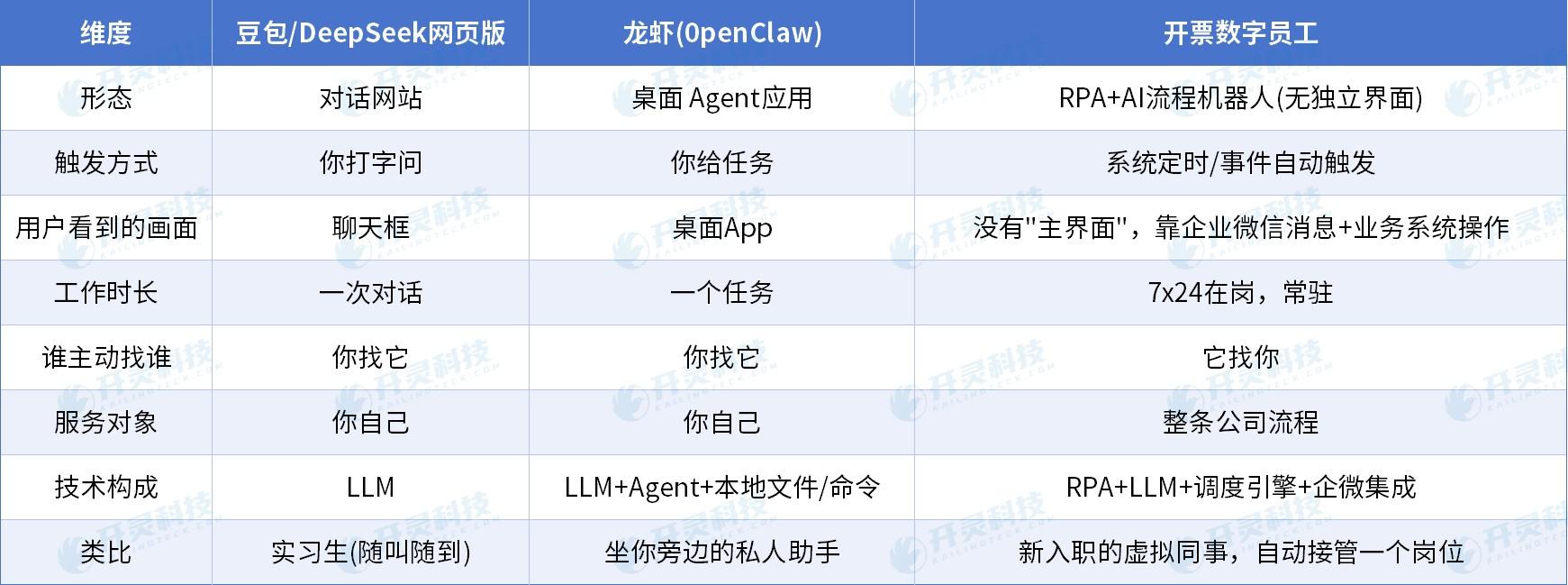
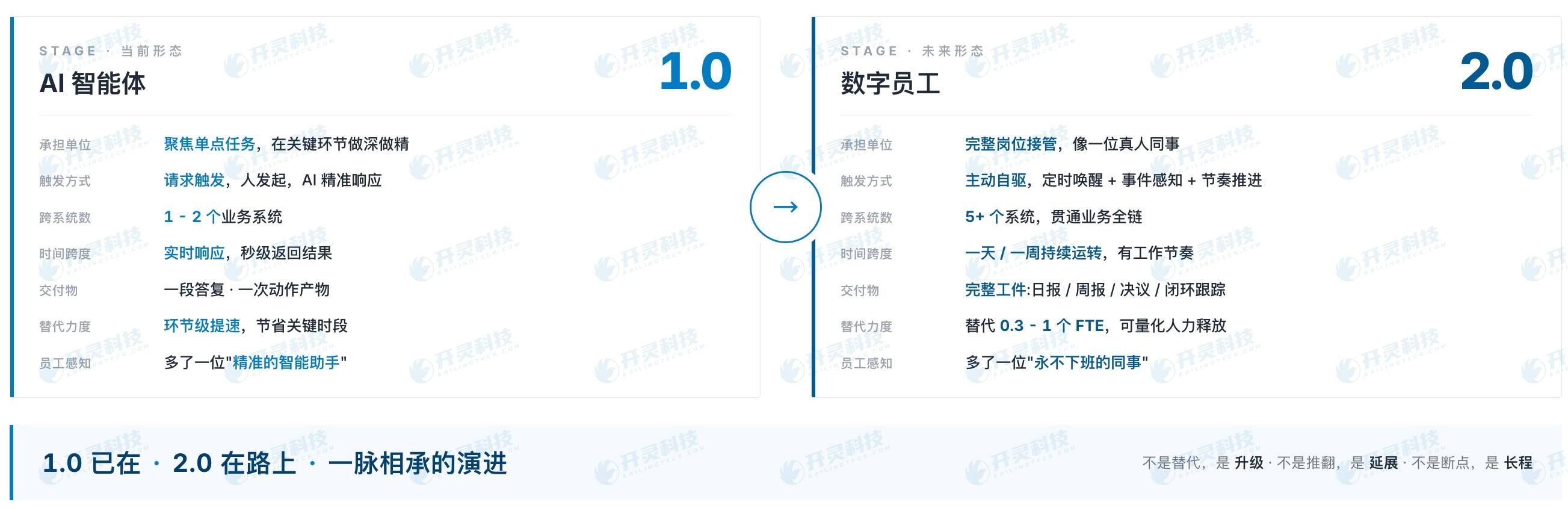
II. What is an AI digital employee? How is it different from an AI agent?AI digital employees refer to AI applications that can autonomously complete the work of an entire position across multiple business systems, just like real colleagues. They are not smarter chatbots, but 'digital labor' that can get things done: able to drive tasks forward on their own, make yes/no judgments, and produce complete deliverables.
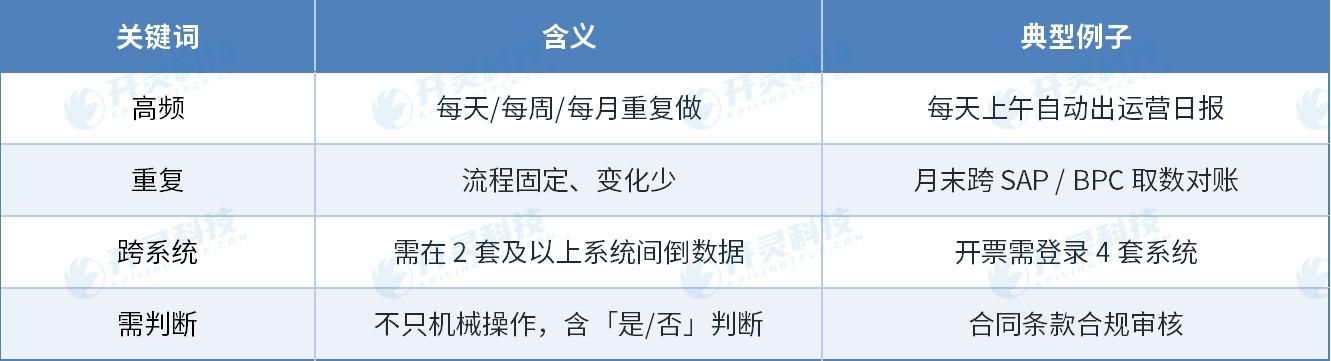
Key insight:The two share the same root and origin. 1.0 and 2.0 are not a replacement relationship, but an upgrade "from point to chain to surface"—the AI digital employee stands on the enterprise's already-validated agent capabilities, expanding single-point value into complete role value. III. The upgrade path from "single-point application" to "complete position replacement"1. Let AI understand business processesBusiness staff record their screens, and a large model then parses each operation step, converting human experience into standard processes AI can execute — this is the first step in connecting "single points" into "whole positions." 2. Let AI know whom to askIn the "Think" stage, directly connect to the enterprise's existing large models and invoke the enterprise's own intelligent agents. Understanding and reasoning capabilities do not rely on the service provider but on the enterprise's own models, maximizing the reuse of existing AI assets. 3. Let AI know where it must stopMark "human-in-the-loop" nodes, where key approvals must be confirmed by a person. AI digital employees are mainly assistive and do not replace people in making final decisions, ensuring compliance and controllability. 4. Let AI test itselfBefore go-live, run 100 times in the sandbox, and only go live when the pass rate reaches 99%, with the error rate written into the SLA. Make role replacement not a slogan but an engineering delivery with a quality baseline. IV. Which position scenarios are most suitable for upgrading to AI digital employees?To judge whether a scenario is suitable for an AI digital employee, look at four keywords: high frequency, repetitive, cross-system, requires judgment. The more that are met, the greater the value.
The five capability categories can cover almost all enterprise position scenarios: general (Q&A/knowledge query), review (contract/reimbursement/compliance), monitoring (equipment/environment), reporting (daily/weekly reports), and data linkage (cross-system synchronization/master data verification)—any AI digital employee must fall into one of them. V. Why are enterprises with "all three conditions in place" the best soil for digital employees?① AI platform ready:The large model has been privately deployed, and the MaaS / agent repository is ready for direct use, eliminating the need for further model investment. ② Numerous systems:Multiple business systems and rich scenarios—the more systems there are, the greater the value of AI digital employees working across systems. ③ Clear requirements:There are already urgent real needs, so there is no need to start a project from 0 and development can begin directly.
Common Questions FAQQ: We have already deployed a large model; do we still need to buy another model? A: No. Kailing's digital employees directly reuse the enterprise's already privatized large model and MaaS platform. The "understanding + reasoning" capability relies on the enterprise's own model, with no duplicate investment. Q: Are AI agents and digital employees two separate things? A: No. The two share the same root and origin: the intelligent agent (1.0) validates the value of key links, and the digital employee (2.0) extends to complete positions based on the same foundation — an upgrade of "linking points into a surface." Q: Will AI digital employees replace employees in making decisions? A: No. Digital employees are primarily assistive, with "human-in-the-loop" nodes at key approvals that must be confirmed by humans, ensuring decision-making authority and compliance remain with the enterprise. Q: How is go-live quality ensured? A: Before launch, run 100 times in a sandbox, only go live with a 99% pass rate, and write the error rate into the SLA, making position replacement a quantifiable and accountable engineering delivery. With a large model platform already in place, the next step is to make it "do things" — Kailing Technology helps you upgrade single-point agents into complete-position AI digital employees:www.kailingteck.com 。 Kailing TechnologyAs a comprehensive business-finance-tax digitalization solution service provider, we provide business-finance-tax management digital transformation products and operational services for various government agencies, institutions, and large, medium, and small enterprises. The product line includes: Sales contract management system, procurement contract management system, fully digitalized Leqi interface project, output automatic invoicing system,Reverse invoicing system,Solutions for the invoice issuance for individuals system, employee expense control and reimbursement system, input VAT invoice management system, supply chain collaborative reconciliation system, image AI OCR recognition system, automated financial bookkeeping system, electronic accounting archives system, and other businesses, comprehensively advancing the digitalization process across various fields. If you have any business-finance-tax digital transformation needs, welcome to contact us. Beijing KailingKailing TechnologyWe will serve you wholeheartedly.
Keywords:Large model implementation · AI digital employee · AI agent · Single-point application · Full position replacement · MaaS · Private deployment · AI entry layer |