010-6097 4119Book a Demo


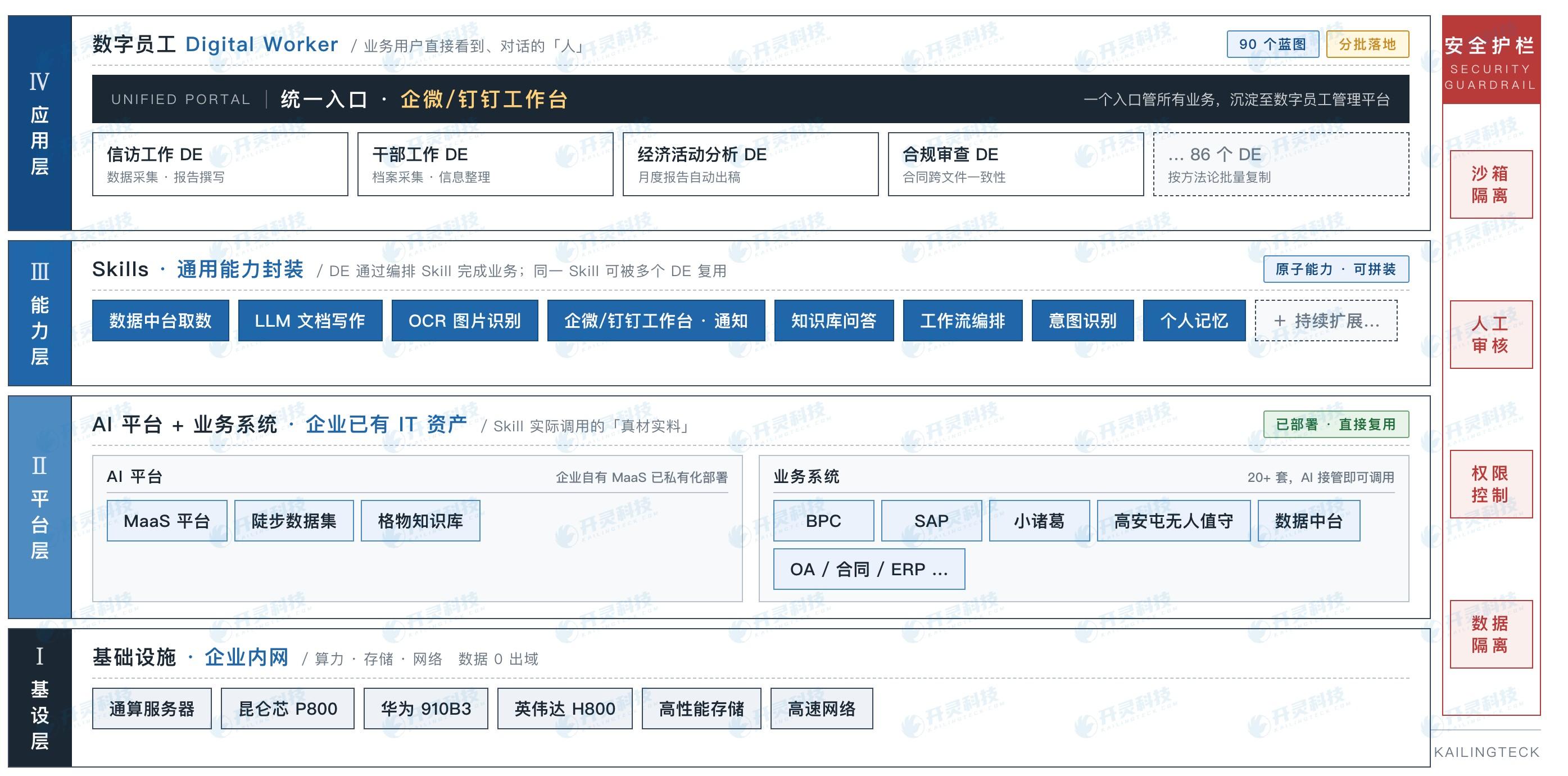
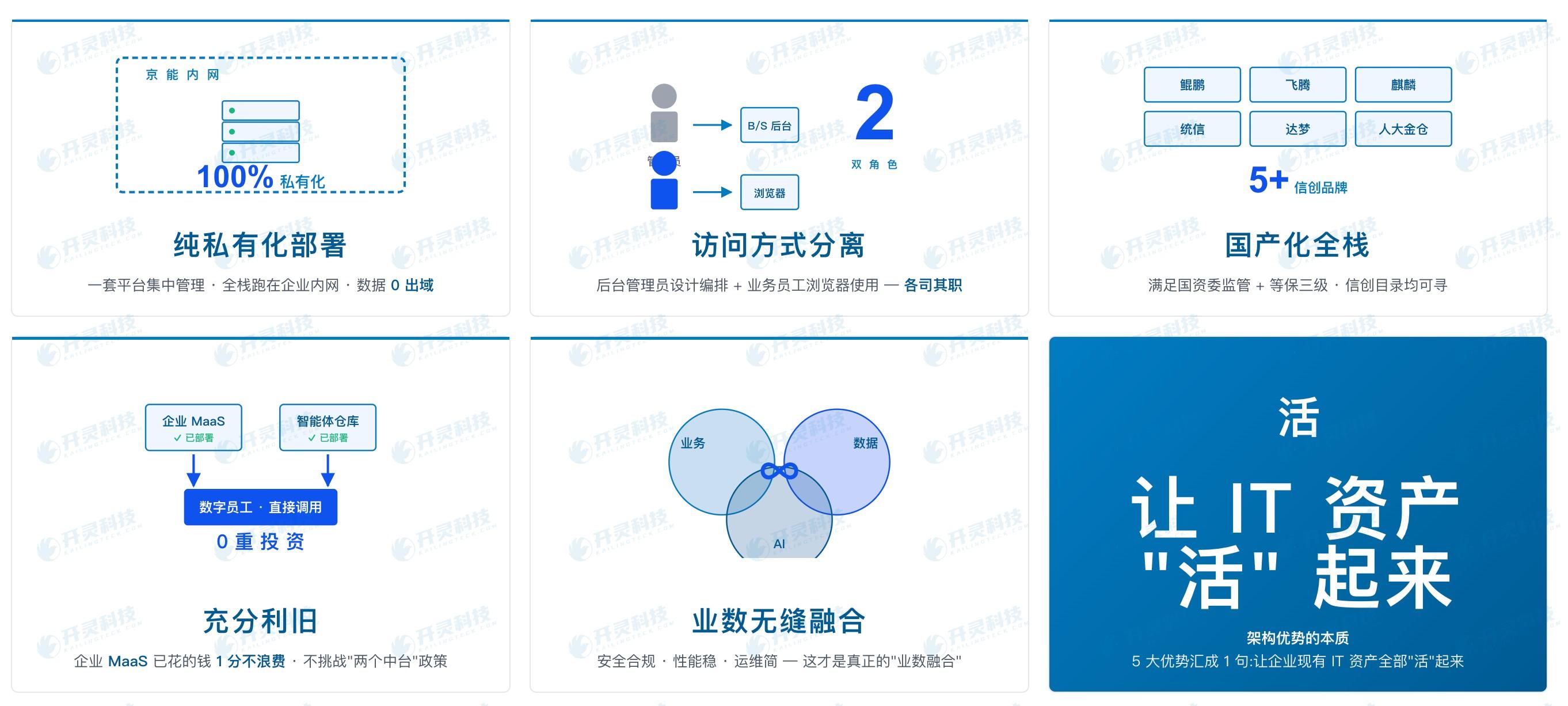
Will digital employees leak secrets or make arbitrary decisions for people? Kailing Technology AI digital employees use private deployment + human-in-the-loop, data zero egress, fully controllable and traceablePublished: 2026-06-22 15:31 I. The two things enterprises worry about most when adopting digital employees: Will they leak secrets? Will they make arbitrary decisions on people's behalf?For CIOs of central state-owned enterprises and groups, the value of introducing AI digital employees is obvious—handing high-frequency, repetitive, cross-system, judgment-requiring work to AI, turning business activity analysis from 5 accountants working hard for 3 days into half-day delivery, and compressing monthly reconciliation, reimbursement review, and contract comparison from 40 minutes to 5 minutes. But what truly determines whether a project can be implemented is often not "whether it can do the work," but two bottom-line issues. The first issue is data security:AI digital employees need to retrieve data and handle tasks across 20+ systems such as SAP, BPC, OA, contracts, and ERP. Will this data be uploaded to external large models, and will it leave the domain? The second issue is decision-making power:Will AI bypass people and automatically approve risks, making arbitrary decisions on people's behalf? Kailing's answer is clear: use "pure private deployment + zero data egress" to protect data, use "human-in-the-loop" to protect decision-making authority, and use "5 compliance listing nodes + full-process health monitoring" to make everything controllable and traceable. The following breaks it down one by one. II. Data security: Pure private deployment, data 0 out-of-domainAll deployment of AI digital employees is completed within the enterprise intranet. The infrastructure layer relies on the enterprise's own intranet, computing power, and storage. The AI platform layer directly reuses the enterprise's already privatized MaaS (Model as a Service) and existing business systems. Data always flows within the enterprise boundary and does not leave the domain. 100% pure private deployment:All deployed on the enterprise intranet, without relying on any external cloud services. Data 0 out-of-domain:Data flows entirely within the enterprise boundary throughout the process, and no external large model is uploaded. National cryptographic SM4 encryption:Data is encrypted using the national SM4 algorithm, meeting compliance requirements. Level 3 of the Multi-Level Protection Scheme:The overall solution meets Level 3 requirements of the Cybersecurity Classified Protection. Reuse the enterprise's MaaS without external transmission:Directly calls the large model already deployed by the enterprise; the "thinking" step is completed on the internal network without external transmission. 0 heavy investment:Reuse the enterprise's existing AI platform and IT assets, with no need to reinvest in models.
III. Four safety guardrails: sandbox isolation / manual review / permission control / data isolationOn the major premise of private deployment, Kailing has built four security guardrails spanning the full stack into its overall technical architecture, setting up defenses layer by layer from the runtime environment, process nodes, and access permissions to data boundaries.
IV. It does not make decisions for people: human-in-the-loop, key approvals must be confirmed by a person.Kailing digital employees are positioned as "primarily assistive, not replacing human decision-making." During the development execution stage, we specifically mark "human-in-the-loop" nodes—any key approval involving risk judgment, compliance determination, or amount confirmation must be confirmed by a human before proceeding. AI is responsible for running the process to completion and identifying exceptions and risks item by item, but the final decision always remains with people. Taking automatic invoicing as an example, AI does 6 things for people but still retains 2 key nodes for people to click and confirm; reimbursement and contract review likewise set abnormal approvals as manual nodes, with people only looking at the anomalies picked out by AI. To ensure reliability, every digital employee runs 100 times in a sandbox before going live, and only after reaching a 99% pass rate is it allowed to go live, with the error rate written into the SLA, using quantifiable standards to constrain the boundaries of AI behavior.
V. Controllable and traceable: compliant listing with 5 nodes + full-process health monitoringDigital employee onboarding follows a 5-node process with full compliance and responsibility assigned to departments: script submission → group review → functional assessment → security assessment → post-launch monitoring. Each step has a clearly responsible department, security assessment is front-loaded, and post-launch monitoring continues, ensuring that "who submits, who reviews, who assesses" is fully traceable. After listing, business employees are automatically bound with permissions upon subscription and can use it immediately, with no secondary IT configuration required; the backend monitors the health of each AI digital employee, with operational health, task success rate, anomaly alerts, and business value metrics visible in real time, real-time anomaly alerts, and traceable closed-loop issue resolution. Combined with a full-stack domestic solution (compatible with 5+ Xinchuang brands such as Kylin, Phytium, UnionTech, and Kingbase), the overall solution meets SASAC regulatory and Level 3 classified protection requirements, enabling both regulators and enterprises to see, manage, and audit clearly.
Common Questions FAQQ: Will data be uploaded to external large models? A: No. Kailing digital employees are 100% purely privately deployed with zero data leaving the domain. The AI platform layer directly reuses the enterprise's already privately deployed MaaS; the "thinking" step is completed within the enterprise intranet, and data flows throughout within the enterprise boundary without external transmission, using SM4 national cryptography encryption and meeting Level 3 classified protection requirements. Q: Will risks be automatically approved away by AI? A: No. Kailing digital employees are primarily assistive and do not replace human decision-making; key approval nodes are marked as "human-in-the-loop" and must be confirmed by humans. AI is responsible for completing the process and surfacing anomalies and risks, while the final decision-making power always remains with humans. Q: Does it meet Multi-Level Protection Scheme and Xinchuang requirements? A: It meets them. The solution meets Level 3 of the Multi-Level Protection Scheme, with data encrypted using the national SM4 algorithm; the full domestic stack is adapted to 5+ Xinchuang brands including Kylin, Phytium, UnionTech, and Kingbase, meeting SASAC regulatory requirements. Q: When problems arise, can they be traced back to someone? A: Yes. Listing follows the 5 compliance nodes with responsibility assigned to departments (script submission -> group review -> functional assessment -> security assessment -> listing monitoring). After launch, there is backend health monitoring, real-time abnormal alerts, traceable closed-loop issue handling, and full-process records. Private deployment + human-in-the-loop, enabling AI digital employees to both get work done and remain safe and controllable — this is exactly the standard delivered by Kailing:www.kailingteck.com 。 Kailing TechnologyAs a comprehensive business-finance-tax digitalization solution service provider, we provide business-finance-tax management digital transformation products and operational services for various government agencies, institutions, and large, medium, and small enterprises. The product line includes: Sales contract management system, procurement contract management system, fully digitalized Leqi interface project, output automatic invoicing system,Reverse invoicing system,Solutions for the invoice issuance for individuals system, employee expense control and reimbursement system, input VAT invoice management system, supply chain collaborative reconciliation system, image AI OCR recognition system, automated financial bookkeeping system, electronic accounting archives system, and other businesses, comprehensively advancing the digitalization process across various fields. If you have any business-finance-tax digital transformation needs, welcome to contact us. Beijing KailingKailing TechnologyWe will serve you wholeheartedly.
Keywords:Data security, private deployment, data 0 out-of-domain, human-in-the-loop, Level 3 of the Multi-Level Protection Scheme, national cryptographic SM4, domestic innovation, controllable and traceable, AI digital employee, Kailing Technology |