010-6097 4119Book a Demo


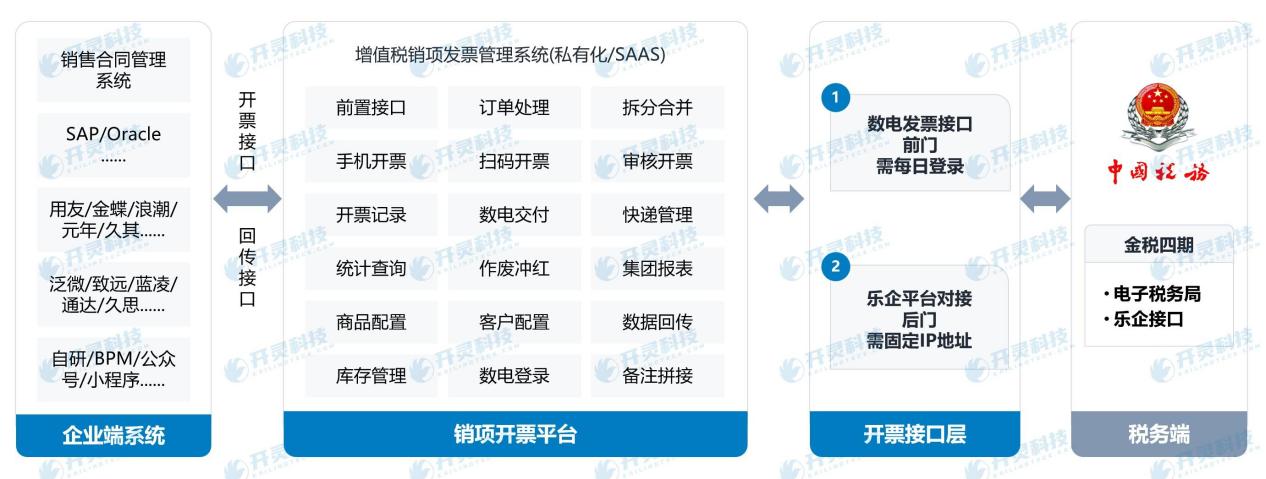
Kailing Technology Technical Solution: How enterprise ERP/mini-programs automatically issue invoices through API direct connection to the Electronic Tax Bureau (invoicing effect same as Didi and JD.com invoicing model)Published: 2026-03-26 17:40 Against the backdrop of the comprehensive advancement of China Golden Tax Phase IV and the popularization of fully digitalized e-invoices, enterprise invoicing models are undergoing a transformation from "manual operation" to "automation and real-time processing." The automatic invoicing models of platforms such as Didi and JD.com have long become industry benchmarks—after users complete transactions, invoices are automatically issued and pushed in real time without manual intervention, greatly improving transaction efficiency and user experience. Based on deep insight into tax digitalization trends, Kailing Technology has built an automatic invoicing solution with API direct connection to the electronic tax bureau, enabling enterprise ERP systems and self-developed mini-programs to easily replicate this efficient model and achieve full-process automation of "invoicing upon business occurrence, pushing upon invoicing, payment reminder upon pushing, and write-off upon payment collection." I. Solution core logic: API direct connection breaks data barriers and replicates benchmark platform invoicing experienceThe core of Kailing Technology's automatic invoicing solution is to use standardized API interfaces to open up the data channel between enterprise ERP/mini programs and the Electronic Tax Bureau and Leqi platform, building a full-chain digital flow of "business system - invoicing platform - tax end." Its logic is in the same vein as the invoicing models of Didi and JD.com: 1. Trigger automation:Starting from the enterprise's actual business scenarios, after payment is completed for sales orders, delivery notes, and receivable notes in the ERP system, or user consumption orders in the mini-program, an invoicing request is automatically triggered, with no need for manual entry of invoicing information; 2. Automatic data synchronization:The system automatically extracts core data such as customer information, commodity information, amounts, and tax rates from orders through API interfaces, and completes data formatting according to fully digitalized e-invoice specifications; 3. Direct invoicing via the tax authority:Formatted data is transmitted via a secure encrypted channel to the Electronic Tax Bureau or the Leqi platform, completing invoice issuance in real time and generating fully digitalized e-invoices in PDF, OFD, and XML formats; 4. Instant delivery and write-off:After invoice issuance, invoices are automatically pushed to customers via SMS, email, order pages, and other channels, while being synchronized back to the enterprise ERP/mini-program to complete invoicing status updates and subsequent payment collection write-off associations. The entire process requires no manual intervention. The time gap from transaction completion to invoice delivery is shortened to the minute level, fully matching the user experience of platforms such as Didi and JD.com, while meeting the dual needs of enterprise financial compliance and operational efficiency improvement. II. Solution core architecture: multi-level adaptation covering all-scenario invoicing needsKailing Technology's output invoicing management platform adopts a three-layer architecture design of "interface layer-functional layer-tax end," with extremely strong compatibility and scalability, and can adapt to ERP systems, self-developed mini programs, e-commerce platforms, and various other business carriers of enterprises of different sizes.
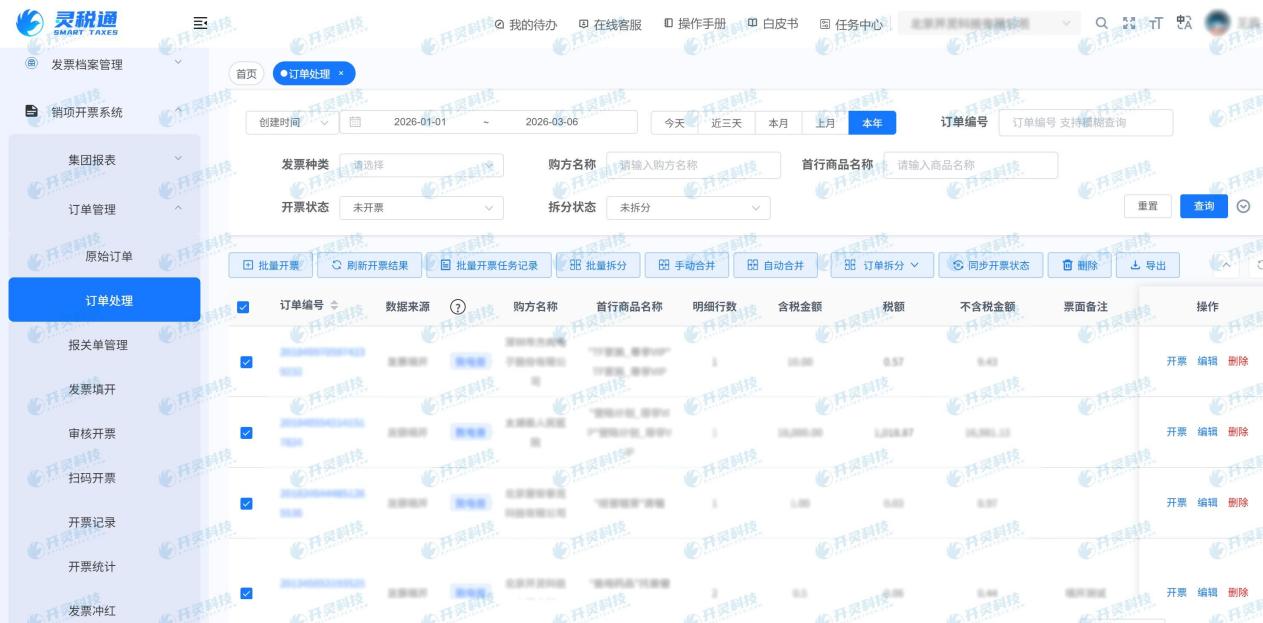
(1) Interface Layer: Standardized Adaptation, Seamless Integration with Enterprises' Existing Systems The platform provides standardized API interfaces for all scenarios, including fully digitalized e-invoice issuance interfaces, general red-flush interfaces, invoicing result query interfaces, and invoicing result callback interfaces, supporting rapid integration with various mainstream systems: ▪ ERP system:Yonyou U8/U9, Kingdee Cloud Xingchen/Xinghan, SAP, Oracle JDE, Inspur, etc., can be integrated through multiple interaction methods such as SFTP file scheduled tasks, intermediate table data views, and RPA front-end scraping; ▪ In-house system:Mini programs, official accounts, APPs, business middle platforms, etc., supporting active/passive JSON and XML data transmission via API, enabling real-time linkage between order completion and invoicing requests; ▪ E-commerce platforms:Self-operated malls, B2B2C hosted platforms, and mainstream e-commerce platforms (JD.com, Taobao, Douyin, etc.) can connect to sales orders, delivery notes, and other triggering documents to enable collaborative invoicing between merchants and platforms. (2) Functional layer: full-process automation, supporting complex business scenarios The platform embeds powerful functional modules covering the entire invoicing process while accommodating enterprises' personalized business rules: 1. Intelligent order processing:Supports automatic splitting/merging of orders by rules such as tax rate, partial shipment, same customer, and same product, adapting to complex scenarios such as mixed sales, large-amount procurement, and monthly consolidated invoicing; for multi-dimensional needs such as promotional discounts and multi-department allocation, combined processing of splitting by department and tax rate followed by discount application can be achieved; 2. Support for all invoice types:Covering the issuance of all invoice types including fully digitalized special VAT invoices, fully digitalized ordinary invoices, railway electronic passenger tickets, and air transport electronic passenger ticket itineraries, supporting special business scenarios such as tax-exempt goods, 0% tax rate goods, and differential taxation; 3. Dynamic credit management:Synchronize the dynamic credit limit of the electronic tax bureau, monitor in real time the usage of an enterprise's invoicing limit, and automatically adapt to the initial credit rules for incremental and existing taxpayers, avoiding invoicing interruptions caused by insufficient limits; 4. Full invoice lifecycle management:Supports multiple issuance methods such as manual invoice filling, scan-code invoicing, batch issuance, and Excel import invoicing, while also enabling full-process management including red-letter invoice reversal, export of invoice PDF/OFD/XML source files, and query and statistics of invoicing records; 5. Intelligent delivery and verification:After invoicing is completed, invoices are automatically pushed via SMS and email, and customers can download them directly from the mini-program order page or ERP customer portal; invoicing status is returned in real time, linking with the enterprise fund system to complete payment collection and write-off association. (3) Tax side: dual-path adaptation, meeting the needs of enterprises of different sizes The Kailing Technology solution supports dual-path integration via Electronic Tax Bureau API and Leqi platform, flexibly adapting to different enterprises' business volumes and invoicing needs:
Both connection methods strictly follow the security specifications of the State Taxation Administration, ensuring the security and compliance of invoicing data through multiple security mechanisms such as encrypted transmission and identity authentication. III. Key Feature Highlights: Core Support for Replicating Benchmark Experience(1) Deep linkage between business and invoicing, achieving "invoicing upon transaction" Just as Didi automatically issues invoices after completing a trip and JD.com after confirming receipt, Kailing Technology's solution achieves deep coupling between business systems and the invoicing platform: after a sales order in the ERP system is approved and a delivery note is confirmed as issued, or after a mini-program user completes payment, the system automatically extracts order data and generates an invoicing request according to preset rules, with no need for finance personnel to re-enter data. Taking a manufacturing enterprise as an example, after a sales note in its ERP system triggers invoicing, the system automatically splits goods and services at different tax rates, issues invoices separately, and pushes them to the purchaser, fully replicating the efficient invoicing process of platform-based enterprises. (II) Flexible Adaptation to Complex Scenarios, Balancing Standardization and Personalization For enterprises' diverse invoicing needs, the solution provides rich rule configuration functions: ▪ Splitting rules:Supports automatic invoice splitting by tax rate, partial shipment, order amount threshold, etc. For example, a mixed order of hardware products (13% tax rate) and technical services (6% tax rate) is automatically split into two invoices; ▪ Consolidation rules:Supports combined invoicing for multiple small-amount orders from the same customer in the same month, reducing the number of invoices and reconciliation costs, and adapting to high-frequency small-amount invoicing scenarios such as logistics companies and service providers; ▪ Discount rules:Supports multi-dimensional discount processing such as batch order discounts and promotional product discounts, automatically calculating discounted amounts and tax amounts to ensure invoice data accuracy and compliance.
(3) Seamless login and stable invoicing to ensure business continuity The solution solves the pain point of frequently logging into the Electronic Tax Bureau for traditional invoicing: through the Electronic Tax Bureau login-free resource package configuration, the system can automatically obtain SMS verification codes from the operator's backend to complete login, with no user perception; for users connected to the Leqi platform, long-term stable invoicing is achieved through IP whitelist filing, without daily manual intervention. It also supports setting the duration of face-scan authentication, further reducing operating costs and ensuring smooth invoicing links. (4) Group management capabilities, adapting to collaborative invoicing across multiple entities For group enterprises, the solution supports centralized management of multiple company entities. Through the Excel import invoicing function, invoicing data from more than 10 subsidiaries can be imported at once and issued in batches without switching company entities. It also provides multi-tax ID selection and certification and deduction statistics functions, enabling summary query and management of the entire group's invoicing data on a single interface, greatly improving group tax management efficiency.
IV. Solution core advantages: triple optimization of efficiency, compliance, and cost1. Doubled efficiency:Completely replace manual entry, invoice printing, mailing and other steps, compressing the invoicing process from hours to minutes, while reducing dependence on invoicing clerk positions and lowering labor costs; 2. Compliance assurance:Strictly comply with fully digitalized e-invoice specifications and the requirements of Cai Kuai [2020] No. 6, automatically retaining invoice source files, dynamically adapting to tax policy changes, and avoiding compliance risks such as fraudulent invoicing and data errors; 3. Experience upgrade:Customers do not need to wait for manual invoicing and receive the invoice immediately after the transaction is completed, improving customer satisfaction; the enterprise payment collection cycle accelerates due to the "payment upon invoice" rule, and cash flow turnover efficiency increases by more than 30%; 4. Flexible expansion:Supports SaaS deployment and private deployment, adapting to the different needs of small and medium-sized enterprises and large groups; short launch cycle, and standardized products can be quickly implemented. Amid the wave of tax digitalization, automated invoicing has become a key lever for enterprises to enhance their core competitiveness. Through a technical solution that directly connects to the electronic tax bureau via API, Kailing Technology frees enterprise ERP/mini-programs from the constraints of manual invoicing, making it easy to replicate the efficient invoicing models of Didi and JD.com and achieve deep synergy between business and taxation. Whether it is a manufacturing enterprise, an e-commerce platform, or a local life service provider, all can throughKailing Technology automatic invoicingThe solution reduces operating costs, improves compliance, optimizes customer experience, and seizes the initiative in digital transformation:https://www.kailingteck.com/h-col-107.html 。 As a comprehensive business-finance-tax digitalization solution service provider, Kailing Technology provides business-finance-tax management digital transformation products and operational services for various government agencies, institutions, and large, medium, and small enterprises. The product line includes: Sales contract management system, procurement contract management system, fully digitalized Leqi interface project, output automatic invoicing system,Reverse invoicing system,The invoice issuance for individuals system, employee expense control and reimbursement system, input VAT invoice management system, supply chain collaborative reconciliation system, image AI OCR recognition system, automated financial bookkeeping system, electronic accounting archives system, and other business solutions comprehensively advance digitalization across various fields. If you have any business-finance-tax digital transformation needs, welcome to contact us. Beijing Kailing Technology will serve you wholeheartedly.
#Output VAT Invoice Management Solution #Fully Digitalized E-invoice #fully digitalized e-invoice API #Invoice Management System #Fully digitalized e-invoice interface #Output Invoicing Management #Automatic Invoicing System #Digital Business-Finance-Tax Compliance #Enterprise Tax Risk Control |