010-6097 4119Book a Demo


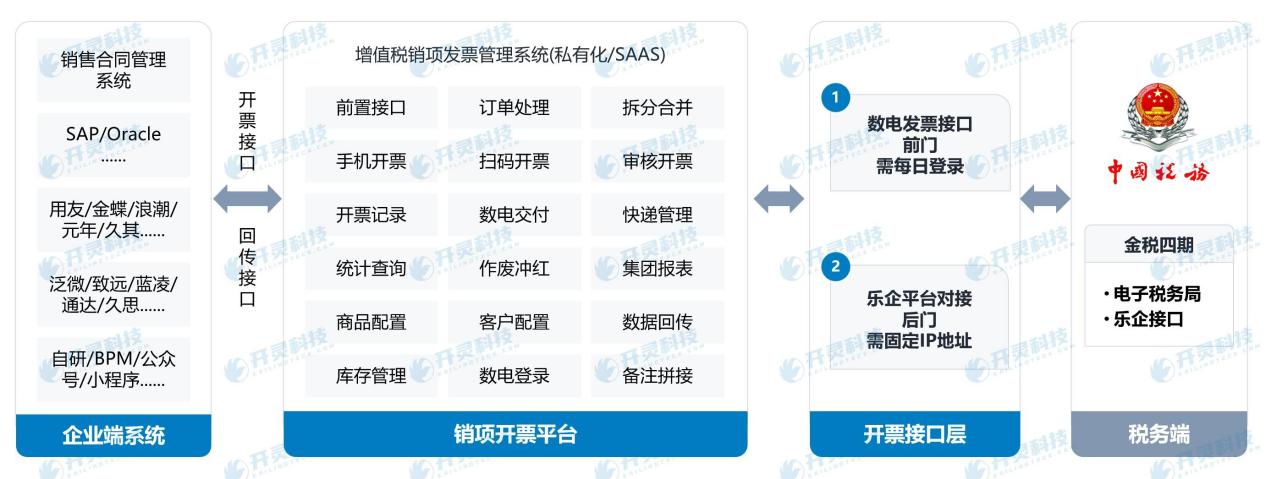
How can an enterprise business system connect to the tax bureau for automatic invoicing? Kailing Technology provides a comprehensive, low-cost automatic invoicing solutionPublished: 2026-03-06 16:51 With the full implementation of China Golden Tax Phase IV and the accelerated arrival of the "fully digitalized e-invoice" era, China's tax management has officially entered a new stage of "tax governance by data." With disruptive features such as no medium, no layout, tagging, and credit-based issuance, fully digitalized e-invoices have completely changed enterprises' traditional invoicing models. Tax bureaus have opened automatic invoicing capabilities to enterprises through channels such as the Leqi platform and the electronic tax bureau. However, how to seamlessly connect enterprises' complex internal business systems with tax bureaus to achieve efficient, compliant, and low-cost automatic invoicing has become a real challenge facing many enterprises. Kailing Technology has launched a full-scenario output VAT invoice management platform, helping enterprises quickly connect to the tax bureau's automatic invoicing system at extremely low cost, truly achieving the business closed loop of "invoice upon business occurrence, delivery upon invoicing, and payment collection upon delivery." I. China Golden Tax Phase IV forces enterprises to upgrade their invoicing models, making automatic invoicing an imperativeChina Golden Tax Phase IV not only achieves comprehensive monitoring of non-tax business, social security, and banking information, but also pushes invoice supervision to a new digital height. The promotion of fully digitalized e-invoices means: - Invoicing no longer depends on tax control equipment:Enterprises no longer need to purchase invoices or manage tax control devices, and can issue invoices as soon as they start business; - Dynamic management of credit limits:The tax bureau dynamically adjusts the total invoice issuance amount based on enterprise operations, invoicing, and filing status. Enterprises must pay real-time attention to changes in the amount, otherwise business may be affected; - Supply chain risk transmission:Abnormal transactions of upstream and downstream enterprises will be locked by big data; if the invoicing party has problems, the invoice recipient may also be traced; - Deeper audit penetration:People's Bank of China transaction data is interconnected with tax data, hidden transaction behavior becomes transparent, and non-compliant enterprises may face quota reduction, invoice suspension, or even fines. Against this background, traditional manual invoicing and scattered invoicing can no longer meet the real-time and compliance requirements of business. Enterprises must embed invoicing capabilities into business systems to achieve an automated process of "business trigger, automatic invoicing, instant delivery" in order to keep pace with tax reform, improve operational efficiency, and reduce compliance risks. II. Three mainstream methods and comparison of advantages and disadvantages for enterprises connecting to the tax bureau's automatic invoicingCurrently, there are mainly the following three paths for enterprises to connect with the tax bureau for automatic invoicing: 1. Manual invoicing on the Electronic Tax BureauApplicable entities:Small enterprises, sole proprietors, and sporadic invoicing scenarios. Pros:No development required; simply log in to the web page to operate. Disadvantages:Unable to link with business systems; each invoice requires manual entry, resulting in low efficiency, high error rates, and inability to meet large-volume invoicing needs. 2. Leqi Platform direct connection ("headquarters-to-headquarters" model)Applicable entities:Mid-to-large enterprises, group companies, internet platforms. Pros:Direct connection to the tax bureau's core system, delivering the strongest real-time invoicing, supporting high concurrency, and fully embeddable into business processes. Disadvantages:High application threshold,It is necessary to have a certain scale and good tax credit;Complex application process,Requires writing a large amount of documentation and passing sandbox testing, with relatively high operation and maintenance costs. 3. Access via a professional service provider API (e.g., Kailing Technology) Applicable entities:Enterprises of all sizes, especially those seeking rapid deployment at low cost. Pros:The service provider encapsulates the tax bureau's complex interfaces and provides standard, easy-to-use APIs, so enterprises can achieve automatic invoicing with simple calls; the service provider can also assist with Leqi applications and coordinate tax relationships, greatly reducing enterprises' self-development costs. Disadvantages:Service providers need stable and reliable technical capabilities and a deep understanding of tax policies. Kailing Technology's output VAT invoicing management platform is based on the third approach, compatible with both Leqi Direct Connection and the electronic tax bureau's official interfaces, providing enterprises with flexible, stable, and low-cost automated invoicing capabilities, helping enterprises choose the optimal access method based on their own scale and needs. III. Ten highlights of Kailing Technology's low-cost automatic invoicing solution1. Full coverage of multiple business scenarios, one solution solves all enterprise invoicing needs Kailing Technology has conducted in-depth research on invoicing pain points in manufacturing, retail, logistics, e-commerce, finance and many other industries. The solution supports seamless integration with almost all mainstream business systems: - OA/approval system automatic invoicing:It receives invoicing application forms from OA systems via SFTP files, intermediate tables, API interfaces, and other methods, automatically performs data verification, splitting and merging, and then submits them to the tax bureau for invoicing. Invoicing results are returned in real time, and status is updated synchronously. It supports rapid integration with OA systems such as Weaver, Seeyon, and Landray. - Automatic invoicing via ERP system:Deep integration with ERP systems such as Yonyou, Kingdee, SAP, Oracle, and Inspur, triggering invoicing based on common documents such as sales orders, delivery notes, sales notes, receivables notes, and delivery orders. Enterprises can achieve automation from documents to invoices without changing their original business processes. - Automatic invoicing on e-commerce platforms:Supports self-operated e-commerce websites, APP, mini-programs, as well as mainstream e-commerce platforms such as JD.com, Taobao, Tmall, and Pinduoduo. After consumers place orders, the system automatically obtains order information, automatically issues invoices according to platform rules and tax rates, and delivers invoice PDF/OFD/XML to the consumer's order center or email, where consumers can view and download at any time. - Export business/tax refund scenarios:Automatically connect to the electronic port, obtain customs declaration data, and generate invoices that meet export tax rebate requirements, support customizable remark information, and ensure a smooth tax rebate process. - Scan-to-invoice on mobile:Applicable to stores, catering, and service industries. Store staff open the WeChat official account link on their phone, enter the invoicing amount, and the system automatically generates a QR code; customers scan the code, fill in the title information and choose the receiving method (SMS/email), and the invoice is automatically issued and pushed. - Invoicing upon payment:Linked with payment systems (such as WeChat Pay, Alipay, bank payment interfaces), a successful payment event triggers an invoicing task, achieving "invoicing upon payment completion," completely eliminating consumers' hassle of chasing invoices and enhancing the consumption experience.
2. Intelligent splitting and merging rules, flexibly responding to complex business needs Different industries and different transaction models have vastly different requirements for invoice splitting and merging. The Kailing system has a built-in rich document processing rules engine that supports enterprises in configuring rules through a visual interface without secondary development: - Split by tax rate:When an order simultaneously includes 13% hardware and 6% technical services, the system automatically splits it into two invoices and issues them separately, avoiding tax risks caused by mixed sales. - Split shipment splitting:For a large equipment purchase order shipped in three batches, with different quantities and amounts each time, the system automatically splits invoices based on delivery notes to ensure invoice-goods consistency. - Merge same customers:A logistics company provides multiple trips of transportation services to a long-term cooperative customer, and the customer requests a consolidated invoice at the end of the month. The system merges all waybills for services completed that month into one invoice, simplifying reconciliation. - Merge same goods:When an office supplies wholesaler has the same customer purchasing the same goods multiple times, the system automatically merges identical item lines, reducing invoice lines and improving invoicing efficiency. - Multi-dimensional combined processing:In group procurement scenarios, orders contain products with different tax rates, some products enjoy promotional discounts, and invoices need to be split by each subsidiary. The system supports multi-dimensional combined processing and automatically generates invoices that meet the requirements of all parties.
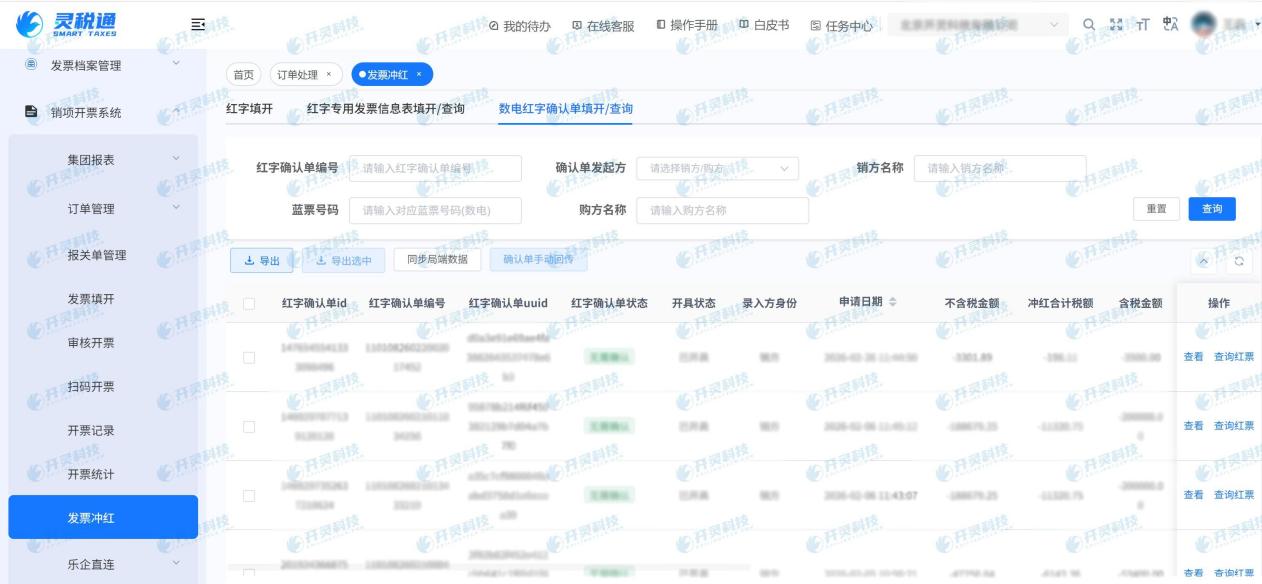
3. Simplified red-flush process, complex operations handled with one interface Traditional fully digitalized e-invoice red-letter reversal involves red-letter confirmation form application, originalInvoice query、red invoice issuance and other steps, requiring at least 3 sets of APIs. Kailing Technology encapsulates the red-flush process into one universal red-flush API. The front-end system only needs to pass in the original invoice number, red-flush reason, red-flush amount and other information; the system automatically determines the red-flush type, applies for and confirms the red-letter confirmation form on behalf of the user, and calls the tax bureau's red-flush API to complete the operation. Results are returned in real time, greatly reducing front-end system development and integration workload, with error rates also dropping significantly.
4. Login-free authentication mechanism ensures a 24/7 smooth invoicing process The E-Tax Bureau requires users to log in daily before they can call the invoicing interface, which is a huge obstacle for unattended automatic invoicing systems. Kailing Technology has launched a login-free authentication solution: users with legal representative or financial officer permissions complete a one-time authorization configuration when the system goes live; thereafter, the system automatically obtains an SMS verification code via mobile each day to complete login and maintains the authentication status on the backend. When an automatic invoicing task is initiated, the system can call the tax bureau interface without manual intervention, ensuring business continuity. At the same time, this mechanism fully complies with tax bureau security requirements, requires no password storage, and keeps risks controllable.
5. Full synchronization of historical data for seamless transition between old and new systems The platform supports full synchronization of historical invoicing records from the Electronic Tax Bureau or the original invoicing system, ensuring the completeness of the invoice pool. In addition, the Excel batch import function supports importing invoices from multiple companies at once (distinguished by seller tax number), greatly improving the efficiency of initial data migration and facilitating unified group control.
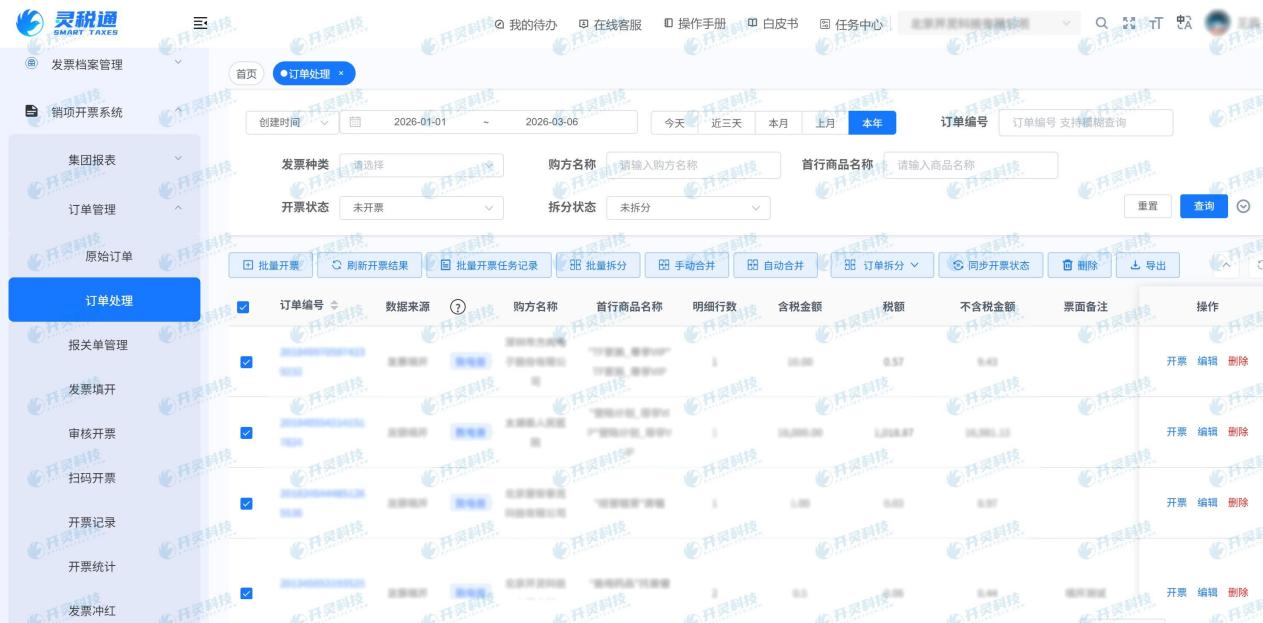
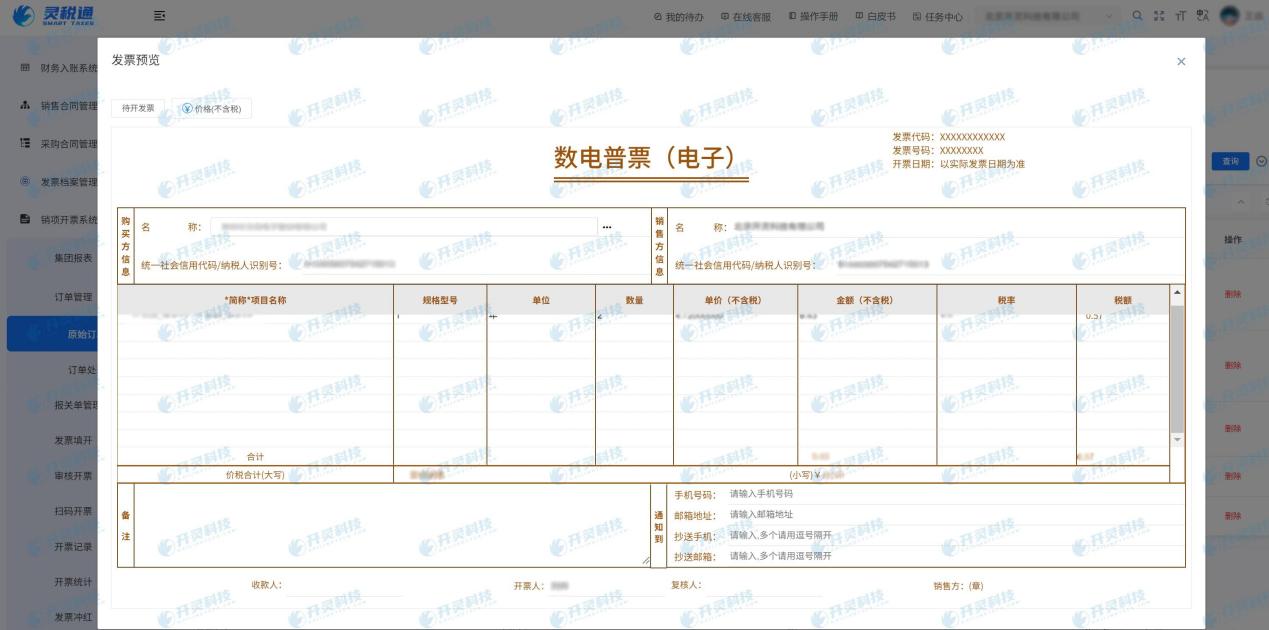
6. Invoice preview and order confirmation, effectively avoiding invoicing errors Although automatic invoicing reduces manual intervention, business data errors can still lead to invalid invoices. The Kailing system supports two invoicing trigger modes: - Automatic invoicing:Invoice immediately after input from the business system, suitable for standardized scenarios. - Order confirmation mode:The invoicing application input from the business system stays on the "order processing interface". Finance personnel can double-click to open the invoice preview interface and verify information such as header, goods, amount, and tax rate in a WYSIWYG manner. After confirmation, click the "Invoice" button. The preview interface is completely consistent with the official invoice layout, allowing intuitive error detection and avoiding repeated red-letter reversals.
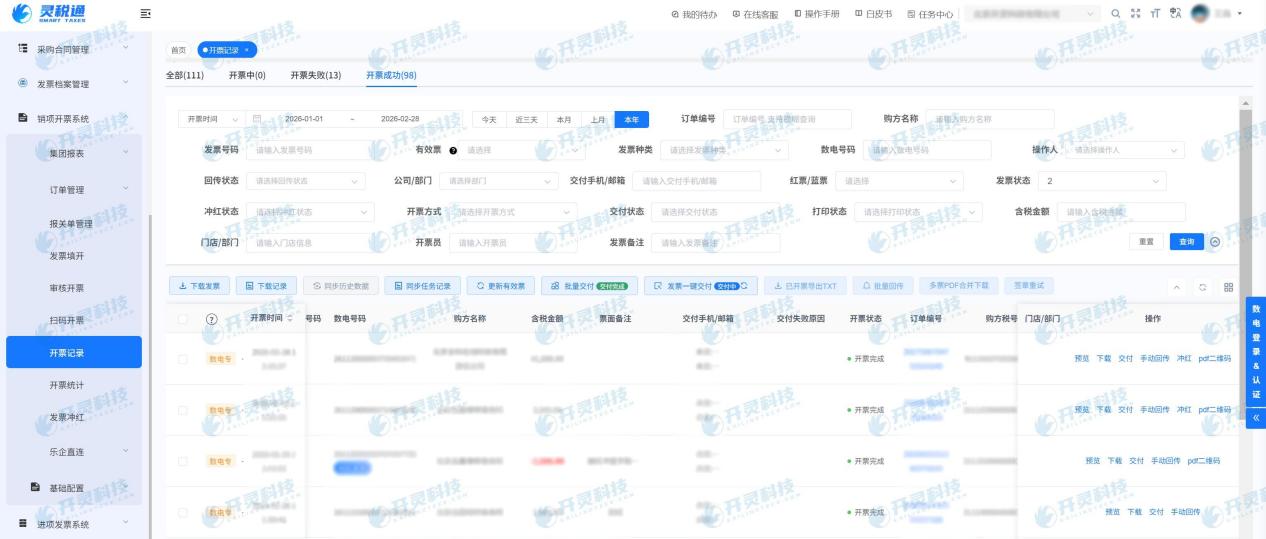
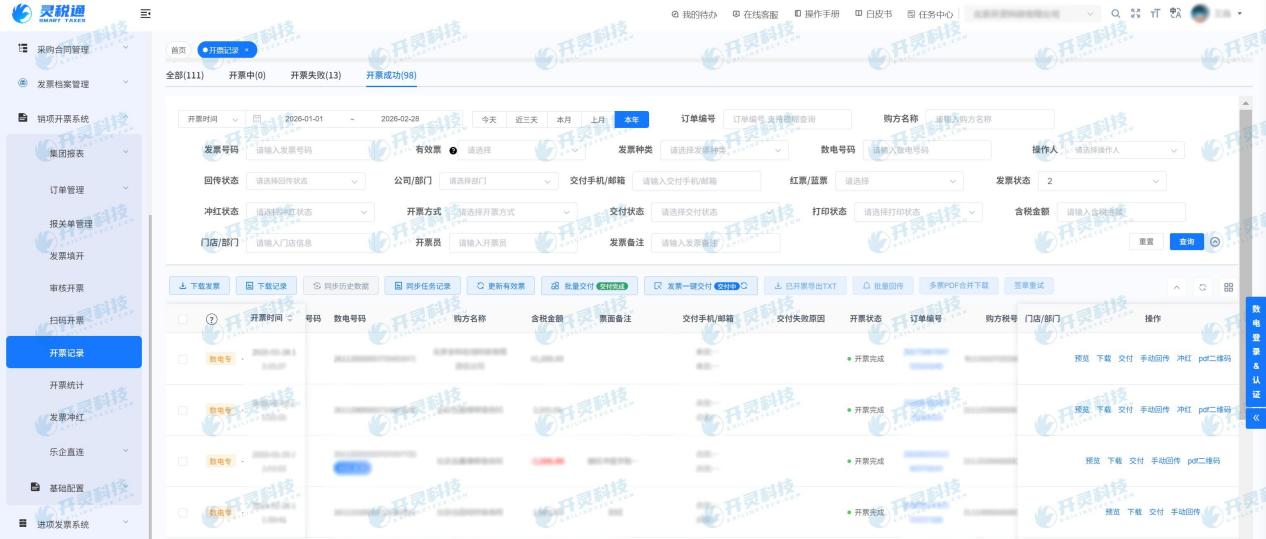
7. Unified invoice pool, one-stop management of all issued invoices The system provides a powerful "Invoicing Records" interface that centrally displays all invoices issued by the enterprise. It supports filtering and querying by invoice number, purchaser, invoicing date, amount, status, and other dimensions, and allows batch download of PDF, OFD, and XML files to meet archiving, audit, and delivery needs. At the same time, invoice status is updated in real time, and voided/red-flushed and abnormal invoices are automatically highlighted with red warnings.
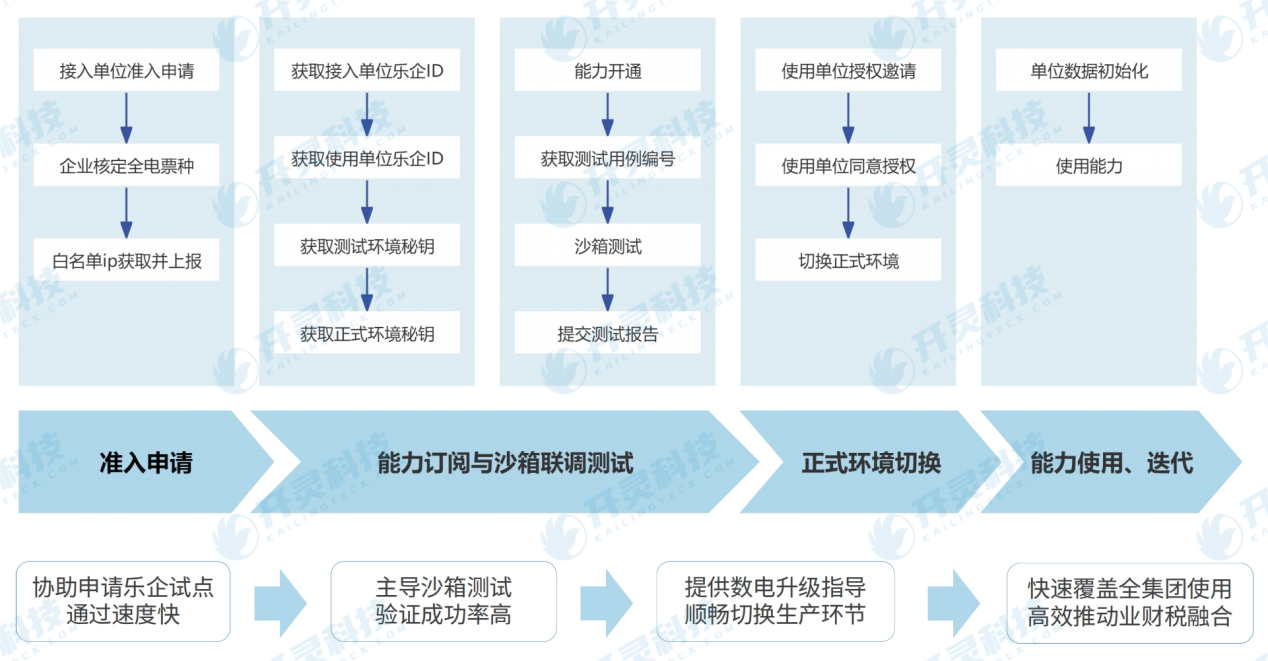
8. Full-process assistance for Leqi application, one-stop service from documentation to launch For enterprises that wish to directly connect to the Leqi platform, Kailing Technology provides "nanny-style" assistance: - Document writing service: responsible for writing the full set of documents required for the Leqi application; Party A only needs to print, stamp, and submit. - Tax bureau relationship coordination: interface with the competent tax bureau's relevant departments as Party A, answer questions, and follow up on approval progress, greatly shortening the application cycle. - Sandbox testing support: Assist enterprises in completing interface debugging and testing in the Leqi sandbox environment to ensure a flawless official launch. - Production environment switchover: guide enterprises through production environment configuration to achieve a smooth switchover and avoid business interruption.
China Golden Tax Phase IV is not only an upgrade in supervision, but also a catalyst for enterprises' business-finance-tax digital transformation. Whoever first achieves automatic invoicing integration between business systems and tax bureaus will gain the upper hand in efficiency, cost, and compliance. Kailing Technology helps enterprises connect to tax bureau automatic invoicing capabilities at the lowest cost and fastest speed, truly achieving business-finance-tax integration. Whether you are a medium-to-large enterprise planning automated invoicing or a small and micro enterprise seeking lightweight access, Kailing Technology can tailor the most suitable solution for you, making invoice management no longer a burden but an accelerator for business growth.:https://www.kailingteck.com/h-col-107.html 。 As a comprehensive business-finance-tax digitalization solution service provider, Kailing Technology provides business-finance-tax management digital transformation products and operational services for various government agencies, institutions, and large, medium, and small enterprises. The product line includes: Sales contract management system, procurement contract management system, fully digitalized Leqi interface project, output automatic invoicing system,Reverse invoicing system,The invoice issuance for individuals system, employee expense control and reimbursement system, input VAT invoice management system, supply chain collaborative reconciliation system, image AI OCR recognition system, automated financial bookkeeping system, electronic accounting archives system, and other business solutions comprehensively advance digitalization across various fields. If you have any business-finance-tax digital transformation needs, welcome to contact us. Beijing Kailing Technology will serve you wholeheartedly.
#Output VAT Invoice Management Solution #Fully Digitalized E-invoice #fully digitalized e-invoice API #Invoice Management System #Fully digitalized e-invoice interface #Output Invoicing Management #Automatic Invoicing System #Digital Business-Finance-Tax Compliance #Enterprise Tax Risk Control |