010-6097 4119Book a Demo


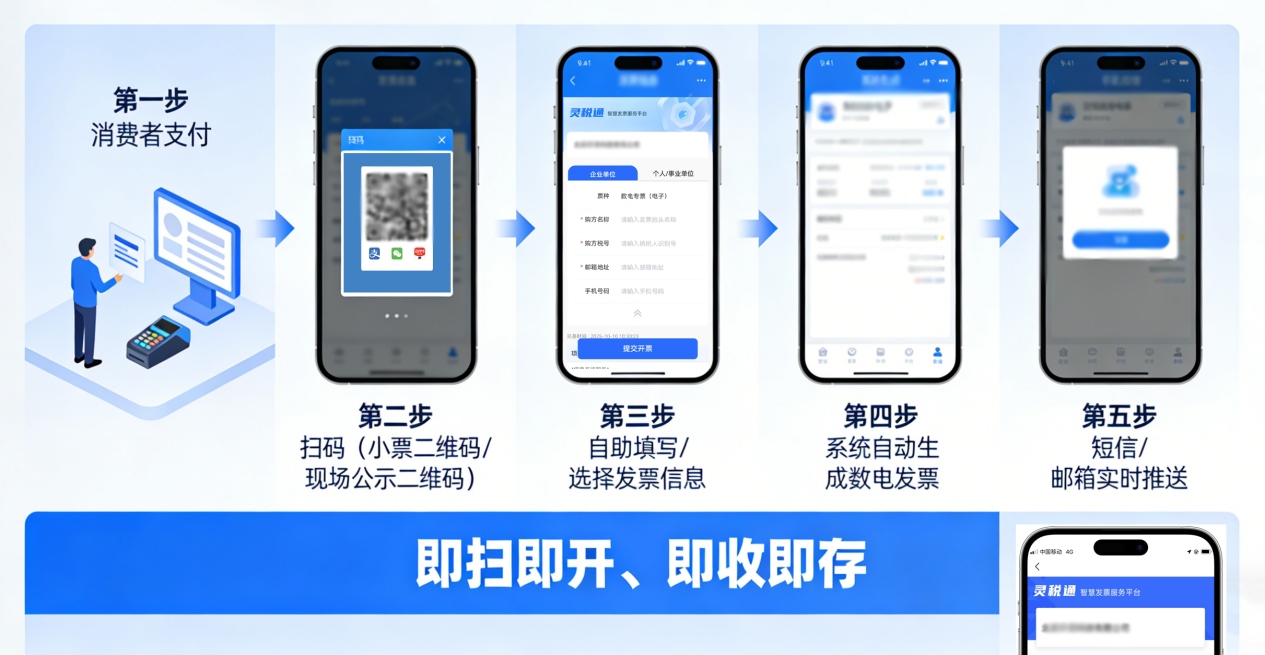
Farewell to manual invoicing entry: Kailing Technology helps your business system directly connect to the electronic tax bureau to achieve batch automatic invoicing (the invoicing effect is the same as the invoicing model of Didi and JD.com)Published: 2026-04-09 16:48 For the finance teams of many enterprises, monthly invoicing work is almost a war of attrition. Imagine this scenario: finance staff log into the business system to copy customer information and order data on one side, while switching to the electronic tax bureau platform to paste, verify, and submit item by item on the other; promotional orders from e-commerce platforms pour in like a tide, but invoicing speed can never keep up with the business rhythm; merchants operating across multiple platforms have to jump back and forth between different systems—these seemingly ordinary repetitive tasks are actually quietly eroding enterprises' operational efficiency and financial compliance bottom line. Survey data shows that more than 60% of finance teams need to process over a thousand invoices each month, with more than 40% of their time spent on low-value operations such as data verification, repeated entry, and switching between systems. With China Golden Tax Phase IV fully implemented and fully digitalized e-invoices rapidly becoming widespread, this "manual handling" style of invoicing is no longer sustainable. I. Why are traditional invoicing methods already "not enough"?1. The dual waves of China Golden Tax Phase IV and fully digitalized e-invoicesChina Golden Tax Phase IV brings not only an upgrade of supervision means, but also a profound reform of "tax governance by data." Through comprehensive monitoring of non-tax businesses, social security, and banking information, the tax system has pushed invoice supervision to a new digital height. With disruptive features such as medium-free, format-free, tag-based, and credit-based, fully digitalized e-invoices have completely changed the traditional invoicing model of enterprises. Tax authorities have opened automatic invoicing capabilities to enterprises through channels such as the Leqi platform and electronic tax bureaus. However, how to seamlessly connect enterprises' complex internal business systems with tax authorities to achieve efficient, compliant, and low-cost automatic invoicing has become a real challenge for many enterprises. At the same time, the Beijing Municipal Tax Service has officially launched the "invoicing upon transaction" pilot,i.e.When the transaction is completed, the system automatically pre-fills, issues immediately, and pushes the fully digitalized e-invoice to the consumer, effectively solving problems in invoice management such as "no invoicing, difficult invoicing, and surplus invoices." This model is becoming a new benchmark for tax compliance, and enterprises unable to keep pace will face dual pressure of efficiency and compliance. 2. Three hidden costs of manual invoicingThe cost of manual invoicing is far more than just "low efficiency"; it drags down enterprises in at least three dimensions: - Efficiency cost:Each invoice issuance involves multiple steps such as order information export, data cleaning, entry one by one, and submission for review. A single invoice takes an average of more than 15 minutes, and during e-commerce promotions it is even a "overtime disaster zone" for finance teams. - Compliance cost:Manual operations inevitably bring information errors. The error rate of traditional manual coding can reach 5%-8%. A single erroneous invoice can trigger a chain reaction of returns, reissuance, customer complaints, and even tax audits. - Management cost:Data fragmentation across multiple platforms and systems leads toInvoice queryCross-platform verification is required, invoicing data from various channels is stored separately, making it difficult to form a unified invoice ledger, and management costs remain high. 3. Benchmarks already set: why are the invoicing models of JD.com and Didi enviable? Open the Didi or JD APP. After a user completes a trip or order, they only need to apply with one click on the order page, and the invoice is automatically generated and instantly pushed via SMS or email. The underlying technical logic is: the business system directly connects to the Electronic Tax Bureau or Leqi platform through standardized API interfaces; once the transaction is completed, an invoicing request is automatically triggered, and data such as customer information, product details, amount, and tax rate in the order is automatically extracted, formatted, encrypted, and transmitted to the tax side for issuance, with no manual intervention throughout the process. A case published by the Beijing Municipal Tax Service shows that after JD connected to the Leqi platform, it gradually achieved online automatic issuance of invoices for personal consumption of self-operated goods, significantly improving invoice processing efficiency in the face of massive orders. The core of this model is not an unattainable technical barrier, but a shift in philosophy: making invoicing move from "people looking for invoices" to "invoices following the business."
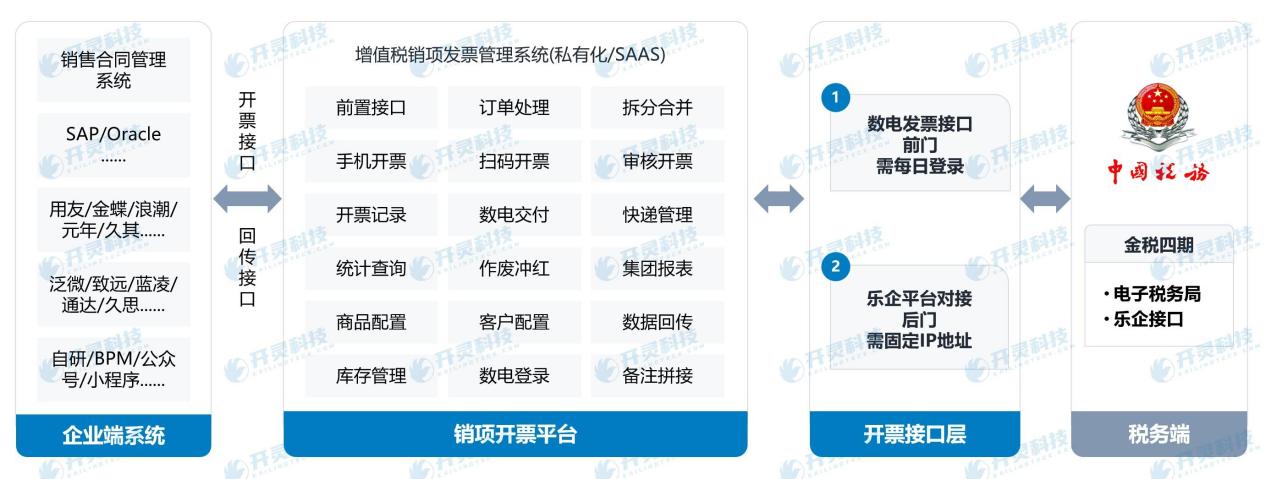
II. How does Kailing Technology replicate the invoicing experience of benchmark platforms?The core of Kailing Technology's automatic invoicing solution is to use standardized API interfaces to open up the data channel between enterprise ERP/mini programs and the Electronic Tax Bureau and Leqi platform, building a full-chain digital flow of "business system - invoicing platform - tax end." Its logic is in the same vein as the invoicing models of Didi and JD.com - enabling enterprises' own systems to easily realize full-process automation of "invoicing upon business occurrence, pushing upon invoicing, payment reminder upon pushing, and write-off upon payment collection." 1. Direct connection to business systems: breaking through the "last mile" of data silos Under the traditional invoicing model, business systems and tax invoicing platforms are independent of each other, data flow relies on manual intervention, and it is difficult to adapt to diverse invoicing needs. Kailing Technology breaks this barrier through comprehensive system integration capabilities: - Deep integration with mainstream ERP:Direct connection with mainstream ERP systems such as SAP, Oracle, Yonyou, and Kingdee, enabling direct data capture from business systems and automatic generation of invoicing information according to preset rules, realizing the automated process of "business document-driven invoicing." The average integration cycle does not exceed 5 working days, without large-scale transformation of existing systems. - Rapid integration with self-developed systems:Supports active/passive JSON and XML data transmission via API from self-developed systems such as mini programs, official accounts, APPs, and business middle platforms, achieving real-time linkage between order completion and invoicing requests. - Unified aggregation across multiple e-commerce platforms:Deeply connected to the open interfaces of mainstream e-commerce platforms such as Douyin, Tmall, JD.com, and Kuaishou, synchronizing order information from each platform in real time. Consumers can automatically submit invoicing requests based on orders, completely eliminating the hassle of switching between multiple platforms for manual entry. 2. Four key nodes of full-process automationFrom the generation of a business order to the delivery of the invoice to the customer, the entire process is broken down into four automatically flowing stages: - Trigger automation:Starting from the enterprise's actual business scenarios, after payment is completed for sales orders, delivery notes, and receivable notes in the ERP system, or user consumption orders in the mini-program, an invoicing request is automatically triggered, with no need for manual entry of invoicing information. - Automatic data synchronization:The system automatically extracts core data such as customer information, commodity information, amounts, and tax rates from orders through API interfaces. The built-in AI coding engine automatically matches the latest tax classification codes of the State Taxation Administration, with accuracy up to 99.9%. - Direct invoicing via tax side:Formatted data is transmitted via a secure encrypted channel to the Electronic Tax Bureau or the Leqi platform, completing invoice issuance in real time and generating fully digitalized e-invoices in PDF, OFD, and XML formats. - Instant delivery and write-back:After invoice issuance, invoices are automatically pushed to customers via SMS, email, order pages, and other channels, while invoicing status, invoice number, and other information are returned in real time to business systems such as ERP and OA, automatically updating financial ledgers without manual re-entry. 3. Dual-channel tax connection: flexibly adapting to different enterprise sizes Enterprises of different sizes have different needs for invoicing capabilities and access thresholds. Kailing Technology provides two core integration modes, allowing enterprises to choose flexibly according to their own situation: - Leqi Direct Connection interface:For medium and large enterprises with daily invoicing volume of more than 1,000 invoices, through the tax authority's filed IP whitelist, automatic invoicing can be performed without daily login to the Electronic Tax Bureau, supporting high concurrency and high stability requirements. - Fully digitalized e-invoice API interface:For small and medium-sized enterprises, it supports real-name authentication login through the Electronic Tax Bureau. A single tax ID can meet daily invoicing demand of fewer than 1,000 invoices, with low access threshold and fast launch. For enterprises that temporarily do not meet Leqi application conditions but have relatively large invoicing needs, Kailing Technology can also assist with qualification assessment, material preparation, and process follow-up for Leqi applications, providing full-cycle support from assessment to implementation.
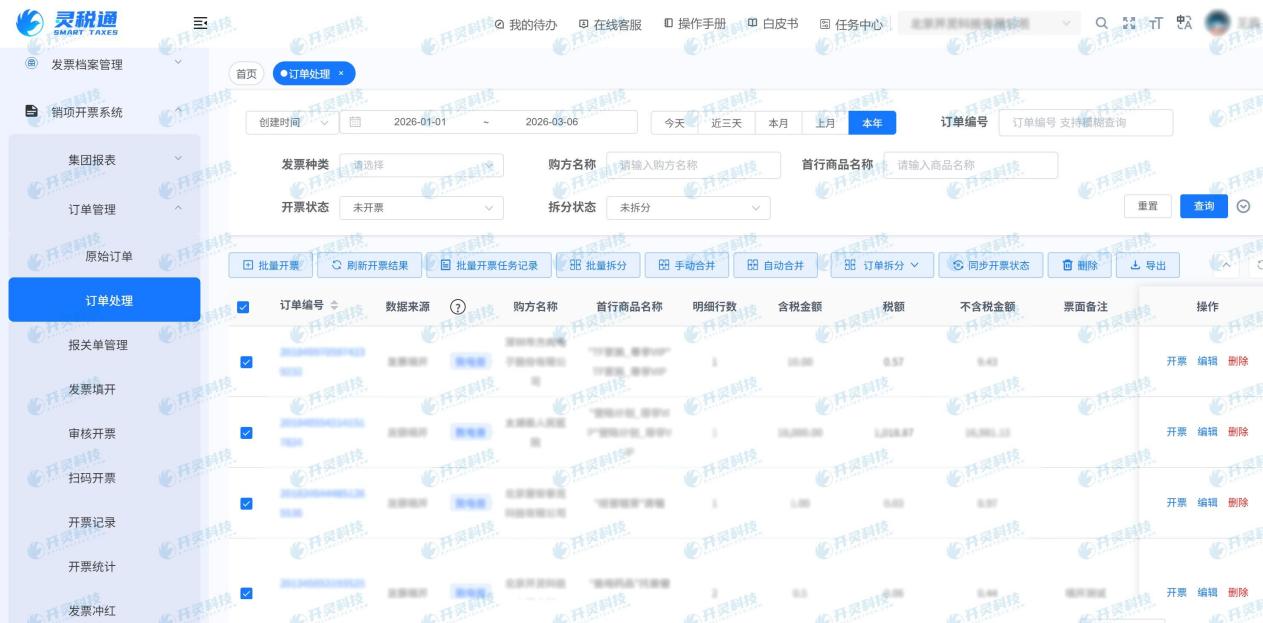
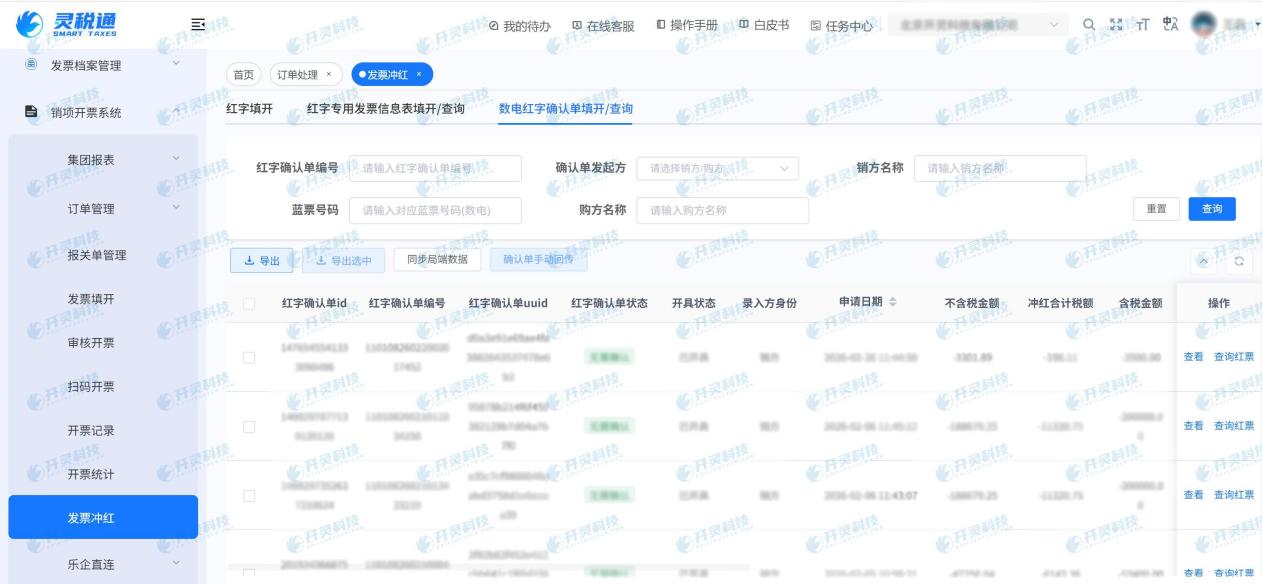
4. Beyond "fast issuance": intelligent control across the full lifecycle The value of automatic invoicing is reflected not only in speed, but also in compliance assurance and refined management across the entire process: - Intelligent rule processing:Enterprises can customize invoice splitting and merging rules. For example, multiple small orders can be automatically merged for invoicing, and mixed-sales orders can be automatically split by tax rate, without manual judgment. - Full-dimensional risk prevention and control:Before invoicing, automatically verify the enterprise's credit limit and red-letter invoice compliance conditions, and synchronize tax bureau system status in real time. This not only eliminates tax risks such as over-limit invoicing and delayed red reversal, but also warns of insufficient quota to avoid invoicing interruption due to lack of invoices. - One-tap red-letter reversal and reissue:Facing abnormal scenarios such as incorrect invoicing and returns/exchanges, it supports one-click initiation of the red-letter reversal process, and the system automatically verifies information and generates red-letter invoices, with no manual verification required throughout. - Centralized invoice management:All output VAT invoices are automatically collected into a unified invoice pool, supporting multi-dimensional retrieval by time, customer, amount, invoice type, etc. Finance staff can retrieve invoice details and samples in 1 second, completely eliminating the inefficient mode of searching paper archives across systems.
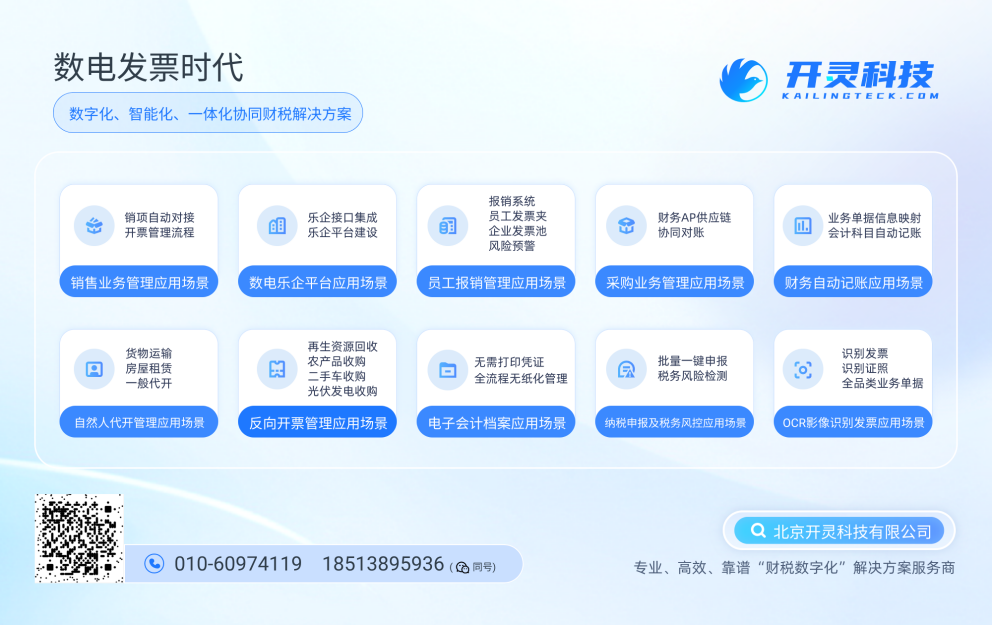
III. Efficiency leap and value reshaping brought by automated invoicingTransform the invoicing process from manual intervention to system-driven automation, delivering multi-dimensional and quantifiable benefits. This change is not just about saving a few people's work hours, but a systematic improvement in financial operation models, customer service experience, and corporate compliance levels. 1. The timeliness revolution from "day-level" to "second-level"Under traditional manual models, an invoice often needs to pass through multiple roles such as salesperson, finance specialist, and reviewer from business occurrence to delivery to the customer, with circulation cycles measured in days or even weeks. After connecting to an automated invoicing system, this link is compressed to second-level response. Taking a standard online order as an example: at the same time the user successfully pays, the business system sends an invoicing request to the Kailing Technology platform. The platform completes data cleaning, code matching, and tax-side connection within hundreds of milliseconds, and the e-invoice can be pushed to the user's phone the second after the order is completed. 2. Shift in the role focus of finance teamsOnce repetitive, low-value entry and verification work is replaced by the system, the finance team can be liberated from mechanical labor. The team's core function will shift from "data porter" to "business analyst" and "compliance guardian." They can devote more energy to high-value-added work such as tax burden analysis of output and input, optimization of supply chain invoice circulation efficiency, and risk investigation of abnormal invoices. For enterprise management, this means a true transformation of the finance department from a cost center to a value creation center. 3. Customer experience-driven brand premiumIn the C-end consumer market, "whether invoicing is convenient" has become one of the important implicit standards for measuring service quality. If consumers still have to go through cumbersome title filling and long invoicing waits after completing a transaction, negative experiences are easily generated. Conversely, an automatic invoicing experience that is as "silent and seamless" as JD.com or Didi can significantly improve customer satisfaction and brand trust. For B2B enterprises, the accuracy and timeliness of invoice delivery are directly related to the collection cycle of accounts receivable—when the invoice is one step faster, payment collection is one day earlier. 4. Quantifiable input-output modelFrom the perspective of actual enterprise operating data, the payback period of an automatic invoicing solution is usually much shorter than expected. Comprehensive estimates show that for a medium-sized enterprise with an average daily invoicing volume of about 200 invoices, after automation transformation: - Can free up approximately 60 to 80 hours of effective working time for finance staff each month; - Costs for invoice returns, red-letter reversals, and communication caused by invoice errors dropped by more than 90%; - Improved invoicing timeliness can indirectly shorten accounts receivable turnover days by 3 to 5 days. These visible numbers will ultimately translate into tangible cost optimization and cash flow improvement on enterprises' income statements. When the focus of invoice management shifts from "post-event processing" to "business-driven," enterprise business-finance-tax operations can truly match the pace of business growth. Kailing Technology's automated invoicing solution allows invoices to be naturally generated and delivered instantly at the moment a transaction is completed, freeing the finance team from repetitive operations to devote energy to more valuable business-finance-tax analysis and decision-making.:https://www.kailingteck.com/h-col-107.html 。 As a comprehensive business-finance-tax digitalization solution service provider, Kailing Technology provides business-finance-tax management digital transformation products and operational services for various government agencies, institutions, and large, medium, and small enterprises. The product line includes: Sales contract management system, procurement contract management system, fully digitalized Leqi interface project, output automatic invoicing system,Reverse invoicing system,The invoice issuance for individuals system, employee expense control and reimbursement system, input VAT invoice management system, supply chain collaborative reconciliation system, image AI OCR recognition system, automated financial bookkeeping system, electronic accounting archives system, and other business solutions comprehensively advance digitalization across various fields. If you have any business-finance-tax digital transformation needs, welcome to contact us. Beijing Kailing Technology will serve you wholeheartedly.
#Output VAT Invoice Management Solution #Fully Digitalized E-invoice #fully digitalized e-invoice API #Invoice Management System #Fully digitalized e-invoice interface #Output Invoicing Management #Automatic Invoicing System #Digital Business-Finance-Tax Compliance #Enterprise Tax Risk Control |