010-6097 4119Book a Demo


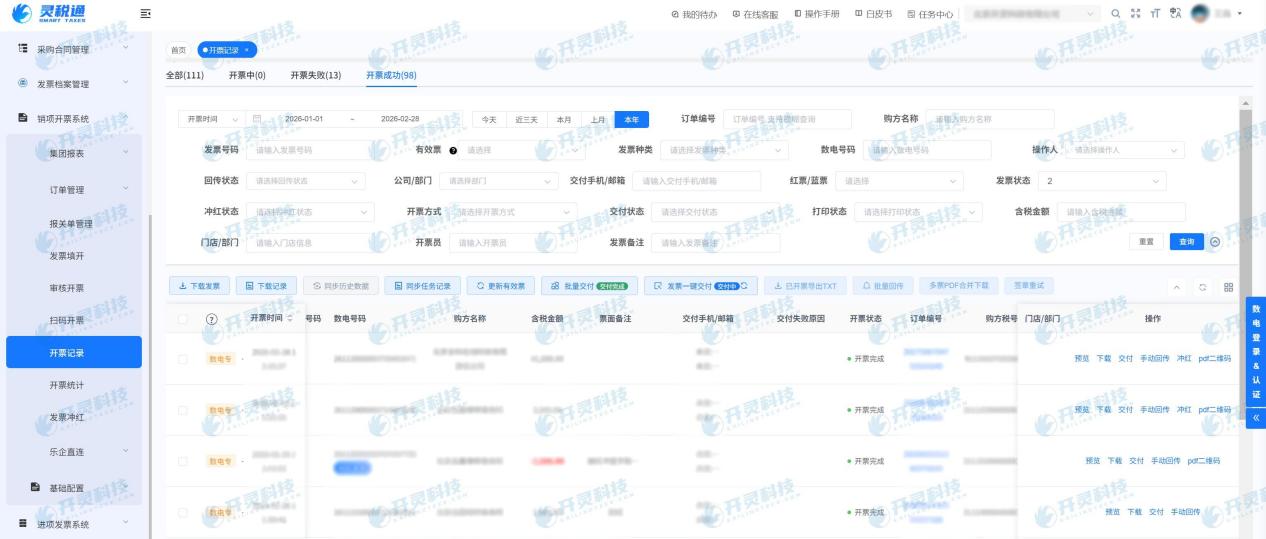
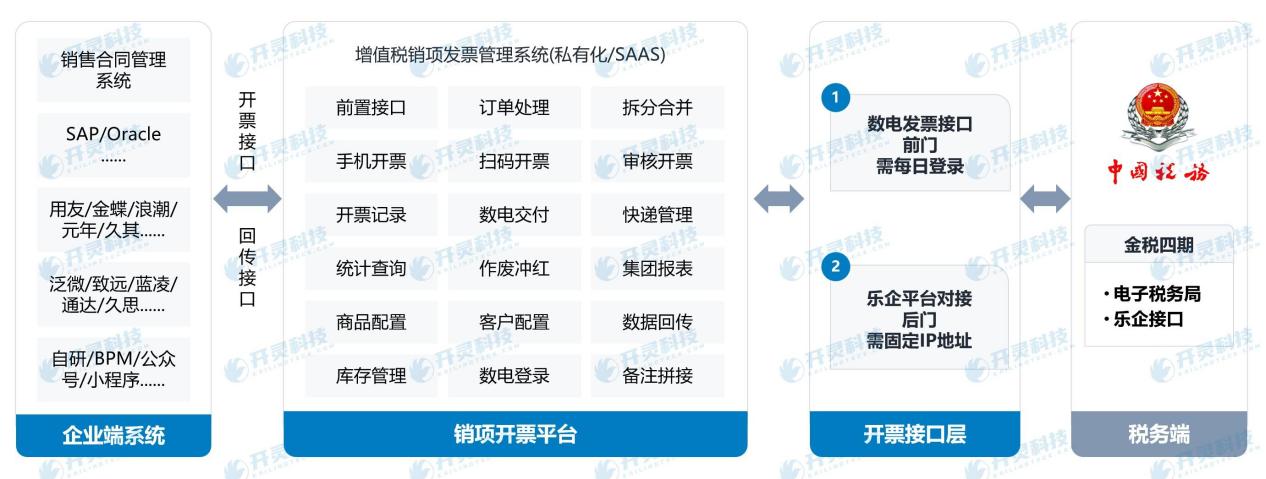
How can an enterprise ERP system connect directly to the tax bureau for automatic invoicing? Kailing Technology's tax API direct connection solution empowers rapid business growthPublished: 2026-02-28 17:16 Against the backdrop of the comprehensive implementation of China Golden Tax Phase IV and the promotion of fully digitalized e-invoices, corporate invoicing models are transforming from reliance on traditional tax-control devices to full digitalization and automation. As the core hub of corporate business data, the ERP system's direct interconnection with the tax bureau system has become key to breaking invoicing efficiency bottlenecks, reducing compliance risks, and empowering business growth. Based on tax API direct connection technology, Kailing Technology's output VAT invoice solution achieves seamless connection between the ERP system and the tax end, turning automatic invoicing from an "ideal" into "reality" and bringing full-chain efficiency innovation and value improvement to enterprises. I. The traditional invoicing model constrains enterprise digital transformationAs enterprise business scale expands and transaction frequency increases, the drawbacks of the traditional invoicing model become increasingly prominent, becoming a "stumbling block" constraining business development: 1. Disconnection between business and invoicing leads to low efficiency:Business data such as sales orders and delivery notes in the ERP system must be manually exported and organized, then entered into the invoicing system. Repeated entry is prone to errors, and the invoicing process lags behind the business process. Especially with large-volume orders, the invoicing clerk's workload surges and response speed is slow. 2. Difficult compliance risk prevention and control:Under China Golden Tax Phase IV, tax supervision has entered the precision stage of "tax governance by data." Under traditional invoicing models, issues such as invoice quota management, cumbersome red-letter reversal processes, and mismatched commodity tax codes can easily trigger tax audit risks; at the same time, manual invoicing struggles to adapt in real time to dynamic credit quota adjustments, which may lead to interruptions in temporary invoicing permissions. 3. High cost of fragmented systems:The invoicing system is not connected to ERP and financial systems, requiring manual reconciliation and write-off, which increases financial accounting costs and the probability of errors. 4. Insufficient multi-scenario adaptation:Facing complex scenarios such as partial shipments, mixed tax rate sales, e-commerce platform integration, and export business, the traditional invoicing model struggles to achieve flexible splitting and combined invoicing, and cannot meet enterprises' diverse business needs. II. The technical logic of Kailing Technology's tax API direct connection solutionKailing Technology has long been deeply engaged in the field of tax digitalization. Based on the State Taxation Administration's fully digitalized e-invoice API and the Leqi platform interface specifications, it has built an ERP direct connection to the tax bureau solution suitable for all industries. Its core logic lies in building "ERP business data-Tax API interface-Full-chain connection of the tax authority system, enabling one-time data entry, full-process reuse, and automatic flow: 1. Two-way interface adaptation:Provides a standardized API interface library, supporting seamless integration with mainstream ERP systems such as Yonyou, Kingdee, SAP, and Oracle, while also compatible with electronic tax bureau APIs and Leqi platform interfaces, allowing flexible selection of access methods based on enterprise invoicing volume and scale,Meet the needs of different enterprises. 2. Automatic data mapping:Through preset commodity tax code libraries, customer information libraries, and tax rate rule libraries, order data in the ERP system is automatically matched with invoice elements. For example, commodity names in sales orders are automatically mapped to corresponding tax codes, customer information is automatically synchronized to the invoice buyer field, and tax rates are intelligently matched based on commodity type, with no manual intervention. 3. Real-time interaction with the tax authority:API direct connection supports real-time push of invoicing requests to the tax system, with invoice issuance status called back to the ERP system in real time, achieving instant feedback on invoicing results; at the same time, tax information such as dynamic credit limits and red-letter confirmation form status is synchronized to the ERP system, allowing enterprises to grasp invoicing permissions and invoice status in real time. 4. Full-process compliance control:The system has built-in compliance rules such as fully digitalized e-invoice issuance specifications, red-letter reversal processes, and invoice archiving requirements. Before invoicing, it automatically verifies order data completeness, tax rate accuracy, and credit limit sufficiency, avoiding invoicing errors and tax risks from the source and complying with the requirements of Cai Kuai [2020] No. 6 on electronic accounting voucher archiving. III. Four core advantages empower enterprises to issue invoices efficiently1. High degree of automation, freeing up labor costs Achieve "business trigger-Automatic invoicing-Invoice delivery-Full-process automation of data write-back. After a sales order in the ERP system is approved, the system automatically extracts order data, generates invoice information, and pushes it to the tax bureau for issuance. After invoicing is completed, the e-invoice (PDF/OFD/XML format) is automatically sent to the customer's email/SMS, and the invoicing data is written back to the ERP system and financial system, with no manual operation by the invoicing clerk required. This can reduce invoicing workload by more than 80%, completely ending "manual entry-Repeated verification-the inefficient mode of "manual push."
2. Adaptable to complex scenarios, meeting diverse needs For enterprises' diverse invoicing scenarios, flexible document processing capabilities are provided: - Split invoicing: supports splitting orders by rules such as tax rate, batch shipment, and order amount; for example, in mixed sales business, hardware products at a 13% tax rate and service items at a 6% tax rate are automatically split for invoicing; - Consolidated invoicing: multiple orders from the same customer and multiple transactions for the same goods are automatically consolidated, simplifying the reconciliation process; - Special scenario adaptation: Export business automatically connects to the electronic port to obtain customs declaration data, with customizable remark information; e-commerce platform (Taobao, Douyin, JD.com, etc.) orders are automatically synchronized, and invoices are issued immediately after consumers place orders; supports multiple modes such as batch import invoicing, scan-code invoicing, and mobile invoicing.
3.Fast implementation and launch, reducing transformation costs - Flexible deployment: supports SaaS deployment (the first choice for small, medium, and micro enterprises, going live within 2 weeks) and private deployment (suitable for medium and large groups and state-owned/central enterprises, with standard product go-live completed within 3 weeks), meeting the data security needs of different enterprises; - Low-code integration: provides complete interface documentation and joint debugging support, with no need to transform the ERP core system, enabling rapid data interoperability; - Leqi application support:If there is a need to upgrade Leqi,Assist enterprises throughout the entire Leqi Direct Connection application process, including document preparation, tax bureau relationship coordination, sandbox testing, and production environment switchover, shortening the integration cycle.
4.Dual assurance of compliance and security, reducing tax risks - Dynamic credit management: synchronize tax-side credit limits in real time, intelligently warn of insufficient credit risk based on enterprise production and operations and invoicing/filing behavior, avoiding impact on invoicing due to credit limit overruns; - Red-letter invoice simplification: the reversal process that originally required calling 3 sets of interfaces is encapsulated into 1 set of general reversal interfaces, automatically applying for the red-letter confirmation form and simplifying the operation process; - Data security protection: HTTPS encrypted transmission, hierarchical permission management, and full-process traceability of operation logs are used. SaaS deployment has passed Level 3 of the Multi-Level Protection Scheme certification, and private deployment supports local data storage, ensuring the security of business data and tax data. IV. Value implementation: From efficiency improvement to business growth empowerment1. Reduce costs and increase efficiency:Reduce repetitive work for positions such as invoicing clerks and reconciliation clerks, lowering labor costs and error costs; invoicing response speed is shortened from hours to minutes, especially in high-frequency invoicing scenarios such as e-commerce platforms and bulk commodity transactions, significantly improving customer satisfaction. 2. Compliance burden reduction:Automatically adapt to changes in tax policies and fully digitalized e-invoice standards, avoiding the risk of tax supplements and fines caused by invoicing errors and non-standard processes, and reducing the tax compliance pressure on finance staff. 3. Data-driven decision-making:BI dashboards display invoicing statistics, tax rate statistics, department statistics, and other data in real time, providing data support for enterprise sales analysis and tax planning; invoicing data is connected with ERP and financial systems, achieving integrated business-finance-tax data and improving management efficiency. 4. Business growth empowerment:In B2B transactions, fully digitalized e-invoices are pushed to customers immediately after issuance, shortening the "payment upon invoice" cycle and accelerating collections; the rapid adaptation capability for complex scenarios supports enterprises in expanding new business scenarios such as e-commerce and export, with no worries about the invoicing process. With the technical accumulation of deep cultivation in tax digitalization and scenario-based solutions, through tax API direct connection technology, Kailing Technology not only solves the core pain points of enterprise invoicing efficiency and compliance risks, but also achieves deep integration of business-finance-tax data, providing solid support for enterprises to reduce costs, improve efficiency, and expand business. If you want to understand the adaptation details of the solution for a specific ERP system, or obtain a customized solution demo for your enterprise size, you may contact Kailing Technology's professional consultants at any time for support:https://www.kailingteck.com/h-col-107.html 。 As a comprehensive business-finance-tax digitalization solution service provider, Kailing Technology provides business-finance-tax management digital transformation products and operational services for various government agencies, institutions, and large, medium, and small enterprises. The product line includes: Sales contract management system, procurement contract management system, fully digitalized Leqi interface project, output automatic invoicing system,Reverse invoicing system,The invoice issuance for individuals system, employee expense control and reimbursement system, input VAT invoice management system, supply chain collaborative reconciliation system, image AI OCR recognition system, automated financial bookkeeping system, electronic accounting archives system, and other business solutions comprehensively advance digitalization across various fields. If you have any business-finance-tax digital transformation needs, welcome to contact us. Beijing Kailing Technology will serve you wholeheartedly.
#Output VAT Invoice Management Solution #Fully Digitalized E-invoice #fully digitalized e-invoice API #Invoice Management System #Fully digitalized e-invoice interface #Output Invoicing Management #Automatic Invoicing System #Digital Business-Finance-Tax Compliance #Enterprise Tax Risk Control |