010-6097 4119Book a Demo


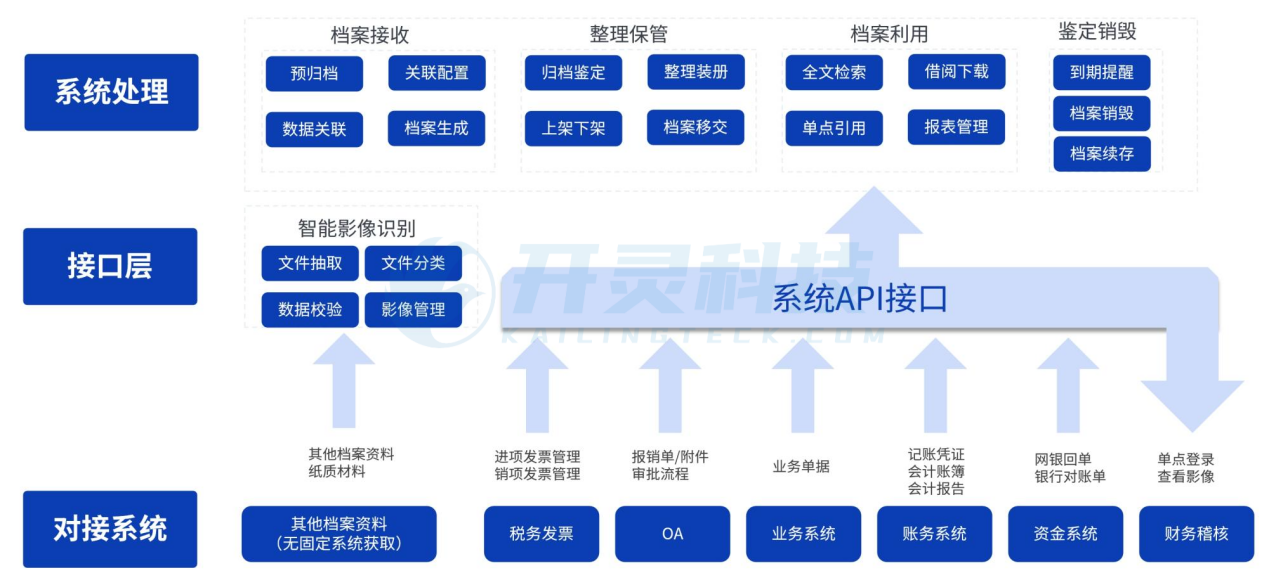
The Electronic Archives Management Measures take effect this month, strengthening standardized electronic archives managementPublished: 2024-11-05 16:43 Days ago, the National Archives Administration Order No. 22 published the "Electronic Archives Management Measures" (hereinafter referred to as the "Measures"), effective from November 1, 2024. The "Measures" further strengthen and standardize electronic archives management, ensure the authenticity, integrity, usability, and security of electronic archives, and set forth regulatory requirements for the entire process of electronic archives management. The issuance of the Measures is an important measure for implementing the Archives Law of the People's Republic of China and the Implementing Regulations of the Archives Law of the People's Republic of China and ensuring that electronic archive management work is carried out in accordance with laws and regulations, marking a new stage in China's electronic archive management work. It is of great significance for promoting the innovative development of archival undertakings and realizing archival modernization. The Measures consist of seven chapters and thirty-eight articles. They clarify the definition of electronic archives and the specific requirements of "reliable source, standardized procedures, compliant elements" and the principles of whole-process management. They specify the duties of archival authorities, units that create electronic archives, and archives repositories. They set out clear requirements for the organization and archiving of electronic documents, the transfer and receipt of electronic archives, the custody and disposal of electronic archives, and the opening and utilization of electronic archives. They provide guidance for archives repositories and organs, organizations, enterprises, public institutions and other organizations that create archives in carrying out related work in a standardized manner. With the continued implementation of fully digitalized e-invoice policies, the requirements for standardizing enterprise electronic archive management have been given clearer guidance. Under strong policy guidance, many enterprises have begun building electronic processes for invoice reimbursement, booking, and archiving, further driving corporate finance toward digital transformation. However, formulating an electronic archive management plan that both meets national requirements and satisfies business development needs has become a key issue that corporate finance urgently needs to address. At the business management level,Undertakes data collection and business processing work (such as invoice scanning, recognition, authenticity verification, certification, etc.), flexibly meeting the common and individualized data management needs of different enterprises. At the archive level,Responsible for basic archive processes such as collection, archiving, borrowing, appraisal, transfer, and destruction, in line with the requirements of national laws and regulations on archive management. 1. Full Lifecycle Management of Electronic Accounting ArchivesKailing TechnologyTaking the pain points and needs of electronic accounting archive management as the starting point, it launches a full-lifecycle management solution for electronic accounting archives. With functions such as automatic collection, intelligent archiving, standardized management, and efficient utilization, it helps enterprise finance improve archive management and processing efficiency while meeting national compliance requirements, reducing the workload of finance personnel.
Automatic collection:KailingThe electronic archives system connects with major business systems (such as ERP, OA, CRM, etc.), major financial systems (such as Kingdee, SAP, etc.), major banks (such as Bank of China, Agricultural Bank of China, Industrial and Commercial Bank of China, China Construction Bank, etc.), and tax systems (such as invoice verification systems). It can directly collect internal and external archive data into the Maycur electronic archives system and establish associations, ensuring data authenticity, validity, and transparency while saving finance staff the workload of organizing and collecting archives and reducing the cost of archive storage for enterprises. Intelligent archiving:Provide customizable configuration of fonds numbers, catalog numbers, and file numbers. The system automatically generates them according to configuration rules and allows manual adjustment, supporting the generation of cover information and box spine data as well as one-click printing. Provide automatic archiving settings based on different dimensions, regularly archiving files that meet the rules. Convenient borrowing:Set permissions for internal personnel to control the scope of archive access and record access logs; when unauthorized personnel apply for access, approval is carried out according to the configured approval flow, and access permission is granted after approval; when external personnel apply for access, approval is likewise carried out according to the configured approval flow, and a temporary account and permissions are opened after approval. Access permissions include the scope of archive access, access time limit, copy and download permissions, etc. Approval flows can be customized, with approval nodes and statuses configured. Support the borrowing of electronic archives and paper archives; for electronic archive borrowing, temporary authorization is granted to the borrower, and the permission is automatically revoked upon expiration; for paper archive borrowing, keep online and offline paper archive information synchronized, and maintain the shelving and unshelving operations of paper archives. Appraisal:Appraisal can be initiated by users or automatically initiated by the system based on the retention period. After archive management personnel start the appraisal process, the archive administrator authorizes unit accounting, auditing, discipline inspection and supervision personnel to review the archives and sign appraisal opinions. Based on the appraisal opinions, the archive retention period can be modified, or the destruction process can be initiated, or the archives can be transferred for storage. Transfer:The system generates an accounting archive transfer inventory, detailing the names, volume numbers, number of volumes, start and end years, archive numbers, required retention periods, and elapsed retention periods of accounting archives to be transferred, resets archive management personnel permissions, and transfers the highest permissions to the archive department. Destruction:For accounting archives identified as requiring destruction, the system automatically generates an accounting archive destruction list, listing the name, volume number, number of volumes, start and end years, archive number, required retention period, retained period, and destruction time of the accounting archives to be destroyed. At the same time, review requests are sent to the unit head, the head of the archive management institution, the head of the accounting management institution, the handler of the archive management institution, and the handler of the accounting management institution. Destruction may proceed only after review approval. 2. Security Assurance of Kailing Electronic Accounting Archives▪ Archive compliance and security Two-dimensional permission control:Dual-dimensional permission control of functions and permissions, ensuring archive security with button-level precision. For customers' refined archive management needs, data permission groups can be set according to different business entities and roles, precisely achieving multi-dimensional data control within the group. At the same time, different functional permissions are granted based on different archive management roles, further reducing the risk of data leakage. Three-role management:According to relevant laws and regulations, national confidentiality provisions, and standards, to ensure data security, classified information systems should be equipped with a system administrator, a security and confidentiality administrator, and a security auditor (referred to as the "three officers"), respectively responsible for the operation and maintenance, security and confidentiality management, and security auditing of the classified information system. In addition, the "three officers" must undergo strict review, be reviewed periodically, and remain relatively stable.Kailing Electronic AccountingArchives strictly follow the "three-person" role division and permission settings, complying with national confidentiality regulations and standards. Four-property detection:According to the requirements of the "Archives Industry Standard of the People's Republic of China (DA/T 70—2018)", in order to ensure authenticity, integrity, usability and security and to facilitate detection during electronic file archiving and electronic archive transfer, receipt and long-term preservation, four-property testing standards are proposed.Kailing Electronic Accounting Archives SystemProvides four-property testing covering the entire process of archive filing, transfer, and archiving. After the filing, transfer, and archiving nodes are completed, the system automatically issues a four-property testing report, which is also the guarantee for electronic archives to smoothly pass the pilot acceptance of reimbursement, booking, and archiving. ▪ Archive utilization Online borrowing is safe and reliable:When facing an audit inspection,SystemAble to grant auditors and inspectors temporary permissions for archive viewing. In this process, download control can be applied to borrowed files. Supports purpose descriptions for exported files, ensuring the archive borrowing process is standardized and information is traceable. Watermark settings to prevent leaks:The system supports settings for page watermarks and image watermarks, effectively preventing data leakage and enabling traceability of data, documents, etc. At the same time, it also supports refined watermark settings for different roles and document types, meeting data security needs in different scenarios. ▪ Risk control Log management:Supports user log management, with clear presentation of operation records, traceability of system issues, and downloadable system logs, effectively controlling archive data risks and preventing data leakage. System Detection:The system provides daily monitoring, making metadata, image data, and other conditions clear at a glance, eliminating risks such as insufficient capacity and abnormal usage, and promoting healthy and stable system operation. As a comprehensive business-finance-tax digitalization solution service provider, Kailing Technology provides business-finance-tax management digital transformation products and operational services for various government agencies, institutions, and large, medium, and small enterprises. The product line includes: Solutions for businesses including sales contract management system, procurement contract management system, fully digitalized Leqi interface project, output automatic invoicing system, employee expense control and reimbursement system, input VAT invoice management system, supply chain collaborative reconciliation system, image OCR recognition system, automatic financial bookkeeping system, and electronic accounting archives system, comprehensively driving the digitalization process across various fields. If you have any business-finance-tax digital transformation needs, welcome to contact us. Beijing Kailing Technology will serve you wholeheartedly.
|