010-6097 4119Book a Demo


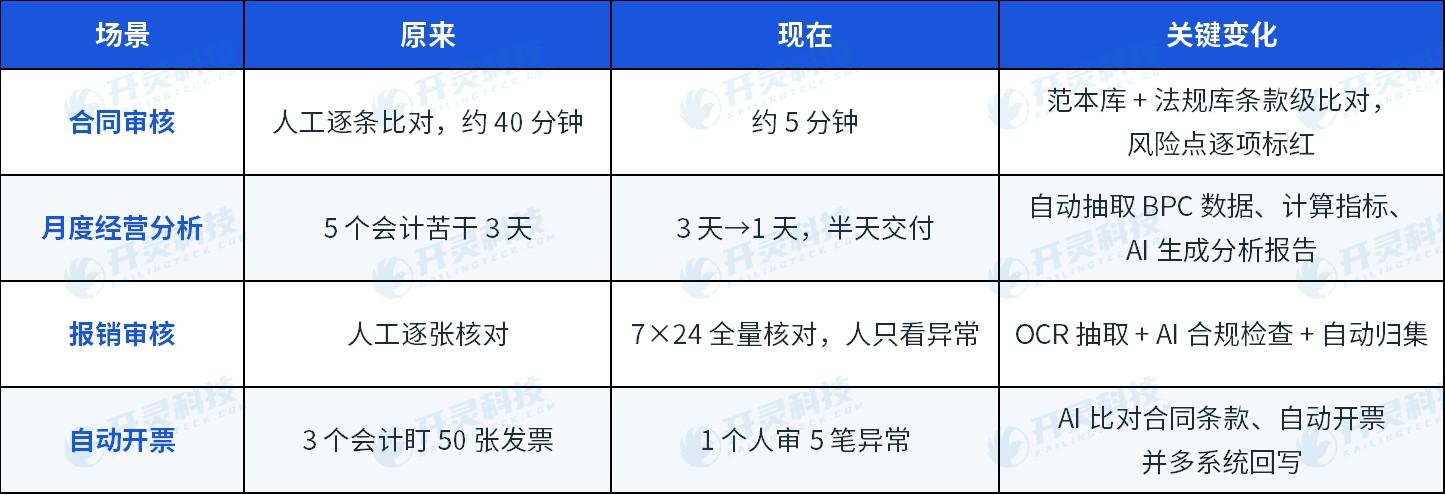
How many people and how much money can AI digital employees actually save? Kailing Technology AI digital employees let the real data of "40 min→5 min, 3 days→1 day" speakPublished: 2026-06-25 13:40 I. First look at a set of real efficiency improvement data"How much can digital employees save?" The most convincing answer to this question is not a slogan on a PPT, but a comparison of the same task "before launch" and "after launch." The data below all come from the real operating metrics of scenarios already implemented by Kailing Technology - they measure work hours, staffing allocation, and coverage, rather than payback figures given out of thin air.
II. Save "people": upgrade from "full-volume execution" to "only look at exceptions"Saving "people" does not mean cutting staff, but changing where people are positioned. Take expense reimbursement review as an example: AI digital employees perform full-volume verification 24/7, from OCR extraction and AI compliance checks to automatic aggregation, running a ten-step closed loop, and only pushing exceptions that cannot be determined to human nodes. People no longer flip through invoices one by one, but only look at the few marked exceptions. Automatic invoicing is even more typical: it does 6 things for you - scanning the sales contract ledger, identifying projects that have reached milestones, pushing to the project manager via WeCom, completing contract clause comparison, issuing invoices in the electronic tax bureau, and then writing back to the project management system / WeCom / shared platform, asking a person to click to confirm only at 2 key nodes. The result is that 3 accountants watching 50 invoices becomes 1 person reviewing 5 exceptions. People upgrade from "repetitive executors" to "exception reviewers and decision-makers" - this is the true meaning of saving "people."
III. Save "money": zero reinvestment, reusing the enterprise's existing AI and systemsMany managers worry, "Does implementing digital employees mean spending another large sum to buy models?" Kailing's answer is: no. Digital employees directly reuse the large models, MaaS, and agent repositories that the enterprise has already deployed privately, calling the enterprise's own AI assets for the "thinking" steps, with no additional investment in models—this is the source of "zero additional investment." The implementation approach also avoids wasting money: fully private deployment and a full-stack domestic technology suite (Xinchuang brands such as Kylin, Phytium, UnionTech, and KingbaseES), meeting SASAC supervision and Level 3 classified protection; more importantly, "business processes unchanged / systems unswitched / processes uninterrupted"—without rebuilding systems or interrupting existing processes, it simply adds a unified AI entry layer to 20+ existing systems such as SAP / BPC / OA / contract / ERP, truly bringing dormant IT assets to life.
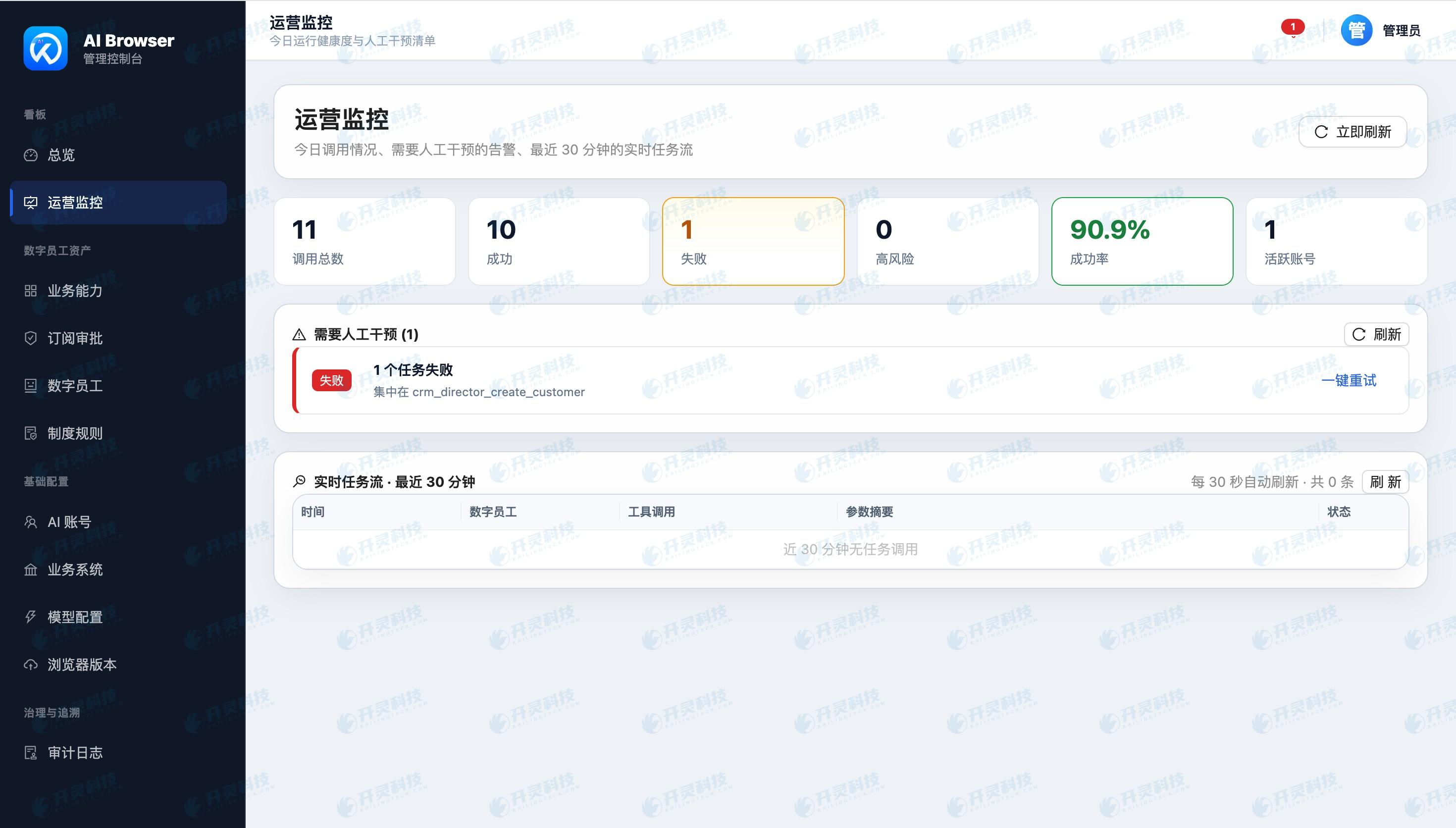
IV. Save "time and risk": 24/7 without rest, error rates written into SLAs, value monitorableDigital employees are on duty 7×24 without rest, which itself liberates human time: at night, on weekends, and during month-end peaks, they keep working. But "tireless" does not equal "worry-free," so Kailing makes quality a hard constraint—every digital employee must run 100 times in a sandbox before launch, and only those with a pass rate of 99% are allowed to go live, with the error rate written directly into the SLA. What is more important is that "efficiency gains are visible": the operations monitoring dashboard presents in real time the total number of calls, task success rate, anomaly alerts, and business value indicators, making operational health clear at a glance. How much time was saved, how many tasks were covered, and how many anomalies were intercepted are not guesses, but data that can be monitored and traced on the dashboard.
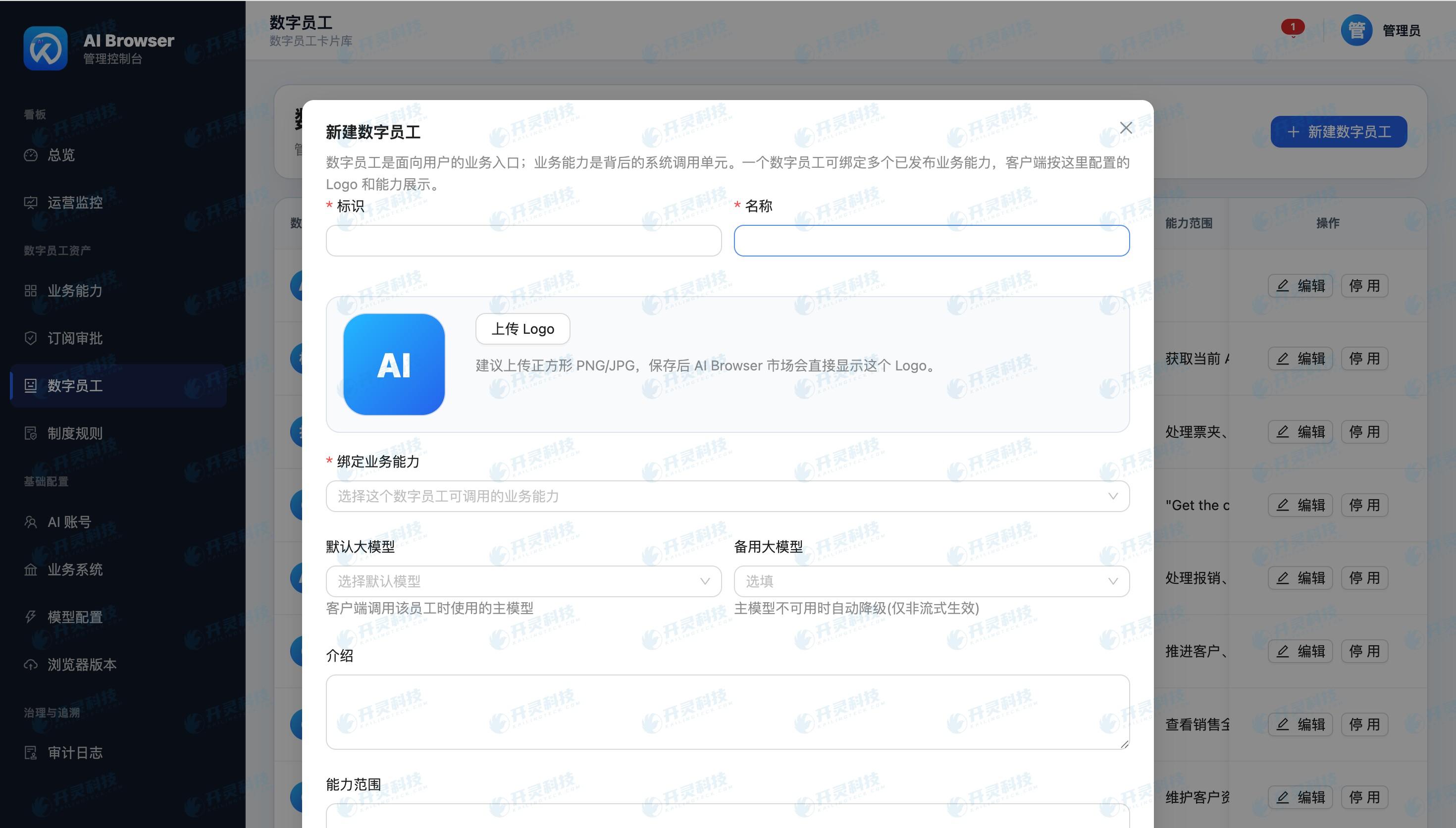
V. Calculate the overall account: 90 digital employees in 9 months = group-exclusive capability assetsLooking at one scenario alone, what is saved is work hours; calculating the total at the group level, what is saved is an asset that will continue to appreciate. Kailing's planning path is clear: pilot breakthrough phase of 2-3 weeks, free of charge, first getting 1 truly usable AI digital employee running; scale replication phase of reaching 10 within 2 months, accumulating methodology and a Skill library; full coverage phase of covering 90 within 6 months, building up all positions in the group that can be standardized. 9 months, 90 digital employees—what ultimately remains is not just 90 "colleagues" who can handle affairs, but the group's exclusive capability asset library, replicable methodologies, and even a benchmark case for the State-owned Assets Supervision and Administration Commission. Once digital employees go live, they belong to the enterprise and become the enterprise's long-term assets—this is the account that most deserves to be calculated clearly when asking "how much money is saved." Common Questions FAQQ: How many people can AI digital employees actually save? A: It does not rely on layoffs, but on changing people's positions. Reimbursement changes from reviewing each document one by one to 7×24 full-volume verification, with people only looking at exceptions. Automated invoicing changes from 3 accountants watching 50 invoices to 1 person reviewing 5 exceptions. Monthly business analysis changes from 5 accountants working 3 days to delivery in half a day. People shift from repetitive executors to exception reviewers and decision-makers. Q: Do we need to spend more on buying models to adopt AI digital employees? A: No. Digital employees directly reuse the enterprise's already privatized large model and MaaS. When creating a new one, simply bind the enterprise's "default / backup large model," with 0 duplicate investment, no additional model investment, and no switching of existing business systems. Q: How soon can results be seen? A: The pilot breakthrough period is generally 2-3 weeks and is free of charge, first delivering 1 genuinely usable AI digital employee. After launch, issues can be reported within a 1-week trial, and we respond with fine-tuning within 48 hours. Q: How are efficiency improvement data measured, and will it be empty talk? A: The operations monitoring dashboard presents total calls, task success rate, abnormal alerts, and business value indicators in real time. Efficiency improvements can be monitored and traced. At the same time, the error rate is written into the SLA, and before launch the sandbox runs 100 times with a 99% pass rate before going live, providing hard quality constraints. Let real data speak: zero heavy investment, visible efficiency gains — Kailing Technology's AI digital employees turn "saved people, time, and risk" into the group's long-term assets:www.kailingteck.com 。 Kailing TechnologyAs a comprehensive business-finance-tax digitalization solution service provider, we provide business-finance-tax management digital transformation products and operational services for various government agencies, institutions, and large, medium, and small enterprises. The product line includes: Sales contract management system, procurement contract management system, fully digitalized Leqi interface project, output automatic invoicing system,Reverse invoicing system,Solutions for the invoice issuance for individuals system, employee expense control and reimbursement system, input VAT invoice management system, supply chain collaborative reconciliation system, image AI OCR recognition system, automated financial bookkeeping system, electronic accounting archives system, and other businesses, comprehensively advancing the digitalization process across various fields. If you have any business-finance-tax digital transformation needs, welcome to contact us. Beijing KailingKailing TechnologyWe will serve you wholeheartedly.
Keywords:Digital employee ROI, cost reduction and efficiency improvement, efficiency enhancement, zero reinvestment, value quantification, AI digital employee, Kailing Technology |