
How do customer business cards collected at exhibitions become opportunities? Kailing Technology's marketing customer acquisition system designs post-event follow-up, and the AI-CRM system allocates leads

At the end of an exhibition, sales have business cards and WeChat contacts, and marketing has the scan list; the real question is which enterprises are worth contacting first after the event. Kailing Technology's marketing customer acquisition system plans communication actions before, during, and after the exhibition, and the AI-CRM system then files business card information into enterprise leads and assigns owners.

▍Determine the customers to find before the exhibition
Before attending an exhibition, marketing and sales should jointly list target industries, roles, and application scenarios, and clarify that what they hope to obtain on site is not a stack of business cards but enterprise needs that can lead to a next conversation. Invitation lists, product demo topics, and post-event materials can be prepared by customer role, avoiding every on-site visitor hearing the same company introduction.
Kailing Technology's marketing customer acquisition system design can connect target customer profiles, booth reception questions, and follow-up rules. If what counts as a valid lead is not agreed upon before the show, then when entering data into CRM after the show, statistics can only be based on headcount, and sales will find it difficult to judge whom to contact first.
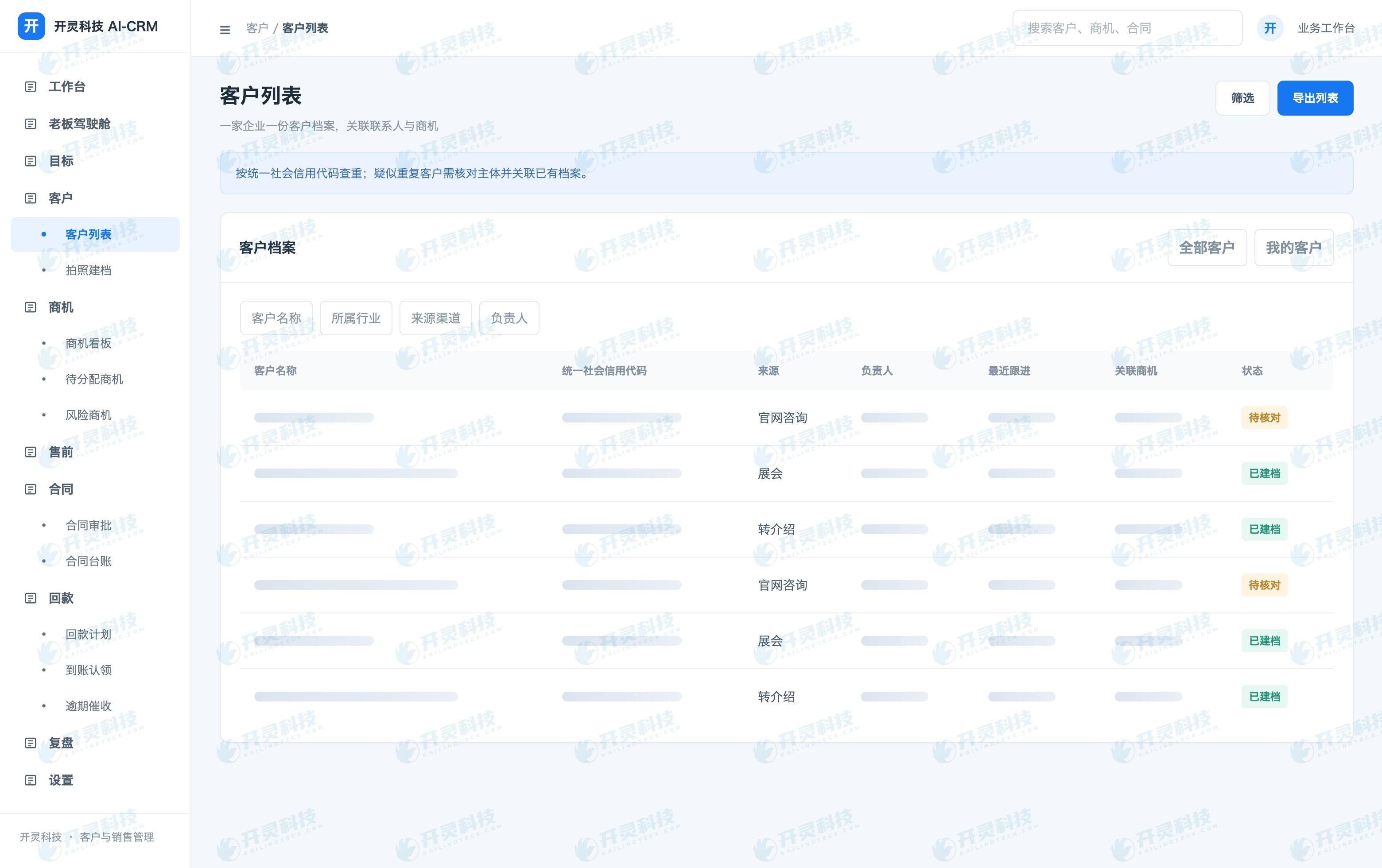
Archiving exhibition customers and contacts
▍On-site business cards must be supplemented with meeting context
A business card only shows name, company, and contact information; it cannot record why the customer stopped by. Reception staff can add the products of interest, existing systems, urgency of the problem, agreed materials or meeting times, and mark whether the customer consents to follow-up contact. When exhibition QR scans and paper business cards coexist, retain the collection method and event name for later review.
The same enterprise may have three visitors from procurement, finance, and IT. The AI-CRM system deduplicates by enterprise record and places contacts and conversation records in the same customer view, rather than treating three business cards as three new customers. After manual entry or batch import, key contact details and consent scope still need to be verified.
▍Post-event assignment must consider ownership and timeliness
After a lead enters AI-CRM, the follow-up person can be determined based on the customer's existing owner, region, industry, or product line. The system workbench shows to-dos, first contact time, and next actions; leads not contacted within the time limit enter reminders or reassignment. Marketing cannot stop at importing, and sales cannot simply change the status to "contacted" without writing the communication result.
For customers who explicitly mention a project, budget, or pilot timeline during the meeting, needs confirmation should be prioritized; customers who only collect materials can receive targeted content by topic with an agreed follow-up. The two types of leads use different rhythms, reducing missed hot opportunities while avoiding forcing general visitors into opportunities.
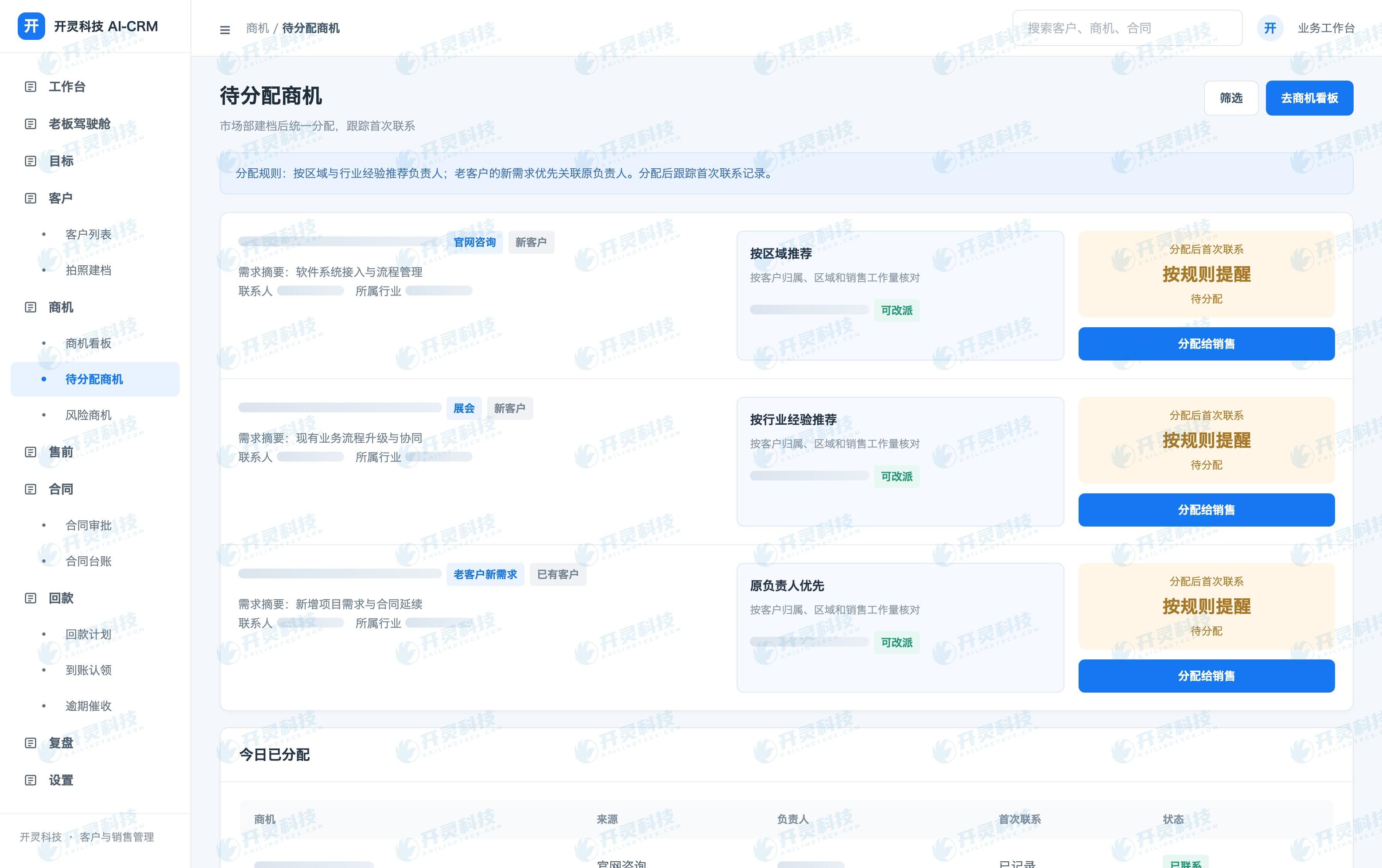
Exhibition lead allocation and to-dos
▍When to convert a lead into an opportunity
An opportunity should have verifiable needs, contacts, next steps, and a possible purchasing window. A customer saying "let's talk sometime" at the booth is not enough to enter the same forecast category. After sales confirms the business problem and decision participants, the lead is converted to an opportunity in the CRM and linked to the original exhibition event, business card, and follow-up notes.
The opportunity page shows the stage, owner, and to-dos. When marketing reviews conversion results, it should not only count "how many were converted" but also examine which exhibition themes attracted target customers and which issues recurred. Kailing Technology's AI-CRM system links sources with opportunity results, making preparation for the next exhibition more focused.
▍Review exhibition investment rather than total business cards
Post-event review can start with the proportion of target companies, completion of first contact, demand confirmation, opportunity formation, and subsequent results. If an exhibition produced many business cards but few people were willing to continue communicating, first check whether the target customer group, booth information, and post-event commitments match.
Kailing Technology's solution puts customer acquisition planning and CRM follow-up on the same work chain. What each event leaves behind is not just a list of names, but also customer questions, sales feedback, and opportunity outcomes. The next choice of trade show and demo topic then has a more specific basis.
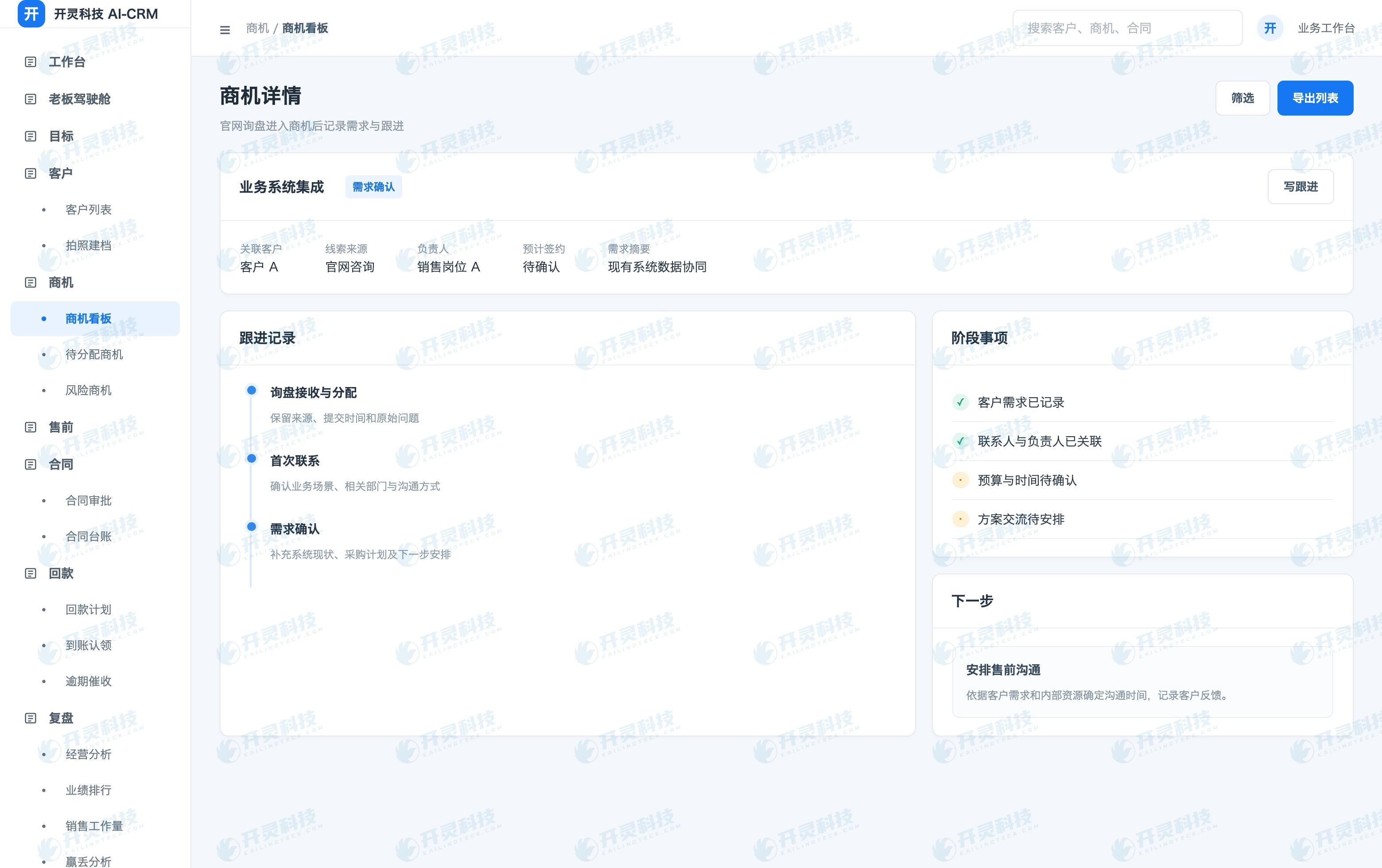
Follow-up records after a lead is converted to an opportunity
▍Several easily overlooked details in exhibition follow-up
If an industry solution is promised on site, the system should record the content of the promise and the time it was sent. Sending the same company introduction to all business cards after the event often fails to address the questions customers raised at the booth. When sales makes the first contact with the original conversation information, customers can more easily pick up the discussion, and there is less need to re-explain "which company are you."
During the exhibition, there are both unified QR scans by marketing and personal WeChat additions by sales. During import, deduplicate by enterprise name, mobile number, email, and contact relationships, and retain multiple contact channels. If the customer is already discussing an opportunity, append the new exhibition touchpoint to the existing customer record rather than creating a new lead with unclear ownership.
Allocation rules should consider sales territory, customers already served, product lines, and on-site reception staff. When the on-site reception person and the follow-up owner are not the same, the handover record explains customer concerns and next-step agreements. Distributing only by average quantity can easily cause sales reps familiar with the customer to lose continuous communication.
The first round of post-event contact can be prioritized by demand maturity. Customers who explicitly request a quote or demo should be scheduled first, while customers still in the understanding stage should be provided with targeted materials and a re-contact date. The AI-CRM workspace helps sales manage to-dos, but it cannot judge for sales whether a customer truly has a procurement project.
When reviewing a trade show afterward, do not compare only the number of business cards. Look at target company coverage, contact with key roles, completion of first contact, needs confirmation, and opportunity progression. If the show theme attracted a large number of poorly matched people, adjust the invitees and on-site communication questions for the next event.
For each closed exhibition lead, sales writes the reason for invalidity or conditions for deferral. When the customer inquires again a year later, the team can restore context from the original event and meeting records. Kailing Technology connects lead allocation, opportunities, and marketing review, so the value of an exhibition has follow-up evidence.
▍Handover standards from business card to opportunity
Leads handed from marketing to sales should, beyond business card fields, preferably include the reception person, the customer's concerns, promised materials, and agreed follow-up time. If the customer saw a demo at the exhibition, sales can continue discussing the actual scenario on first contact instead of starting over with the company introduction. The handover record in the CRM also helps marketing confirm whether commitments are fulfilled.
For visitors without clear needs, they can enter a nurturing queue by industry and interest topic, without creating opportunities early just to increase the converted opportunity count. If the customer later replies to materials, books a demo, or proposes a project timeline, sales then supplements the needs and advances the stage. This way, the opportunity board reflects real purchasing intent.
Exhibition review should have marketing and sales use the same checklist: which customers have been contacted, which still need materials, which have entered opportunities, and which were closed as unsuitable. If "not contacted" entries persist in the list for a long time, check the allocation and reminder mechanisms rather than simply blaming the exhibition channel for being ineffective.
The response timing in the first week after the event should also be included in the review.
▍FAQ
Q: Does importing all exhibition business cards into the CRM count as lead generation?
A: The meeting context still needs to be supplemented, a clear owner assigned, a follow-up visit completed, and whether a valid demand has formed verified.
Q: How should it be handled when multiple people from the same company visit?
A: Save different contacts and communication content under the same company profile to avoid double-counting customers.
Q: What leads are suitable for conversion to opportunities?
A: Leads that already have a specific business issue, participants, and next-step actions are more suitable for opportunity management.
Visit Kailing Technology to learn about related products and implementation plans: https://www.kailingteck.com/aicrm/ .
As a national high-tech enterprise, Kailing Technology focuses on the digital and intelligent transformation of enterprise business-finance-tax and operations management, providing software products, system integration, implementation and delivery, and operational services for various government agencies, institutions, group enterprises, and SMEs.
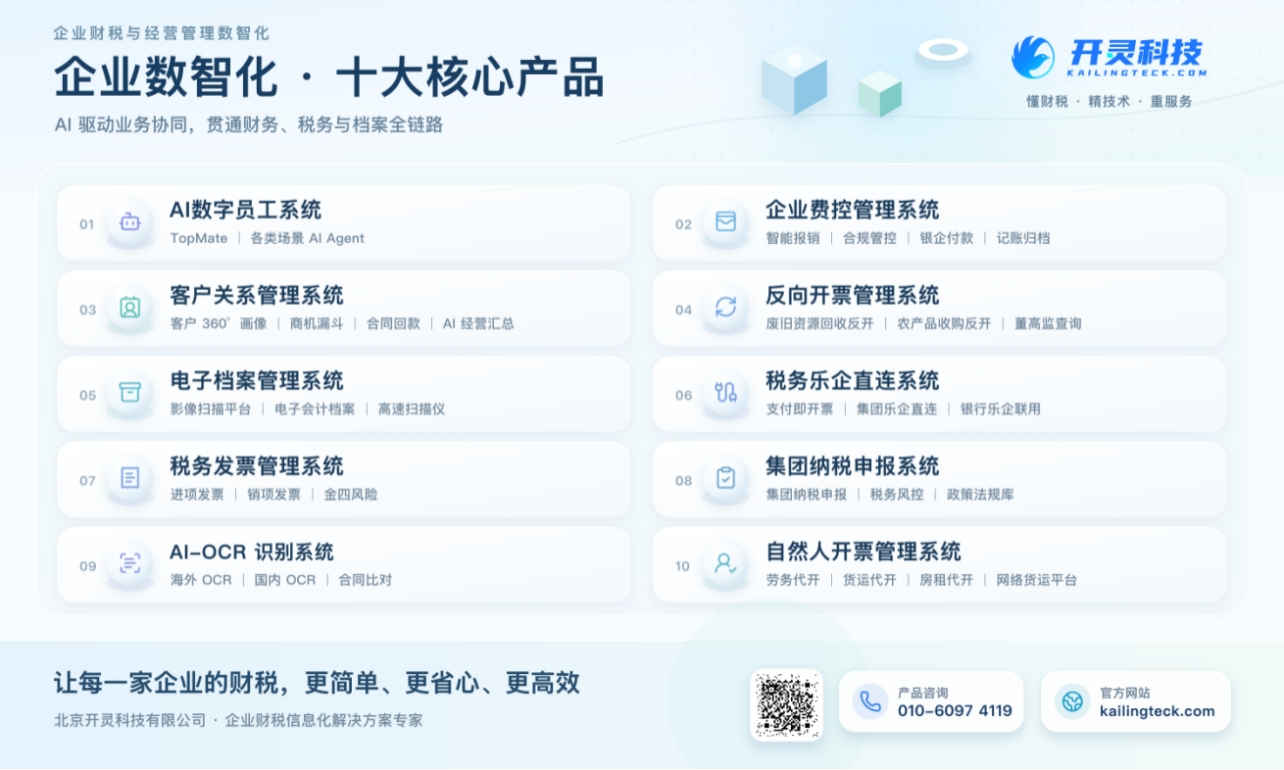
The company has now formed ten core product lines, including: AI digital employee system, enterprise expense control management system, customer relationship management system, reverse invoicing management system, invoice issuance for individuals management system, electronic archives management system, tax fully digitalized e-invoice Leqi system, tax invoice management system, group tax filing system, and AI OCR recognition system. It is committed to connecting enterprise business, finance, tax, funds, and archive data to help customers improve operational efficiency, business-finance-tax compliance capabilities, and digital management levels.
If you have any business-finance-tax digital transformation needs, welcome to contact us. Beijing Kailing Technology will serve you wholeheartedly.
Keywords: Exhibition customer acquisition, business card to opportunity, post-event follow-up, AI-CRM lead allocation, Kailing Technology
As a comprehensive business-finance-tax digitalization solution service provider, Kailing Technology provides business-finance-tax management digital transformation products and operational services for various government agencies, institutions, and large, medium, and small enterprises. The product line includes: solutions for sales contract management system, procurement contract management system, fully digitalized Leqi interface project, automatic output invoicing system, reverse invoicing system, invoice issuance for individuals system, employee expense control and reimbursement system, input VAT invoice management system, supply chain collaborative reconciliation system, image AI OCR recognition system, automatic financial bookkeeping system, electronic accounting archives system, etc., comprehensively driving the digitalization process across various fields.
Consultation Hotline: 18513895936 / 010-60974119 Location: Beijing