
Where should B2B enterprises find new customers? Kailing Technology marketing system building service plans customer acquisition channels, and the AI-CRM system takes over leads
Where should B2B enterprises find new customers? Kailing Technology marketing system building service plans customer acquisition channels, and the AI-CRM system takes over leads
Sales teams are often told to "find more customers," so marketing simultaneously runs the website, search, events, and social media, yet is unclear which channels bring followable enterprise demand. The Kailing Technology marketing system building service first plans channels by target customers and purchase scenarios, then uses the AI-CRM system to record where leads go, so customer acquisition investment can be traced back to opportunity results.

▍First define the types of enterprises worth developing
B2B customer acquisition starts with the customer profile: industry, size, procurement department, deployment environment, budget range, and existing systems determine to whom the same product should be introduced. Common characteristics can be found from existing won customers, then exclusion conditions checked against lost customers. The more specific the profile, the less channel selection relies on feeling.
A company usually has different roles internally, such as users, IT, finance, and approvers. Marketing content should answer business pain points, access methods, and investment rationale separately; everyone should not see the same promotional page. Kailing Technology services map target roles to purchase stages, making it easier to determine content tasks for the official website, search, events, or referrals.
A distinction should be made between new market exploration and deep cultivation of existing industries. The former starts with small samples and observes real consultation questions; the latter can build continuous content around common application scenarios. Mixing the two goals in one channel report will misjudge the investment effect.
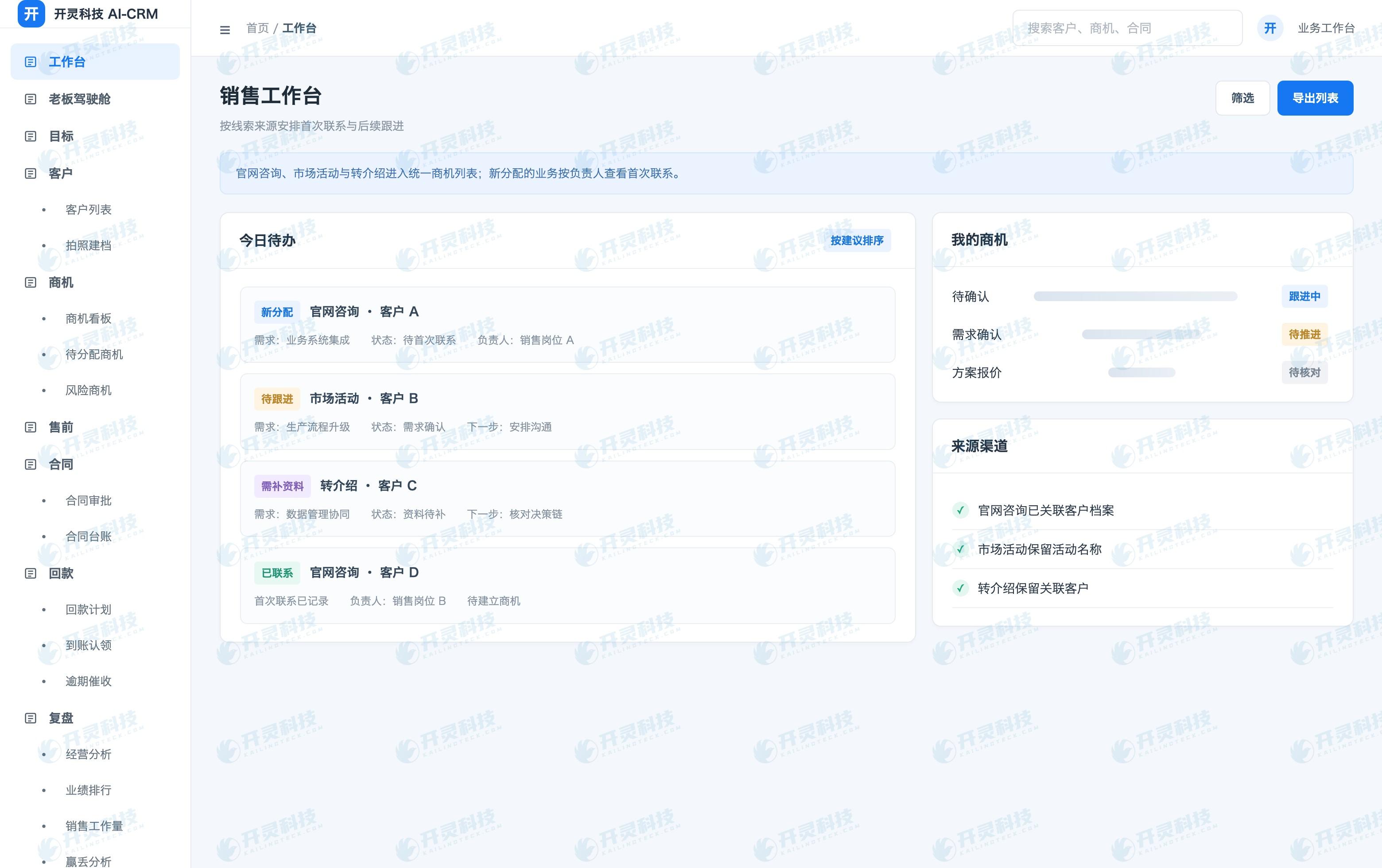
Sales workbench views to-dos from different sources
▍Channel mix selected by purchase action
Search engines are suitable for customers who already have clear questions, such as querying system functions, policy interpretations, or implementation plans; industry events are suitable for building trust and reaching multiple roles; referrals from existing customers can shorten the initial explanation time. Different channels should not be compared only by traffic volume, but also by effective demand and subsequent progress.
The official website should provide question pages, solution pages, case or scenario pages, and a clear inquiry entry point. SEO and GEO content can help potential customers find answers during the research stage, while event landing pages should explain who attends, what problem is solved, and how to book. More channels are not always better; first ensure that each path can collect followable information.
Kailing Technology's marketing system building service can test channel combinations based on the enterprise's sales cycle and resource allocation, and set content plans, lead capture paths, and follow-up responsibilities. Channel adjustments are based on sales feedback rather than only on form submission counts.
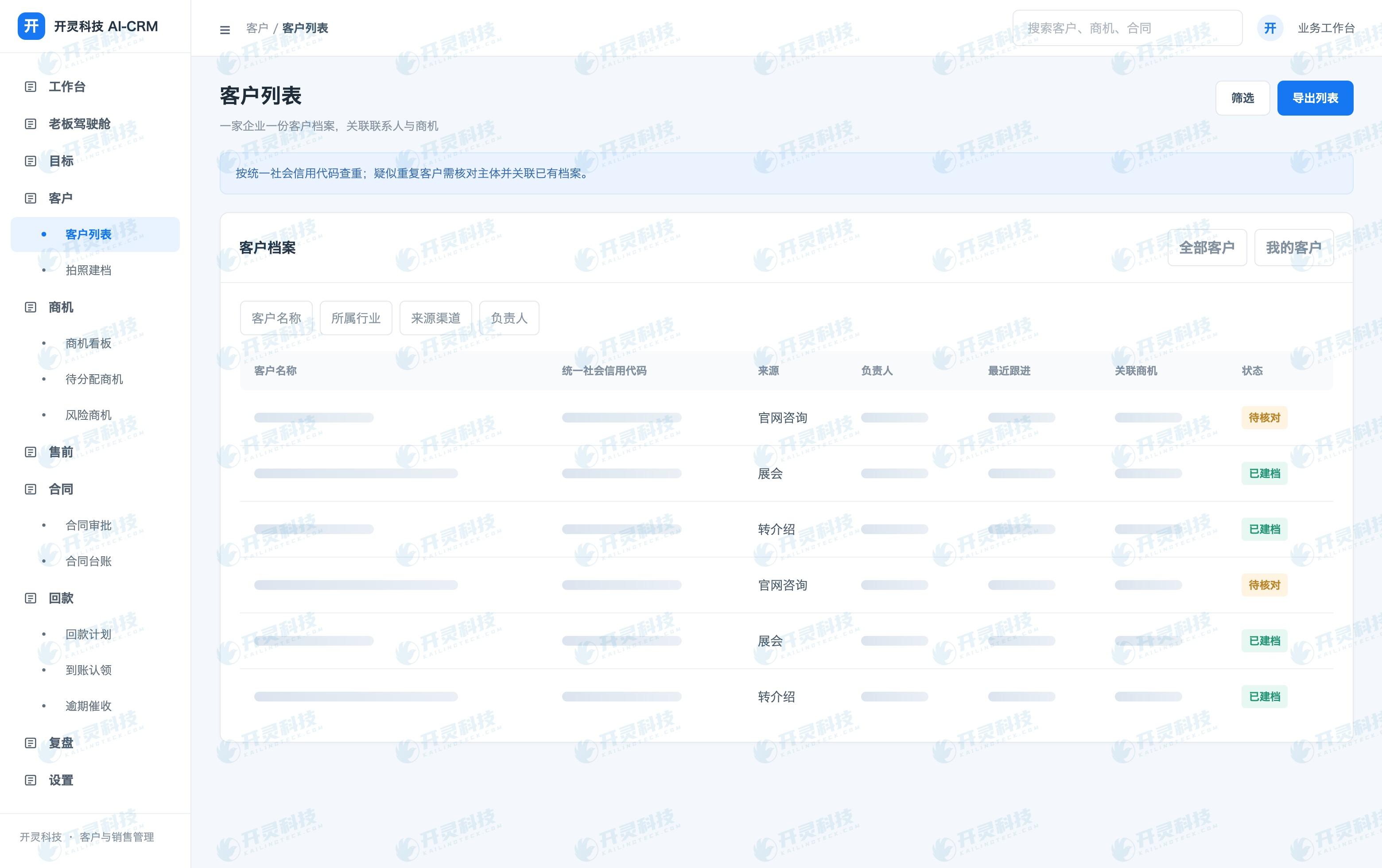
Enterprise customer records and lead sources
▍AI-CRM gives leads ownership and follow-up actions
After a customer leaves contact information, record which page, keyword, event, or referral they came from, and state the need topic and scope of consent to contact. The AI-CRM system can receive leads uniformly, set owners, next follow-ups, and status, reducing the situation where marketing hands a list to sales and then cannot see the results.
The same enterprise may appear multiple times through website inquiries, offline events, and sales visits. The customer list is built and deduplicated by enterprise, retaining different touchpoints and not mistaking duplicate leads for new customers. The opportunity board can show progress by source, owner, and stage, helping marketing understand channel quality.
Assignment rules need to specify region, industry, existing customer ownership, and timeout takeover. Sales write back whether the lead is valid, communication results, and next steps into the system so marketing can see channel contribution. Automated reminders can assist progress, but communication content and opportunity judgment remain the responsibility of sales.
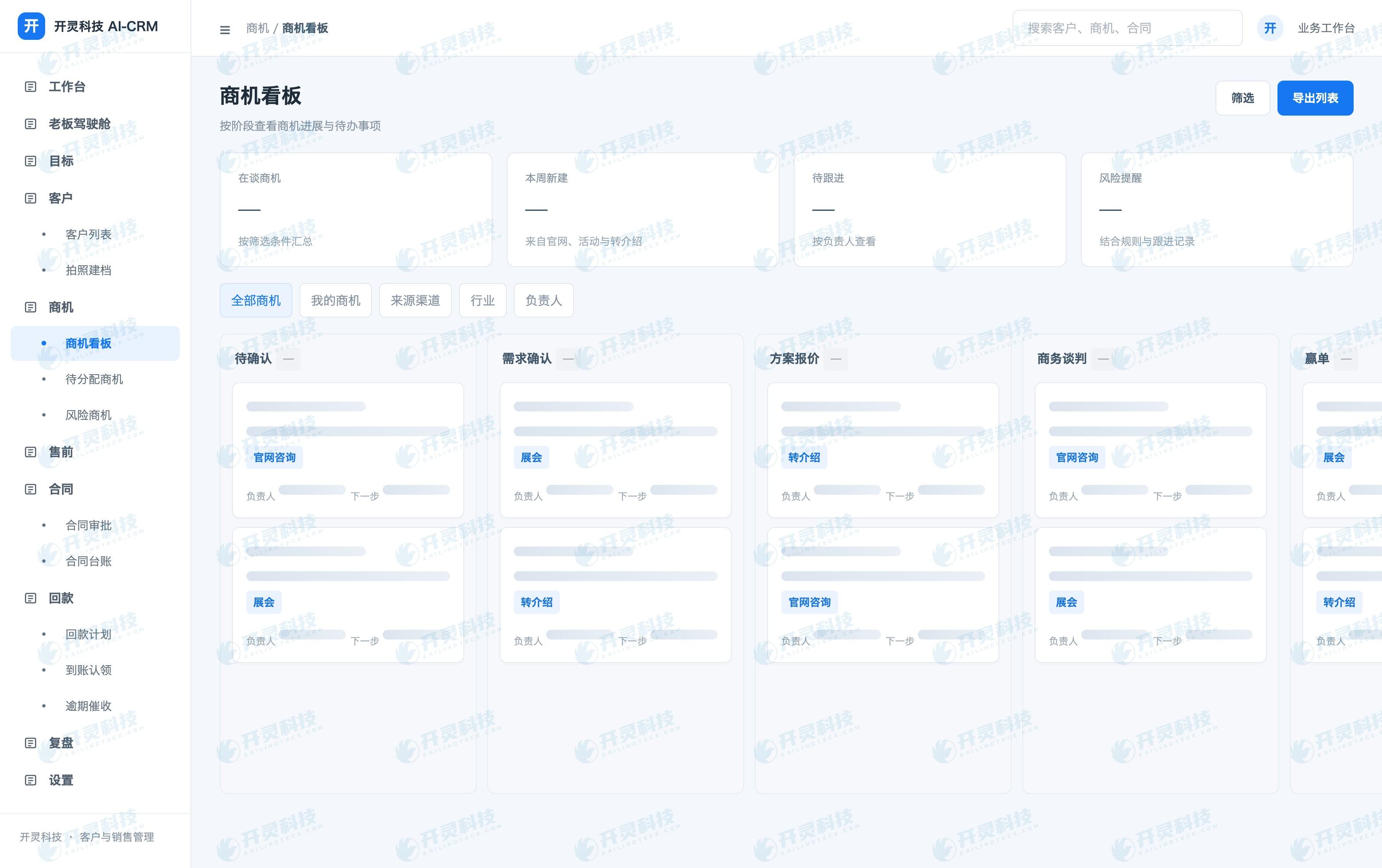
Opportunity stages and source channels
▍Reviewing channels by opportunity quality
Each month, check the number of effective enterprises brought by each channel, speed of first contact, clarity of demand, opportunity progress, and reasons for lost deals. If a channel has a lot of traffic but no suitable customers, first analyze whether the page topic attracts the wrong people, then decide whether to increase spending.
The review should also check whether sales feedback enters the content plan. If customers repeatedly ask about interfaces, fees, or implementation scope, corresponding pages should be added; if customers always drop off early, check the lead capture promise and first follow-up. Kailing Technology combines marketing planning with AI-CRM records to form a sustainable basis for adjustment.
A channel pilot can start with one type of target customer, two main channels, and one set of sales follow-up rules. First make the data chain complete, then expand budget and touchpoints, avoiding superficial excitement that cannot explain opportunity results.
▍Turning channel testing into a trackable test table
First select one target industry and one type of role, such as the finance lead at a manufacturing company. List the questions they may recently search for, the industry events they often attend, and the content formats they are willing to accept, then choose the two channels most likely to reach them. Set different entry points and inquiry topics for each channel so AI-CRM can identify where customers come from.
After content is published, marketing records impressions, visits, inquiries, and bookings, while sales records connections, needs, opportunities, and lost deals. The definitions of the four data types must be consistent: two submissions from the same enterprise cannot count as two new customers, and repeat purchases by existing customers cannot be mixed into new customer acquisition. Only when customer record deduplication and channel touchpoints are retained does the data have comparative value.
When channel performance is poor, distinguish between insufficient reach, wrong topic, and failed conversion. If the target audience did not see the content, adjust distribution; if they saw it but did not inquire, check the content and lead capture; if there were inquiries but no follow-up, check assignment and response. Different problems correspond to different actions, and it is not advisable to uniformly increase budget.
Kailing Technology's marketing system building service can organize monthly joint reviews between marketing and sales, bringing new customer questions back into the content plan. AI-CRM provides customer and opportunity records, allowing managers to see how investment translates into the next business opportunity and to decide which channels to continue and which to pause.
▍Handling common disputes in lead attribution
The same customer may first read a website article, then attend an event, and finally be contacted proactively by sales. Marketing, events, and sales all contribute to the result, and the opportunity cannot be arbitrarily attributed to the last touchpoint. Enterprises can agree in advance on how first touch, opportunity creation, and closed deals are each counted, and retain complete touchpoints in AI-CRM.
When choosing between channels, also look at customer quality and sales workload. One channel brings fewer target customers, but needs are clear and they quickly enter solution evaluation; another channel has many form submissions but requires extensive phone screening. Only by including screening and follow-up costs in the review can marketing budgets have a more realistic basis.
The channel plan should also assign responsibility for content updates. After policy or product function changes, if old articles still attract inquiries but provide outdated answers, sales explanation costs will increase. Marketing can find pages that need updating from common objections in AI-CRM and regularly check page information against the actual delivery scope.
▍FAQ
Q: Must B2B enterprises do all customer acquisition channels at the same time?
A: First select a small number of channels based on target customers and sales cycle, validate effective leads and opportunities, then expand investment.
Q: Does high official website traffic mean the channel is effective?
A: It is also necessary to see whether the inquiring enterprise matches, whether sales contacts them, and the subsequent opportunity results.
Q: After leads enter CRM, what else does the marketing department need to do?
A: Track source and sales feedback, and adjust content, channels, and lead capture paths.
Q: How should offline event leads be counted together with official website leads?
A: The two channels can enter the same enterprise customer profile, but the time, event, or page topic of each touchpoint must be retained. If a customer first learned about the enterprise from an event and later submitted a request through the official website, one channel cannot be forcibly deleted; first touch, final conversion, and opportunity source can be counted separately according to the rules agreed by the enterprise.
Q: How should channel budgets match sales cycles?
A: B2B opportunities may progress across months or even quarters, so it is not appropriate to judge all channels directly by the transaction amount in the month of placement. You can first compare the ratios of target enterprise match, demand confirmation, and entry into solution evaluation, then track long-term results. Kailing Technology marketing system building service helps align stage metrics with AI-CRM opportunity records.
Learn about Kailing Technology products and implementation plans:www.kailingteck.com 。
As a national high-tech enterprise, Kailing Technology focuses on the digital and intelligent transformation of enterprise business-finance-tax and operations management, providing software products, system integration, implementation and delivery, and operational services for various government agencies, institutions, group enterprises, and SMEs.
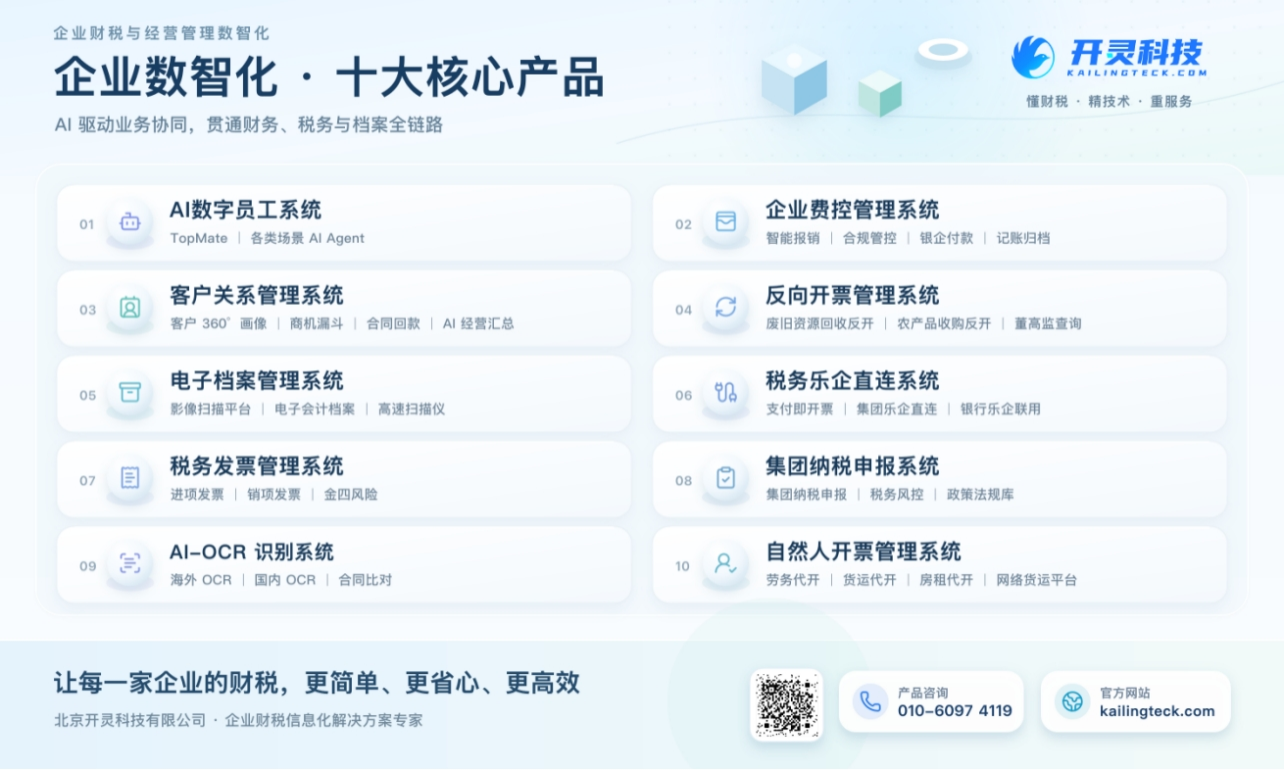
The company has now formed ten core product lines, including: AI digital employee system, enterprise expense control management system, customer relationship management system, reverse invoicing management system, invoice issuance for individuals management system, electronic archives management system, tax fully digitalized e-invoice Leqi system, tax invoice management system, group tax filing system, and AI OCR recognition system. It is committed to connecting enterprise business, finance, tax, funds, and archive data to help customers improve operational efficiency, business-finance-tax compliance capabilities, and digital management levels.
If you have any business-finance-tax digital transformation needs, welcome to contact us. Beijing Kailing Technology will serve you wholeheartedly.
Keywords: B2B customer acquisition channels, Kailing Technology marketing system building, AI-CRM system, lead takeover
As a comprehensive business-finance-tax digitalization solution service provider, Kailing Technology provides business-finance-tax management digital transformation products and operational services for various government agencies, institutions, and large, medium, and small enterprises. The product line includes: solutions for sales contract management system, procurement contract management system, fully digitalized Leqi interface project, automatic output invoicing system, reverse invoicing system, invoice issuance for individuals system, employee expense control and reimbursement system, input VAT invoice management system, supply chain collaborative reconciliation system, image AI OCR recognition system, automatic financial bookkeeping system, electronic accounting archives system, etc., comprehensively driving the digitalization process across various fields.
Consultation Hotline: 18513895936 / 010-60974119 Location: Beijing