
How to follow up from customer lead entering CRM to receipt? Kailing Technology's AI-CRM system connects opportunities, contracts, and collections
After a lead enters CRM, sales truly has to go through a long chain: confirming needs, organizing pre-sales, quote negotiation, signing contracts, and collecting payment according to terms. Each step is handled by different people, and information is easily broken. The Kailing Technology AI-CRM system links customers, opportunities, contract ledgers, collection plans, receipt claiming and overdue handling in the same business chain, so that the status, responsibility and original basis of each step from "follow-up to collection" can be traced to each other.

▍The opportunity stage should record verifiable advancement evidence
For leads from the official website or marketing events, after the first contact the status should not simply be changed to "following up." Sales needs to confirm the customer's problem, application scenario, budget range, procurement plan, decision-maker and technical gatekeeper, and agree on next steps. The opportunity kanban provides a stage view, and specified items must be completed before advancement; the opportunity details put follow-up records, contacts, to-dos, and risks together, so the person taking over knows why the project is stuck here.
The AI minutes page can extract communication points, commitments from both parties, next steps, and budget changes from the verbatim transcript; the generated content should serve as a draft and be saved after sales review. If the transcription and summary are treated directly as customer confirmation, prices or commitments may be misrecorded. Key conclusions are best linked to the original words, meeting minutes, and responsible persons; when the expected signing date changes, the reason should be stated rather than moved arbitrarily to make the forecast look good.
The risky opportunity page simultaneously observes rule signals and changes in meeting notes: long time without follow-up, stage stagnation, budget postponement, contact replacement, etc. Its value is to let supervisors intervene early and arrange solutions, quotations, or relationship maintenance; it is not to automatically determine that the customer will definitely lose the order. Only after sales updates progress or writes the handling reason and then closes the alert can management distinguish resolved risks from ignored ones.
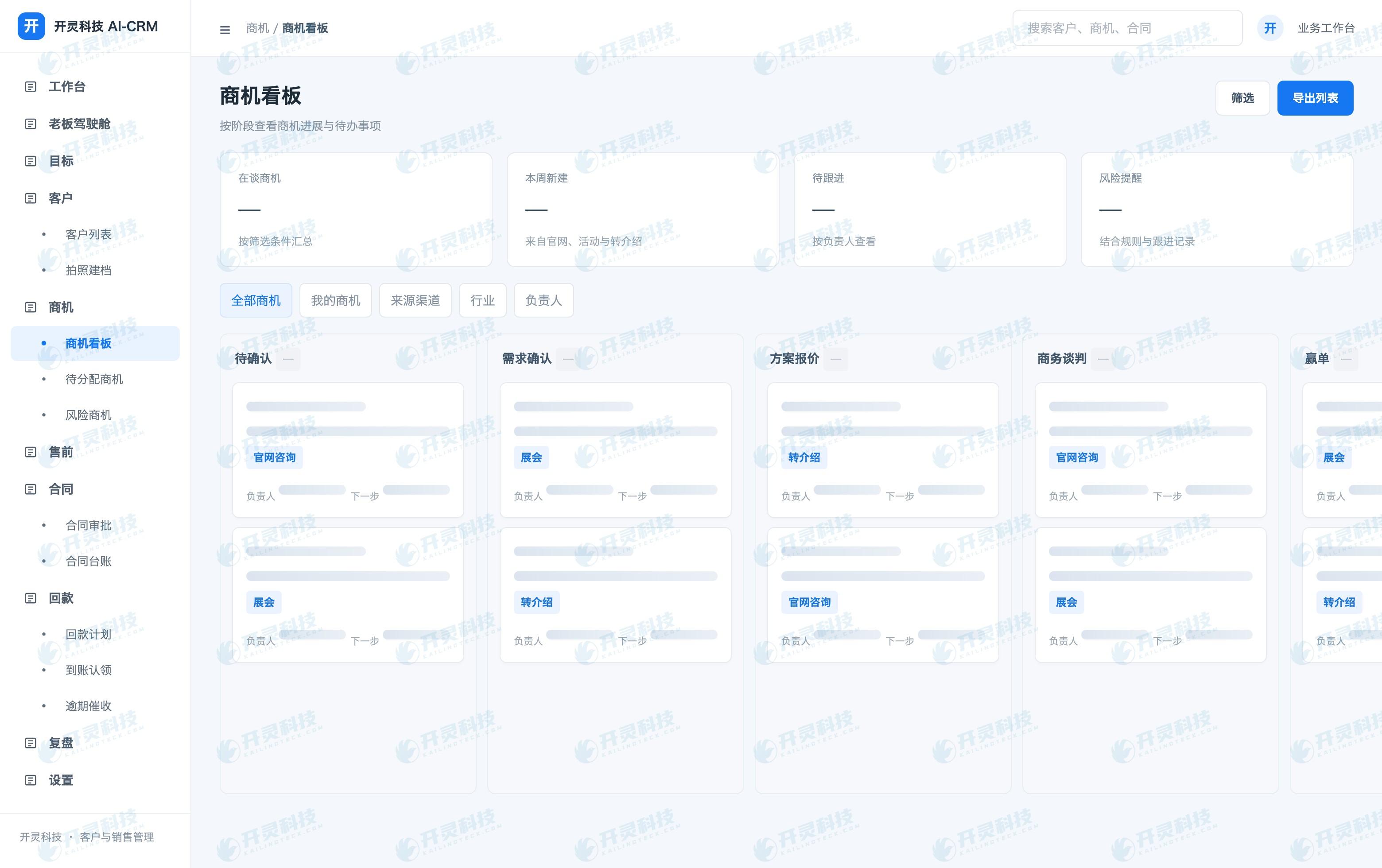
Kailing Technology AI-CRM: Opportunity Stage Board
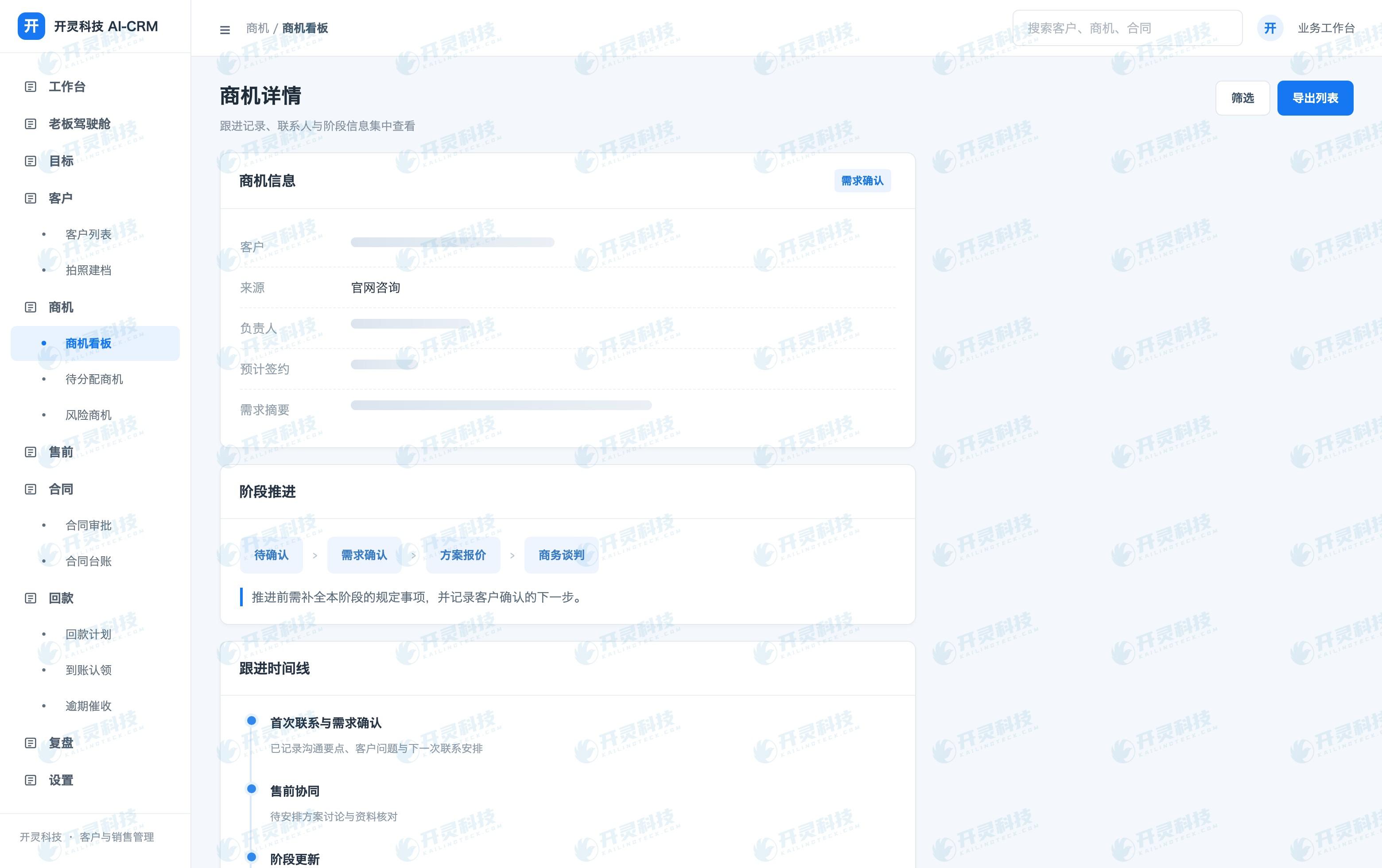
Kailing Technology AI-CRM: Opportunity details and follow-up timeline
▍At signing, connect quote approval and contract conditions to the original opportunity
After entering solution quotation, discount authority, contract terms, and exception approval should be linked to the opportunity background. The system has quotation approval, contract rule review, and contract ledger pages, showing the connection among quotations, contracts, and sales owners. During project implementation, determine which discounts require escalated approval and which terms must be reviewed by legal or finance, avoiding sales maintaining two inconsistent versions in email and CRM.
The contract ledger should not only store scanned copies; it should at least record the customer, contract number, amount, execution status, invoicing and collection overview, and be traceable back to the specific opportunity. One customer may have multiple projects, and one project may have supplementary agreements; if summarized only by customer name, it is difficult to attribute receipts to the correct contract. After a contract change, the collection installments, amounts, and conditions should be rechecked synchronously, with versions and approval records retained.
The contract ledger consolidates invoiced, collected, uncollected, and next installment information to help sales and finance compare contract execution progress. If a customer has multiple parallel contracts, they should also be viewed by contract number and project to prevent receipts from different projects being mixed together. Actual projects should also verify the master data boundaries of ERP, finance, and invoicing systems, and clarify which system is the authoritative source for contracts, invoices, and receipt results.
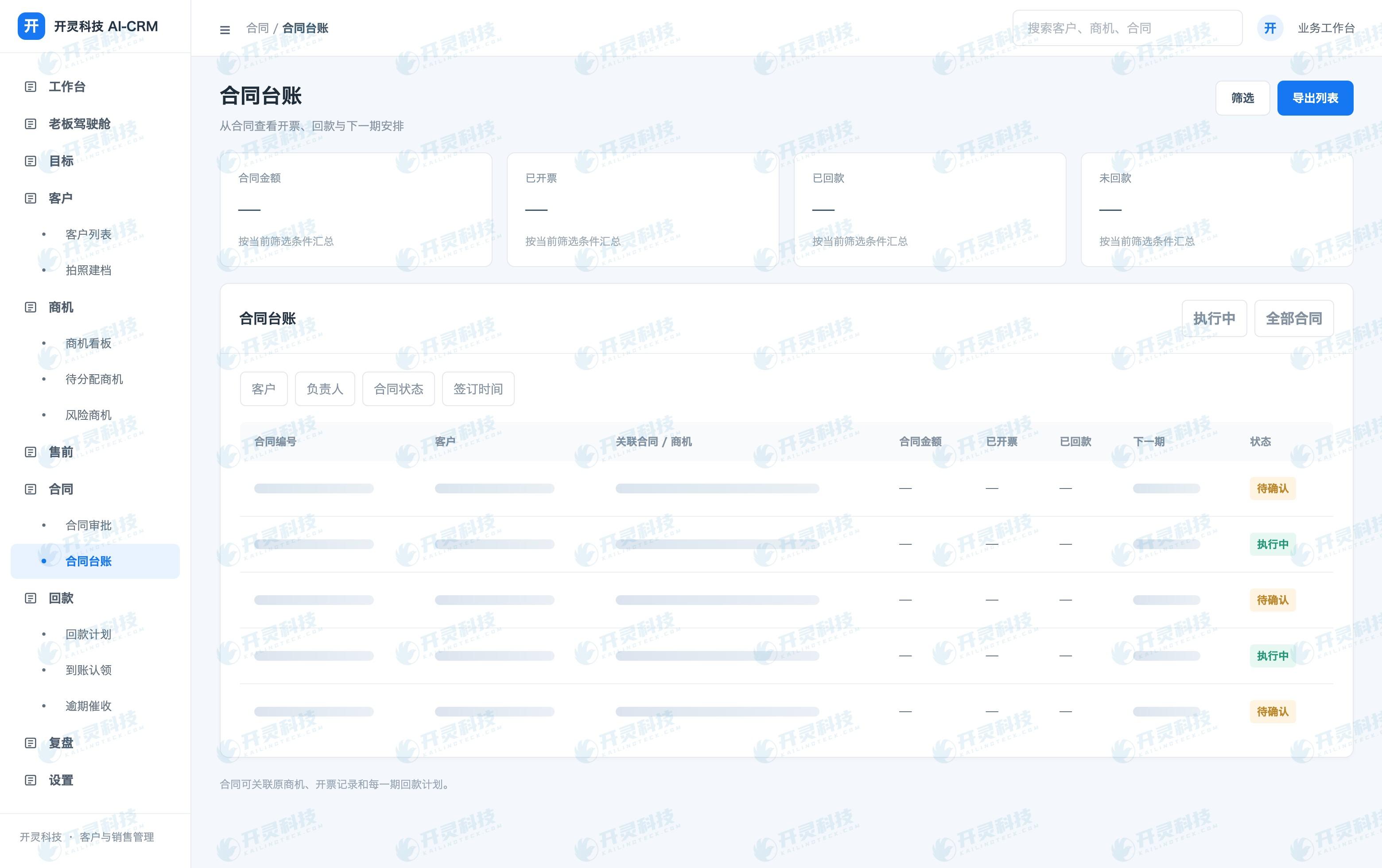
Kailing Technology AI-CRM: Contract ledger
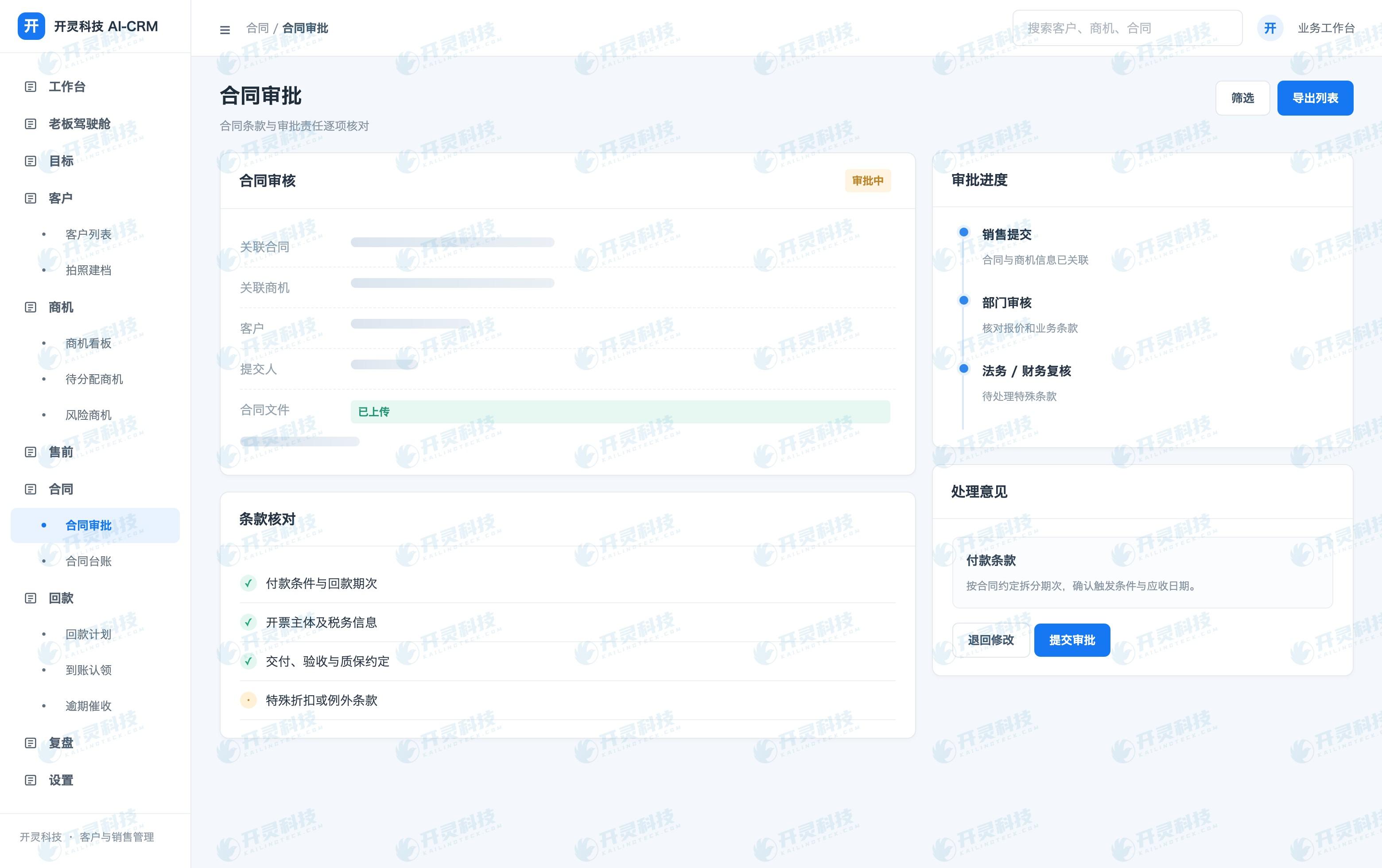
Kailing Technology AI-CRM: Contract approval and terms verification
▍The collection plan takes effect according to contract conditions, and someone must confirm after receipt
B2B contracts often have advance payment, delivery payment, acceptance payment, and warranty deposit; not all unreceived amounts can be counted as overdue right after signing. The collection plan generates installment drafts according to payment terms and takes effect after financial review; each installment retains the due rule, receivable date, received amount, and status. Installments for which acceptance has not yet occurred or the warranty period has not expired are listed separately, so sales collection has a basis.
The receipt claim page displays recommended matches between bank statements and contract installments and requires explicit financial confirmation. Automatic claiming should meet relatively strict matching conditions: the payer name matches the customer, and the amount exactly corresponds to a unique unpaid installment; cases such as parent company payment on behalf, amounts matching multiple installments, and personal transfers go to manual judgment. The bank statement access method, synchronization frequency, and accounting treatment should be verified item by item in the project according to bank interfaces and financial processes.
After receipt is confirmed, sales and finance should see the same installment balance. Partial receipts should retain the remaining amount receivable, cross-period payments should be split according to the confirmation result, and refunds or write-offs should form reverse records. During financial reconciliation, it should be possible to trace back from a single receipt to the customer, contract, payment terms, and claimant, and also to see the corresponding actual receipts from the contract installments. For erroneous claims that are returned, the reason for cancellation and the handler for re-matching need to be recorded, so that the cause cannot be found after report amounts change.
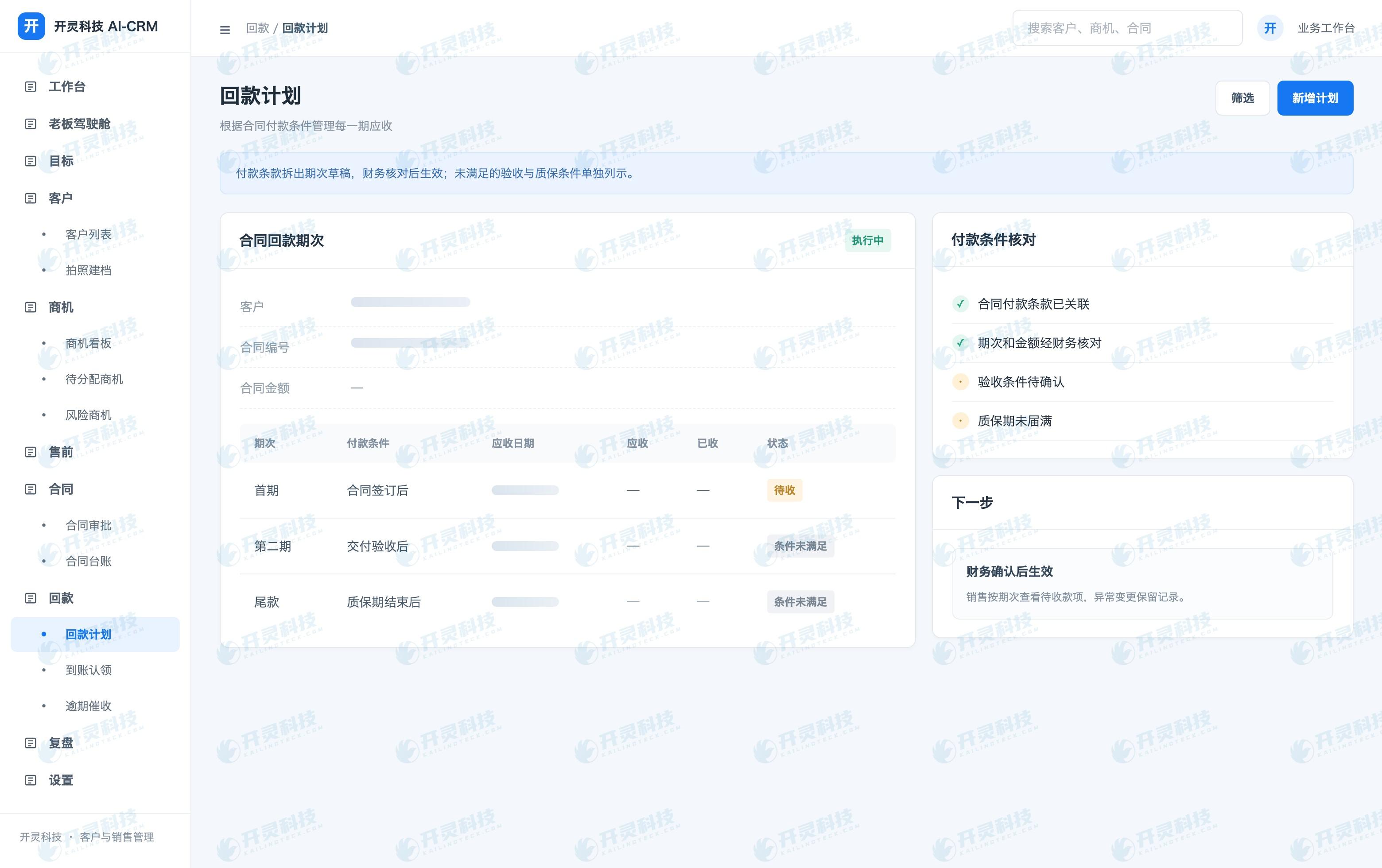
Kailing Technology AI-CRM: Contract collection plan
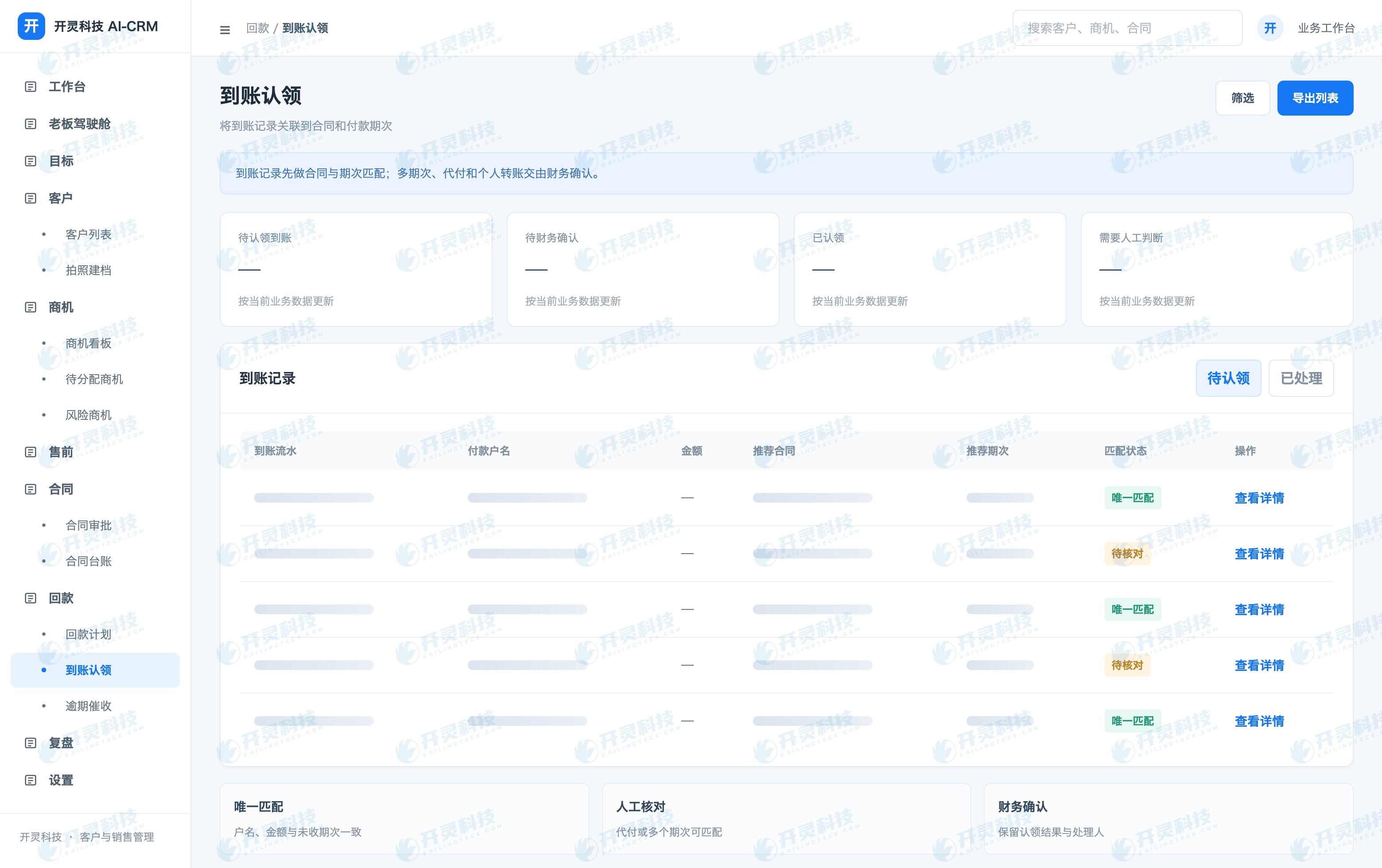
Kailing Technology AI-CRM: Receipt claim and matching verification
▍Overdue management should record the original receivable date, customer commitment, and responsibility separately
The overdue collection page separates overdue, near-due, and pending-condition items, and reminds sales, supervisors, or the general manager by aging. A customer's promise to pay next week is only collection information and should not override the original contract due date. Collection records include communication method, commitment date, attachments, and next follow-up, so supervisors can judge whether it is a customer process delay, acceptance dispute, invoicing issue, or change in payment ability.
Implementation acceptance can sample one complete chain: website inquiry file creation, opportunity stage progression, quotation and contract approval, installment plan, partial receipt claim, and overdue reminder for uncollected installments. Check one by one whether numbers are mutually traceable, whether role permissions are appropriate, and whether exceptions are picked up by someone. Kailing Technology's AI-CRM system lets the basis, status, and next-step responsibility of each node continue to pass along the customer, opportunity, contract, and collection installment.
For group customers and multi-project customers, special payment situations also need to be verified: parent company unified payment, different contracts with the same amount, one installment paid in two parts, and payment conditions not met due to delayed acceptance. Finance should be able to reject incorrect matches and state the reason, sales should see the customer information that needs to be supplemented, and supervisors should be able to distinguish between sales not having chased payment and finance pending claim. If these exceptions are resolved only verbally and not recorded in the system, the numbers on the collection dashboard lose their explainability. Acceptance samples should cover these boundaries. The project should also define the scope that sales, finance, and managers can each view and modify; especially for receipt confirmation and contract amount changes, approvals, operation logs, and notifications should be retained to ensure that the progress seen by business personnel is consistent with financial results. Each reconciliation should be able to return to the original contract terms and confirmation records.
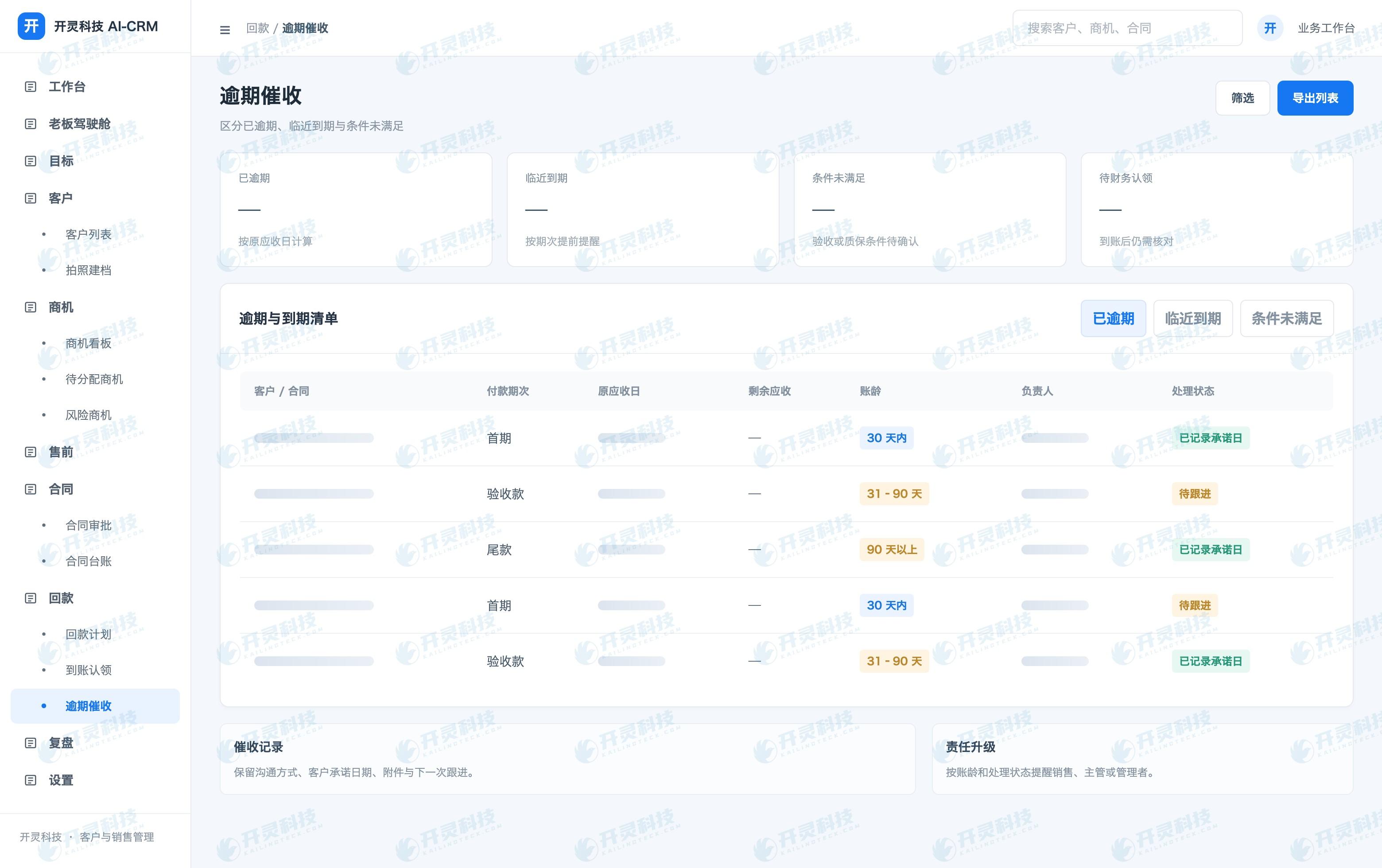
Kailing Technology AI-CRM: Overdue collection and installment management
▍FAQ
Q: Once the contract is signed, are all unreceived amounts counted as overdue?
A: That should not be done. Distinguish due, not-yet-due, and not-yet-satisfied installments according to contract payment terms.
Q: Can AI minutes replace sales review?
A: No. AI minutes should first be treated as content pending verification; important commitments, amounts, and dates must be checked against the original text before saving.
Q: Can bank statements be automatically recognized against contracts?
A: Matching recommendations can be made first, and when unique-match conditions are met, claims can be made according to rules; bank integration, matching rules, and financial confirmation must be accepted in the project.
Q: If the customer commits to a new payment date, should the original receivable date be changed?
A: Usually the original contract receivable date is retained, with the commitment date and collection progress recorded separately, to avoid obscuring the true aging.
Make opportunities, contracts, and each payment installment traceable to one another. Learn about Kailing Technology AI-CRM system: www.kailingteck.com .
As a national high-tech enterprise, Kailing Technology focuses on the digital and intelligent transformation of enterprise business-finance-tax and operations management, providing software products, system integration, implementation and delivery, and operational services for various government agencies, institutions, group enterprises, and SMEs.
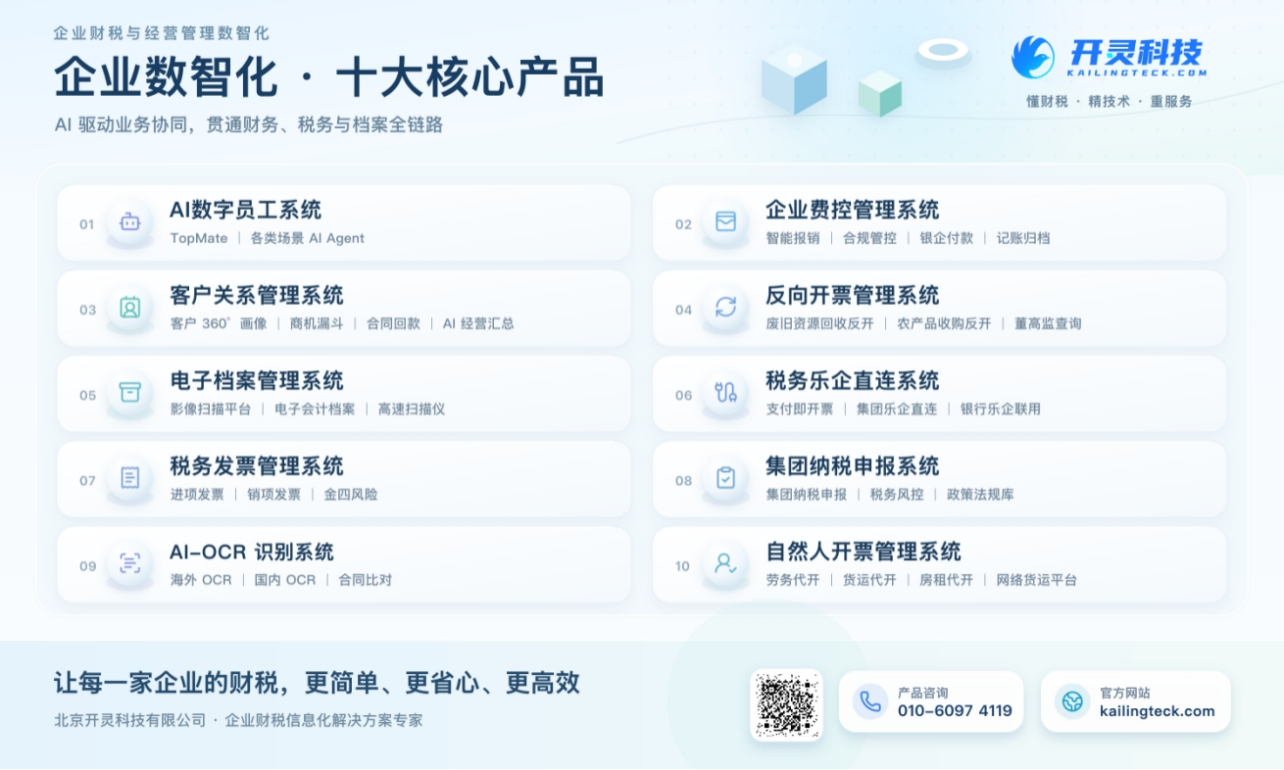
The company has now formed ten core product lines, including: AI digital employee system, enterprise expense control management system, customer relationship management system, reverse invoicing management system, invoice issuance for individuals management system, electronic archives management system, tax fully digitalized e-invoice Leqi system, tax invoice management system, group tax filing system, and AI OCR recognition system. It is committed to connecting enterprise business, finance, tax, funds, and archive data to help customers improve operational efficiency, business-finance-tax compliance capabilities, and digital management levels.
If you have any business-finance-tax digital transformation needs, welcome to contact us. Beijing Kailing Technology will serve you wholeheartedly.
Keywords: Kailing Technology AI-CRM, opportunity contract collection, CRM collection plan, receipt claim, overdue management
As a comprehensive business-finance-tax digitalization solution service provider, Kailing Technology provides business-finance-tax management digital transformation products and operational services for various government agencies, institutions, and large, medium, and small enterprises. The product line includes: solutions for sales contract management system, procurement contract management system, fully digitalized Leqi interface project, automatic output invoicing system, reverse invoicing system, invoice issuance for individuals system, employee expense control and reimbursement system, input VAT invoice management system, supply chain collaborative reconciliation system, image AI OCR recognition system, automatic financial bookkeeping system, electronic accounting archives system, etc., comprehensively driving the digitalization process across various fields.
Consultation Hotline: 18513895936 / 010-60974119 Location: Beijing