
Replicating from one position to multiple departments, Kailing Technology's AI digital employee helps enterprises reuse skills while preserving permission boundaries
To replicate one digital employee across multiple departments, the correct approach is to reuse solidified skills, processes, and task templates, and then reauthorize according to the target department's organization, data, and operational permissions. Kailing Technology's AI digital employee manages "what it can do" and "which data it can access" separately, making replication fast without copying the original position's permissions along with it.
Many enterprises have already run their first AI position in finance, customer service, or operations, but next they start again from a blank slate, reconfigure processes, and restate the rules. If the original position account is cloned as a whole, it is easy to bring cross-department data to places where it should not appear. Scaling is not copying a few more robots, but establishing a digital position system that can be inherited and configured.
▍1. Why is it still hard to scale after the first AI position succeeds?
The first breakpoint is that "every replication requires redoing the work." Data retrieval, form filling, review, and notification actions in existing positions have not been encapsulated into skills, so new departments can only go through requirements research and interface development again. It makes it difficult to trace skill versions, business system permissions, departmental rules, and task logs.
What is more easily overlooked is that "rules are copied into dead copies." Forms, policies, and processing deadlines differ across departments, and one-time copying causes subsequent changes to diverge in all directions, making it difficult to distinguish old and new versions. Once the relationship is broken, business leads and employees in each department have to find leads again, and large-scale reuse of role capabilities and accountability are also delayed.
and so on. Once business piles up, "skill inheritance becomes permission inheritance" will be amplified. If accounts, data scopes, and executable operations are cloned along with skills, departmental isolation and job responsibilities become blurred, and high-risk actions may lack necessary confirmation. If "skill inheritance becomes permission inheritance" is not closed out, you will have to make up for it later.
▍II. The core of scaled replication is inheritable skills and reauthorized identities
"Reusing skills" means encapsulating repeatable data retrieval, judgment, operations, and output into composable Skills; "preserving permission boundaries" means each new AI digital employee still obtains permissions according to its organization, position account, tool whitelist, and approval policy. Combining the two, what is replicated is the way of doing things, not someone else's pass.
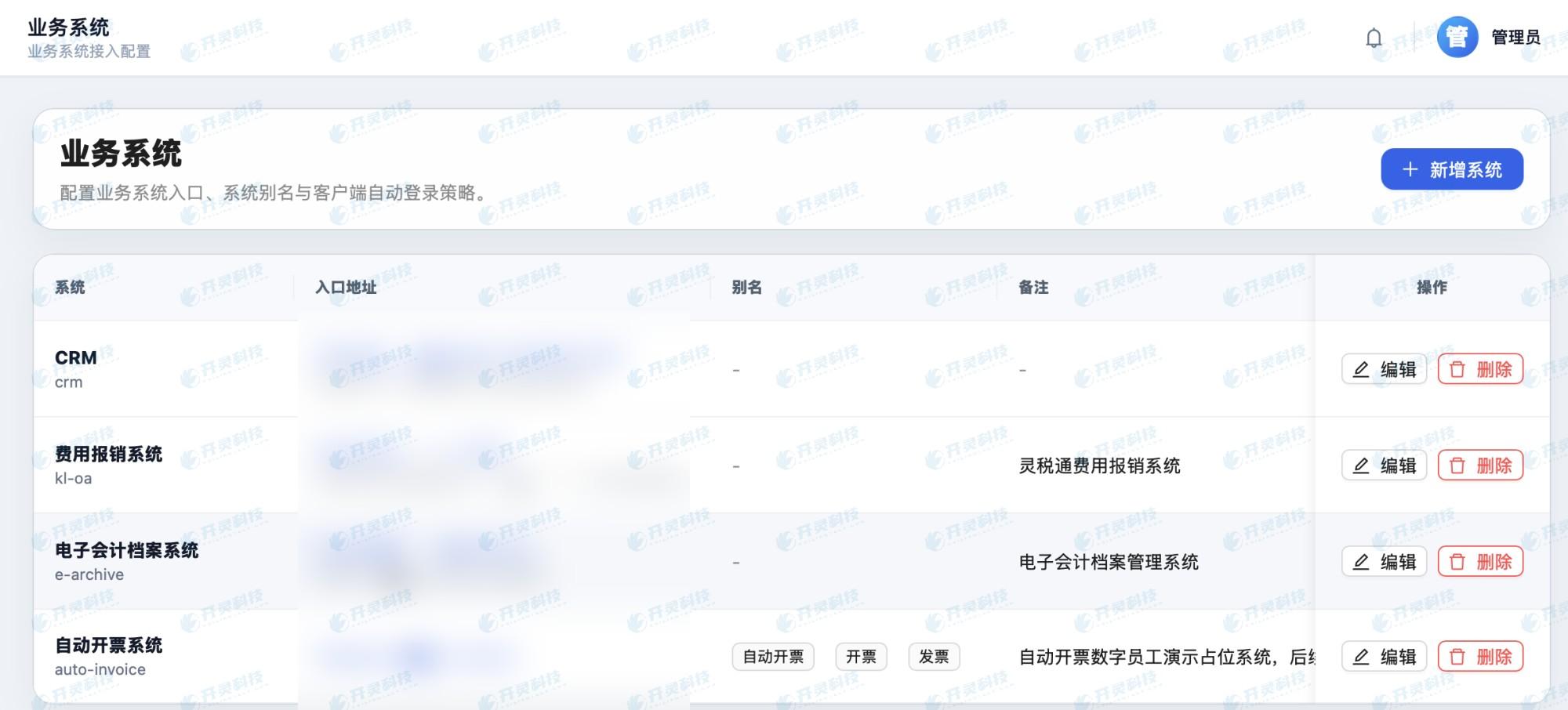
For digital employee position replication, what is truly worth connecting is not an isolated button, but the business relationships among skill versions, business system permissions, department rules, and task logs. Kailing Technology AI digital employees organize data and operations around digital employee position replication, allowing users to see the next step in their original work context and enabling managers to review the entire path.
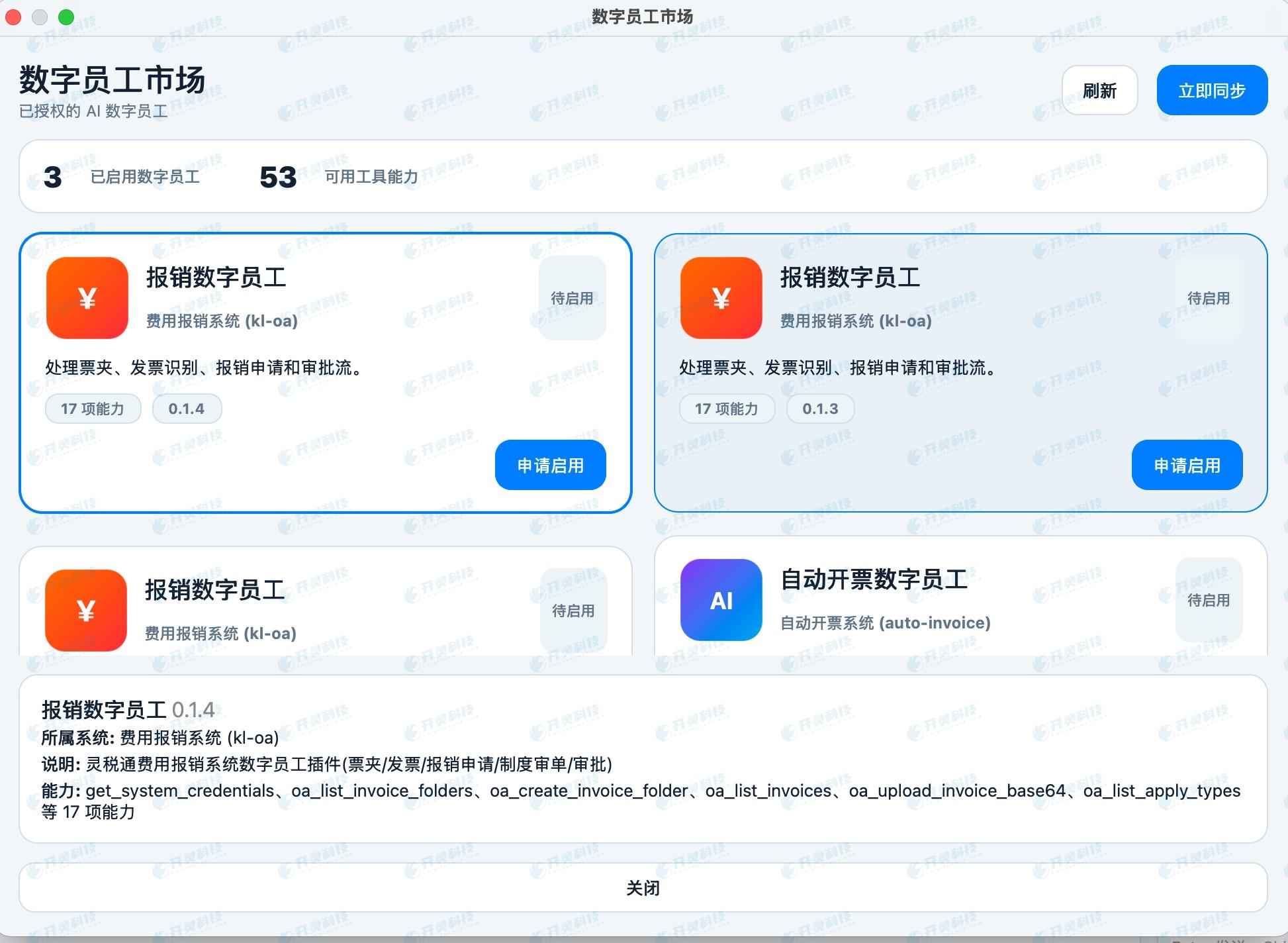
Kailing's four-layer architecture manages business-facing digital employees, reusable skills, connection protocols, and clients in layers. One skill can be invoked by multiple positions, but each invocation still uses the business permissions corresponding to the current employee; administrators can uniformly govern skill publishing, sandbox operation, gray release, and rollback.
▍III. How Kailing Technology AI digital employee runs key processes end to end
Step 1: Extract general skills. Extract reusable actions from positions that have already been run successfully, and keep department-specific definitions at the configuration layer. It turns temporary actions in replicating AI digital employee positions into stateful steps.
Step 2: Create target positions. Combine the required skills according to the new department's work objectives, task inputs, and delivery results. It turns the temporary action in digital employee position replication into a stateful step.
Step 3: Rebind permissions. Associate the belonging organization, business account, and available tools; by default, the original position's data scope is not carried over. This turns the temporary action in duplicating a digital employee position into a stateful step.
Step 4: Fill in department rules. Load this department's policies, form fields, processing time limits, and manual takeover roles. It turns temporary actions in the replication of AI digital employee positions into a stateful step.
Step 5: Release and continuously operate. Record versions, success rates, exception types, and business value, and feed common improvements back into the skill library. This turns temporary actions in digital employee role replication into stateful steps.

▍IV. From replicating tools to replicating position methods: where the experience differs
One of the capability priorities is skill composition rather than overall cloning. Atomic capabilities such as general data retrieval, review, form filling, and notification are assembled according to job requirements, and the same capability maintains only one controlled master version. Business owners and employees in various departments can therefore directly see the next step.
One of the capability priorities is isolation of organization and position permissions. AI digital employees read and write within the authorization scope of associated accounts, and departments, subsidiaries, and business positions retain their own data views. When anomalies occur, handlers can see the context of organization and position permission isolation.
One of the capability priorities is human-in-the-loop for high-risk actions. Actions such as external sending, formal submission, payment, and deletion/modification can be forced to require secondary approval according to policy, preserving ultimate human responsibility. This allows skill versions, business system permissions, department rules, and task logs to naturally accumulate in the business.
One of the capability priorities is unified management of versions and runtime data. Each skill update has review, gray release, and rollback paths, and the management side can observe task success, failure, and manual intervention by position. Users feel fewer steps, while the back end completes the coordination of unified management of versions and runtime data.
▍V. What happens when the skills library becomes an enterprise capability asset
For frontline users, the most direct change comes from getting up to speed on the job faster. New departments can start from a mature skill library and focus their energy on the department's unique rules and ways of collaboration. Ultimately, scaled reuse of job capabilities and accountability rely less on individual experience.
From a management perspective, common improvements can be transmitted so that originally hidden processes become visible. After a general skill completes one controlled update, multiple positions can inherit it according to the version rhythm, reducing the aging of multiple scripts separately. Ultimately, large-scale reuse of position capabilities and responsibility traceability rely less on individual experience.
In long-term operations, clearer division of labor and responsibility determines whether the system becomes smoother with use. Business personnel know which part the AI digital employee will handle, and administrators can see which account and which skill version were used. Ultimately, scalable reuse of role capabilities and responsibility traceability rely less on personal experience.

▍VI. Which enterprises are suited to move from replicating one position to multiple departments
This approach is especially suitable for enterprises that have already successfully run one finance, contract, reporting, customer service, or operations role and are preparing to expand to similar roles and multiple subsidiaries. First choose roles with high frequency, stable input, and clear permission boundaries, making it easier to turn “one successful case” into organizational capability.
If an enterprise has repeatedly encountered "redoing everything each time it is copied" and "rules copied into dead copies," it usually indicates that digital employee role replication is no longer suitable to continue relying on manual connection. Starting from the highest-frequency business chain with the clearest responsible person, first connect skill versions, business system permissions, department rules, and task logs, then gradually expand the scope. This is often easier to turn into a sustainable business experience than merely adding another tool.
Kailing Technology combines position methods, skill libraries, permission mapping, and operations dashboards. Enterprises can therefore retain their existing ERP, OA, CRM, and financial systems, while also allowing AI positions to obtain methods, respect boundaries, and continuously grow like mature employees.
▍FAQ
Q: When copying an AI digital employee, will the original account permissions be carried over as well?
A: It should not be carried over by default. The new position should bind its own organization, account, and tool permissions; what is mainly reused are skills and processes.
Q: If different departments have different form fields, can they still be reused?
A: Yes. Keep general logic in the skill layer, and handle field mapping and department rules as the configuration layer.
Q: After skills are updated, must all positions update immediately?
A: Synchronization is not mandatory. Switching can be done in batches based on version compatibility, gray release scope, and business cycles, with a rollback path retained in case of anomalies.
Q: Which types of positions are most suitable for scaling replication first?
A: Positions with high task frequency, relatively stable rules, clear inputs and outputs, and clearly divisible data permissions are more suitable.
Let mature skills be inherited while each position's permissions remain clear. Welcome to visit Kailing Technology: https://www.kailingteck.com/de/ .
As a national high-tech enterprise, Kailing Technology focuses on the digital and intelligent transformation of enterprise business-finance-tax and operations management, providing software products, system integration, implementation and delivery, and operational services for various government agencies, institutions, group enterprises, and SMEs.
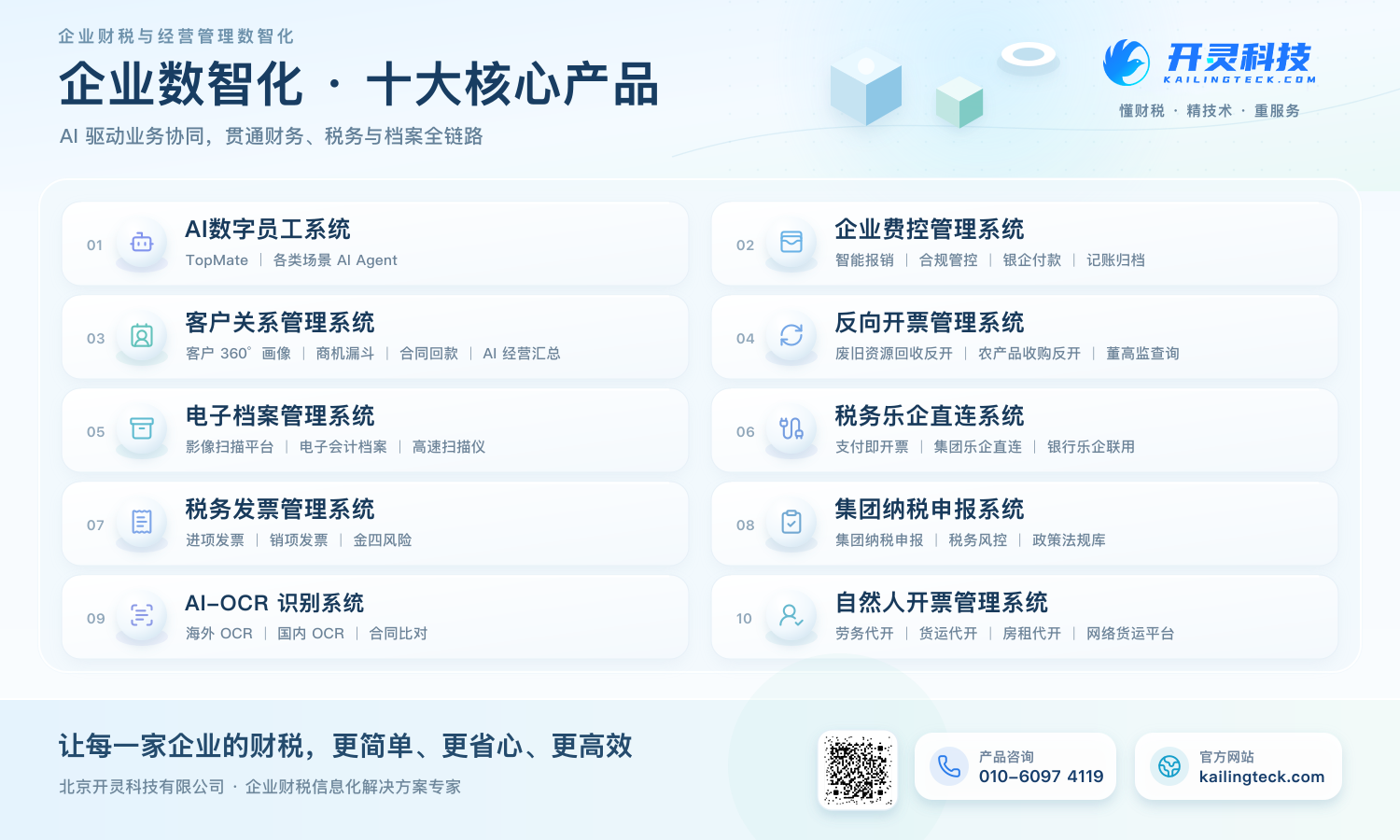
The company has now formed ten core product lines, including: AI digital employee system, enterprise expense control management system, customer relationship management system, reverse invoicing management system, invoice issuance for individuals management system, electronic archives management system, tax fully digitalized e-invoice Leqi system, tax invoice management system, group tax filing system, and AI OCR recognition system. It is committed to connecting enterprise business, finance, tax, funds, and archive data to help customers improve operational efficiency, business-finance-tax compliance capabilities, and digital management levels.
If you have any business-finance-tax digital transformation needs, welcome to contact us. Beijing Kailing Technology will serve you wholeheartedly.
Keywords: AI digital employee, position replication, skill reuse, permission boundaries, Kailing Technology AI digital employee
As a comprehensive business-finance-tax digitalization solution service provider, Kailing Technology provides business-finance-tax management digital transformation products and operational services for various government agencies, institutions, and large, medium, and small enterprises. The product line includes: solutions for sales contract management system, procurement contract management system, fully digitalized Leqi interface project, automatic output invoicing system, reverse invoicing system, invoice issuance for individuals system, employee expense control and reimbursement system, input VAT invoice management system, supply chain collaborative reconciliation system, image AI OCR recognition system, automatic financial bookkeeping system, electronic accounting archives system, etc., comprehensively driving the digitalization process across various fields.
Consultation Hotline: 18513895936 / 010-60974119 Location: Beijing