
From customer 360° to payment collection and write-off, how does Kailing Technology's sales full-lifecycle CRM management system automatically advance key sales milestones?
Sales automation is often misunderstood as the system judging for people whether a customer will close. What is truly suitable for automatic advancement are verifiable events such as a date arriving, a status change, funds arriving, or a contract nearing expiry: they trigger to-dos, reminders, approvals or write-offs, while people then handle relationship judgments, business communication and authorization exceptions. Without a unified customer view, any reminder may be distorted because data is scattered. Around "1. Customer 360° is not a profile card, but an index of relationships and status," Kailing Technology sales full-lifecycle CRM management system needs to incorporate related relationships into the same business chain.
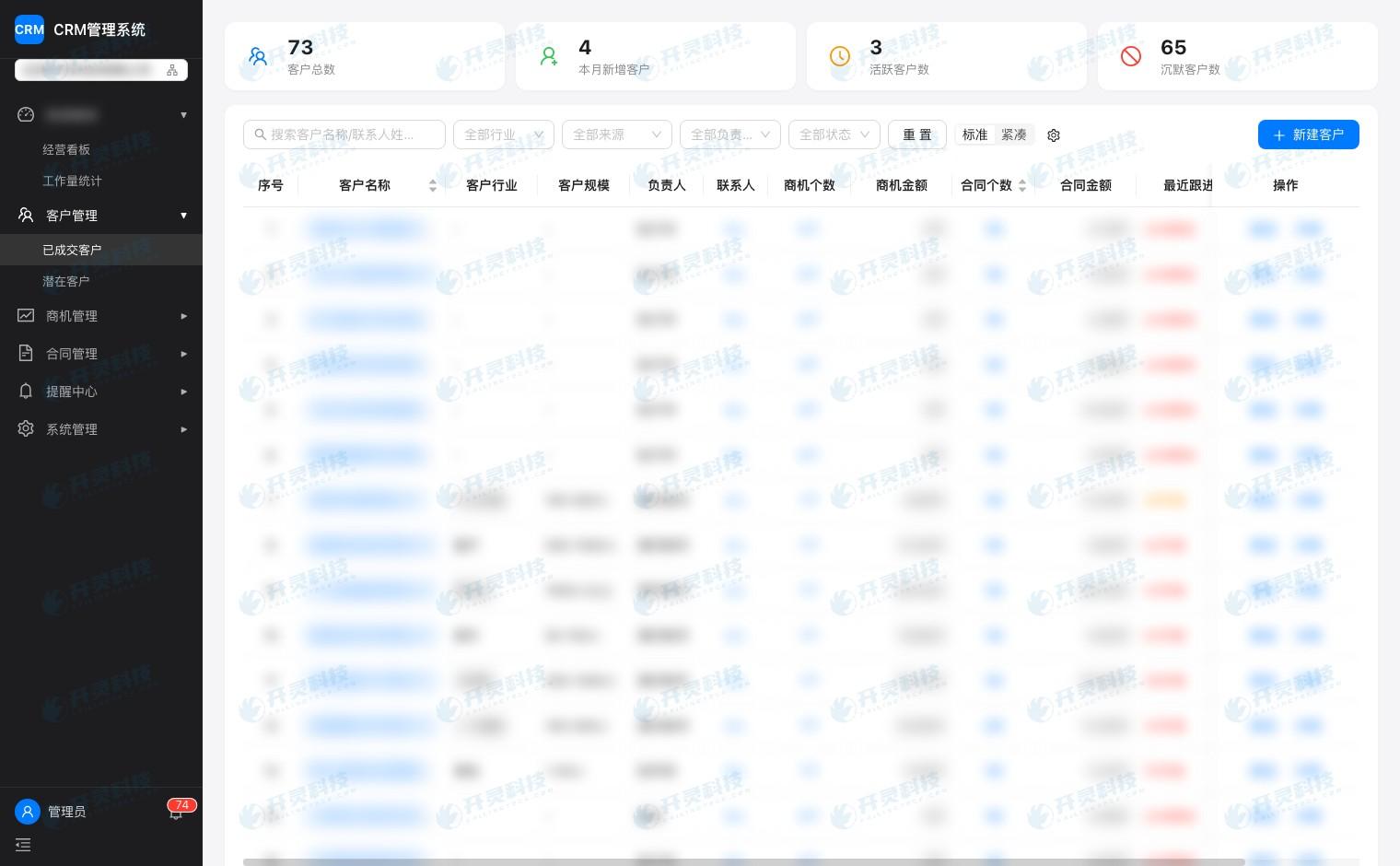
Kailing Technology's sales full lifecycle CRM management system takes the customer 360° view as the relationship center, connecting leads and opportunities, contract milestones, invoices, bank receipts, write-offs, reminders, and dashboards. Automatic advancement refers to rule- and event-driven task collaboration, rather than letting machines arbitrarily change business stages; every trigger should have a source, responsible person, handling action, and write-back result.
▍1. Customer 360° is not a profile card, but an index of relationships and statuses
Basic information only answers who the customer is. A 360° view must also connect contacts and the decision chain, recent follow-ups, opportunity stages, contracts, invoicing, receivables, collections, reminders, and renewals. Entering from the customer, users can see the node that most needs action at present and can also trace back which business record generated the status.
Before forming a unified view, first govern duplicate customers and responsibility attribution. Situations such as similar names, group subsidiaries, and inconsistency between remitter and contracting party cannot be automatically merged based only on strings; the system lists candidates for confirmation by sales operations or master data roles. Incorrect merging will mix up reminders, amounts, and contacts.
- The customer master file provides a unique starting point for relationships, and duplicate merges retain the basis and history.
- Contacts, opportunities, contracts, and financial objects are recorded separately, then aggregated by customer relationship.
- The current responsible person and historical responsible persons can both be traced; customer transfer does not erase old actions.
▍II. Kailing Technology sales full-lifecycle CRM management system: four types of events are worth automatically triggering sales actions
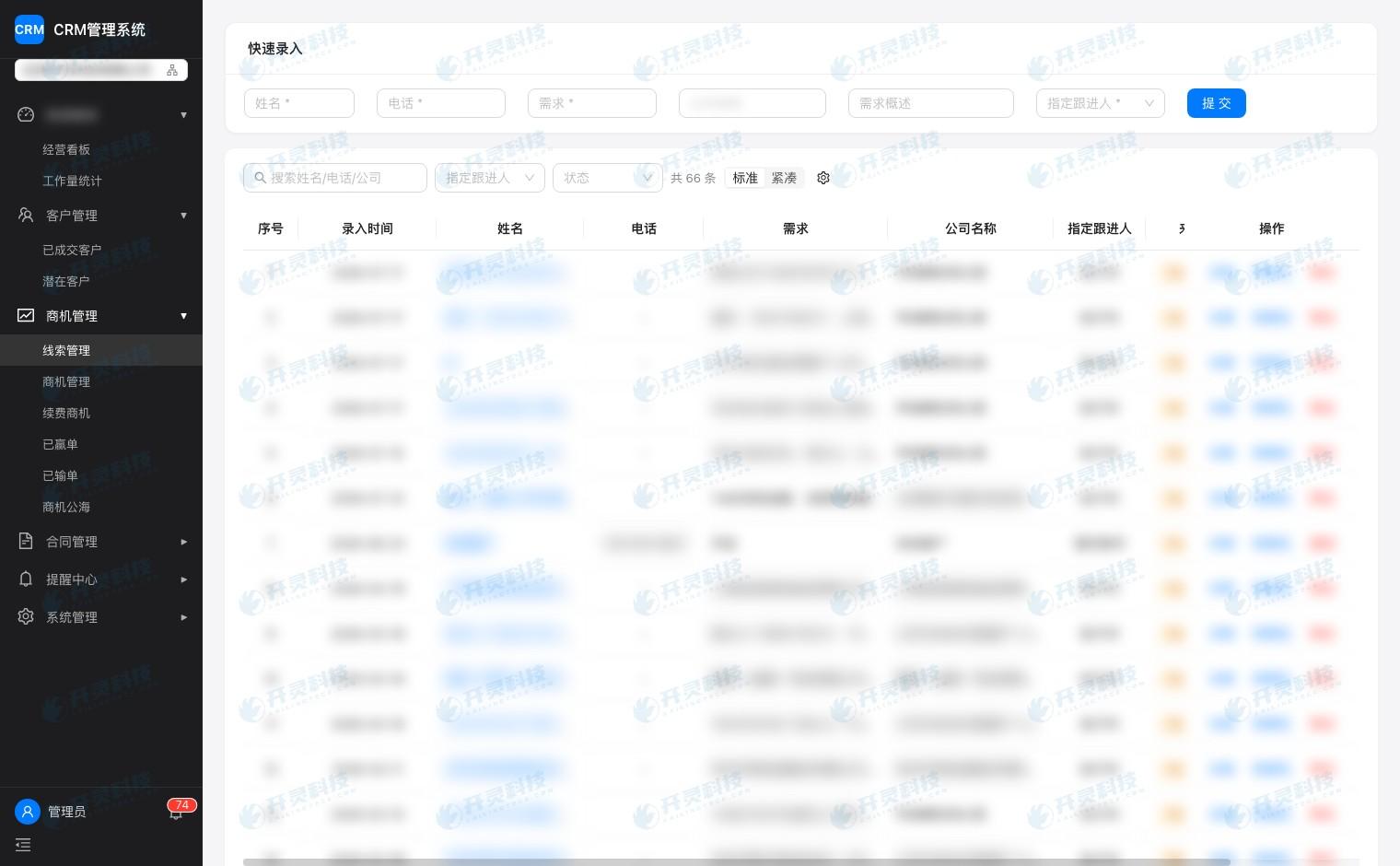
The first category is time events, such as contract payment milestones becoming due or renewals approaching; the second category is status events, such as opportunities entering a new stage or contract approval being completed; the third category is amount events, such as invoice issuance, bank receipt, or changes in accounts receivable balances; the fourth category is manual confirmation events, such as customer acceptance completion or key matters being flagged.
Trigger rules must clearly specify conditions, frequency, recipients, and deduplication method. Daily summaries are suitable for centrally displaying ordinary to-dos; urgent collections or upcoming renewals can be pushed by priority, and items already handled or postponed should not be repeatedly bombarded. Kailing Technology's full sales lifecycle CRM management system supports to-do grading and pushing to WeCom, DingTalk, Feishu, etc.; specific connections require project configuration.
| "What is automatically advanced is verifiable nodes and tasks, not the system judging customer relationships for sales. |
▍3. The human-machine boundary is divided by "system triggers, personnel decide, results write back"
The system is suitable for calculating dates, reading status, comparing amounts, generating to-dos and escalation reminders; sales is responsible for contacting customers, judging intent, and recording next steps; managers handle authorization or resource coordination; finance confirms invoicing, payment collection, and write-off exceptions. Any action that automatically changes opportunity win/loss, promises payment, or closes a customer requires explicit authorization.
Handling actions should also be structured. Sales selects contacted, postponed, needs collaboration, or no further action, and fills in necessary notes; the system updates the next time point or closes the to-do accordingly. If the reply is only "followed up" in chat, the customer view will not receive the result, and the reminder will repeat the next day.
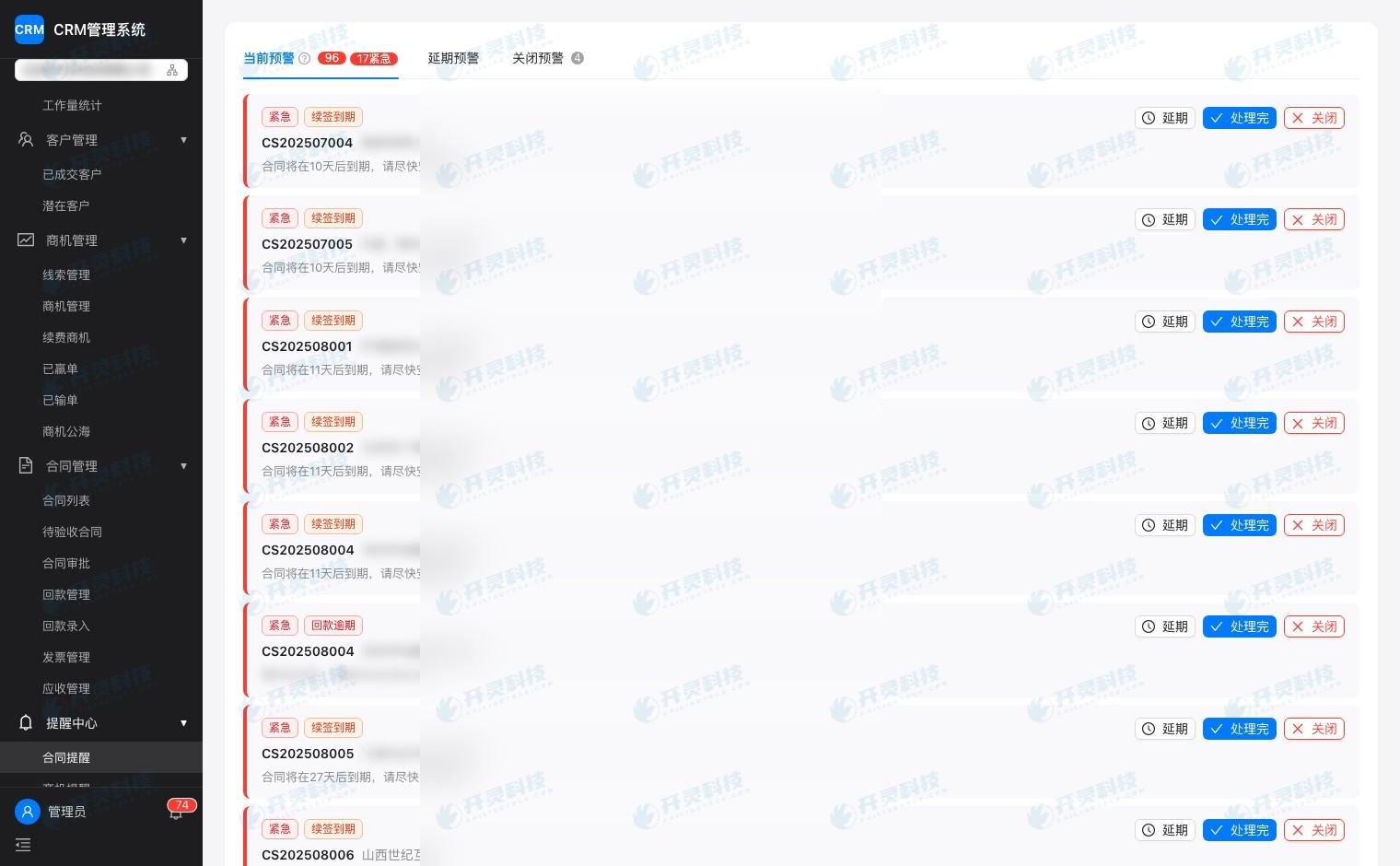
- Trigger records the source event, so personnel know why they received the task.
- Record handling actions and results, and the system determines the next node accordingly.
- Upgrade reminders have clear levels; all overdue items cannot be pushed to senior management at the same time.
▍IV. Payment collection write-off is the key test of whether automation can close the loop
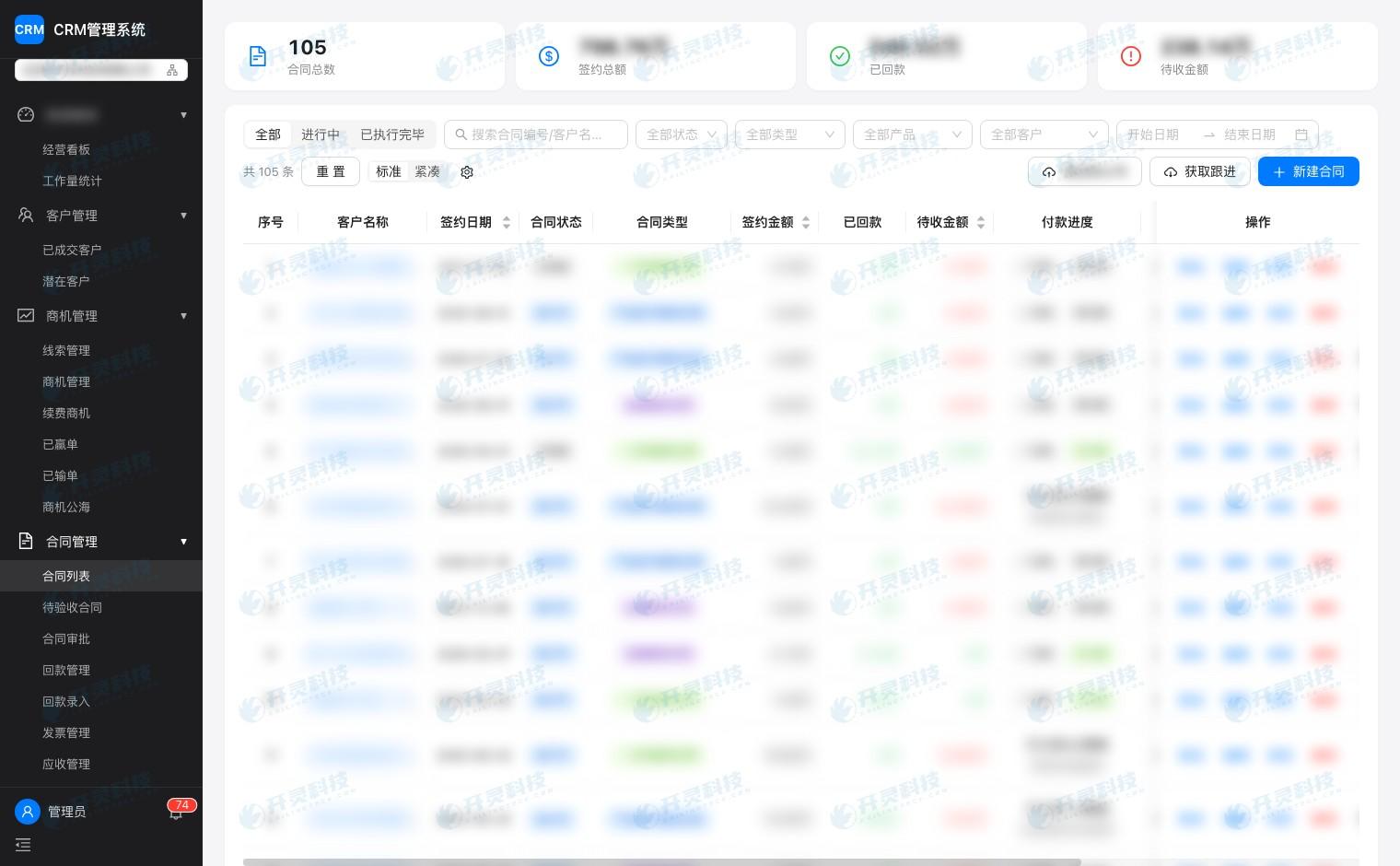
After a contract milestone is due, the system can generate a receivable reminder; after an invoice is issued, it updates the document status; when bank transaction records arrive, it searches for a match based on information such as the remitter, amount, contract, and invoice. Unique relationships can be claimed and written off according to rules; when there are consolidated payments for multiple contracts, partial payments, or remitter differences, they are handed to finance for candidate confirmation.
Kailing Technology's sales full lifecycle CRM management system supports receipt acquisition, claiming, and automatic write-off via bank-enterprise direct connection. After successful write-off, contract pending receipts, receivables, and sales to-dos are updated synchronously; refunds, rebinding, or reversals retain before-and-after records. Automation is not about posting to the account whenever the same amount is seen, but about providing an explainable relationship and leaving anomalies to humans.
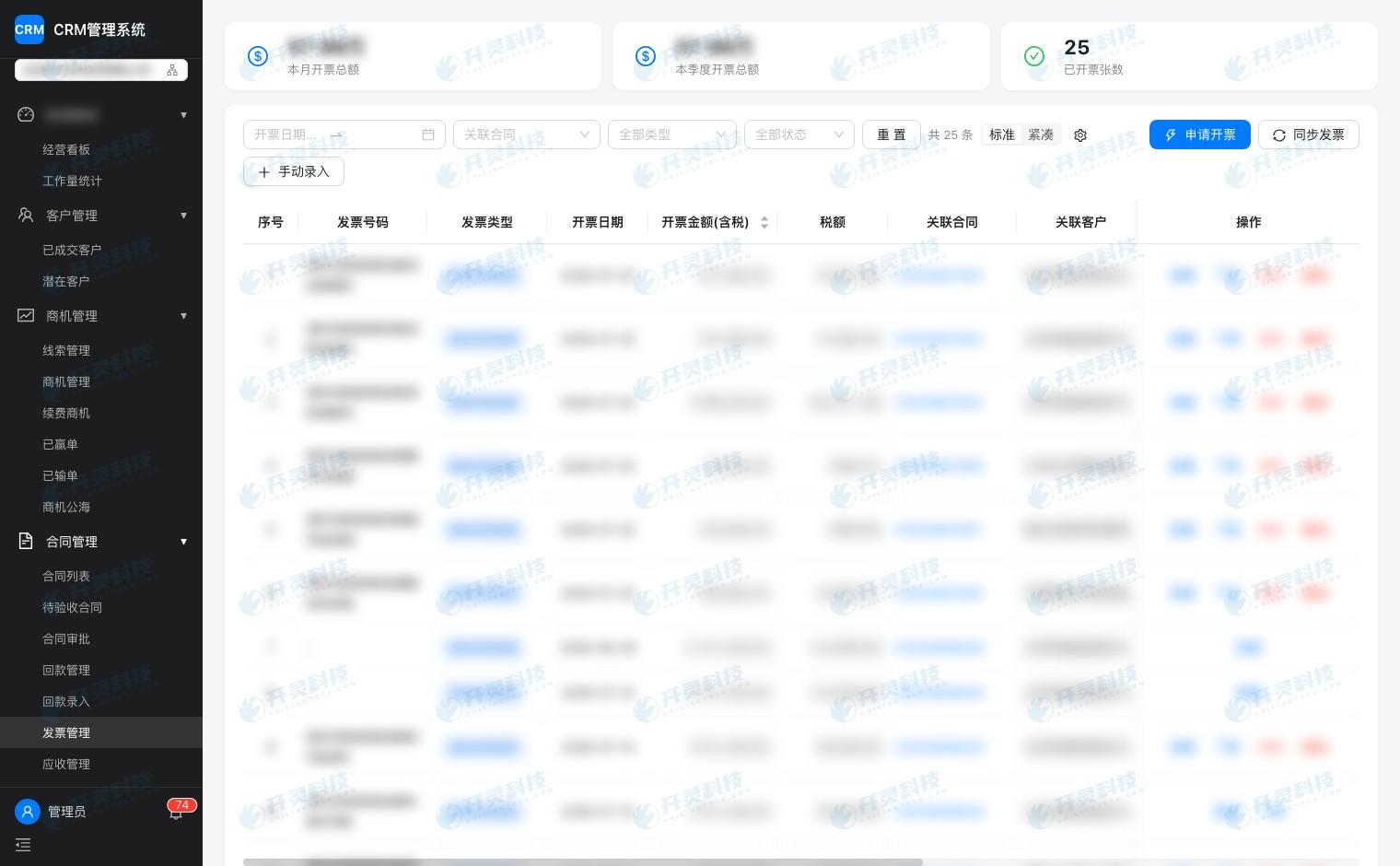
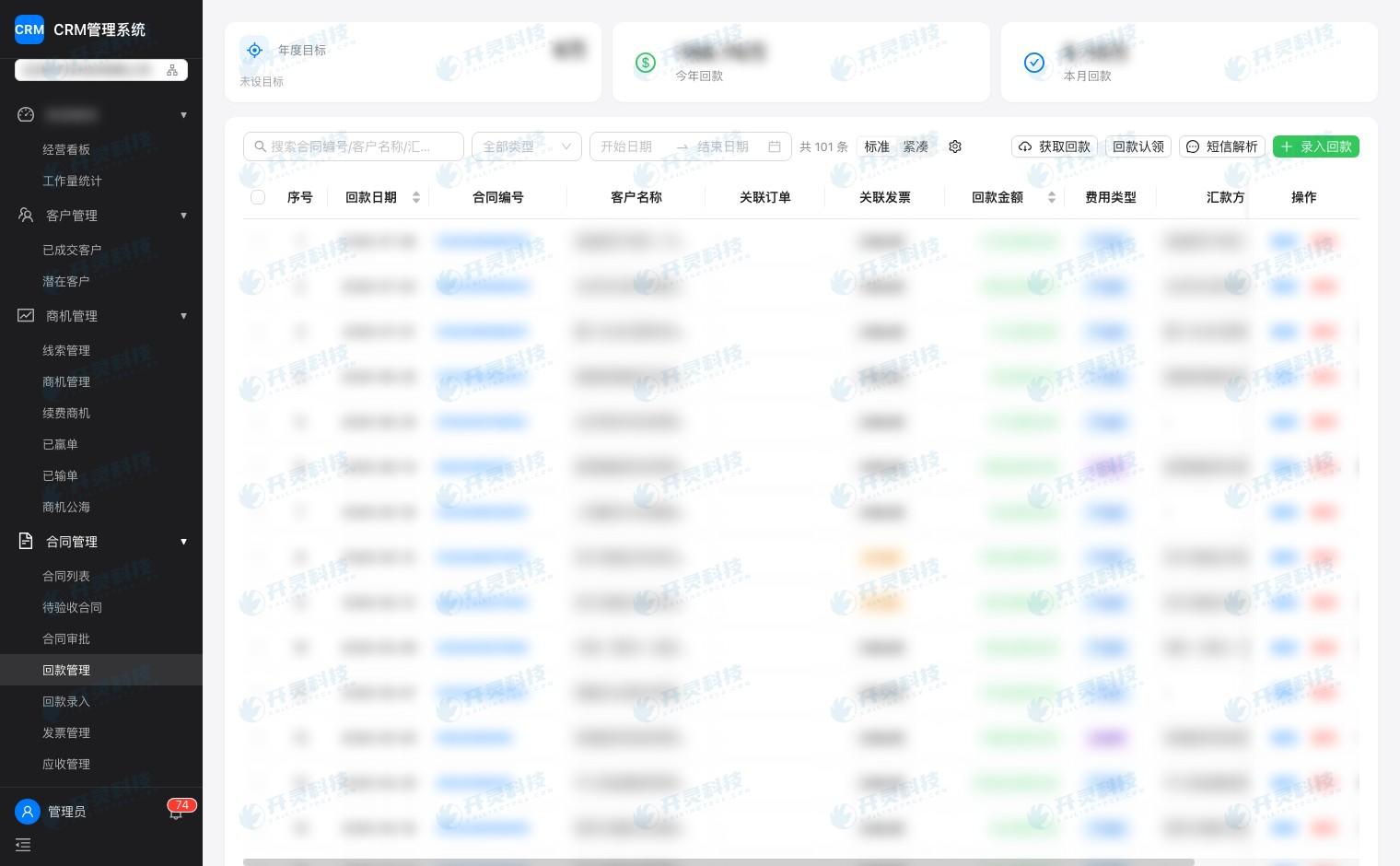
- Multiple entries of the same amount are not forcibly matched; candidates and the basis for judgment are displayed.
- Partial collections update the node balance without closing the entire contract in advance.
- After write-off, notify the responsible salesperson to avoid continuing to repeatedly urge the customer for payment.
▍V. Start with one process and let data calibrate rules in reverse
For the first phase, you can choose the chain of "contract payment milestone - invoicing - payment collection - write-off - reminder closure," first unifying fields, status and responsibilities, then expanding to opportunities and renewals. Test with samples such as normal receipt, partial payment collection, merged payment, refund, inconsistent remitter and overdue extension, confirming that each event triggers only once and results are written back to the customer view.
The business dashboard observes the opportunity funnel, receivables overview, collection trends, and to-do distribution, but does not treat demo numbers as performance commitments. Kailing Technology's full sales lifecycle CRM management system allows managers to drill down from summary to responsibility chain; enterprises still need to define metric timing, permissions, and exclusions.
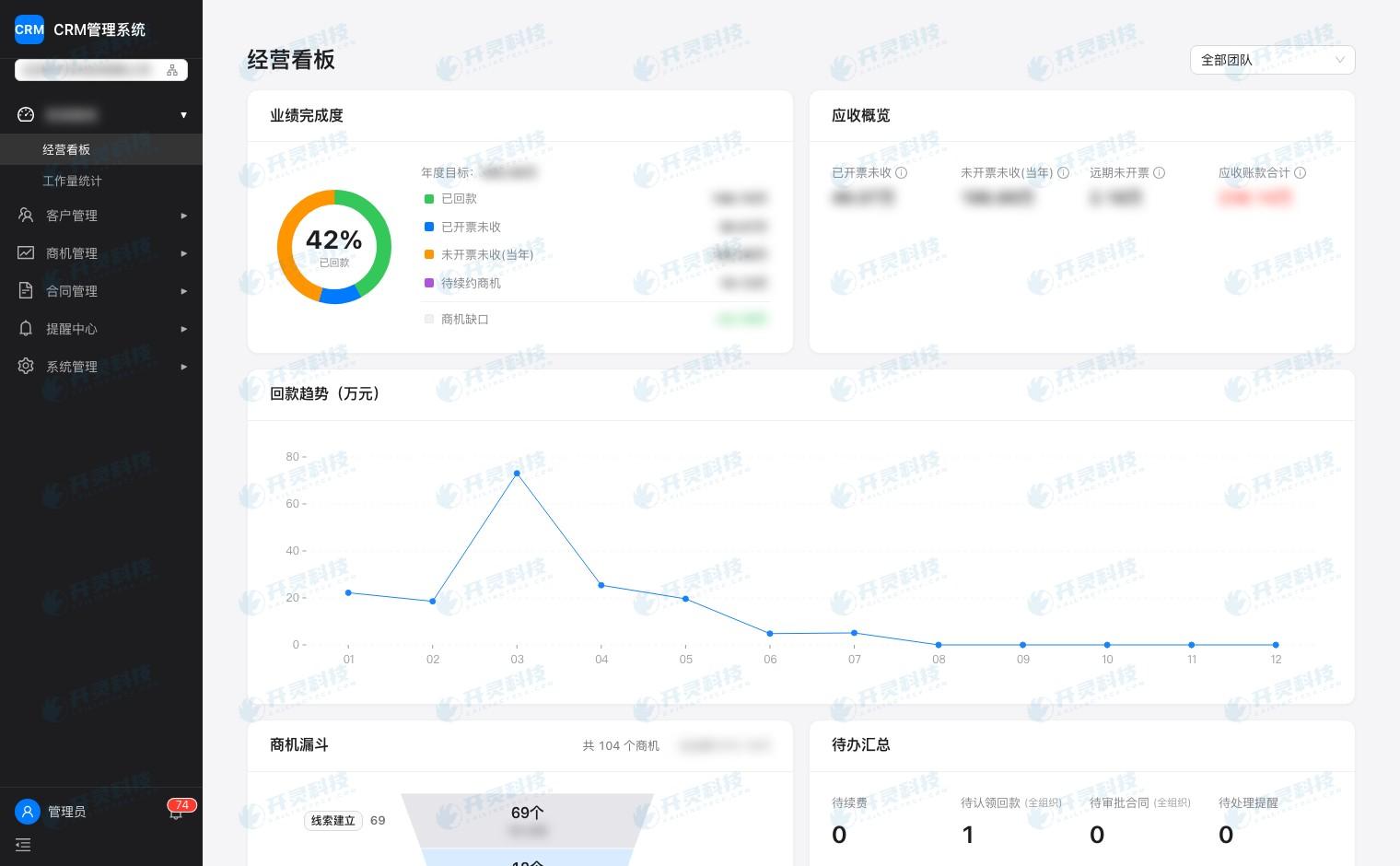
- Count invalid reminders and manual extension reasons to reduce interruptions and correct trigger conditions.
- Analyze unclaimed transactions and misbinding causes to improve the quality of customer, contract, and bank information.
- Observe the handling results of overdue tasks, distinguishing sales action issues from changes in contract terms.
Every rule adjustment must have a version and effective time. New conditions should first replay desensitized historical samples to confirm they will not cause old to-dos to be generated repeatedly, then be released in gray scale; historical customers can still see the rules and processing records at the time, avoiding reinterpreting the past with today's settings.
Permissions split by responsibility: Sales handles customers, finance confirms the invoice-payment relationship, sales operations maintains stages and reminder templates, and system administrators maintain connections but do not arbitrarily change business conclusions. Viewing, exporting, and transferring customer and amount data are all recorded.
When the customer 360° provides complete context, events trigger the creation of clear tasks, personnel determine the results and write them back to the system, and only then can key sales milestones truly advance automatically. The team reduces reliance on individual memory, managers can see whether responsibilities form a closed loop, and customers no longer need to repeatedly explain the same thing due to internal information gaps.
After implementation, task timeout and escalation boundaries should also be set. Ordinary follow-ups can go into a daily summary, while overdue key payment nodes escalate along the responsibility chain; if severity is not distinguished, the more messages there are, the easier they are to ignore, and automated advancement will instead become new noise.
▍FAQ
Q: Will Customer 360° automatically merge customers with similar names?
A: It should not be forcibly merged by name alone. The system can suggest candidates, and authorized positions confirm based on entity and business relationships, with merge records retained.
Q: Can the system automatically determine that a sales opportunity will definitely close?
A: This article does not make such a commitment. The system is suitable for triggering tasks based on date, status, and amount; business judgment is still completed by sales and managers.
Q: Will all incoming bank payments be automatically written off?
A: Unique relationships with clear rules can be processed automatically, while combined payments, partial payments, or remitter differences should be confirmed by finance as candidates.
Q: With too many reminders, how can salespeople avoid being disturbed?
A: Set priorities, aggregation frequency, and deduplication. Processed or postponed tasks should be written back promptly, and invalid reminder data should be used for continuous calibration.
Let customers, contracts, invoices, and payment collection events automatically become clear, actionable sales tasks. Welcome to visit Kailing Technology: https://www.kailingteck.com/aicrm/ .
As a national high-tech enterprise, Kailing Technology focuses on the digital and intelligent transformation of enterprise business-finance-tax and operations management, providing software products, system integration, implementation and delivery, and operational services for various government agencies, institutions, group enterprises, and SMEs.
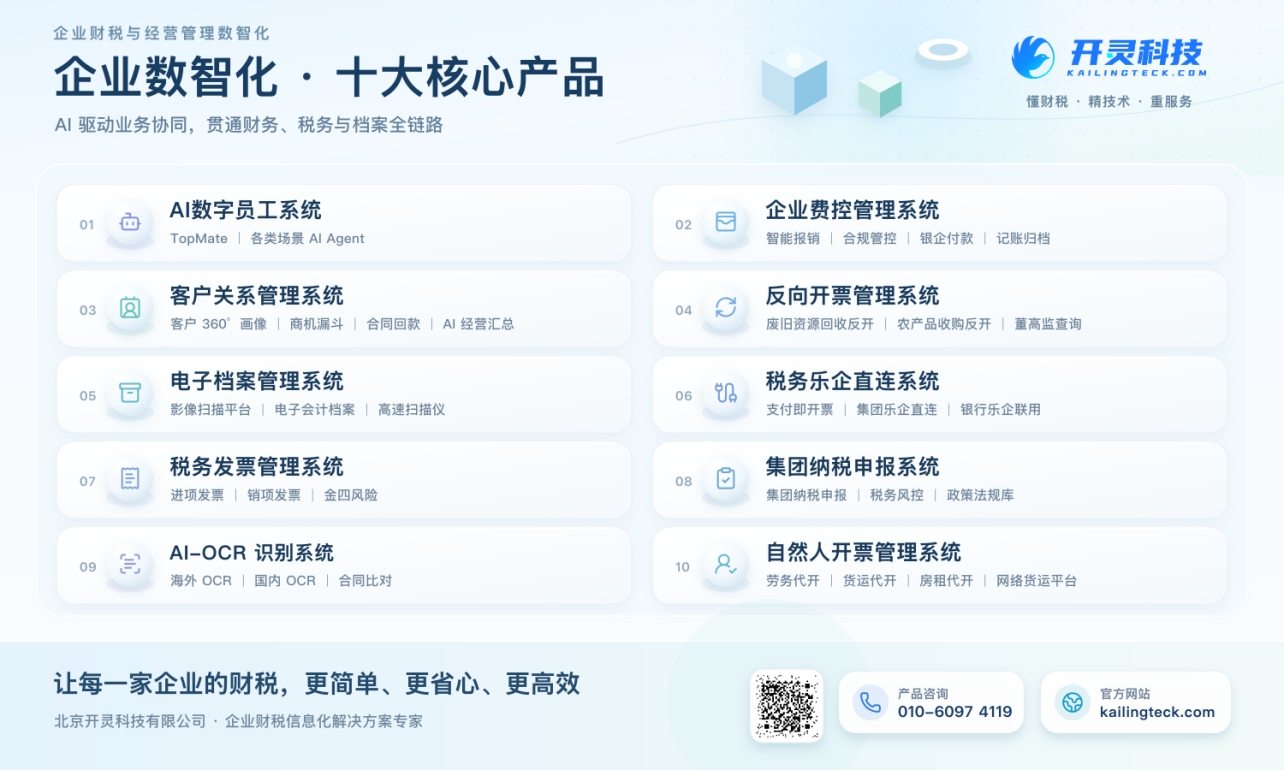
The company has now formed ten core product lines, including: AI digital employee system, enterprise expense control management system, customer relationship management system, reverse invoicing management system, invoice issuance for individuals management system, electronic archives management system, tax fully digitalized e-invoice Leqi system, tax invoice management system, group tax filing system, and AI OCR recognition system. It is committed to connecting enterprise business, finance, tax, funds, and archive data to help customers improve operational efficiency, business-finance-tax compliance capabilities, and digital management levels.
If you have any business-finance-tax digital transformation needs, welcome to contact us. Beijing Kailing Technology will serve you wholeheartedly.
Keywords: Comprehensive customer management, sales node automation, collection write-off, Kailing Technology, sales full-lifecycle CRM management system
As a comprehensive business-finance-tax digitalization solution service provider, Kailing Technology provides business-finance-tax management digital transformation products and operational services for various government agencies, institutions, and large, medium, and small enterprises. The product line includes: solutions for sales contract management system, procurement contract management system, fully digitalized Leqi interface project, automatic output invoicing system, reverse invoicing system, invoice issuance for individuals system, employee expense control and reimbursement system, input VAT invoice management system, supply chain collaborative reconciliation system, image AI OCR recognition system, automatic financial bookkeeping system, electronic accounting archives system, etc., comprehensively driving the digitalization process across various fields.
Consultation Hotline: 18513895936 / 010-60974119 Location: Beijing