010-6097 4119Book a Demo


Xinjiang tax authorities strictly investigate agricultural product purchase invoices: seeing the path to corporate compliance from 96,000 suspicious data points, Kailing Technology provides solutionsPublished: 2025-12-29 18:04 Recently, the Changji Hui Autonomous Prefecture Tax Bureau of the State Taxation Administration, targeting the characteristics of the agricultural product processing industry—"many points, long lines, scattered data"—focused on the three major links of purchase, processing, and sales to strengthen tax risk prevention and control, cumulatively screening over 96,000 suspicious data entries and blocking 1,832 proxy-issued agricultural product VAT ordinary invoices, involving an amount of 263 million yuan. This series of strict investigation actions not only demonstrates the tax authorities' determination to regulate industry tax order, but also exposes the long-standing invoice management chaos and corporate compliance pain points in the agricultural product purchase field. Against this background, the full-process management system for agricultural product purchase reverse invoicing business launched by Kailing Technology Co., Ltd. based on the national "reverse invoicing" policy provides enterprises with a clear path to compliant operations.
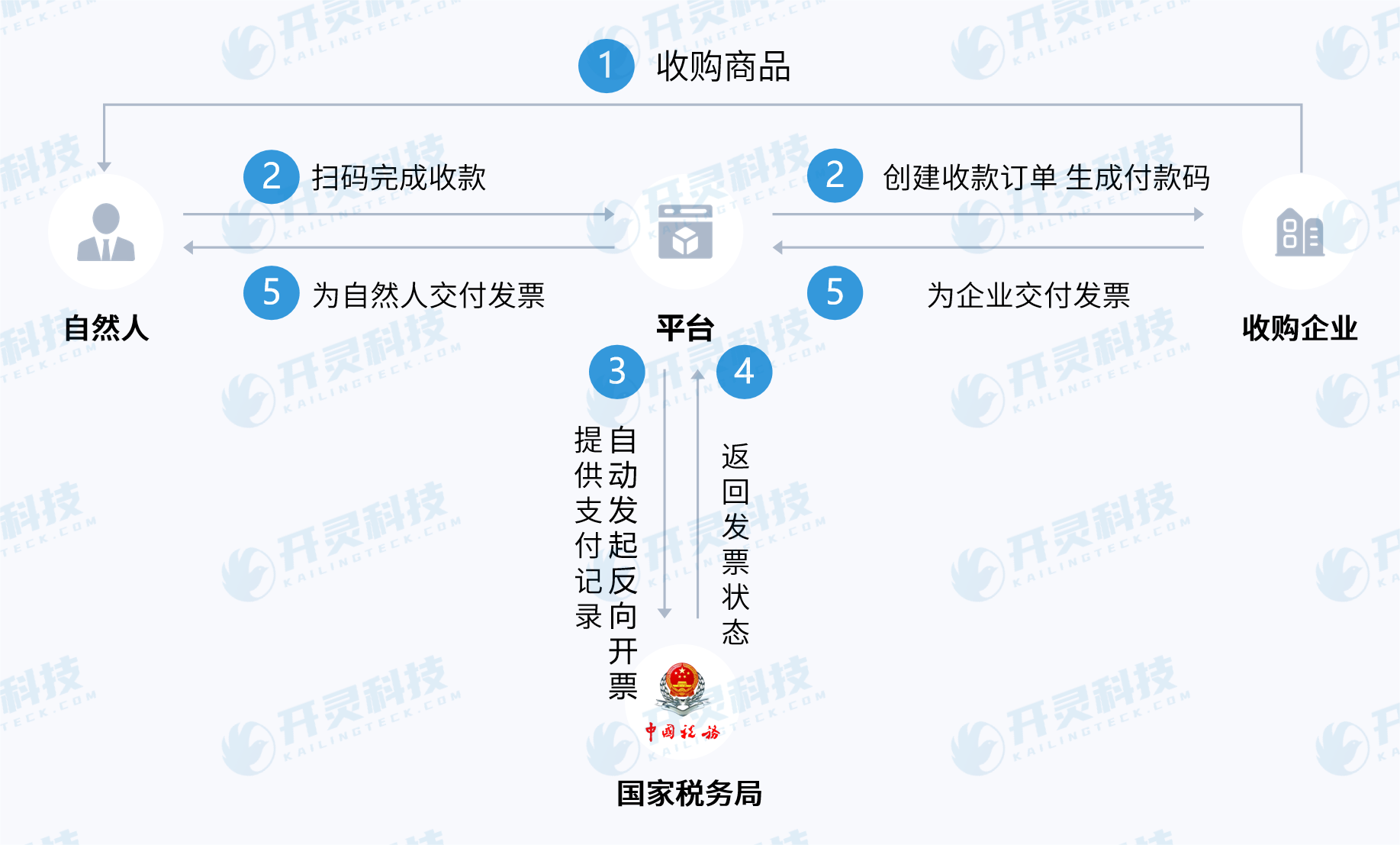
I. Under policy pressure: Compliance pain points in the agricultural product procurement industry become prominentAs a key link connecting agricultural production and market consumption, the agricultural product processing industry is thriving in Changji Prefecture, Xinjiang. At present, the area has cultivated 92 key leading enterprises in agricultural industrialization at or above the autonomous region level and 196 farmers' professional cooperatives, producing more than 480 types of agricultural products. However, as tax authorities continue to strengthen regulation, the industry's long-standing compliance shortcomings have become more prominent, mainly concentrated in three core pain points: (1) High Risk of Fraudulent Invoicing at the Purchasing End, Transaction Authenticity Hard to Verify Enterprises purchasing agricultural products from farmers can issue purchase invoices themselves to deduct taxes, but some enterprises engage in illegal operations such as "fabricating purchase targets and falsely increasing purchase quantities." Xinjiang tax authorities found through big data screening that a cotton processing enterprise issued 3,431 purchase invoices to a single farmer over 3 years, with a total amount exceeding 100 million yuan, seriously inconsistent with the farmer's actual production capacity. Such behavior not only faces consequences such as red-letter reversal of invoices and supplementary tax payments, but may also involve criminal liability. For compliant enterprises, the current situation of scattered farmers and widespread cash transactions also makes it difficult to verify the authenticity of each transaction, falling into the dilemma of "high compliance costs and high non-compliance risks." (2) Difficulties in invoice acquisition and deduction, with high tax burden pressure on enterprises Sellers of agricultural products are mostly natural persons who have not completed tax registration and cannot issue invoices themselves, making it difficult for procurement enterprises to obtain compliant input VAT invoices. According to tax law, enterprises lacking compliant invoices can neither deduct VAT (agricultural product procurement is generally deductible at 9%, and heavy processing at 10%) nor make pre-tax deductions for corporate income tax, directly driving up operating costs. At the same time, some enterprises with non-standard invoice management may, even with invoices in hand, face "Four flowsInconsistency" faces audit risk. (3) Cumbersome and inefficient financial operations, high compliance management costs Agricultural product procurement transactions are frequent and individual amounts are scattered. Enterprises need to record transaction information one by one, verify farmer identities, and manually handle payment and invoicing procedures, resulting in an enormous workload for finance staff and making errors easy. In addition, tax authorities require enterprises to retain original vouchers such as freight documents, measurement records, and acceptance sheets, and financial settlement records must be retained for individual procurement amounts above 20,000 yuan. These requirements further increase the difficulty of compliance management for enterprises, and the traditional offline model can no longer adapt to regulatory requirements. II. Policy Support: "Reverse Invoicing" Provides an Institutional Basis for Compliant OperationsIn response to the invoice management difficulties in the field of agricultural product procurement, clear policies have been issued at the national level to address them. In April 2024, the State Taxation Administration issued the Announcement on Matters Concerning Reverse Invoicing by Resource Recycling Enterprises to Individual Scrap Product Sellers (Announcement No. 5 of 2024), clarifying that eligible enterprises may issue invoices to individual sellers, breaking the traditional model of the seller issuing invoices. Previously, the Provisions on the Use of VAT Ordinary Invoices (Purchase) in Fujian Province had also made detailed specifications on the scope, requirements, and retained vouchers for purchase invoices. At the local implementation level, Xinjiang, as one of the regions where the tax bureau is focusing on promoting reverse invoicing, is actively working with platforms such as Alipay to broaden application scenarios. The implementation of this series of policies provides enterprises with institutional guidance for compliant invoicing and also lays the foundation for the promotion of digital solutions—reverse invoicing not only allows enterprises to obtain legal deduction vouchers, but also allows farmers to enjoy VAT exemption policies as stipulated, achieving a win-win for both enterprises and farmers. III. Kailing Technology Solutions: using digitalization to break compliance pain points and achieve "four-flow integration"Kailing TechnologyBased on the national "reverse invoicing" policy, launch a full-process management system for agricultural product procurement reverse invoicing business, through "invoicing upon payment,"IV"flow integration" innovative model, specifically addressing industry pain points and providing a practical compliance path for Xinjiang agricultural product procurement enterprises. (1) Core Design Philosophy: Policy Adaptation + Full-Process Digitalization This system strictly follows policy requirements such as the Provisions of Fujian Province on the Use of VAT General Invoices (Purchases), digitally integrating links such as invoice issuance, fund payment, order management, and voucher retention, achieving "invoicing upon transaction completion and full-process data traceability." The system seamlessly connects with the electronic tax bureau, ensuring the compliance and validity of invoice issuance and avoiding false invoicing risks from the source. (II) Four core functions: directly addressing corporate compliance pain points 1. Automated invoice acquisition, solving the "difficult invoicing" problem The system achieves "invoicing upon payment." After the enterprise completes purchase order creation and payment, the platform automatically initiates a reverse invoicing application to the tax authorities without manual intervention. Invoices are generated in real time and synchronized to the enterprise and farmer accounts; farmers do not need to provide complex personal information, and enterprises do not need to log in to the electronic tax bureau to issue invoices manually, completely escaping the dilemma of "hard-to-find invoices." The issued invoices meet tax deduction requirements, and agricultural product purchasing enterprises can deduct 9% or 10% VAT according to policy. 2.IVIntegrated flow risk control, eliminating false invoicing risks The system forcibly associatesContract information, logistics information, fund information, invoice information, achieving "IV"flow integration" dynamic verification. Meanwhile, the system has 76 built-in risk indicators (referencing Xinjiang tax risk prevention and control standards), automatically alerting on abnormal situations such as large-amount transactions and cross-region transactions, and working with tax big data traceability comparison to eliminate violations such as "forging procurement targets and inflating procurement quantities" from a technical level. 3. Efficient capital payment to reduce financial costs The system connects to the UnionPay Merchant platform, supporting enterprises to pay for goods directly to farmers' bank cards. Farmers do not need to pay withdrawal fees, and funds arrive in real time with no transaction limit. Enterprises can make single or batch payments through the platform without manual operation one by one, compressing the financial process from "hours" to "minutes." At the same time, the system automatically retains financial settlement records, meeting the voucher retention requirements for single transactions of 20,000 yuan or more, and reducing the pressure of enterprise archive management. 4. Full-process traceability to support tax audits Original vouchers such as order details, payment records, invoice information, farmer identity information, and acceptance sheets in the enterprise procurement process are retained in real time and traceable in the system. During tax authority verification, enterprises can retrieve full-chain data with one click, meeting the invoice management requirements of "complete items and consistent with actual business operations," and completely avoiding audit risks caused by incomplete vouchers.
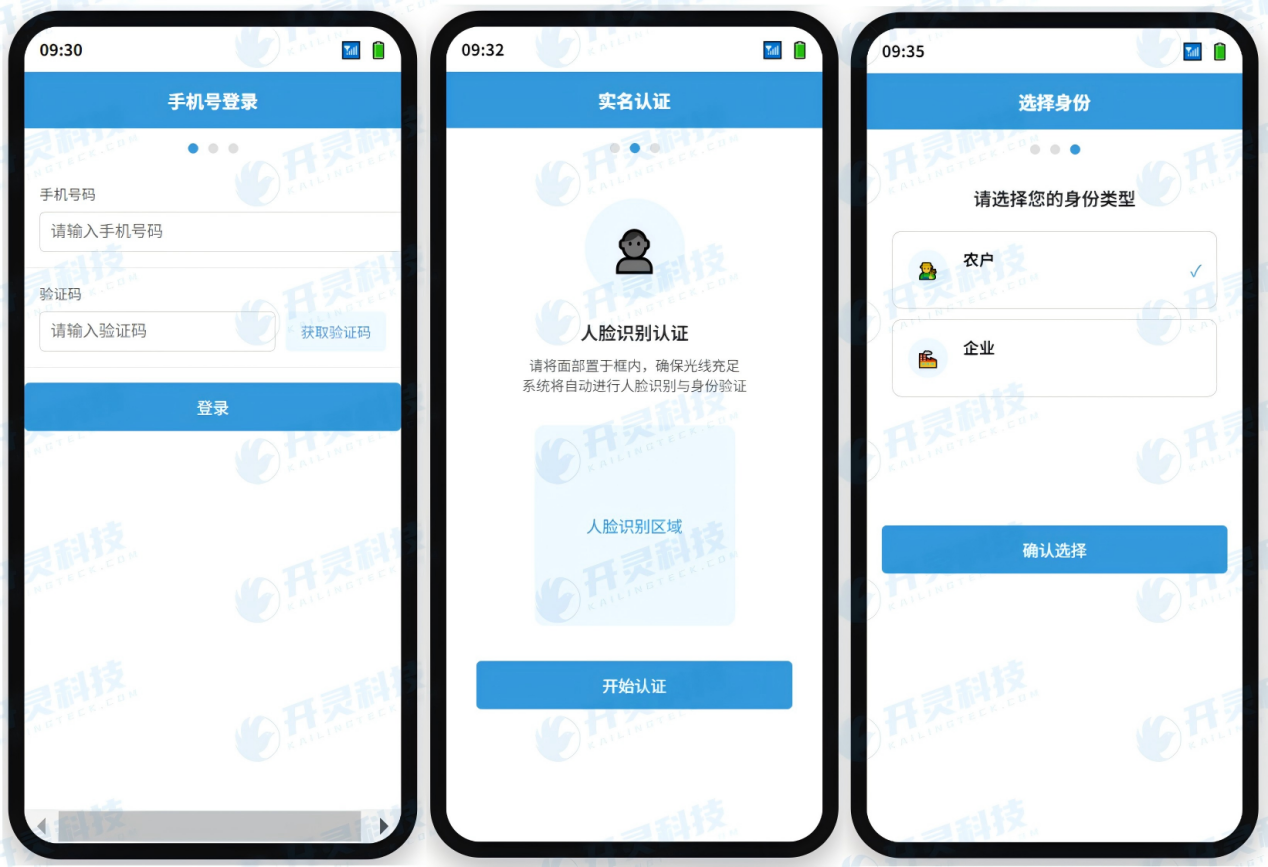
(3) Simple operating process: reducing the burden on both enterprises and farmers 1. Enterprise side: ready to use upon onboarding, no complex modifications required Enterprises submit onboarding applications through the mini-program or backend system, upload business license, legal representative ID and other materials, and can use the service after platform review and authorization of the Leqi section in the electronic tax bureau. The system supports product information initialization, historical transaction customer management, batch order creation and other functions, fitting the "high-frequency, scattered" business characteristics of agricultural product procurement. 2. Farmer side: scan to get paid, zero-threshold operation Farmers do not need to register complex accounts; by scanning the order QR code generated by the enterprise via WeChat, they can confirm transaction information and bind a bank card for payment collection. After the transaction is completed, the electronic invoice is automatically pushed to the farmer's WeChat, achieving "payment received, invoice received" with no offline errands throughout.
IV. Value of compliance transformation: From "passive response" to "proactive prevention and control"For agricultural product acquisition enterprises in Xinjiang, connecting to the Kailing Technology reverse invoicing management system not only meets the regulatory requirements of tax authorities but also achieves multiple business values: At the compliance level, the system through "IV"flow integration" and full-process traceability, allowing enterprises to completely escape false invoicing risks. When facing tax audits, they have "evidence to check and proof to rely on," avoiding compliance crises caused by screening suspicious data such as 96,000 records; in terms of efficiency, it frees finance personnel from tedious invoicing, reconciliation, and voucher organization work, allowing them to focus on core business; in terms of cost, legitimate input VAT deduction vouchers can directly reduce corporate tax burden, and efficient payment and invoicing processes reduce labor and communication costs. From the perspective of industry development, this system is driving the agricultural product procurement industry from the traditional model of "people watching people, orders watching orders" to a digital model of "data running the process, system-based risk control." Just as Xinjiang tax authorities regulate industry order through big data screening, Kailing Technology's solution provides enterprises with tools for proactive compliance, making compliant operations the cornerstone of sustainable industry development. The screening action by Xinjiang tax authorities on 96,000 suspicious data points marks that regulation of the agricultural product purchasing industry has entered a new stage of "big data empowerment and full-chain control." Based on the national "reverse invoicing" policy, Kailing Technology has launched a full-process management system that uses digital means to solve core pain points such as invoice acquisition, risk prevention and control, and cost control, providing Xinjiang agricultural product purchasing enterprises with a transformation path that is "compliant, efficient, and cost-reducing." To learn moreReverse invoicing applicable scenarios andFor system details, visit Kailing Technology to obtain a dedicated solution:https://www.kailingteck.com/h-col-127.html 。 As a comprehensive business-finance-tax digitalization solution service provider, Kailing Technology provides business-finance-tax management digital transformation products and operational services for various government agencies, institutions, and large, medium, and small enterprises. The product line includes: Sales contract management system, procurement contract management system, fully digitalized Leqi interface project, output automatic invoicing system,Reverse invoicing system,Solutions for the invoice issuance for individuals system, employee expense control and reimbursement system, input VAT invoice management system, supply chain collaborative reconciliation system, image AI OCR recognition system, automated financial bookkeeping system, electronic accounting archives system, and other businesses, comprehensively advancing the digitalization process across various fields. If you have any business-finance-tax digital transformation needs, welcome to contact us. Beijing Kailing Technology will serve you wholeheartedly.
#Reverse Invoicing Solution #Reverse Invoicing System #Resource Recycling Enterprise Reverse Invoicing Solution #Agricultural Product Procurement Reverse Invoicing Solution #Digital Business-Finance-Tax |