010-6097 4119Book a Demo


Solving the Reverse Invoicing Challenge in Agricultural Product Procurement! A Full-Process Practical Manual for Digital Compliance in Agricultural Product Procurement Reverse InvoicingPublished: 2025-12-19 17:21 Content timeliness statement (updated 2026-08-29) This article was originally published on 2025-12-19. The following are changes to current regulations related to this article since publication:
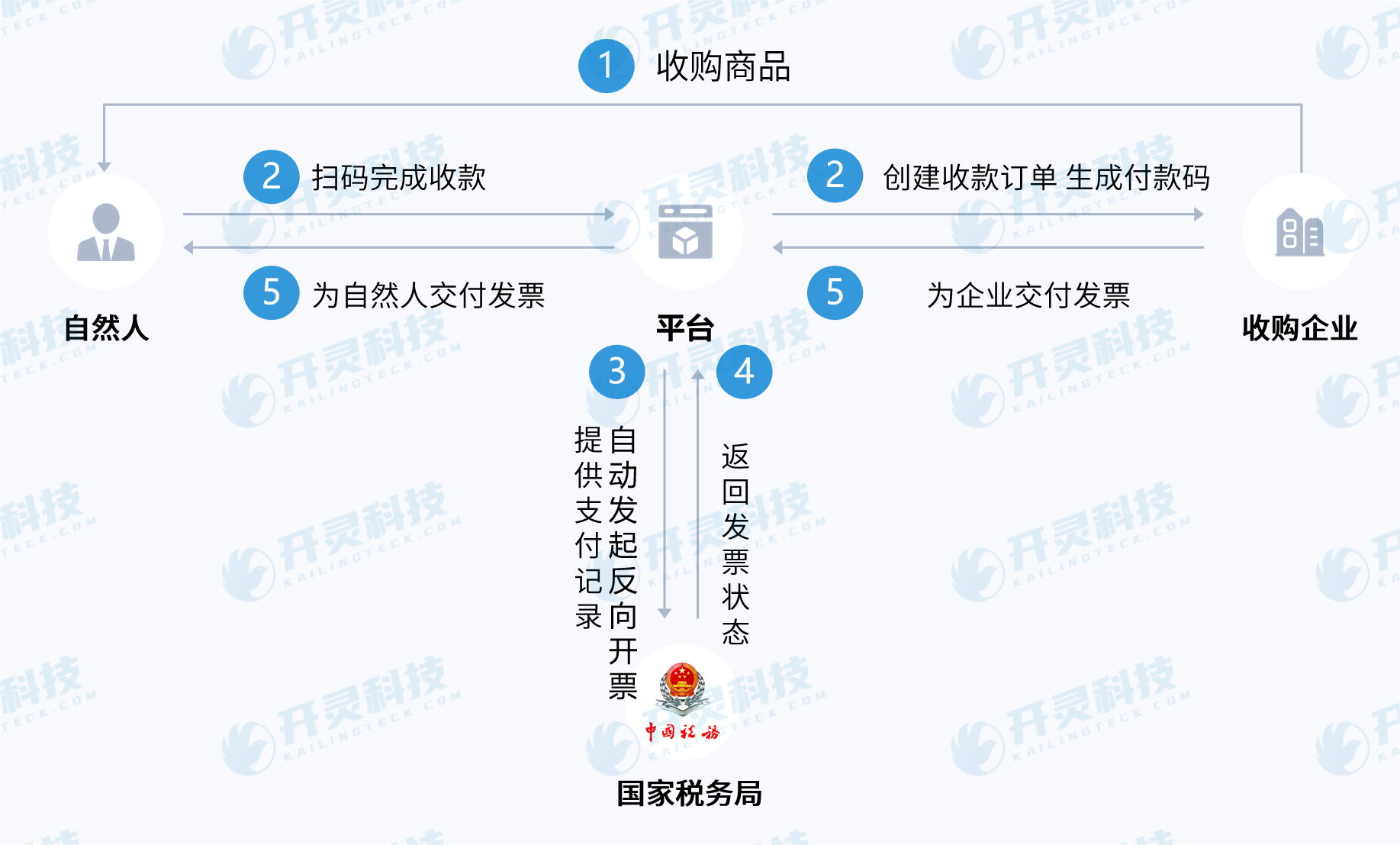
In agricultural product procurement, when enterprises purchase vegetables directly from farmers, they often face the dilemma of "farmers having no invoicing capability," making tax compliance difficult to advance. In fact, tax law has long provided a dedicated solution for such scenarios: "reverse invoicing" — that is, the procurement enterprise (buyer) issues an agricultural product procurement invoice to the farmer (seller), overturning the traditional "seller issues invoice" model. This not only provides enterprises with compliant pre-tax deduction vouchers for corporate income tax, but also ensures farmers enjoy the VAT exemption policy in accordance with the law. In recent years, national policies have continued to increase support for the implementation of reverse invoicing: in March 2024, the State Council issued a plan clearly promoting reverse invoicing; in April 2024, the State Taxation Administration further refined operational measures; in 2025, Jiangxi, Guangdong, Zhejiang, and other places accelerated the full coverage of reverse invoicing for agricultural product purchasing. With policy benefits and digital tools, enterprises only need to complete the four key steps of "qualification filing - standardized invoicing - evidence retention - archive management" to easily achieve tax compliance, and digital means can multiply the efficiency of the entire process. Step 1: Qualification filing — digital collaboration opens the prerequisite for invoicing Enterprises do not automatically have reverse invoicing qualification. They must first pass the tax authority's qualification review, the core of which is proving that the "business is authentic and compliant." Nowadays, with digital platforms, the filing process can be greatly simplified: 1. More convenient material submission:Explain the enterprise's business scope (which must include agricultural product procurement categories) and actual procurement needs to the competent tax authority, and provide internal financial control system documents to prove the ability to manage invoices and retain vouchers; if settled on an agricultural product trading platform, materials can also be submitted online synchronously through the platform, reducing offline communication costs. 2. Higher verification pass rate:Tax authorities will verify the authenticity of materials and confirm that the enterprise has no record of non-compliant invoicing and that the business model meets the requirement of "direct procurement from farmers"; the platform can assist enterprises in providing proof of standardized transaction processes, making verification smoother. 3. Seamless connection between filing and onboarding:After filing is approved, the company logs in to the tax system to view the "Specific Business - Agricultural Product Purchase" category and confirm that the reverse invoicing qualification is effective; at the same time, it completes merchant information binding on the onboarding platform and enables invoicing permissions, achieving "one operation, dual effectiveness." Step 2: Standardized invoicing — invoice upon payment, eliminating manual errors When a procurement business occurs, the enterprise issues an invoice as the invoicing party. Digital tools make the invoicing process more precise and efficient, with no key information omitted:
- Automatic verification of seller information:Farmers scan the code via the platform mini program to register and upload their ID card. The system uses OCR to intelligently recognize and extract the name and ID number. After completing real-name authentication with the public security system, the information is automatically synced to the invoice information, with no manual entry required, avoiding errors and omissions at the source. - Precise matching of goods information:When enterprises create purchase orders on the platform, they fill in the agricultural product name, unit, quantity, unit price and total amount item by item. The system automatically synchronizes them to the invoice template, ensuring complete consistency with actual procurement. It supports batch addition of product details, greatly improving invoicing efficiency. - Automatic remarks + instant invoicing:The system automatically notes the origin and purchase date of agricultural products, further strengthening business authenticity; it adopts a "pay and invoice" model, where after the enterprise completes payment, the platform initiates an invoicing request to the tax system in real time and generates a blue invoice; if a refund or return occurs, the system simultaneously issues a red invoice, with no manual intervention throughout. Step 3: Evidence retention —Four flows in one, automatically aggregate the compliance chain Reverse invoicing is issued by enterprises themselves and lacks external invoice corroboration, so a complete evidence chain must be established to prove that "the transaction truly exists" and that "the farmer is selling self-produced goods." The following six core types of evidence are indispensable, and a digital platform makes evidence collection more convenient and retention more secure:
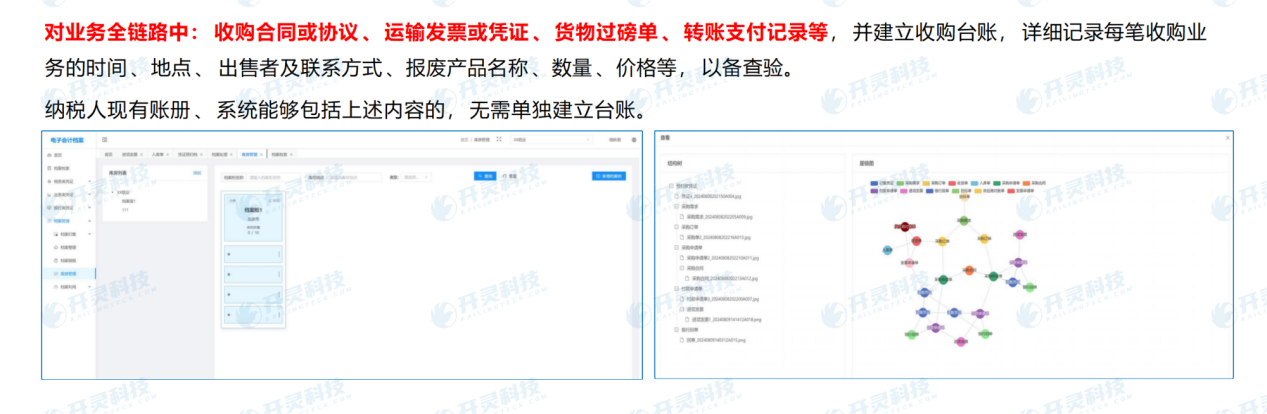
1. Identity confirmation evidence:The ID card copy uploaded by farmers during registration, after confirmation by their own electronic signature, is permanently archived by the system, ensuring consistency with the ID number on the invoice and replacing traditional paper signatures. 2. Core evidence of self-production qualification:Farmers must provide the original "Self-Production Certificate" issued and stamped with the official seal by the local village committee or township government, specifying name, ID number, contracted land information, self-produced varieties, and estimated output—this is the key to distinguishing "farmers" from "vendors." Farmers can upload electronic scans via the platform for archiving and retrieve them at any time. 3. Transaction agreement evidence:The platform embeds standardized procurement contract templates, supporting enterprises and farmers to sign electronic contracts online, clarifying rights and responsibilities, procurement varieties, pricing mechanisms, delivery and settlement methods, with customizable terms, completely replacing verbal agreements, with electronic contracts automatically retained for reference. 4. Process record evidence:The platform connects to the weighbridge system to automatically obtain weighing data and synchronously generate the Procurement List and Warehouse Entry Registration Record; enterprises can also upload photos or videos of the procurement site and delivery process, which the system archives by order association to form dynamic transaction evidence. 5. Ironclad proof of fund flow:Eliminate large cash payments; enterprises pay the goods payment directly to farmers' bank cards through the platform, with real-time arrival and no transaction limits, supporting all common banks; during transfer, the system automatically notes the order number, achieving "Contract flow,Fund flow, document flow, goods flow"Four flows in one, with data synchronized to the tax system in real time, becoming the core basis for tax audits. 6. Comprehensive retention of supporting evidence:The platform automatically archives farmer contact information, procurement location positioning records, order IP addresses, and device information, forming a complete transaction trajectory; if disputes arise later, all supporting evidence can be exported with one click to prove business authenticity. Step 4: Archives Management - Digital Archiving for Full-Cycle Traceability Tax compliance is not a one-time operation; long-term standardized management is needed to ensure vouchers are traceable. Digital tools free archive management from cumbersome work, making it more efficient and safer:
1. Dedicated digital archives for farmers:The platform establishes a dedicated electronic archive for each cooperating farmer, automatically archiving basic materials such as ID card real-name authentication information, bank account information, and electronic purchase contracts, achieving "one file per person," queryable and exportable anytime and anywhere, replacing traditional paper archives. 2. One-to-one document association and archiving:Based on the unique order number, the system automatically associates and integrates purchase invoices, procurement lists, weighbridge records, and payment vouchers, and marks the transaction date and farmer name, achieving "one invoice corresponding to one order and invoice-payment matching"; all vouchers are stored in the cloud in the form of electronic scans for at least 10 years, fully complying with tax material retention requirements, and can be exported with one click during tax authority verification. 3. Real-time risk warning and prevention:The platform uses intelligent algorithms to monitor transaction data and provides real-time warnings for abnormal situations such as excessive purchases, price anomalies, and fund recirculation, helping enterprises identify and avoid potential tax risks in advance. Kailing TechnologyFull-chain solutions: empowering both compliance and efficiency Taking the full-process management system for reverse invoicing of agricultural product purchases launched by Beijing Kailing Technology as an example, the system builds a full-link digital platform for enterprises, fully digitalizing the offline processes of both the enterprise side and the farmer side, achieving dual improvements in compliance and efficiency: - Farmer side:Convenient operation, privacy protection。No need to provide sensitive personal information to the enterprise; scan the code to register and complete real-name authentication; receive payment and invoices in real time after the transaction, with funds directly reaching the bank card and no withdrawal fees. The entire operation is simple and easy to understand. - Enterprise side:Simplified processes, worry-free and efficient。No need to log in to the electronic tax bureau to manually issue invoices; the entire process of order creation, payment, and invoicing can be completed through the platform; finance no longer needs to make manual payments one by one, and batch operations are more efficient, greatly reducing manual errors. - Tax authority side:Compliance visible, verification worry-free。The big data dashboard transforms invoicing data, transaction flows, risk warnings, etc. into intuitive dynamic charts, allowing managers to grasp the full business picture in real time; the full-chain electronic archives support one-click export, making tax inspections more manageable. - Fund side:Payment freedom, unrestricted。Supports all common banks, with no restriction on the account-opening banks of enterprises and farmers. There are no specific limits on single transactions or accounts, and funds arrive in real time, ensuring smooth transactions. Core Project Value: Multi-Party Win-Win, Achieving Both Compliance and Efficiency Through the combination of "policy support + digital tools," the reverse invoicing model for agricultural product procurement brings multiple values to enterprises, farmers, and even the entire industry: 1. Zero tax compliance risk:Fully complies with the State Taxation Administration's "Four flows in one" requirements, with a complete and traceable evidence chain, thoroughly solving the problems of difficult invoice acquisition and high risk of fraudulent invoicing; reverse invoicing allows compliant VAT deduction, effectively reducing corporate income tax burden. 2. Major improvement in operational efficiency:Processes such as identity verification, invoicing, and evidence collection are completed automatically, greatly reducing the complexity of financial operations, shortening the entire process time by more than 60%, and bringing manual errors to nearly zero. 3. Win-win cooperation for development:Enterprises simplify operational processes and reduce compliance costs, farmers receive payments conveniently with privacy protected, and both parties' willingness to cooperate increases, helping build a more stable and efficient agricultural product procurement supply chain. Kailing Technology is willing to join hands with more enterprises to turn the policy benefits of reverse invoicing for agricultural product procurement into tangible management efficiency, and jointly promote the agricultural supply chain toward a more standardized, transparent, and efficient new stage. ContactKailing Technology, get a customized solution and system demo,Make compliance simpler:https://www.kailingteck.com/h-col-127.html 。 As a comprehensive business-finance-tax digitalization solution service provider, Kailing Technology provides business-finance-tax management digital transformation products and operational services for various government agencies, institutions, and large, medium, and small enterprises. The product line includes: Sales contract management system, procurement contract management system, fully digitalized Leqi interface project, output automatic invoicing system,Reverse invoicing system,Solutions for the invoice issuance for individuals system, employee expense control and reimbursement system, input VAT invoice management system, supply chain collaborative reconciliation system, image AI OCR recognition system, automated financial bookkeeping system, electronic accounting archives system, and other businesses, comprehensively advancing the digitalization process across various fields. If you have any business-finance-tax digital transformation needs, welcome to contact us. Beijing Kailing Technology will serve you wholeheartedly.
#Reverse Invoicing Solution #Reverse Invoicing System #Resource Recycling Enterprise Reverse Invoicing Solution #Agricultural Product Procurement Reverse Invoicing Solution #Digital Business-Finance-Tax |