010-6097 4119Book a Demo


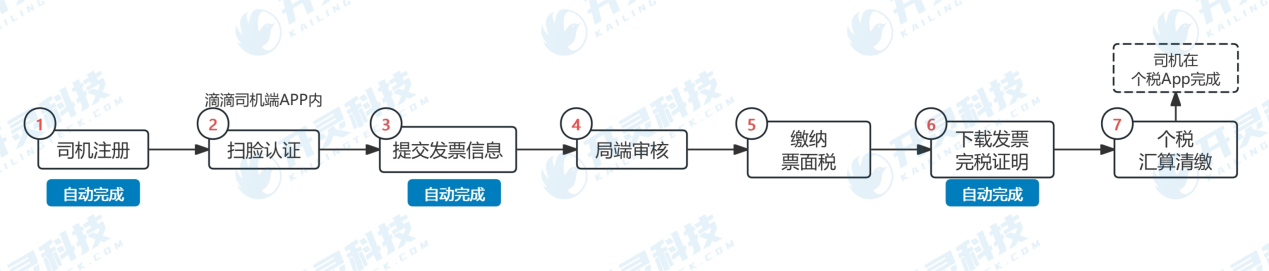
Under China Golden Tax Phase IV, how can invoice issuance for individuals be compliant? Kailing Technology builds a secure evidence chainPublished: 2025-10-17 17:10 With the full implementation of China Golden Tax Phase IV, tax regulation has entered a new stage of "big data penetrating verification"—information sharing mechanisms are connected and risk analysis models are upgraded, and invoice issuance for individuals business between enterprises and natural persons has shifted from "obtaining invoices" to the deeper challenge of "full-process compliance." Previously, enterprises often faced broken invoice chains caused by natural persons' low willingness to issue invoices and cumbersome processes, or tax risks caused by improper information storage, and even compliance loopholes arising from manual tax calculation and multi-location filing. Against this backdrop, Kailing Technology, through "technology adaptation + process standardization + evidence chain construction," provides enterprises with compliant solutions for invoice issuance for individuals, fundamentally solving the challenge of balancing regulatory adaptation and operational efficiency. I. Enterprise Compliance Dilemmas under China Golden Tax Phase IV: The Three Core Pain Points of Invoice Issuance for IndividualsThe regulatory upgrade of China Golden Tax Phase IV has fully exposed the potential risks of enterprises in the invoice issuance for individuals process. From a practical perspective, enterprises mainly face three major pain points, which are directly related to tax burden pressure and regulatory compliance。 1. Invoice compliance risk: Tax burden pressure caused by broken chains Enterprise expenditures need compliant invoices as pre-income-tax deduction vouchers, but natural persons (such as homeowners, freight drivers, and service providers) generally lack invoicing capability - they do not understand online operation processes and are unwilling to cooperate with face scan authentication, making it difficult for enterprises to obtain compliant vouchers. Some enterprises, due to "white slip bookkeeping" or invoice information not...full, not only cannot offset the tax burden, but may also be deemed non-compliant by tax authorities, facing the risk of tax repayment and fines. 2. Process efficiency bottleneck: the dual drain of long cycles and high costs In the traditional invoice issuance for individuals process, enterprises need to repeatedly guide individuals to operate the electronic tax bureau, track invoicing progress in real time, and even transmit paper materials offline, with the entire cycle often lasting 3-5 days. Taking the housing rental scenario as an example, enterprises need to coordinate with property owners to submit ownership certificates and lease contracts, then complete tax bureau review and payment, resulting in high coordination costs and error-proneness; in the freight scenario, drivers are scattered and highly mobile, and the labor cost of information collection and invoice aggregation increases significantly. 3. Hidden risks in data security and evidence retentionSensitive data such as natural person identity information and contracts collected by enterprises, if improperly stored, can easily lead to privacy leakage risks; at the same time, tax verification requires consistency of the "business-invoice-capital" three flows. If enterprises cannot provide complete chain evidence such as invoicing applications, review records, and payment vouchers, they may face regulatory inquiries and even be deemed to have "issued false invoices." II. Key to breaking through compliance: Building a "full-process traceable" secure evidence chainFaced with the regulatory logic of China Golden Tax Phase IV, the compliance core of enterprise invoice issuance for individuals has shifted from "single invoice compliance" to "closed-loop evidence chain across all stages." According to tax regulatory requirements, a compliant evidence chain needs to cover three major dimensions。 - Entity compliance:Individual identity is authentic and verifiable, and the invoicing entity is consistent with the actual service provider; - Business compliance:Invoicing content matches the actual business (e.g., lease address, freight route, service content), with supporting materials such as contracts and property ownership certificates attached; - Process compliance:From invoicing application, identity authentication, and tax authority review to tax payment and invoice archiving, every step has a traceable record and is synced with the electronic tax bureau's data. Kailing Technology's solution revolves around these three dimensions, using technical tools and standardized processes to help enterprises automatically build a complete, verifiable compliance evidence chain, meeting regulatory requirements while reducing operational costs. III. Kailing Technology Solutions: Technology + process dual-driven compliance implementationWith "connecting with regulators + serving enterprises" at its core, Kailing Technology has built an invoice issuance platform for individuals covering "multi-scenario adaptation, full-process compliance, and controllable data security." Its core value lies in shifting enterprises from "passively responding to compliance" to "proactively building compliance capabilities." 1. Technical architecture: Dual assurance of stable connection and data security The platform adopts an "enterprise intranet private deployment" model to ensure sensitive data is not leaked, while supporting high-concurrency scenarios through application cluster and database cluster design. Key technical designs include: - Direct Connection to Regulatory Systems:Seamless connection with the electronic tax bureaus of various provinces to achieve automatic application, review feedback, and data synchronization for fully digitalized e-invoices, avoiding information deviations caused by manual operations; - SmartFace scan authentication:Individuals do not need to download third-party Apps; scan-face authentication can be completed within the enterprise's business interface (such as rental Apps and freight platforms), greatly improving individual cooperation; - Data security protection:100% deployed on the enterprise intranet, ensuring that sensitive data such as identity information and contract materials is not transmitted externally, while meeting the requirements of the Personal Information Protection Law. 2. Core process: standardized compliance paths covering multiple scenariosFor the three common individual invoice issuance scenarios of housing rental, goods and services, and freight transport, Kailing Technology has designed standardized processes, with evidence preserved synchronously at each step to form a closed loop: (1) Housing lease scenario: dual initiation path for the lessee/property owner - Lessee-initiated:Enterprises (such as leasing platforms) submit the property owner's identity information, property ownership certificate, and lease contract → the system automatically triggers the property owner's facial recognition authorization → the invoice issuance platform submits to the tax bureau for review → the enterprise withholds in batches or pays taxes by scanning a code → automatically downloads invoices and tax payment certificates, with the entire process traceable (authorization records, review logs, payment vouchers);
- Property owner initiates:Property owners complete electronic tax bureau registration and face scan through the enterprise side → upload property information and contract → system verifies information compliance → submit invoicing application and tax payment → invoice is automatically pushed to the enterprise, avoiding invalid invoices caused by "information asymmetry" for the enterprise.
(2) Freight scenario: an efficient process adapted to the mobility characteristics of drivers. In response to the characteristics of freight drivers being "scattered and weak in operational ability," the platform supports: - Automatic driver registration with the electronic tax bureau,First face scanVerificationAfterward, subsequent logins do not require repeated authentication; - The enterprise imports freight order information in batches (place of departure, place of arrival, goods name, license plate number), and the system automatically generates invoicing applications; - Drivers only need one facial scan to complete invoicing, and the taxCanCompleted by the enterprise through bank batch withholding or UnionPay payment, with tax payment certificates and invoices archived synchronously to the enterprise system.
(3) Goods/ServicesGeneral invoice issuance for individualsScenario: Balancing small-amount tax exemption and large-amount compliance For single invoices with an amount below 500 yuan, the system automatically adapts to the VAT exemption policy with no tax payment required; for large-amount invoices, it strictly verifies business contracts and service details to ensure the invoicing content is consistent with the actual business, and automatically calculates VAT, urban maintenance and construction tax, etc., avoiding manual tax calculation errors.
3. Core of the evidence chain: full-process traceability and regulatory adaptationThe platform's core value lies in "automatically building a traceable evidence chain", where every operation generates a compliance record that can directly respond to tax audits: - Identity proof:Individual scan-face authentication records and front and back copies of ID cards are archived; - Business evidence:Supporting materials such as lease contracts, freight orders, and service agreements; - Process evidence:Invoice request form, tax bureau review feedback, tax payment vouchers; - Result evidence:Fully digitalized e-invoices (PDF/OFD format), tax payment certificates, with real-time synchronization with the Electronic Tax Bureau, ensuring consistency of the three flows: "invoice, tax, and certificate." IV. Practical verification: the effectiveness of solving enterprise compliance challengesKailing Technology's solution has been implemented in enterprises across multiple industries, helping enterprises solve the compliance challenge of invoice issuance for individuals under China Golden Tax Phase IV. The core results are concentrated in two dimensions: "reduced compliance risk" and "improved operational efficiency."。 Case 1: A cross-regional new energy enterprise—solving the challenges of multi-province invoicing adaptation and invoice acquisition This enterprise's business covers more than 10 provinces and needs to lease rooftops from farmers to install photovoltaic equipment. Previously, due to differences in requirements among provincial tax bureaus, the acquisition rate of invoices issued for individuals was less than 5%, and it faced the risk of a large tax burden that could not be deducted. Through Kailing Technology's solution: - The system adapts to the rules of electronic tax bureaus in various provinces, automatically matching the material requirements of different regions (such as some provinces requiring property ownership certificates, and some only requiring contracts); - Simplify farmer operations: only one face scan is required, no offline document submission is needed, and invoicing cooperation is greatly improved; - Ultimately, the invoice acquisition rate increased to over 75%, the compliant deduction ratio improved, annual tax risk reduction exceeded ten million yuan, and the complete evidence chain formed successfully passed the tax authority's special inspection. Case 2: AMedical Academic Institutions——Achieve invoicing process automation and labor cost optimization ThisThe institution hosts more than 500 academic conferences each year, involving experts and teachers distributed across the country, previously, 5 finance staff were dedicated to tracking the invoice issuance for individuals process, with an average invoicing cycle of 4 days, and documents were easily rendered invalid due to missing materials. After introducing the Kailing solution: - Process automation: from information submission and tax authority review to tax payment, 90% of steps require no manual intervention; - The invoicing cycle is shortened to within 1 working day, finance personnel are reduced to 2 people, and labor costs are reduced by 60%; - All bills and evidence are automatically archived. During annual tax self-inspection, it takes only 1 hour to retrieve the full-chain materials, greatly reducing verification pressure. Case 3: A nationwide freight enterprise—solving the challenges of scattered driver invoicing and data security This enterprise has tens of thousands of partner drivers. Previously, due to high driver turnover and low willingness to issue invoices, 30% of freight expenses each month could not obtain compliant invoices. Through Kailing Technology's solution: - Drivers can complete face scan invoicing within the freight App, with no need to jump to other platforms, increasing cooperation by 80%; - Enterprises withhold taxes in batches through banks, avoiding the cumbersome process of individual payment by drivers; - All driver identity information and order data are stored on the enterprise intranet, and no data leakage incident has occurred. At the same time, the complete evidence chain ensures consistency of "invoice, document, payment" in freight business and passes the tax authorities' big data risk screening. As a key link in cooperation between enterprises and individuals, the compliance of invoice issuance for individuals not only affects tax burden safety but also impacts the enterprise's overall regulatory credit. Kailing Technology's solution is not a simple invoicing tool, but rather helps enterprises integrate compliance requirements into daily operations by technically adapting to regulatory requirements, standardizing compliance paths through processes, and building evidence chains across all stages. It not only solves the current difficulties of invoice acquisition and risk prevention, but also reserves adaptation space for future regulatory upgrades. For enterprises, responding to regulatory changes with compliance capabilities is the only way to solidify their operational foundation in a complex market environment and achieve long-term stable development. Welcome industries with relevant needs to contact Kailing Technology to obtain customized solutions:https://www.kailingteck.com/h-col-126.html 。 As a comprehensive business-finance-tax digitalization solution service provider, Kailing Technology provides business-finance-tax management digital transformation products and operational services for various government agencies, institutions, and large, medium, and small enterprises. The product line includes: Solutions for sales contract management system, procurement contract management system, fully digitalized Leqi interface project, automatic output VAT invoicing system, invoice issuance for individuals system, employee expense control and reimbursement system, input VAT invoice management system, supply chain collaborative reconciliation system, imaging OCR recognition system, automatic financial bookkeeping system, electronic accounting archives system and other businesses, comprehensively advancing the digitalization process across various fields. If you have any business-finance-tax digital transformation needs, welcome to contact us. Beijing Kailing Technology will serve you wholeheartedly.
|