010-6097 4119Book a Demo


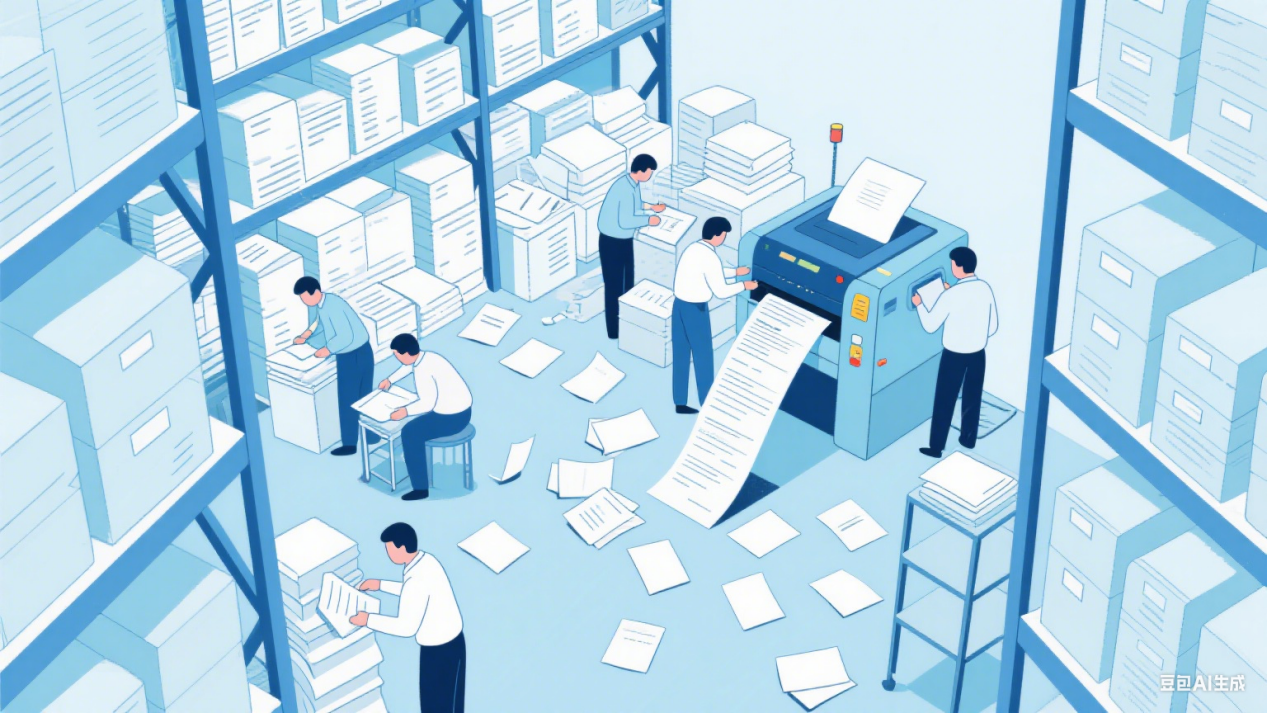
How to do electronic archives under China Golden Tax Phase IV? Kailing Technology's policy adaptation rate is 100%Published: 2025-07-03 17:24 With the comprehensive advancement of China Golden Tax Phase IV, tax collection and administration have entered a new stage of "tax governance by data," and full-process electronic management of electronic vouchers has become a mandatory requirement for corporate compliance. The Ministry of Finance and nine other departments jointly issued the Notice on Jointly Carrying Out the Deepened Pilot Work on Accounting Data Standards for Electronic Vouchers, which specifies that nine categories of electronic vouchers, including fully digitalized e-invoices, railway electronic tickets, and bank electronic receipts, must achieve paperless full-process management from issuance to archiving. Against this backdrop, enterprise electronic accounting archives management is not only about efficiency improvement, but has also become a core element in responding to tax supervision and preventing compliance risks. Kailing Technology's electronic accounting archives solution based on business-finance integration provides enterprises with a new path for fully compliant and efficient archives management with a 100% policy adaptation rate. I. Industry Pain Points Under Policy Drivers: Traditional Models Cannot Bear the WeightChina Golden Tax Phase IV's strengthened penetrating supervision of corporate data has made the compliance, completeness, and traceability of electronic accounting archives a rigid requirement. However, most enterprises still use traditional archive management models and face multiple challenges: ▪ Cost and efficiency dilemma:Full paper printing and manual organization not only consume large amounts of paper and storage resources, but also cause disconnects among business, finance, and archive data due to fragmented processes, failing to meet China Golden Tax Phase IV requirements for full-process electronification. ▪ Prominent compliance risks:Electronic vouchers such as fully digitalized e-invoices need to be stored as XML originals. Under traditional models, problems such as missing originals and broken evidence chains can easily lead to internal control loopholes and tax audit risks. ▪ Data integration challenges:Business-finance systems (ERP, CRM, expense control, etc.) have different data formats, making it difficult to form a unified "business-finance-tax-archive" data pool and unable to respond to China Golden Tax Phase IV's verification requirements for data relevance and consistency.
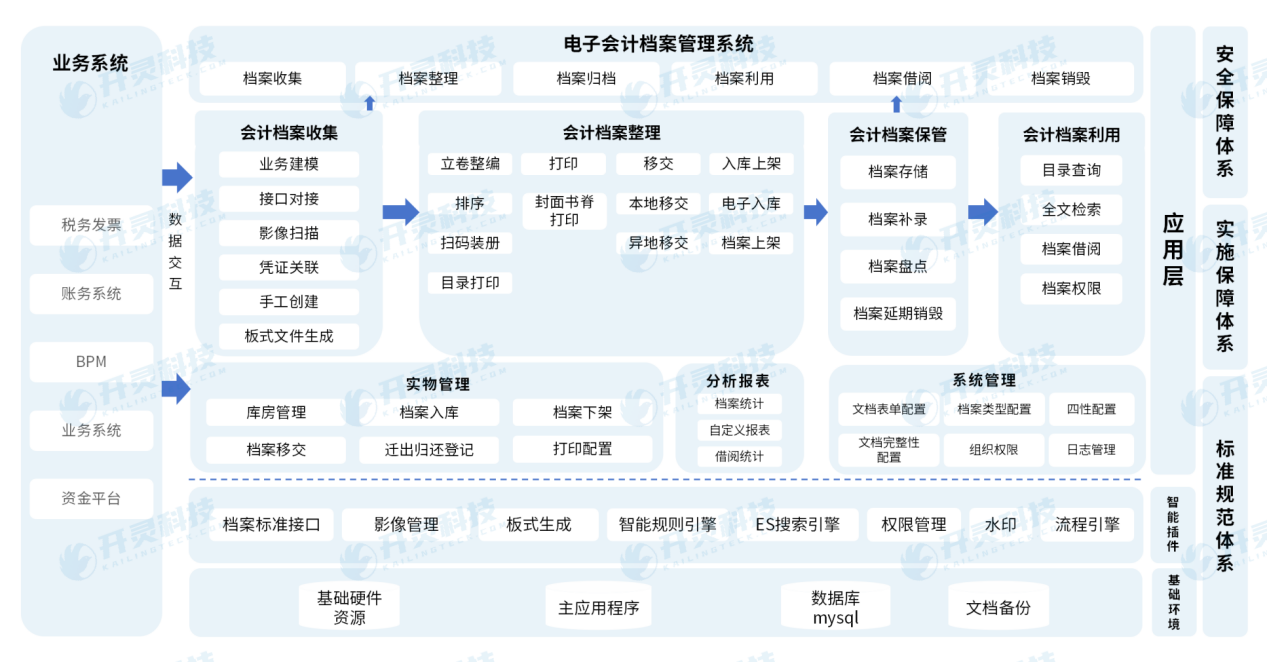
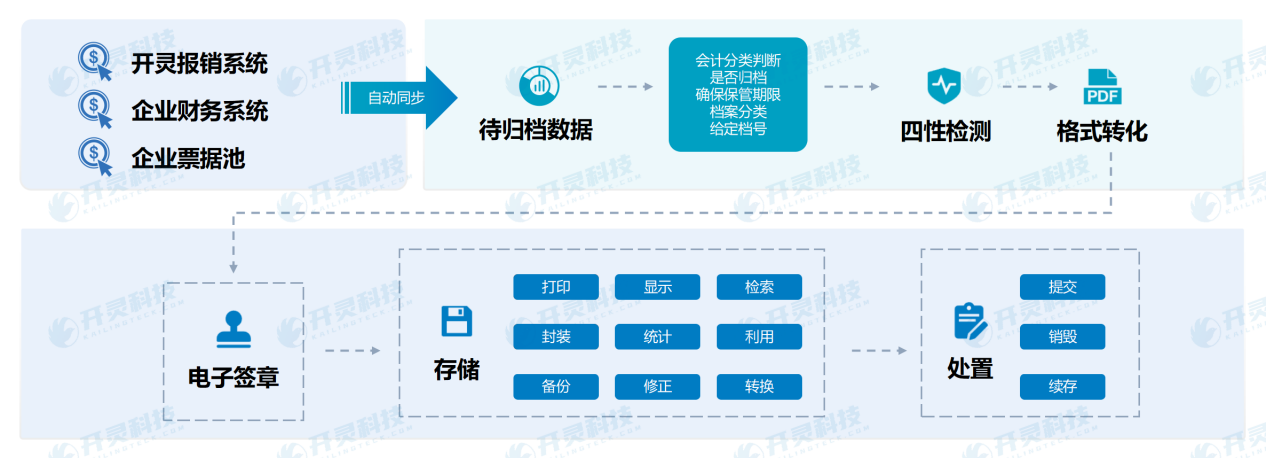
II. Analysis of build challenges: the obstacles to electronic archives transformationDriven by both China Golden Tax Phase IV and the popularization of electronic vouchers, enterprise electronic archives construction faces multiple barriers: 1. Reconstruction of fully digitalized e-invoice management modelThe collection, storage, and verification methods for XML files have fundamentally changed, requiring adaptation to new archiving standards; otherwise, compliance defects are likely to occur. 2. Inconsistent system integration standardsThe business-finance systems of multi-business enterprises are developed by different vendors, with large differences in data formats and interface rules, making integration difficult and hard to meet China Golden Tax Phase IV requirements for data connectivity. 3. Complex paper-electronic parallel managementOffline paper vouchers and online electronic archives need to establish precise associations. Traditional models struggle to achieve "one order, one archive" traceability management, increasing regulatory risk. 4. High requirements for flexible scalabilityVoucher types differ significantly across business segments (such as manufacturing and services), and the system needs rapid adaptation capabilities to respond to dynamic changes in policies and business. III. Kailing Technology Solutions: 100% policy adaptation, building an integrated business-finance-archive systemBased on deep interpretation of China Golden Tax Phase IV policies and electronic accounting archive standards, Kailing Technology has built a full-process compliant, efficient, and intelligent electronic accounting archives solution, achieving "collect all that should be collected, archive all that should be archived, and full-process controllability." 1. Full-lifecycle management, meeting rigid policy requirements Covers the entire process of electronic accounting archives from collection, arrangement, and filing to utilization, appraisal, and destruction, with built-in metadata standards and retention period tables that comply with the Measures for the Management of Accounting Archives and the requirements of China Golden Tax Phase IV, automatically completing the "four-property testing" (authenticity, integrity, usability, security) to ensure 100% compliance of archived files. Through layout file conversion (unified management of PDF/OFD/XML) and electronic signature application, it meets the original preservation requirements of fully digitalized e-invoices and avoids compliance risks from the source.
2. Full-scenario, full-volume archiving, connecting the business-finance data link Supports full-scenario archiving for multiple business formats within the same organization (general ledger, accounts receivable and payable, fixed assets, etc.), enabling automatic collection of all accounting materials such as accounting vouchers, fully digitalized e-invoices, contracts, and bank receipts. Through standardized interfaces, it seamlessly integrates with ERP, expense control, bank-enterprise interconnection, and other systems, breaking data silos and forming a complete "business-Finance-The "archive" evidence chain meets China Golden Tax Phase IV's requirements for penetrating data verification.
3. Intelligent association and penetrating linked queries, restoring the full picture of the business Relying on an intelligent association engine, it automatically matches accounting vouchers with source vouchers such as invoices, reimbursement forms and bank receipts, building a tamper-proof electronic evidence chain. It supports "one-click linked query and layer-by-layer drill-down", allowing related archives to be retrieved through any document, realizing forward traceability from accounting vouchers to business sources and reverse verification from source vouchers to financial processing, giving regulatory audits "evidence to rely on".
4. Paper-electronic hybrid management, achieving linkage between physical and electronic archives To meet management needs during the paper-electronic parallel stage, through technologies such as QR code association and imaging processing, offline paper vouchers are converted into electronic copies and bound with system archives, forming an integrated management model of "electronic as primary, paper as auxiliary," ensuring that physical archives can be quickly located during supervision and eliminating management blind spots.
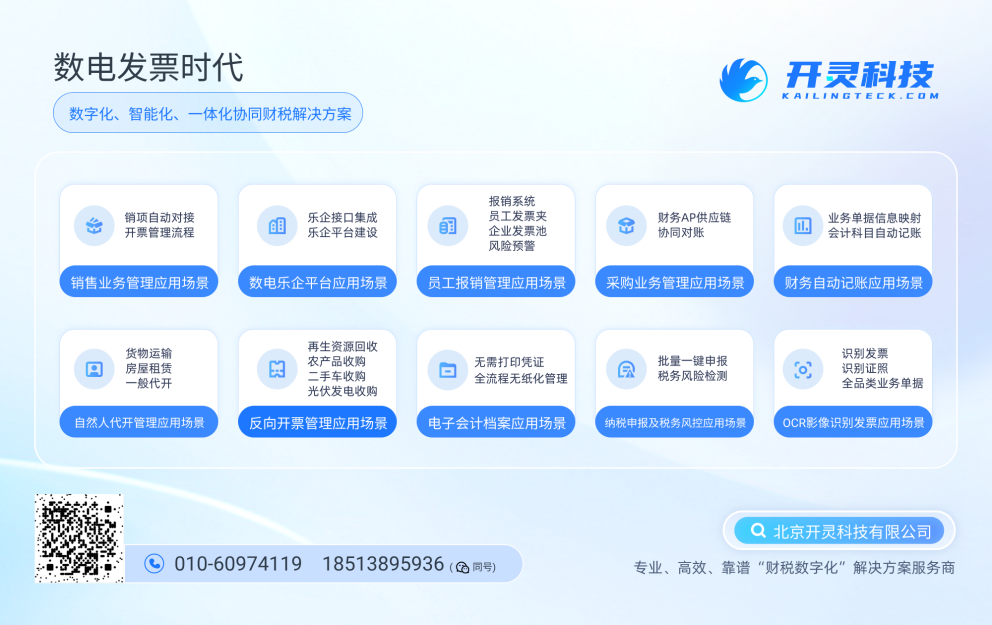
5. Flexible and scalable architecture, adaptable to multi-business scenarios Adopt a microservices architecture design, supporting on-demand configuration of archive rules (such as voucher types and association logic), easily adapting to differentiated needs such as production work orders in manufacturing enterprises and contract ledgers in service enterprises, while quickly responding to policy updates and ensuring long-term system compliance. IV. Customer practice: cost reduction and efficiency improvement + 100% compliance, building a solid regulatory defense lineAfter China Golden Tax Phase IV strengthened supervision, a cross-regional manufacturing enterprise faced problems such as chaotic electronic voucher management and frequent audit obstacles. By deploying the Kailing Technology solution, it achieved: ▪ Full Compliance Attainment:Electronic vouchers such as fully digitalized e-invoices and bank receipts 100% comply with archiving standards, smoothly passing tax inspections and external audits. ▪ Management costs significantly reduced:Reduce paper printing by 800,000 sheets per year, compress storage space by 90%, and save more than 600,000 yuan in overall costs. ▪ Significant improvement in work efficiency:Voucher linkage and retrieval time is reduced from hours to seconds, archive organization efficiency improves by 90%, and finance staff can focus on business enablement. The deepening advancement of China Golden Tax Phase IV marks that enterprise business-finance-tax management has entered the fully digital era, and electronic accounting archives have become the infrastructure for compliant operations of enterprises. With a 100% policy adaptation rate and full-process management capabilities integrating business and finance, Kailing Technology helps enterprises break free from the constraints of traditional models and achieve archive management from a compliance baseline to an efficiency engineleap. Consult Kailing Technology,Make electronic accounting archives a core competitiveness for enterprises to respond to regulation and drive digital transformation:https://www.kailingteck.com/h-col-110.html 。 As a comprehensive business-finance-tax digitalization solution service provider, Kailing Technology provides business-finance-tax management digital transformation products and operational services for various government agencies, institutions, and large, medium, and small enterprises. The product line includes: Solutions for sales contract management system, procurement contract management system, fully digitalized Leqi interface project, automatic output VAT invoicing system, invoice issuance for individuals system, employee expense control and reimbursement system, input VAT invoice management system, supply chain collaborative reconciliation system, imaging OCR recognition system, automatic financial bookkeeping system, electronic accounting archives system and other businesses, comprehensively advancing the digitalization process across various fields. If you have any business-finance-tax digital transformation needs, welcome to contact us. Beijing Kailing Technology will serve you wholeheartedly.
|