010-6097 4119Book a Demo


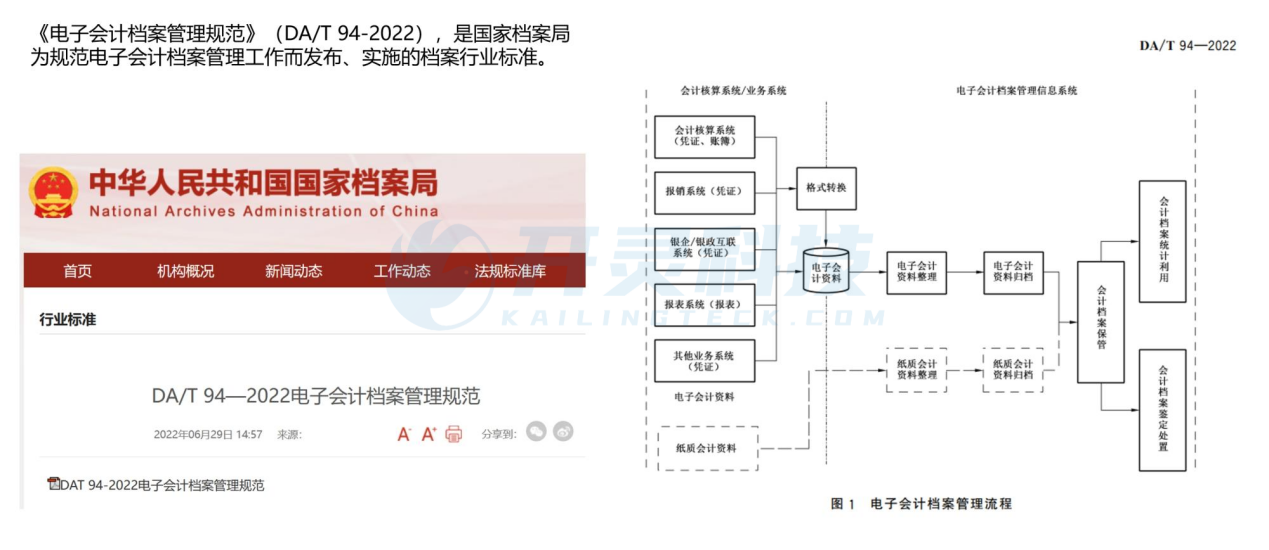
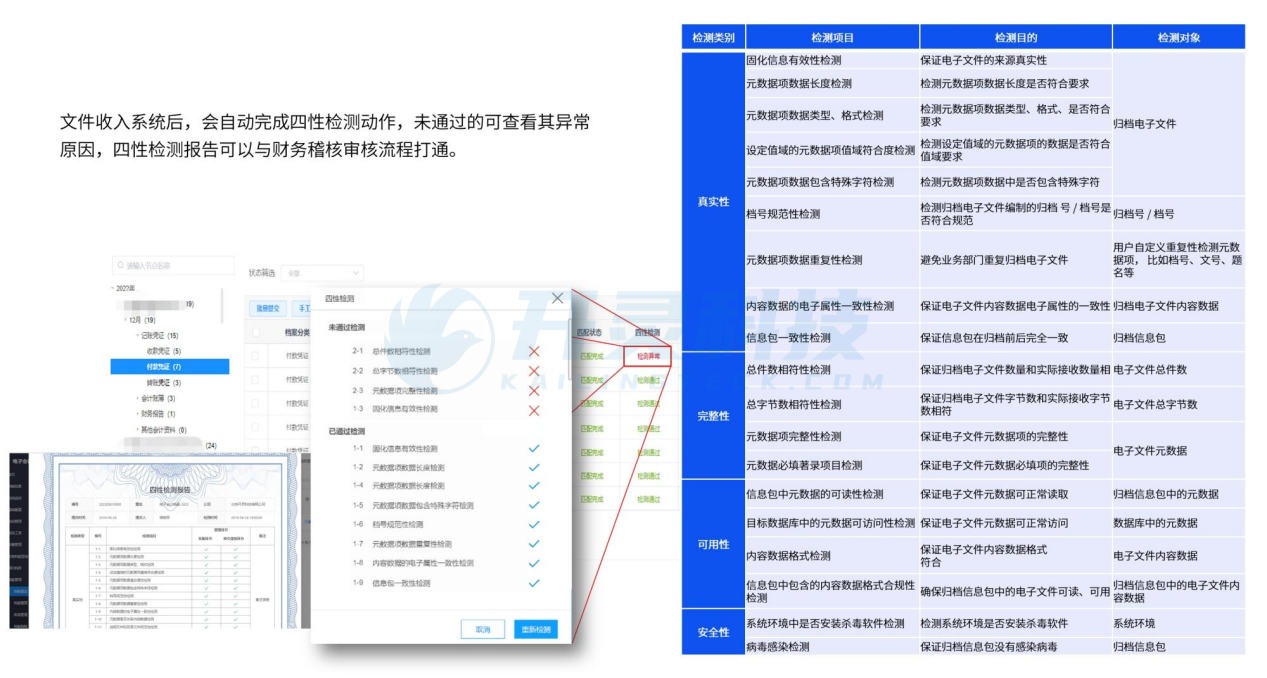
New Opportunities for Electronic Accounting Archives: Analyzing the Ministry of Finance's Two Regulations from an Archival PerspectivePublished: 2024-10-11 17:13 Recently, the Ministry of Finance revised and issued the "Work Standards for Accounting Informatization" (Cai Kuai [2024] No. 11, hereinafter referred to as the "Work Standards") and the "Basic Functions and Service Standards for Accounting Software" (Cai Kuai [2024] No. 12, hereinafter referred to as the "Software Standards"), effective from January 1, 2025. The release of the two standards plays a positive role in implementing the new Accounting Law, serving high-quality economic and social development, accelerating the digital transformation of accounting work, and improving the accounting informatization institutional system. 01 What is the connection between the two specifications and electronic accounting archives? The two specifications laid a solid foundation for the implementation of electronic accounting archives. Article 29 of the Work Specifications states, "Units with the necessary conditions should promote paperless and automated processing throughout the entire process of receiving, generating, transmitting, storing, and archiving electronic accounting vouchers." Article 28 of the Software Specifications states, "Electronic accounting materials output for archiving should meet the state's requirements for electronic file archiving and electronic accounting archive management." The electronification of electronic accounting materials such as electronic accounting vouchers at the business system end preserves the native nature of electronic accounting materials, making the full-process electronification and datafication of electronic archives a natural progression. As the responsible department for accounting archive management, the Ministry of Finance once again mentioned the legal effect of electronic accounting archives in the Work Specifications. Article 32 states, "Electronic accounting archives that meet the relevant national requirements for electronic accounting archive management have the same legal effect as paper accounting archives." At the same time, it also explained the single-set management of electronic archives that the National Archives Administration has focused on promoting in recent years: "Unless otherwise provided by laws and administrative regulations, electronic accounting archives may no longer be kept in paper form." 02 Where are electronic accounting archives used? Article 35 of the Work Specifications states, "Units shall, in accordance with laws and regulations, provide electronic accounting materials such as electronic financial accounting reports to users of accounting materials." Article 36 states, "When a unit accepts inquiries and access to accounting materials by external supervision and inspection institutions in accordance with laws and regulations, for electronic accounting materials that meet the requirements of relevant national regulations on electronic accounting archives management, they may be provided in electronic form only." On this basis, it is believed that staff of supervision, inspection, audit and other institutions will subsequently change their original working habits, shifting from a paper-based review model to an electronic document-based review model. 03 What digital resources do electronic accounting archives include? Accounting archives involve two types of digital resources. One is electronic archives. Article 27 of the Work Standards gives specific requirements: "Where a unit uses paper printouts of electronic accounting vouchers as the basis for reimbursement, posting, and archiving, it must simultaneously preserve the original electronic accounting voucher files from which the paper copies were printed, and establish a retrieval relationship between the paper accounting vouchers and their corresponding electronic files." The other is paper archives that have undergone digital processing. Article 28 of the Work Standards also gives the handling method: "Where a unit uses electronic image files of paper accounting vouchers as the basis for reimbursement, posting, and archiving, it must simultaneously preserve the paper accounting vouchers and establish a retrieval relationship between the electronic image files and their corresponding paper accounting vouchers." The above two handling methods are interpretations of "incremental electronization" and "digitization of existing stock" in the application of accounting archives. While ensuring the nativity of archives, they place more emphasis on the relationship between archive carrier and effectiveness. 04 How are electronic accounting archives realized? As the "last mile" of accounting informatization work, electronic accounting archives need to be controlled throughout the entire process. Article 16 of the Software Specification on accounting data input: "Accounting software should support integrated application with business software systems, ensure the true, complete and secure transmission of accounting data, and realize the automatic generation of electronic bookkeeping vouchers from electronic original vouchers." Article 21 of Accounting Data Processing: "Accounting software should have the function of processing electronic accounting vouchers in accordance with the requirements of the electronic voucher accounting data standard and generating structured data files of posting information." Article 28 of Accounting Data Output: "Accounting software should have the function of archiving accounting materials and provide an interface for exporting electronic accounting archives. The exported archived electronic accounting materials should comply with national requirements for electronic file archiving and electronic accounting archive management." The national standard closest to this description is the Specification for Electronic File Archiving and Electronic Archive Management (GB/T18894). In this specification, general methods are given for the collection, organization, and archiving of electronic files with preservation value and the cataloging, management, and disposal of electronic archives. Article 31 of the Work Standards summarizes the full process, consistent with this specification: "Units shall, in accordance with national regulations on electronic accounting archive management, establish and improve management systems for the formation, collection, organization, archiving of electronic accounting materials and the preservation, statistics, utilization, appraisal, and disposal of electronic accounting archives, adopt reliable security protection technologies and measures, ensure the authenticity, integrity, usability, and security of electronic accounting archives during transmission and storage, and strengthen the archiving of electronic accounting materials and management of electronic accounting archives. Structured data files of posting information that comply with the electronic voucher accounting data standard should be archived simultaneously with electronic accounting vouchers." 05 What are the current difficulties and key points facing electronic accounting archives? The "Archives Law of the People's Republic of China" explicitly requires that "electronic archives shall have reliable sources, standardized procedures, and compliant elements," which is also mentioned in the "Work Specifications," as well as the requirements of "authenticity, integrity, usability, and security." These are prerequisites for electronic archives to have evidentiary effect. Effectively implementing the relevant requirements of the archives industry standard "General Requirements for Testing Document-Type Electronic Archives" (DA/T 70) is an important guarantee for maintaining the validity of electronic archives, and is also the core and difficulty of building an electronic archives management system.
Kailing Technology's electronic accounting archives product comprehensively covers all aspects of the document lifecycle management, including document collection, organization, and archiving, as well as archive receipt, organization, preservation, statistics, utilization, and disposal. It provides standardized accounting system data exchange interfaces, enabling convenient and rapid integration between electronic accounting archives and systems, making data transmission smoother and more efficient. Through flexible configuration of refined "four-property" detection schemes, it fully ensures that electronic accounting archives have reliable evidentiary effect, strongly supporting various application scenarios such as external supervision and auditing. The product applies advanced technologies such as cloud computing and big data to digitize accounting vouchers, electronic vouchers, and original vouchers, fully tapping the value of data. Moreover, on the basis of enabling archive retrieval through any business metadata, it also relies on the electronic archive management platform to simultaneously retrieve other archives associated with the accounting archive, greatly improving the efficiency and comprehensiveness of archive query and utilization.
Kailing Technology provides enterprise business-finance-tax digital product lines according to enterprise needs: Solutions for businesses including sales contract management system, procurement contract management system, fully digitalized Leqi interface project, output automatic invoicing system, employee expense control and reimbursement system, input VAT invoice management system, supply chain collaborative reconciliation system, image OCR recognition system, automatic financial bookkeeping system, and electronic accounting archives system, professionally and efficiently supporting the transformation and upgrading of enterprise business-finance-tax digital management. If you have any business-finance-tax digital transformation needs, welcome to contact us. Beijing Kailing Technology will serve you wholeheartedly.
|