010-6097 4119Book a Demo


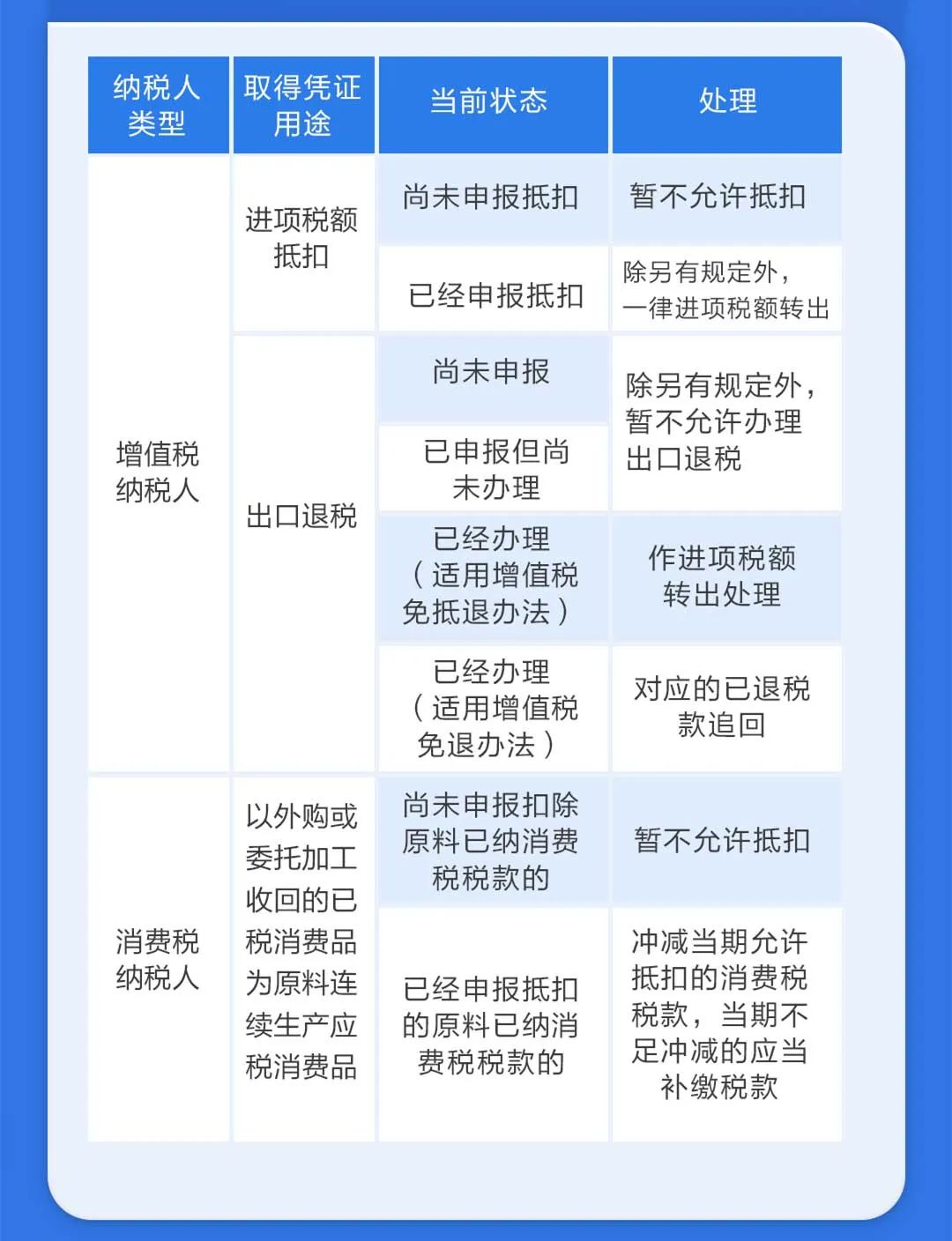
What should be done when notified by the tax bureau that an obtained invoice has been listed as an abnormal tax deduction voucher?Published: 2024-09-10 17:19 Recently, a taxpayer inquired: What should be done when a received special VAT invoice is classified as an "abnormal VAT deduction voucher"? The taxpayer said that the enterprise received a notice from the tax authority that due to the upstream enterprise absconding or becoming unreachable, the special VAT invoice obtained from the upstream enterprise has been determined to be an abnormal VAT deduction voucher. So, what are abnormal deduction vouchers? How should enterprises handle them? Six circumstances for being listed as abnormal tax deduction vouchers Scenario 1:VAT special invoices that have not been issued or have been issued but not uploaded in the tax-control dedicated equipment lost or stolen by the taxpayer. Scenario 2:VAT special invoices of abnormal taxpayer status where the taxpayer has not filed with the tax authority or has not paid taxes as required. Scenario 3:VAT special invoices found by the VAT invoice management system through audit comparison to be "comparison inconsistent," "missing copy," or "voided." Scenario 4:VAT special invoices issued by taxpayers that are found through big data analysis by the State Taxation Administration or provincial tax bureaus to involve suspected false issuance, failure to pay consumption tax as required, and other circumstances. Scenario 5:If a runaway (unreachable) enterprise commits any of the following during its continued operation, the VAT special invoices issued for the corresponding period shall be included in the scope of abnormal vouchers: 1. Serious deviation between the names of purchased and sold goods of commercial enterprises, production enterprises without actual production and processing capacity and without entrusted processing, or serious mismatch between production energy consumption and sales, or purchased goods cannot directly produce the goods they sell and there is no entrusted processing; 2. Directly absconding or disappearing without tax filing, or filing but evading tax authority review and comparison by filling in relevant columns of the VAT tax return to conduct false filing. Note: A runaway (unreachable) enterprise refers to an enterprise that fails to fulfill its tax-related obligations and escapes the supervision of tax authorities. 1. The tax authority still cannot locate the enterprise and its relevant personnel through on-site investigations, telephone inquiries, tax-related matter handling verification, and other collection and management means. 2. Although corporate bookkeeping agencies, tax filing personnel, etc. can be contacted, if they are unaware and cannot reach the enterprise's actual controller, the enterprise can be determined to be a runaway (unreachable) enterprise. Scenario 6:Where the abnormal input VAT accepted by a general VAT taxpayer exceeds RMB 50,000 cumulatively and accounts for 70% (inclusive) or more of all VAT special invoice input tax in the same period, the VAT special invoices correspondingly issued by that taxpayer. Note: For abnormal vouchers for which the taxpayer has not yet declared deduction, has not yet declared export tax refund, or has already processed input tax transfer-out, the input tax involved is not included in the calculation of the input tax of abnormal vouchers. How should abnormal vouchers obtained be handled?
What should be done if there are objections to abnormal vouchers obtained?
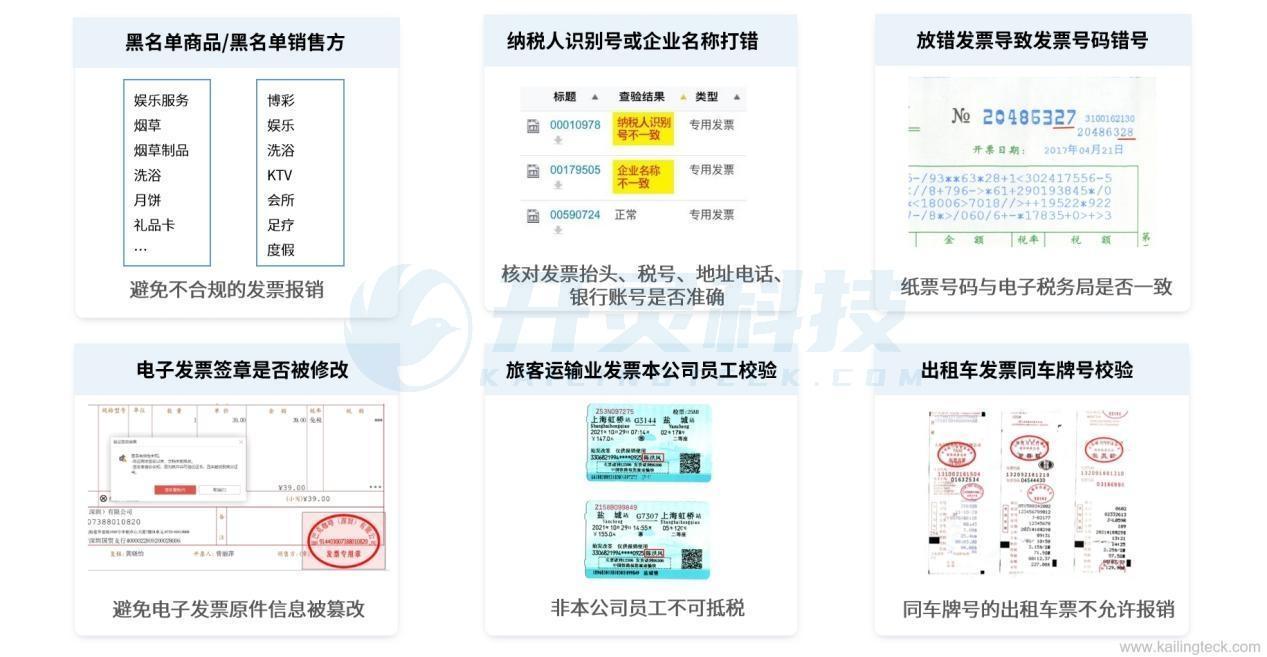
For example One day, Company M received a tax matter notice from the tax authority regarding acceptance of abnormal vouchers, and the abnormal voucher had already been declared for VAT deduction. If Company M is an A-level taxpayer, it may, within 10 working days from the date of receiving the tax authority's notice, submit a verification application to the competent tax authority, and may defer the input VAT transfer-out until the tax authority completes verification. If Company M still fails to submit a verification application beyond 10 working days, it shall handle the input VAT transfer-out as required. If Company M is not an A-level taxpayer, it must handle the input VAT transfer-out upon receiving the notice. Note, however, that if Company M has objections, it may still submit a verification application to the competent tax authority. If verification confirms compliance with relevant provisions, it may continue to declare for deduction. Kailing Technology's tax risk control monitoring system solution 1. Pre-event invoice management: multi-dimensional invoice risk monitoringCheck whether the invoice header, tax number, address and telephone, and bank account number are accurate, and whether the paper invoice number is consistent with the electronic tax bureau. Avoid tampering with the original information of electronic invoices, and verify whether the electronic invoice signature is modified. Avoid non-compliant invoice reimbursement, such as blacklisted commodities (entertainment services, tobacco, tobacco products, bathing, mooncakes, gift cards, etc.) and blacklisted sellers (gambling, entertainment, bathing, KTV, clubs, foot massage, vacation, etc.). Passenger transport invoices of non-employees of the company are not deductible; taxi receipts with the same license plate number are not allowed for reimbursement, and taxi invoices with the same license plate number must be verified.
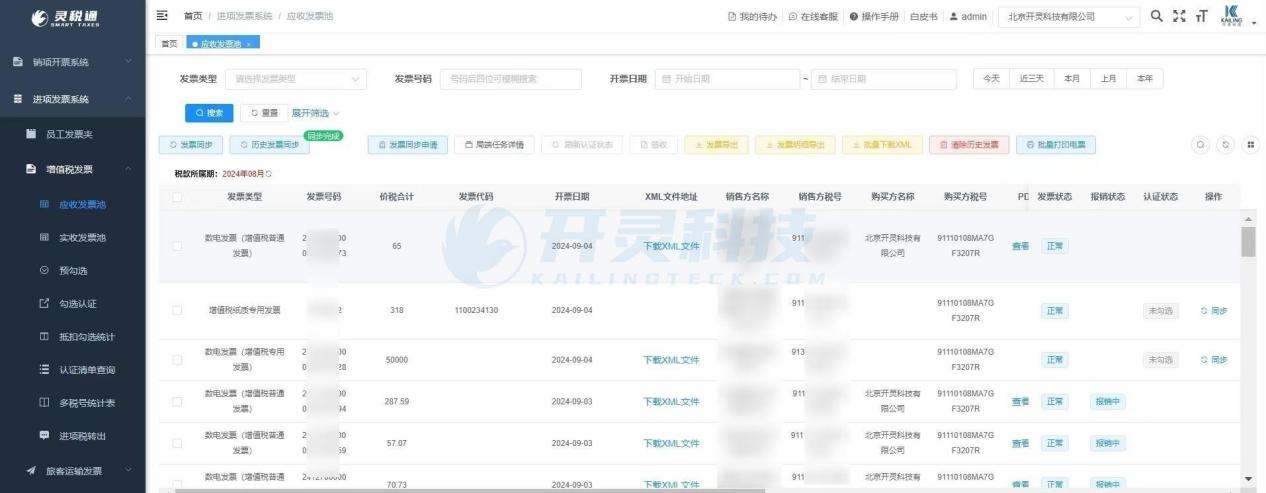
2. In-process invoice management: in-transit invoice monitoringThe accounts receivable invoice pool can synchronize invoice data (PDF, OFD, XML) source files and the latest invoice status with the tax bureau multiple times a day. The in-transit invoice pool is used to monitor invoices whose issuer title is the company title but which have not yet been received. Understand in-transit invoice status in real time, plan tax certification and deduction in advance, and reasonably plan the tax burden rate for tax planning. The tax burden rate formula is: tax burden rate = current VAT payable / current taxable sales revenue; current VAT payable = current output VAT - actual deducted input VAT; actual deducted input VAT = beginning retained input VAT + current input VAT - input VAT transfer-out - export tax refund - ending retained input VAT. Finance staff can understand the invoice amounts about to be booked through the in-transit invoice pool, ensuring the authenticity and timeliness of financial statements.
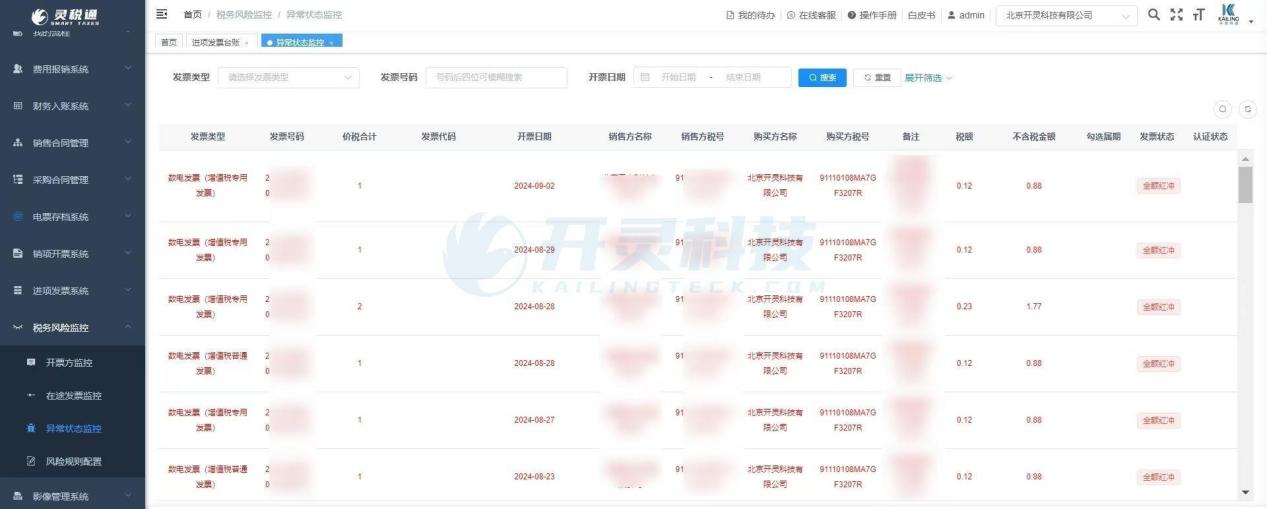
3. Post-event invoice management: abnormal invoice monitoringFor invoices already reimbursed/recorded, monitor invoice status in real time daily to prevent invoices from being voided, red-flushed, marked abnormal, or out of control by the issuer.
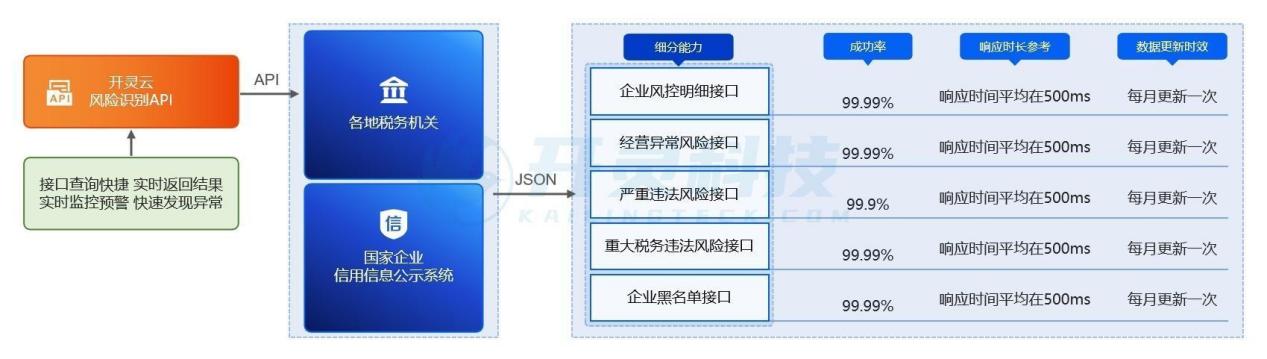
4. Multi-dimensional monitoring service for the invoicing partyThrough the Kailing Cloud risk identification API for interface queries, quickly return results in real time, monitor and warn in real time, and quickly discover anomalies. Obtain enterprise credit information from more perspectives as a basis for cooperation evaluation., monitor whether the issuer of input VAT invoices has been included in the tax blacklist. Efficiently prevent business risks:Reflect the enterprise's credit status, accurately understand the credit status of partner enterprises, and prevent potential risks of partner enterprises; Reduce labor costs:Interface-based integration can be integrated with customer systems, reducing manual query costs and improving customer enterprise work efficiency; Wide enterprise query coverage:Supports nationwide queries of enterprises with abnormal operations, major tax violations, and serious illegal and dishonest enterprises, with accuracy unaffected by manual operations。
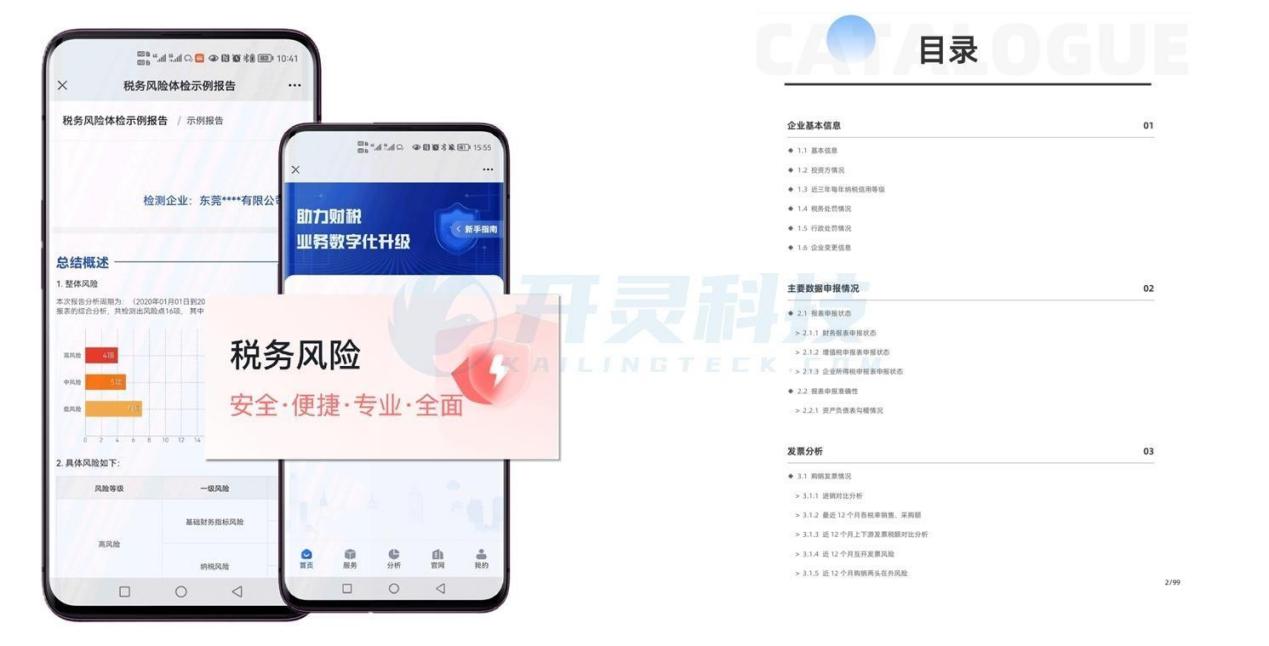
5.Comprehensive tax risk control report, scheduled health check service The system has nearly a hundred built-in business-finance-tax risksMonitoringIndicators and risk control models, comprehensively analyzing enterprise financial indicators, tax indicators, related-party transactions, invoice input/output risks and other information, directly generating tax-related risk assessment reports through the online platform, helping enterprises promptly grasp enterprise risks and adjust response strategies.
The tax risk control monitoring system solution is an important safeguard for enterprise compliance operations and sustainable development. ThroughKailingTax Risk Control Monitoring System Solution, enterprises can promptly identify and resolve potential tax risks, improve financial management, reduce tax costs, and enhance market competitiveness.If your enterprise wants to learn more related information and tax solutions, welcome to contact Kailing Technology. Kailing Technology provides enterprise business-finance-tax digital product lines according to enterprise needs: Solutions for businesses including sales contract management system, procurement contract management system, fully digitalized Leqi interface project, output automatic invoicing system, employee expense control and reimbursement system, input VAT invoice management system, supply chain collaborative reconciliation system, image OCR recognition system, automatic financial bookkeeping system, and electronic accounting archives system, professionally and efficiently supporting the transformation and upgrading of enterprise business-finance-tax digital management. If you have any business-finance-tax digital transformation needs, welcome to contact us. Beijing Kailing Technology will serve you wholeheartedly.
|