010-6097 4119Book a Demo


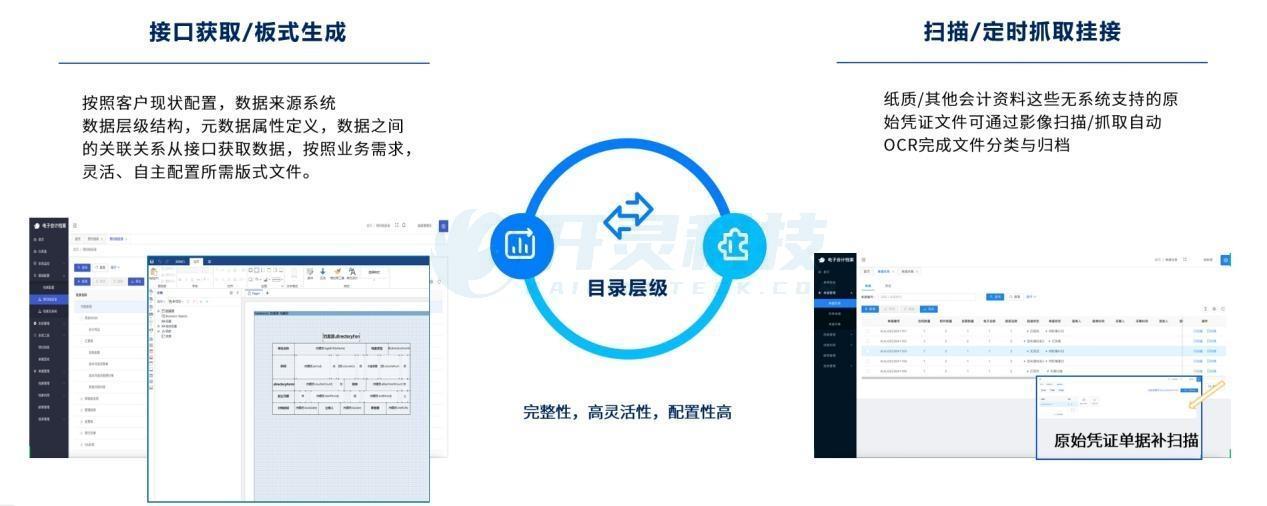
Interpretation of the Accounting Informatization Work Standards, focusing on electronic accounting archives managementPublished: 2024-09-04 17:06 To implement the relevant requirements of the Accounting Law of the People's Republic of China, regulate accounting work in the digital economy environment, and promote the healthy development of accounting informatization, the Ministry of Finance issued the Work Specifications for Accounting Informatization (Cai Kuai [2024] No. 11) on July 26, 2024, which will take effect on January 1, 2025. The "Work Specifications for Accounting Informatization" (hereinafter referred to as the "Work Specifications") puts forward many latest requirements and work guidance for electronic accounting archives. 01 The Legal Status and Effect of Electronic Accounting Archives Original policy text:(Article 32) Electronic accounting vouchers, electronic accounting books, electronic financial accounting reports, and other electronic accounting materials with reliable sources, standardized procedures, and compliant elements have the same legal effect as paper accounting materials, and may be received, processed, generated, and archived solely in electronic form. Electronic accounting archives that meet the relevant national requirements for electronic accounting archives management have the same legal effect as paper accounting archives. Unless otherwise provided by laws and administrative regulations, electronic accounting archives no longer need to be kept in paper form. Policy Interpretation:Finance staff have long been puzzled and concerned about whether electronic accounting vouchers, electronic accounting books, electronic financial accounting reports, and other electronic accounting materials with reliable sources, standardized procedures, and compliant elements can no longer be printed as paper copies for storage and custody. The "Work Specifications" provide clear provisions, supporting that electronic accounting archives can be received, processed, generated, and archived solely in electronic form. 02 Security Management of Electronic Accounting Archives Original policy text:(Article 37) A unit's accounting informatization work shall coordinate security and development, comply with the relevant provisions of the Cybersecurity Law of the People's Republic of China, the Data Security Law of the People's Republic of China, the Law of the People's Republic of China on Guarding State Secrets, and other laws and regulations, and effectively prevent, control, and resolve risks that may arise from accounting informatization. Policy Interpretation:First, each unit needs to establish and improve management systems for electronic accounting materials, including formation, collection, organization and archiving, and ensure that the custody, statistics, utilization, appraisal and disposal of electronic accounting archives comply with national regulations. In daily work, reliable security protection technologies and measures should be adopted, such as security authentication, electronic signatures, digital encryption, and trusted evidence preservation, to prevent unauthorized access, prevent data tampering, and ensure the authenticity, integrity, usability, and security of electronic accounting archives during transmission and storage. Each entity shall back up electronic accounting materials, ensuring that the backup method, frequency, storage medium, and retention period comply with regulations, so as to safeguard the security, completeness, and usability of accounting materials. For entities with overseas branches, even if their data servers are deployed overseas, electronic accounting material backups shall be kept domestically, with a backup frequency of no less than once per month. 03 Technical Requirements for Electronic Accounting Archives Original policy text:(Article 26) A unit's accounting information system shall adapt to the electronic voucher accounting data standards, have the capability to process electronic accounting vouchers that meet the standards, and generate structured data files of booking information that meet the standards. (Articles 21 and 22) Encourage exploration of the application of modern information technologies such as big data, artificial intelligence, mobile internet, cloud computing, the Internet of Things, and blockchain in the accounting field, to improve the level of accounting informatization and promote the intensification, automation, and intelligentization of accounting work. Policy Interpretation:In the formation process of electronic accounting archives, electronic accounting vouchers need to comply with the "Electronic Voucher Accounting Data Standards" (Version 2.0) issued by the Ministry of Finance and eight other ministries and commissions on March 22, 2024, including electronic voucher accounting data standards: including VAT electronic invoices, fully digitalized e-invoices, railway electronic tickets, air transport electronic ticket itineraries, electronic general payment books for non-tax revenue, bank electronic receipts, and bank electronic statements. For improving the intensification, automation, and intelligence of electronic accounting archives, front-end accounting software is required to have data interfaces that comply with national unified standards, and the archived electronic accounting materials output should comply with national requirements for electronic file archiving and electronic accounting archives management. As the key final step of accounting work, archives management, with the application of new technologies, helps accelerate the transformation of finance personnel from accounting accountants to management accountants, and also facilitates the realization of the national dual carbon goals. 04 Build a safe, compliant, efficient, and intelligent archive management system Kailing TechnologyElectronic Accounting Archive Management Platform, relying on the national electronic voucher accounting data standards and business-finance-tax policies, meeting enterprises' needs for safe, compliant, efficient, and intelligent archive management, and helping enterprises complete the "last mile" of financial informatization: 1.Data acquisition: The system can obtain data from multiple data sources and perform pre-archiving and organization of the data.
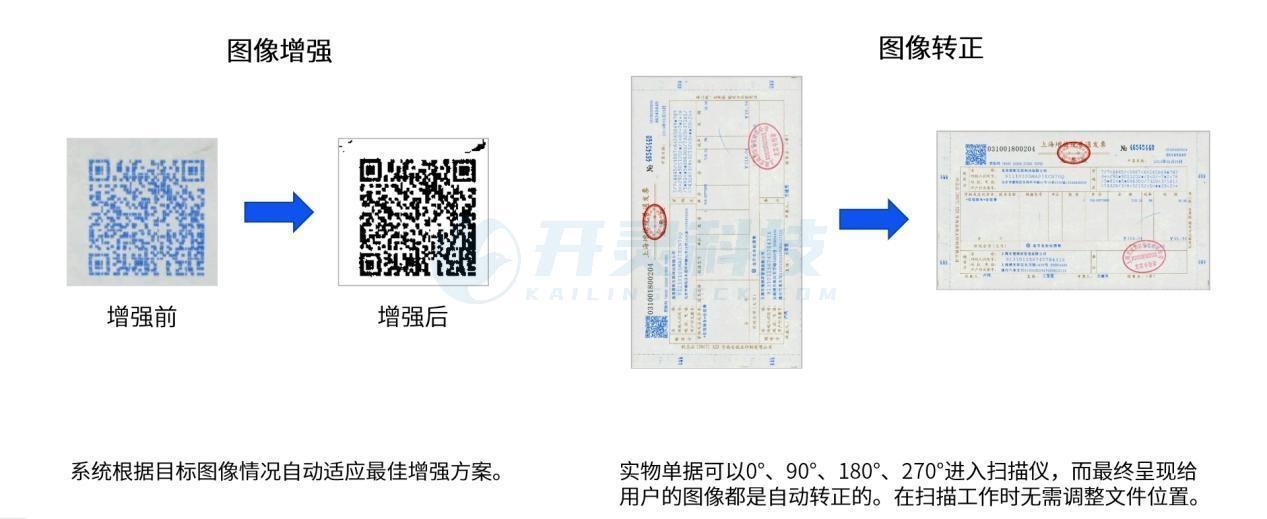
2.Scanned image compressionand processing: Able to save the highest-precision images in the smallest space. Functions such as image enhancement and image rectification.
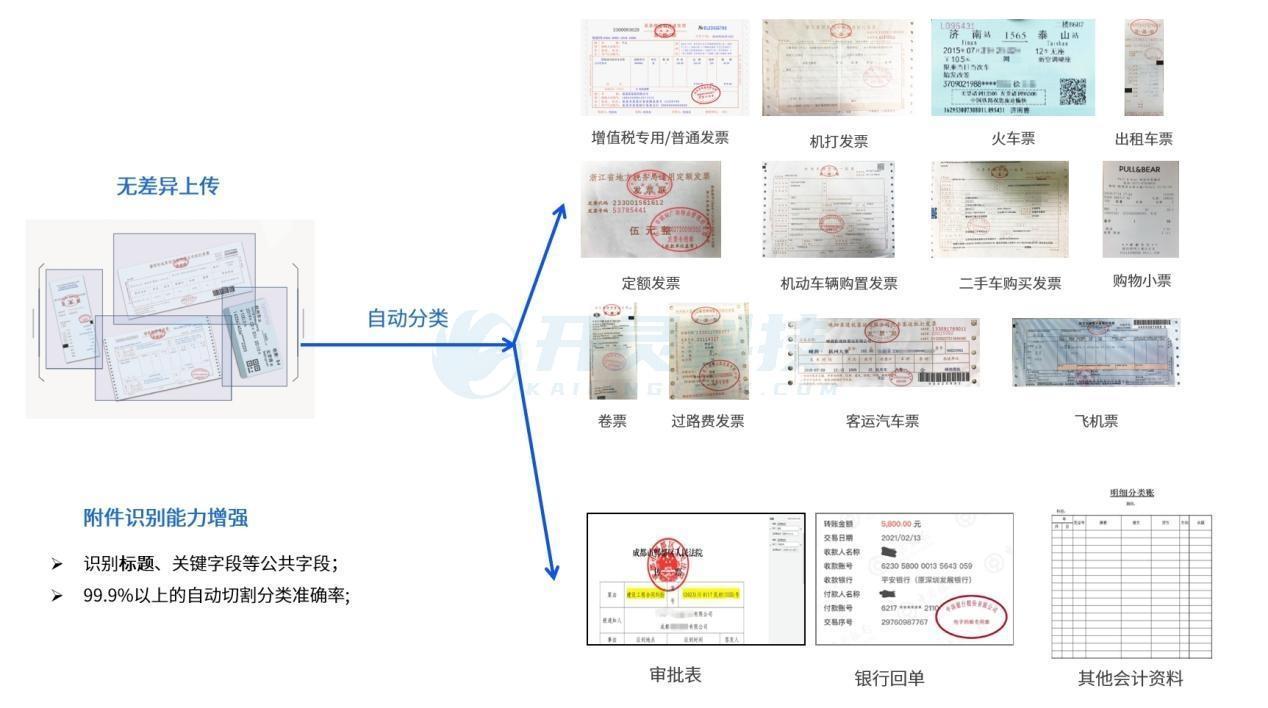
3.OCR recognition platform: private deployment, self-trainable, able to recognize multiple document types, extract key information, and achieve information exchange and structured output. Application scenarios include recognition and classification of various invoices, bills, approval forms, bank receipts, and more.
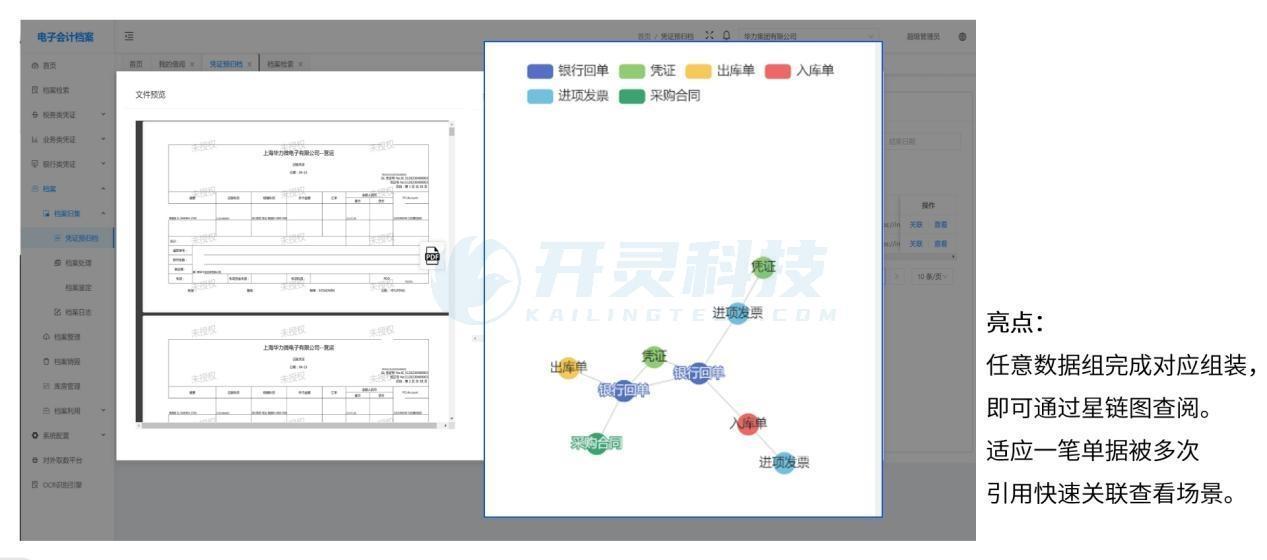
4.Automatic collection and matching, pre-archiving、Star Chain Graph: automatically collects and performs completeness verification based on archive source and process type. The pre-archiving page can be embedded and integrated with accounting systems and review processes to achieve in-process compliance management. Through the Star Chain Graph, you can view the assembly status of any data group, adapting to scenarios where a single document is referenced multiple times and needs to be quickly associated and viewed.
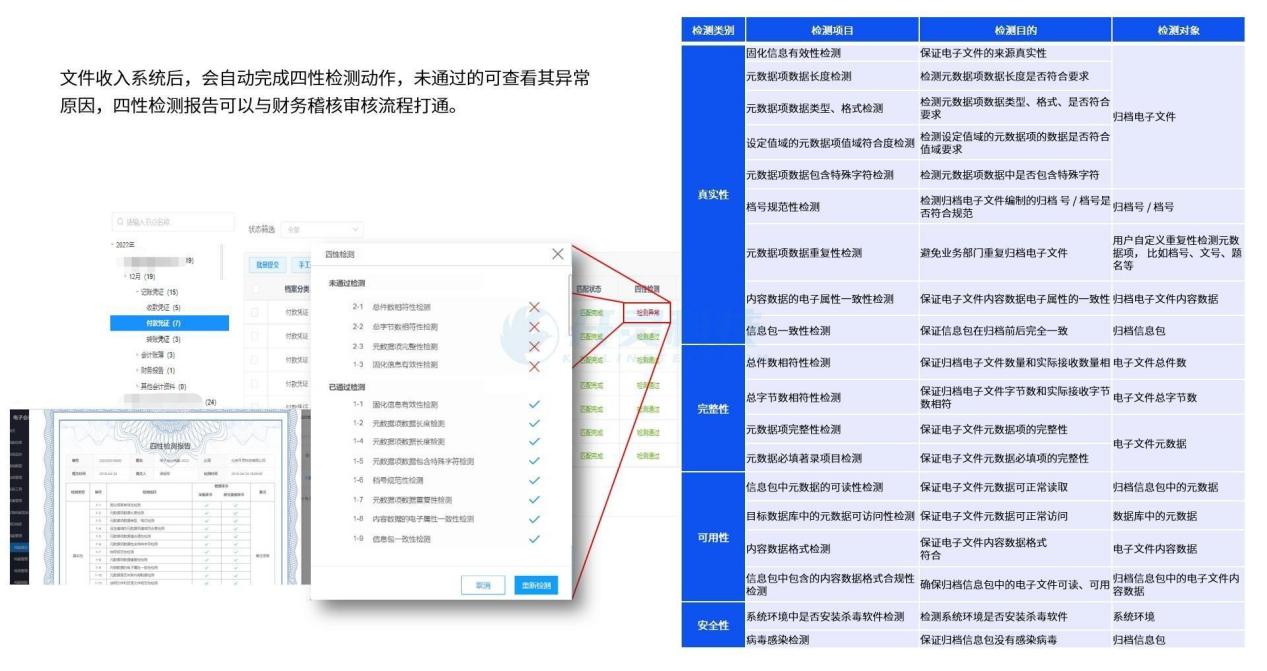
5.Archive four-property inspection standards: Based on the Electronic Accounting Archive Management Specification (DA/T 94 - 2022), authenticity, integrity, usability, and security inspections are performed on electronic accounting archives. After files are received into the system, the four-property inspection is automatically completed. For those that fail, the abnormal reasons can be viewed, and the four-property inspection report can be integrated with the financial audit review process. The core logic of the four-property inspection includes the integrity of the total electronic archive data and structural files, the integrity of electronic archive metadata, the integrity of paper archive transfer, external data authenticity verification, usability inspection, and security inspection.
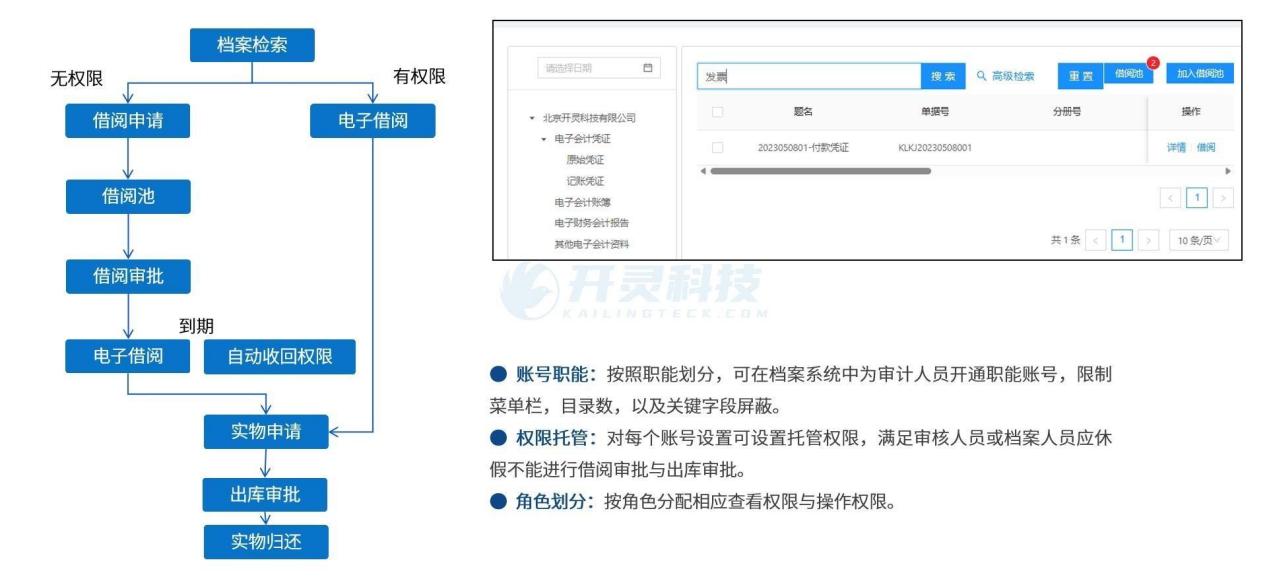
6.Borrowing Management: Account functions are divided by function. Functional accounts can be opened in the archive system for auditors, restricting menus, directory counts, and shielding key fields; permission hosting allows hosting permissions to be set for each account, meeting the need for reviewers or archive staff to be unable to perform borrowing approval and outbound approval during leave; role division assigns corresponding viewing and operation permissions by role. Full-text search, category search, period search, archivist search, and other conditions can be used for cross-searching to obtain final results, optimizing the utilization experience.
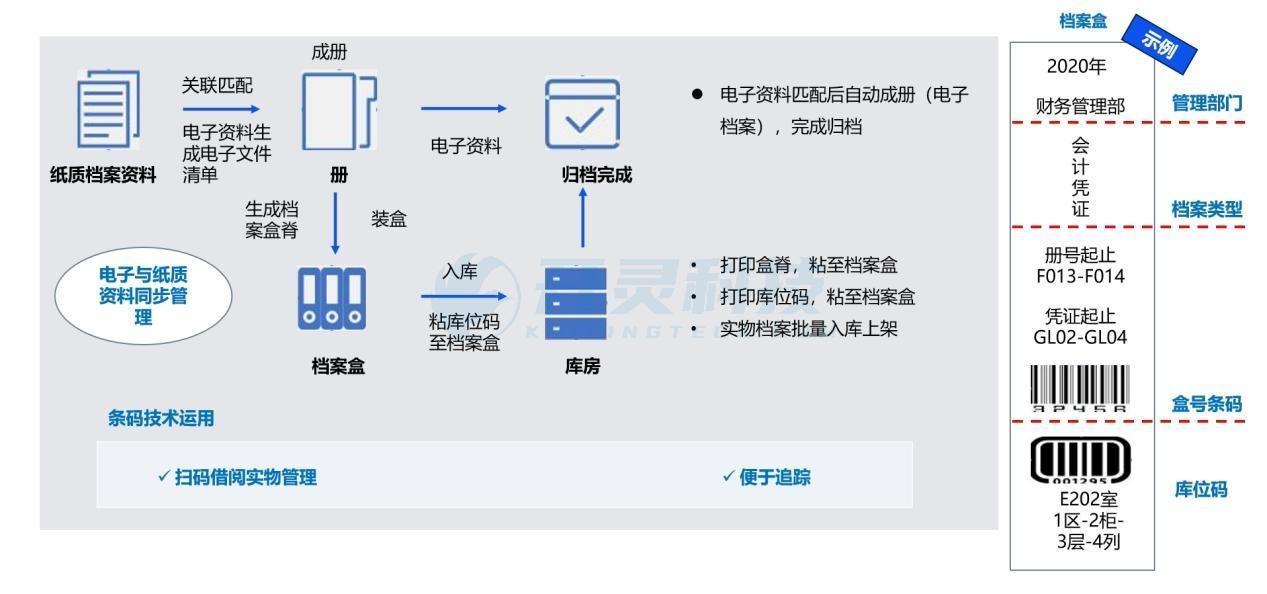
7.Shelf placement process for paper archive warehouses: electronic materials generate an electronic document list, are automatically bound into volumes (electronic archives), archiving is completed, box spines and location codes are printed and affixed to archive boxes, and physical archives are put into storage and placed on shelves in batches.
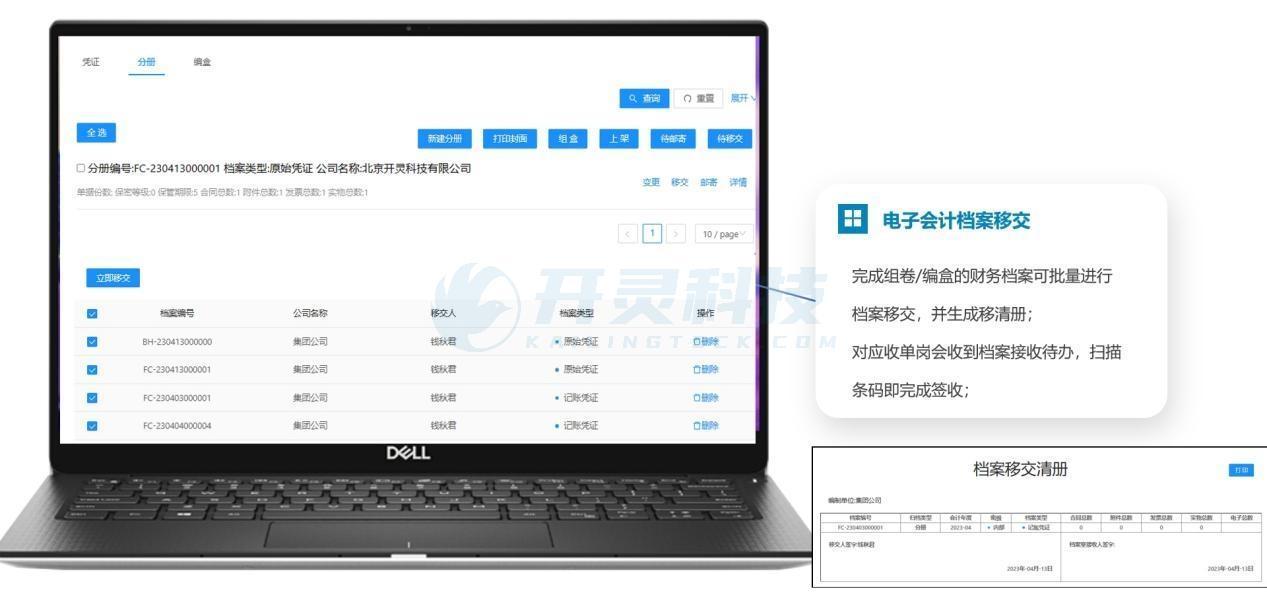
8.Electronic Accounting Archive Transfer: Financial archives that have completed file assembly/box compilation can be transferred in batches, and a transfer list is generated. The corresponding document receiving position will receive a pending archive receipt task, and signing off is completed by scanning the barcode.
The issuance of the "Work Specifications for Accounting Informatization" provides clear guidance and norms for the management of electronic accounting archives, promoting the digitization, automation, and intelligence of accounting work. With the continuous advancement of technology and in-depth implementation of the specifications, electronic accounting archives will play an increasingly important role in improving accounting work efficiency, ensuring data security, and promoting information sharing. Kailing Technology provides enterprise business-finance-tax digital product lines according to enterprise needs: Solutions for businesses including sales contract management system, procurement contract management system, fully digitalized Leqi interface project, output automatic invoicing system, employee expense control and reimbursement system, input VAT invoice management system, supply chain collaborative reconciliation system, image OCR recognition system, automatic financial bookkeeping system, and electronic accounting archives system, professionally and efficiently supporting the transformation and upgrading of enterprise business-finance-tax digital management. If you have any business-finance-tax digital transformation needs, welcome to contact us. Beijing Kailing Technology will serve you wholeheartedly.
|