010-6097 4119Book a Demo


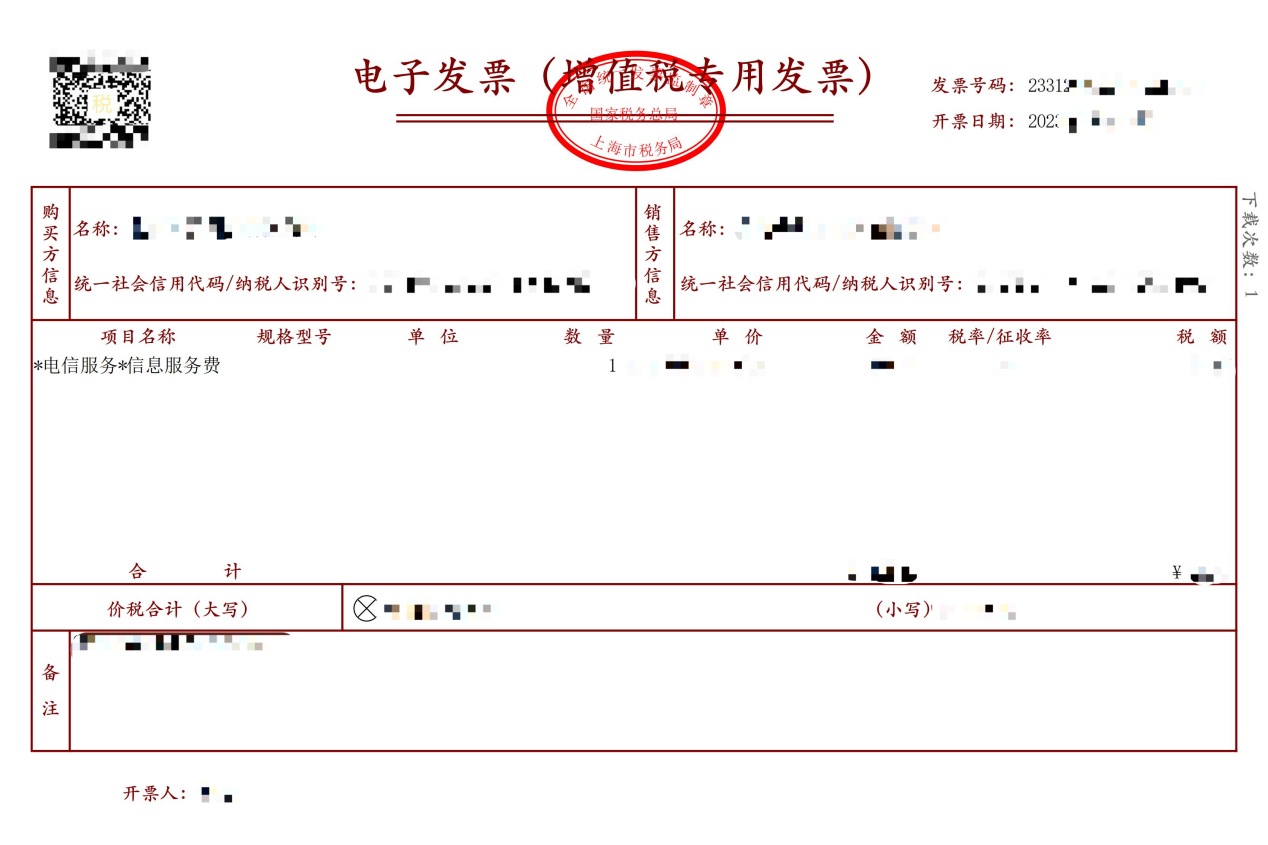
How to Archive Electronic Accounting Archives Under the Fully Digitalized E-Invoice ModelPublished: 2024-03-25 16:51 In recent years, the emergence of "new variables" represented by fully digitalized e-invoices has further accelerated the digitization of accounting vouchers. In the future, finance personnel will face new challenges in booking and archiving more "electronic vouchers" and managing electronic accounting archives. 01 Fully Digitalized E-invoiceFeatures Fully Digitalized E-invoiceRelying on the trusted identity system and the electronic invoice service platform, with the basic features of de-medium, de-format, tagging, elementization, credit-based issuance and code assignment, it is a brand-new invoice covering all fields, all links and all elements, and has the same legal effect as paper invoices. 02 Invoice format Fully Digitalized E-invoice's format will be more concise than the original VAT electronic invoice. The seller's and buyer's addresses and banks will no longer be displayed; the payee and reviewer at the bottom are removed, leaving only the issuer; the upper right corner only shows the invoice number and issuance date, removing the invoice code, check code, and machine number information. Fully Digitalized E-invoiceBoth special VAT invoices and general VAT invoices can be issued. NoteFully Digitalized E-invoiceThere is only an invoice number, no invoice code. The special invoice format is as follows:
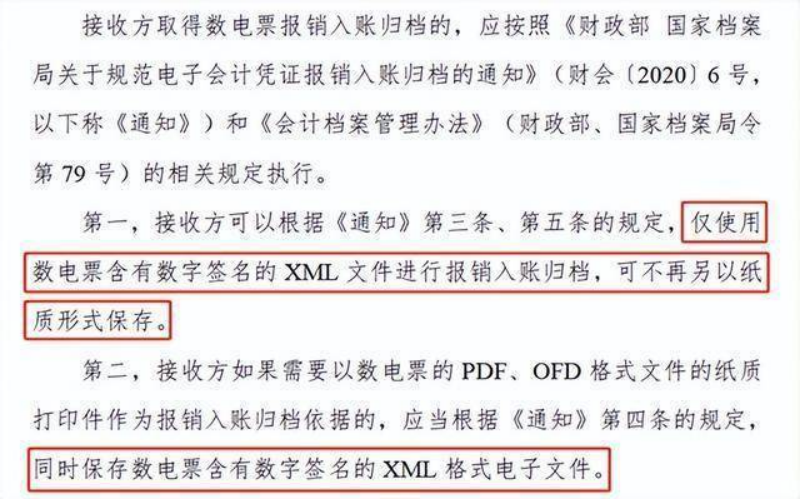
Fully Digitalized E-invoiceThe number is 20 digits, of which: the 1st-2nd digits represent the last two digits of the Gregorian calendar year, the 3rd-4th digits represent the administrative division code, and the 5th digit representsFully Digitalized E-invoiceIssuance channel and other information; digits 6-20 represent the sequence code. For example, the first invoice issued in Guangdong in 2022Fully Digitalized E-invoiceThe number is: 22 44 1 000000000000001 03 System documents In December 2015, Order No. 79 of the Ministry of Finance and the National Archives Administration, the Measures for the Management of Accounting Archives: Determined the concept and management requirements of electronic accounting archives, and clarified that accounting archives may be archived and preserved only in electronic form. In March 2020, Cai Kuai [2020] No. 6 "Notice on Regulating the Reimbursement, Booking, and Archiving of Electronic Accounting Vouchers": it clarifies that electronic invoices and other electronic accounting vouchers may not be printed; electronic archiving has the same effect as paper vouchers. In July 2022, the "Specification for Electronic Accounting Archives Management": stipulates requirements for the formation, collection, organization, and archiving of electronic accounting materials and the custody, statistics, utilization, appraisal, and disposal of electronic accounting archives, strengthening industry standards for electronic accounting archives. In May this year, the Accounting Department of the Ministry of Finance published the "Accounting Data Standards for Electronic Vouchers" notice, further clarifying the preservation method for reimbursement and archiving of fully digitalized e-invoices.
Generally speaking, electronic archives, as objects of archive management, are generally called electronic documents before archiving, and electronic documents in a certain field are generally called "XXX electronic documents." However, this standard calls them electronic accounting materials before the archiving of electronic accounting archives, which differs from our conventional naming method. This is because the Accounting Law of the People's Republic of China (hereinafter referred to as the Accounting Law) has already defined the management object before archiving, uniformly naming it electronic accounting materials. To prevent accountants from misunderstanding, this standard still follows the definition in the Accounting Law, calling electronic accounting archives before archiving electronic accounting materials, defined as "various accounting information records in electronic form formed, transmitted, and stored by units through computers and other electronic devices during accounting that record and reflect the unit's economic business matters." Electronic accounting materials include accounting vouchers, accounting books, financial accounting reports, and other accounting materials that exist in electronic form. 04 Retention requirements Basic requirements:The classification method of electronic accounting archives fully adopts the classification method of paper accounting archives. Electronic accounting materials are mainly filed into volumes by time combined with the storage capacity of individual electronic files. When accounting vouchers with the same bookkeeping voucher number exist in different record forms, they may be organized separately according to different record forms, and their association relationships recorded in the form of metadata. For example, when the bookkeeping voucher is in electronic form and the original voucher is in paper form, the bookkeeping voucher is organized in electronic archive form and becomes one electronic archive; the original voucher is organized in paper archive form and becomes one paper archive. At the same time, the corresponding metadata of the bookkeeping voucher notes its original voucher number, and the appropriate position of the original voucher notes its corresponding bookkeeping voucher number. Fully Digitalized E-invoiceArchiving requirements:To implement the requirement in the Notice of the Ministry of Finance and the National Archives Administration on Regulating the Reimbursement, Posting, and Archiving of Electronic Accounting Vouchers that "where a unit uses a paper printout of an electronic accounting voucher as the basis for reimbursement, posting, and archiving, it must simultaneously preserve the electronic accounting voucher from which the paper printout was made," this standard particularly applies to units that have not implemented an electronic accounting archives management information system but conduct accounting through an accounting system. It regulates the management of electronic accounting archives and the preservation and management methods of electronic invoices for those units that have not implemented an electronic accounting archives management information system and do not conduct accounting through an accounting system. The content of this section is especially applicable to small and medium-sized units, and its essence is to manage electronic accounting archives or electronic invoices using semi-manual methods. For example, all small and medium-sized enterprises receive electronic invoices. Before the issuance of the Notice of the Ministry of Finance and the National Archives Administration on Regulating the Reimbursement, Posting, and Archiving of Electronic Accounting Vouchers, these electronic invoices were directly printed out as black-and-white paper accounting materials for reimbursement, posting, and preservation, but after the issuance of the Notice of the Ministry of Finance and the National Archives Administration on Regulating the Reimbursement, Posting, and Archiving of Electronic Accounting Vouchers, the original electronic versions of electronic invoices must be preserved. However, these units generally have not implemented an electronic archives management system and need to adopt simplified preservation methods for management. Chapter 16 of this standard precisely proposes corresponding requirements to regulate the simplified preservation methods of electronic versions of electronic invoices. China Communications Construction Group has already implemented a financial cloud system, which conforms to what the system stipulates, namely an electronic accounting archives management information system, and at that time should have been preserved separatelyFully Digitalized E-invoiceXML format electronic accounting archives and establish a ledger for retention and inspection. Archive transfer time:That is, after the end of the accounting year, the organized electronic accounting materials may be temporarily kept by the unit's finance department for 1 year, and then transferred to the unit's archives management institution for custody. If transfer must be delayed due to work needs, approval from the unit's archives management institution shall be obtained, but the maximum period shall not exceed 3 years. During temporary custody, the custody of electronic accounting archives shall comply with relevant national archives management regulations, and cashiers shall not concurrently manage electronic accounting archives. This also follows the archive transfer timeline requirements for paper archives. Retention requirements:Conduct sampling machine-readable inspections of magnetic carriers storing electronic accounting archives offline every 2 years and optical discs every 4 years, with a sampling rate of no less than 10%, and take timely measures if problems are found. Electronic archives on magnetic carriers should be transferred every 4 years. The original carrier should be retained for no less than 4 years at the same time. Source: internet Beijing Kailing Technology Co., Ltd.——an enterprise business-finance-tax digitalization solution service provider. Kailing Technology provides solutions for sales management systems, procurement management systems, output invoicing systems, input invoice collection systems, imaging management systems, financial posting systems, electronic accounting archives, fully digitalized e-invoice and Leqi interfaces and other businesses according to enterprise needs, professionally and efficiently helping enterprises transform and upgrade their business-finance-tax digital management. If you have any business-finance-tax digital transformation needs, welcome to contact us. Beijing Kailing Technology will serve you wholeheartedly.
|