010-6097 4119Book a Demo


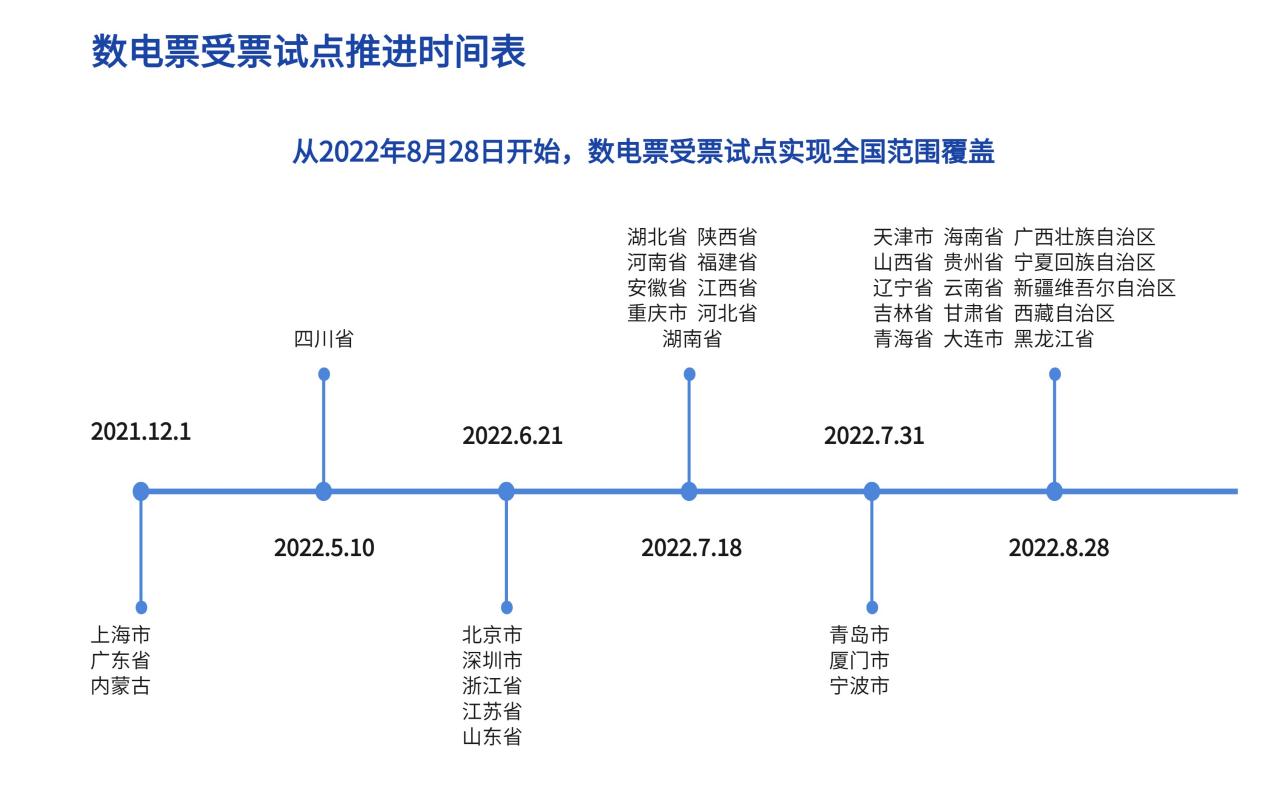
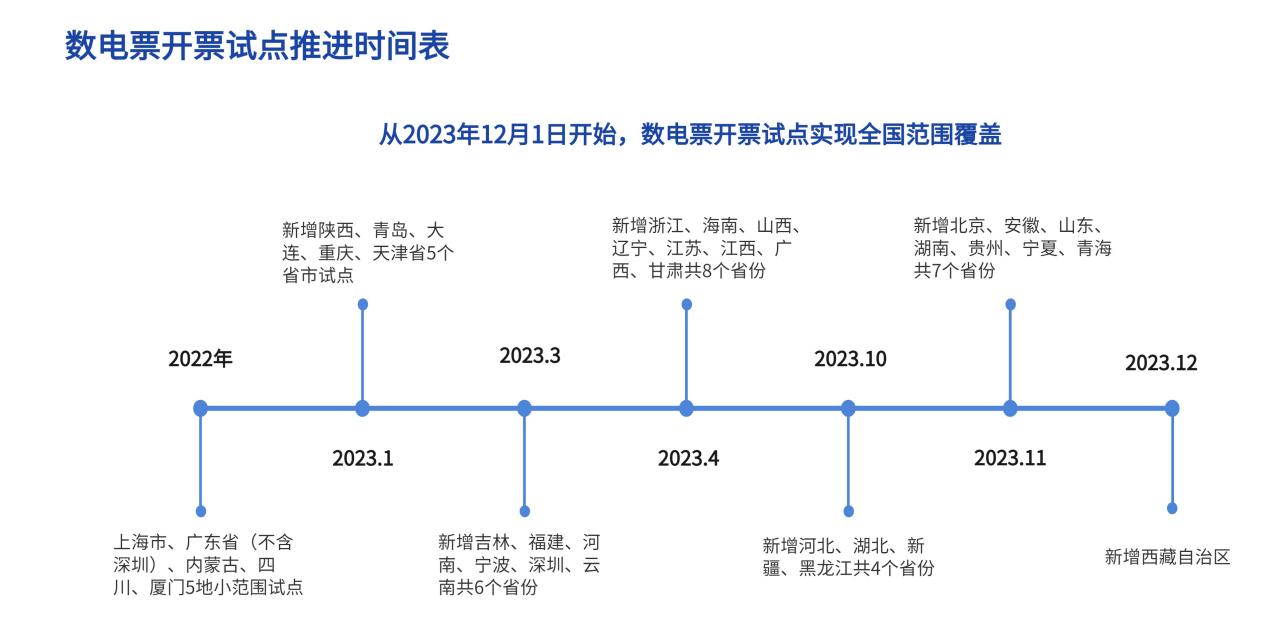
Experts guide you through fully digitalized e-invoices, decoding the enterprise's "business-finance-tax-archives" approachPublished: 2024-02-26 15:59 In March 2021, the General Office of the CPC Central Committee and the General Office of the State Council issued the "Opinions on Further Deepening the Reform of Tax Administration" (hereinafter referred to as the "Opinions"). The "Opinions" proposed focusing on building smart taxation with high integration functions, high security performance, and high application efficiency, centered on serving taxpayers and fee payers, with invoice electronicization reform as the breakthrough, and driven by tax big data. To implement the "Opinions," following the principle of prudence and orderliness, the work strategy was to first carry out pilots in some regions and then gradually expand the scope of regions and taxpayers. Starting from December 1, 2021, Shanghai, Guangdong, Inner Mongolia, and other places carried out pilot work on fully digitalized e-invoices. After two years, as of December 1, 2023, 34 provinces (regions, municipalities) across the country had issued notices on the comprehensive pilot of fully digitalized e-invoices.
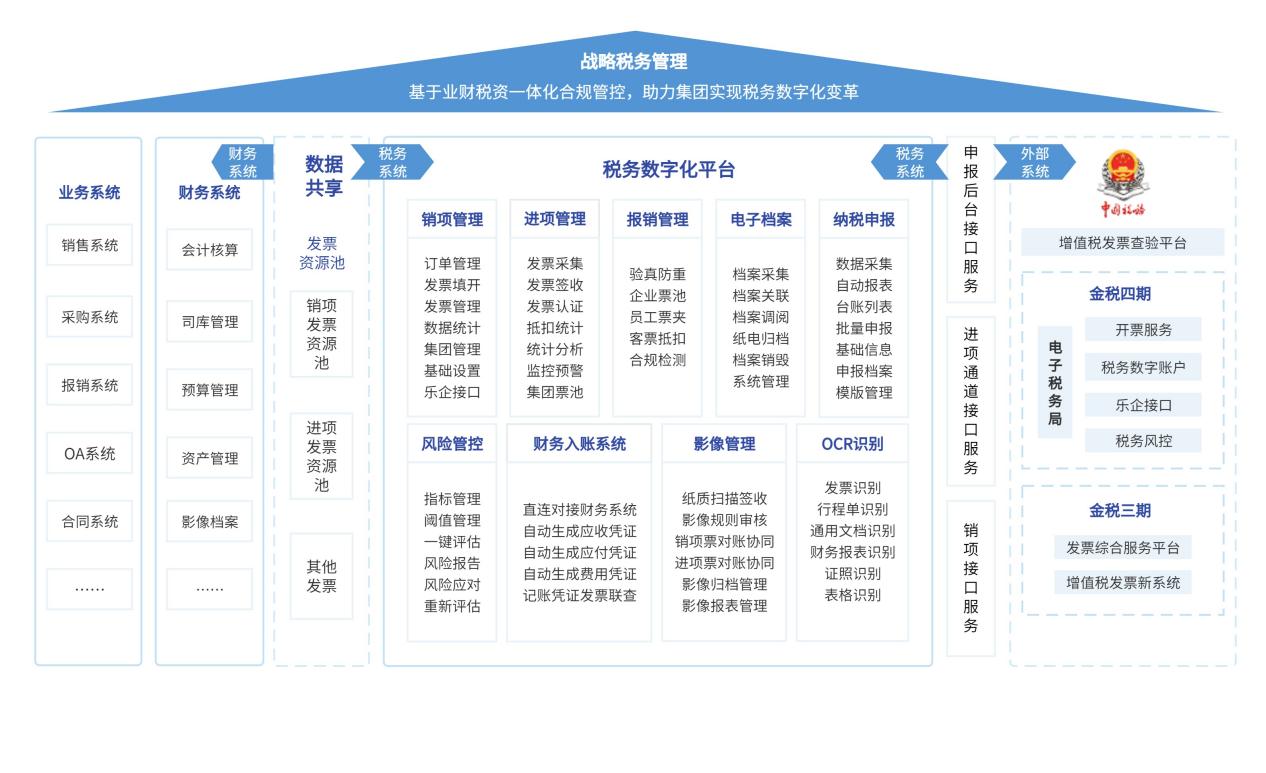
Compared with traditional paper invoices and electronic invoices, what are the differences and advantages of fully digitalized e-invoices? What impact will the nationwide rollout of fully digitalized e-invoices have on enterprise business-finance-tax management? What role will it play in the digital transformation of tax collection and administration? 01 Comprehensive digitalization of invoice face information facilitates tax collection and payment "Tax control by invoice" has always been one of the important methods of tax collection and administration. Through traditional paper invoices, electronic invoices, and now the promoted fully digitalized e-invoices, the principle remains unchanged. Paper invoices are printed with high-standard anti-counterfeiting technology, exist in paper form, have fixed layouts and formats, and are standard invoices with unified format issuance and unified digital numbering by the state. They are divided into many types such as VAT special invoices, VAT ordinary invoices, general machine-printed invoices, and general fixed-amount invoices. Taxpayers must apply to tax authorities to obtain them, and VAT invoices are issued relying on media such as dedicated tax control equipment. Electronic invoices, also called "paper-electronic invoices," are based on the current paper invoice format and management process, electronifying the face of paper invoices. They are electronic images and electronic records of paper invoices and still have multiple invoice types. Although they reduce processes such as invoice printing and delivery, invoice application, sale, issuance, quota, and cancellation still follow the paper invoice management model. Fully digitalized e-invoiceIssueThe invoice is a completely new invoice with equal legal effect, without format, without medium, and without application; it is elementized and tagged, turning all invoice information into structured data, merging multiple invoice types into a single fully digitalized e-invoice type, requiring no tax-control equipment application, invoice type approval, or maximum invoicing limit approval, with intelligent credit granting and automatic targeted delivery, achieving unified nationwide coding.Expertstated that after the rollout of fully digitalized e-invoices, the system has operated smoothly, and due to advantages such as no need for collection, convenient issuance, information integration, and cost savings, it has been welcomed by more and more taxpayers. Whether in the business-finance-tax field or the information technology field, fully digitalized e-invoices were a "hot term" in 2023. In June 2023, the Shanghai National Accounting Institute, with academic support from the Accounting Informatization Professional Committee of the Accounting Society of China, jointly launched the "Top 10 Information Technologies Affecting the Accounting Industry in 2023" selection activity with professional institutions, and fully digitalized e-invoices ranked first on the list. Speaking of the reasons,ExpertBelieves that, on the one hand, invoices play an important role in accounting work. Invoices are payment and receipt vouchers issued and collected when purchasing and selling goods, providing or accepting services, and engaging in other business activities. They are reimbursement vouchers and important original accounting vouchers, and are tax deduction vouchers closely related to VAT, income tax, and other taxes. The comprehensive digitalization of invoices will affect accounting, accounting archives, and tax management under the business-finance-tax integration system. On the other hand, the comprehensive digitalization of invoices brings convenience to accountants. New highlights such as removing media, removing formats, credit-based systems, code assignment, tagging, and elementization will bring convenience to enterprise tax departments and financial management, effectively promoting the digital transformation of enterprise management. In addition, among the selected "Top Ten Information Technologies," financial cloud, electronic accounting archives, and next-generation ERP are more or less related to fully digitalized e-invoices, showing the great significance of promoting fully digitalized e-invoices. 02 Enterprise business-finance-tax management faces "five major challenges" Fully digitalized e-invoices use invoice tags as the starting point to gradually achieve the collection and aggregation of all types of invoice data, and elementize the specific content recorded on invoices to generate structured information that can be read and collected, improving the utilization rate of invoice data. Fully digitalized e-invoices bring "five major challenges" to enterprise business-finance-tax management. The first major challengeIt means "complete collection," requiring the establishment of an invoice pool in the internal management information system to collect all invoice information accordingly. The second major challengeIt means "complete management," structuring the information of each invoice and managing the related business, financial, and fund information so that cross-system joint queries are possible. In addition, the data collected by fully digitalized e-invoices is more timely and accurate, with broader application scenarios. Automatically collecting relevant invoice data by tax subject dimension, through "one-household" and "one-person" management, and strengthening data linkage through the reconciliation relationships between invoice data and various tax and fee data, lays the data foundation for the transformation from traditional tax filing form completion to a "confirmation-based" tax filing model. The third major challengeIt means "complete calculation," requiring attention to the reconciliation relationship between invoices and taxes and calculating all taxes and fees related to invoice information. For example, if a taxpayer issues an invoice for housing rental in the current period, the calculation, accrual, and tax filing of related taxes and fees such as VAT output tax, property tax source details under the rental-based levy, stamp tax under the property lease contract item, and corporate income tax rental income must be comprehensively considered when calculating taxes. Taxpayers should use fully digitalized e-invoices in accordance with laws and regulations, and eliminate false issuance, false deduction of fully digitalized e-invoices, and tax-related illegal and criminal acts such as tax evasion, avoidance, and fraud using fully digitalized e-invoices. The Fourth Major ChallengeIt means "complete preparation," organizing all supporting materials related to invoice information when a transaction occurs. The fifth major challengeIt means "complete control," managing tax risks related to invoices so that when accepting lawful inspections or coordinated investigations by tax authorities, there is evidence to rely on and records to check. 03 Enterprise native systems and core tax administration systems will achieve direct connection According to the grand blueprint for the smart tax collection and administration system depicted in the Opinions, the full promotion of fully digitalized e-invoices is just around the corner, and the electronicization of invoices in railways, civil aviation, and other fields will be gradually and orderly advanced. By 2025, the electronicization of invoices in all fields, all links, and all elements will be basically achieved, focusing on reducing institutional transaction costs. In addition,ExpertIntroduction: A nationally unified and standardized electronic tax bureau is also under construction, which will gradually change the traditional filing model based on forms, enabling information systems to automatically extract data, automatically calculate tax amounts, and automatically pre-fill filings; taxpayers and fee payers can submit online after confirmation or correction. ExpertBelieves that, with the formulation of fully digitalized e-invoice and national tax filing standards, it has become possible for enterprises to connect to the core collection and management system of smart tax bureaus. The OECD report "Tax Administration 3.0: The Digital Transformation of Tax Administration" released at the end of 2020 pointed out that if tax administration uses data exported from trusted systems such as taxpayers' own accounting systems or software as much as possible, it will significantly reduce compliance costs caused by differences between tax administration processes and taxpayers' daily business processes, and can further advance precise law enforcement, refined services, precise supervision, and sincere co-governance, promoting the modernization reform of tax administration. In March 2022, the State-owned Assets Supervision and Administration Commission of the State Council issued the "Guiding Opinions on Accelerating the Construction of a World-Class Financial Management System by Central Enterprises," pointing out the need to advance group-based tax management, establish a coordinated scheduling and use mechanism for tax policies, resources, information, and data, improve tax management information systems, strive to achieve unification of tax management workflows, policy interpretation, tax calculation rules, and other matters, and raise the level of automated processing, pointing out the direction and path for the tax management transformation of large enterprise groups represented by central enterprises. Expertstated that fully digitalized e-invoices are not only VAT invoices but also include special customs payment certificates, train tickets, and itineraries, and will also include non-tax bills in the future. In the foreseeable future, all transaction-type vouchers will be "digitalized". Based on transaction data, smart tax bureaus will create comprehensive profiles for taxpayers, and enterprises' internal information systems will also automatically generate tax-related data, thereby integrating internal and external enterprise data. On the one hand, data analysis and intelligent applications help tax authorities provide more refined services to taxpayers and fee payers; on the other hand, taxpayers' and fee payers' tax-related information can reflect the tax burden of enterprise business more promptly, accurately, and quickly. 04 Business-finance-tax-archive integration is a prerequisite for tax digital-intelligence transformation In May 2023, the Accounting Department of the Ministry of Finance, in accordance with the "Notice on Jointly Carrying Out the Deepening Pilot of Accounting Data Standards for Electronic Vouchers," researched and formulated a total of 9 categories of accounting data standards for electronic vouchers, including the "Accounting Data Standards for Electronic Vouchers — VAT Electronic Invoices (Trial Version)" (including VAT electronic ordinary invoices and VAT electronic special invoices) and the "Accounting Data Standards for Electronic Vouchers — Fully Digitalized Electronic Invoices (Trial Version)," opening up the "last mile" of the digital transformation of enterprise business-finance-tax management. The integration of business-finance-tax-archives is key to ensuring that electronic archives have reliable sources, standardized procedures, and compliant elements.Expertstated that, guided by "unified group accounting archive management" for large enterprises, it standardizes basic data, connects scenario processes, serves sharing, and preserves valuable data, realizing business-finance-tax-archive integration, achieving standardization and normalization, enhancing control capabilities, improving organizational personnel management capabilities and digital-intelligent operational capabilities, and serving the enterprise's high-quality development. At the current stage, most Chinese enterprises' business-finance-tax management is based on a business-finance integration system centered on ERP or financial sharing, which is difficult to support the needs of group tax management digital transformation.Expertstated that tax data is not generated from financial data after business occurs, but arises along with the occurrence of tax-related economic business. Only by establishing a system and process design with deep business-finance-tax-archive integration is it possible to truly realize the digital-intelligent transformation of tax management. The goal of the digital and intelligent transformation of enterprise tax management is "compliance and adherence, controllable risks, improved quality and efficiency".ExpertExplanation: First, tax calculation rules are front-loaded, building a standardized tax-related data management system based on business matters. Second, deep integration of business-finance-tax-archives, automatically extracting tax source information from business, finance, and other related systems, automatically performing tax calculations and tax filing, and automatically generating tax-related archives, transforming tax law from active compliance to automatic compliance. Third, achieving management system innovation supported by organizational transformation, process reform, and system construction. The digital and intelligent transformation of enterprise tax management cannot be achieved without the support of a digital and intelligent platform.Kailing TechnologyTo meet enterprises' needs for full lifecycle management of fully digitalized e-invoices, an integrated fully digitalized e-invoice solution was launched, achieving full-process and full-link management of issuance, receipt, management, use, and storage of fully digitalized e-invoices.
Based on the deep integration of business-finance-tax-archives, build a digital-intelligent tax management platform to achieve seamless connection between internal enterprise systems such as ERP, financial sharing, and contract management and external systems such as the Electronic Tax Bureau and the Comprehensive Invoice Service Platform, forming an invoice-tax "data lake". With intelligent analysis scenarios, achieve multi-dimensional self-service tax analysis and tax reports, and under the premise of ensuring accurate tax calculation and compliance efficiency, conduct reasonable planning to empower business development, help enterprises achieve collaborative upgrading of multiple business processes with minimal-cost transformation, create tax benefits, and support scientific decision-making。 Source: internet Beijing Kailing Technology Co., Ltd.——an enterprise business-finance-tax digitalization solution service provider. Kailing Technology provides solutions for sales management systems, procurement management systems, output invoicing systems, input invoice collection systems, imaging management systems, financial posting systems, electronic accounting archives, fully digitalized e-invoice and Leqi interfaces and other businesses according to enterprise needs, professionally and efficiently helping enterprises transform and upgrade their business-finance-tax digital management. If you have any business-finance-tax digital transformation needs, welcome to contact us. Beijing Kailing Technology will serve you wholeheartedly.
|