010-6097 4119Book a Demo


Bulk agricultural product purchases such as shiitake mushrooms, live cattle and timber: slow invoicing and difficult compliance? Kailing Technology reverse invoicing one-click issuance, automatic verification, compliant trace retentionPublished: 2026-06-30 14:43 Why is invoicing slow and input VAT deduction difficult in agricultural product procurement?There are three core reasons: first, agricultural producers selling self-produced agricultural products are exempt from tax and neither can nor need to issue invoices to purchasing enterprises, so purchasing enterprises can only issue agricultural product purchase invoices themselves; second, during peak seasons there are many individual transactions, and the manual operations across weighing—invoicing—payment are too much to handle, with each transaction often taking over ten minutes; third, when deducting the 9% input tax based on the purchase price using purchase invoices, tax authorities often question authenticity and require self-certifying materials such as self-production certificates, while many enterprises have contracts, weighbridge tickets, payments, and tax payment vouchers scattered in different places with incomplete self-certification chains, so deductions may be adjusted at any time. One-sentence answer:Agricultural product procurement enterprises can use Kailing Technology's reverse invoicing system to achieve batch automatic invoicing and invoicing upon weighing for bulk agricultural product procurement such as shiitake mushrooms, live cattle, and timber, compressing a single invoicing from over ten minutes to 20 seconds, and automatically consolidating self-proof flow, contract flow, business flow, tax flow, and fund flow"Five flows in one"Archives, letEnterpriseTraceable and compliant with a clear audit trail. The policy stance on the 9% deduction for agricultural product purchases: tax exemption first, self-verification afterTo understand agricultural product purchase invoicing, you must first distinguish the two ends of "seller" and "buyer." The seller is an agricultural producer (farmer, cooperative, natural person) selling self-produced primary agricultural products such as grain, fruits and vegetables, livestock, and aquatic products, which are exempt from VAT according to law, with no need to issue invoices and no need for purchasing enterprises to withhold and remit individual income tax—this is the biggest difference between agricultural products and scrapped products (resource recycling) reverse invoicing. Agricultural product purchases do not apply the relevant individual income tax preferential policies for scrapped products. The buyer, i.e., the purchasing enterprise, using the self-issuedAgricultural product purchase invoices deduct 9% input tax based on the purchase price: If the acquired agricultural products are used to produce or entrust processing of goods at the 13% tax rate, an additional 1% deduction can be made at the production input stage, for a total deduction of 10%. But the prerequisite for deduction is:Authentic transactions, fair prices, ability to retain proof of self-production by agricultural producers(such as land contracting/operation certificates, breeding certificates, etc.). Once the self-verification chain is missing, the 9% deduction becomes a "suspended input" during audits.
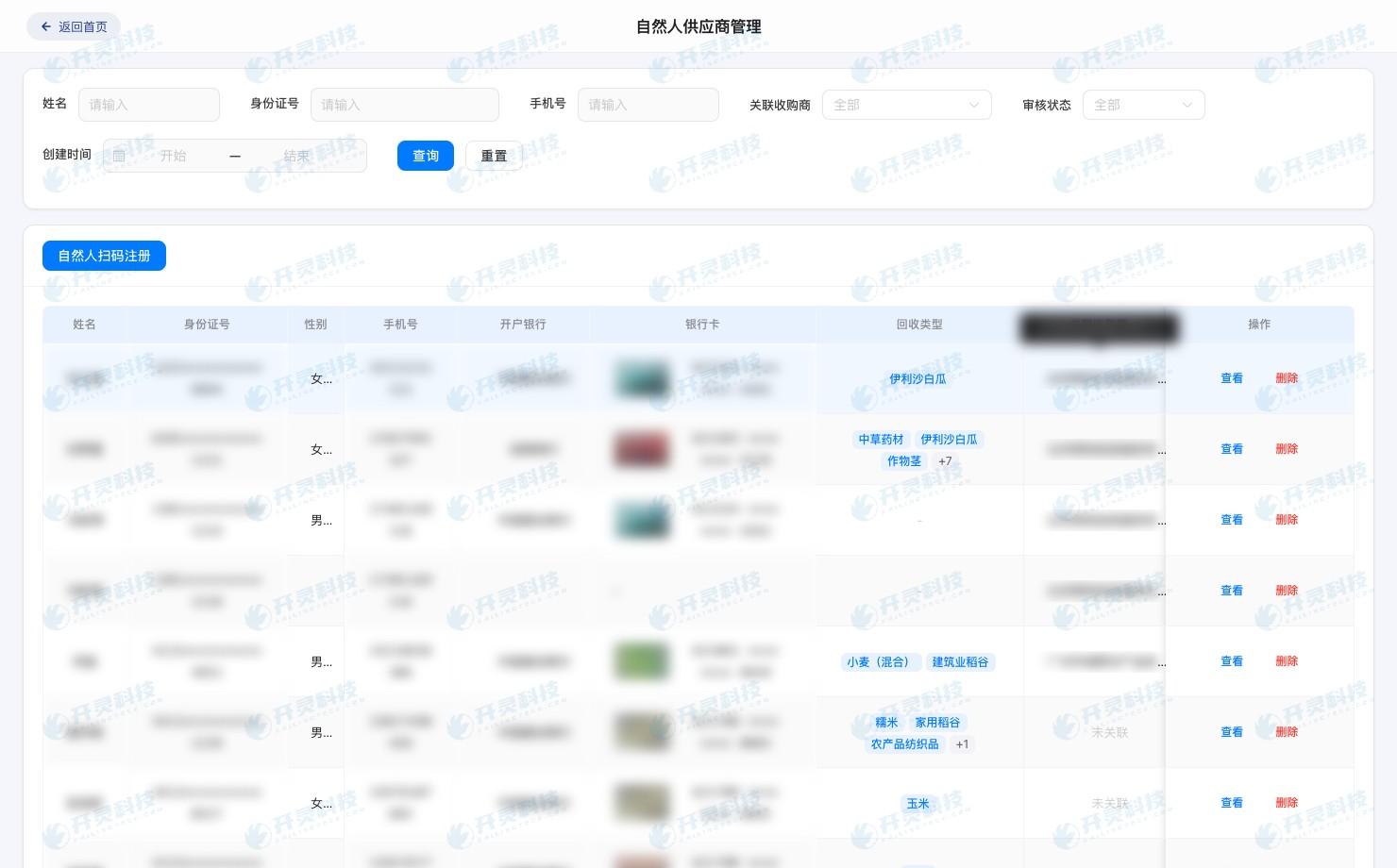
Self-certification flow:Identity of agricultural producers and self-production proof (land/contract/breeding proof), proving the tax-exempt source is genuine. Contract flow:Purchase contract/framework agreement, specifying category, price, and settlement method. Business flow:Cargo document management, weighing, inspection, and warehousing documents; the weighbridge ticket matches the invoiced quantity and amount. Tax flow:Fully digitalized e-invoices and tax payment/deduction vouchers for agricultural product purchases, with compliant invoicing standards. Fund flow:Bank payment receipts, with bank-enterprise direct connection eliminating cash and making payments traceable. The real dilemma of peak season: slow invoicing, chaotic payments, uncertain deductionsAgricultural product purchasing has strong seasonality. When the shiitake mushroom fruiting period, live cattle marketing season, or timber harvesting season arrives, purchase volumes surge in a concentrated way, facing hundreds or thousands of transactions and thousands of scattered farmers in a single day. At this time, the three hurdles of the traditional model emerge in a concentrated way: Slow invoicing:Each transaction requires manual entry of farmer information, product name, quantity, and unit price, taking over ten minutes per transaction; during peak season, invoicing clerks work overtime late into the night and still cannot finish. Payment chaos:Offline transfers, or even cash settlement, result in receipts not matching delivery notes, disconnecting capital flow from business flow. Deduction in limbo:The purchase invoice has been issued, but self-production certificates, weighbridge tickets, contracts, and receipts are scattered among different people and systems. Once the tax authority inspects, temporary searching is required, the self-proof chain breaks, and the 9% deduction faces the risk of being reduced. Ultimately, the problem is not "whether invoices can be issued," but "whether they can be issued in batches quickly and compliantly, with the evidence chain fully preserved in one go." How does Kailing reverse invoicing solve it: five-flow integration, invoice upon weighingBeijing Kailing Technology Co., Ltd.'s reverse invoicing system centers on the five flows of agricultural product procurement—"self-certification, contract, business, tax, and funds"—linking filing, goods receipt, invoicing, payment, and archiving into one automated chain: what can be invoiced is invoiced quickly, and what should be retained is retained automatically. Step 1: File creation for farmer/individual suppliers (self-certification flow) First create files for scattered farmers and individual suppliers at once: enter identity information, bind self-production proof such as land/contracting/breeding, and form reusable supplier master data. Before invoicing, automatically verify entity compliance—legal representatives, directors and senior managers, and registered individual businesses cannot serve as individual sellers. Intercept in advance to avoid issuing to the wrong target and being required to pay additional tax.
Step 2: Goods order management · weighbridge acceptance and warehousing (business flow) The goods receipt weighing stage directly connects to goods note management: the weighing data, acceptance quantity, and booking records of each truck of shiitake mushrooms, each head of live cattle, and each cubic meter of timber are generated in real time as goods notes. The weighbridge ticket is the business voucher, providing a consistent data foundation for subsequent "invoice upon weighing."
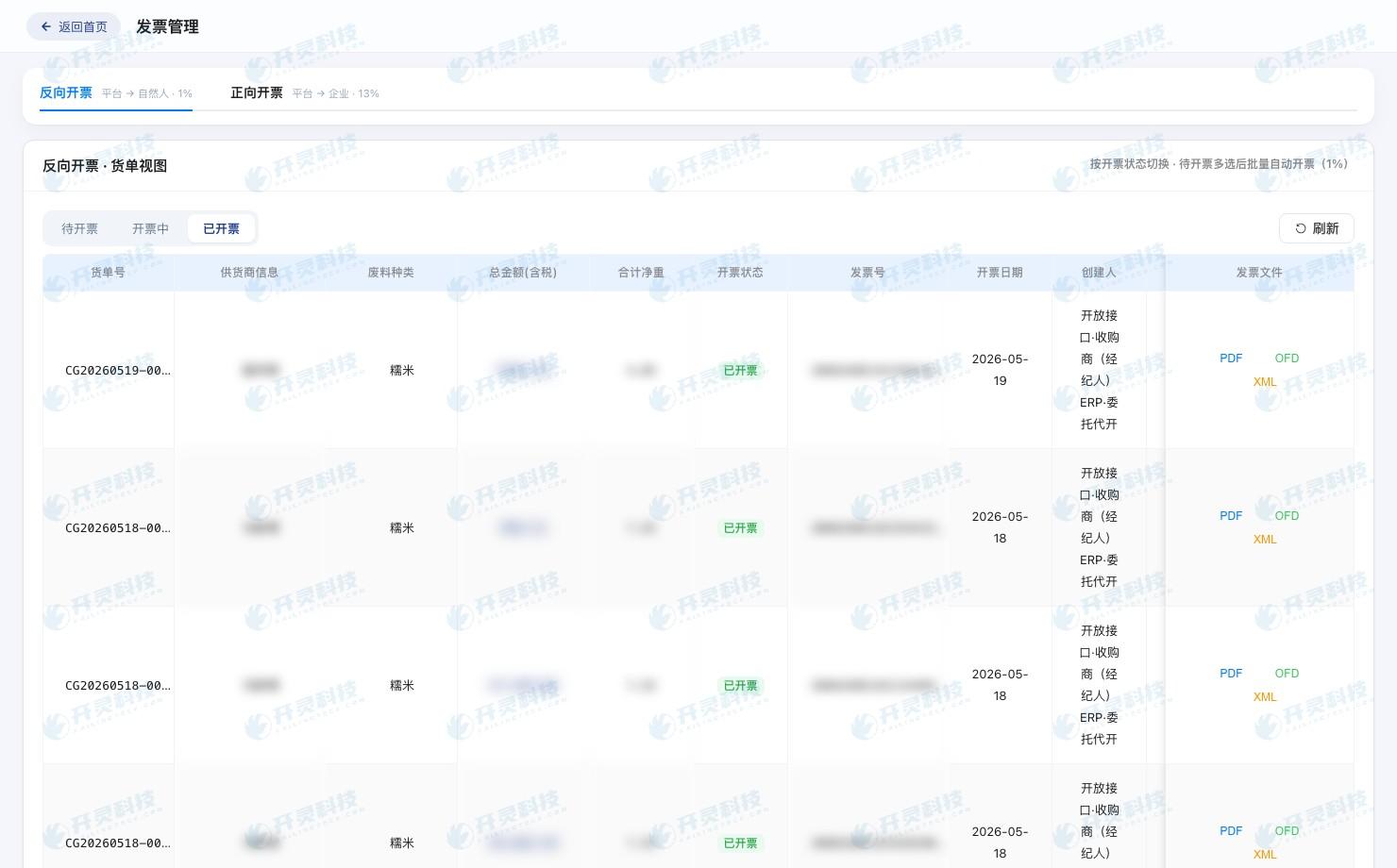
Step 3: Reverse invoicing · Batch one-click issuance in goods order view (tax flow) This is the core of the speed improvement. The system aggregates transactions pending invoicing in a goods order view, and invoicing clerks can select them in batches and issue acquisition fully digitalized e-invoices with one click, directly calling the electronic tax bureau interface without login, with quantity and amount automatically aligned with the weighing slip. After a cooperative in a major shiitake production area (annual scale exceeding 10 billion yuan, about 100,000 farmers) went live, single invoicing was compressed from 15 minutes to 20 seconds, and there is no longer any need to queue for invoices during peak season.
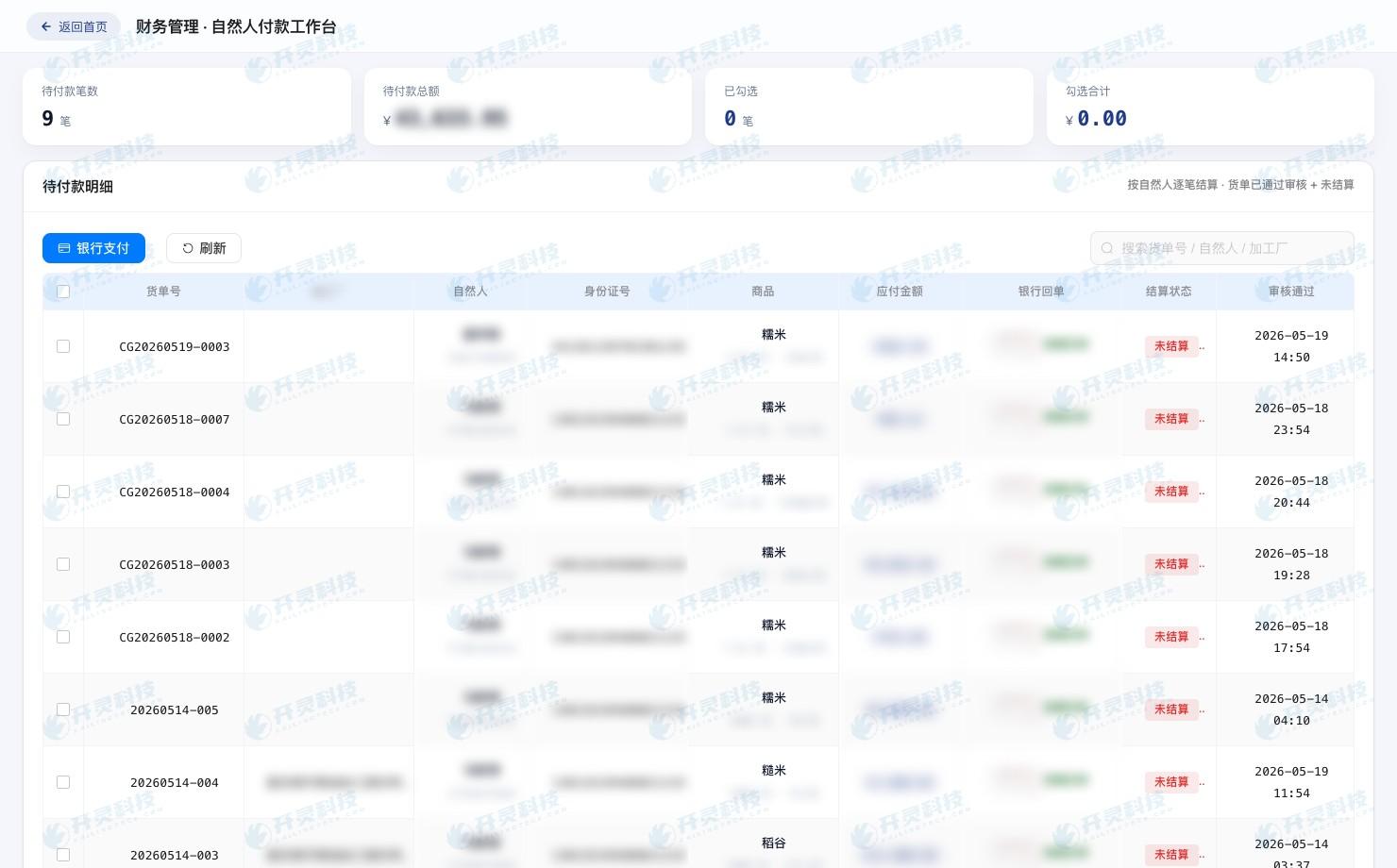
Step 4: Financial Payment Workbench · Bank-Enterprise Direct Connection (Fund Flow) After the invoice is issued, the finance payment workstation automatically generates payment orders based on cargo documents and invoices, enables batch payment via bank-enterprise direct connection, and automatically writes back bank receipts, eliminating cash transactions and ensuring one-to-one correspondence and traceability among fund flow, business flow, and tax flow.
Step 5: Five-flow integrated archives · completeness verification (compliance traceability) Finally, the system automatically collects self-certification (self-production certificate), contracts, weighbridge tickets, invoices, and payment receipts into the same transaction file and performs completeness verification: which transaction is missing a self-production certificate, and which weighbridge ticket doesn't match the invoice, are visible at a glance. During tax inspections, files can be retrieved on demand, the self-certification chain is complete, and the 9% deduction stands up.
Shiitake mushrooms, live cattle, timber: different categories, the same compliance foundationThe procurement pain points across all agriculture, forestry, animal husbandry, and fishery scenarios are essentially the same. Kailing reverse invoicing flexibly adapts by category: Shiitake mushrooms and other fruits/vegetables/grains:Many households, scattered volume, concentrated peak season—batch filing + goods order view batch invoicing is most effective; a certain mushroom cooperative area reduced invoicing from 15 minutes to 20 seconds. Live cattle and other livestock/aquatic products:For large single transactions requiring self-production certificates for breeding, a certain live cattle purchasing enterprise uses file creation to bind breeding certificates + bank-enterprise direct connection payment, aligning capital flow and self-certification flow in one transaction. Wood and other forest products:Weighing measurement is complex and transport links are long. A wood acquisition enterprise uses invoicing upon weighing + five-flow archiving to make measurement, invoicing, and payment data consistent and traceable throughout. From single-point acceleration to full-chain compliance, Kailing reverse invoicing enables agricultural product procurement enterprises in peak season to "issue quickly, pay clearly, deduct steadily, and trace reliably," turning the compliance risk that previously relied on person-to-person monitoring into the certainty of automatic system traces. Slow invoicing and difficult deduction in agricultural product purchases? Let Kailing Technology's reverse invoicing help you issue with one click, verify automatically, and trace the five flows, steadily deducting 9% even in peak season: www.kailingteck.com . As a comprehensive business-finance-tax digitalization solution service provider, Kailing Technology provides business-finance-tax management digital transformation products and operational services for various government agencies, institutions, and large, medium, and small enterprises. The product line includes: Solutions for businesses including sales contract management system, procurement contract management system, fully digitalized Leqi interface project, output automatic invoicing system, reverse invoicing system, invoice issuance for individuals system, employee expense control and reimbursement system, input VAT invoice management system, supply chain collaborative reconciliation system, image OCR recognition system, automatic financial bookkeeping system, and electronic accounting archives system, comprehensively driving the digitalization process across various fields. If you have any business-finance-tax digital transformation needs, welcome to contact us. Beijing Kailing Technology will serve you wholeheartedly.
Keywords:agricultural product procurement invoice, reverse invoicing, 9% agricultural product deduction, shiitake mushroom procurement invoicing, live cattle and timber procurement, five-flow integrated traces, self-production certificate, invoicing upon weighing |