Against the broader backdrop of the national effort to continuously promote resource recycling, enterprise digital upgrading, and tax compliance governance, the traditional waste paper recycling business is accelerating its evolution toward "online business operations, closed-loop processes, and invoice-finance coordination." Recently, Beijing Kailing Technology Co., Ltd. successfully won the bid for the waste paper recycling reverse platform construction project of Taishan Gypsum Co., Ltd., and will build an integrated digital platform around the waste paper recycling scenario, covering key links such as natural person supplier registration, reporting, quality inspection, weighing, warehousing, reverse invoicing, and payment coordination, helping the enterprise build a more standardized, efficient, and traceable resource recycling management system.
I. Client enterprise introduction
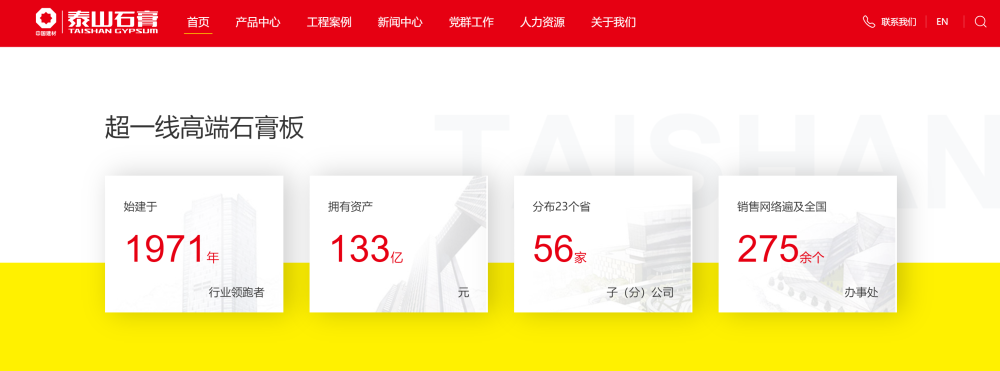
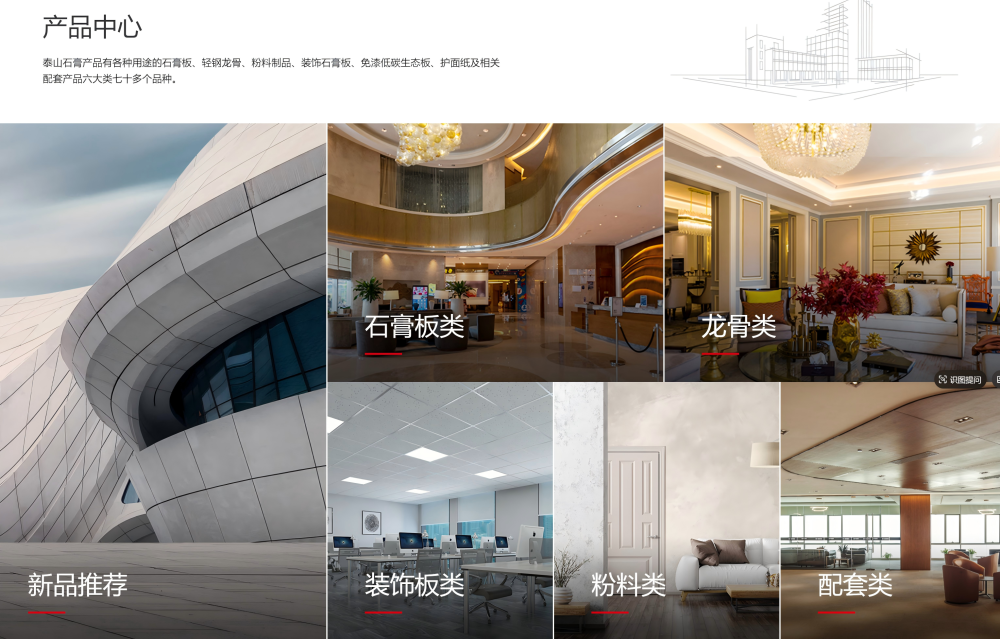
Taishan Gypsum Co., Ltd. is a backbone enterprise under China National Building Material Group (a Fortune Global 500 company) and a world-renowned gypsum board manufacturer. Its gypsum board production and sales volume has led by a wide margin for many consecutive years, with a domestic gypsum board market share of 53%, earning it the reputation of a leader in the gypsum board industry. The company has assets of 13.3 billion yuan and annual revenue of over 12 billion yuan. Its main products include six major categories and more than 60 varieties: gypsum board, light steel keel, powder products, decorative gypsum board, facing paper, and related supporting products.
As one of the important enterprises in China's building materials industry, Taishan Gypsum has a high level in production and manufacturing, supply chain management, and operational standardization. As the enterprise's requirements for refined management of raw material procurement continue to rise, especially in resource recycling business scenarios such as waste paper, the enterprise has put forward higher requirements for procurement business process integration, individual supplier management, invoice compliance, payment collaboration, and documentation traceability.
Under traditional models, the waste paper recycling business involves multiple links such as natural person reporting, price approval, procurement contracts and orders, vehicle weighing upon arrival at the plant, quality inspection deductions, procurement warehousing, invoice processing, and payment applications. The chain is long, many roles are involved, and system interaction is complex. How to improve the transparency, automation level, and tax compliance capability of the recycling business while ensuring business continuity has become a key topic in enterprise digitalization construction.
II. Project Background: The Waste Paper Recycling Business Is Moving Toward Digitalization, Compliance, and Platformization
This project focuses on the construction of a waste paper recycling reverse platform. The core objective is to connect the main and auxiliary processes of the waste paper recycling business through systematic platform construction, achieving overall upgrades from the natural person end to the enterprise management end, from business flow to invoice flow, and from offline materials to electronic archives.
From the perspective of business characteristics, the project not only involves collaboration between the enterprise's internal procurement and financial processes, but also involves management of natural person suppliers, mini-program applications, tax invoicing capabilities, coordination with third-party payment channels, and integration with multiple systems such as the NC system, weighing system, and quality inspection system. The construction content has strong comprehensiveness and industry scenario characteristics.
With its product and project experience in invoice-business-finance-tax digitalization, reverse invoicing platforms, and system integration implementation, Kailing Technology provided Taishan Gypsum with an integrated construction plan tailored to actual business needs and ultimately won the bid.
III. Project Construction Content: Build a Platform System Covering the Entire Process of "Reporting—Plant Entry—Quality Inspection—Warehousing—Invoicing—Payment"
The construction content of this project mainly includes the PC-side reverse invoicing management platform, mini-program business applications, interface integration with NC and peripheral systems, and supporting construction around business archiving and risk control capabilities, forming a complete waste paper recycling reverse platform.
1. Build a reverse invoicing management platform to solidify the enterprise-side business management foundation
The project will build a reverse invoicing management platform to support enterprises in unified management of waste paper recycling-related business on the PC side. The platform focuses on process support for reverse invoicing business for individuals, supporting core capabilities such as invoice information management, application processing, status tracking, document archiving, and approval collaboration, establishing a standardized, auditable, and traceable management mechanism for enterprises.
This platform not only handles the invoicing business itself, but will also coordinate with the preceding and following links such as procurement, warehousing, and payment, promoting the organic linkage of business flow, document flow, and invoice flow, and improving management efficiency and process transparency.
2. Build a mini-program application to enhance online collaboration capabilities for individual suppliers
In response to the characteristics of high participation of natural person suppliers, scattered information collection, and high offline communication costs in the waste paper recycling business, the project will build a mini-program application to support natural persons in completing operations such as registration, reporting, agreement signing, and information inquiry online.
The mini program mainly includes the following capabilities:
Individual registration and review: supports filling in basic information such as name, ID card, mobile phone number, and bank card, and uploading relevant credential materials;
Online agreement signing: after review approval, documents such as the Waste Paper Purchase and Sale Agreement and the Consent Certificate for Reverse Invoicing and Tax Payment on Behalf can be signed online;
Filing information submission: individuals can submit delivery filing information online, and the system supports memorization and reuse of information such as license plates and drivers;
Quality inspection and settlement inquiry: You can view quality inspection deduction point information, invoice issuance status, and payment progress;
Permission and interface control: Individuals can only view their own data, while administrators can perform unified review and management.
Through mini-program development, enterprises can significantly improve the online collaboration level with individual suppliers, reduce manual communication and document collection costs, and lay the foundation for subsequent business traceability and audit trails.
3. Promote NC business process transformation to realize automated collaboration between procurement and invoicing
A major focus of the project is collaborative transformation and integration around NC system-related business processes, with process-based and automated design for key business nodes in waste paper recycling scenarios.
Centered on enterprise-side processes, the project covers the following key stages:
Price approval: Add a new "invoice issuance for individuals reverse invoicing" price approval form type, supporting tax-exclusive unit price and invoicing price approval;
Automatic generation of procurement contracts and orders: after individual reporting, one contract per vehicle and one order per vehicle are automatically generated based on delivery type, and linked to price approval forms;
Warehousing-linked invoicing application: after procurement warehousing is completed, the system automatically generates a reverse invoicing application based on the actual received quantity and order price;
Invoice maintenance and payment collaboration: after issuing purchase invoices, automatically generate purchase invoice maintenance documents and further associate them with payables and payment applications.
This design forms a closed loop for business actions that were originally scattered across different nodes and relied on manual handoffs, greatly improving procurement and finance collaboration efficiency.
4. Establish quota verification and tax risk prevention and control mechanisms to enhance compliance management capabilities
In response to the actual needs of quota control and tax risk prevention in individual reverse invoicing business, the project introduces individual quota verification capability, supporting verification of individual invoicing quotas in conjunction with WeChat or Alipay channels, avoiding tax risks caused by excessive invoicing.
After a natural person files a report, the enterprise side can automatically verify the quota; if the quota is exceeded, it can reject or intercept the risk. This mechanism helps enterprises establish compliance verification capabilities at the front end of business, moving risk prevention and control forward and reducing subsequent tax processing pressure.
At the same time, the system supports process-based management of reverse invoicing business and cooperates with enterprises to standardize the connection between payment and invoicing links, further improving business authenticity, compliance, and superviseability.
5. Connect data links such as weighing, quality inspection, warehousing, invoicing, and payment
This project is not an isolated construction of a single system but focuses on data connectivity across the entire business chain. According to the plan, the platform will integrate interfaces with the NC system, weighing system, quality inspection system, etc., to achieve bidirectional flow of key business data, mainly including:
Receipt of product and purchase price information;
Transmission of individual reporting information;
Weighing data and vehicle images are transmitted back;
Quality inspection results and deduction point details are returned;
Warehousing details sync;
Issued invoice information is returned;
Payment approval progress synchronized.
Through these system integration capabilities, the platform can achieve automatic data transmission and status synchronization between different business nodes, reducing duplicate entry, lowering error rates, and improving timeliness across the entire process.
6. Strengthen attachment archiving and image trace retention, promoting the transition from paper materials to electronic management
In the waste paper recycling scenario, materials such as contracts, filings, quality inspection reports, warehouse receipts, and vehicle images are usually scattered across multiple stages. This project particularly emphasizes the construction of attachment management and image association capabilities, promoting enterprises to gradually reduce reliance on paper documents and shift to electronic archiving.
After completion, purchase invoice maintenance documents can automatically associate materials such as individual reporting information, electronic contracts, quality inspection reports, and purchase warehouse receipts; vehicle images during weighing can also be automatically captured and associated with business records. This not only helps daily management, but also facilitates subsequent audit queries, issue tracing, and compliance verification.
IV. Project core highlights: centering on industry scenarios to build an implementable business closed loop
From the overall construction plan, this project has the following outstanding highlights:
First, the process loop is complete. The project covers the full business chain from price approval, individual registration, and delivery reporting to weighing, quality inspection, warehousing, invoicing, and payment application, truly achieving end-to-end closed-loop business management.
Second, efficient dual-end collaboration. Through the collaboration between the PC platform and the mini-program application, it balances enterprise management needs with the convenience of use for natural persons, enhancing platform promotion and actual implementation results.
Third, outstanding integration capability. The project connects multiple peripheral systems such as NC, weighing, and quality inspection, forming cross-system data linkage capability and building a unified and efficient business collaboration system for the enterprise.
Fourth, equal emphasis on compliance and risk control. Through mechanisms such as individual quota verification, online signing, information review, document archiving, and image trace retention, tax compliance and business risk control are embedded into the process.
Fifth, balancing efficiency and standardization. While ensuring management requirements such as approval, archiving, and verification, the system also improves business processing efficiency by automatically generating contracts, orders, application forms, etc.
V. Project implementation value: helping enterprises achieve digital upgrading of waste paper recycling business
As the project advances and is implemented, Taishan Gypsum is expected to achieve significant improvements in the following areas:
First, improve the standardized management level of the waste paper recycling business. Through a unified platform and process, enterprises can bring business originally relying on offline communication and manual processing into systematic management, reducing operational differences and improving execution standardization.
Second, enhance supply chain collaboration efficiency. Natural person suppliers can complete registration, reporting, signing, inquiry, and other operations through a mini program, while within the enterprise, roles such as procurement, finance, and approval can collaborate, shortening the business processing cycle.
Third, strengthen tax compliance and risk control. Capabilities such as quota verification, invoicing process control, and electronic documentation trails help enterprises better respond to compliance requirements in reverse invoicing business and reduce management risks.
At the same time, promote the accumulation and traceable management of business data. Through system integration and electronic archive construction, the project helps enterprises form full-process data records, providing support for subsequent business analysis, internal audit, and process optimization.
VI. Kailing Technology's Project Capability: Supporting Customer Success with Product Capability and Industry Understanding
Winning the Taishan Gypsum project this time further demonstrates Kailing Technology's comprehensive capabilities in enterprise invoice, finance, and tax digitalization, industry-specific scenario solutions, and system integration implementation.
On one hand, Kailing Technology has mature invoice information management platform product capabilities, supports private deployment, and covers both PC and mobile application scenarios; on the other hand, the company can deeply understand customers' actual needs in complex businesses such as resource recycling, individual procurement, reverse invoicing, and payment collaboration, and drives project implementation through a combination of product capabilities, API integration, and implementation services.
For this project, Kailing Technology is not only the platform builder, but also a collaborative partner in the enterprise's business digital upgrade process. Through comprehensive construction around business processes, system architecture, compliance needs, and user experience, the project will create a waste paper recycling reverse platform for Taishan Gypsum that is better adapted to actual business.
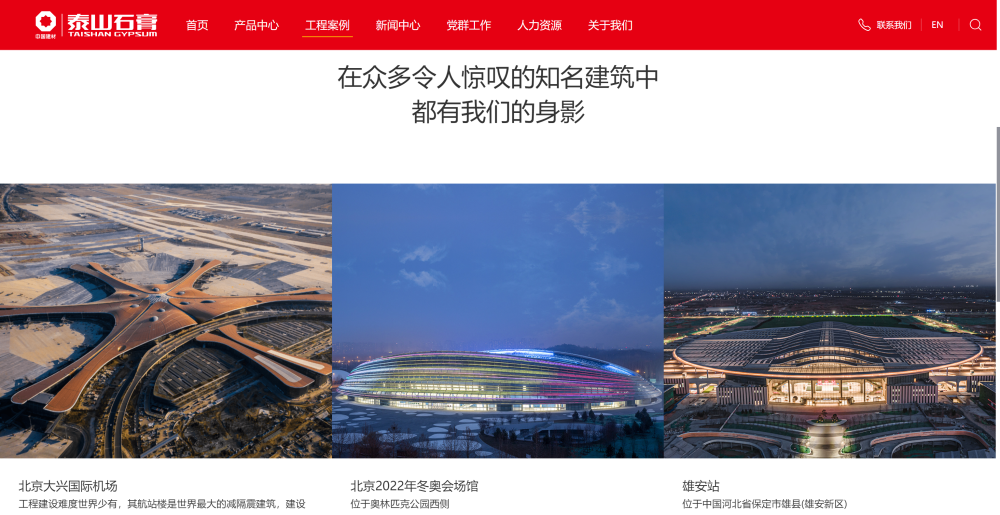
The waste paper recycling reverse platform construction project of Taishan Gypsum Co., Ltd. is an in-depth digitalization practice oriented to resource recycling business scenarios. The project uses reverse invoicing as its entry point, connecting core links such as individual management, procurement collaboration, quality inspection and weighing, invoice processing, payment applications, and archive traceability, reflecting the enterprise's high emphasis on standardized, digitalized, and compliant management.
As the project contractor, Kailing Technology will rely on mature product capabilities, solid implementation experience, and deep understanding of scenarios to help Taishan Gypsum build an efficient, standardized, and sustainably evolving waste paper recycling reverse platform, providing strong support for the enterprise's supply chain digitalization and resource recycling business management upgrade.
Note:Images in this article are sourced from the Taishan Gypsum official website. The images are used solely for illustrative purposes in this article. Copyright belongs to the original content source. If there are any copyright issues or objections to the use of the images, please contact us promptly, and we will address them immediately.
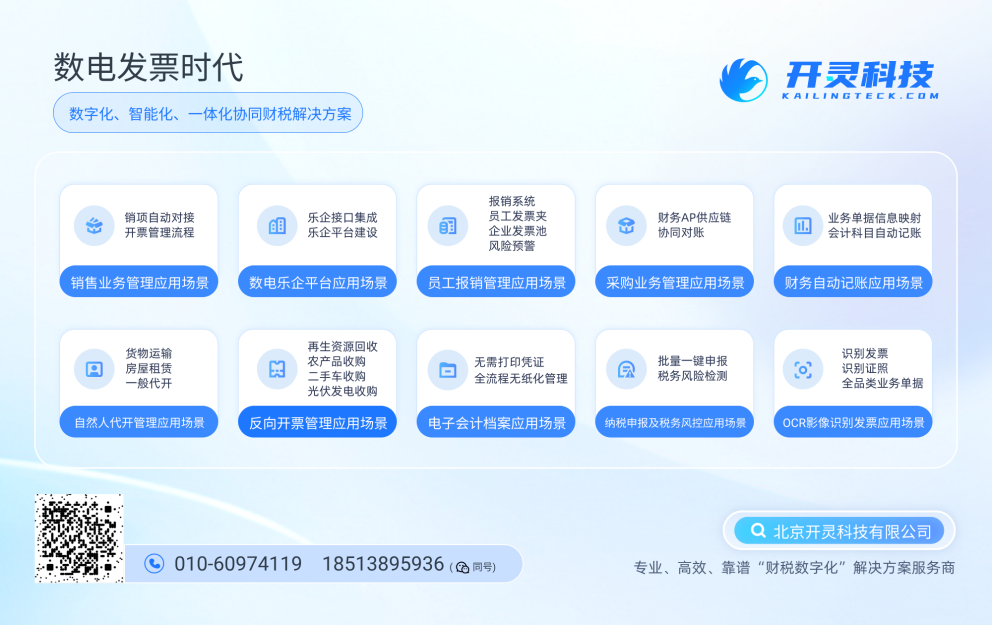
As a comprehensive business-finance-tax digitalization solution service provider, Kailing Technology provides business-finance-tax management digital transformation products and operational services for various government agencies, institutions, and large, medium, and small enterprises. The product line includes:
Solutions for businesses including sales contract management system, procurement contract management system, fully digitalized Leqi interface project, output automatic invoicing system, reverse invoicing system, natural-person invoicing system, employee expense control and reimbursement system, input VAT invoice management system, supply chain collaborative reconciliation system, image OCR recognition system, automatic financial bookkeeping system, and electronic accounting archives system, comprehensively driving the digitalization process across various fields.
If you have any business-finance-tax digital transformation needs, welcome to contact us. Beijing Kailing Technology will serve you wholeheartedly.