010-6097 4119Book a Demo


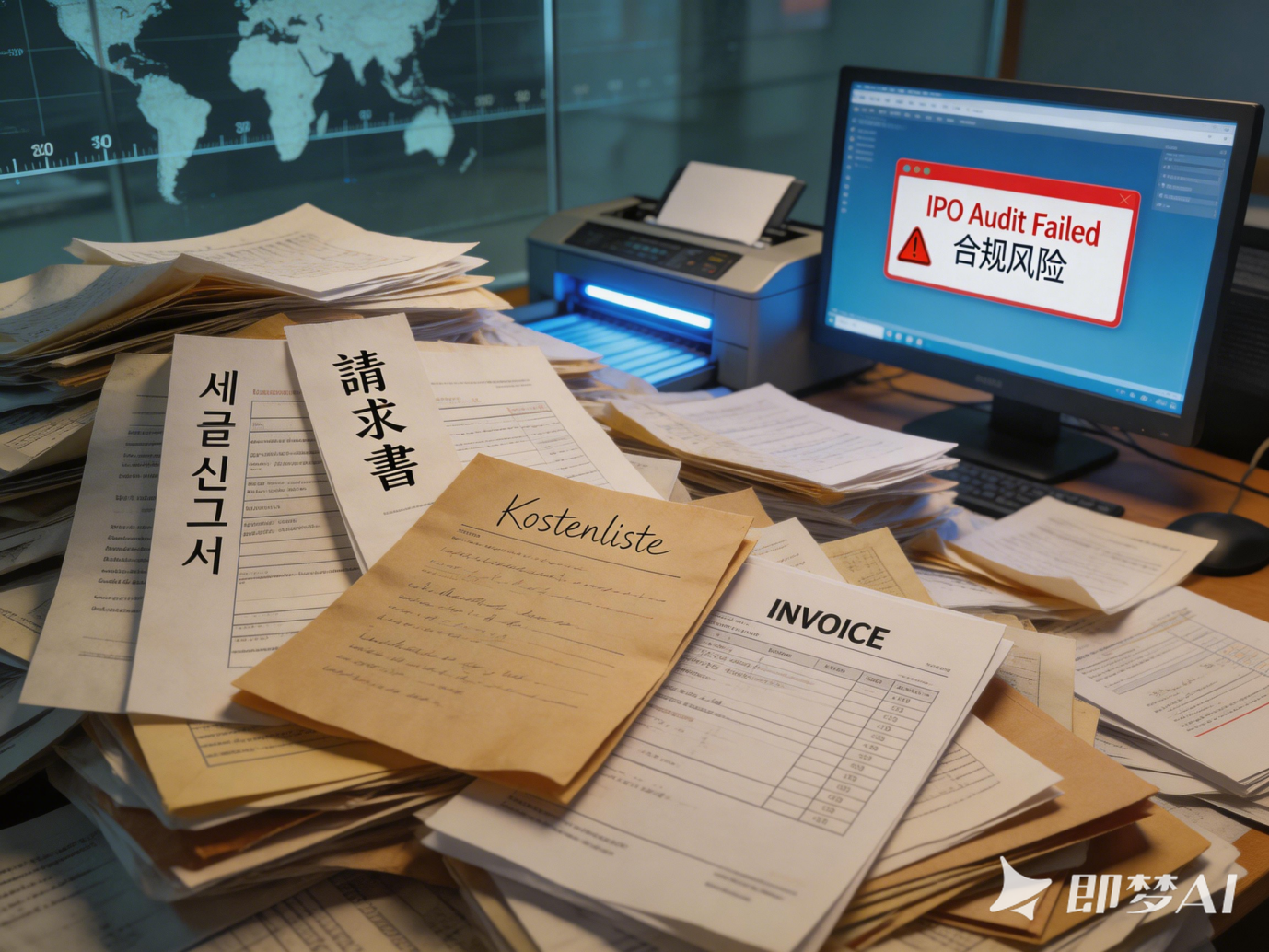
Kailing Technology batch processes overseas paper documents with automatic translation, AI semantic parsing for efficient retrieval, and penetrating audits to accelerate enterprise IPO processesPublished: 2026-04-10 16:05 I. In the era of globalization, cross-border voucher management is dragging down your IPO paceWhen an enterprise extends its business globally, the complexity of financial management often rises exponentially. What internal audit and finance teams face is no longer uniform VAT invoices, but Japanese "request forms" scattered in drawers of the Tokyo office, Korean tax bills in corners of Seoul warehouses, handwritten German expense lists at Frankfurt project sites, and port miscellaneous fee receipts in various formats from Southeast Asian countries. It is estimated that a medium-sized multinational enterprise may need to process tens of thousands of overseas invoices each year, creating a huge workload for manual entry and translation. During the IPO sprint stage, these paper documents spanning several time zones and carrying information in dozens of languages constitute a key focus of regulators—Penetrating verification。 The three major pain points of cross-border business are becoming the "invisible killers" of the IPO process: First, language semantics are difficult to align. Accounting treatment logic is completely different across languages. Manual translation often only converts the literal meaning without translating the connotation, easily leading to account classification errors. Professional terms such as the "non-taxable" field in Japanese invoices, the "registration number" in Korean invoices, and "Consignee" and "MAWB/HAWB" (master/house waybill numbers) in international invoices, once mistranslated, directly affect the accuracy of financial statements. Second, format and layout are difficult to unify. Overseas invoices lack unified anti-counterfeiting and layout standards, with handwritten modifications, stamps covering text, and mixed barcode information. Japanese invoices have unique vertical layout habits, and Korean invoices have complex mixed character structures, making it difficult for traditional OCR systems to capture accurately. Conventional scanners can only retain images and cannot convert them into searchable structured fields. Third, related evidence is difficult to trace. A cross-border procurement transaction may involve overseas contracts, proforma invoices, multimodal transport bills of lading, customs duty-paid certificates, and multiple bank deduction records. Once the evidence chain has a break in time or amount, auditors cannot complete a "full-path penetration" from financial statement accounts to the business source. Looking back at recent IPO market dynamics, cases of failure due to minor flaws in financial internal controls are common. "Insufficient bank statement verification" and "source documents disconnected from business substance" have become high-frequency minefields in regulatory inquiries。How to efficiently convert paper vouchers of varying forms scattered around the world into structured, searchable, traceableDigital assets, has become an urgent issue for globally operating enterprises to address.
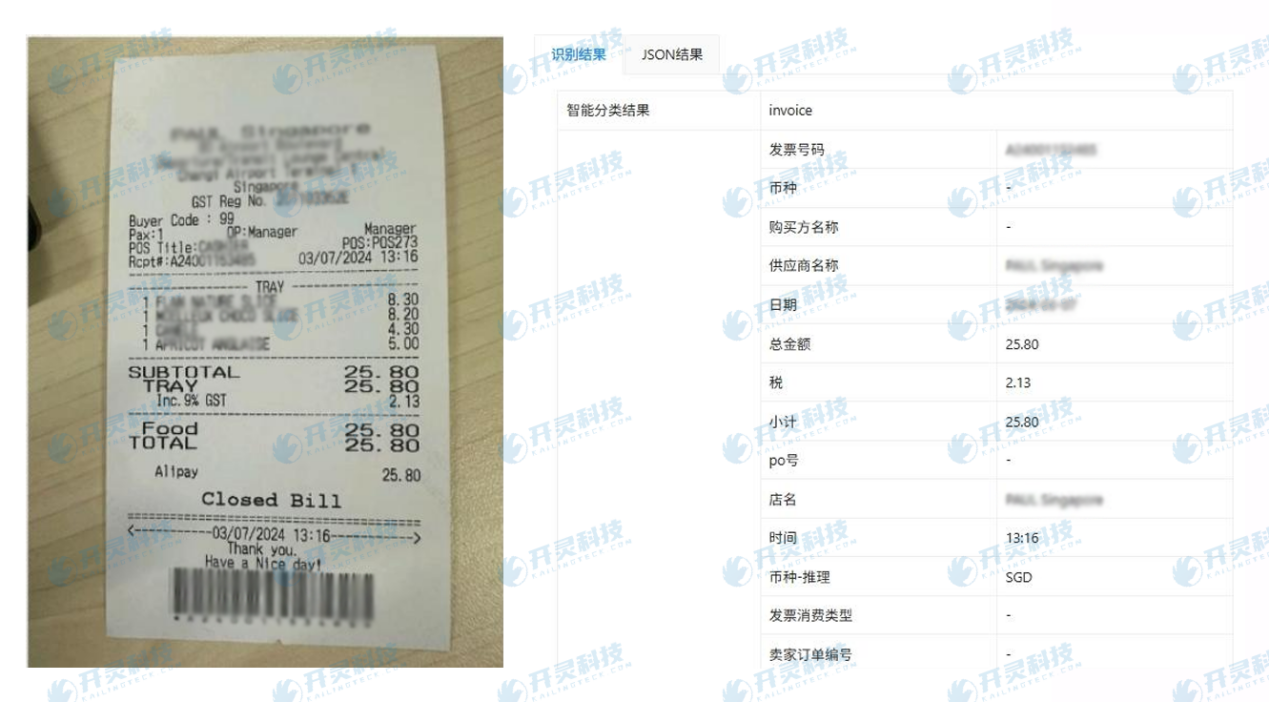
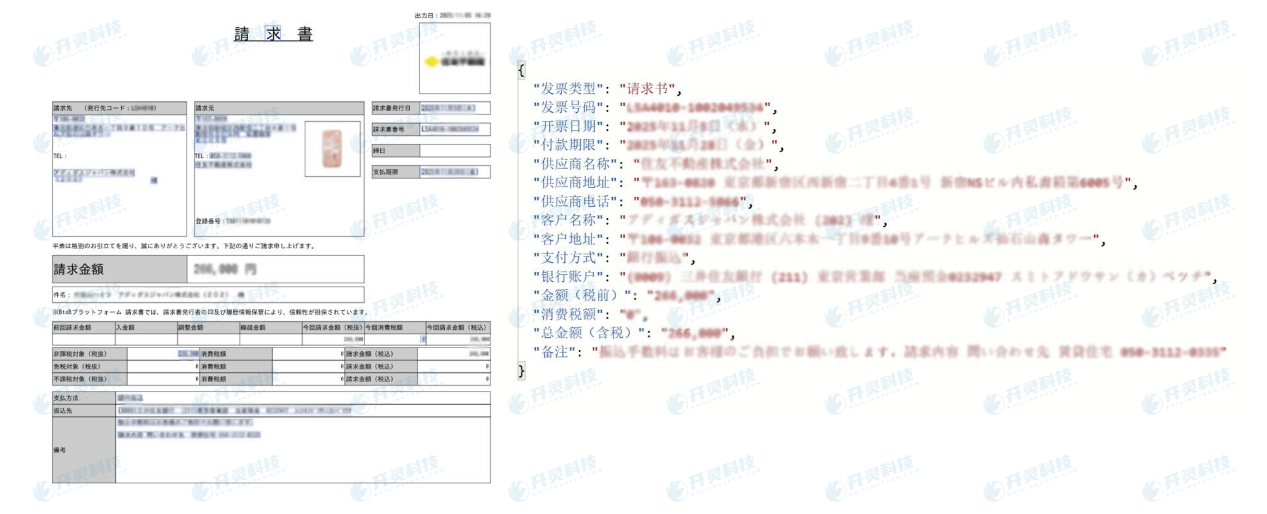
II. Batch scanning + automatic translation: enabling overseas paper vouchers to "speak Chinese"Facing the cross-border voucher management challenges in enterprises' global operations, Kailing Technology has launched a multi-language, multi-scenarioSmart OCR recognition system, building an automated processing channel for enterprises from paper vouchers to structured data. 1. Full coverage of nearly 100 languages, barrier-free global business Trained on massive multilingual samples, the system can accurately process English, Japanese, Korean, Thai, Vietnamese, German, French, Russian, Spanish, etc.Nearly 100 language typesinvoices. No matter how widely a company's business is distributed, seamless recognition and extraction of cross-language data can be achieved. It is worth noting that Kailing Technology focused on overcoming the recognition challenges of distinctive languages. In response toJapanese vertical layout, Korean mixed-character structurefeatures, achieving precise character capture and semantic conversion; it also supports more than 30 languages including English, German, Spanish, and Thai, perfectly adapting to multilingual mixed-layout scenarios. 2. "Dual-engine" architecture: General model + customized model working in coordination In terms of technical approach, Kailing Technology abandons traditional template matching and manual verification models, and through "Multi-scenario image capture—intelligent image preprocessing—dual-model intelligent data extraction—large language model output" full-process closed loop, achieving efficient processing of overseas documents. The system innovatively adopts "Official general model + industry-customized model" dual-track strategy. The official general model can efficiently process standardized international hotel invoices, restaurant receipts, government receipts, etc.; the industry-customized model targets special document types and provides a self-training platform to help customers quickly build exclusive recognition models and accurately extract key fields. In Japan and South Korea scenarios, the system has successfully adapted10 categories of core invoices, including Japan's logistics fee invoices, consumption tax payment documents, housing rent receipts, as well as South Korea's taxi receipts, restaurant card sales slips, and service-type VAT invoices. 3. Intelligent image preprocessing: giving blurry invoices a "new life" To address recognition difficulties of overseas invoices often caused by paper quality, scanning conditions, and other factors, Kailing Technology's algorithm effectively eliminates interference such as invoice wrinkles, stains, and uneven lighting, improving the text clarity of low-quality invoices by40%, it also supports automatic tilt correction within a range of ±15°. At the text recognition level, the system can accurately capture various texts within the range of 0.5mm-10mm, even in complex scenarios such as dot matrix printing, ink smudging, and dense small text,Core field recognition accuracy remains as high as 99%, the error rate for recognizing similar characters is reduced by 60%. 4. Intelligent currency conversion: standardized and unified global financial dataTo address currency differences in cross-border settlement, the system has a built-in global mainstream currency recognition and conversion engine, which can automatically recognize currency symbols and amount formats of multiple countries such as Japanese yen, Korean won, US dollars, and euros, and accurately extract core financial fields such as pre-tax amount, tax amount, and total amount including tax. All extracted data is automatically converted into international currency codes and output in standardized preset formats, providing unified data support for global financial accounting. Batch processing improves efficiency by more than 85%. Taking a cross-border procurement scenario as an example, invoice entry work that originally required 3 people/day can now be completed by 1 person/hour, greatly freeing up finance staff energy.
III. AI semantic parsing: the cognitive leap from "recognizing text" to "understanding business"If OCR solves the problem of "what is seen," thenAI semantic parsingThen it answers "what was understood." This is the key difference between Kailing Technology's solutions and traditional recognition tools. 1. Understand context and associationsThe system can automatically link invoice header information with line item details, understand the tax implications of special fields such as "tatekaekin (advance payment)" (advance payments) and "non-taxable," and accurately distinguish the calculation logic for tax-inclusive prices, tax-exclusive prices, and various tax amounts. Through deep learning models, the system can determine whether a field is a "product name" or "service description," and can automatically link and verify calculations for "total amount," "tax amount," and "subtotal" scattered in different locations. 2. Parse multilingual mixed contentFacing invoice content mixed with Chinese and English or Japanese and English, the AI semantic parsing module can accurately determine the language attribution and business meaning of each field based on context, rather than simply performing word translation. 3. Insights into the business logic behind invoicesFor customs duty bills, the system can not only recognize amounts, but also parse key information such as cargo descriptions, tariff codes, country of origin and taxation methods, and semantically associate them with logistics documents and purchase orders to verify the reasonableness of tax and fee calculations. The system is deeply adapted to the tax rules of different countries, can precisely recognize distinctive tax fields such as Japan's "consumption tax rate" and South Korea's "VAT amount," and automatically validates the logical consistency of invoice information. In the post-processing stage, industry-specific semantic models enable "intelligent error correction + field completion," logically repairing vague or missing information, with error correction accuracy of over 92%。
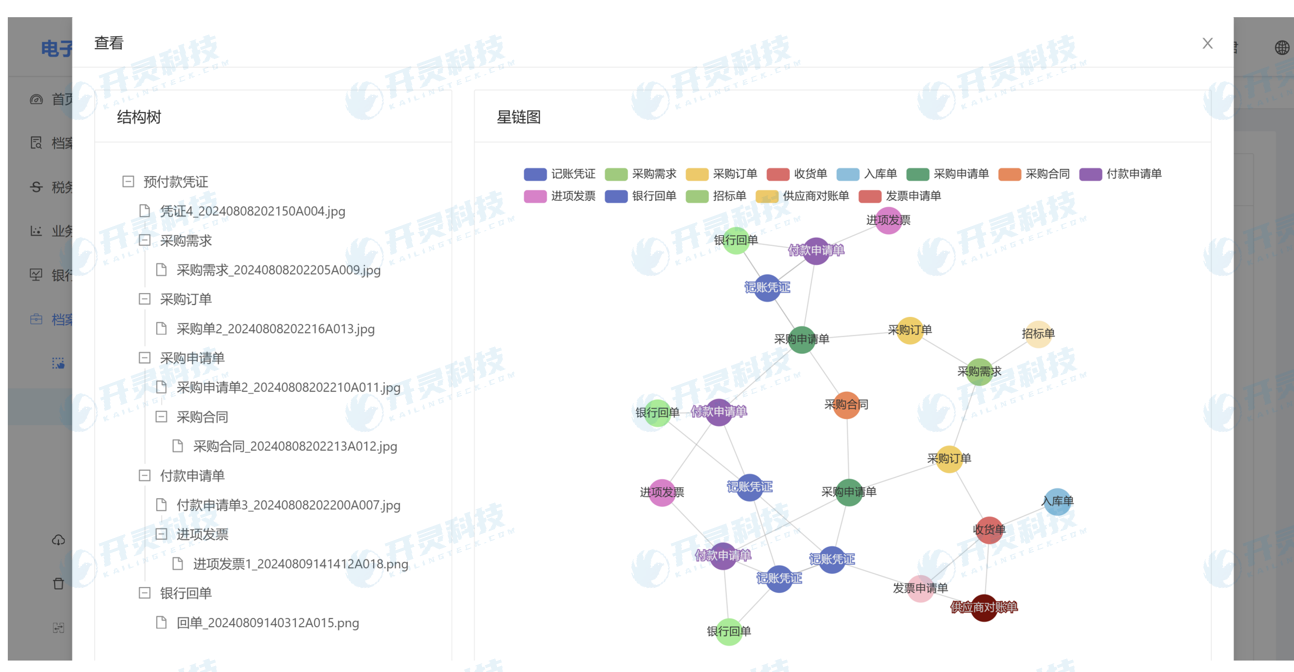
IV. Penetrating audit: paving a "data highway" for IPOWhen an enterprise moves toward the capital market, penetrating audit is an unavoidable "required course." Kailing Technology has connected everything from overseas voucher digitization to intelligent auditFull-chain solutions, providing solid financial data support for enterprises preparing for listing and other capital operations. 1. Full-path penetration: tracing from report line items back to the business sourceThe system supports auditors starting from any statement account and drilling through layer by layer to original voucher images, contracts and agreements, bank statements, and logistics documents, fully presenting the ins and outs of a business transaction. All processed documents and extracted data are encrypted and archived, forming complete and traceable electronic accounting archives. 2. Intelligent review engine: upfront interception of compliance risksThe system has built-in a configurable review rule library. Extracted structured data automatically triggers compliance checks: verifying whether the invoice amount matches the purchase order, checking whether the tariff bill tax rate matches the commodity code, and verifying whether the billing cycle is within the contract period. Suspected anomalies are automatically flagged and prioritized for manual review. The system supportsInvoice authenticity verification and duplicate reimbursement interception, providing dual protection for enterprises' cross-border business compliance. At the data storage and transmission level, Kailing follows international security standards, fully safeguarding the confidentiality and integrity of enterprise financial data, and assisting enterprises in meeting cross-border data compliance requirements such as GDPR. 3. One-click generation of audit evidence chainThe system has built-in multiple audit templates that can generate standard evidence packages for different scenarios such as tax audits and customs verification letters with one click, greatly shortening audit response cycles. After a certain financial enterprise deployed Kailing Technology's electronic accounting archives system, it saved more than 1 million yuan annually in paper procurement, warehousing rental, and other costs, truly transforming a cost center into value space.
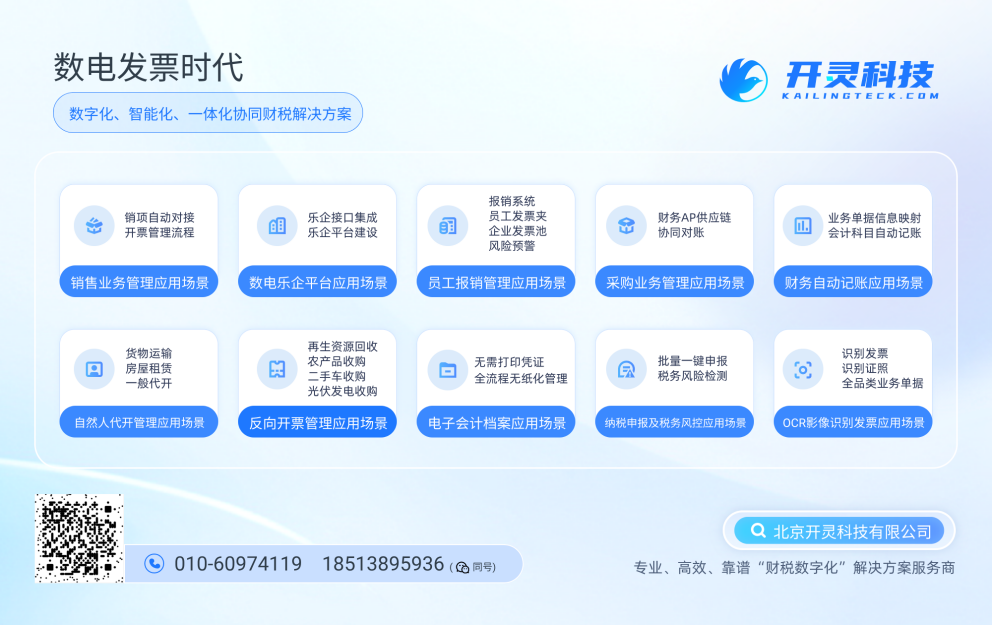
In today's increasingly complex global operations, the ability to process financial data has become an important part of enterprises' core competitiveness. With core capabilities such as multilingual global document recognition, dual-engine collaborative processing, and deep AI semantic parsing, Kailing Technology's OCR recognition system effectively solves the pain points enterprises face in cross-border voucher processing, such as low efficiency, error-proneness, and difficult cross-border adaptation. From batch scanning and automatic translation, to AI semantic parsing and intelligent review, and then to second-level retrieval and penetrating audit of electronic accounting archives, Kailing Technology usesFull-chain intelligence's approach connects every link from the digitization of paper vouchers to the output of IPO audit data working papers. The system has passed acceptance by the National Archives Administration, achieving automated four-property testing and 100% adaptation to fully digitalized e-invoices,Audit efficiency increased by 300%。 Choosing Kailing Technology is paving a solid, transparent, and efficient "data highway" for your enterprise's path to IPO:https://www.kailingteck.com/h-col-109.html 。 Kailing TechnologyAs a comprehensive business-finance-tax digitalization solution service provider, we provide business-finance-tax management digital transformation products and operational services for various government agencies, institutions, and large, medium, and small enterprises. The product line includes: Sales contract management system, procurement contract management system, fully digitalized Leqi interface project, output automatic invoicing system,Reverse invoicing system,Solutions for the invoice issuance for individuals system, employee expense control and reimbursement system, input VAT invoice management system, supply chain collaborative reconciliation system, image AI OCR recognition system, automated financial bookkeeping system, electronic accounting archives system, and other businesses, comprehensively advancing the digitalization process across various fields. If you have any business-finance-tax digital transformation needs, welcome to contact us. Beijing KailingKailing TechnologyWe will serve you wholeheartedly.
#OCR Recognition #Image Recognition System #Invoice Recognition #Overseas Invoice Recognition #Overseas Invoice OCR #Global Invoice Recognition System #AI Semantic Parsing #Paperless Office #Intelligent Finance #Digital Business-Finance-Tax |