010-6097 4119Book a Demo


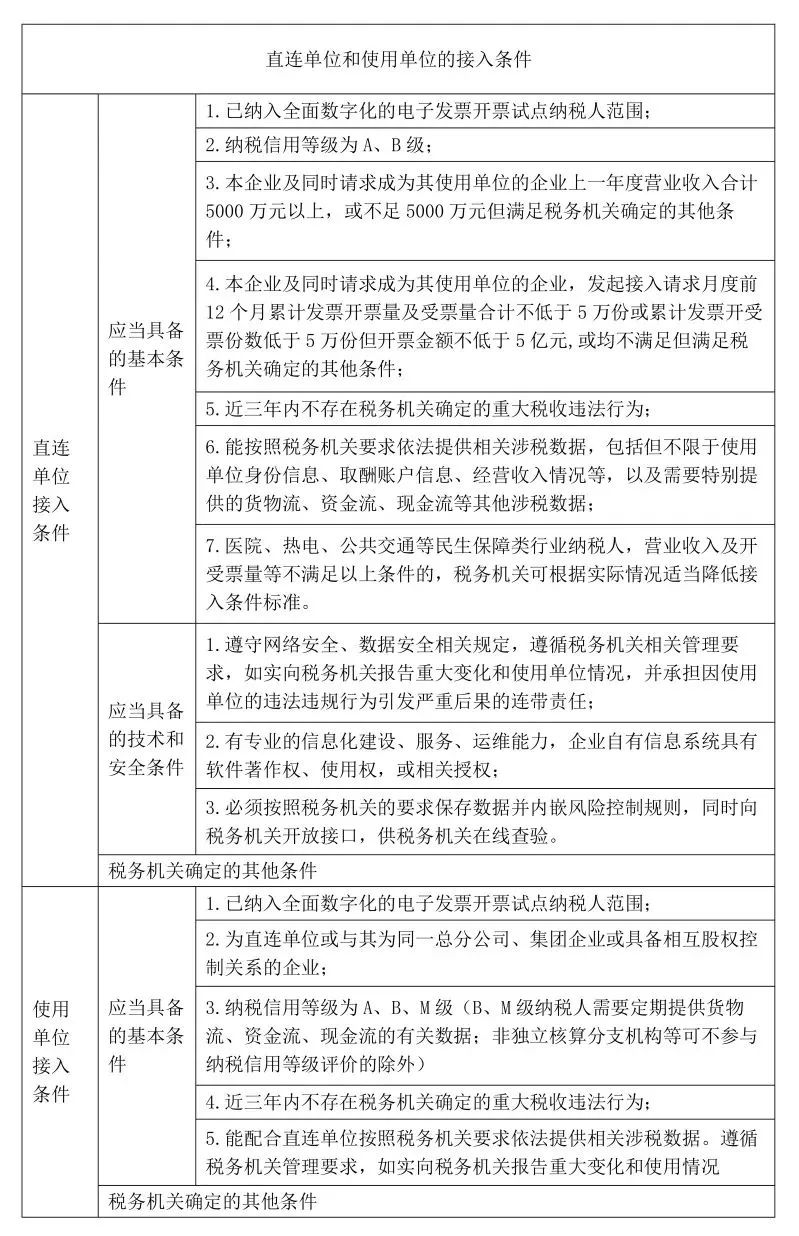
What challenges do enterprises face when connecting to "Leqi Service"?Published: 2024-01-17 11:33 Recently, Beijing, Hunan, and other places also publicly released the "Guidelines on the Standards for Leqi Self-use Direct Connection Services." As of now, Tibet is the only region that has not publicly released guideline documents. Let us review once again the meaning of Leqi. Leqi refers to a platform through which the State Taxation Administration provides tax-related services such as rule-open, standard-unified fully digitalized e-invoices to eligible enterprises by directly connecting the tax system with the enterprise's own information system. In other words, Leqi services have basic fully digitalized e-invoice services, centralized smart filing capabilities, and tax information push capabilities, including automated invoicing, deduction, statistical confirmation, smart filing, data pre-filling, and tax-related information push, among other functions, and can promote enterprise invoice and tax digital control and collaborative application. However, the Leqi self-use direct connection service has strict restrictions on the access conditions for direct-connection units and user units, mainly targeting medium and large enterprises that meet certain conditions (as shown in the figure).
After understanding the Leqi platform access guidelines, enterprises can comprehensively consider application, development, and time investment costs based on their own informatization strength and business process conditions. In order to realize "digital"IssueUnder the era of "invoices," enterprises can choose independent R&D or entrust professional third parties to assist with integration for a smooth transition of management models. Through "tax-enterprise direct connection," enterprises can smoothly transform to a smart business-finance-tax management model. However, connecting to the Leqi platform also presents challenges, such as business stability, system upgrade costs, and financial management costs. The following are three specific challenges: 1. Complexity of business integrationCurrently, the cost of connecting the Leqi platform with other systems is relatively high, and business information and invoice information cannot be directly linked, resulting in disconnected information between systems and making it difficult to meet enterprises' complex financial management needs. For example, enterprises' needs in unified invoice collection and aggregation, management, business invoicing, invoice-business matching, and online invoice data analysis. Especially for enterprises with extremely high information security requirements, such as those involving internal and external network isolation, handling data conversion between internal and external networks is even more difficult. 2. Adapts to changes in the fully digitalized e-invoice process management methodWith the spread of fully digitalized e-invoices, adapting to changes in their process management approach is particularly important. In the transition from the traditional paper invoice model to the fully digitalized e-invoice model, enterprises need to face many new issues. This is especially true for output VAT invoice management at large enterprises, where actual invoicing situations are often quite complex due to operating entities across different regions and fields. Under traditional tax control environments, enterprises usually set up multiple invoicing points based on tax control devices, manage blank invoices, and assign relevant operators to invoicing duties. However, the introduction of fully digitalized e-invoices means invoice issuance and management no longer depend on physical devices. Through platforms such as "Leqi," various "invoicing points" can be centralized at the group level for connection. But considering the complex actual invoicing situations of large enterprises, should the traditional management system still be referenced and multiple "invoicing points" be set up? In addition, the "issuer" of a fully digitalized e-invoice is a traceable actual person's name. For large enterprises, it is difficult to set a single "issuer". Therefore, it is necessary to consider the construction of the "issuer" system based on actual business needs and from the perspectives of the customer service system and management control. Overall, adapting to changes in the fully digitalized e-invoice process management approach requires enterprises to think and adjust in multiple aspects. 3. The cost issue of in-house development investmentBecause the Leqi interface logic is complex, enterprises need to invest substantial effort and time to understand the "Taxpayer Leqi Access Guide" and conduct integration development. Such investment costs are relatively high, putting considerable pressure on enterprises. At the same time, because tax bureau systems are frequently upgraded and changed, if enterprises choose to develop integration themselves, they need to equip a dedicated R&D team to address the challenge of interface changes. The timeliness requirements for upgrades and updates are very strict. Once a change occurs, enterprises need to complete system transformation and integration testing within 30 days. If updates are not timely, normal business may be affected. Therefore, when deciding whether to develop integrations in-house, enterprises need to fully consider the cost of self-development investment, as well as the ability and resources to respond to interface changes. Cooperating with professional institutions or seeking external support may be a more practical and economical choice. Source: internet Beijing Kailing Technology Co., Ltd.——an enterprise business-finance-tax digitalization solution service provider. Kailing Technology provides solutions for sales management systems, procurement management systems, output invoicing systems, input invoice collection systems, imaging management systems, financial posting systems, electronic accounting archives, fully digitalized e-invoice and Leqi interfaces and other businesses according to enterprise needs, professionally and efficiently helping enterprises transform and upgrade their business-finance-tax digital management. If you have any business-finance-tax digital transformation needs, welcome to contact us. Beijing Kailing Technology will serve you wholeheartedly.
|