010-6097 4119Book a Demo


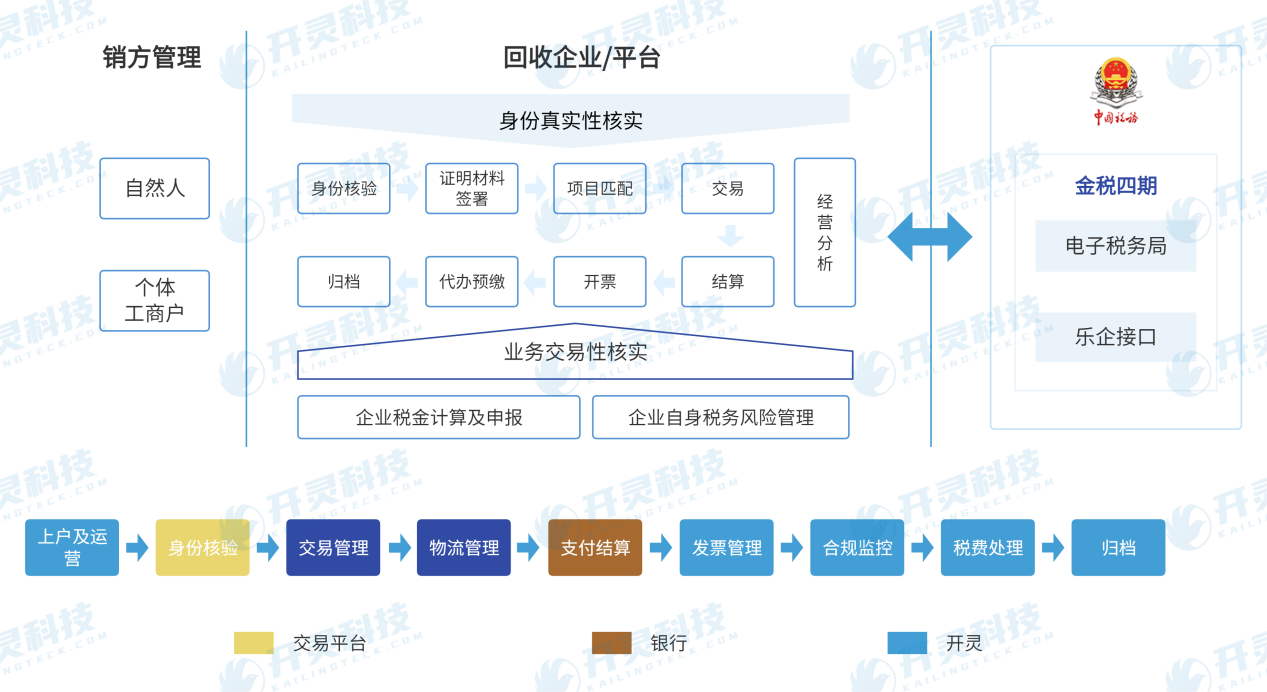
Solving the Missing Input VAT Invoice Dilemma in Scrap Steel Recycling, Kailing Technology's Reverse Invoicing Enables Compliant Tax ManagementPublished: 2026-01-26 17:44 Under the dual guidance of the "dual carbon" goals and the circular economy development strategy, scrap steel recycling, as a core link in the green transformation of the steel industry, has achieved steady expansion in industry scale. However, for a long time, the industry has always been trapped by the pain point of missing input VAT invoices: individual sellers cannot provide compliant invoices, making it difficult for recycling enterprises to deduct input tax and causing chaotic cost accounting, which not only increases operating tax burdens but also hides extremely high tax compliance risks. To address this industry challenge, in April 2024, the State Taxation Administration issued the Announcement on Matters Concerning "Reverse Invoicing" by Resource Recycling Enterprises to Individual Sellers of Scrapped Products, clarifying that eligible resource recycling enterprises may issue invoices to individual sellers, and setting out detailed provisions on enterprise qualification requirements, invoicing scope restrictions, and tax fee agency standards. After the 2026 Notice on Implementing the Policy of Large-Scale Equipment Renewal and Consumer Goods Trade-In was issued, the reverse invoicing policy was further deepened and implemented. Against this background, Kailing Technology, with its deep technical accumulation in the field of business-finance-tax digitalization, launched a targeted solution to precisely open up the "last mile" of compliant tax management for scrap steel recycling enterprises. I. Industry Pain Points Highlighted: Lack of Input VAT Invoices Restricts the Standardized Development of the Scrap Steel Recycling IndustryThe industrial chain characteristics of the scrap steel recycling industry determine the complexity of its transaction scenarios. Recycling enterprises source goods mostly from individual natural persons and individual businesses, and such sellers generally lack invoicing qualifications and cannot provide lawful and valid VAT input invoices. This core pain point directly triggers multiple industry problems: First, high tax compliance risk. Due to the lack of input VAT invoices, enterprises either cannot deduct VAT, resulting in an artificially high tax burden, or resolve invoice issues through non-compliant methods, facing tax audit risks; second, transaction authenticity is difficult to verify. Under the traditional model, vouchers such as purchase contracts, weighbridge tickets, and fund flow records are managed in a scattered manner, making it difficult to form a complete evidence chain and unable to meet the tax authorities' regulatory requirements for business authenticity; third, low operational efficiency. Processes such as manual entry of transaction data, manual calculation of taxes and fees, and offline archiving of vouchers are cumbersome, not only time-consuming and labor-intensive but also prone to data errors; fourth, policy adaptation is difficult. With the successive implementation of the 2024 State Taxation Administration Announcement No. 5 and the 2026 Two New policies, more detailed requirements have been put forward for reverse invoicing qualification review, invoicing processes, tax agency services, and archive retention, and the cost for enterprises to adapt to policies on their own is high. II. Policies Continue to Intensify: Reverse Invoicing Becomes Core Support for Industry Compliance DevelopmentTo address the tax challenges of the resource recycling industry, national policies have continued to intensify. In April 2024, the State Taxation Administration issued the Announcement on Matters Concerning "Reverse Invoicing" by Resource Recycling Enterprises to Individual Sellers of Scrapped Products (Announcement No. 5 of 2024), clarifying that eligible resource recycling enterprises may issue "scrapped product purchase" invoices to individual sellers, and setting out specific provisions on the invoicing system, tax rate standards, and tax fee agency services. Among them, enterprises under the general taxation method may issue special VAT invoices or general VAT invoices, applying a 3% or 1% tax rate, providing a legal path for enterprises' input tax deduction. The 2026 Notice on Implementing the Policy of Large-Scale Equipment Renewal and Consumer Goods Trade-In further strengthens the policy orientation, making reverse invoicing an important supporting measure to promote resource recycling, requiring expansion of the policy scope, simplification of processing procedures, and strengthening of technological empowerment, and encouraging enterprises to achieve full-process traceability of transactions through digital means, providing stronger policy guarantees for the standardized and large-scale development of the scrap steel recycling industry. The successive implementation of the two policies not only solves the urgent problem of enterprises' "difficulty in obtaining invoices," but also sets a compliance path for the high-quality development of the industry. III. Full-process solutions: Kailing Technology's reverse invoicing solves industry dilemmasIn response to the pain points and policy requirements of the scrap steel recycling industry, Kailing Technology has created a reverse invoicing solution covering the full lifecycle of "business, finance, and tax," using digital means to connect the contract flow, logistics flow, fund flow, and invoice flow "IV"flow integration," achieving compliant and efficient tax management.
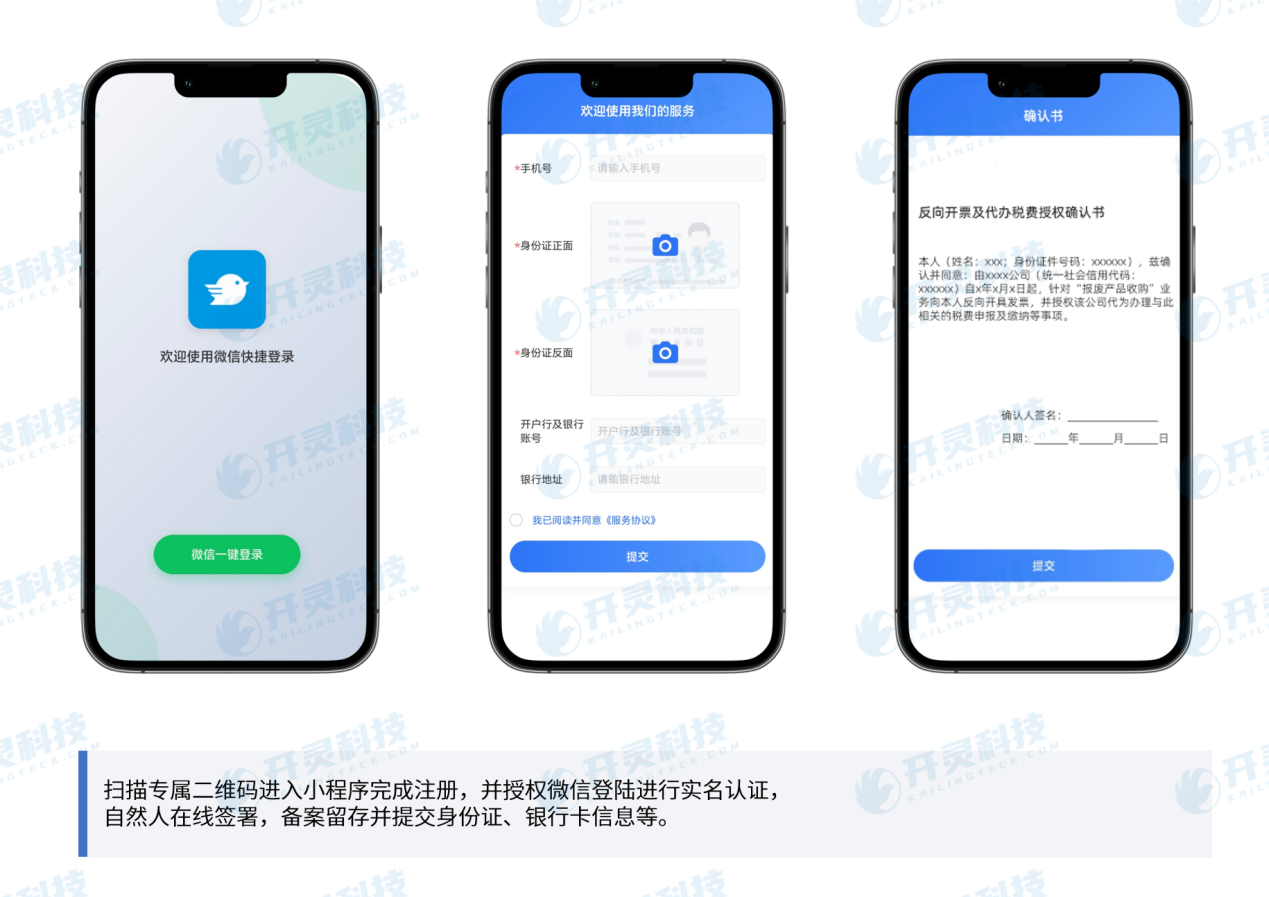
(1) Pre-control: standardized identity verification and authorization The solution usesThe enterprise's existing APP orBuilt on the WeChat Mini Program to simplify the authorization process for individuals. Sellers can complete registration by scanning the company's exclusive QR code, log in quickly via WeChat, and upload their ID card and bank card information. The system uses AI OCR technology to automatically recognize the information and generate electronic accounting archives, while completing identity authenticity verification. Individuals sign the reverse invoicing and tax and fee agency authorization letter online, and the signing records are filed and retained in real time, ensuring that the enterprise has obtained legal authorization before its first invoicing, fully complying with policy requirements.
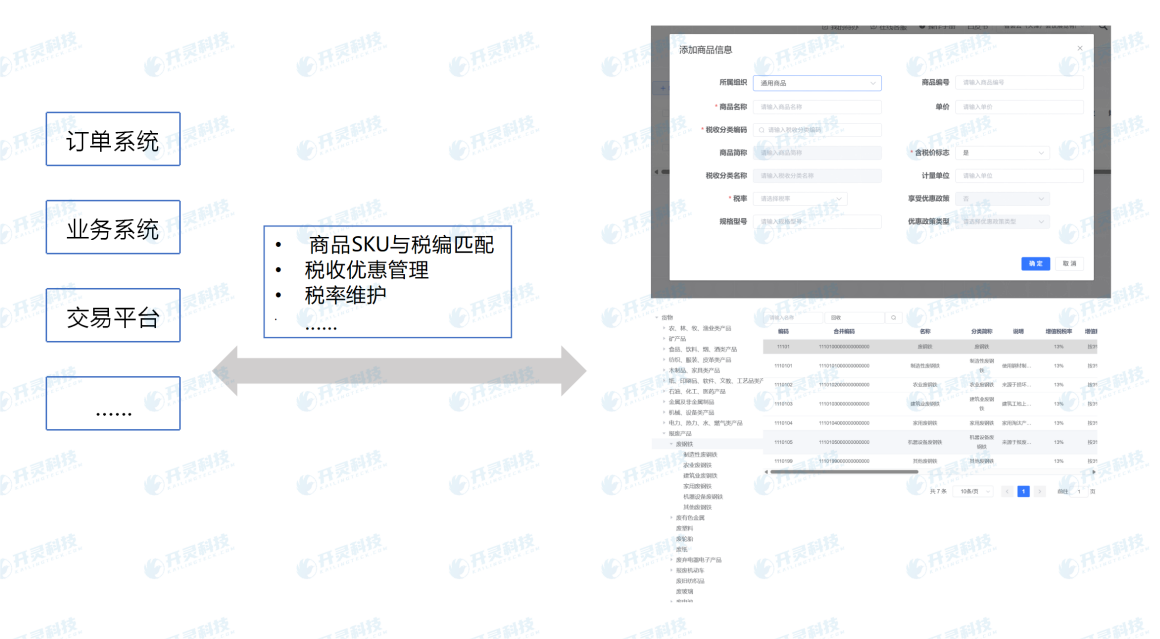
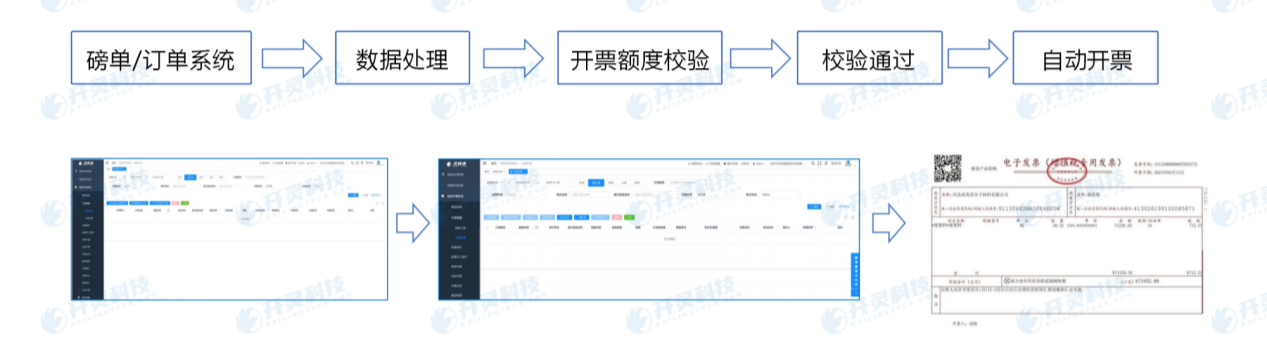
(II) Intelligent invoicing: precise, efficient, and risk-controllable The system supports full-process online automated invoicing, is compatible with multiple connection forms such as electronic invoice service platforms, and can automatically issue fully digitalized e-invoices. For the segmented scenario of scrap steel recycling, the system has built-in intelligent matching between product SKUs and tax classification codes, automatically maintains applicable tax rates and tax incentive policies, and effectively prevents invoicing errors caused by mismatched tax categories.
Before invoicing, the system performs dual risk verification: first, check whether the individual is a blocked invoicer; second, calculate whether the individual's currently requested tax-exclusive amount plus cumulative sales over 12 consecutive months exceeds 5 million yuan. If the standard is reached, invoicing is automatically blocked and the individual is reminded to register as a business entity, avoiding policy risks from the source. If sales returns, invoicing errors, or other situations occur after invoicing, the system supports intelligent red reversal of invoices. After successful red reversal, the order is automatically released and a blue invoice can be reissued, making the process efficient and convenient.
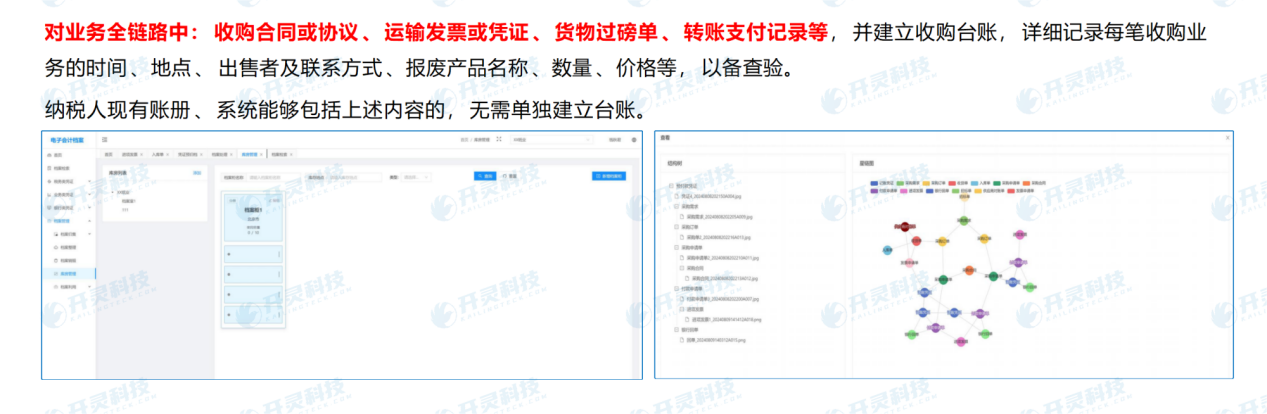
(3) Data collaboration: full-chain traceability and voucher archiving The solution uses blockchain technology to achieve full-chain transaction traceability, digitally storing key materials such as acquisition contracts, weighbridge tickets, transport vouchers, and fund payment records to form a tamper-proof transaction evidence chain, meeting the tax authorities' verification requirements for business authenticity. The system can connect to peripheral platforms such as weighbridge systems and SAP systems, automatically obtaining data such as gross weight, net weight, vehicle photos, and weighing time to generate orders, while synchronously collecting fund payment information to achieve real-time data flow and automatic verification. At the same time, the system builds an electronic accounting archive repository, automatically collecting input VAT invoices, warehouse receipts, settlement vouchers, and other materials, and supports quick retrieval by dimensions such as time, transaction counterparty, and commodity type. Enterprises do not need to separately establish purchase ledgers; existing account book systems only need to meet information recording requirements, greatly reducing archive management pressure.
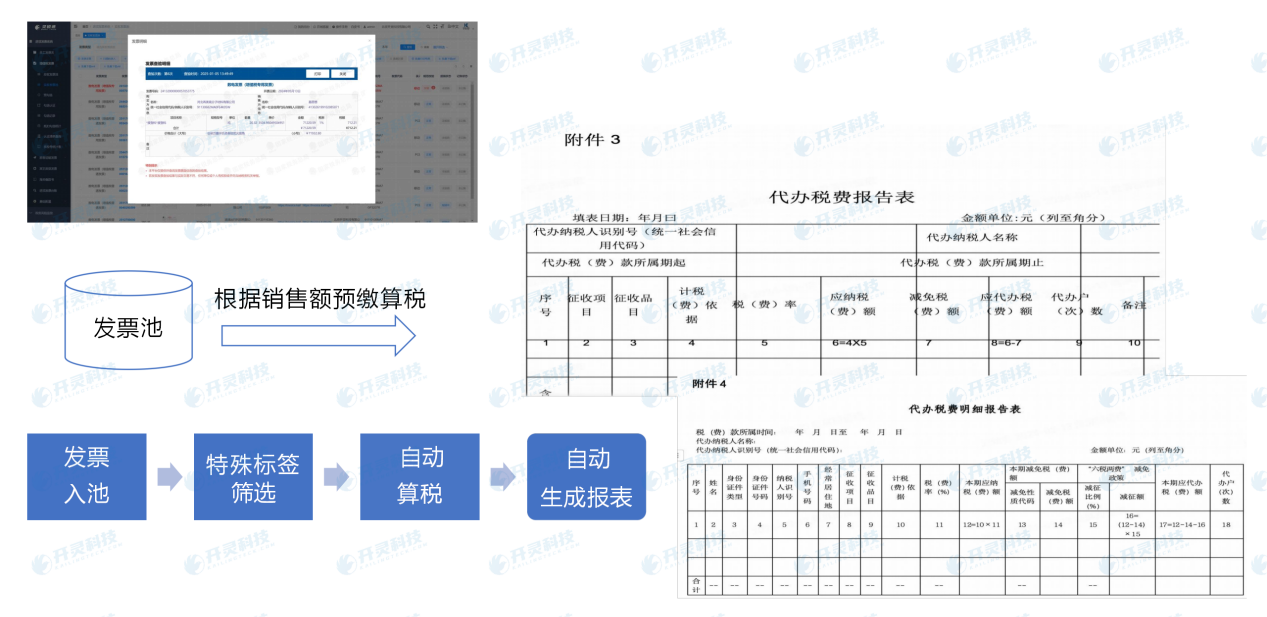
(4) Tax collaboration: automated filing and payment The system can automatically collect all invoice data issued in reverse by the enterprise, accurately calculate VAT, surcharges, and individual income tax, and generate the Tax Payment Report and Tax Payment Detail Report with one click. After the user confirms the reports are correct, they can be submitted directly to the tax authority to complete filing and payment. At the same time, tax accounting vouchers are automatically generated and pushed to the financial system, realizing full-process automation of tax filing, payment, and bookkeeping, greatly reducing manual operation errors and improving tax processing efficiency.
IV. Empowered by core advantages: four values helping enterprises reduce costs and improve efficiencyWith core advantages of compliance, efficiency, and security, Kailing Technology's reverse invoicing solution creates multiple values for scrap steel recycling enterprises: In terms of compliance, strictly following Announcement No. 5 of 2024 and the 2026LatestThe Two New policies require that the entire process—from authorization workflow and invoicing standards to voucher retention and tax filing—complies with policy specifications, helping enterprises completely avoid tax risks. In terms of efficiency, features such as automated invoicing, intelligent tax calculation, and one-click filing compress a tax processing workflow that originally took several days down to hours, greatly improving operational efficiency. In terms of accuracy, technologies such as OCR recognition, intelligent matching, and data validation reduce manual operation errors and ensure consistency among invoice data, tax calculation results, and filing information. In terms of cost control, by reducing manpower input in links such as manual entry and archive management, it lowers enterprise operating costs while helping enterprises legally deduct input tax and optimize their tax burden structure. In addition, the solution has strong flexibility and adaptability, and can customize functional modules and operating processes according to enterprise size, business model, and local tax regulatory requirements. In response to dynamic policy changes, Kailing Technology will complete system iteration and upgrades as soon as possible, synchronously updating core elements such as tax rate standards and invoicing specifications, ensuring enterprises always keep up with policy direction without investing additional costs to adapt to policy adjustments, and continuously strengthening the foundation of compliant operations. With the in-depth implementation of the large-scale equipment renewal and consumer goods trade-in policies in 2026, the scrap steel recycling industry will usher in broader development space, and tax compliance and digital transformation will become core competitiveness for enterprises. Kailing Technology will continue to deepen its work in the business-finance-tax digitalization field, upgrade its solutions with "AI + data" technology, further optimize the natural person authorization process, strengthen risk warning models, and expand system integration capabilities, providing enterprises with more intelligent and green digital services. Kailing TechnologyWith technology as support, help scrap steel recycling enterprises solve tax challenges, reduce operating costs, promote efficient resource recycling, and contribute more digital power to the development of the green circular economy and the realization of the "carbon neutrality" goal:https://www.kailingteck.com/h-col-127.html 。 As a comprehensive business-finance-tax digitalization solution service provider, Kailing Technology provides business-finance-tax management digital transformation products and operational services for various government agencies, institutions, and large, medium, and small enterprises. The product line includes: Sales contract management system, procurement contract management system, fully digitalized Leqi interface project, output automatic invoicing system,Reverse invoicing system,Natural personSolutions for the invoicing system, employee expense control and reimbursement system, input VAT invoice management system, supply chain collaboration and reconciliation system, image OCR recognition system, automated financial bookkeeping system, electronic accounting archives system, and other businesses, comprehensively advancing digitalization across all fields. If you have any business-finance-tax digital transformation needs, welcome to contact us. Beijing Kailing Technology will serve you wholeheartedly.
#Reverse Invoicing Solution #Reverse Invoicing System #Resource Recycling Enterprise Reverse Invoicing Solution #Agricultural Product Procurement Reverse Invoicing Solution #Digital Business-Finance-Tax |