
Still pulling all-nighters at month-end to prepare vouchers? Kailing Technology reimbursement system uses voucher conversion middleware to push reimbursement forms directly into mainstream financial software

First set a specific scenario: a reimbursement form that has just completed approval sits in the system—three days of business travel, four invoices, the amount has been approved, and payment has been made. From a business perspective, the matter is over; from an accounting perspective, it is only halfway done, because it still needs to become an accounting voucher and enter the ledger before the accounts are settled. When implementing expense control reimbursement for enterprises, Kailing Technology noticed that from "approval completed" to "voucher posting," many enterprises still rely on people copying cell by cell. Below, we follow only this document: what is still missing before it becomes a postable voucher, how fields correspond one by one, and why this can be handed over to rules.
▍From approval completion to voucher posting, a full manual transcription lies in between
Most companies arrange the next journey of this document as follows: after approval, it is set aside first and processed in a concentrated manner during the closing window; the accountant opens the financial software, creates a voucher, selects accounts by expense type, supplements auxiliary accounting by department, personnel, and project, copies the total amount including tax and the tax amount, writes a comprehensible summary, and attaches the document number; after entry, it is submitted for review, returned if there are problems, and reposted after correction.
Looking at one document, it takes only a few minutes; the problem is that it multiplies. With hundreds or thousands of documents a month, the same set of actions must be repeated hundreds or thousands of times, and very little of it requires thinking—the expense type is written on the document, the amount is printed on the invoice, and the department and personnel are already determined at submission. Most of the time is spent moving this known information from one interface to another.
What is more troublesome is the waiting period. After document approval is completed, it must sit for a period, and the workload accumulates to the days around closing, when staff also have to handle payment reminders and invoice verification. With the timeline arranged this way, overtime becomes structural.
▍A closer look: where each field on the reimbursement form goes in the voucher
To hand this matter over to the system, a basic question must first be answered: does the reimbursement form already contain all the information required for an accounting voucher? Laying the two side by side, the answer is basically yes — voucher elements can be divided into four parts: account, amount and tax, auxiliary accounting dimensions, and summary and related information, and the raw materials can almost all be traced on the document.

This comparison table is the entire content of the so-called mapping, and it is not mysterious: it is simply writing the judgment in the accountant's mind—"which account this type of document should be recorded under and which dimensions should be attached"—into correspondences that the system can execute.
▍How Kailing Technology configures account rules: so standards no longer live only in someone's memory
Kailing Technology's Lingdong Reimbursement places a voucher conversion middleware between the reimbursement system and financial software, undertaking exactly the execution of the above comparison table: once a document is completed, it generates structurally complete accounting vouchers according to pre-configured rules, replacing manual voucher creation.
How rules are configured depends on the enterprise's own accounting granularity. The simple case is one expense category to one account; more complex cases can stack conditions—for the same entertainment expense, the account it falls into under different organizations, departments, and projects can be set separately. These conditions already exist in many enterprises, but are only written in policy documents or remembered by a few senior accountants; when newcomers take over, they must confirm repeatedly, and once personnel change, the standards easily drift.
The value of configuring rules into the system also lies here: the standard changes from personal experience into a table that can be checked and maintained in the system. When policies are adjusted, the rules themselves are changed, and subsequent documents automatically follow the new standard, with no need to go back and modify vouchers one by one; even when handled by different people, the resulting vouchers follow the same set of conventions.
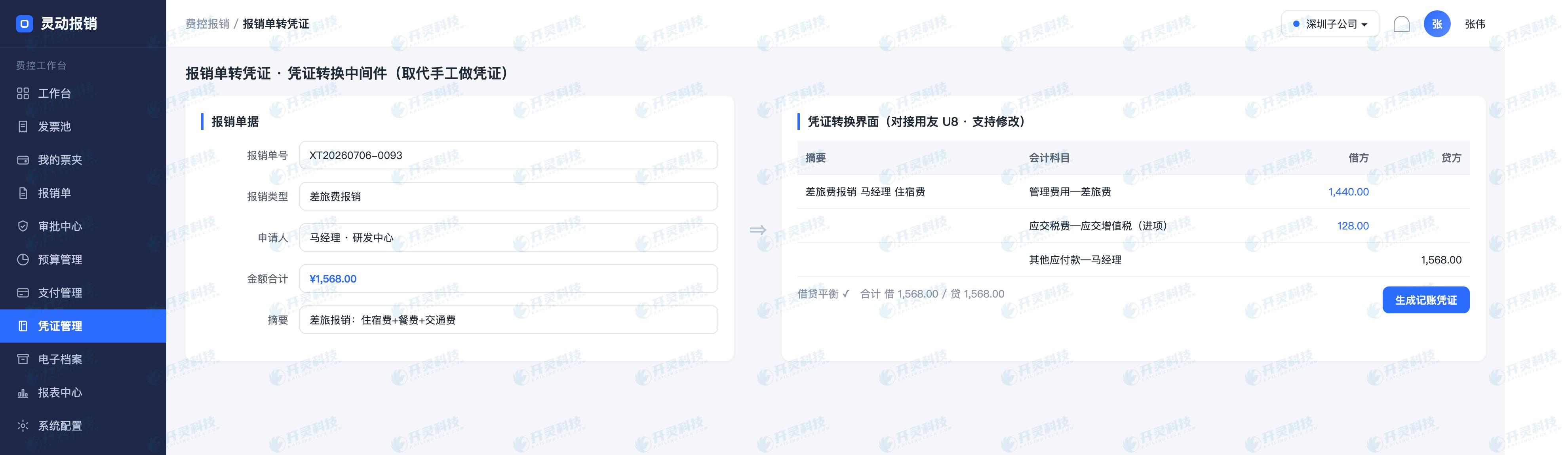
▍How auxiliary accounting dimensions are carried over: department, personnel, and project each occupy a cell on the voucher
The account determines where the money is recorded, and auxiliary accounting determines how it can be analyzed. The departmental expenses, project investments, and personnel expense distributions that management wants to see are all built on these dimensions. When manually entering vouchers, dimensions are precisely the easiest to miss—a missing account immediately triggers an error, but a missing dimension can still be saved successfully, and only when reports don't match is it discovered that it needs to be filled in retroactively.
Taking the mapping approach, the dimensions are carried over from the documents as-is: who reported it, which department, which project it is attached to—whatever was filled in at submission is carried onto the voucher, with no second entry and thus no second chance for error. This is equally critical for subsequent custom reports and drill-down queries—drilling from summary figures all the way down to original documents and invoices relies precisely on these dimensions being fully in place.
▍Why standard integration eliminates the need for custom development
After voucher generation there is another hurdle: it must enter the account set the enterprise is currently using. General ledger, reporting, and closing processes have usually run in the existing financial software for years, and a new system should not require finance to replace this foundation.
Many enterprises are wary of "integration," mostly because they have been frightened by custom development — writing one version of an interface for one account set, having to change it with upgrades, and when problems arise, both sides blame each other. Lingdong Reimbursement takes another path: it integrates with mainstream financial software such as UFIDA U8 in a standard way, pushes vouchers according to the structure required by the target account set, and does not require a separate project for this link; what needs adjustment is configuration items such as mapping rules, not code.
In daily operations, the changes are actually subtle: accounting habits don't need to change, voucher formats don't need to change—only the source shifts from "people entering them one by one" to "the system pushing them by rule"; for the IT lead, there is also one less custom interface to maintain long-term.
▍After voucher generation: documents, invoices, and payments still reconcile
Automatic generation does not mean losing the trail. Once a voucher is created, the accounting status of the invoice in the ledger is updated accordingly; whether an invoice is unreimbursed, reimbursed, or already recorded can be filtered directly, and batch selection and voucher binding are also supported; after payment is completed, the bank receipt is automatically retrieved and attached under its corresponding document.
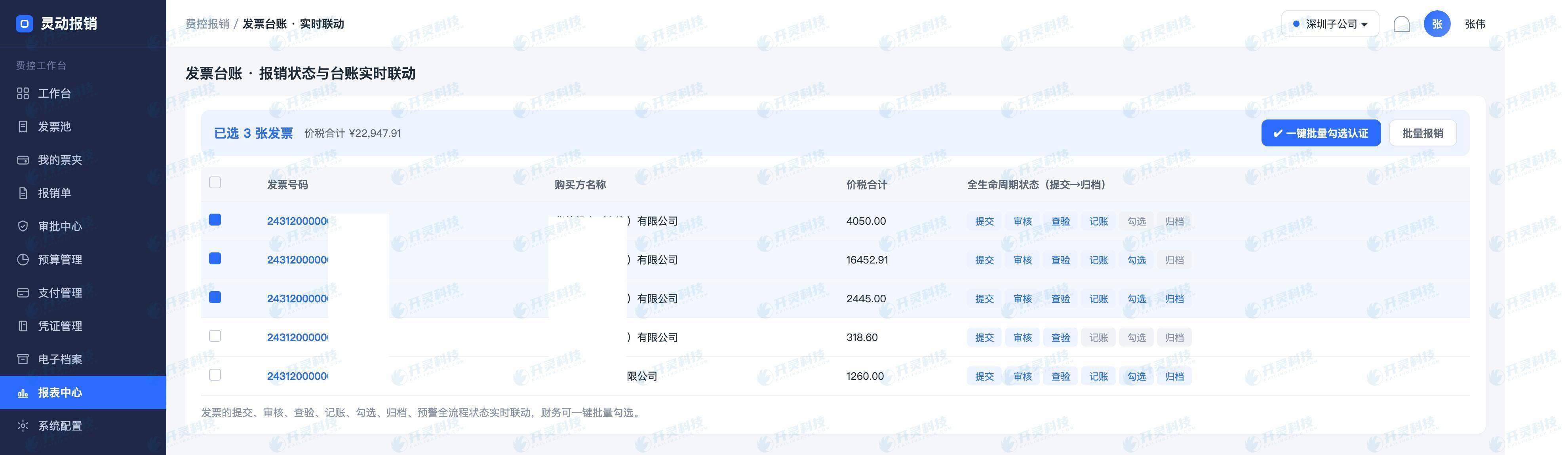
Thus the audit path is clear: with a voucher in hand, one can trace back to the document by its number; with an invoice in hand, one can conversely know which voucher it entered. This two-way traceability is especially effective in group enterprises—a certain equipment manufacturing enterprise group has multiple legal entities and multiple sets of books; in the past, at every closing, accountants at the shared service center had to organize and enter data separately by entity; after mapping rules were configured by organization, each entity's documents were converted according to its own standards, the headquarters viewed data uniformly, and duplicate handling was significantly reduced.
▍The timeline after rescheduling: vouchers no longer pile up on the same night
Back to that document from the beginning. Once the mapping rules are in place, its journey becomes: upon completion of approval and payment, it enters field mapping, vouchers are generated accordingly, and the accountant only needs to review the mapping results and exceptions, then post after confirmation. The waiting period disappears, and the workload is spread from the few days of closing back across the entire month.
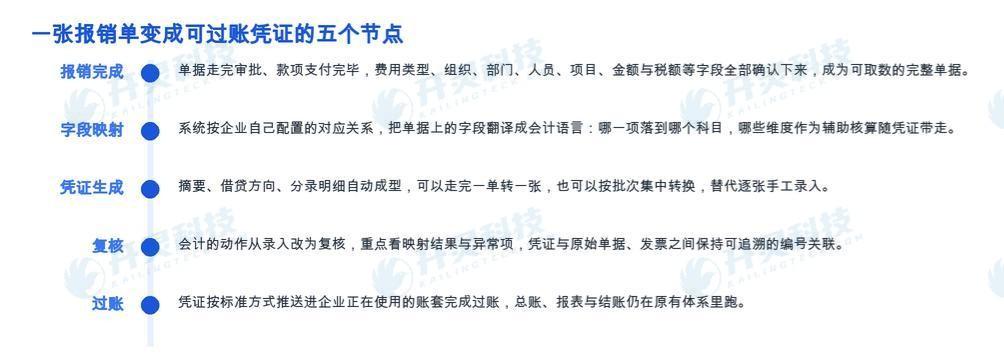
The change is not that a certain step is a few seconds faster, but that the nature of the work has changed: in the past, accountants did transport work during the closing period, with low value density but no room for error, and could only endure it by spending time; now they do review and judgment, looking at abnormal documents, changes in standards, and cross-period attribution. The finance head of a chain retail enterprise once described this difference: previously, the books were done from scratch; now, the already formed books are reviewed once.
It should be noted that the premise for this chain to run smoothly is that the previous steps are solid enough — invoices are authentic and not duplicated, the fields that should be filled in on reimbursement forms are filled in in a standardized way, and payment results can be truthfully returned to the document. Kailing Technology makes collection, verification and duplicate checking, reimbursement, approval, and payment posting into one chain precisely because the automation of the voucher step consumes the clean data left by each previous step.
▍FAQ
Q: Who configures the mapping between accounts and auxiliary accounting? Can accountants maintain it themselves?
A: Usually finance leads the sorting: define the correspondence between expense types, organizations, departments, personnel, projects and accounts, and auxiliary accounting, and configure them as mapping rules. Rules are configuration items rather than code, and daily standard adjustments can be maintained by finance itself.
Q: Can vouchers be generated in batches? Or can only one document be converted into one voucher?
A: Both are supported. Documents can be converted individually once the process is completed, spreading the workload over normal times. For those accustomed to centralized processing, they can also select by batch and generate all at once, allowing accountants to focus their energy on review.
Q: How long does development take to integrate with mainstream financial software? Will it affect our existing account sets?
A: Use standard integration; there is no need for separate custom development for this link. The original account set structure, accounting habits, and closing process remain unchanged. What changes is only the source of vouchers, from manual entry to rule-based push.
Q: For dimensions not on the reimbursement form, such as project number, how can they be carried into the voucher?
A: First add this field to the reimbursement form. Reimbursement forms and approval flows support drag-and-drop configuration. After adding the field, include it in the mapping rules, and subsequent documents will bring this dimension into the voucher as well, with no additional development required.
Want to see whether one of your reimbursement forms can automatically become a postable voucher? Welcome to book a voucher conversion demo of Kailing Technology Lingdong Reimbursement: https://www.kailingteck.com/feikong/ .
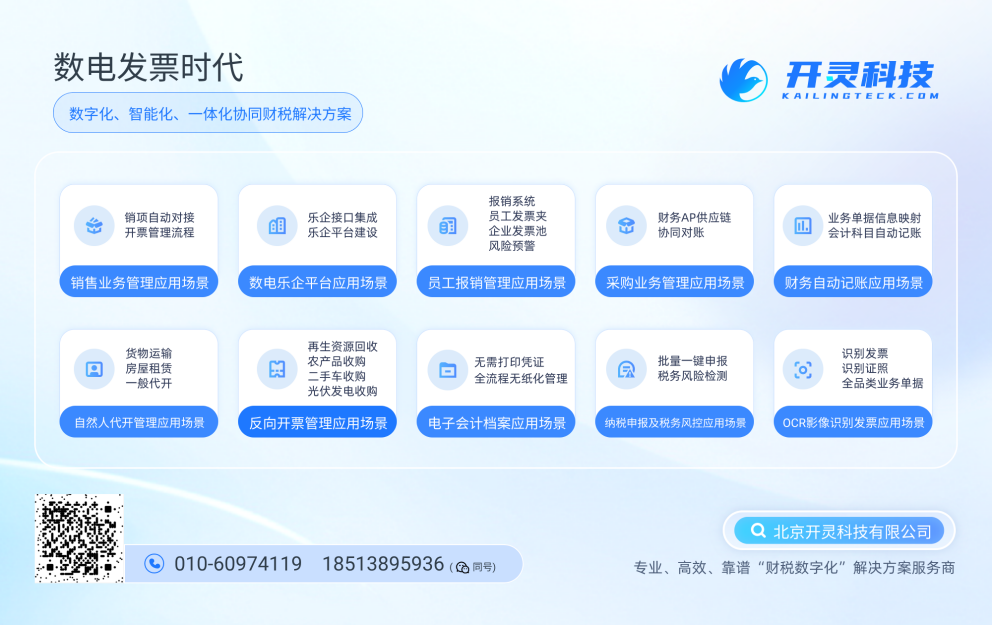
As a comprehensive business-finance-tax digitalization solution service provider, Kailing Technology provides business-finance-tax management digital transformation products and operational services for various government agencies, institutions, and large, medium, and small enterprises. The product line includes:
Solutions for businesses including sales contract management system, procurement contract management system, fully digitalized Leqi interface project, output automatic invoicing system, reverse invoicing system, invoice issuance for individuals system, employee expense control and reimbursement system, input VAT invoice management system, supply chain collaborative reconciliation system, image OCR recognition system, automatic financial bookkeeping system, and electronic accounting archives system, comprehensively driving the digitalization process across various fields.
If you have any business-finance-tax digital transformation needs, welcome to contact us. Beijing Kailing Technology will serve you wholeheartedly.
Keywords: Kailing Technology, Lingdong Reimbursement, reimbursement form to voucher, voucher conversion middleware, field mapping, auxiliary accounting, expense control reimbursement system, automatic financial bookkeeping, month-end closing
As a comprehensive business-finance-tax digitalization solution service provider, Kailing Technology provides business-finance-tax management digital transformation products and operational services for various government agencies, institutions, and large, medium, and small enterprises. The product line includes: solutions for sales contract management system, procurement contract management system, fully digitalized Leqi interface project, automatic output invoicing system, reverse invoicing system, invoice issuance for individuals system, employee expense control and reimbursement system, input VAT invoice management system, supply chain collaborative reconciliation system, image AI OCR recognition system, automatic financial bookkeeping system, electronic accounting archives system, etc., comprehensively driving the digitalization process across various fields.
Consultation Hotline: 18513895936 / 010-60974119 Location: Beijing