
The more enterprise systems there are, the more isolated the data and the more exhausted the people? Kailing Technology AI digital employees connect SAPERPOA through one entry point to automatically complete cross-system collaboration
The more enterprise systems there are, the more isolated the data and the more exhausted the people? Kailing Technology AI digital employees connect SAP/ERP/OA through one entry point to automatically complete cross-system collaboration
The more systems an enterprise adopts, the more tired employees become - this is not an illusion, but the inevitable result of "data silos." SAP, ERP, OA, BPC, contracts, and expense control each manage their own area, and none recognizes the others. One matter often requires logging in back and forth across four or five systems and manually copying data from system A into system B. The answer from Kailing Technology's AI digital employees is to completely reverse this logic: in the past it was "people finding systems"—people had to remember which matter was in which system and in what order to operate; in the future it is "AI calling systems for people"—employees initiate requests only from a unified entry point in WeCom or DingTalk, and AI digital employees, like real colleagues, transfer data across multiple systems for you and automatically complete cross-system collaboration. The systems remain the same, but the work of connecting them and running errands for people is handed to AI that can get things done.
"There are many AIs that can chat, but almost none that can get things done. What Kailing Technology builds is the one that can complete tasks for you across systems—the digital employee. |
▍1. The more systems are deployed, the more tired people become
Many enterprises have invested no small amount in digitalization over the years: ERP for inventory and sales, BPC for financial consolidation, OA for approvals, and separate systems for procurement and contracts—dozens of systems large and small. Logically, having complete tools should make things easier, but reality is often the opposite—employees are "tied up" by these systems.
The root cause is that these systems were originally built one by one separately, and they do not know each other. For a business transaction to be implemented, data must flow among multiple systems, but systems cannot flow by themselves, so it can only rely on people. Thus came those familiar scenarios: month-end reconciliation requires repeatedly retrieving and comparing data between SAP and BPC; one invoicing requires logging into four systems to gather complete information; when master data is changed in one system, one must remember to manually synchronize it to finance, procurement, contracts, and several other places, and missing one place causes errors. The more systems there are, the more of this work of "manually moving data and manually acting as an interface" there is, and people naturally become busier and more exhausted.
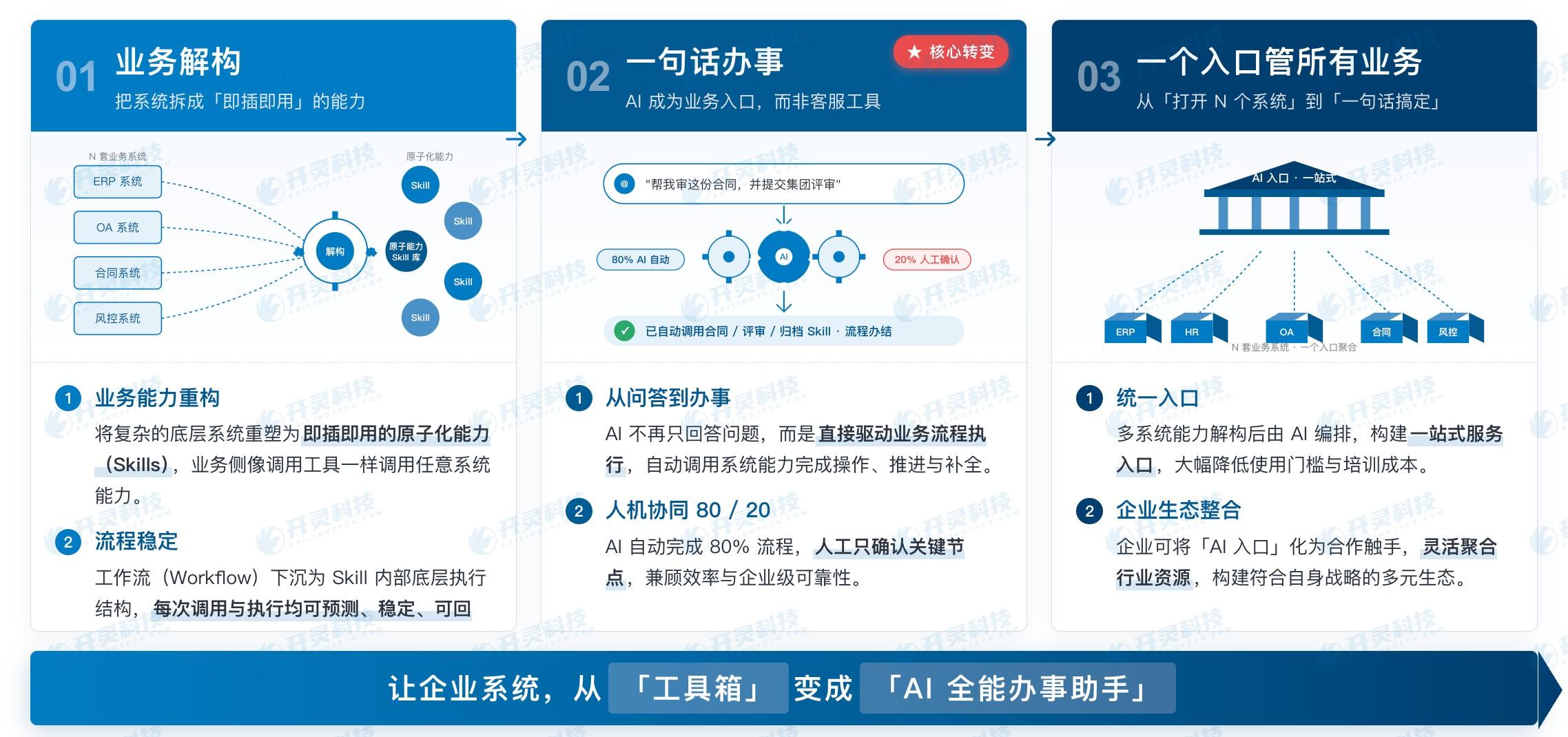
Ultimately, what traps people in silos is not the systems themselves, but the gaps between systems that no one takes charge of. The work of filling these gaps falls on employees year after year, consuming manpower and being prone to errors—this is exactly the problem that digital employees are meant to solve.
▍II. Paradigm shift: from "people finding systems" to "AI adjusting systems for people"
Kailing Technology's judgment on this matter is very direct: there are already many AIs that can chat, but almost no AI that can "get things done." What enterprises truly lack is exactly the one that can finish the work. A so-called digital employee is an AI employee that, like a real colleague, can work across multiple systems, push things forward on its own, and finally deliver complete results, rather than a chatbot that only answers questions.
What it brings is a shift in the interaction paradigm. In the past it was "people find systems": employees had to know which system each matter should go into, where to click first and where next, training themselves into a "system operation manual." Now it has become "AI calls systems for people": employees only need to state clearly at a unified entry point what they want done, and the rest—logging in, retrieving data, comparing, filling back—is run across systems by the digital employee for you. Enterprise systems thus change from individual "toolboxes" into an "AI all-purpose assistant" that can understand needs and proactively handle matters.
A line must be drawn here with another matter: a digital employee is not another new software suite issued to employees, making everyone learn another set of operations. On the contrary, it removes the burden of "learning systems, memorizing processes, and switching back and forth" from people, allowing employees to return to the two things that truly require people: "raising requests and confirming results."
▍III. Cross-system data transfer: building a "bridge" between ERP and finance
Among the positions that AI digital employees can cover, the ones that most directly address data silos are a category called "data linking" employees—specifically responsible for cross-system data synchronization and master data verification. Their value is turning data that originally had to be moved back and forth by people into automatic, accurate flows between systems.
Take a typical role—the "ERP and finance bridge employee": When master data in the ERP changes (for example, a customer, material, or project is added or modified), the AI digital employee automatically synchronizes this change to related systems such as finance, procurement, and contracts, keeping master data consistent everywhere, rather than relying on someone remembering "this was changed here, so those places must change too." It is like building a bridge between ERP and finance, where data travels on its own without people carrying spreadsheets back and forth.
What this solves is the most hidden and most critical link in data silos—master data inconsistency. Once master data is misaligned, subsequent reconciliation, reporting, and invoicing will all go wrong, and troubleshooting often consumes a large amount of manpower. Having digital employees monitor every master data change 7×24 and automatically synchronize and verify is equivalent to installing an “automatic transmission” for cross-system collaboration.
▍IV. Unified entry: in the WeCom/DingTalk workspace, hosting multiple digital employees
For cross-system collaboration to truly reach employees, an "entry point" is still needed. Kailing built this entry point where enterprise employees use it every day—the workbench of WeCom and DingTalk. Employees no longer need to remember the URL and account for each system; instead, in this unified entry point on the workbench, they can directly find and use digital employees one by one: whatever they need to do and whichever digital employee to find is as natural as finding a colleague in the contacts list.
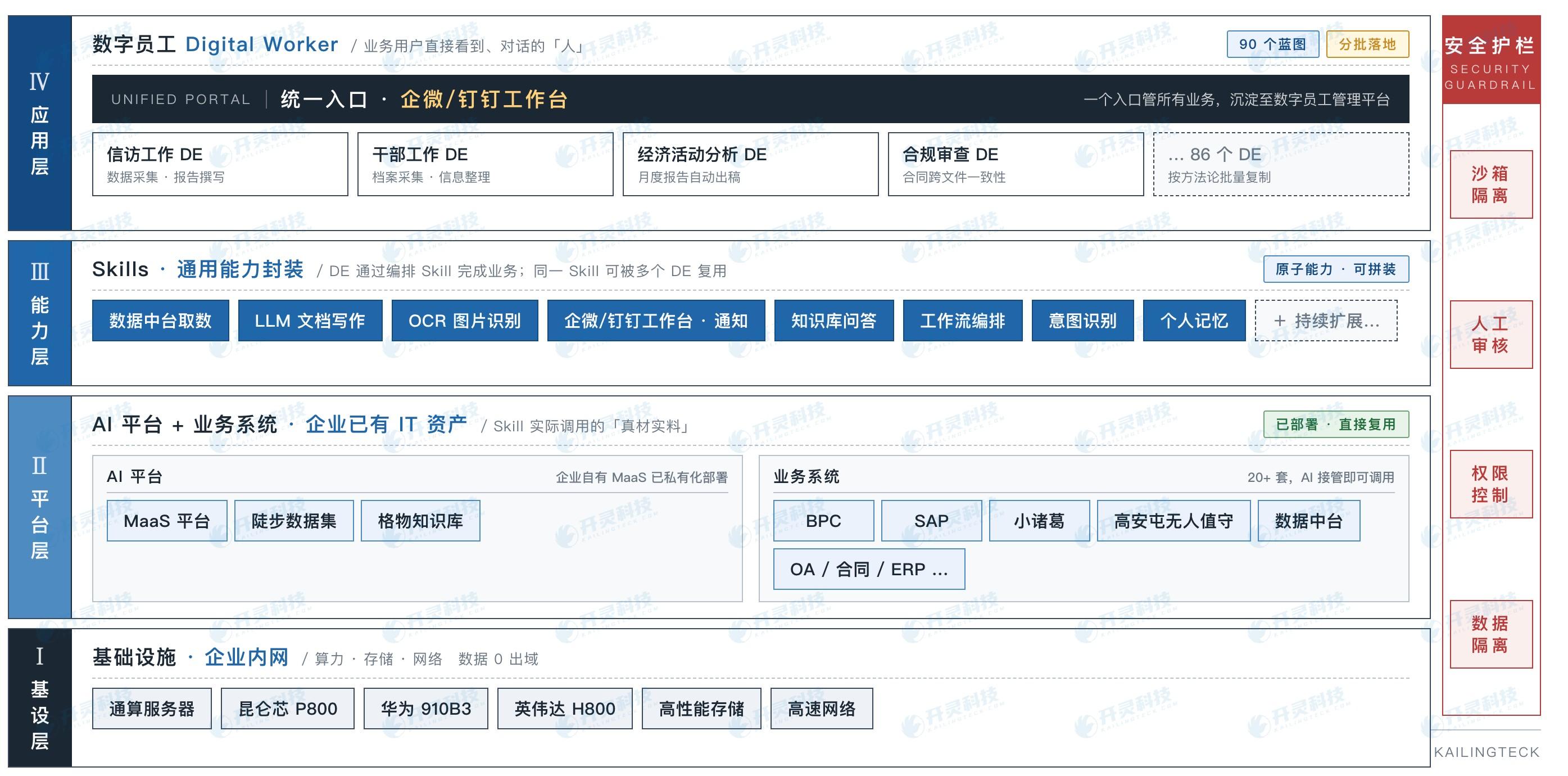
Supporting this entry point is a four-layer technical architecture. The top application layer is the unified entry point of the WeCom/DingTalk workspace, which can host multiple AI digital employees for different roles; the middle capability layer turns data retrieval, document writing, AI OCR, notifications, knowledge base Q&A, workflow orchestration, and more into reusable atomic capabilities for each AI digital employee to combine as needed; the AI platform layer below directly reuses the enterprise's already privately deployed large models (MaaS) and existing business systems such as BPC, SAP, OA, contracts, and ERP; the bottom layer is the enterprise's own intranet, computing power, and storage, with zero data leaving the domain. Across the four layers run four security guardrails: sandbox isolation, manual review, permission control, and data isolation.
▍V. No overturning, no re-investment: reuse MaaS, zero data egress, localized implementation
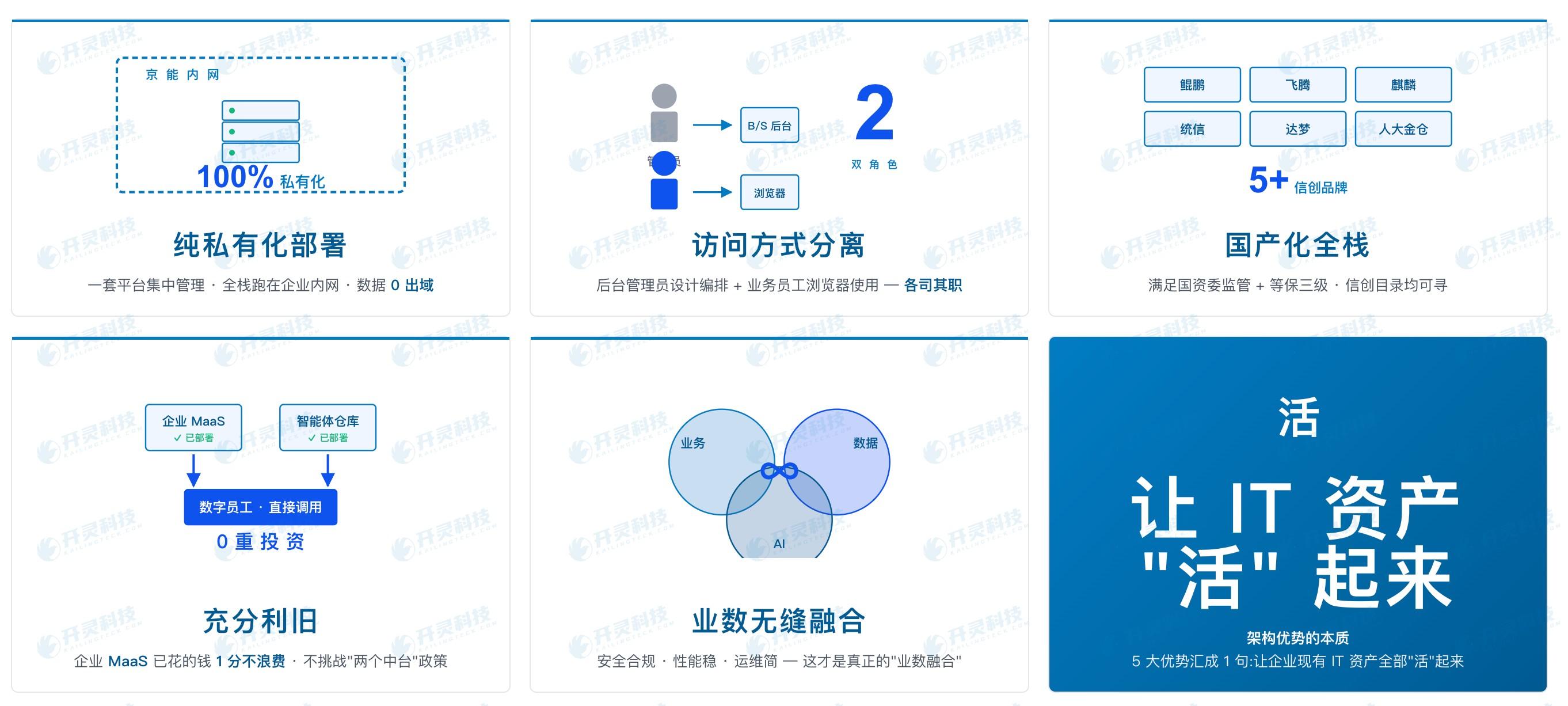
What enterprises worry about most is often not whether AI is good, but "whether adopting AI means overturning existing systems again and spending another large sum of money." The approach of Kailing AI digital employees is exactly the opposite - business processes stay unchanged, systems are not replaced, and processes are not interrupted. It does not replace any of your existing systems, but stands above these systems to reuse and connect them.
- 0 heavy investment: Directly reuse the MaaS (large model/agent repository) already deployed by the enterprise, with no need to purchase and train a new set of models just to adopt digital employees.
- Data 0 out-of-domain: Fully private deployment; the digital employee application server is set up on the enterprise intranet, connecting to the enterprise's own MaaS and existing business system cluster, with data never leaving the enterprise.
- Full-stack localization: Compatible with 5+ Xinchuang brands including Kylin, Phytium, UnionTech, and Kingbase, paired with SM4 national cryptographic encryption and Level 3 classified protection, meeting state-owned asset regulatory requirements.
- Bring IT assets to life: Systems purchased in the past lie dormant in corners; AI digital employees seamlessly integrate and orchestrate their business-finance-tax data, allowing sunk IT assets to generate value again.
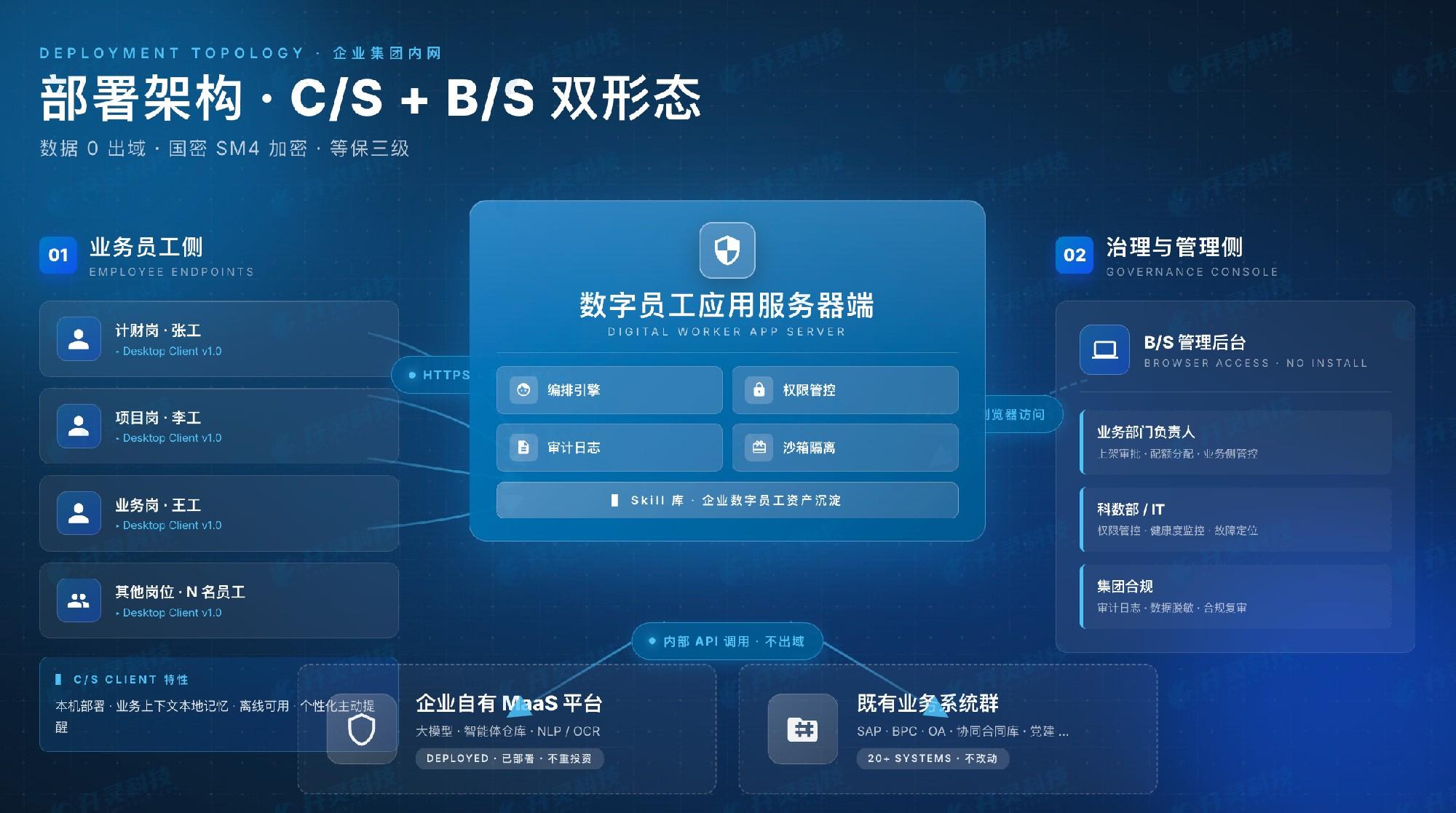
In other words, when an enterprise adopts digital employees, it is not adding another new system, but hiring a group of AI colleagues who "can handle things across systems" for the dozens of systems it already has. The systems remain the same, the money was basically spent in the past, but from now on there is someone to use and connect them for you.

"The systems are still those systems, but the work of connecting them and running errands for people is from now on handed to digital employees who can get things done. |
Want dozens of systems to no longer fight separately and free employees from "people looking for systems"? Welcome to Kailing Technology to learn about AI digital employees and cross-system collaboration solutions: www.kailingteck.com .
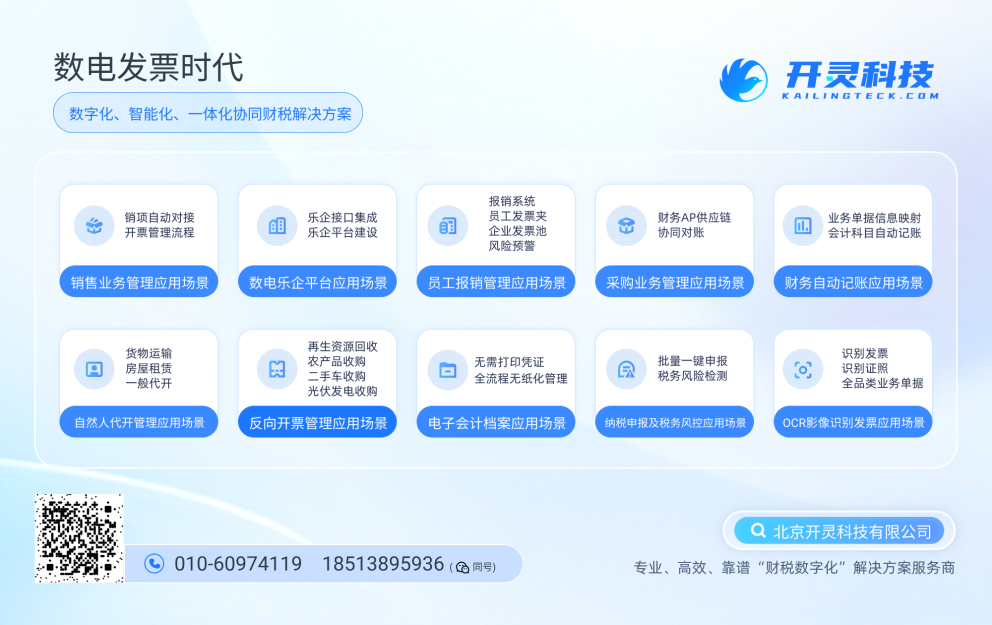
As a comprehensive business-finance-tax digitalization solution service provider, Kailing Technology provides business-finance-tax management digital transformation products and operational services for various government agencies, institutions, and large, medium, and small enterprises. The product line includes:
Solutions for businesses including sales contract management system, procurement contract management system, fully digitalized Leqi interface project, output automatic invoicing system, reverse invoicing system, invoice issuance for individuals system, employee expense control and reimbursement system, input VAT invoice management system, supply chain collaborative reconciliation system, image OCR recognition system, automatic financial bookkeeping system, and electronic accounting archives system, comprehensively driving the digitalization process across various fields.
If you have any business-finance-tax digital transformation needs, welcome to contact us. Beijing Kailing Technology will serve you wholeheartedly.
Keywords: AI digital employee, cross-system collaboration, data silos, people finding systems, AI adjusting systems on behalf of people, unified entry, WeCom and DingTalk workbench, SAP/ERP/OA, master data synchronization, reusable MaaS, zero data egress, Kailing Technology
As a comprehensive business-finance-tax digitalization solution service provider, Kailing Technology provides business-finance-tax management digital transformation products and operational services for various government agencies, institutions, and large, medium, and small enterprises. The product line includes: solutions for sales contract management system, procurement contract management system, fully digitalized Leqi interface project, automatic output invoicing system, reverse invoicing system, invoice issuance for individuals system, employee expense control and reimbursement system, input VAT invoice management system, supply chain collaborative reconciliation system, image AI OCR recognition system, automatic financial bookkeeping system, electronic accounting archives system, etc., comprehensively driving the digitalization process across various fields.
Consultation Hotline: 18513895936 / 010-60974119 Location: Beijing