
One reimbursement form cut from 65 minutes to 9 minutes: how Kailing Technology expense control and reimbursement system achieves truly paperless reimbursement
One reimbursement form cut from 65 minutes to 9 minutes: how Kailing Technology expense control and reimbursement system achieves truly paperless reimbursement
The same business trip invoice can have a completely different fate. In a company still using paper processes, from being carried back to the workstation by the employee to finally lying in the voucher binding book, it often goes through six steps and takes nearly an hour; while in a company using Kailing Technology expense control and reimbursement system's company, the same invoice takes only a few minutes from scanning into the folder to electronic archiving. We might as well write a "life biography" for this reimbursement form, walk through both routes side by side, and see where time is actually spent and who saves it.
First put the general ledger on the table: the processing time of a typical reimbursement form can be compressed from about 65 minutes in the traditional model to about 9 minutes in the paperless model.This gap from 65 to 9 is not a slogan shouted out, but the natural result of six processes being dismantled one by one and replaced by automation. Below, following the order in which a reimbursement form passes through, let's look step by step at how it "slims down."
▍The life of traditional reimbursement: six steps, each time-consuming
In traditional offline reimbursement, the reimbursement form must go through a long and sticky chain, and none of the six steps can save manpower:
- ① Organize and paste paper invoices— Employees spread a stack of paper invoices of different sizes on the table, trim and align them by category, apply glue, and paste them onto backing sheets, laying them out one by one.
- ② Manual form filling— Copy the header, amount, reason, and items item by item from the invoice, then check the expense standards; if one field is written incorrectly, the entire form must be redone.
- ③ Level-by-level signature— Paper documents circulate among the desks of department supervisors, finance, and responsible leaders. Whoever is away on business, the documents are stuck in that person's drawer.
- ④ Cashier issues the receipt—— After payment, the cashier logs in to each bank's online banking, downloads bank receipts one by one, prints them out, and manually matches them with reimbursement forms.
- ⑤ Manual voucher preparation—— Accountants type reimbursement forms field by field into financial software and manually prepare bookkeeping vouchers, with account correctness relying entirely on human eyes.
- ⑥ Binding and retention—— Print vouchers, gather invoices and receipts, punch holes, thread, affix seals, then stuff them into voucher boxes and shelve them.
Every step requires someone to watch, wait, and pass along. Invoices get lost, amounts get copied wrong, signatures get stuck, receipts get mismatched, vouchers get reversed, and any problem in any link means starting over from scratch. The so-called 65 minutes is precisely the sum of the time of these six processes—and the judgment that truly creates value actually accounts for only a small part of it.
▍The life of Kailing's paperless process: the same six steps, compressed step by step
Switch to Kailing Technology expense control and reimbursement system In addition, this reimbursement form still follows the six steps of "collection → order creation → approval → payment → voucher → archiving," but each step has changed from "done by people" to "done by the system," with people stepping in only where judgment is needed.
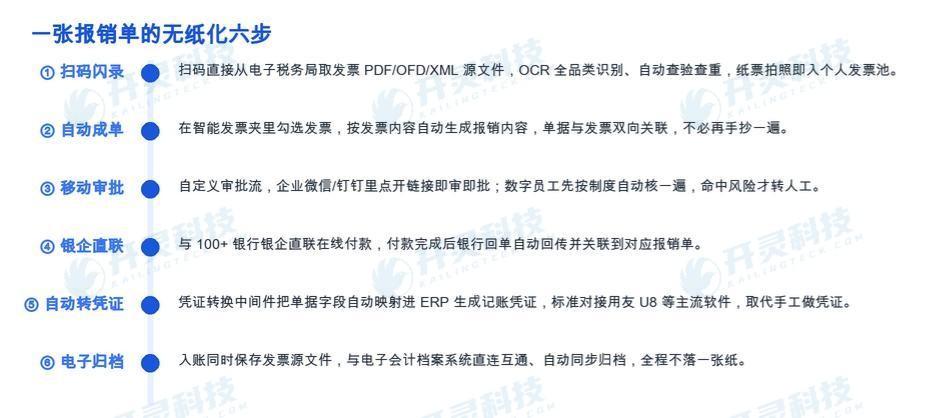
Collection and order generation: from "cutting paper and pasting invoices" to "scanning and checking"
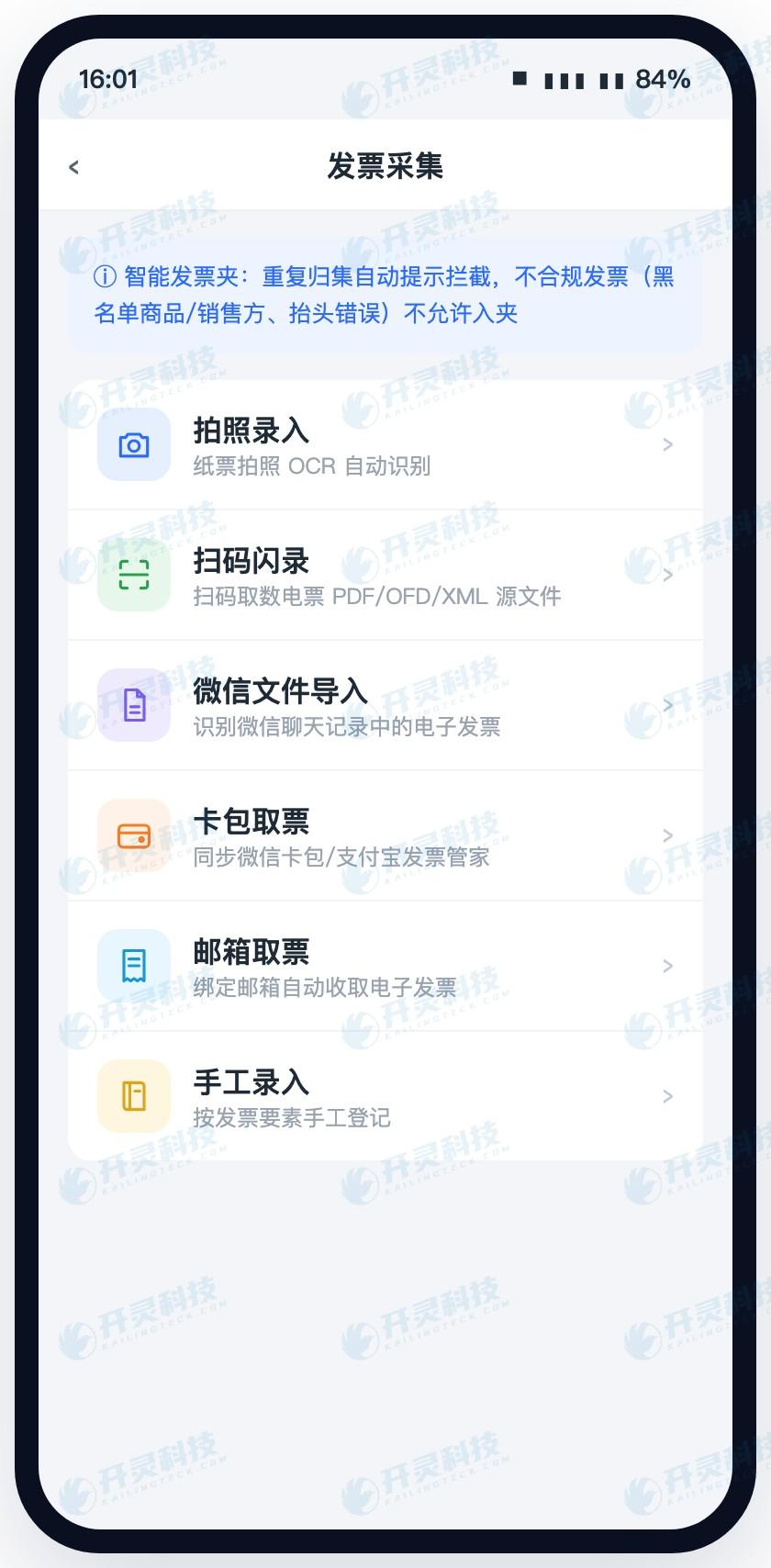
The first two steps are the most heavily compressed links. Scan-and-flash entry retrieves invoice source files directly from the electronic tax bureau. OCR covers all categories including special invoices, general invoices, fully digitalized e-invoices, roll invoices, motor vehicle invoices, and passenger transport invoices. Authenticity verification and duplicate aggregation interception are completed at the same time as entry, and non-compliant invoices can also be set with strong control to "not allow into the folder." Once invoices enter the smart invoice folder, reimbursement forms are automatically generated based on invoice content and bidirectionally linked to invoices—the most tedious tasks of cutting paper, pasting invoices, hand-copying, and checking standards disappear all at once.
Approval and payment: from "forms stuck in drawers" to "approving on mobile phones"
Approval no longer relies on paper forms being physically passed between desks. Approval flows can be customized, and approvals can be made instantly by clicking a message link in WeCom or DingTalk, and can be rejected back to the initiator or the previous level; AI digital employees will also automatically check once according to rules such as the Employee Allowance and Travel Management Policy, and only documents that hit risks or anomalies are transferred to manual review. The payment step is completed online through bank-enterprise direct connections with 100+ banks. After payment, bank receipts are automatically returned and linked to the corresponding reimbursement form, so cashiers no longer need to download, print, and match them one by one.
"What paperless truly saves is not those few sheets of paper, but the hidden time behind paper: "waiting for people, passing forms, rework." |
Vouchers and Filing: From "manually keying vouchers" to "one-click transfer to archives"
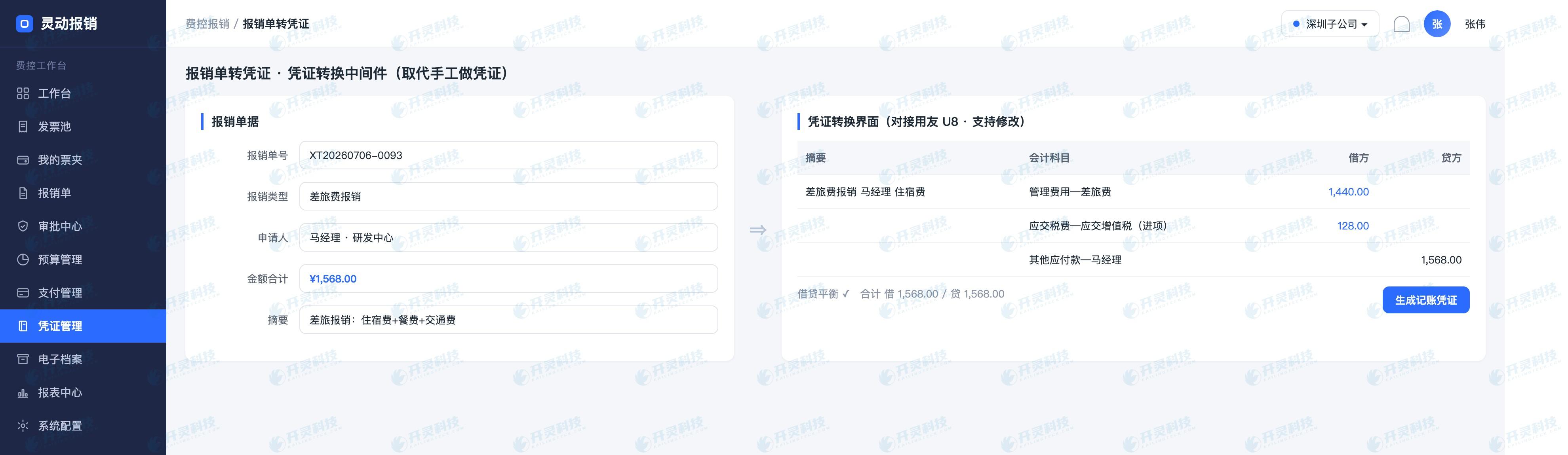
The last two steps are left to the system to finish. The voucher conversion middleware automatically maps reimbursement form fields into the ERP, directly generates accounting vouchers, and standardly connects to mainstream financial software such as Yonyou U8, replacing manual entry field by field; at the same time as booking, the system saves the invoice PDF/OFD/XML source files and directly connects and interoperates with the electronic accounting archives system for automatic synchronized archiving. The entire set of paper-based actions—punching, threading, binding, and shelving—is completely eliminated, and the reimbursement form goes from creation to "retirement" without a single sheet of paper—this is the weight of "truly paperless": not scanning paper into images for storage, but no longer depending on paper from the source.
▍Two routes side by side: slow with manpower, fast with automation
Place the two kinds of "lifecycle" side by side, and the difference is obvious at a glance—the traditional model spends almost all its time on manual transfer and transcription, while the paperless model returns repetitive labor to the system, leaving people responsible only for judgment.
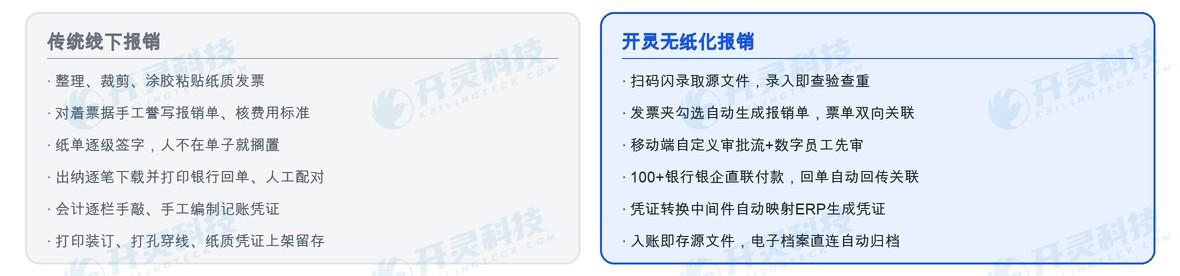
It is worth emphasizing that the speedup from 65 to 9 was not achieved by "skipping processes." The necessary steps of collection, approval, payment, posting, and archiving are all still there, and risk control checks are actually denser—what is eliminated is only non-value-adding handling actions such as cutting paper, copying, running for signatures, matching documents, and binding. When a company processes thousands of reimbursement documents each year, this systematic compression of repetitive labor releases considerable manpower and compliance certainty cumulatively.
▍FAQ
Q: Is "paperless" just scanning invoices into images and storing them?
A: No. Storing only scanned copies and image files still belongs to "electronification" rather than true paperlessness. Kailing directly retrieves invoice PDF/OFD/XML source files during scan-and-flash entry, saves source files at the same time as accounting, and directly connects to the electronic accounting archives system for archiving. The entire chain from collection to archiving does not depend on paper originals — this is true paperlessness in the real sense.
Q: Does converting reimbursement forms into vouchers require custom development for our financial software?
A: Usually not needed. The voucher conversion middleware automatically maps document fields into ERP to generate accounting vouchers, and standardly connects with mainstream financial software such as Yonyou U8. This is standard integration, and there is no need for additional customization for common software.
Q: Will mobile approval sacrifice risk control and become "approve with one casual tap"?
A: No. Approval flows are customizable and support rejection back to the initiator or the previous level, and the digital employee first automatically checks against enterprise policy rules; only documents that hit risks or anomalies are routed to humans, adding an automatic gatekeeping layer beyond "speed."
Q: Do bank receipts still need to be downloaded one by one by the cashier?
A: No need. The system makes online payments via direct bank-enterprise connection with 100+ banks. After payment is completed, bank receipts are automatically returned and associated with the corresponding reimbursement form, preparing for the four-streams-in-one of electronic accounting archives and eliminating the steps of downloading, printing, and matching one by one.
Want the life of a reimbursement form to go from 65 minutes to 9 minutes? Welcome to learn about the Kailing Technology expense control and reimbursement system, which helps you return repetitive labor to the system:www.kailingteck.com 。
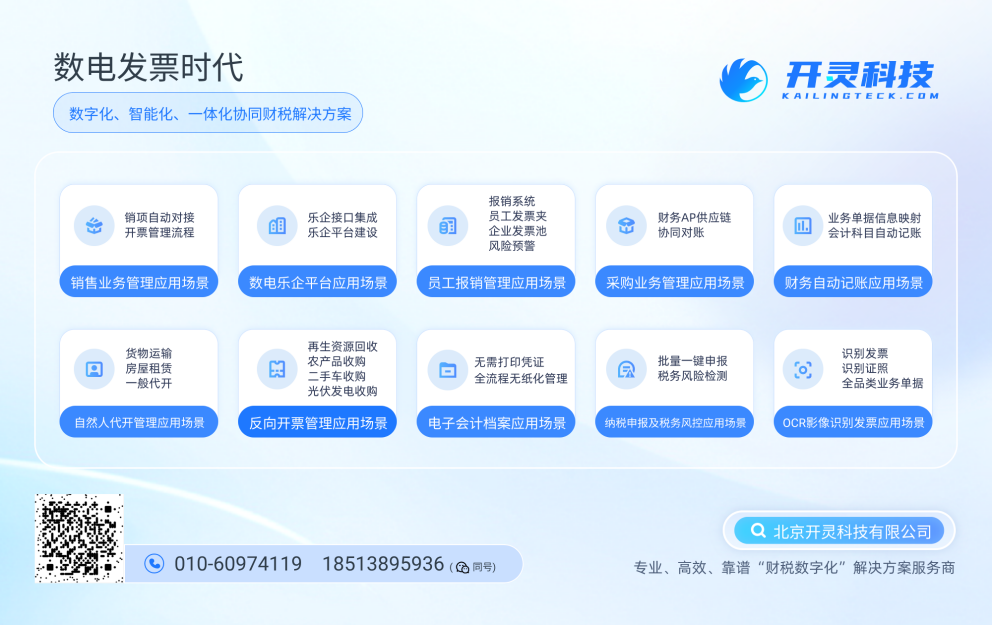
As a comprehensive business-finance-tax digitalization solution service provider, Kailing Technology provides business-finance-tax management digital transformation products and operational services for various government agencies, institutions, and large, medium, and small enterprises. The product line includes:
Solutions for businesses including sales contract management system, procurement contract management system, fully digitalized Leqi interface project, output automatic invoicing system, reverse invoicing system, invoice issuance for individuals system, employee expense control and reimbursement system, input VAT invoice management system, supply chain collaborative reconciliation system, image OCR recognition system, automatic financial bookkeeping system, and electronic accounting archives system, comprehensively driving the digitalization process across various fields.
If you have any business-finance-tax digital transformation needs, welcome to contact us. Beijing Kailing Technology will serve you wholeheartedly.
Keywords: Kailing Technology expense control and reimbursement system, paperless reimbursement, expense control and reimbursement system, electronic accounting archives, reimbursement form-to-voucher conversion, bank-enterprise direct connection, business-finance-tax digitalization
As a comprehensive business-finance-tax digitalization solution service provider, Kailing Technology provides business-finance-tax management digital transformation products and operational services for various government agencies, institutions, and large, medium, and small enterprises. The product line includes: solutions for sales contract management system, procurement contract management system, fully digitalized Leqi interface project, automatic output invoicing system, reverse invoicing system, invoice issuance for individuals system, employee expense control and reimbursement system, input VAT invoice management system, supply chain collaborative reconciliation system, image AI OCR recognition system, automatic financial bookkeeping system, electronic accounting archives system, etc., comprehensively driving the digitalization process across various fields.
Consultation Hotline: 18513895936 / 010-60974119 Location: Beijing