
Kailing Technology assists Hubei Jingshan Light Industry Machinery Co., Ltd. in image scanning and electronic archives project construction
Against the backdrop of continuously deepening digitalization of corporate financial management, the collection, recognition, verification, and long-term archiving of document images are gradually becoming a foundational part of financial shared services and internal control system construction, rather than merely auxiliary work. Especially for manufacturing groups with many business segments, many legal entities, and complex payment processes, how to truly link document data with business processes and how to ensure processing efficiency and traceability amid continuously growing document volumes have become important topics in financial digitalization upgrades.
Recently, Beijing Kailing Technology Co., Ltd. undertook the image system construction project of Hubei Jingshan Light Industry Machinery Co., Ltd. The project centers on corporate payment process scenarios, building an electronic image management platform integrating scanning and collection, AI OCR, authenticity verification, data push, status write-back, and image archiving, helping the enterprise improve invoice processing efficiency, enhance financial review and audit traceability capabilities, and solidify the foundation of electronic accounting archives management.
I. Client enterprise introduction
Hubei Jingshan Light Industry Machinery Co., Ltd. was founded in 1957 and listed on the Shenzhen Stock Exchange in 1998. It is one of the representative enterprises in China's high-end intelligent complete equipment sector. The company entered the packaging machinery manufacturing field in 1974 and hasworked extensively in for over forty years. It has now formed a business structure centered on photovoltaic intelligent equipment and packaging machinery equipment, and through a series of industrial mergers and acquisitions has completed industrial layout in economically developed regions such as East China and South China, with multiple subsidiaries and production bases.
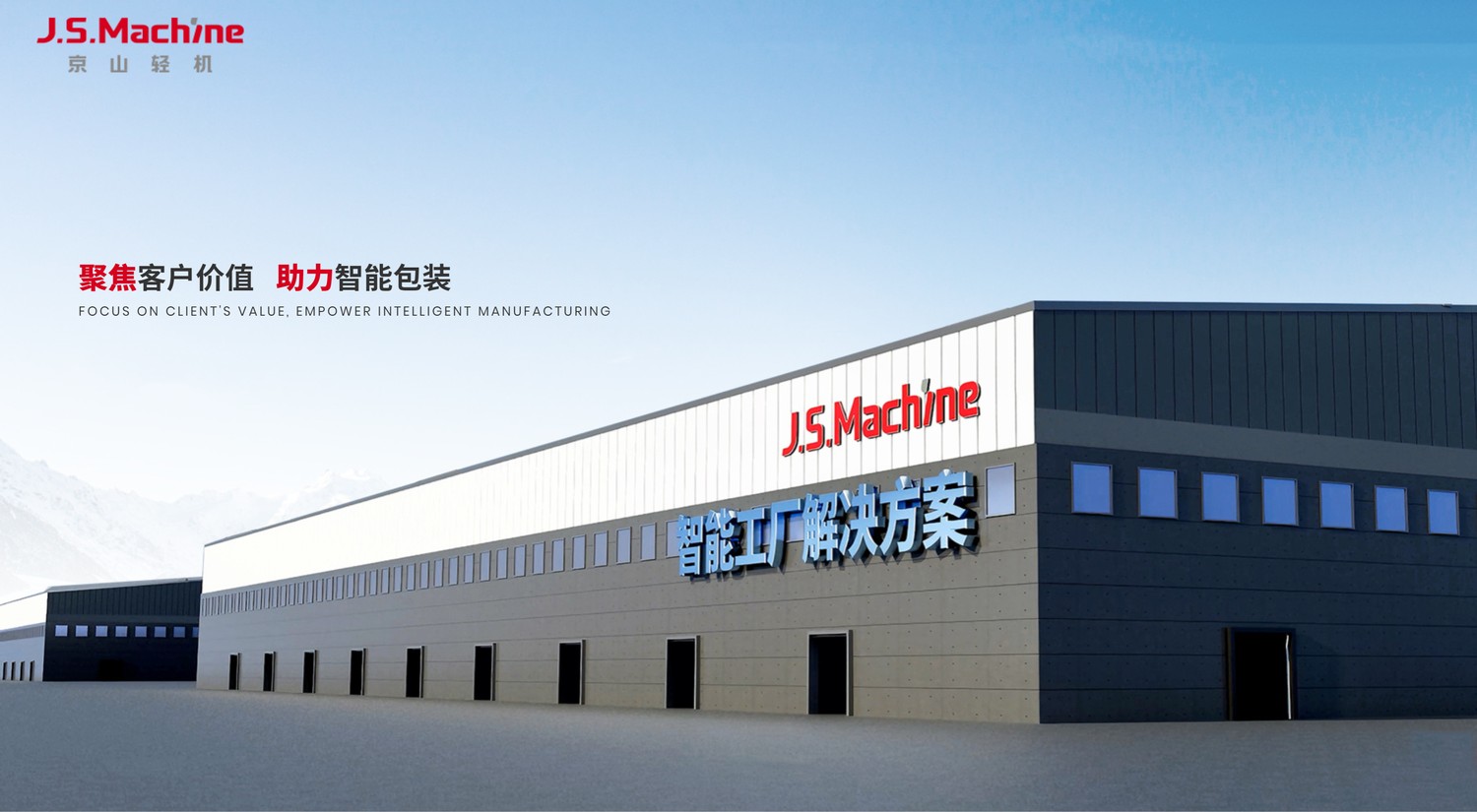
As business scale continues to expand, enterprises accumulate large amounts of paper vouchers and image materials in processes such as procurement settlement, expense reimbursement, asset capitalization, and construction in progress. An operating structure with multiple industries, multiple subsidiaries, and multiple legal entities means the finance side must simultaneously handle a large volume of invoices with different sources, different invoice types, and different approval paths, and traditional manual entry and manual collection methods can no longer meet management requirements. To this end, Jingshan Light Machinery launched this imaging system construction, hoping to establish a more efficient, standardized, and sustainably evolving invoice processing and electronic archiving system through platform-based and structured technical means.
II. Project background: the demand for invoice processing in payment processes continues to rise
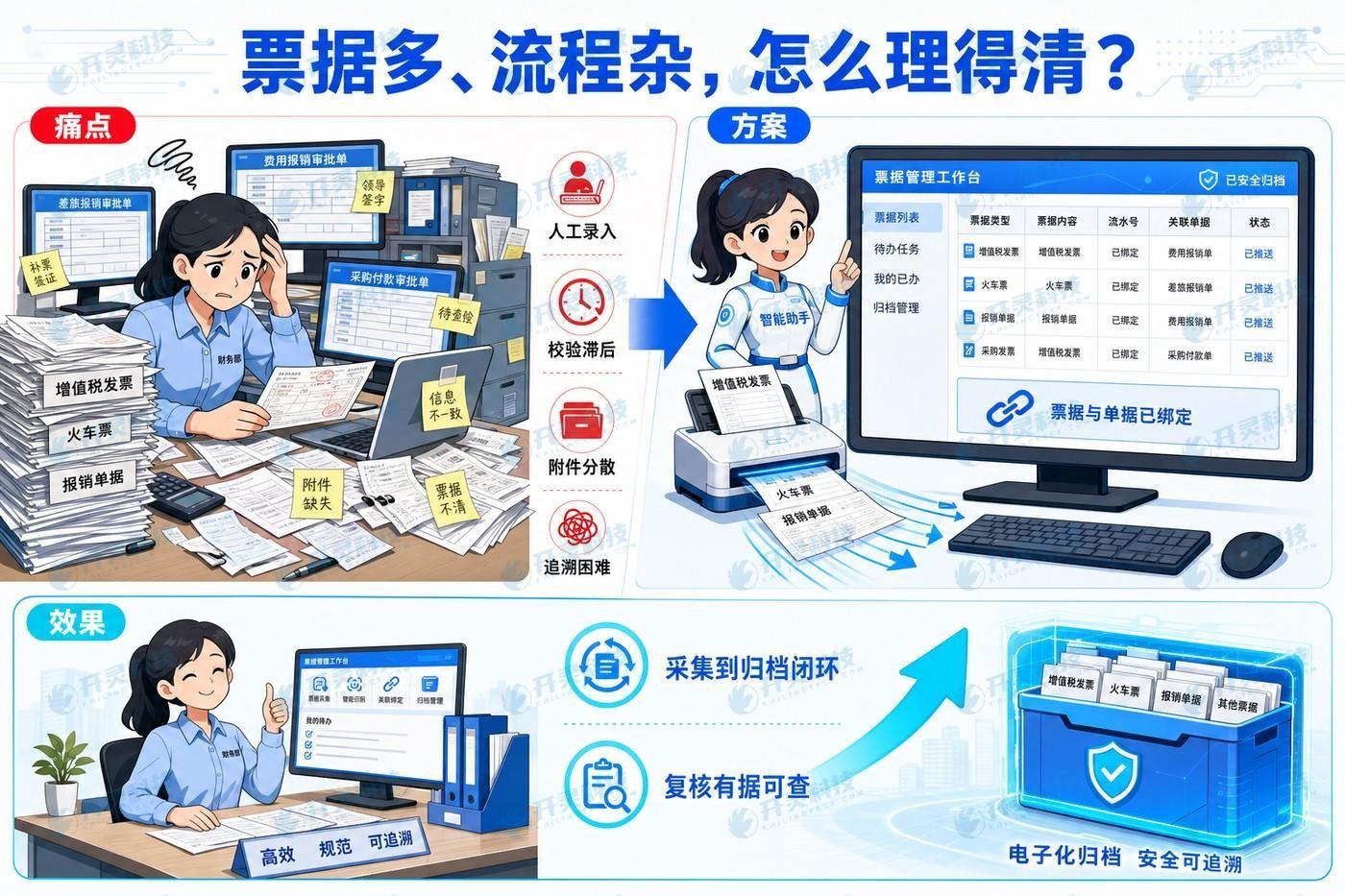
Unlike many enterprises, Jing Shan Qing Ji's invoice processing scenarios are not limited to single expense reimbursement, but constitute a comprehensive system jointly formed by multiple payment processes such as supplier payments, employee loans, refund applications, asset capitalization reimbursement, construction-in-progress capitalization reimbursement, and daily expense reimbursement. The initiating departments, approval chains, and invoice requirements of each process differ, making it difficult for a single reimbursement template to cover them all; combined with the enterprise's tens of thousands of invoices processed annually, mainly VAT special invoices, this places high demands on system stability and processing efficiency.
Compared with invoice processing in a single scenario, this type of comprehensive payment process has several typical management difficulties:
- Key fields rely on manual entry, resulting in much repetitive work and prone to errors;
- Authenticity verification and compliance checks often occur after the fact, and problematic invoices may already have flowed downstream for approval;
- Image files of the same transaction are scattered across different stages and different personnel, making it difficult to gather them completely when downstream systems need them;
- During financial review, reconciliation, auditing, or issue identification, it is difficult to retrieve all invoices and processing records associated with a historical process at once;
- Traditional electronic archiving mostly remains at the level of scanning and retention, lacking a stable association between images and business data.
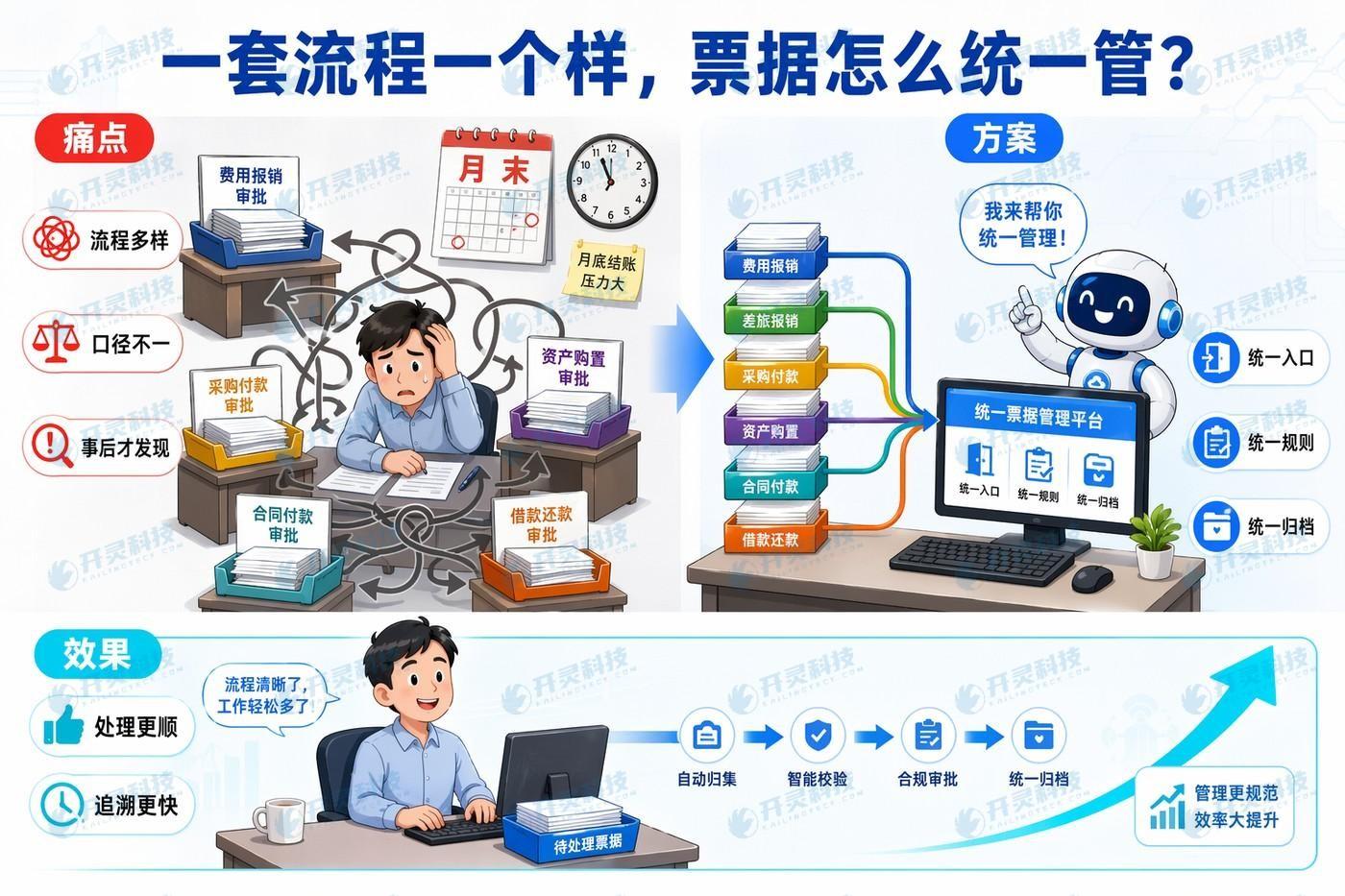
For Jingshan Light Machinery, building an imaging system is not just a matter of improving document processing efficiency; it also relates to financial internal control standards, data traceability, cross-system collaboration efficiency, and the foundation for subsequent rollout to more business entities. Therefore, the focus of this project is not simply to launch a scanning tool, but to build an invoice processing and electronic archiving platform oriented to real payment process scenarios.
III. Overall Project Goal: Build an Integrated Capability System of "Collection—Recognition—Verification—Push—Archiving"
This project is based on the Kailing Electronic Image Management Platform, building a locally privatized deployment invoice image processing and electronic archiving platform for Jingshan Light Machinery. The overall objectives mainly include:
- Taking the payment process as the main line, establish a strong association mechanism based on process serial numbers between the enterprise's existing OA and imaging systems;
- Achieve efficient electronic collection of paper invoices and batch import of e-invoices;
- Call the enterprise's own OCR capabilities to complete automatic recognition and structured extraction of key invoice fields;
- Complete invoice authenticity verification and compliance verification, and visually identify abnormal invoices;
- Push structured invoice information back to the OA and receive write-back of approval status from the payment process;
- Provide downstream fund systems with a standard interface for querying and reviewing invoice materials by serial number;
- Achieve unified archiving and long-term retention of original images with recognition results, verification results, and processing records;
- Complete localized deployment and permission control of the platform to meet enterprise data security requirements.
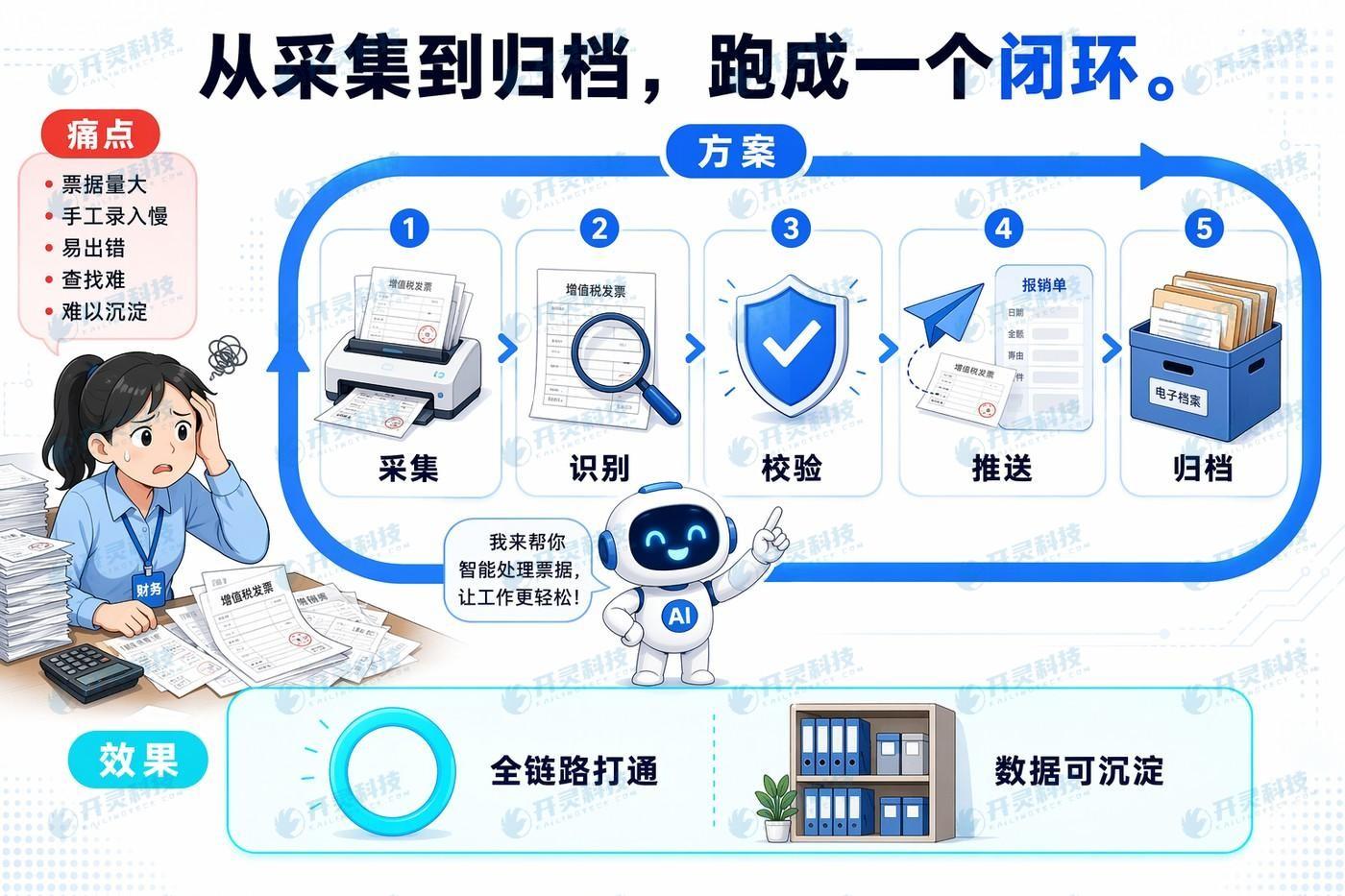
Through this platform build, Jing Shan Qing Ji's invoice management will upgrade from decentralized manual circulation and post-hoc verification to an integrated processing model centered on processes and data accumulation. In Phase I, one subsidiary within the group will be selected as the pilot entity to complete full-chain operation, accumulating standardized implementation experience for subsequent rollout to more business entities.
IV. Main project construction content
According to the construction plan confirmed by both parties, Phase I construction is divided into six functional domains: single-point integration, invoice collection, invoice processing, external interfaces, system support, and operations and maintenance support. This division is consistent with the enterprise's existing payment process system and facilitates subsequent development and testing by module.
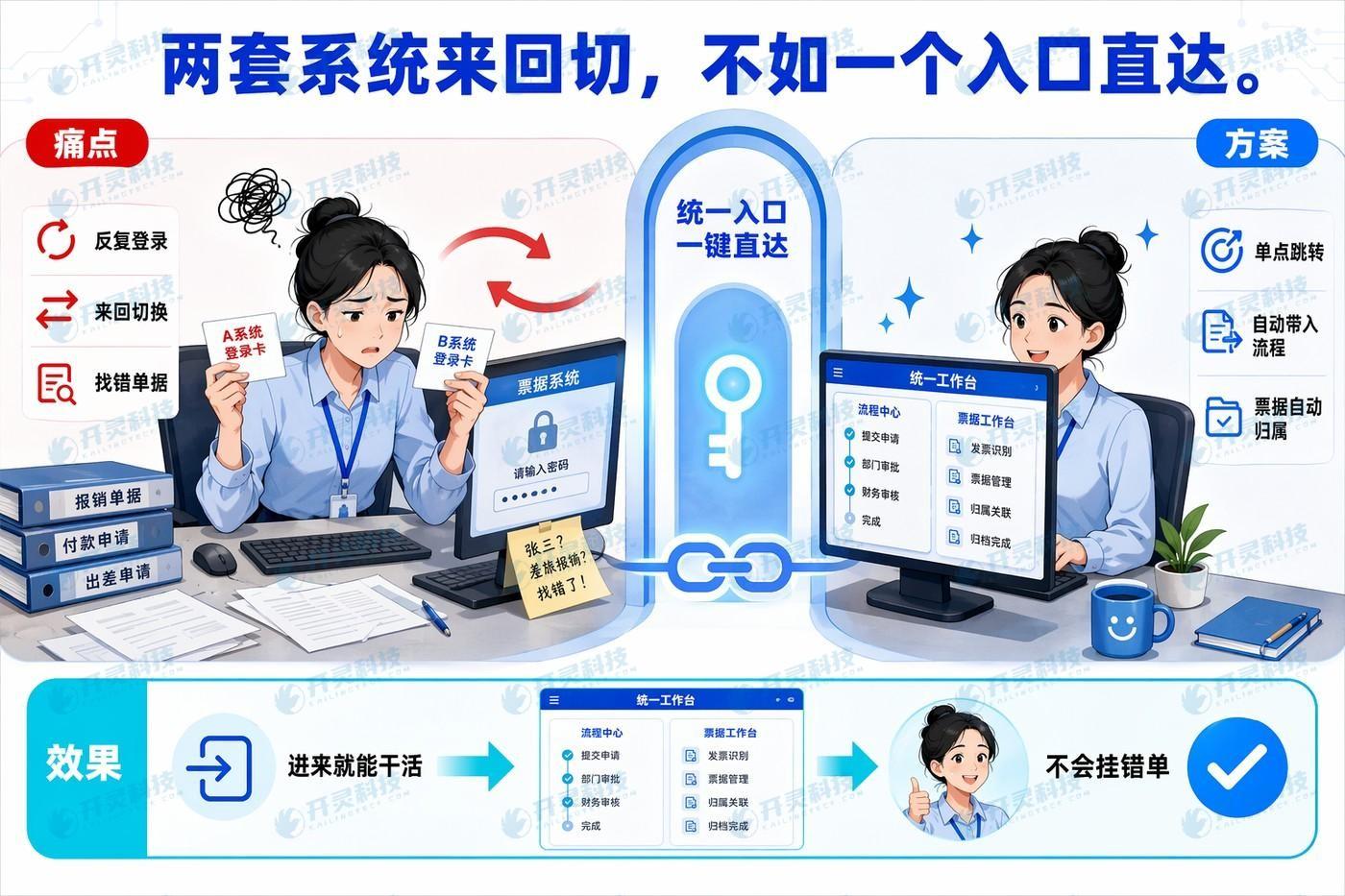
1. Build single sign-on integration capability to connect OA and the imaging system through a unified entry point
The project builds single sign-on integration capability between the enterprise's existing OA and imaging system. After users initiate a payment-related process in OA, they can jump from the process page via single sign-on to the unified page of the imaging system without logging in again; during the jump, the key context of the process is passed along, and the imaging system automatically locates the current business accordingly and locks the process as the default work object.
In this way, users are in the correct business scenario as soon as they enter the page, and all subsequently collected invoices are automatically assigned to the current process, avoiding manual maintenance of the correspondence between invoices and processes at the source.
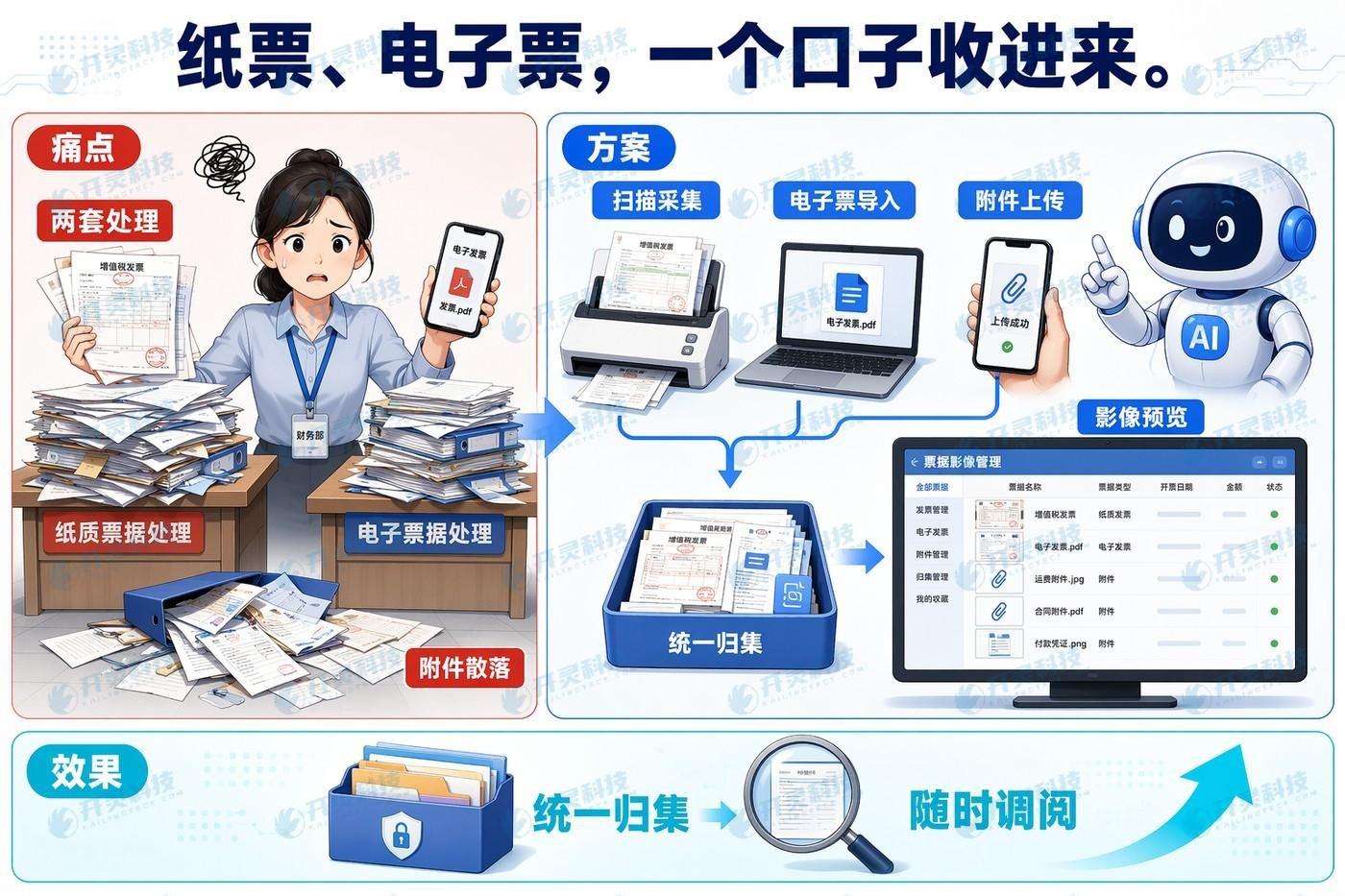
2. Build document collection capabilities to achieve unified aggregation of paper and electronic documents
The platform supports collecting paper invoices via scanners, as well as importing electronic invoice files and uploading attachments, and provides image preview capabilities. It is also compatible with different types of collection devices, adapting to enterprises' document collection needs in different business scenarios.
Beyond collection capability, the platform also has clear requirements for the images themselves: it supports generating dual-layer PDFs containing an image layer and a text layer, and is compatible with common image and document formats. A dual-layer PDF both preserves the original appearance of the voucher and makes the image content searchable, and is the standard format for long-term archiving of financial vouchers.
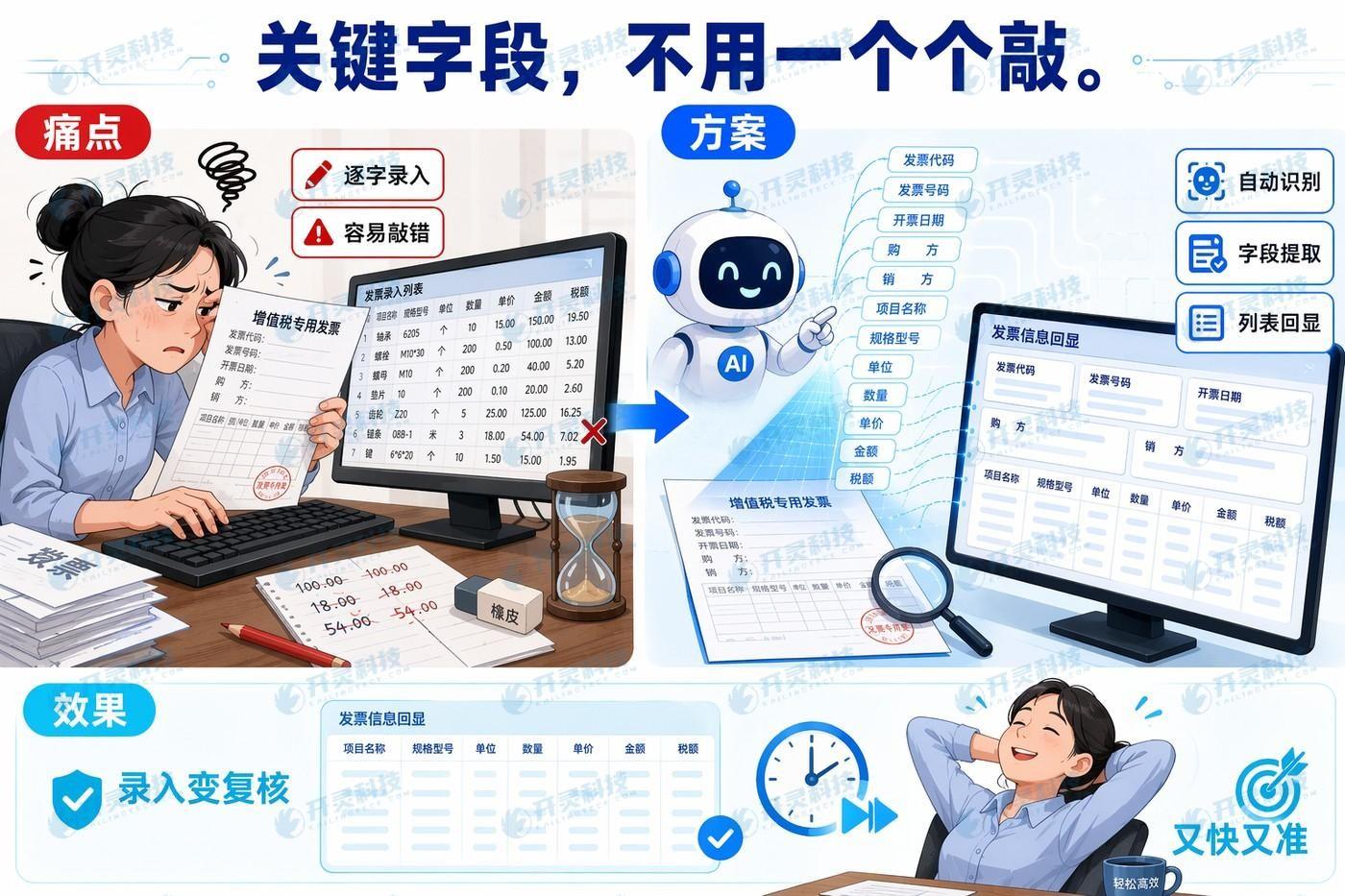
3. Connect to the enterprise's own OCR capabilities to complete structured extraction of key fields
This period's solution does not separately implement OCR replacement, but directly calls the enterprise's already deployed OCR service to automatically recognize key invoice fields and display the recognition results in the invoice list.
To ensure system stability and subsequent scalability, OCR calls are encapsulated as an independent adaptation layer, and a unified recognition input-output model is defined within the system, so that upper-layer business modules do not directly depend on any specific OCR service implementation. This means that if the recognition service needs to be adjusted later, the scope of modification can be controlled within the adaptation layer, without affecting business logic and page functions.
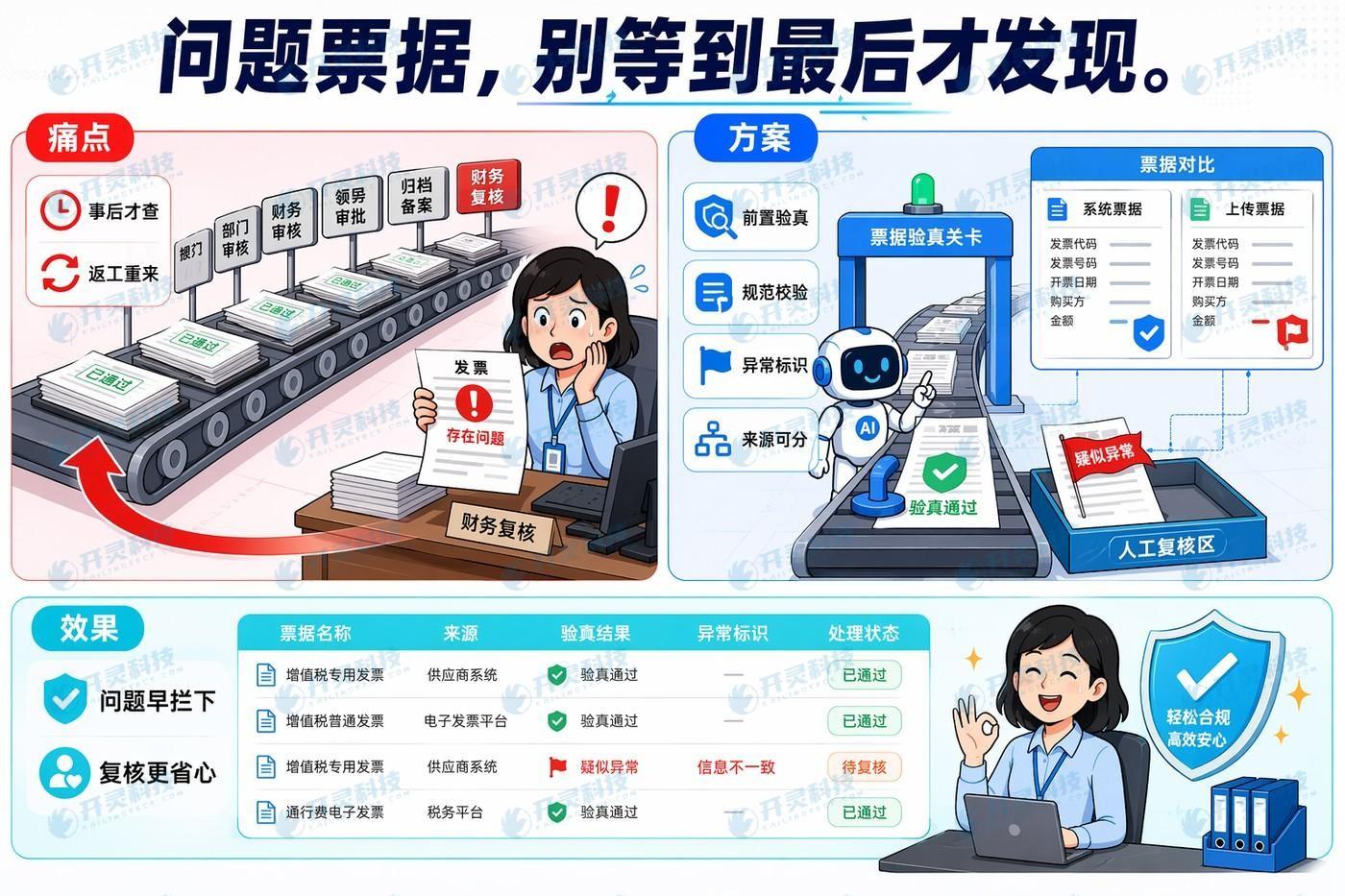
4. Build verification and anomaly identification mechanisms to front-load invoice compliance checks
The platform completes invoice authenticity and compliance verification, supports batch import of historical invoice data by template, compares it with invoices entered for reimbursement, and displays verification results intuitively in the list as normal, abnormal, and other statuses.
For invoices with abnormal recognition, verification, or rule exceptions, the system marks them visually and distinguishes different data sources such as AI OCR recognition, manual entry, and manual review, making abnormal sources and processing progress clearly visible and facilitating centralized review by finance staff.
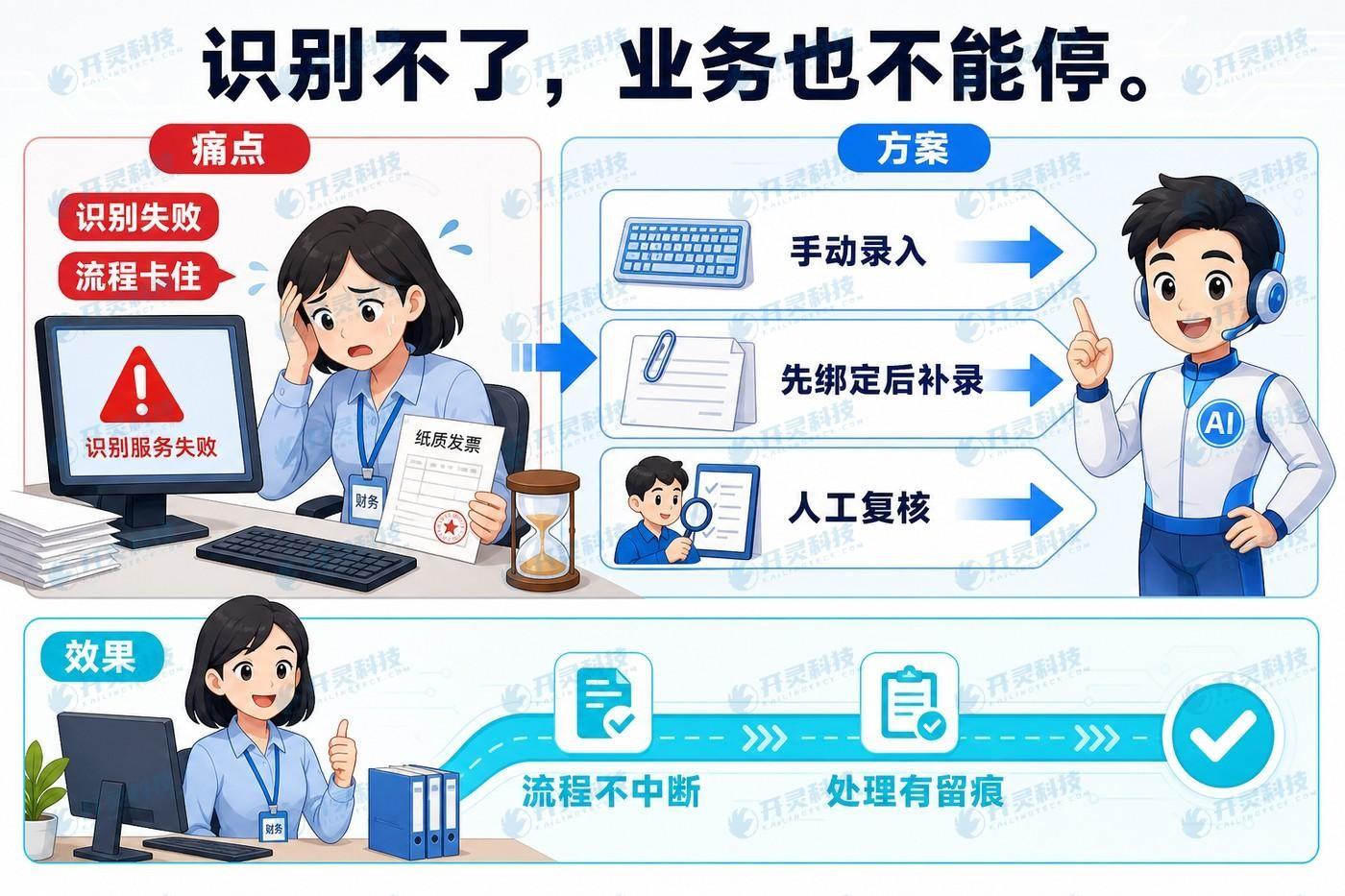
5. Design multiple contingency paths to ensure business continuity when recognition is abnormal
A common problem in image-related projects is that operations run smoothly during acceptance but are frequently interrupted after go-live, mostly because the solution only designed the ideal path. Once the recognition service times out, becomes abnormal, or returns results that cannot be directly trusted, the operation page has no next step, and the business process stalls.
This project lists exception paths as rigid requirements from the requirements stage. In addition to the normal recognition path, the platform also provides three emergency handling paths: first, manual entry as a fallback, allowing users to manually supplement document information and retain attachment upload capability when the recognition service is unavailable or results cannot be directly adopted; second, bind first and supplement later, allowing attachments to be uploaded and bound to the process first when the recognition service is temporarily abnormal but business must continue, with recognition or manual entry supplemented after the service recovers; third, a manual review task pool, forming pending review tasks for recognition results with low confidence or field conflicts, which designated personnel correct before processing continues.
According to the agreed plan, none of the above paths may cause the page to become unavailable or the process to be interrupted. The page must also provide a clear manual entry point and exception prompts, and this must be included in the test scope as a scenario that must be verified before launch.
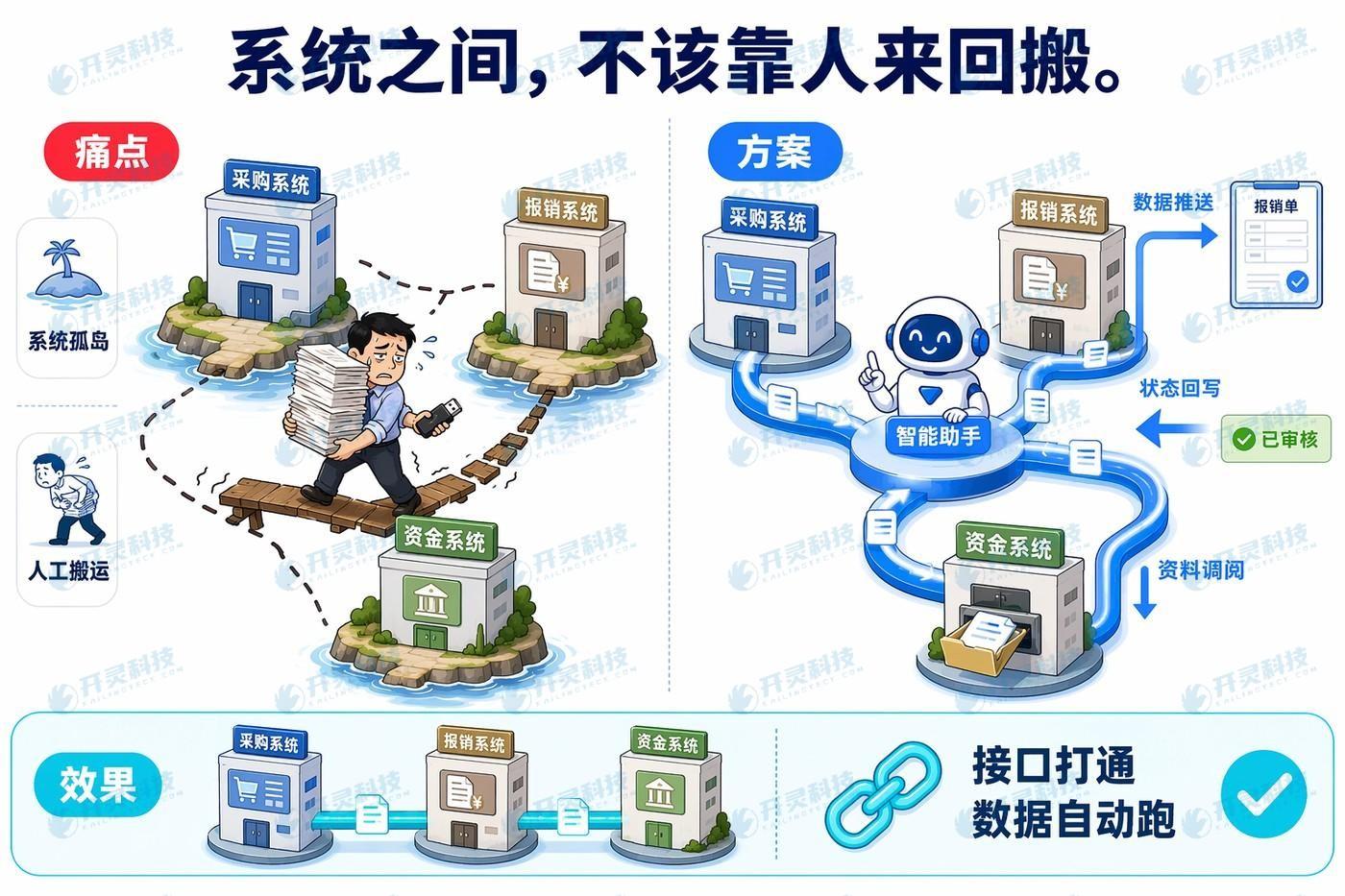
6. Build an external interface system to enable push, write-back, and downstream retrieval
External interfaces are a core component of this project. The imaging system needs to synchronously handle single sign-on jump requests from OA, push invoice data to OA, and write back approval status from OA: invoices that meet the rules are actively pushed back to OA by users on the page for subsequent approval processes; the approval status of the payment process is written back to the imaging system through interfaces, enabling invoice status to reflect business processing progress.
On the downstream side, the platform provides a standard data access interface for the fund system, supporting queries of related bills and attachment collections by transaction serial number. The interface as a whole follows the principles of standardization and stable field naming and forms formal interface documentation, with Kailing Technology uniformly undertaking customer requirements and completing the full closed loop of debugging and optimization.
7. Implement private deployment and operating environment safeguards to meet data security requirements
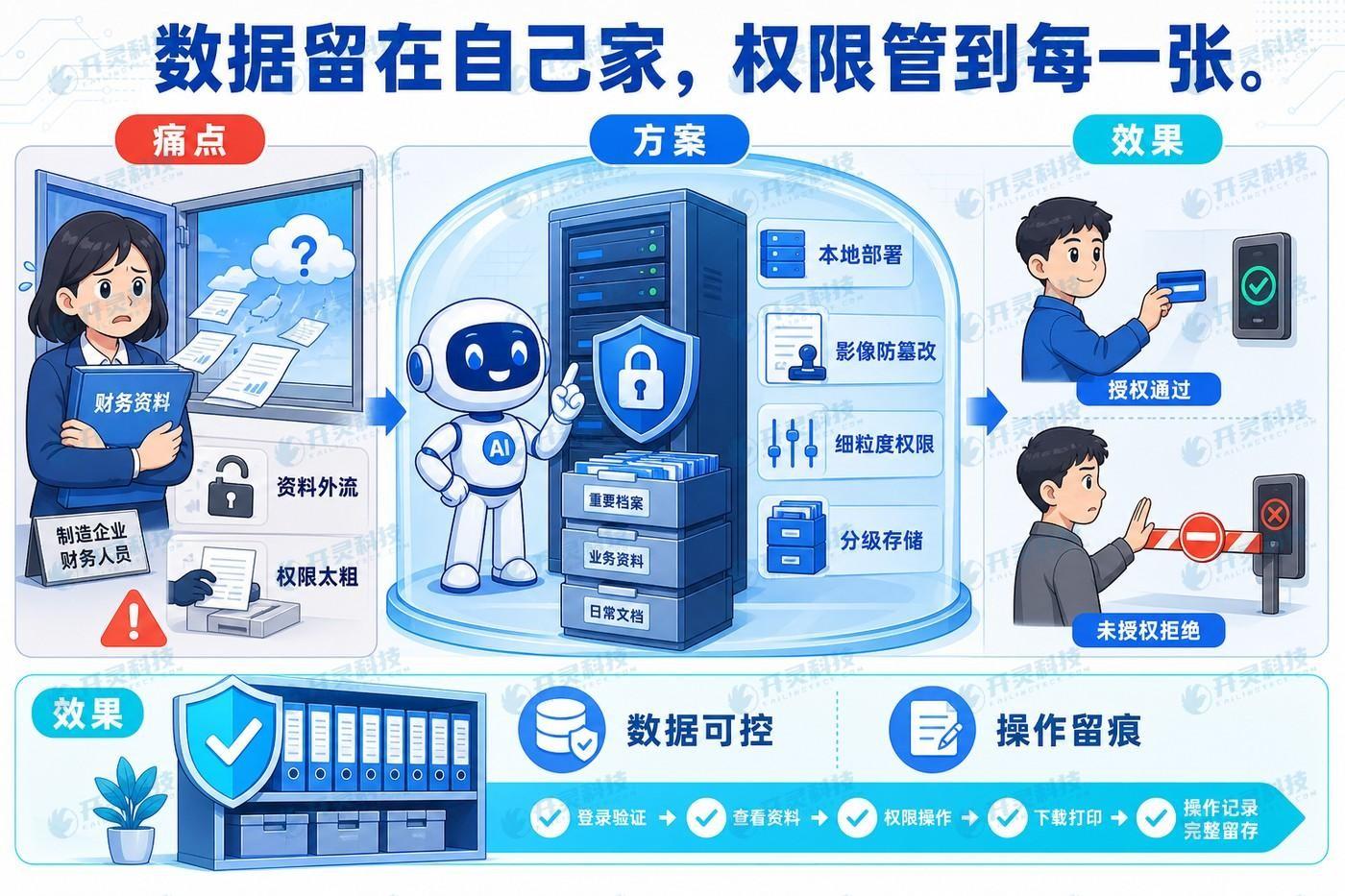
Considering the sensitivity of financial invoices and reimbursement materials, this project adopts local private deployment, with the system deployed in the enterprise's designated server environment and secure access provided for project implementation through dedicated channels. After launch, corresponding capabilities will only be open to authorized users and authorized systems.
The platform also sets clear requirements for security and archive management: ensuring original image files are tamper-proof through verification, electronic watermarks, and other technical means, and recording key operation logs; permissions can be refined to viewing, downloading, and printing of individual vouchers, and support multi-dimensional settings by role, department, and project; storage adopts a tiered strategy combining online, nearline, and archival storage, with reserved horizontal expansion capability to comply with accounting archive retention period regulations and support subsequent group-level deployment.
V. Expected project value
After completion, the project will bring management improvements in multiple aspects to JingShan Light Machinery.
First, there is an improvement in invoice processing efficiency. A large amount of work originally relying on manual entry, manual comparison and manual aggregation will be completed automatically by the system; users can complete collection, recognition, verification and push from a single OA entry point into a unified page, without operating across multiple pages, effectively shortening invoice processing time per process.
Second, it is the enhancement of financial review and audit traceability capabilities. The system uses the serial number as the unique association identifier, fully retaining data such as processes, invoices, associations, verification results, processing logs, and image files. When financial personnel conduct review, reconciliation, audit, or problem locating, they can use the historical serial number to retrieve all associated invoices and processing records at once, forming standardized process traces and a complete audit evidence chain.
Third, it is a guarantee of business continuity. The three contingency paths of manual entry, bind-first-and-supplement-later, and manual review enable the system to continue processing business when the recognition service is abnormal, avoiding overall stagnation of the payment process due to a failure in a single technical link. This is especially important during the month-end payment peak.
Fourth, the strengthening of data security and internal controllability. Local private deployment, interface authentication, fine-grained permission control and logging of key operations enable enterprises to firmly control data boundaries and the processing environment while improving their level of automation.
Fifth, it lays the foundation for subsequent expansion. The system retains expansion space in configuration, interfacing, and modularization. Recognition capabilities are connected through interfaces, and the data model reserves multi-entity expansion capability, enabling lower transformation costs for subsequent service adjustments and multi-entity rollout.
VI. Project Implementation and Assurance
After project initiation, Kailing Technology first completes business research and jointly confirms the project blueprint and requirements specification with the customer, solidifying each requirement for functions, interfaces, data, and environment into an executable and verifiable construction baseline item by item, avoiding rework caused by changes in definitions during implementation.
The implementation phase covers platform private deployment, single sign-on integration, OA-side function development and page embedding, interface development and joint debugging, and conducts testing and acceptance around core business links, focusing on verifying the full-link closed loop from process initiation, invoice collection and binding, push-back writing, to downstream retrieval, rather than only confirming whether a single interface is available. Before go-live, Kailing Technology provides product training and document delivery, and continues to provide operation and maintenance and technical support services after go-live to ensure stable system operation.
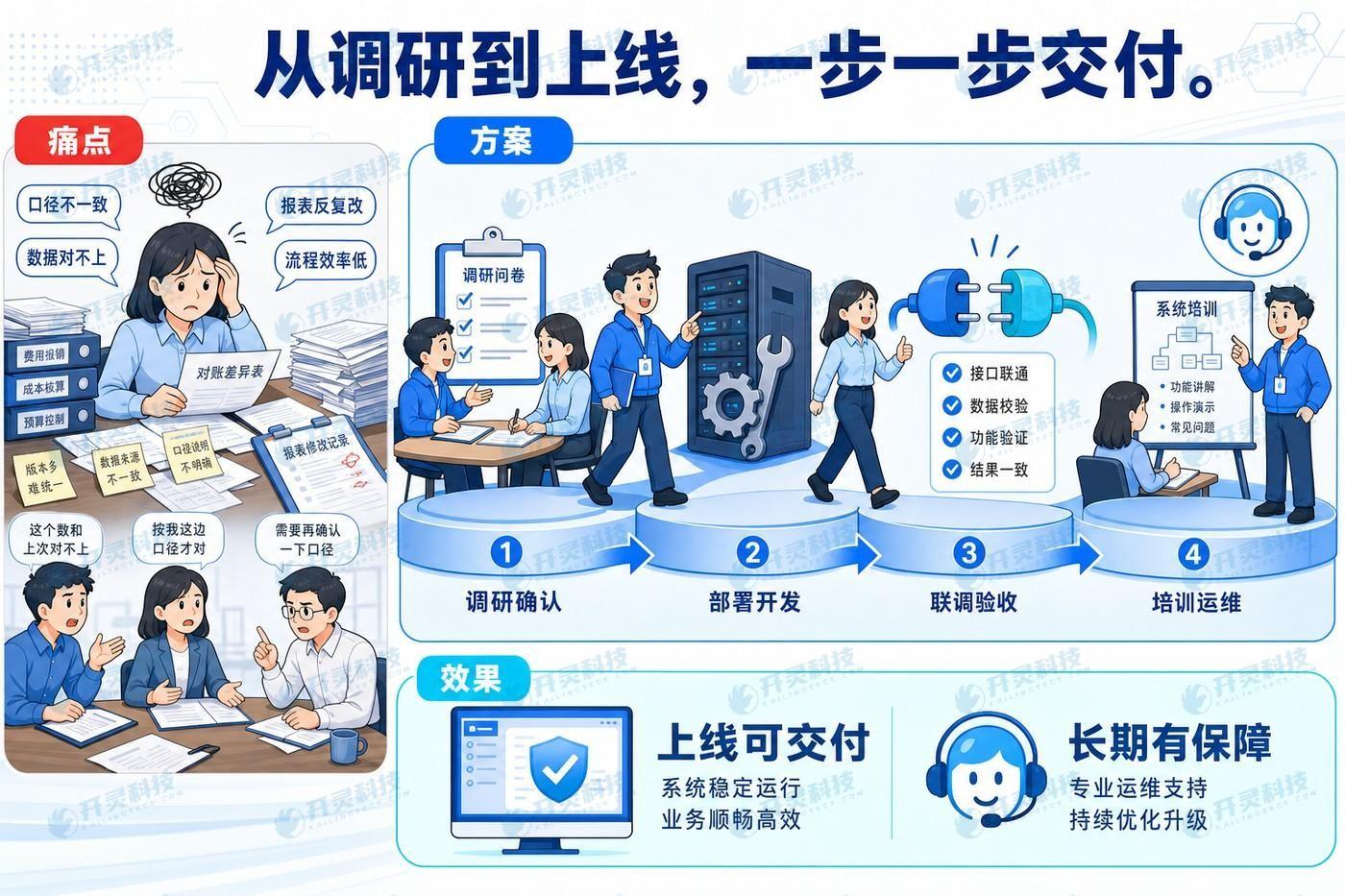
The Jingshan Light Machinery image system construction project is a representative practice of a manufacturing group's invoice management upgrading from imaging to process-based, structured, and traceable management. Kailing Technology's solution is based on an electronic image management platform, with process serial number strong association as the main line, with scanning and collection, OCR recognition, authenticity verification, push-back writing, and electronic archiving as the core capability chain, and with local private deployment and multiple emergency paths as safeguards, building a processing and archiving system covering the full lifecycle of invoices.
As the project advances and is implemented, JingShan Light Machine will further improve invoice processing efficiency in the payment process, financial review standardization, and archive traceability capabilities, and accumulate reusable implementation experience for subsequent promotion to more business entities. As the project undertaker, Kailing Technology will continue to leverage its capability advantages in intelligent recognition, electronic image management, and enterprise-level private deployment to help more enterprises achieve high-quality digital upgrading.
Note: Some images in this article are sourced from the official website of Jingshan Light Machinery. The images are used solely for illustrative purposes in this article. Copyright belongs to the original content source. If there are any copyright issues or objections to the use of the images, please contact us promptly and we will handle it as soon as possible.
As a comprehensive business-finance-tax digitalization solution service provider, Kailing Technology provides business-finance-tax management digital transformation products and operational services for various government agencies, institutions, and large, medium, and small enterprises. The product line includes:
Solutions for businesses including sales contract management system, procurement contract management system, fully digitalized Leqi interface project, output automatic invoicing system, reverse invoicing system, invoice issuance for individuals system, employee expense control and reimbursement system, input VAT invoice management system, supply chain collaborative reconciliation system, image OCR recognition system, automatic financial bookkeeping system, and electronic accounting archives system, comprehensively driving the digitalization process across various fields.
If you have any business-finance-tax digital transformation needs, welcome to contact us. Beijing Kailing Technology will serve you wholeheartedly.
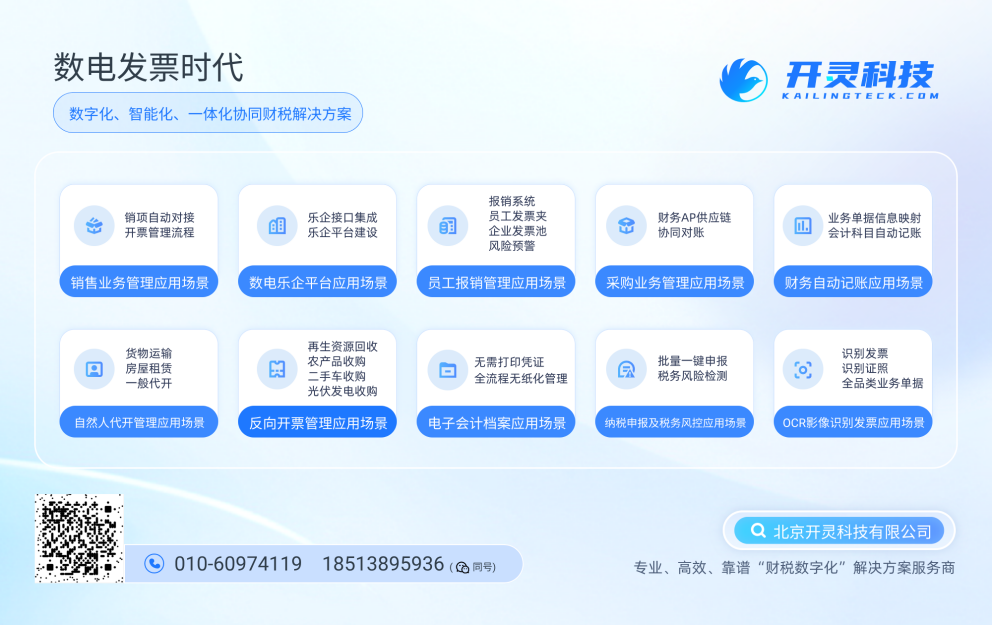
As a comprehensive business-finance-tax digitalization solution service provider, Kailing Technology provides business-finance-tax management digital transformation products and operational services for various government agencies, institutions, and large, medium, and small enterprises. The product line includes: solutions for sales contract management system, procurement contract management system, fully digitalized Leqi interface project, automatic output invoicing system, reverse invoicing system, invoice issuance for individuals system, employee expense control and reimbursement system, input VAT invoice management system, supply chain collaborative reconciliation system, image AI OCR recognition system, automatic financial bookkeeping system, electronic accounting archives system, etc., comprehensively driving the digitalization process across various fields.
Consultation Hotline: 18513895936 / 010-60974119 Location: Beijing