
Log purchases are settled by volume; how do you verify the invoice amount? Kailing Technology's agricultural product purchase reverse invoicing system links the scaling slip, loading sheet and factory arrival inspection

The settlement unit for log purchases is often volume, and on-site scaling, loading and factory arrival inspection may be completed by different personnel. Invoicing based on just one payment order makes it difficult to explain how the volume was determined. Kailing Technology's agricultural product purchase reverse invoicing system links the scaling slip, transport loading and factory arrival review to the same purchase order, so that the settlement amount can be recalculated step by step.

▍The scaling slip records the starting point of volume
At the purchase site, record the log species, number of pieces, length, diameter class, or other scaling elements using the agreed method to form a traceable tally sheet. The pricing basis must be consistent with the contract, local rules, and the enterprise's acceptance measures. If timber from multiple farmers is shipped in the same vehicle, the tally sheet should first distinguish by farmer, avoiding a situation where only the total volume of one vehicle remains after arrival at the plant.
Photos, measurer, time, and location during scaling can assist verification. If timber specifications are incomplete, on-site deductions or separate accounting for nonconforming parts should state the reason; merely manually changing a total volume afterward cannot explain which log, pile, or review the change came from. The system links tally sheets to purchase orders, leaving a calculation entry point for settlement.
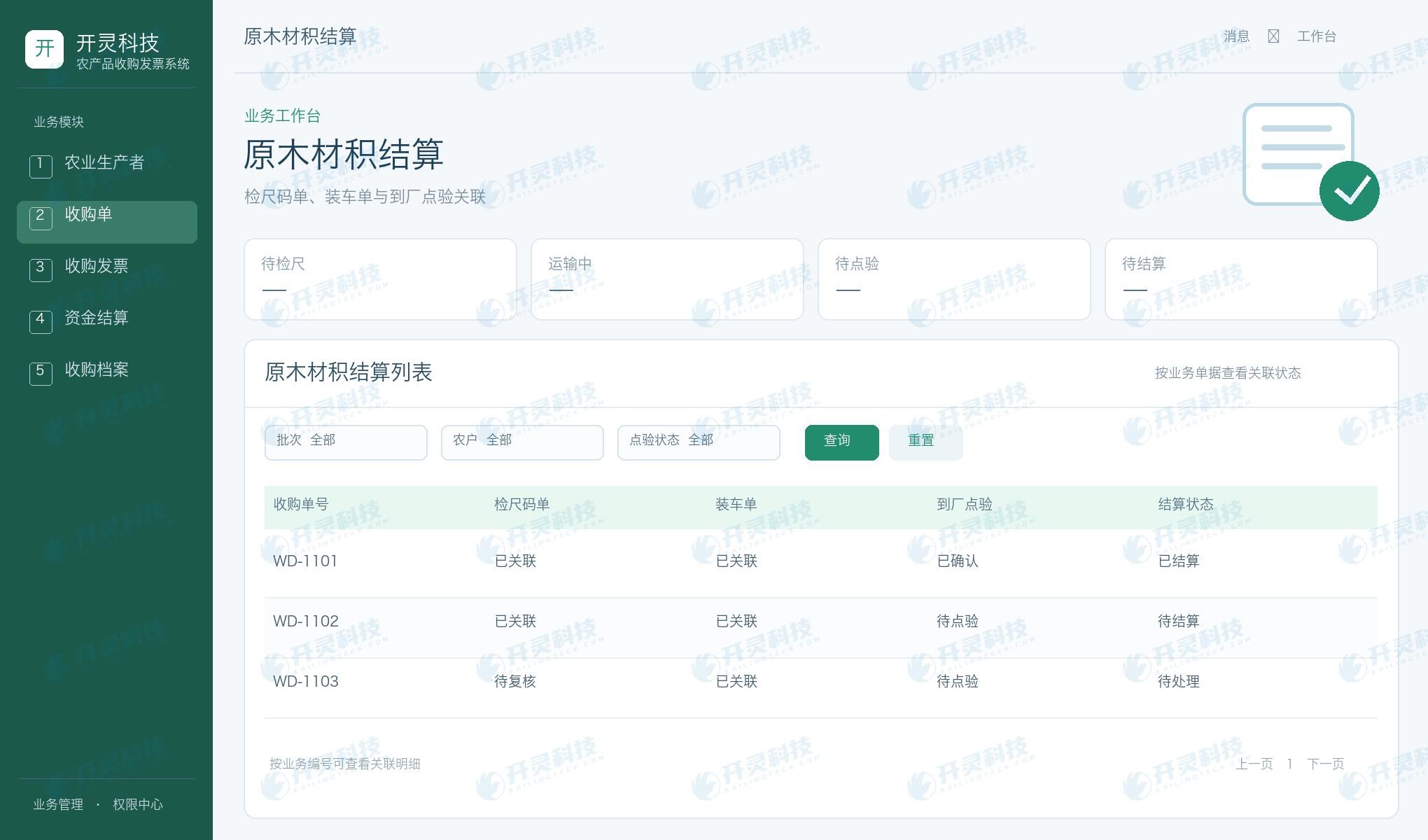
Log scaling, loading and inspection status
▍The loading sheet shows which batch of timber is on the road
The loading sheet should list the purchase order, farmer, loading batch, vehicle, and actual loaded quantity. If the total of the on-site tally sheet is inconsistent with the loaded quantity, timber that was not loaded, returned, or temporarily adjusted must be marked. Transportation documents, seals, and photos can assist in proving handover but cannot replace the specifications and volume in the tally sheet.
When multiple purchase points share a truck for transportation, the vehicle dimension and the farmer dimension are two different indexes. Finance ultimately issues invoices and makes payments by farmer, so it needs to expand each household's timber volume from the truck trip; the warehouse accepts by truck trip arriving at the plant, and must also be able to trace back each household's original scale ticket. The Kailing Technology system keeps both indexes in parallel, reducing confusion of materials after consolidated trucking.
▍Factory arrival inspection determines the final settleable quantity
After factory arrival, check the number of logs, specifications and quality against the loading sheet and the original scaling slip. If shortages, species differences or damage are found, record the difference location, reviewer and handling opinions of both parties. The final settlement volume is based on the agreed confirmation result, while retaining both the on-site initial inspection and factory-arrival review versions.
When pricing by volume, finance can recalculate the payable amount from the final confirmed volume and unit price of each log category. If freight, loss, or quality deductions affect settlement with the farmer, they must also be listed separately, not mixed into the timber unit price as different types of costs. The system writes the final confirmed value back to the purchase order, and payment and invoicing then reference the same result.
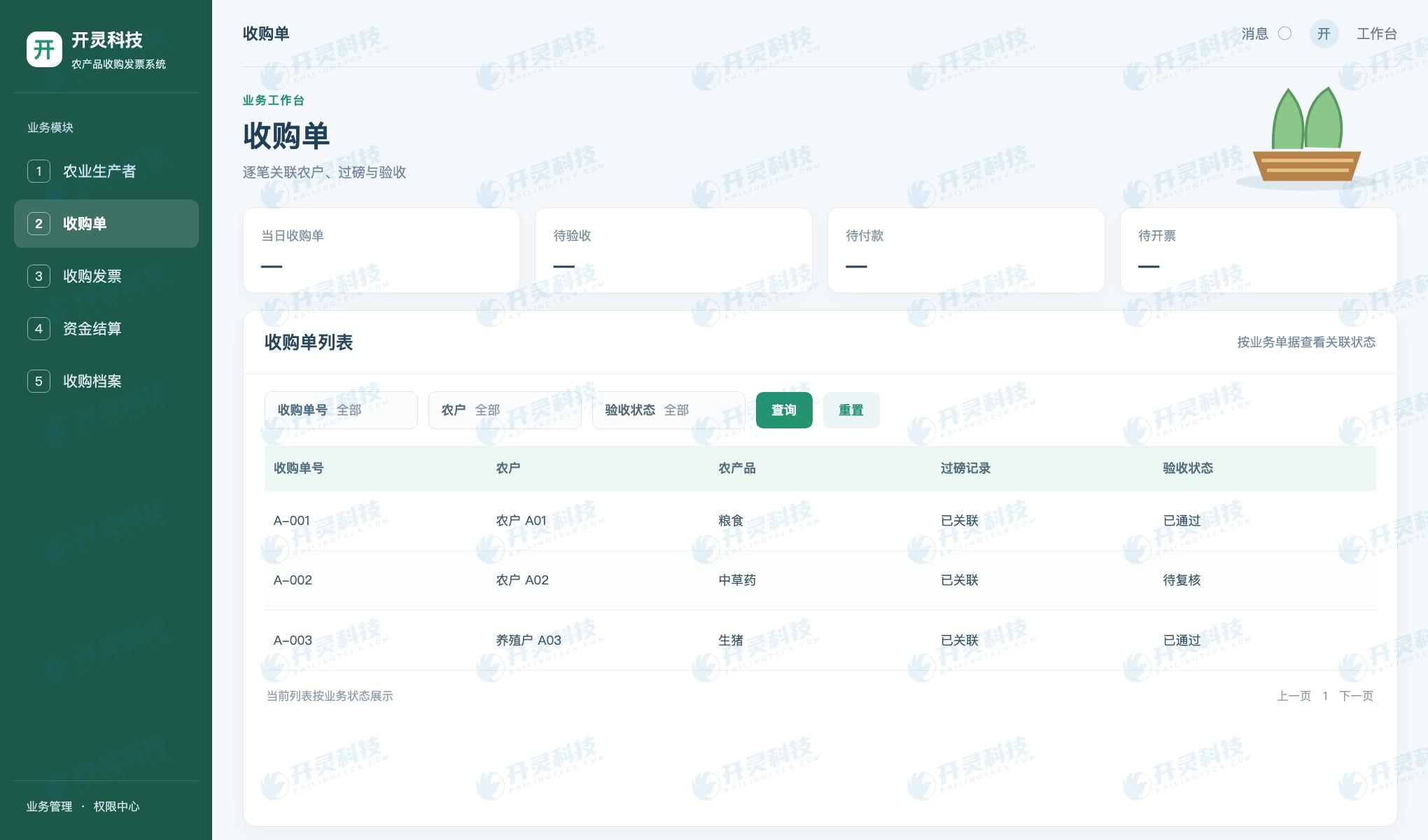
Record purchase orders by farmer
▍Farmer eligibility, invoice payment and volume corroborate each other
Purchase invoices must first correspond to genuine self-produced transactions and qualified sellers. Farmer records, self-production-related materials, and the timber purchase scope should be checked before processing. The farmer, category, quantity, and amount on the invoice face must match the confirmed purchase order, and the payee on the payment receipt should correspond to the actual seller.
If one vehicle belongs to multiple households, tally sheets, payments, and invoices should be retained by household; if multiple vehicles of the same household are settled together, the details of each vehicle can be expanded from the invoice. The Kailing Technology agricultural product purchase reverse invoicing system keeps these relationships on the same business chain, so finance does not need to manually piece together trips and farmers using an Excel sheet.
▍Test the chain with factory-arrival differences
The pilot can select five types of samples: normal arrival, shortage, specification re-testing, shared vehicle with multiple households, and return. Let the warehouse enter from arrival verification and find the corresponding loading and scaling records; let finance trace back from the invoice to the final volume calculation. If the quantities seen at both ends differ, first resolve the version and responsibility issues before considering batch invoicing.
The key to the log business is not scanning all paper scaling slips, but ensuring that every volume change has a source and a confirmer. Kailing Technology's solution links the site, transport, factory arrival and finance into a recalculable document chain, facilitating settlement by household and post-event verification.
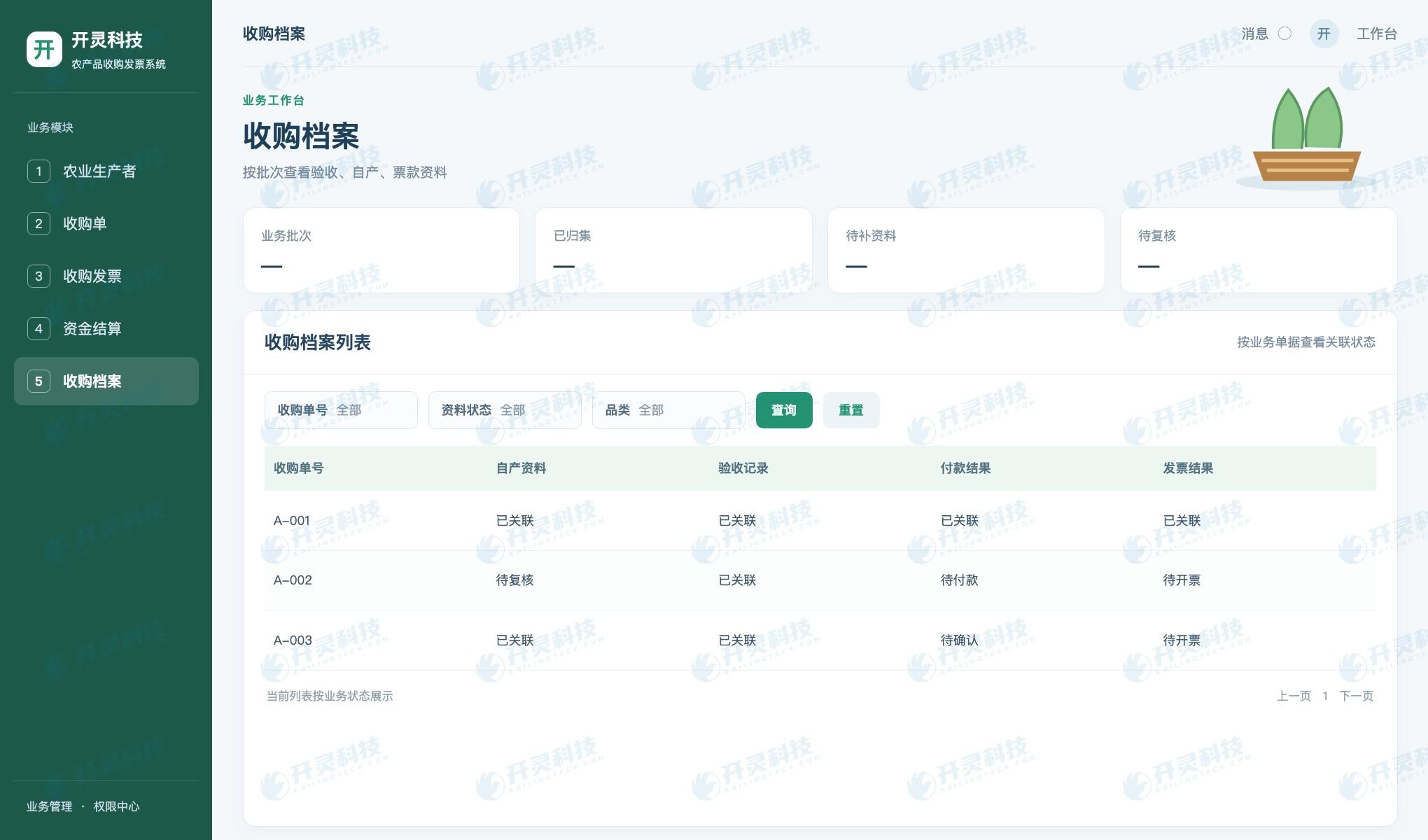
Volume settlement and invoice-payment archive
▍Make log volume calculation reproducible
The scaling method must be clearly defined by the enterprise and both trading parties in the business rules, avoiding different diameter rounding and volume calculation methods at different purchase points. The system saves the original specifications, calculation results, and summarized volume of each log or group of logs, and finance can drill down to details when viewing the total. If only a photo showing a total number is uploaded, review cannot be completed independently.
Transportation between loading and arrival at the plant may take multiple days. If shortages or vehicle changes occur in transit, handover records and responsibility allocation should be retained; it is not advisable to directly write the arrival quantity back to the on-site tally sheet, causing the original facts to disappear. The on-site tally sheet is the starting point of purchase, and arrival verification is settlement review; the difference between the two is precisely a business event that needs explanation.
For multi-household consolidated trucking, the system can first form the amount pending settlement based on each household's scale ticket, then determine the final payable amount after confirming arrival differences. If one household's timber is returned, the returned quantity only affects that household's corresponding details and should not be evenly offset against the whole truck. Payments and invoices reference the final result by household, while warehouse warehousing is recorded by physical arrival at the plant.
Logs may also involve price lists for different timber species and specifications. Enterprises should keep the price effective date, scope of application and approval records. When on-site price negotiation occurs, the settlement statement clearly states which grade used a special price and why. Finance does not need to infer the unit price from experience when recalculating, and can also explain why two purchases of similar specifications have different amounts.
For implementation acceptance, three positions can be allowed to operate independently: the purchaser enters the scale ticket, the driver or transporter maintains loading information, and the warehouse performs inspection; finance finally traces back from the purchase invoice. If any step must rely on phone confirmation or supplementary paper ledgers, that gap should be included in the next round of field and process optimization.
▍Checklist for volume and amount review
When finance receives the log settlement statement, it can check five items in sequence: whether the farmer matches the scale ticket, whether the on-site log scaling method is applicable, whether the loading quantity connects with the scale ticket, whether there is a handling opinion for the difference at the factory inspection, and whether the final volume and unit price can be recalculated for the payable amount. If any step is left with only verbal explanation, it should be clarified before payment and invoicing.
Enterprises can build a price and scaling rule library by common timber species and specifications, but special on-site timber still requires the handler to record exceptions. The role of the rule library is to reduce different algorithms used at different sites, not to replace on-site measurement. Each adjustment to prices and calculation rules should indicate the effective date, and historical documents should continue to reference the version valid at that time.
If transportation is handled by a third party, transportation costs and the farmer's log sale price must be clearly separated in the contract and settlement statement. Secretly deducting freight directly from the volume unit price makes the relationship between invoice amount and timber quantity ambiguous.
In addition, the stacking method of logs before and after loading may change verification efficiency. The site can attach tally sheet identifiers to each pile or vehicle, check against the identifiers upon arrival at the plant, and then write discrepancies back to the corresponding farmer. Without stable identifiers, even if the total number of pieces is close, it is difficult to explain which batch was short.
▍FAQ
Q: Is the log invoice amount calculated by on-site scaling or factory arrival inspection?
A: It should be based on the volume agreed by both parties and finally confirmed for settlement, keeping records of on-site and factory-arrival differences and their handling.
Q: How is invoicing handled when one truck carries logs from multiple households?
A: Split purchases, volume, settlement and invoice payment by household, with vehicle trips as the transport association index.
Q: Can loading photos alone replace the scaling slip?
A: No. Photos supplement the description of goods and handover; the scaling slip bears the basis for specification, quantity and volume calculation.
Visit Kailing Technology to learn about related products and implementation plans: https://www.kailingteck.com/fxncp/ .
As a national high-tech enterprise, Kailing Technology focuses on the digital and intelligent transformation of enterprise business-finance-tax and operations management, providing software products, system integration, implementation and delivery, and operational services for various government agencies, institutions, group enterprises, and SMEs.
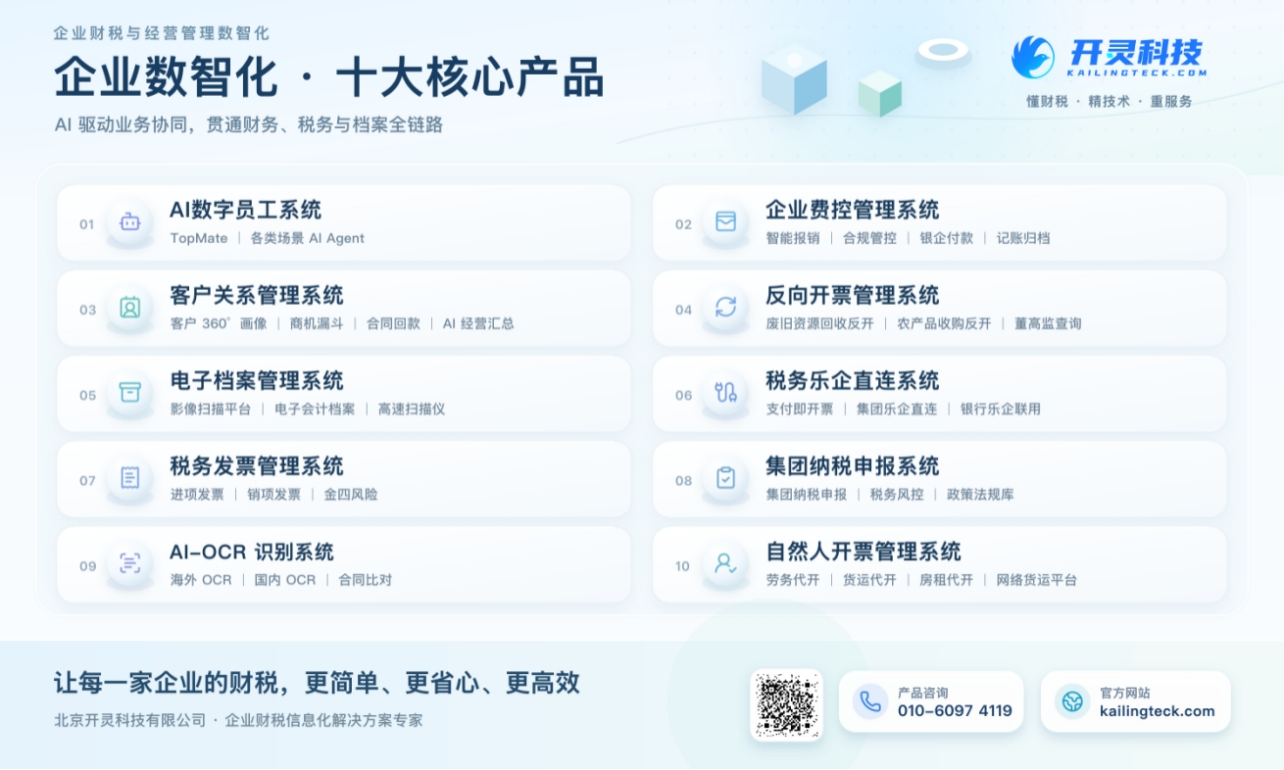
The company has now formed ten core product lines, including: AI digital employee system, enterprise expense control management system, customer relationship management system, reverse invoicing management system, invoice issuance for individuals management system, electronic archives management system, tax fully digitalized e-invoice Leqi system, tax invoice management system, group tax filing system, and AI OCR recognition system. It is committed to connecting enterprise business, finance, tax, funds, and archive data to help customers improve operational efficiency, business-finance-tax compliance capabilities, and digital management levels.
If you have any business-finance-tax digital transformation needs, welcome to contact us. Beijing Kailing Technology will serve you wholeheartedly.
Keywords: Log purchase invoice, scaling slip, volume settlement, factory arrival inspection, Kailing Technology
As a comprehensive business-finance-tax digitalization solution service provider, Kailing Technology provides business-finance-tax management digital transformation products and operational services for various government agencies, institutions, and large, medium, and small enterprises. The product line includes: solutions for sales contract management system, procurement contract management system, fully digitalized Leqi interface project, automatic output invoicing system, reverse invoicing system, invoice issuance for individuals system, employee expense control and reimbursement system, input VAT invoice management system, supply chain collaborative reconciliation system, image AI OCR recognition system, automatic financial bookkeeping system, electronic accounting archives system, etc., comprehensively driving the digitalization process across various fields.
Consultation Hotline: 18513895936 / 010-60974119 Location: Beijing