
How do you issue an aquatic product purchase invoice? Kailing Technology's agricultural product purchase reverse invoicing system links acceptance and payment using scallop and oyster aquaculture purchases as an example
After scallops and oysters are landed from aquaculture sea areas, they need to be handed over, graded, and settled as soon as possible. The water content, sediment, and size differences of aquatic products affect the actual accepted quantity; multiple farmers sharing a boat can also easily confuse the deliverer. Kailing Technology's agricultural product purchase reverse invoicing system records farmers, acceptance, payment, and purchase invoices by batch, establishing a traceable document relationship for such fresh transactions.
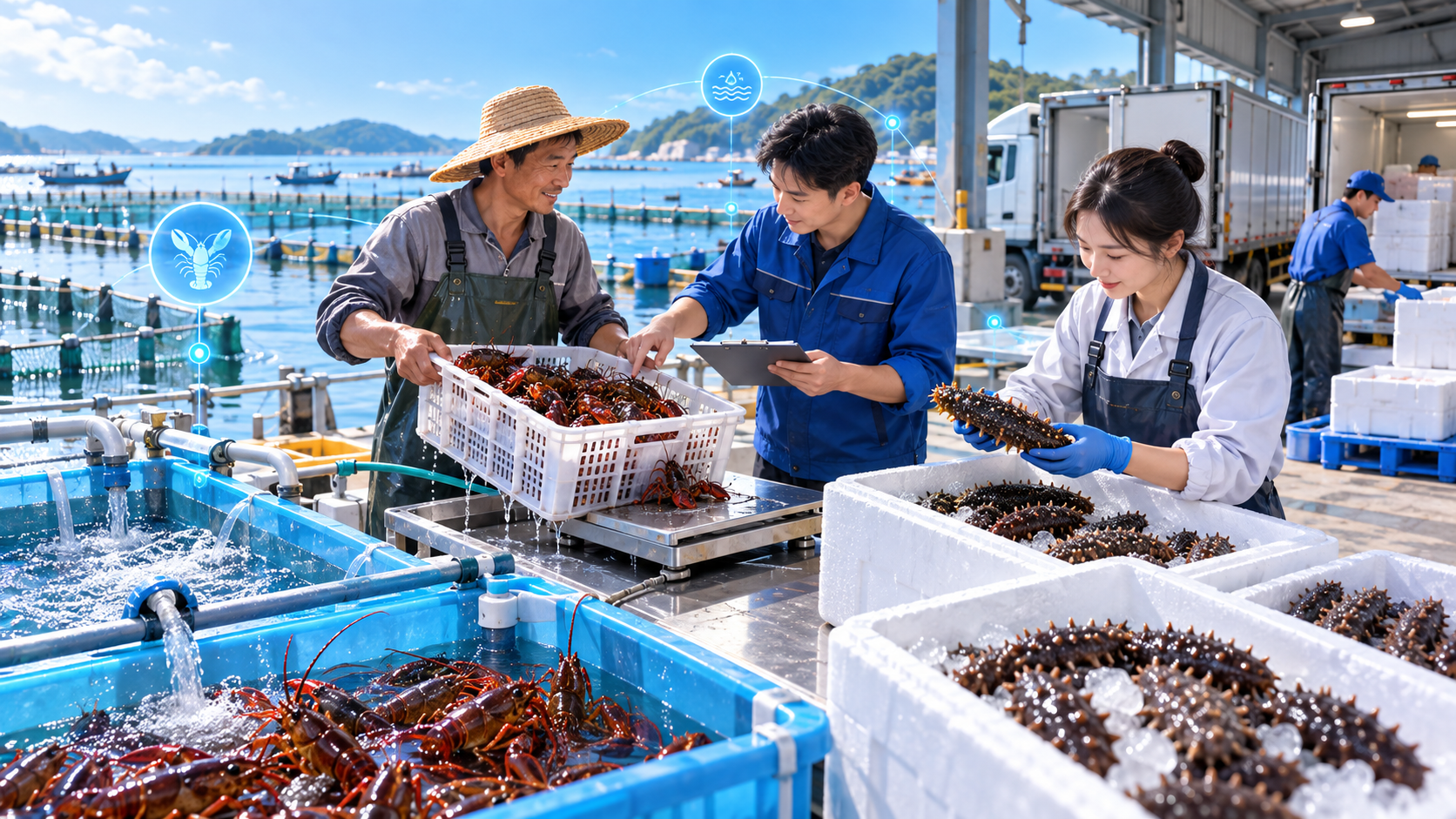
▍Confirm farmers and aquatic product batches
When purchasing scallops and oysters, the roles of the actual aquaculture producer, crew, carrier, and entrusted deliverer should be identified. Farmer or aquaculture household files record identity, aquaculture category, own aquaculture and sales materials, and receiving account. Goods purchased in a centralized way through traders cannot automatically be treated as direct purchases from producers just because the goods come from aquaculture sea areas.
The same boat trip may carry goods from multiple farmers. The trip is suitable as a transport index, but purchase orders still need to be split by farmer and category. Record landing time, basket count, weight, and handover personnel clearly, so that if a household later raises a quantity dispute, there is a starting point for verification.
Kailing Technology's system links producer information with purchase batches and can prompt when information is missing. The earlier a batch number is generated, the easier it is for subsequent acceptance, settlement, and invoice payment to return to the same transaction.
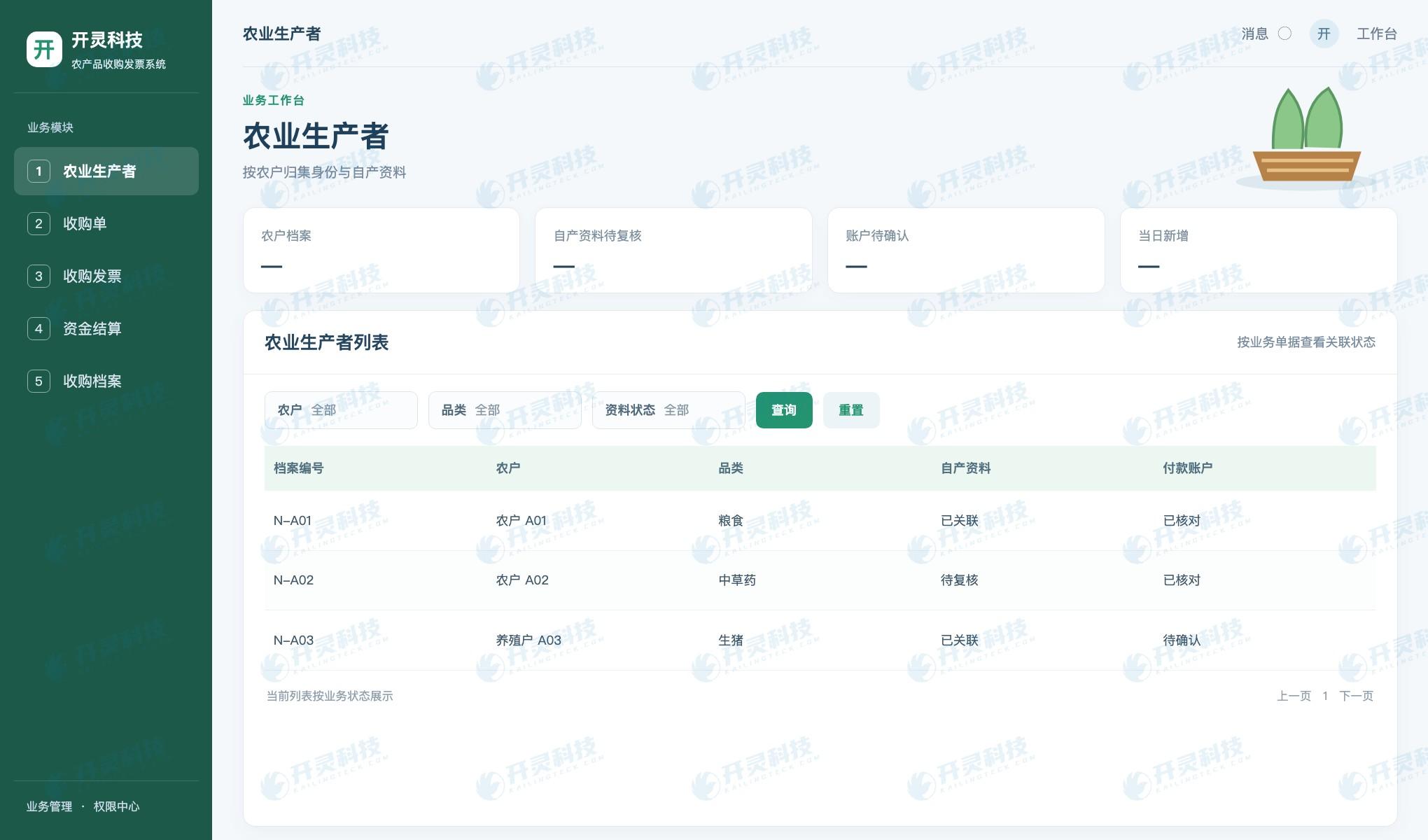
Aquaculture farmer file
▍Acceptance records reflect differences in fresh aquatic products
Scallops and oysters may use different acceptance methods for size, freshness, attachments, and impurities. Purchase points should record weighing, sampling inspection, grade, deductions, and returns, and state the pricing basis used. If only the reported figures from the boat are entered into the invoice, changes in the actual warehoused quantity cannot be explained.
Inspection needs to be completed promptly, but fast does not mean omitting review. For disputed batches, arrival and initial weighing can be registered first, and the settleable weight confirmed after re-weighing or sorting. Each record and confirmer should be retained in the purchase order to avoid leaving only the final value.
A batch of goods may be split into different specifications for sale; the purchase stage should retain the relationship between the original batch and the grading details. Payment and invoicing are based on the confirmed purchase settlement, not back-calculated from downstream sales prices.
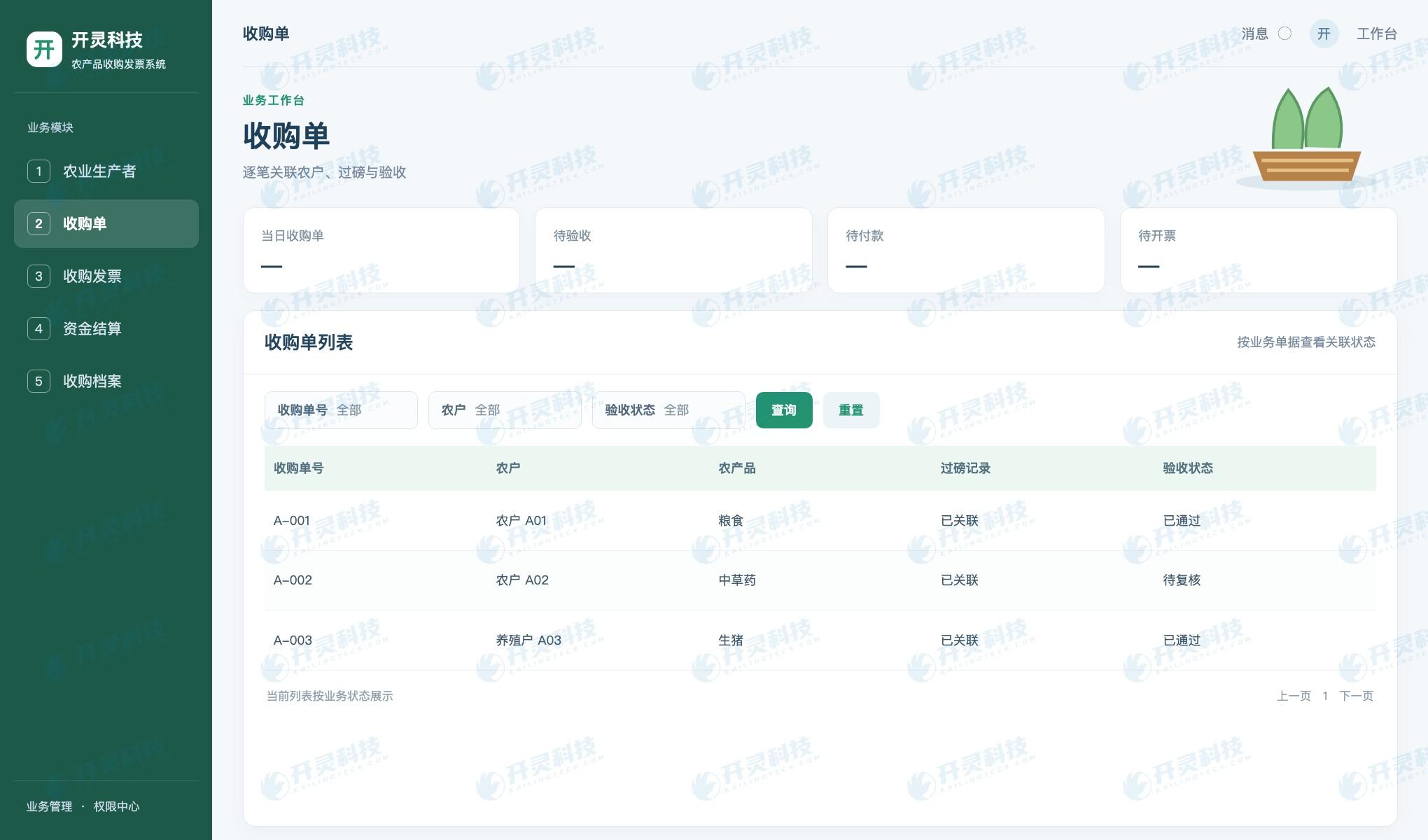
Scallop and oyster purchase acceptance
▍Payments and invoicing aggregated by actual producer
Receiving accounts should be checked against farmer files. If payment is concentrated after receiving goods at sea, the system can summarize pending payments by batch, but bank receipts must be allocable to each producer. Payment failures or account changes should retain confirmation materials, so a batch of goods does not directly become "settled" in the list.
Agricultural product purchase invoices should be issued based on the actual business of purchasing self-produced agricultural products from agricultural producers. The issuer verifies the farmer, category, accepted quantity, and settlement amount, and after the invoice is completed, links the invoice number and electronic file back to the batch. Goods with pending materials or disputed amounts are handled separately.
Kailing Technology's agricultural product purchase reverse invoicing system can enter from an invoice to view acceptance and payment, or from a farmer file to view transactions across different boat trips and categories. This drill-through relationship helps fresh product transactions remain explainable afterward.
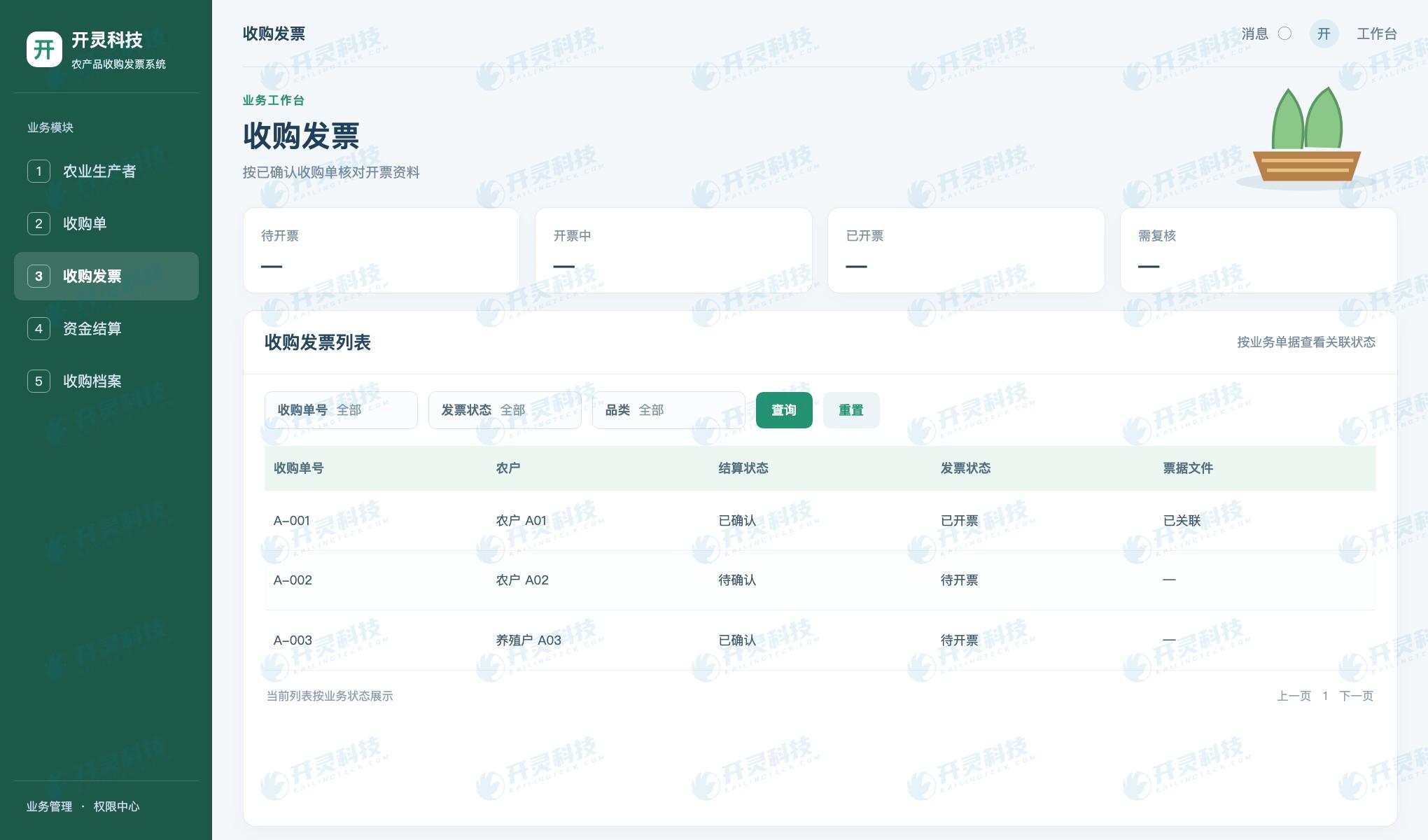
Aquatic product purchase invoice
▍Use port peak scenarios for implementation acceptance
System acceptance can simulate four situations: two households on the same boat, scallops and oysters mixed, impurity deduction after re-weighing, and payment failure for one farmer. Observe whether batch splitting is accurate, whether finance can retry only the failed payment, and whether other confirmed business can continue to be processed.
The stability of on-site networks, weighbridges, and payment platforms should also be included in project checks. When the network is down, first record on-site facts, then supplement the upload after recovery and retain the time and responsible person; do not let backfilling overwrite the original acceptance data.
What the enterprise ultimately needs is a complete purchase file searchable by farmer and batch. The Kailing solution connects rapid receiving with subsequent invoice and payment reconciliation; specific category rules and interface scope are configured and accepted by the purchasing enterprise during implementation.
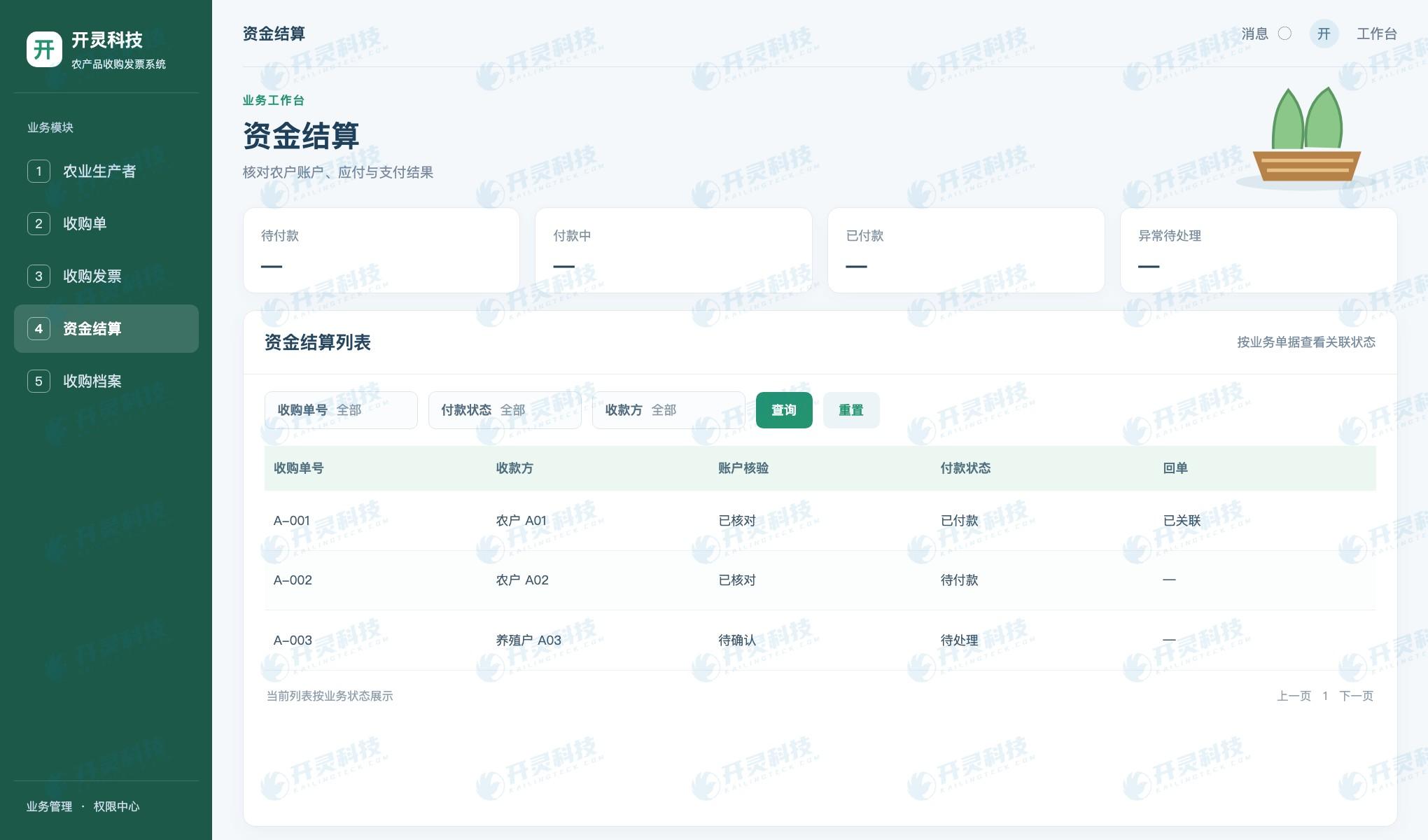
Farmer payment records
▍Time and batch management in fresh product purchases
Shellfish have strong time requirements after landing, so purchasing staff should first record the vessel trip, producer, basket count, and time at handover, then weigh, sample, and grade according to on-site rules. If entries are made later, the difference between the actual occurrence time and the entry time must be preserved. The purchase order status can move from "received" to "inspection completed"; there is no need to force all fields to be filled on site at once.
Multiple households on the same boat and multiple categories under the same household create cross relationships. Trip records record transport facts, farmer files record producers, and purchase batches record a transaction. When scallops and oysters use different acceptance standards, the system stores deduction and settlement bases by category; finance should not combine the two categories into one average unit price before invoicing.
When fresh goods are returned, the sales or warehousing system may already have subsequent records. The enterprise should first confirm which quantities have been inspected and sold and which are only temporarily stored or returned. Payment and invoicing are handled around the confirmed sold portion, and subsequent changes retain the original records and approvals. Only when the business status seen by invoice staff matches the site can temporarily received goods be prevented from being counted in the purchase amount.
After the purchase peak, check unpaid amounts, invoice failures, acceptance disputes, and missing file items by farmer. If a batch is delayed in uploading due to network interruption, the system should have supplementary upload and deduplication mechanisms to prevent one batch of goods from generating two purchase orders. Kailing Technology's solution links these results to batches, helping enterprises review each transaction even after rapid trading.
▍Enable different port sites to adopt the same aggregation standard
Multiple purchase points may use different scales, grading names, and temporary storage methods. Headquarters should unify farmer numbers, shellfish categories, purchase order status, and invoice-payment linkage fields, while allowing sites to record actual acceptance differences. If the same oyster uses different names at two sites, there should be mapping and review before finance summarizes.
During project implementation, one scallop site and one oyster site can be selected for trial operation to check vessel trip splitting, impurity deductions, payment, and invoicing separately. After problems are found, modify fields and training materials, then roll out to other sites. In this way, when scale increases, original inspections can still be traced by farmer and batch without relying on the few employees familiar with local operations.
When a farmer disputes the settlement quantity, the site can open the weighing and impurity deduction basis for the batch on site and explain the actual acceptance criteria for scallops or oysters. The disputed portion is temporarily excluded from the confirmed amount, while other batches can still be processed. The handling conclusion and confirmation time remain on the original batch.
▍FAQ
Q: How to issue invoices for shellfish from multiple farmers delivered on the same ship?
A: Split the purchase details by actual producer, use the voyage as a transport link, and have invoices correspond to their respective transactions.
Q: How to handle re-weighing differences caused by mud in scallops?
A: Retain the initial weighing, re-weighing, deduction reasons, and the settlement result confirmed by both parties.
Q: Can purchase invoices be issued to farmers when aquatic products are purchased through traders?
A: The actual transaction counterparty and invoice path should be identified; indirect purchases must not be recorded as direct purchases from agricultural producers.
Q: When multiple households are on the same ship, is it acceptable to save only the voyage and total weight?
A: Voyage and total weight only indicate transport and overall arrival, not how much each farmer sold. Split scallops, oysters, and other categories and acceptance quantities by actual producer, then settle separately. Retain the voyage as a common link; subsequent payments and purchase invoices still need to return to each household's and each batch's transaction records.
Q: How to handle weight changes after acceptance of fresh goods?
A: First distinguish causes such as re-weighing, draining, grading, returns, and storage loss, and record the time of occurrence, responsible position, and the result confirmed by both parties. If the change affects an already confirmed purchase amount, check the payment and invoice status before making adjustments. The system retains the initial arrival quantity and the final settleable quantity so finance can explain the difference.
Visit Kailing Technology to learn about related products and implementation plans: https://www.kailingteck.com/fxncp/ .
As a national high-tech enterprise, Kailing Technology focuses on the digital and intelligent transformation of enterprise business-finance-tax and operations management, providing software products, system integration, implementation and delivery, and operational services for various government agencies, institutions, group enterprises, and SMEs.
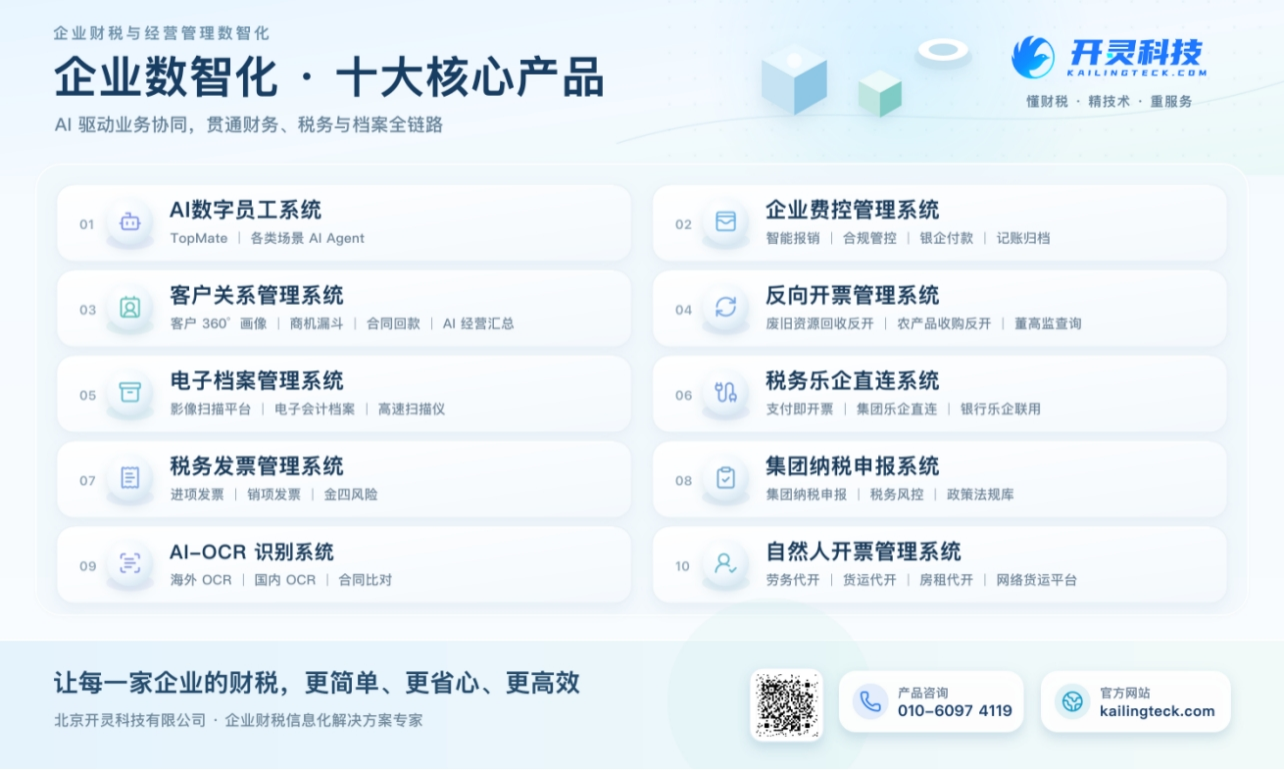
The company has now formed ten core product lines, including: AI digital employee system, enterprise expense control management system, customer relationship management system, reverse invoicing management system, invoice issuance for individuals management system, electronic archives management system, tax fully digitalized e-invoice Leqi system, tax invoice management system, group tax filing system, and AI OCR recognition system. It is committed to connecting enterprise business, finance, tax, funds, and archive data to help customers improve operational efficiency, business-finance-tax compliance capabilities, and digital management levels.
If you have any business-finance-tax digital transformation needs, welcome to contact us. Beijing Kailing Technology will serve you wholeheartedly.
Keywords: Aquatic product purchase invoice, scallop and oyster aquaculture, agricultural product acceptance and payment, Kailing Technology agricultural product purchase reverse invoicing system
As a comprehensive business-finance-tax digitalization solution service provider, Kailing Technology provides business-finance-tax management digital transformation products and operational services for various government agencies, institutions, and large, medium, and small enterprises. The product line includes: solutions for sales contract management system, procurement contract management system, fully digitalized Leqi interface project, automatic output invoicing system, reverse invoicing system, invoice issuance for individuals system, employee expense control and reimbursement system, input VAT invoice management system, supply chain collaborative reconciliation system, image AI OCR recognition system, automatic financial bookkeeping system, electronic accounting archives system, etc., comprehensively driving the digitalization process across various fields.
Consultation Hotline: 18513895936 / 010-60974119 Location: Beijing