
How do resource recycling and agricultural product purchasing enterprises connect to the Leqi integrated use? The Kailing Technology pay-and-invoice solution connects to bank payment platforms, where online payment triggers invoicing
Receipt happens in the enterprise system, payment on the bank platform, and invoicing in the tax channel, each with its own number. For an enterprise to trigger invoicing after online payment, the prerequisite is confirming the partner platform's role, how transaction data is generated, and the result return path. The Kailing Technology payment-triggers-invoicing solution connects to banks or payment platforms with the corresponding capabilities, linking purchase orders, funds, and invoice results.

▍First clarify what each of the three parties does
In Leqi joint use, qualified direct-connection entities provide tax-related services to user entities. Resource recycling or agricultural product procurement enterprises choose banks, payment institutions, and other platforms that have opened the corresponding business capabilities, and accept invitations and confirm becoming user entities according to the process. Kailing Technology designs the integration plan for enterprises and implements the interfaces between business systems and partner platforms.
The enterprise system is responsible for farmer or individual profiles, receiving, acceptance, settlement, and internal review; the partner platform handles online transactions, payments, and tax-related linkage according to its actual available capabilities; tax results are returned to the enterprise business ledger. The three parties' numbers and statuses should correspond to each other; it is not enough to show only a "payment successful" notice.
The invoicing basis for resource recycling and agricultural product purchases differs. The former is handled under the reverse invoicing policy for natural-person sellers of scrapped products; the latter verifies the conditions for purchase invoices for self-produced agricultural products of agricultural producers. The platform can use similar payment-trigger technology, but business eligibility and invoice definitions still need separate configuration.
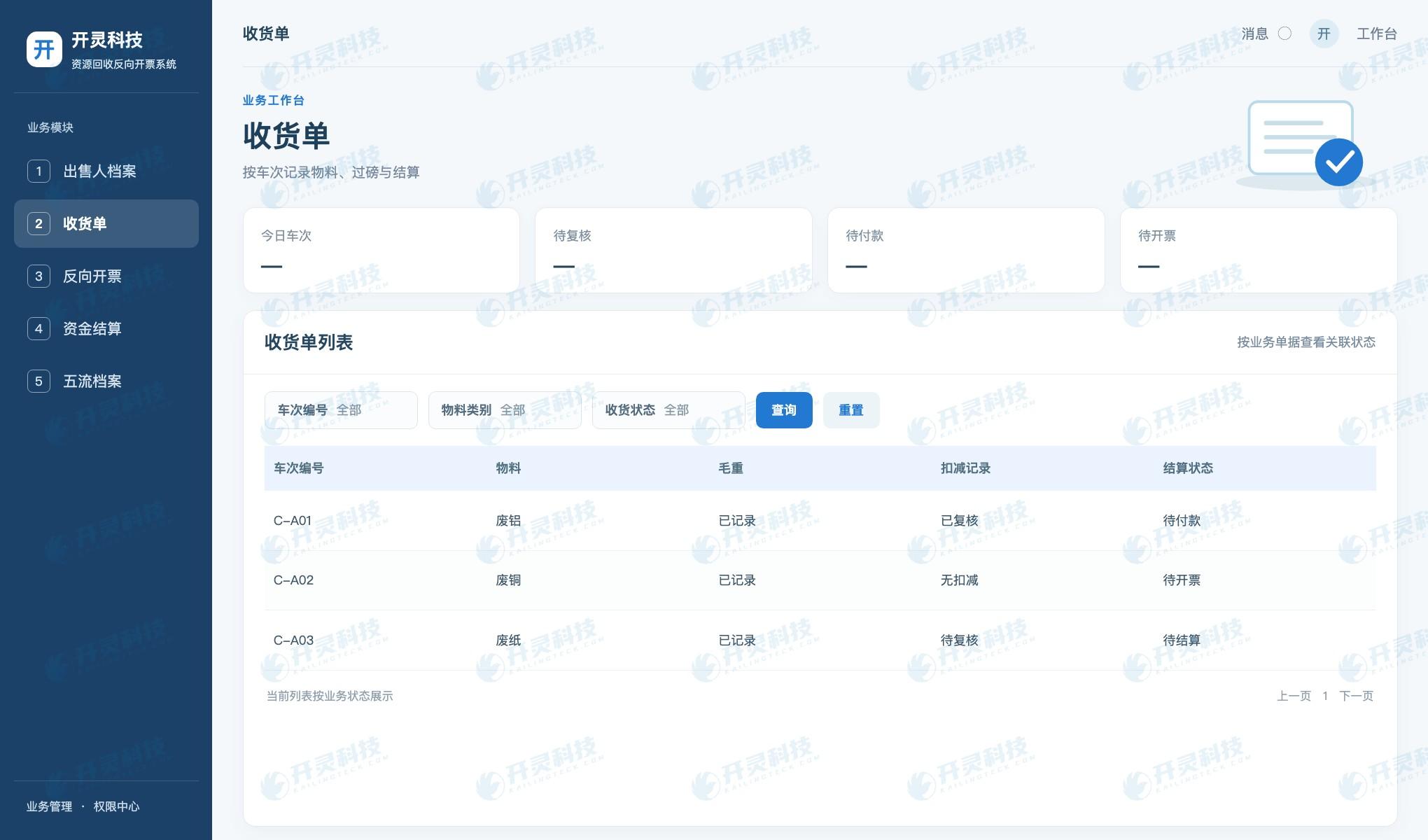
Resource recycling receipt and settlement
▍Before payment triggers, the original transaction data must be complete
After a resource recycling enterprise confirms the goods name, quantity, price, and seller, it transmits the transaction information according to the partner platform's interface requirements. Agricultural product enterprises also need to match farmers' self-production materials, weighing or inspection records with purchase orders. The platform side must form original transaction or fund receipt/payment data in its own information system to support the corresponding linkage.
Online payment cannot bypass payee account verification. Enterprises should ensure that the actual seller, payee, and confirmed settlement are consistent; delivery on behalf of others, combined payments, and partial payments require additional linkage. Documents lacking identity, lacking inspection, or with unconfirmed settlement should first be held at the enterprise review stage.
The interface plan should first define document number mapping, field formats, duplicate request handling, and cancellation mechanisms. Enterprise business numbers, platform transaction numbers, bank payment references, and invoice numbers are each independent; only with well-designed correlation keys can it later be explained which invoice a payment triggered.
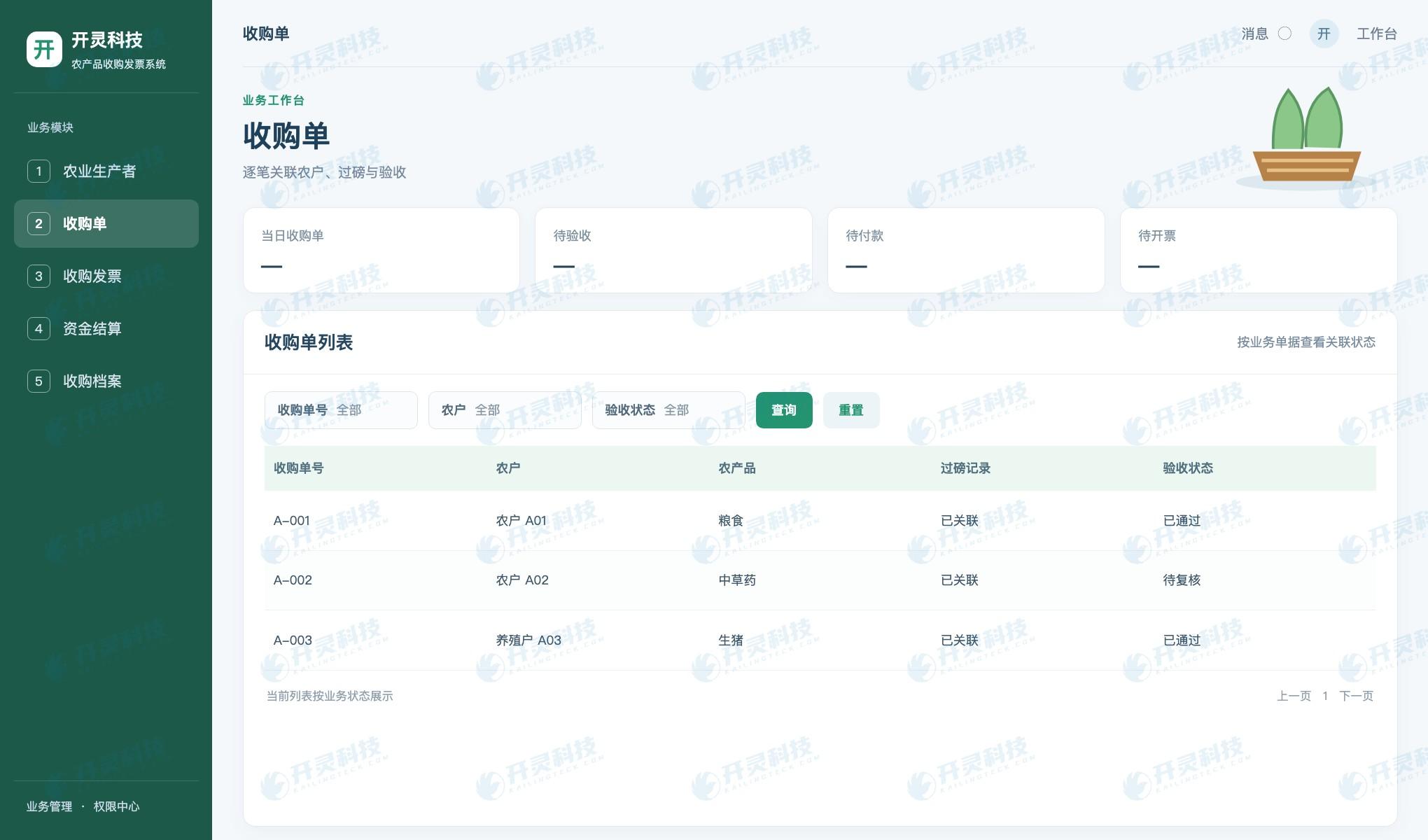
Agricultural product purchase orders and acceptance
▍Check invoices and exceptions after successful payment
A payment request being accepted, the bank actually completing payment, and the invoice being successfully issued are different statuses. If the platform triggers invoicing after the payment action, each result should be returned to the enterprise, rather than using a single "completed" to conceal intermediate failures. Steps requiring confirmation by individuals or farmers should also follow the actual process of the partner platform.
The specific pre-filling, tax payment, and invoice upload steps for resource recycling three-flows-in-one reverse invoicing are subject to the processes opened by the partner platform and the competent tax authority. Agricultural product payment-triggers-invoicing has been practiced in some regions, and projects need to confirm local invoice types, platforms, and farmer operation requirements. Enterprises cannot directly copy one region's handling process to all sites.
When payment failure, return, duplicate callback, or invoicing failure occurs, it should be possible to locate the original purchase order by platform transaction number and decide whether to retry, handle manually, or cancel. The system should also retain the original request, callback, and handler so that every status change is visible during financial reconciliation.
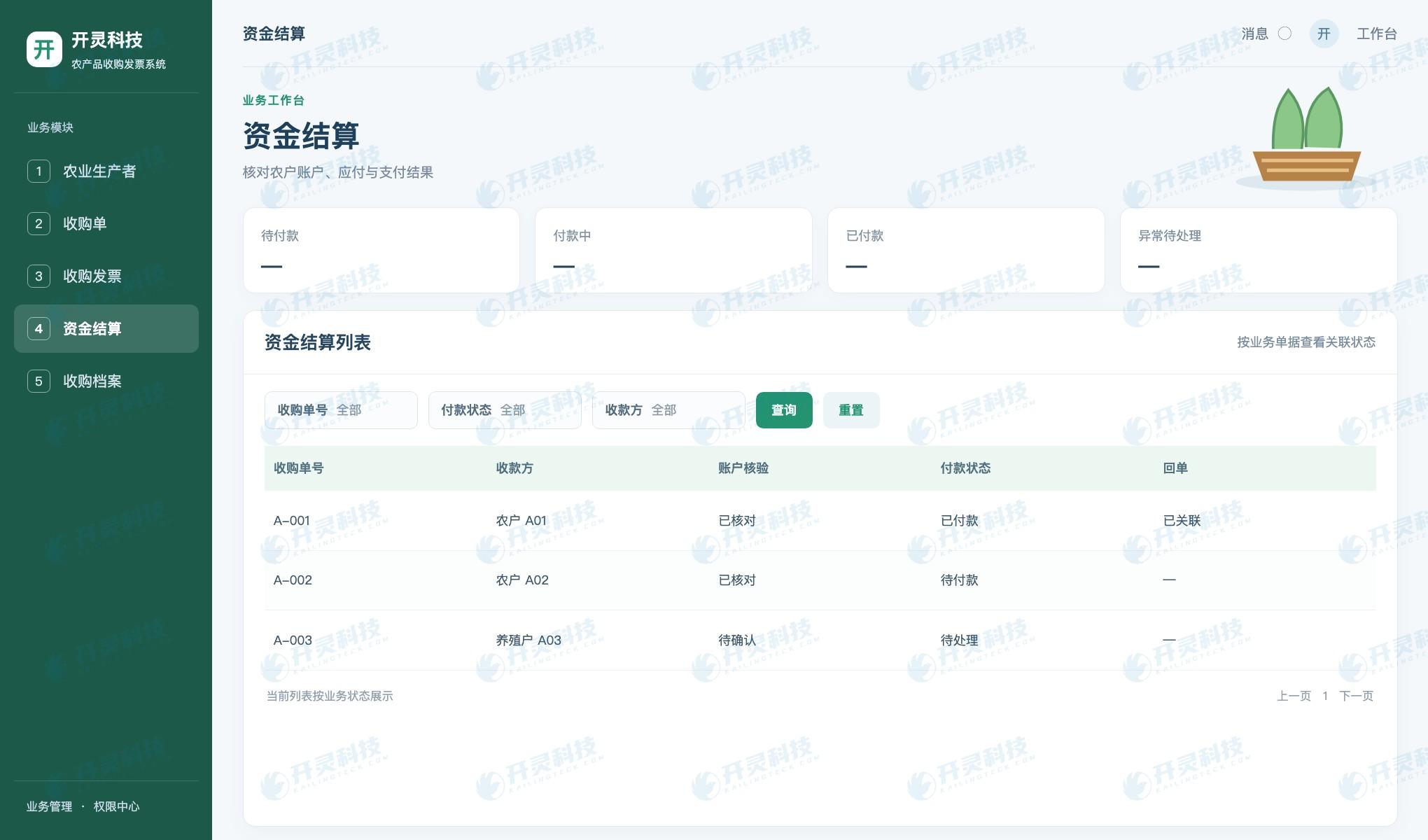
Online payment and result return
▍Accept the integration through sample-based joint testing
First select five types of samples: normal payment, account mismatch, partial payment, payment successful but invoicing failed, and duplicate callback. Business, cashier, tax, and technical personnel should jointly check the enterprise system, partner platform, and bank results, and not replace full-chain acceptance with the success status on a single side's page.
Resource recycling samples focus on verifying individual sellers, scrapped product delivery notes, tax payment and reverse invoices; agricultural product samples focus on verifying self-producing farmers, acceptance and purchasing invoices. The two businesses use different validation rules, but both must be able to trace back from the invoice to the original transaction and payment result.
The implementation sequence of the Kailing Technology payment-with-invoicing solution is to first confirm platform capabilities and enterprise qualifications, then connect fields and statuses, and finally verify with exception samples. Only in this way can manual transcription be reduced after integration while retaining reviewable business materials.
▍The interface integration checklist must be implemented down to document fields
When an enterprise and a partner platform start integration, first determine the mapping of natural person or farmer identity fields, enterprise entity, purchase order number, goods details, amount, receiving account, and business time. Which fields are generated by the enterprise, which by the platform, and which are returned by bank or tax results should be written into the same interface checklist. If field names are the same but meanings differ, resolve this during joint testing and do not leave it for finance to guess at month-end.
For resource recycling transactions, check the scrap product category, seller consent, receiving settlement, and the tax payment confirmation status required by the platform. For agricultural product transactions, check the producer's self-produced materials, acceptance, and purchase invoice elements. The two configurations share the technical foundation for identity, payment, and result return, but they must not share a single "individual invoice type" switch in business rules.
Callback design must handle duplicate results sent by the platform, enterprise network interruptions, and late-arriving bank receipts. Each request should use a unique business identifier, and processed callbacks should not repeatedly generate invoices or payment statuses; failed tasks should enter a viewable pending list. Cashiers, invoicing clerks, and technical personnel should each be able to see the error reasons they need.
Project acceptance is not just about getting one normal transaction to run through; a three-party reconciliation report must also be checked. If the enterprise's payable amount, platform transaction status, bank result and total tax invoice amount are inconsistent, it should be possible to break it down to a single purchase order for explanation. The Kailing Technology solution helps enterprises establish this return and verification mechanism, and the same interface standard is used when expanding to new sites later.
▍FAQ
Q: Does payment guarantee successful invoicing?
A: Payment and invoicing each have their own status; on failure, the reason should be recorded and handled.
Q: Can all bank platforms provide pay-and-invoice for agricultural products?
A: It is necessary to confirm whether the partner platform has opened the corresponding invoice type, business region, and user entity onboarding process. Enterprises should also verify farmer real-name information, self-production documentation, purchase order fields, and the payment result return method.
Q: If platform payment succeeds but invoicing fails, how is it shown in the enterprise's books?
A: Bank payment success and invoice failure should be displayed separately, recording the platform transaction number, failure reason, and handler. Finance should reissue, retry, or handle manually according to the partner platform's process, and must not directly change "paid" to "fully completed." When the invoice later succeeds, link it back to the original purchase order and payment result to ensure the reconciliation chain is not broken.
Visit Kailing Technology to learn about related products and implementation plans: www.kailingteck.com .
As a national high-tech enterprise, Kailing Technology focuses on the digital and intelligent transformation of enterprise business-finance-tax and operations management, providing software products, system integration, implementation and delivery, and operational services for various government agencies, institutions, group enterprises, and SMEs.
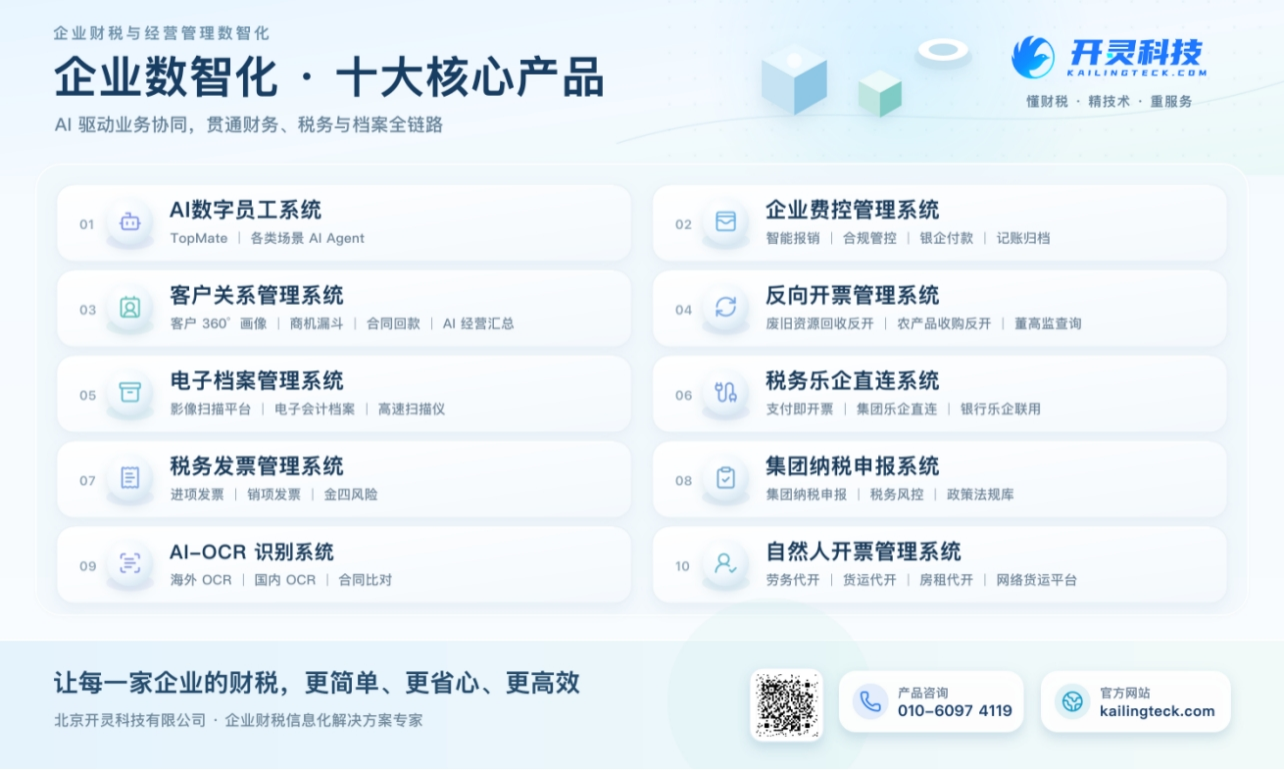
The company has now formed ten core product lines, including: AI digital employee system, enterprise expense control management system, customer relationship management system, reverse invoicing management system, invoice issuance for individuals management system, electronic archives management system, tax fully digitalized e-invoice Leqi system, tax invoice management system, group tax filing system, and AI OCR recognition system. It is committed to connecting enterprise business, finance, tax, funds, and archive data to help customers improve operational efficiency, business-finance-tax compliance capabilities, and digital management levels.
If you have any business-finance-tax digital transformation needs, welcome to contact us. Beijing Kailing Technology will serve you wholeheartedly.
Keywords: Leqi joint use, pay-and-invoice, resource recycling reverse invoicing, agricultural product purchase invoice, Kailing Technology
As a comprehensive business-finance-tax digitalization solution service provider, Kailing Technology provides business-finance-tax management digital transformation products and operational services for various government agencies, institutions, and large, medium, and small enterprises. The product line includes: solutions for sales contract management system, procurement contract management system, fully digitalized Leqi interface project, automatic output invoicing system, reverse invoicing system, invoice issuance for individuals system, employee expense control and reimbursement system, input VAT invoice management system, supply chain collaborative reconciliation system, image AI OCR recognition system, automatic financial bookkeeping system, electronic accounting archives system, etc., comprehensively driving the digitalization process across various fields.
Consultation Hotline: 18513895936 / 010-60974119 Location: Beijing