
What should B2B companies do when they don't know whom to promote their products to? Kailing Technology's marketing system building service defines target customers, and the AI CRM system captures business opportunities
A product can solve many problems, but promotional messaging can only be seen by a few potential customers. If an enterprise counts "all manufacturing" and "all medium and large companies" as target customers, sales still has to re-screen after receiving leads. Kailing Technology's marketing system building service divides target customers by real purchasing scenarios, then uses the AI-CRM system to record the needs and opportunity outcomes of each customer type.

▍Use purchase triggers to narrow the target market
Target customers are not just industry labels. Enterprises should also describe why customers start procurement at this time: establishing a new branch, system replacement, changes in compliance rules, business growth, or a process that has long relied on manual work. The clearer the trigger event, the better marketing content can answer current questions.
When analyzing existing customers, look not only at the won-deal list, but also at implementation difficulty, sales cycle, and subsequent usage. Although an industry may have many inquiries, if demand deviates from the product scope, you should not keep investing just because the form count is large. Kailing Technology's service writes both fit and non-fit conditions into the customer profile.
Procurement is often decided jointly by multiple roles. Business owners care about process changes, finance cares about vouchers and costs, and IT cares about interfaces and permissions. The target customer profile should list key roles and their frequently asked questions, helping content and sales use the same set of descriptions.
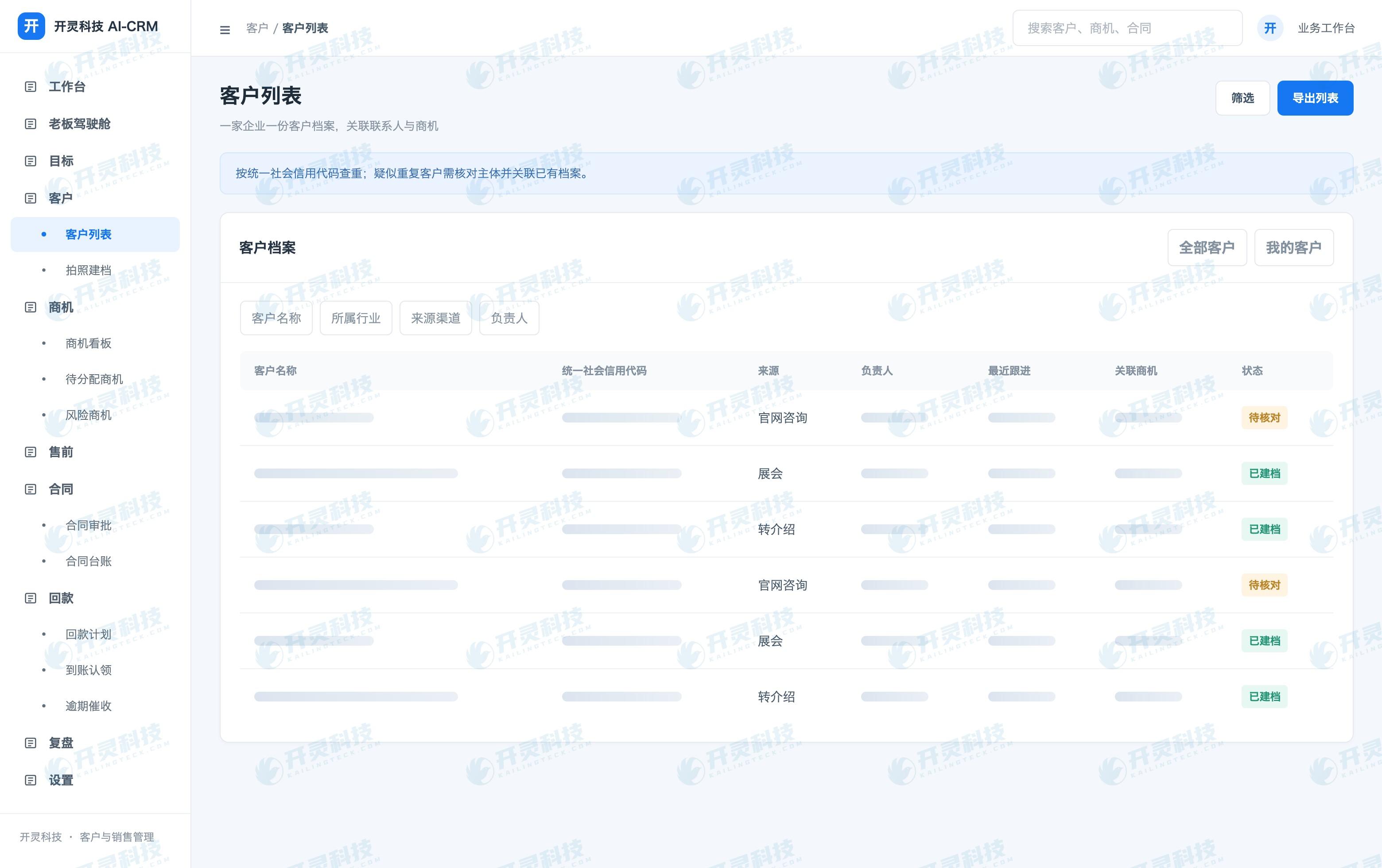
Customer industry and source information
▍Turn the profile into executable promotional content
After defining the target, write a specific problem page for each type of customer: where the current process is stuck, which documents need to be retained, and how the system can be embedded into existing business. The official website, search content, and industry events do not need to repeat the same introduction; instead, they should correspond to different purchasing stages.
Early-stage customers need to understand the problem and the solution path, while customers entering selection need features, implementation boundaries, and acceptance methods. If all pages only leave "Contact Us," customers cannot judge whether the solution applies. Marketing can ask through the consultation entry about industry, existing systems, and the most urgent pain points, reducing wasted effort in the first sales conversation.
During small-scale testing, set up one group of keywords and content topics for each sub-industry, and record whether inquiries from target roles appear after visits. Do not confirm the persona based on the heat of a single campaign; validate it at least with follow-up sales conversations.
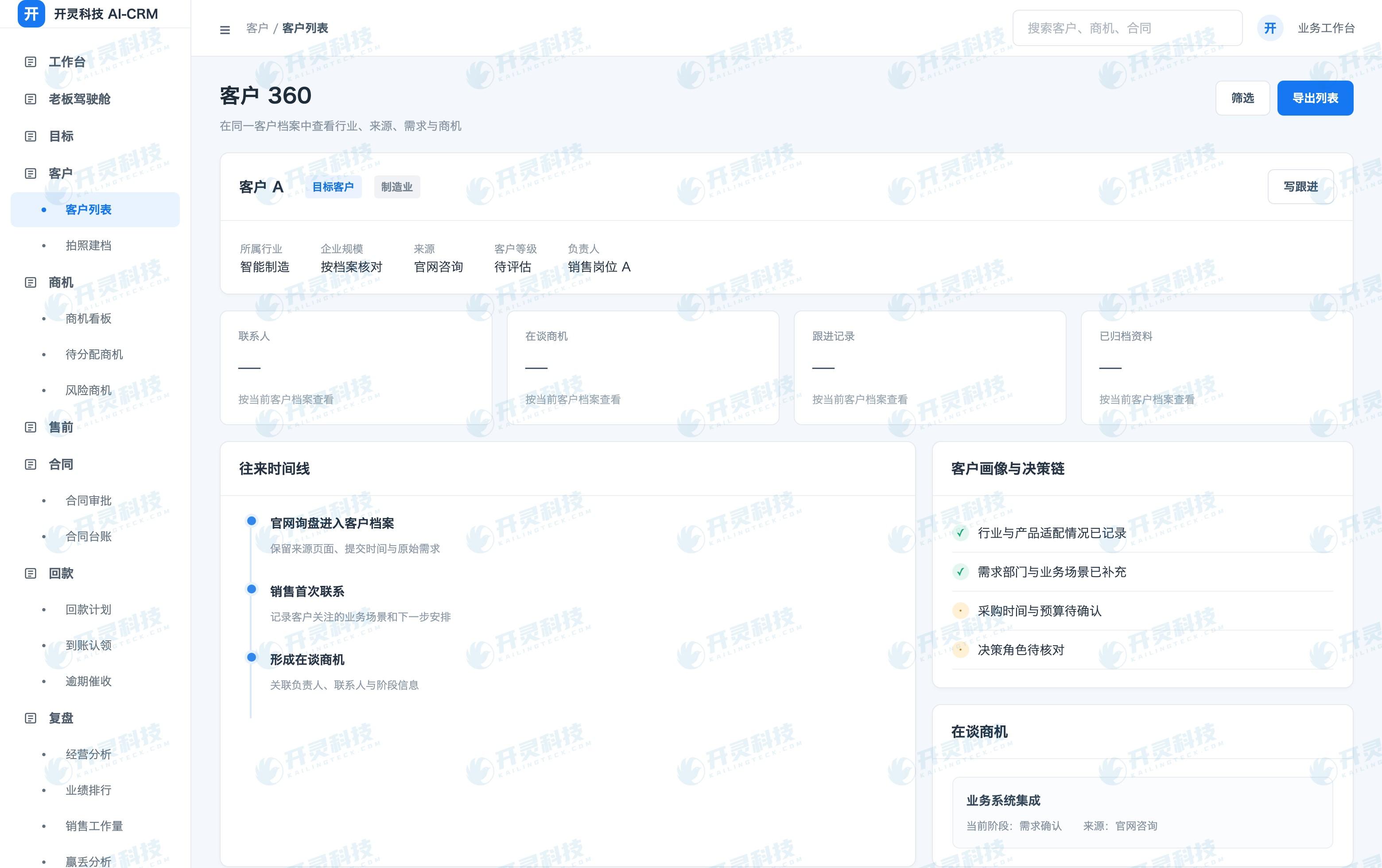
Customer profile, demand, and decision information
▍AI-CRM records customer types and opportunity progress
After new leads enter AI-CRM, industry, scale, business scenario, trigger event, source channel, and owner should be retained. Enterprise customers are deduplicated by unified information, and different contacts at the same company can be grouped under the same record; sales then records the current decision-making role and next step.
Opportunity stages should have actual verification items, such as whether demand is confirmed, whether key people have been contacted, and whether the solution has been evaluated. The system's opportunity board can show progress by source and stage, preventing marketing from only knowing "there are inquiries" but not "why no deal was closed."
Lost deals or long-term stagnation are not only a sales execution problem; they may also indicate that the customer profile is too broad. Recording the reasons for lost deals, budget gaps, difficulty of competitor replacement, and implementation concerns in a structured way gives the next round of investment a clear basis for correction.
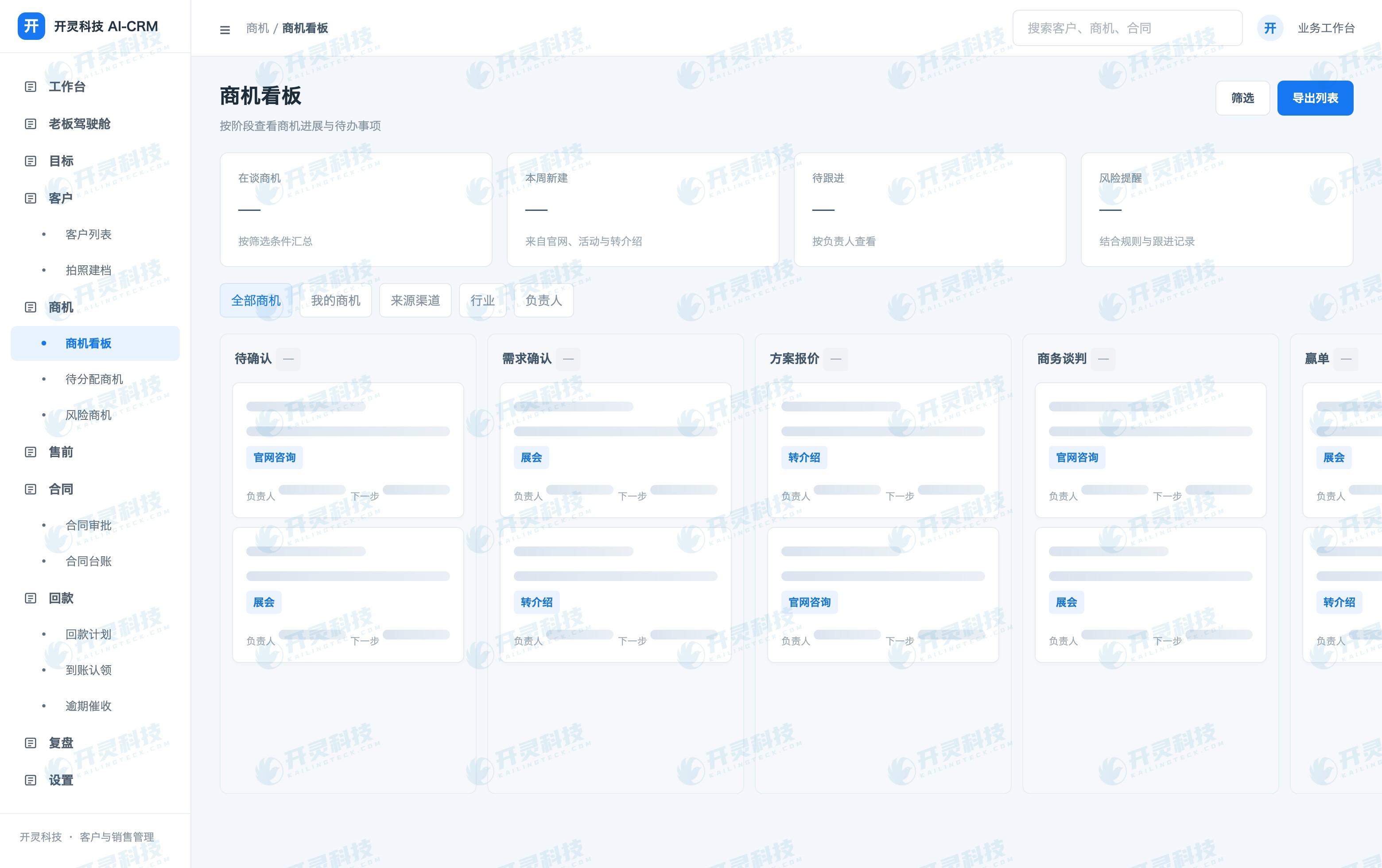
Opportunity stage and source filtering
▍Update the profile with each round of promotion
Each quarter, you can sample one group each of won deals, lost deals, and customers still in progress, and compare industry, trigger point, participating roles, and closing obstacles. If a certain type of customer always requires customization beyond the current product scope, adjust content commitments or choose a new sub-market.
Kailing Technology's marketing system building service, combined with the AI-CRM system, can turn the judgment of "whom to promote to" into continuous review, rather than a persona file that is written once and never changes.
The team first selects the sub-customer group most likely to buy, and completes the closed loop of pages, lead allocation, and sales feedback. After confirming opportunity quality, replicate to the second customer group, so promotion investment is easier to explain.
▍Let the customer profile undergo field testing by sales
The marketing department can validate the persona through follow-up visits with recently closed customers: who first raised the need, when they decided to look for a system, which alternatives they evaluated, and why procurement ultimately moved forward. Sales can then pick several clearly unsuitable leads and point out which characteristics could have been identified at the form stage. The screening criteria formed this way can guide actual promotion better than a "major account persona" drawn from industry reports.
The persona should not only say "willing to digitalize." Business triggers should be written as observable signs, such as adding multiple sites, needing to replace an old system, a sharp increase in invoice volume, or excessively long manual reconciliation time. Marketing content raises questions and solution paths corresponding to these signs, making it easier for customers to judge whether the solution is relevant.
AI-CRM can put customer tags, sources, demand topics, and opportunity outcomes together. If a certain type of customer repeatedly asks about the same interface but is slow to enter solution evaluation, it may be that technical concerns have not been answered; if another type of customer advances quickly, similar content can be increased. Sales feedback keeps the profile updated rather than frozen at the conclusion of a single meeting.
The prioritization of target customer groups should also consider the enterprise's delivery capability. A type of demand may look large but require extensive customization or a lengthy procurement process, and may not be suitable as the main investment direction for this quarter. Kailing Technology services plan marketing investment together with product capability and sales resources, then test the choice with opportunity data.
▍Write target customer conditions as judgment questions usable by sales
In the first sales conversation, record around four questions: how the customer currently handles this business, what has changed recently, who will participate in the decision, and what limitations the existing system has. The answers help determine whether to enter the opportunity, what type of content support is needed, and when to follow up. The customer profile thus becomes a basis for action rather than a poster from the marketing department.
If an industry has a considerable number of leads but often gets stuck at interfaces or delivery scope, the marketing team should adjust page commitments and screening questions. AI-CRM saves feedback for each opportunity, and marketing compares the progress speed and common obstacles of different customer groups monthly, gradually tightening or expanding the target scope.
After the persona is adjusted, the sales lead qualification criteria must be updated accordingly. If marketing lists a new customer group as a priority while sales still filters by old regions or old scale, valuable inquiries will be excluded. Kailing Technology services can organize both sides to confirm fields, assignment rules, and follow-up scripts, then observe opportunity results.
▍FAQ
Q: Is it enough to write only industry and size in a customer profile?
A: It should also describe the purchase trigger, key roles, existing systems, suitability conditions, and main concerns.
Q: How do you determine that promotion is targeting the wrong people?
A: Look at the match between the inquiring enterprise and the target profile, as well as the specific reasons why opportunities stall or are lost.
Q: Can CRM automatically decide the target market?
A: CRM captures facts about customers and opportunities; target selection requires combining sales and market analysis.
Q: With very few existing customers, how do you create the first version of a target customer profile?
A: Start from the specific problems the product has solved and its delivery boundaries, interview sales and implementation staff, then choose one sub-industry for a small-scale test. Record the job roles, trigger events, and common objections of inquiring customers into AI-CRM, and use actual conversations to correct assumptions. There is no need to wait for a very large sample to begin, but the first version of the profile should not be treated as a definitive conclusion.
Q: Can "having a budget" be used as the only screening condition?
A: Budget is important, but it cannot replace business fit. A customer may have sufficient budget but purchasing needs that do not match the product, or may not yet have a project but be at an obvious business change point. Urgency of the problem, decision-making roles, existing systems, and implementation scope should be considered together, and content and sales actions should be arranged by stage.
Visit Kailing Technology to learn about related products and implementation plans: www.kailingteck.com .
As a national high-tech enterprise, Kailing Technology focuses on the digital and intelligent transformation of enterprise business-finance-tax and operations management, providing software products, system integration, implementation and delivery, and operational services for various government agencies, institutions, group enterprises, and SMEs.
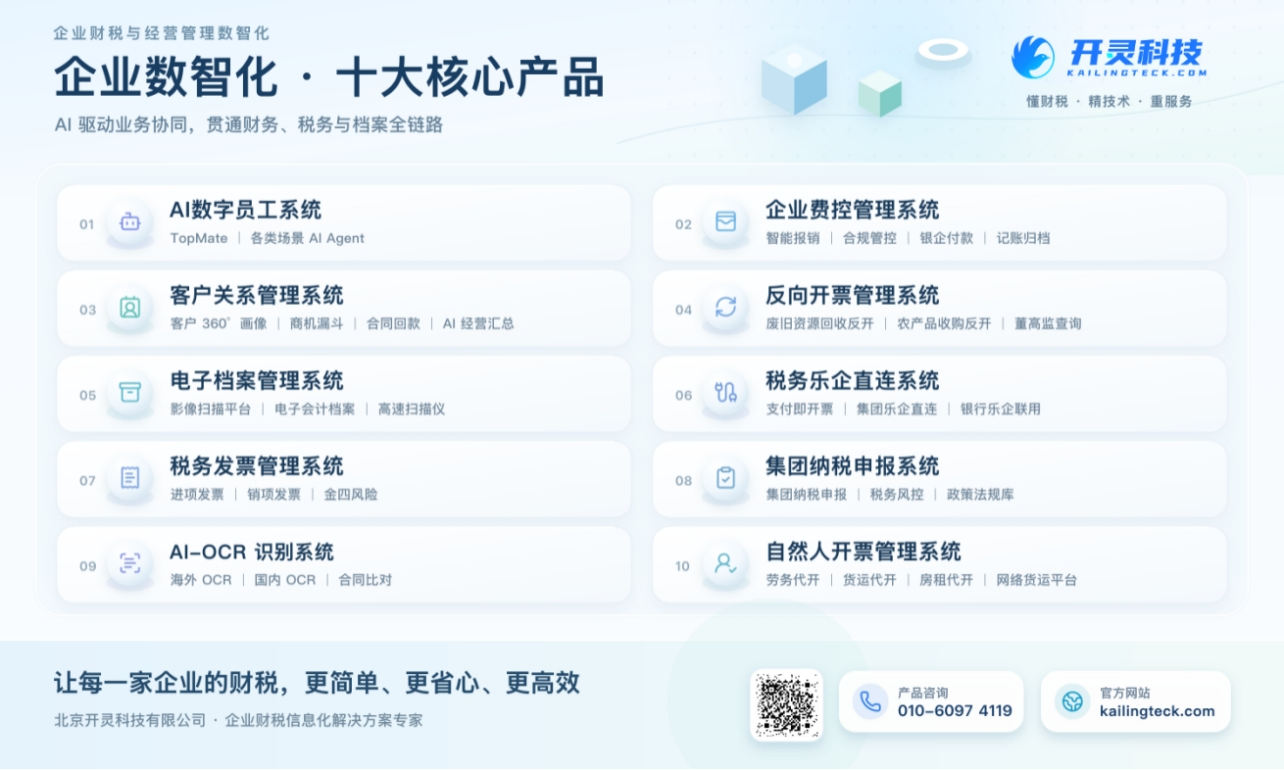
The company has now formed ten core product lines, including: AI digital employee system, enterprise expense control management system, customer relationship management system, reverse invoicing management system, invoice issuance for individuals management system, electronic archives management system, tax fully digitalized e-invoice Leqi system, tax invoice management system, group tax filing system, and AI OCR recognition system. It is committed to connecting enterprise business, finance, tax, funds, and archive data to help customers improve operational efficiency, business-finance-tax compliance capabilities, and digital management levels.
If you have any business-finance-tax digital transformation needs, welcome to contact us. Beijing Kailing Technology will serve you wholeheartedly.
Keywords: B2B target customer profiles, marketing system building, AI-CRM opportunity management, Kailing Technology
As a comprehensive business-finance-tax digitalization solution service provider, Kailing Technology provides business-finance-tax management digital transformation products and operational services for various government agencies, institutions, and large, medium, and small enterprises. The product line includes: solutions for sales contract management system, procurement contract management system, fully digitalized Leqi interface project, automatic output invoicing system, reverse invoicing system, invoice issuance for individuals system, employee expense control and reimbursement system, input VAT invoice management system, supply chain collaborative reconciliation system, image AI OCR recognition system, automatic financial bookkeeping system, electronic accounting archives system, etc., comprehensively driving the digitalization process across various fields.
Consultation Hotline: 18513895936 / 010-60974119 Location: Beijing