
How to invoice when purchasing farmers' self-produced Chinese medicinal herbs? The Kailing Technology agricultural product purchase reverse invoicing system collects acceptance, self-production materials, and payment by order
Chinese herbal medicines may go through harvesting, drying, grading, and entrusted delivery from the planting site to the purchasing point. Arrival product names may be similar, but the actual producer and the deliverer may differ. Kailing Technology's agricultural product purchase reverse invoicing system consolidates farmer identity, self-production materials, acceptance, settlement, and payment for each purchase order, making it easier for finance to determine how the purchase invoice should be issued for that transaction.
▍First confirm the category and self-production attribute
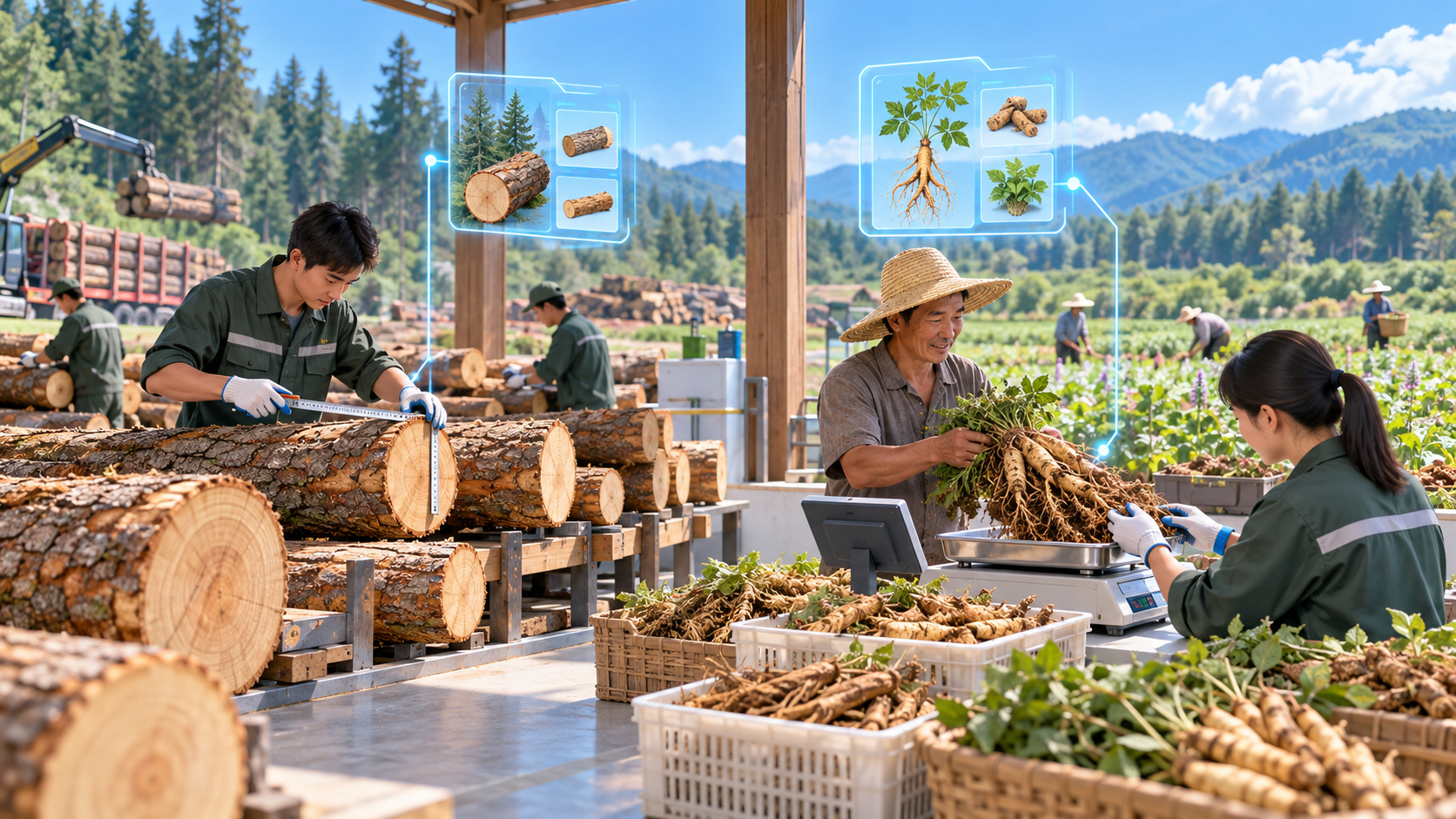
The core of a Chinese herbal medicine purchase invoice is not whether the herb name is common, but whether the specific transaction constitutes purchasing self-produced agricultural products from agricultural producers. Materials grown and harvested by farmers and materials resold from the market should be separated during file creation and goods receipt. The primary processing state of different herbs also needs to be judged based on the actual item and applicable policy.
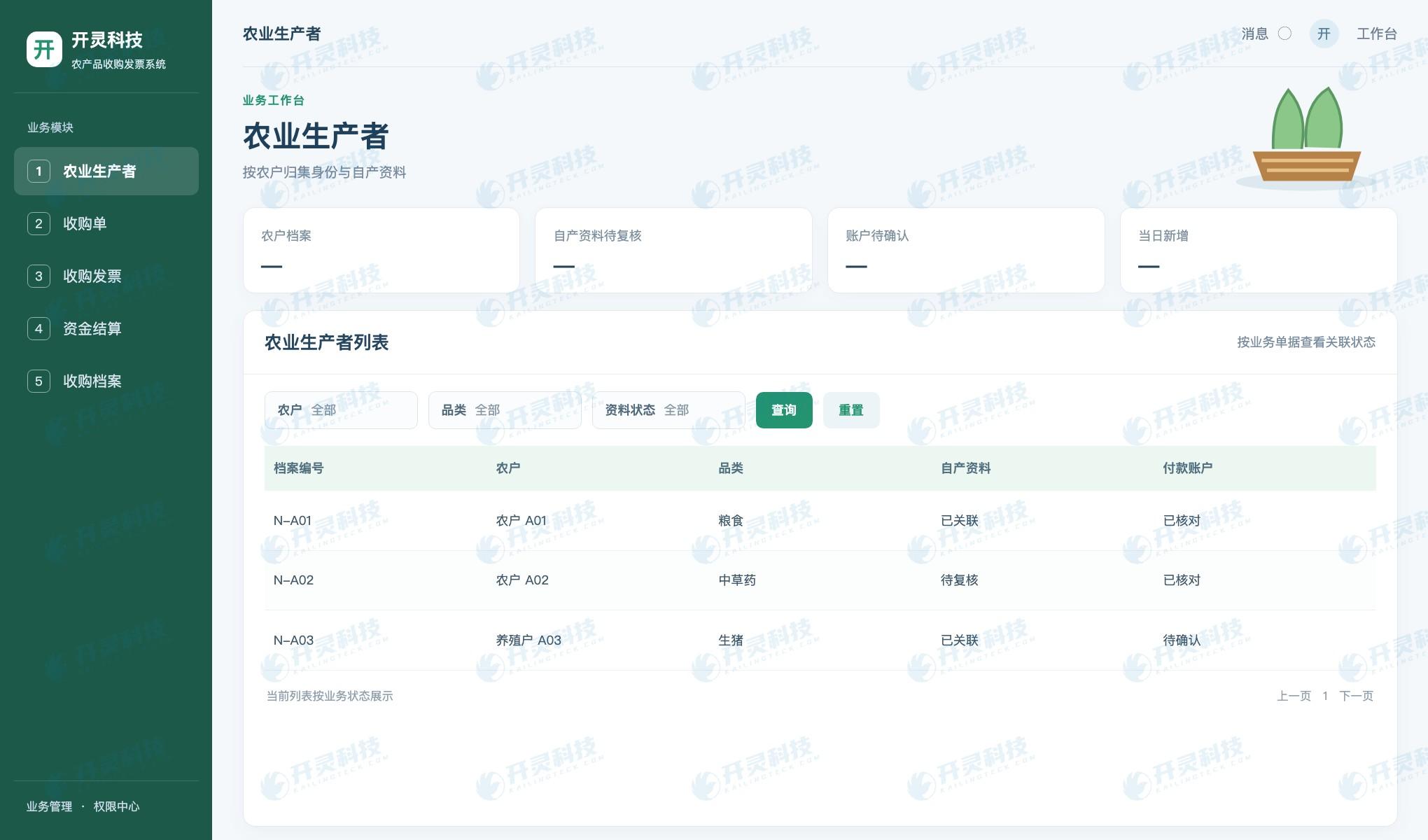
Farmer profiles can record the planting site, planting category, self-production statement, and necessary related materials. When delivery is entrusted to another person, the deliverer's information should be listed separately and cannot replace the self-producing farmer's identity. If farmer materials expire or the actual purchased category exceeds the registered scope, recheck before invoicing.
The Kailing Technology system can flag missing materials before a purchase order is created, making it easier for business staff to complete them on site. The system showing "materials uploaded" only means the files exist; someone still needs to check whether the materials correspond to this batch of medicinal herbs, the grower, and the transaction period.
Chinese herbal medicine growers and self-production materials
▍Acceptance records should reflect the actual state of the medicinal materials
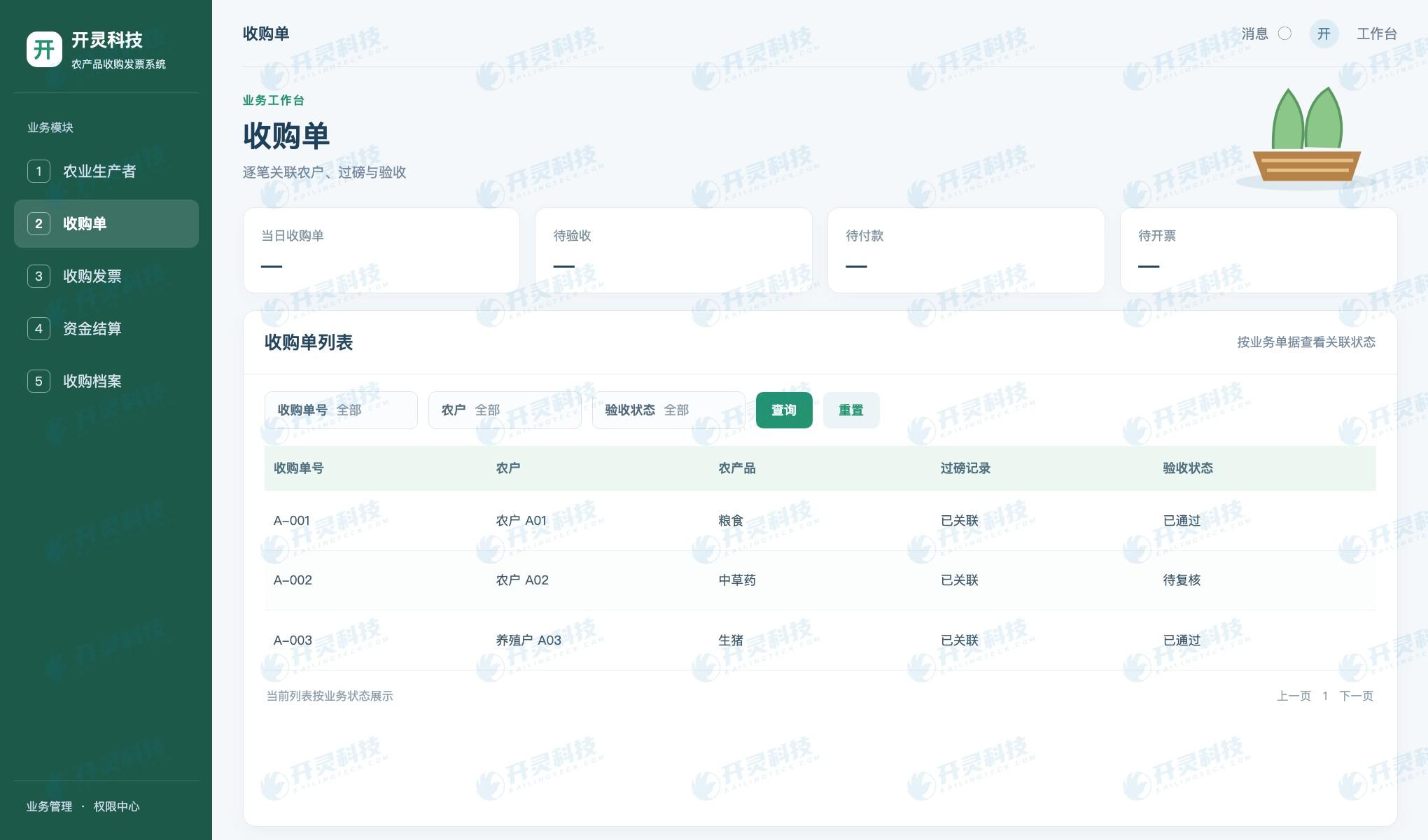
Chinese herbal medicines often produce settlement differences due to moisture, impurities, grade, and packaging. Purchase orders should record the herb category, batch, gross weight, tare weight, acceptance grade, and handling of nonconforming goods. If goods are temporarily received pending inspection, the status should remain pending confirmation, and invoicing must not be based on estimated weight in advance.
For re-weighing after drying or sorting, retain the first weighing and the re-weighing result, and explain the reason for the difference. The purchase point can also link on-site images, inspection records, and farmer confirmation materials, helping finance determine which batch and grade to settle at the end.
When a single farmer delivers multiple types of medicinal materials, list acceptance and prices by category; if medicinal materials of the same name come from multiple growers, they must not be merged into one farmer transaction merely because they arrived in the same truck. The producer and acceptance details of each purchase order should be separately searchable.
Chinese herbal medicine purchase acceptance record
▍From settlement confirmation to payment and invoicing
The settlement statement should calculate the amount from the confirmed quantity, grade, and unit price, and adjustment items must be traceable back to the acceptance basis. Finance verifies the payee account against the farmer profile before initiating payment, and the bank receipt is linked to the original purchase order. If the farmer changes accounts, uses a collection agent, or is paid in installments, the confirmation process should be retained.
Agricultural product purchase invoices are based on appropriate purchase business. The invoicer checks the farmer's self-production attribute, purchase order, settlement amount, and invoice elements, and after success maps the invoice file to the order number. When invoicing fails or a red-letter reversal is needed, retain the original status and handling records.
The Kailing Technology agricultural product purchase reverse invoicing system consolidates materials into a single-invoice view, making it easy to trace from the invoice back to the farmer, acceptance, and payment. However, category applicability, authenticity of self-production, and handling of special transactions should still be reviewed by the enterprise according to its business and policies.
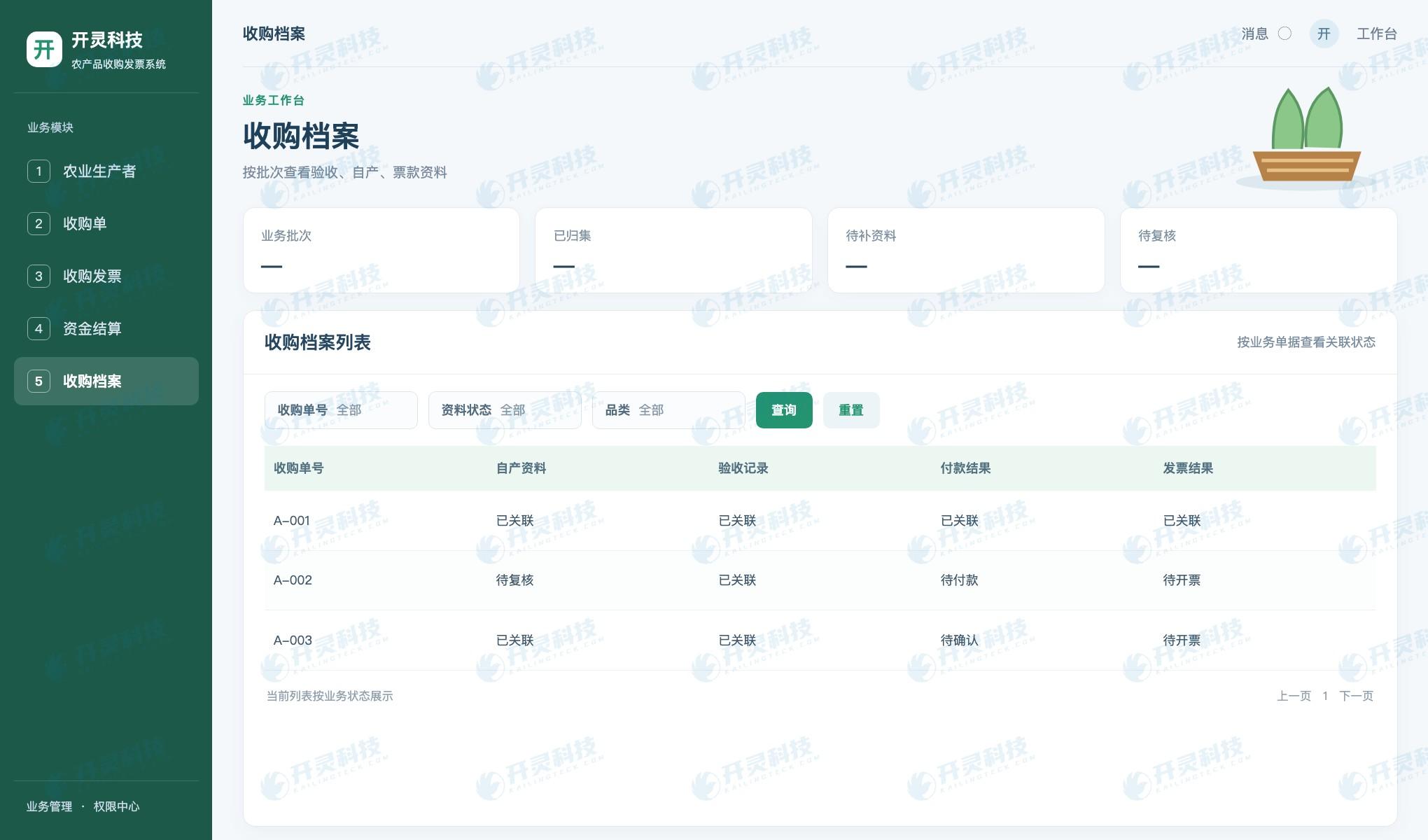
Acceptance, self-production, and payment records
▍Use disputed batches to assess acceptance file quality
It is recommended to select a batch of medicinal herbs with moisture content disputes, a batch of entrusted deliveries, and a batch of farmers with pending documentation as acceptance samples. Check whether the system prevents unconfirmed amounts from going directly into invoicing, and whether it retains each re-weighing and account change, rather than only displaying the final invoice.
During review, have procurement, quality inspection, and finance each find materials from the same purchase order. If procurement can see acceptance but finance cannot see self-production materials, it indicates that permissions or archiving relationships still need adjustment.
Collecting by order does not mean stuffing all files into one attachment folder; it means giving each material a role, a time, and a corresponding business node. Once enterprises fix this rule, processing can continue accurately even when staff change during peak season.
▍Keep the uncertainty of medicinal material batches on the documents
Chinese herbal medicines may go through digging, washing, cutting, and drying from the field to the warehouse. Weight and grade differ at different processing stages, so the purchasing point must state which state this acceptance corresponds to. If goods are first stocked as wet products and later priced as dry products, the system must retain the original arrival quantity, processing method, and final settleable quantity, avoiding a settlement slip suddenly showing figures inconsistent with the original weighbridge ticket.
Farmer materials and the actual delivered category must also be cross-checked. A grower registering a certain herb does not mean every batch comes from self-production; if a large amount of mixed herbs clearly beyond the usual business scope appears on site, business staff should further verify and record the conclusion. The system's "file created" must not be understood as a permanent pass.
When a quality dispute occurs, the procurement personnel submit a re-inspection request, the quality inspection personnel record the re-inspection sample and results, and finance settles only after both parties confirm. If part is qualified and part is returned, the purchase order should be split into two destinations, and payment and invoices should correspond only to the actually concluded portion. The original goods order still shows the arrival of the entire batch, making it easy to explain the difference.
Archive spot checks can trace back from any Chinese medicinal herb invoice to the grower, self-production materials, acceptance grade, re-weighing records, and payment. If the materials are only scans without document relationships, finance still has to search through them one by one. The Kailing Technology system organizes evidence by purchase order, enabling quality inspection, procurement, and finance to collaborate under the same batch.
▍Trace the entire transaction in reverse from a single medicinal material invoice
The reviewer selects a Chinese herbal medicine purchase invoice, first looks at the farmer, category, and amount on the invoice, then opens the corresponding purchase order. The purchase order should show the household's self-production materials, deliverer relationship, first weighing, acceptance grade, reweighing and deductions, final settlement, and bank receipt. When a step is left with only verbal explanation, mark the gap and find the corresponding role to supplement materials.
If one document contains herbs from two farmers, their respective output and settlement should be separated first; finance must not allocate based on the final amount. Kailing Technology's system's per-order consolidation allows procurement and finance to share the same business record, making actual review easier to land on specific batches rather than vaguely judging that "materials are complete."
Procurement, quality inspection, and finance should also agree on a category dictionary: how aliases, places of origin, and processing status of the same medicinal herb are recorded. After names are unified, purchase orders submitted by sites can be summarized by category, and finance can also identify price differences among different grades under the same name. Dictionary adjustments should retain versions, and historical documents should still be searchable by the actual acceptance name at that time.
▍FAQ
Q: If someone is entrusted to deliver the medicinal materials, can the invoice be issued to the deliverer?
A: First confirm the actual agricultural producer and the entrustment relationship; the invoice entity should match the applicable transaction.
Q: What should be done if the weight changes after drying and re-weighing?
A: Retain the original weighing, re-weighing, reasons, and the settlement result confirmed by both parties.
Q: Can an invoice be issued directly if there is a self-production statement?
A: The purchase category, acceptance, settlement, and actual transaction also need to be verified; the materials must correspond to this transaction.
Q: Are Chinese herbal medicines still treated as self-produced after drying or primary processing?
A: Judgment should be made based on the actual category, processing method, producer identity, and applicable policy; it cannot be handled based merely on the four words "self-production statement." Enterprises should record the arrival and processing status of the medicinal materials, the acceptance names, and the corresponding settlement, and where necessary have business-finance-tax personnel verify the invoice treatment. The system is responsible for linking materials with transactions and cannot replace professional category determination.
Q: If a purchase order has both qualified and returned portions, how should invoicing be handled?
A: First separate the actually transacted portion from the returned portion at the acceptance stage, and retain the total arrival quantity, sorting results, and farmer confirmation. Payments and purchase invoices should only be handled around the confirmed transacted quantity and amount. If the return occurs after payment or invoicing, the difference handling and the status of the original invoice should also be verified; it is not advisable to simply change the original purchase order to a smaller quantity.
Visit Kailing Technology to learn about related products and implementation plans: https://www.kailingteck.com/fxncp/ .
As a national high-tech enterprise, Kailing Technology focuses on the digital and intelligent transformation of enterprise business-finance-tax and operations management, providing software products, system integration, implementation and delivery, and operational services for various government agencies, institutions, group enterprises, and SMEs.
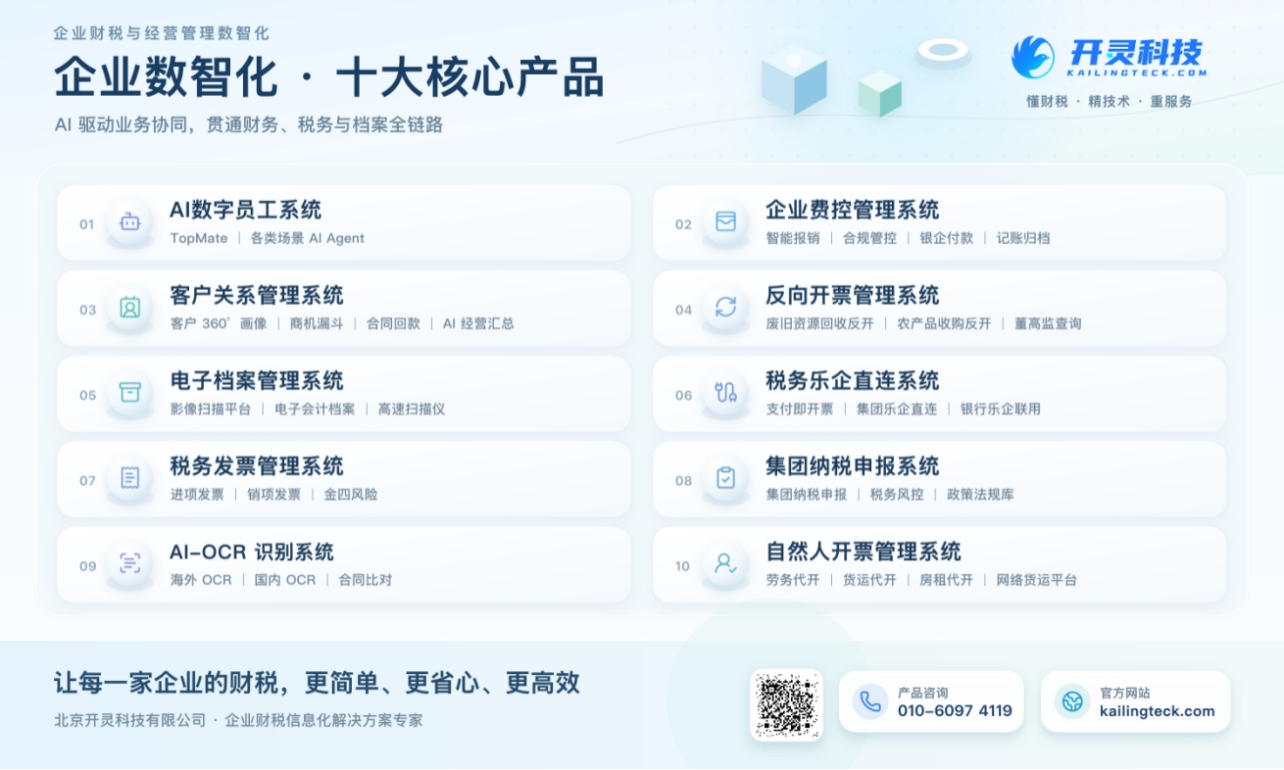
The company has now formed ten core product lines, including: AI digital employee system, enterprise expense control management system, customer relationship management system, reverse invoicing management system, invoice issuance for individuals management system, electronic archives management system, tax fully digitalized e-invoice Leqi system, tax invoice management system, group tax filing system, and AI OCR recognition system. It is committed to connecting enterprise business, finance, tax, funds, and archive data to help customers improve operational efficiency, business-finance-tax compliance capabilities, and digital management levels.
If you have any business-finance-tax digital transformation needs, welcome to contact us. Beijing Kailing Technology will serve you wholeheartedly.
Keywords: Farmer self-produced Chinese herbal medicine purchase invoices, acceptance materials, self-production certificates, Kailing Technology agricultural product purchase reverse invoicing system
As a comprehensive business-finance-tax digitalization solution service provider, Kailing Technology provides business-finance-tax management digital transformation products and operational services for various government agencies, institutions, and large, medium, and small enterprises. The product line includes: solutions for sales contract management system, procurement contract management system, fully digitalized Leqi interface project, automatic output invoicing system, reverse invoicing system, invoice issuance for individuals system, employee expense control and reimbursement system, input VAT invoice management system, supply chain collaborative reconciliation system, image AI OCR recognition system, automatic financial bookkeeping system, electronic accounting archives system, etc., comprehensively driving the digitalization process across various fields.
Consultation Hotline: 18513895936 / 010-60974119 Location: Beijing