
How can scrap copper recycling avoid invoicing the wrong person? The Kailing Technology resource recycling reverse invoicing system checks the seller's identity and payee account
With high scrap copper prices, on-site proxy delivery and temporary account changes both require extra caution. Once a carrier is mistaken for the seller, or the invoice is issued to Party A while payment goes to Party B, no amount of subsequent documentation can clarify the subject relationship. The Kailing Technology resource recycling reverse invoicing system places identity verification and payee account checking within the same goods order, confirming the transaction counterparty first, then proceeding with settlement and invoicing.

▍Separate "who delivered it" from "who sold it"
Scrap copper may be delivered by an individual driving in, or by a family member, driver, or site on their behalf. The person registered at the gate is only the on-site contact and does not automatically acquire seller status. Receivers should record the actual seller, the deliverer, the vehicle, contact information, and authorization or explanatory materials, so that the two roles have a clear relationship.
When registering an individual profile, the name, ID information, and transaction confirmation materials must be consistent. Consent from the seller is obtained for the first reverse invoice, and subsequent transactions should still verify whether identity has changed. If a customer claims "we always invoiced this way before" but cannot explain the relationship between goods ownership and payment, business staff should suspend invoicing and go through review, rather than applying the old record.
The resource recycling reverse invoicing system applies to qualified enterprises purchasing scrapped products from individual sellers of scrapped products. Verifying enterprise eligibility, seller identity, and cumulative transaction status is preliminary work. The system can write verification results and timestamps into the profile, so that finance can see at invoicing time what the handler has checked and which matters have not yet been confirmed.
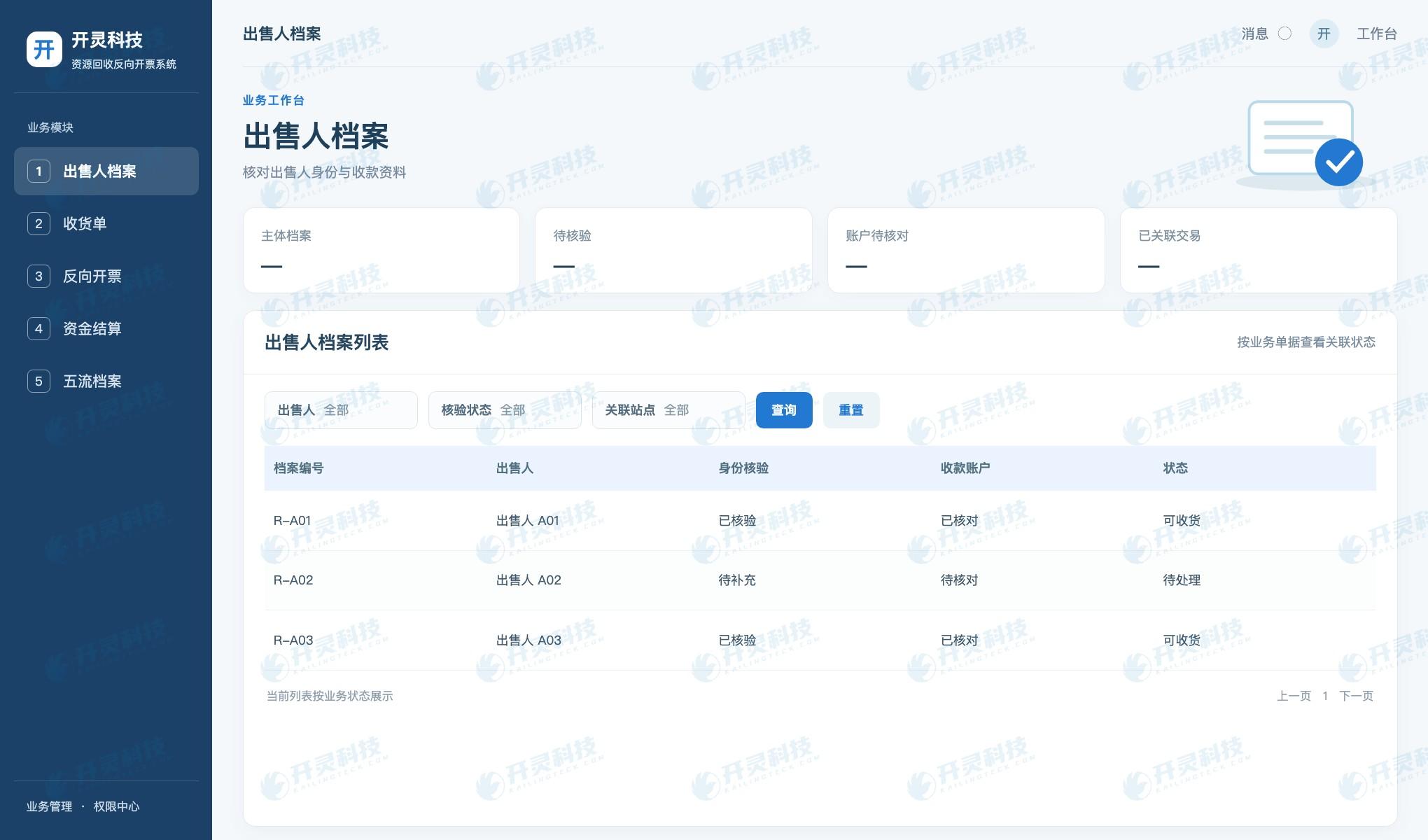
Seller identity and account information
▍Why the payment account must be confirmed before settlement
Scrap copper receiving and settlement may be separated by grade inspection, re-weighing, and price confirmation. If the account changes during this period, finance must not accept just a chat message. The seller should confirm the new account through an agreed channel, with the change time, reviewer, and scope of effect retained, and unpaid goods orders re-checked.
Payment instructions should reference the confirmed settlement slip and show the match result between the payee name and the seller profile. If the account name differs, first clarify the reason and basis for collection on behalf, then decide whether to allow payment; the system must not treat "the bank can transfer" as "the transaction subject is correct." When payment fails or is returned, the original instruction, failure reason, and re-payment result must all remain under the same business.
When multiple truckloads of scrap copper are paid together, the allocated amount for each trip should be retained, avoiding a receipt with only one summary figure. Conversely, if one truckload is paid in installments, it should also be possible to explain which part of the payable each payment covers. Kailing Technology's system writes account verification and payment status back to the goods order, providing invoicers with a clear funds comparison.
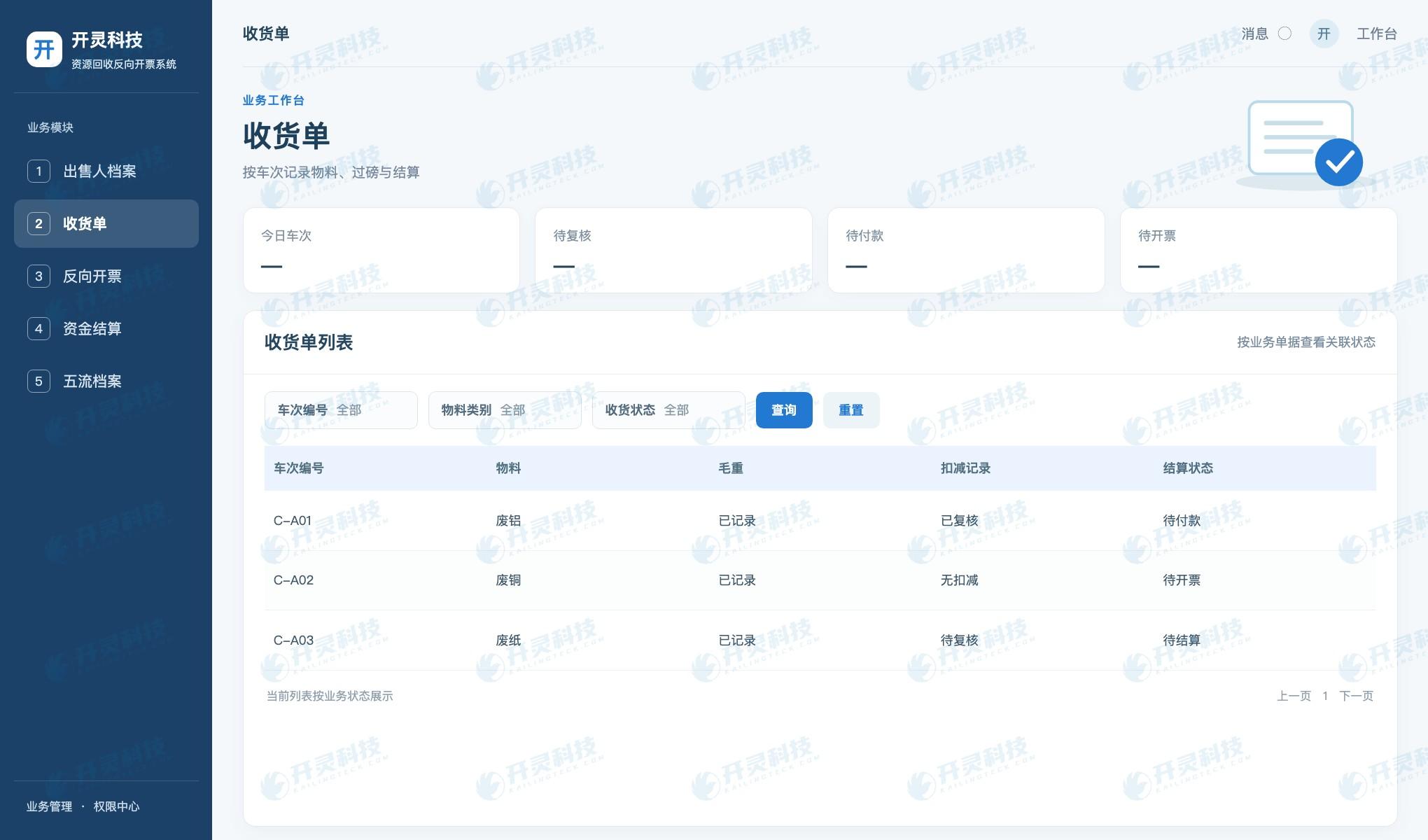
Scrap copper receiving and settlement records
▍Grade-based pricing and invoice amounts must use the same basis
Scrap copper is priced by grade, and impurities, moisture content, and sorting differences can all change the settleable quantity. On-site, based on weighbridge tickets and acceptance records, record the actual grade, net weight, unit price, and reasons for deductions. When the selling price is high, a single manually modified unit price can cause a large discrepancy, so approval and confirmation by both parties must be retained.
Invoices should be based on the confirmed transaction, with the seller and amount on the invoice consistent with the settlement result. If the original goods order is repriced after invoicing, first check the invoice and payment status, then handle the applicable correction or red-letter reversal. Deleting the old goods order and adding a "correct" new one will cut off the retrospective traceability path.
The invoicing workbench can display the status of the entity, goods order, settlement, and payee account at the same time before submission. Businesses pending verification, with unconfirmed account changes, or with settlement disputes should enter the pending queue. The verification sequence formed this way is more reliable than finding someone to explain afterward based on the invoice number.
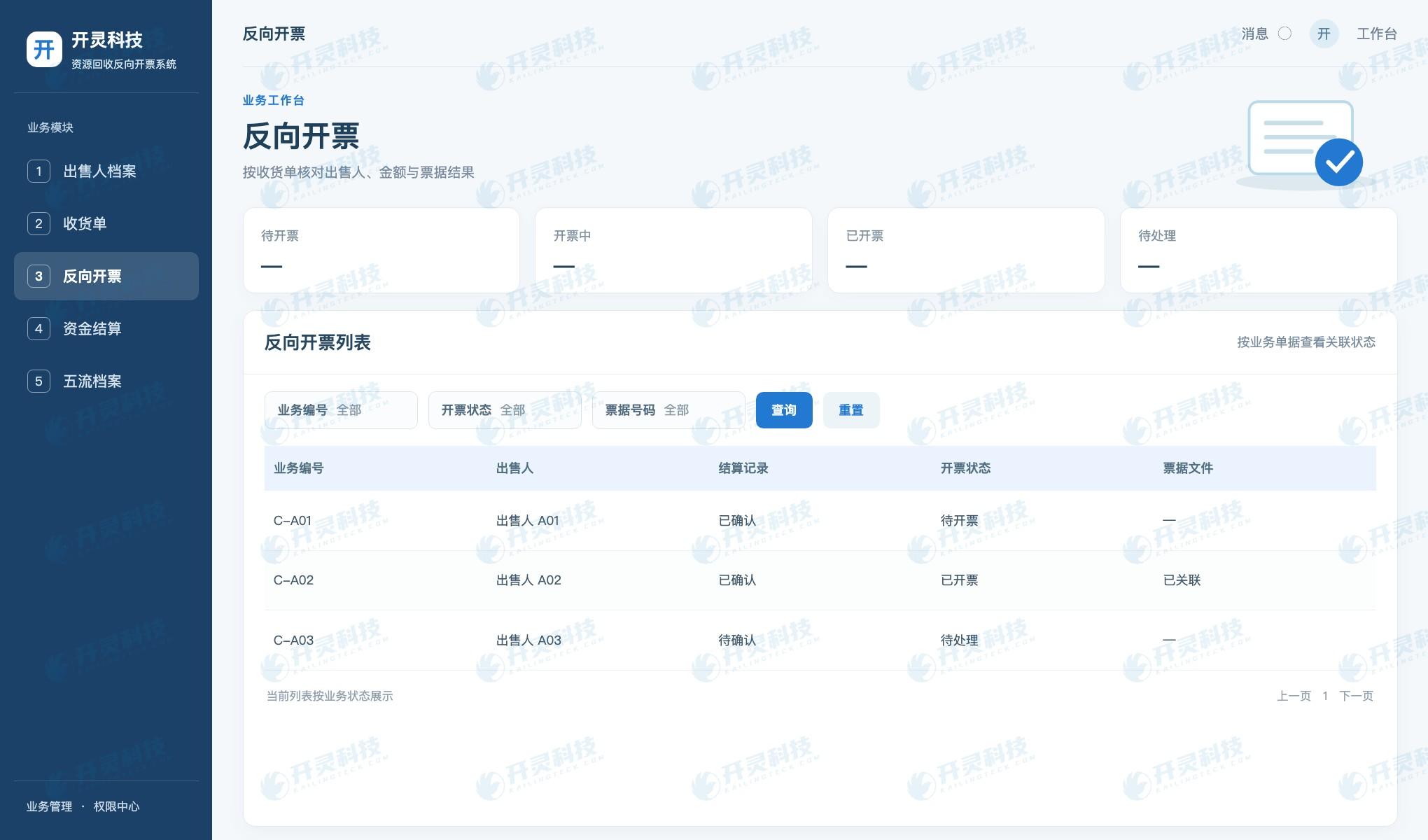
Seller and invoice status verification
▍Use abnormal samples to test whether verification is effective
During implementation, three types of tests can be arranged: a driver delivers on behalf of someone else but the seller is another person; the seller applies to change the account before payment; one natural person sells copper multiple times in a short period. Observe separately whether the system can prompt role differences, retain account change records, and summarize transactions. The focus of testing is whether someone takes over exceptions, rather than the interface uniformly showing green pass.
Financial review can trace back from bank receipts to the payee, settlement statement, scrap copper acceptance, and seller confirmation; it can also work forward from individual profiles to find all truckloads and documents. Both paths can be traced through, and only then do the entity, goods, payment, and invoice have a clear connection.
The Kailing Technology resource recycling reverse invoicing system is suited to setting "whom to invoice" and "whom to pay" as two mutually cross-checked questions. Enterprises still need to determine who is responsible for on-site acceptance, who verifies identity, who approves special payments, and regularly review the exception queue.
▍Write entity exception handling into role responsibilities
The first type of anomaly is when the deliverer and the seller are different. The receiving clerk registers the roles and contact information of both people, and the business owner verifies the explanation of title to the goods; finance includes the goods order in invoicing only after the entity relationship is confirmed. The second type of anomaly is when the seller requests payment to a family member or another account. The cashier should obtain verified confirmation materials and approval, and must not directly modify the bank card in the original file to overwrite the traces of the old account.
The third type of anomaly is when an individual profile shows frequent deliveries and is also associated with a certain business entity. A system prompt does not equal an automatic determination of illegality; the compliance role should review it in light of the actual source of goods, transaction method, and applicable policy. If, after review, the path is changed to the business entity issuing invoices itself, the original goods order should retain the handling result to avoid on-site personnel continuing to receive goods under the old identity.
For scrap copper, a high price also amplifies the impact of subject errors. The portion of one truckload belonging to two actual sellers should retain acceptance and pricing basis separately. If payment and invoices are split between two people, finance can see the amounts of both sellers from one vehicle entry; if merged into one person, the system should require an explanation and must not pass solely because the total amount matches.
Business managers can spot-check account changes, entrusted deliveries, and blocked invoicing requests each week. Spot checks should look not only at whether an invoice was ultimately issued, but also at who raised the concern, what materials were supplemented, and who approved continued processing. In this way, sites can handle similar situations under the same rules, reducing differences in invoice and payment subjects caused by different handlers.
▍FAQ
Q: If scrap copper is delivered by a driver, must the invoice be issued to the driver?
A: Not necessarily. The actual seller should be verified; when the driver is only delivering on behalf, the role and delivery relationship should also be retained.
Q: Can payment be made directly if an individual temporarily changes their bank card?
A: First have the seller confirm the change, re-verify the account name and pending payment goods notes, and record the effective time.
Q: Is it enough if the names on the invoice and the bank receipt are consistent?
A: The seller's identity, goods acceptance, and settlement materials should also be verified to avoid a situation where the entity is consistent but the business facts cannot be matched.
Q: If the seller and the bank account name are inconsistent, can the invoice be issued first and materials supplemented later?
A: It is not advisable to leave entity discrepancies until after invoicing. First distinguish whether it is an entry error, entrusted collection, or a misidentification of the actual seller, obtain the corresponding confirmation and approval, and check the deliverer and seller on the goods note. If the seller is ultimately adjusted, the settlement statement, payment instruction, and invoicing application must all be re-verified against the correct entity; it is not enough to change only the invoice header.
Q: If an individual has already sold scrap copper before, is there no need to check again for each subsequent truckload?
A: Old records can be reused, but new transactions still need to verify the goods, payment account, and currently applicable conditions. Especially when the account changes, delivery is entrusted, transactions are frequent, or identity information changes, re-verification should be performed and the results recorded. Enterprises should also pay attention to cumulative sales over consecutive periods as required by policy, and cannot rely solely on a previous successful application as the basis for continued applicability.
Visit Kailing Technology to learn about related products and implementation plans: https://www.kailingteck.com/fxzy/ .
As a national high-tech enterprise, Kailing Technology focuses on the digital and intelligent transformation of enterprise business-finance-tax and operations management, providing software products, system integration, implementation and delivery, and operational services for various government agencies, institutions, group enterprises, and SMEs.
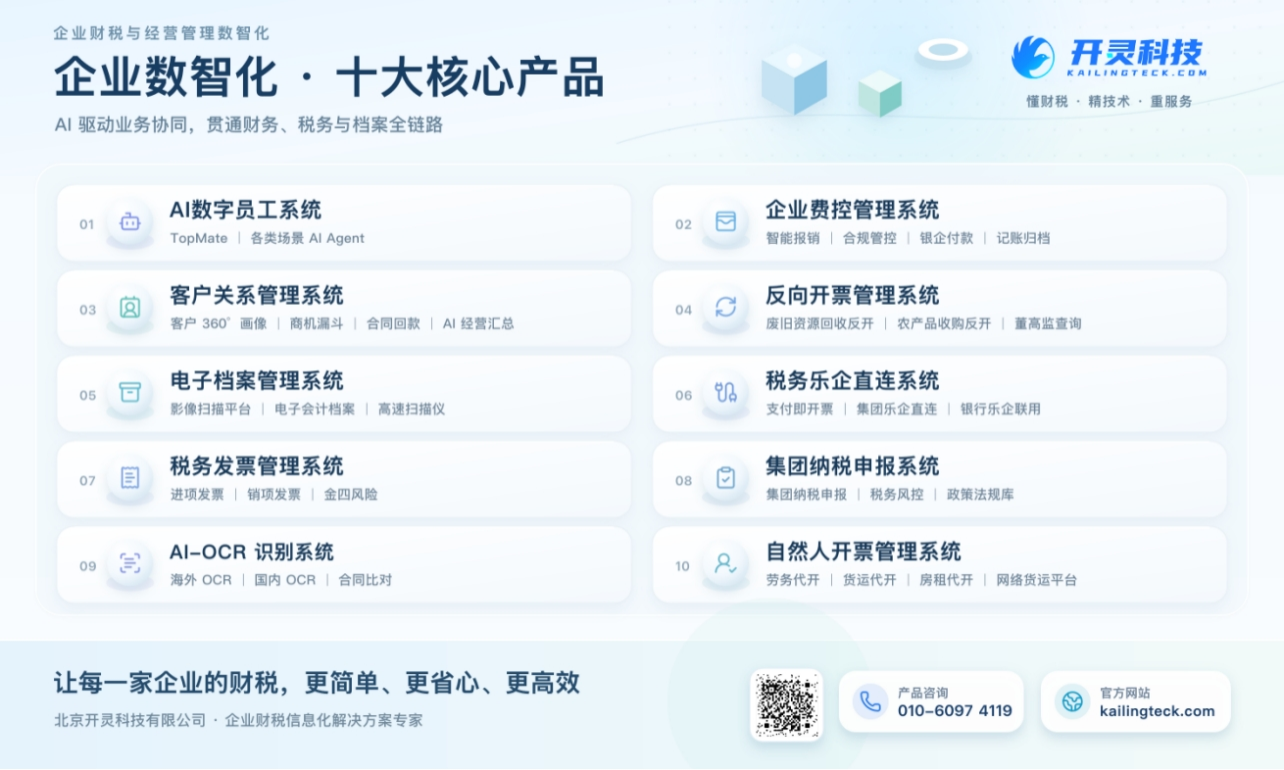
The company has now formed ten core product lines, including: AI digital employee system, enterprise expense control management system, customer relationship management system, reverse invoicing management system, invoice issuance for individuals management system, electronic archives management system, tax fully digitalized e-invoice Leqi system, tax invoice management system, group tax filing system, and AI OCR recognition system. It is committed to connecting enterprise business, finance, tax, funds, and archive data to help customers improve operational efficiency, business-finance-tax compliance capabilities, and digital management levels.
If you have any business-finance-tax digital transformation needs, welcome to contact us. Beijing Kailing Technology will serve you wholeheartedly.
Keywords: Scrap copper reverse invoicing, seller identity verification, payee account checking, Kailing Technology reverse invoicing
As a comprehensive business-finance-tax digitalization solution service provider, Kailing Technology provides business-finance-tax management digital transformation products and operational services for various government agencies, institutions, and large, medium, and small enterprises. The product line includes: solutions for sales contract management system, procurement contract management system, fully digitalized Leqi interface project, automatic output invoicing system, reverse invoicing system, invoice issuance for individuals system, employee expense control and reimbursement system, input VAT invoice management system, supply chain collaborative reconciliation system, image AI OCR recognition system, automatic financial bookkeeping system, electronic accounting archives system, etc., comprehensively driving the digitalization process across various fields.
Consultation Hotline: 18513895936 / 010-60974119 Location: Beijing