
How does the electronic accounting archives system connect with ERP, expense control, and the tax platform? The Kailing Technology electronic accounting archives management system opens up the archiving chain

How does the electronic accounting archives system connect with ERP, expense control, and the tax platform? The Kailing Technology electronic accounting archives management system opens up the archiving chain
The ERP has vouchers, expense control has reimbursement forms, the tax platform has electronic invoices, and the bank keeps receipts. When materials are scattered, the hardest question for archivists is whether the original vouchers, approvals, and payment basis corresponding to a voucher are complete. When Kailing Technology electronic accounting archives management system connects with ERP, expense control, and tax-related platforms, it should first determine the forming system, access method, and archiving responsibility for each type of material, then handle the four-property test, archive numbers, retention periods, and retrieval links.

▍Before integration, list the required materials and the primary system
The Measures for the Management of Accounting Archives (Order No. 79 of the Ministry of Finance and the National Archives Administration) include accounting vouchers, books, financial accounting reports, and other accounting materials with retention value in the archiving scope. For enterprises, the ERP usually provides bookkeeping vouchers, books, and reports; the expense control system provides reimbursement forms, approvals, and attachments; the tax digital account or invoicing platform may provide electronic vouchers and tax-related results; and the bank provides receipts. During integration, verify item by item the location and access permissions of the materials in the existing systems, and clarify the respective access scope of ERP, expense control, vouchers, and bank receipts.
It is recommended to specify the primary key, accounting entity, accounting period, format, acquisition frequency and supplementary upload responsibility for each type of material. For example, reimbursement forms and accounting vouchers should have a mapping, invoice numbers and source file storage locations must be consistent, and bank receipts must be linkable to payment orders and vouchers. Situations where one voucher corresponds to multiple invoices, or one payment covers multiple reimbursement forms, must be expressed in the data model, with accurate associations established through business primary keys.
When the archive system receives materials, it records the upstream system, original number, receipt time, version, and verification result. Enterprises can configure automatic or scheduled receipt based on interface conditions; failed interfaces enter a pending re-upload queue. Manual re-upload retains the original document number and handler. Material receipt, exception re-upload, and subsequent archiving maintain the same batch relationship, making it easier for finance and archive personnel to reconcile.
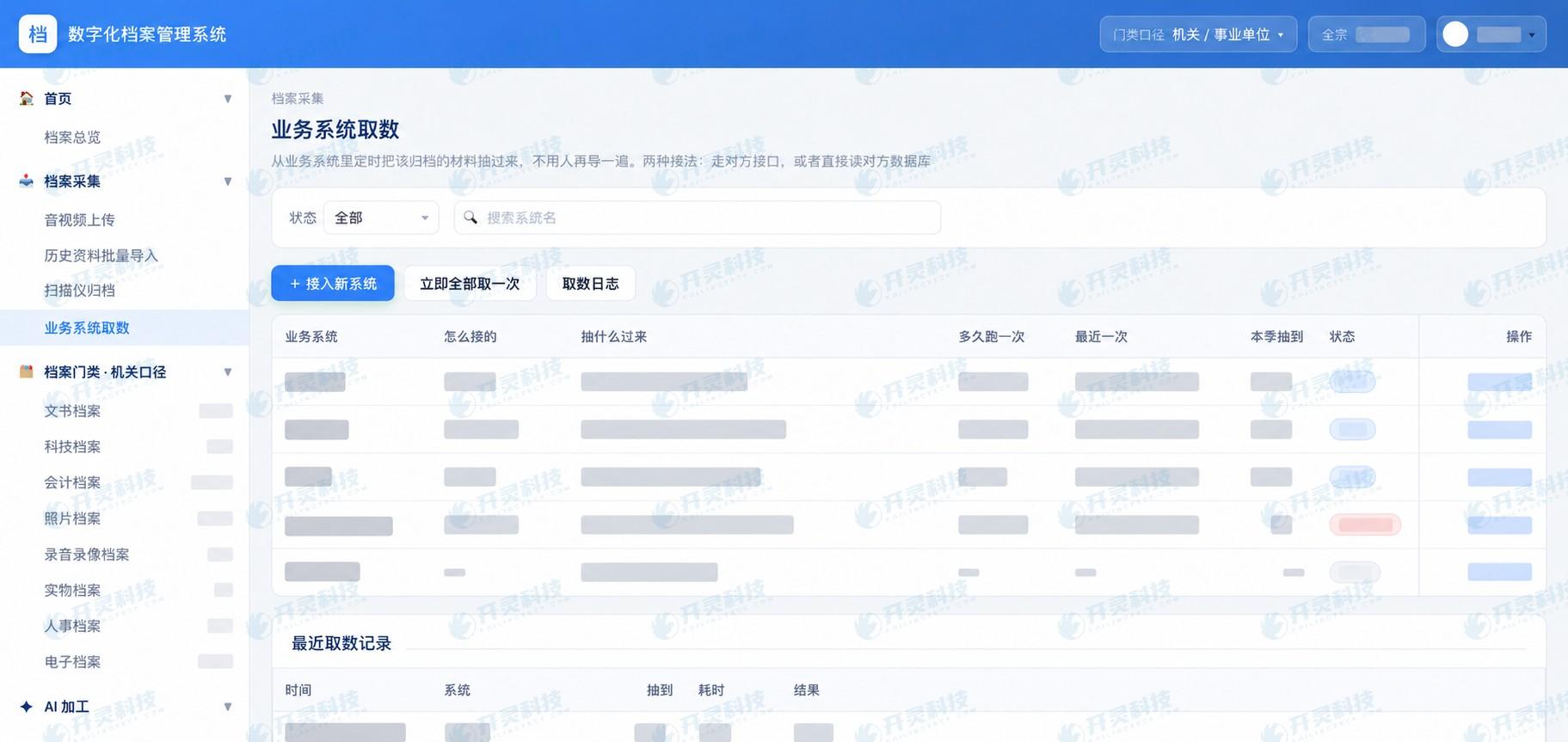
▍Source files, business relationships, and the four-property test enter the archiving stage together
Archiving electronic accounting vouchers should preserve original-format files and necessary metadata. Ministry of Finance document Cai Kuai [2020] No. 6 clarifies the applicable conditions for reimbursement, booking, and archiving of electronic vouchers; when using printed copies for processing, the corresponding electronic voucher must also be preserved. Formats such as PDF and OFD can carry visual content, while XML can carry structured data; the specific preservation combination is determined by the type of voucher actually obtained, and archive integrity should be maintained with signatures, verification, and permission measures.
The Kailing archive solution can configure validation around receipt, organization, archiving, custody and utilization. Order No. 79 sets requirements for the authenticity, integrity, usability and security of electronic accounting archives, and metadata must also be transferred together with corresponding testing. The four-property detection records in the system record inspection items, results and failure reasons; business authenticity and tax treatment are still controlled by the corresponding business review and financial review steps. In this way, technical testing and business review each have their own responsibilities, and archived materials are easier to trace.
Business relationships must be verified before archiving. If reimbursement forms, invoices, payment receipts, and bookkeeping vouchers each exist but cannot open each other, manual assembly of materials is still required during audits. Interfaces can establish links based on original document numbers, voucher numbers, invoice identifiers, and payment batches, mark missing attachments as pending supplementation, and retain link numbers and processing results for duplicate files to facilitate review.
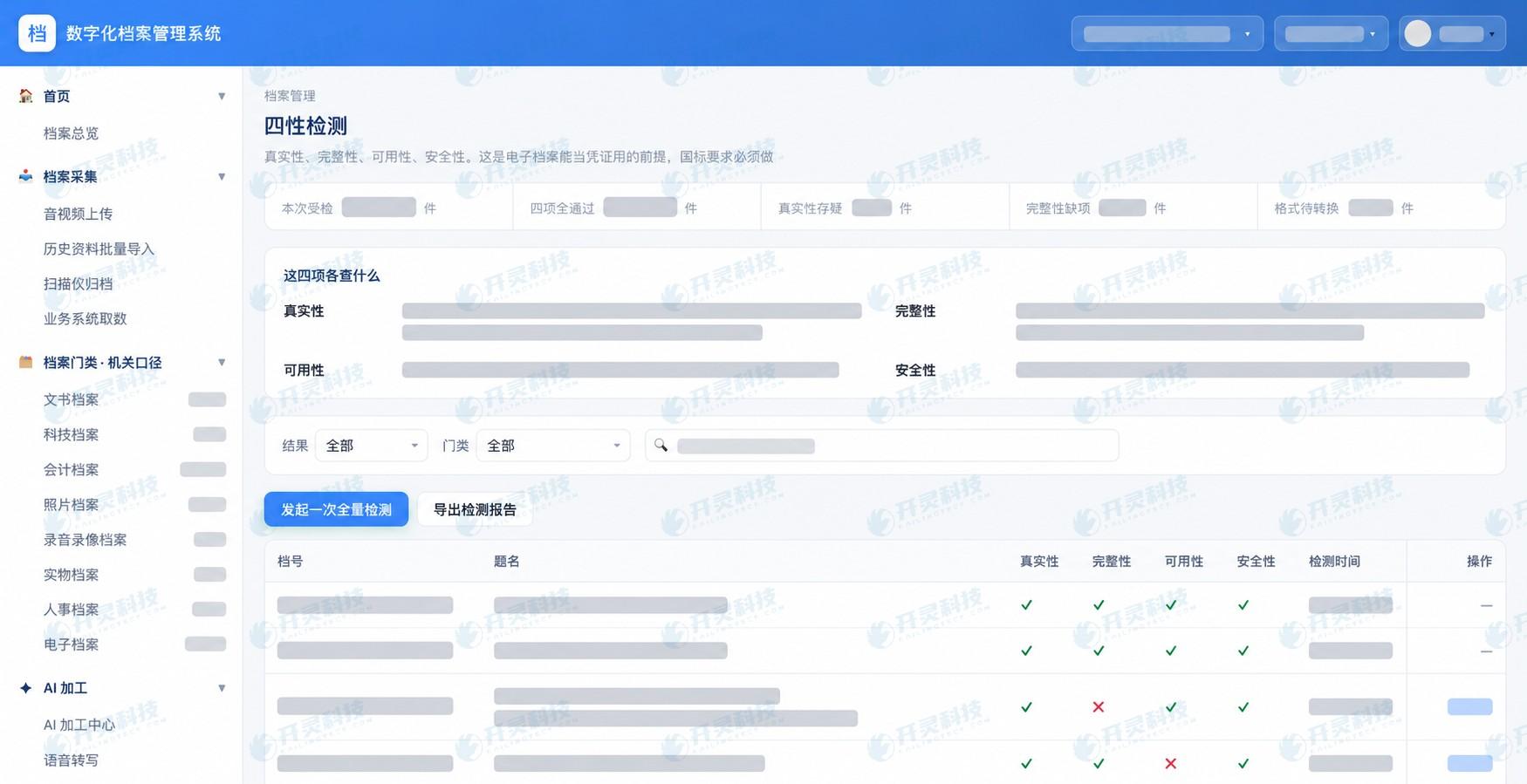
▍ERP, expense control, and tax platforms connect according to business responsibilities
On the ERP side, the status of voucher creation, review, and bookkeeping completion must be determined to avoid mistakenly archiving unbooked drafts as official vouchers. On the expense control side, reimbursement forms, approval chains, invoices, and payment results must be returned, and when cancellations, supplementary invoices, or red-letter reversals occur, the change relationships must be transmitted to the archives system. On the tax-related platform side, the acquisition method of electronic vouchers or invoicing results, data retrieval authorization, and interface frequency must be confirmed; during project implementation, real voucher samples should be used to verify receipt, linking, and re-upload.
Cross-platform integration must also handle inconsistent numbers and format upgrades. An invoice has an internal ID in expense control, a number and fully digitalized e-invoice identifier on the tax side, and may only remain as a summary in ERP; data mapping must retain all association keys. When interfaces use incremental synchronization, idempotent handling of missed, duplicate, and re-uploaded transmissions is required; after system upgrades, original files and historical read capabilities should be retained to prevent archives from containing only invalid links years later.
The Kailing Technology electronic accounting archive management system organizes work around data retrieval from business systems, material organization, four-property detection and archive utilization. During implementation, field mapping, receipt frequency, exception supplementary upload and permission rules for ERP, expense control and tax-related platforms are included in the integration checklist, and acceptance is then performed using linked samples of vouchers, invoices and receipts.
▍After archiving is complete, retrieval, transfer, and retention by permission must still be possible
After materials are received, the system assigns archive numbers and configures retention periods by accounting entity, year, archive category, and confirmed rules, while retaining usage records and access permissions. Order No. 79 stipulates that retention periods fall into permanent and periodic categories; periodic periods are generally ten years and thirty years, determined by archive type; upon expiration, appraisal is required, and vouchers involved in unfinished matters continue to be retained. Interface design must ensure that original files and associated metadata remain readable years later.
During acceptance, trace back from an accounting voucher to the reimbursement form, electronic invoice, and bank receipt, and also trace back from the invoice to the corresponding voucher; then simulate missing source files, disconnected interfaces, red-letter reversals, and cross-year re-uploads, and check the four-property detection, re-upload, version, and logs. The Kailing Technology electronic accounting archive management system connects the archiving chain and should ensure materials are fully received, relationships are clear, exceptions can be re-uploaded, and retrieval is possible; during acceptance, verify both interface status and the actual association results of each business material.
▍Interface governance must cover permissions, backup, and long-term readability
Accounting archives involve high-value materials from multiple systems. Data retrieval accounts are configured on the principle of least necessity, upstream systems grant the corresponding read and write-back permissions, and the archive system controls search, download and access by legal entity, position and purpose. Interface keys and transmission and storage methods are incorporated into the enterprise security system, and the implementation plan specifies the data transmission path, storage location and access permissions.
Long-term preservation also requires backup and readability arrangements independent of business systems. After ERP upgrades, tax interface changes, or supplier replacement, archives should still preserve source files, metadata, verification records, and necessary format descriptions. Project acceptance can simulate an upstream system being temporarily unavailable, check whether the archive side can find archived materials according to permissions, and verify receipt time, business system, and batch records.
▍FAQ
Q: After connecting to ERP, do expense control and vouchers still need separate connections?
A: If the ERP does not store complete approvals, original vouchers, and receipts, they must also be completed from the expense control, voucher, and banking-related systems and linked.
Q: Must PDF, OFD, and XML all three be saved?
A: Save the original format files and metadata according to the type of electronic voucher actually obtained; there is no need to assemble all three formats for every voucher.
Q: If the four-property test passes, can only the electronic version be kept?
A: After meeting the electronic records conditions and unit management requirements stipulated in Order No. 79, records may be kept in electronic form only as required; the four-property test is one part of this.
Q: What if material archiving fails?
A: The system retains the failure reason and the pending re-upload status, and re-verification is performed after the upstream system or responsible person fixes the issue.
Make vouchers, invoices, approvals, and receipts form traceable archives. Learn about the Kailing Technology electronic accounting archive management system:https://www.kailingteck.com/eaa/ 。
As a national high-tech enterprise, Kailing Technology focuses on the digital and intelligent transformation of enterprise business-finance-tax and operations management, providing software products, system integration, implementation and delivery, and operational services for various government agencies, institutions, group enterprises, and SMEs.
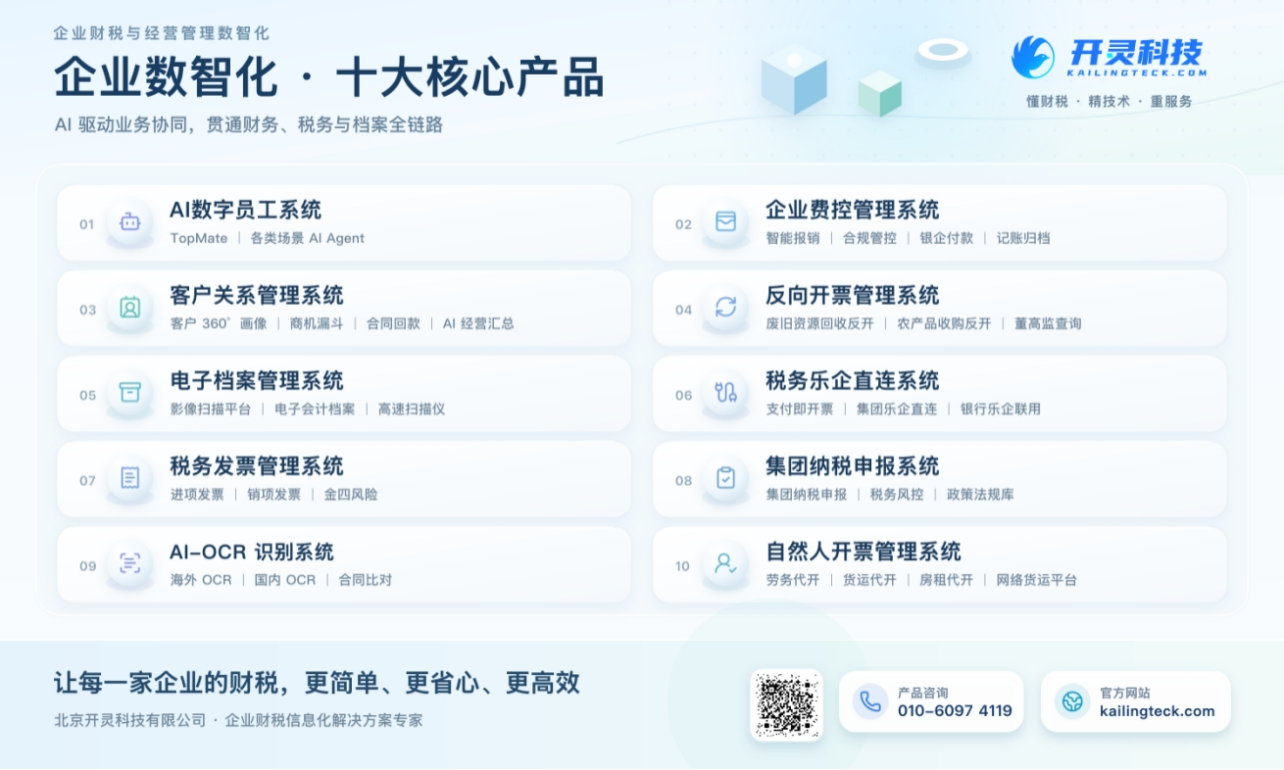
The company has now formed ten core product lines, including: AI digital employee system, enterprise expense control management system, customer relationship management system, reverse invoicing management system, invoice issuance for individuals management system, electronic archives management system, tax fully digitalized e-invoice Leqi system, tax invoice management system, group tax filing system, and AI OCR recognition system. It is committed to connecting enterprise business, finance, tax, funds, and archive data to help customers improve operational efficiency, business-finance-tax compliance capabilities, and digital management levels.
If you have any business-finance-tax digital transformation needs, welcome to contact us. Beijing Kailing Technology will serve you wholeheartedly.
Keywords: Kailing Technology electronic accounting archive management system, ERP archive integration, expense control archiving, electronic voucher source files, four-property detection
As a comprehensive business-finance-tax digitalization solution service provider, Kailing Technology provides business-finance-tax management digital transformation products and operational services for various government agencies, institutions, and large, medium, and small enterprises. The product line includes: solutions for sales contract management system, procurement contract management system, fully digitalized Leqi interface project, automatic output invoicing system, reverse invoicing system, invoice issuance for individuals system, employee expense control and reimbursement system, input VAT invoice management system, supply chain collaborative reconciliation system, image AI OCR recognition system, automatic financial bookkeeping system, electronic accounting archives system, etc., comprehensively driving the digitalization process across various fields.
Consultation Hotline: 18513895936 / 010-60974119 Location: Beijing