
How can live cattle, pigs, and sheep purchased in livestock farming achieve five flows in one? The Kailing Technology agricultural product purchase invoice system aggregates evidence by farmer

A vehicle of live cattle and a vehicle of live pigs both pass over the weighbridge, but subsequent verification cannot rely only on weight. Who the farmer is, which farm household the animals come from, how quantity corresponds to ear tags or batches, and whether transport and quarantine materials can point back to this handover all affect whether an acquisition can be explained. In livestock scenarios, Kailing Technology's agricultural product acquisition invoicing system should not write live animal acquisition as ordinary bulk goods warehousing, but should establish, around the farmer, a link from source to settlement, payment, and acquisition invoices.
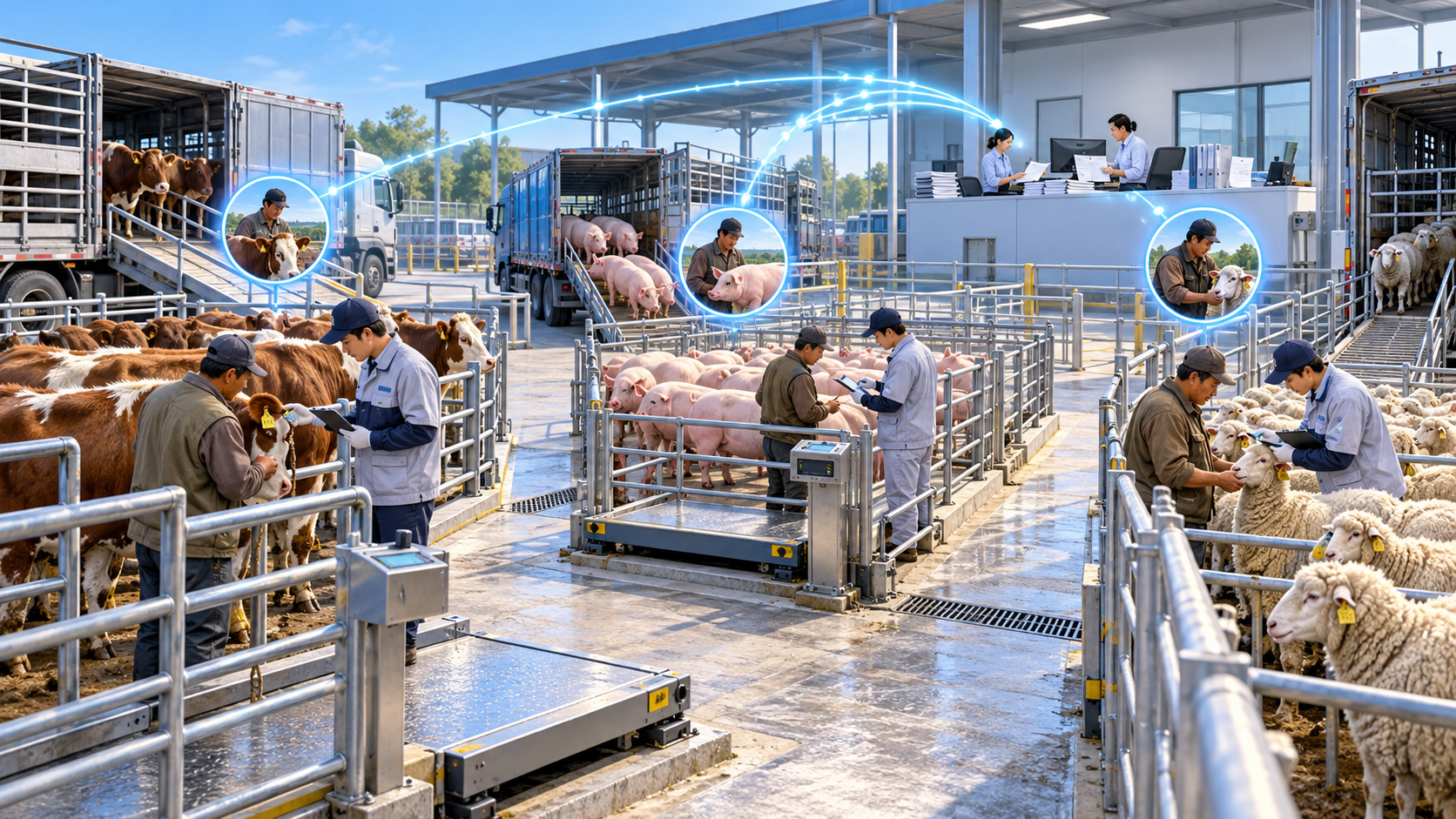
▍First verify the farmer, then verify whether the livestock and poultry are indeed self-produced by that farmer
The scope notes for agricultural products applicable in 2026 include cattle, pigs, sheep, and others within the scope of livestock products; however, a qualified goods category does not automatically mean the seller meets the requirement of being a direct breeder selling products it has raised itself. Acquiring enterprises should distinguish transactions such as direct breeding, delivery organized by cooperatives, and resale after external purchase. When creating files, verify the farmer's identity, breeding location, regularly raised varieties, and available production materials; at the time of transaction, confirm the source of the current batch of animals, and do not assume the current batch is necessarily self-produced merely because the seller has sold livestock before.
If the same transport vehicle carries animals from multiple farmers, the driver and carrier provide only transport clues and cannot replace the seller. The system should record animal quantity, category, handover, and settlement attribution separately for different farmers. When a farmer entrusts someone else to deliver, record the authorization or handover relationship; re-check ownership if the receiving account changes abnormally. This facilitates farmer payment and avoids concentrating several households' goods under the name of one person who is convenient for invoicing.
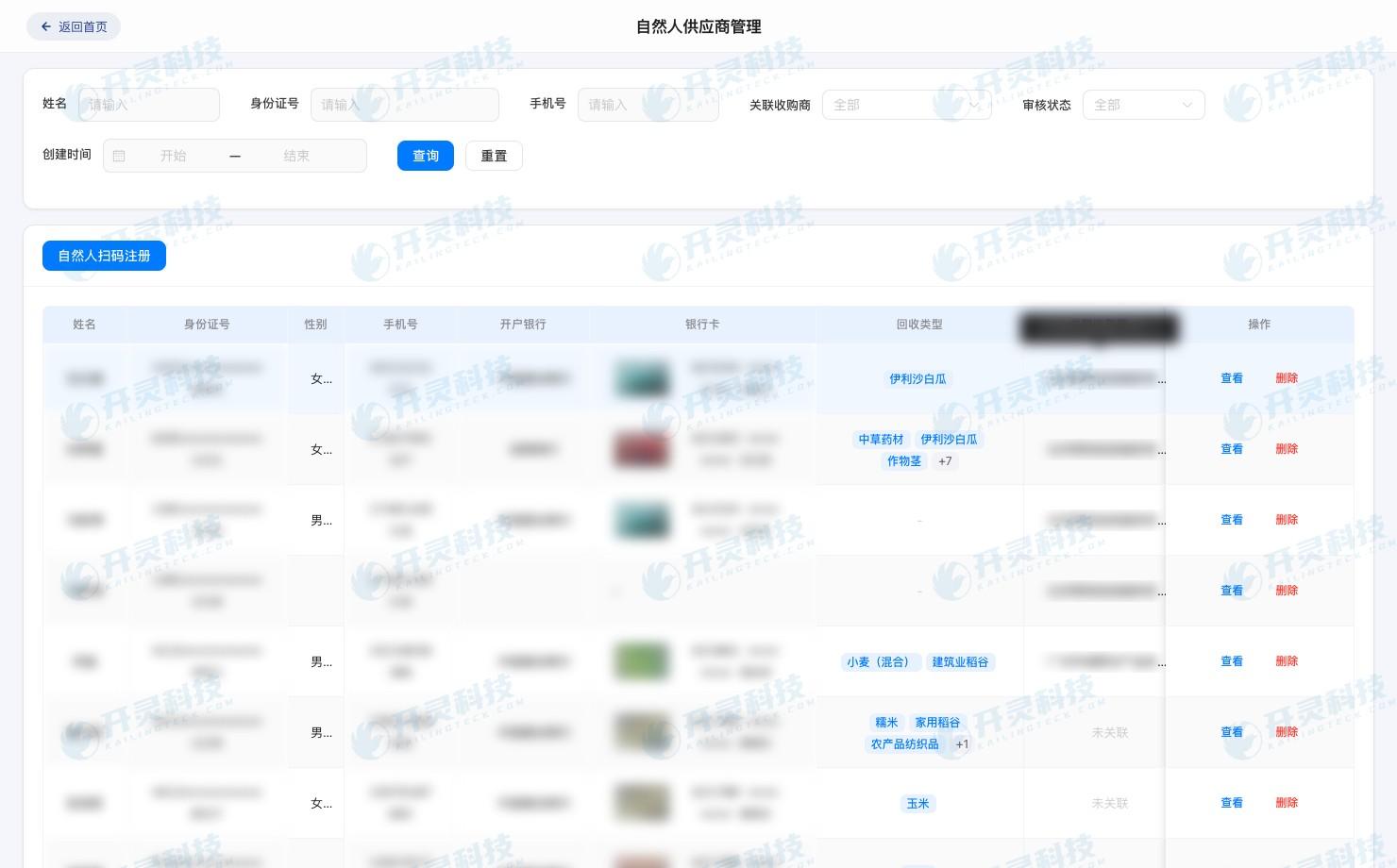
Agricultural producer file creation
▍Live batches must retain quantity, weight, and handover status at the same time
The purchase of cattle, pigs, and sheep may be settled by head count, live weight, or a grade agreed by both parties; a single "kilogram figure" cannot summarize all price sources. At entry, register the farmer, vehicle, breed, quantity, weighing time, and on-site acceptance person; for separate-household loading or mixed loading, record the boundaries of each household and batch. If there are missing heads, re-weighing, returns, or disputes over health status, retain the original entry records and re-verification results; do not directly overwrite the initial quantity.
Animal quarantine materials and acquisition invoices serve different purposes. Quarantine certificates, ear tags, or transport handover materials that must be provided according to law should correspond to the actual animal batch and help explain the source and movement process; they cannot alone prove that the seller produced the animals itself, nor can they replace confirmation of acquisition quantity and price. The Ministry of Agriculture and Rural Affairs has used a new version of animal quarantine certificates since 2026; enterprises should collect and inspect them according to applicable animal epidemic prevention and quarantine requirements, and should not hard-code outdated certificate styles in the system.
The role of on-site images should also be clear: they can record the moment of loading/unloading and quantity checking, but cannot replace farmer confirmation and document signing. If ear tags or batch identifiers cannot be clearly photographed, the purchaser should add a verifiable recording method in the goods order. For cross-farm transfer or vehicle changes en route, keep the transport handover associated with the original farmer batch, to avoid the same group of animals appearing with contradictory sources in different documents.
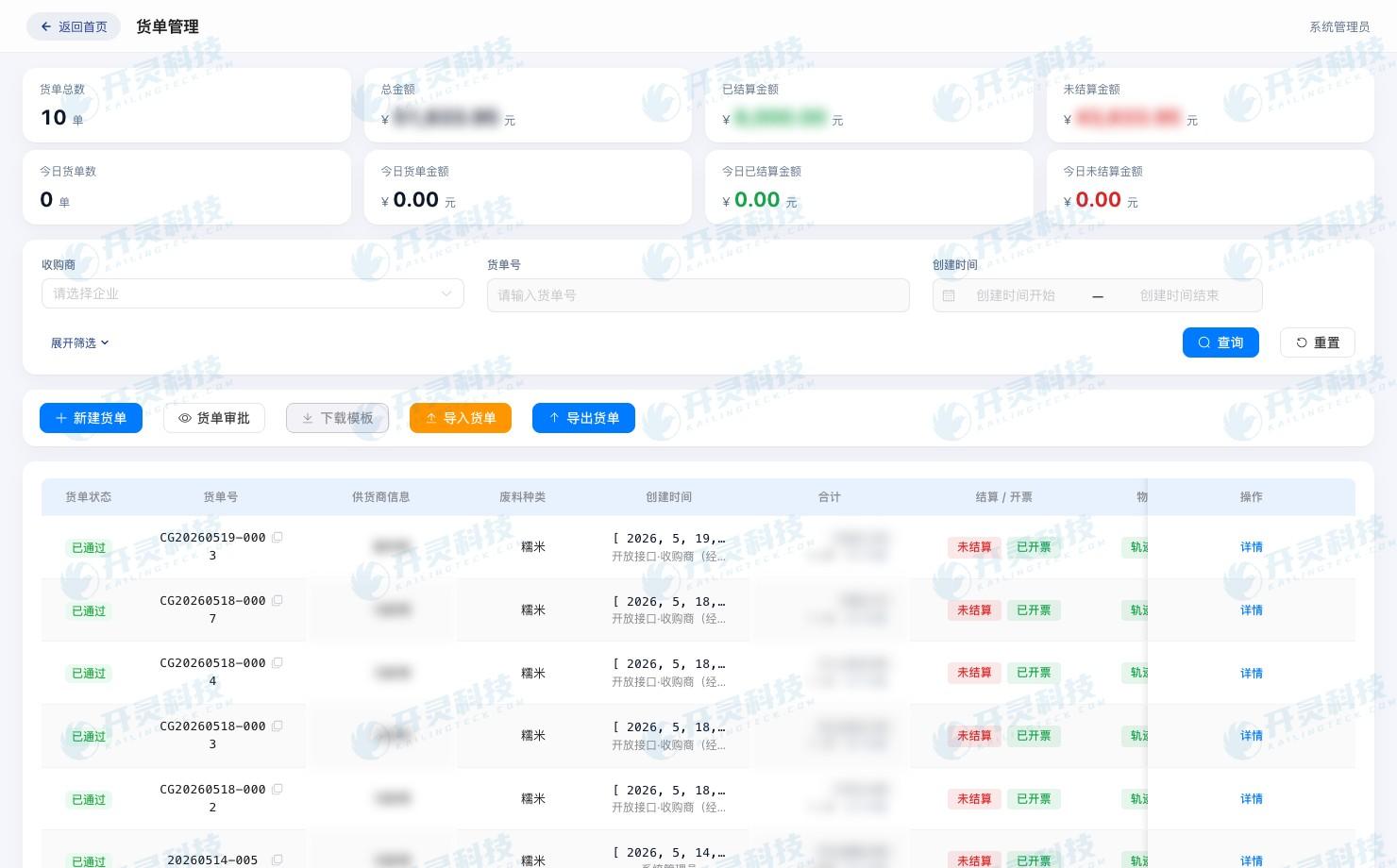
Agricultural product receiving delivery note
▍Settlement should first be by farmer; batch operations must not blur the boundaries between households
After business confirmation, the settlement statement can reference head count, live weight, unit price, and agreed adjustment items. If transport fees, withholding items, or quality disputes affect the amount payable, it should be clear which farmer and which batch of animals they belong to, avoiding making only one difference on the total vehicle amount. When finance summarizes confirmed batches into a pending payment list, it should be able to break them back down to the original documents household by household and exclude batches with unresolved disputes from the payable scope.
If one payment covers multiple deliveries from the same farmer, the payment record may be summarized, but the allocation details should be retained. If payment fails or the account changes, record the reason and reviewer. After the bank receipt enters the system, the statuses seen by the farmer, salesperson, and finance should be consistent: which animals have been accepted, which payments have been made, and which are still pending verification. Do not let payment timing gaps break the link between goods orders and invoices.
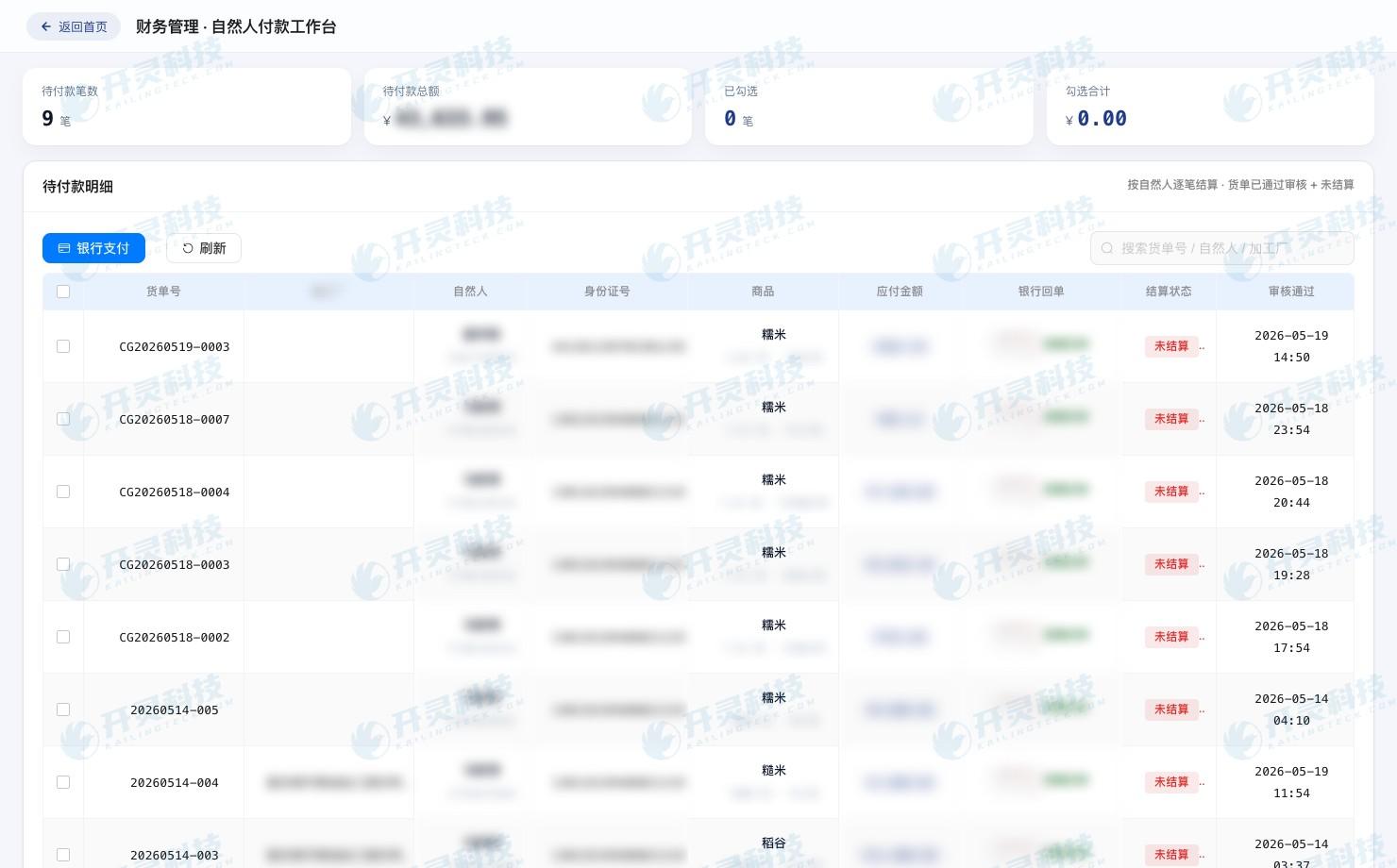
Agricultural producer payment workbench
▍Before issuing acquisition invoices, use source and settlement results for double verification
Entities directly engaged in farming and selling self-produced primary agricultural products may enjoy VAT exemption under applicable rules; the purchaser issuing an agricultural product purchase invoice must rely on a real purchase. Invoice review should check the farmer's identity, the source of the animals in this batch, category, quantity, settlement amount, and invoice information. When general taxpayers obtain or issue compliant agricultural product purchase invoices, input tax is calculated under current policy; the deduction amount calculated by the system must not be treated as proof that the transaction is authentic. Specific invoice types, fields, and regional handling requirements are subject to the applicable rules of the competent tax authority.
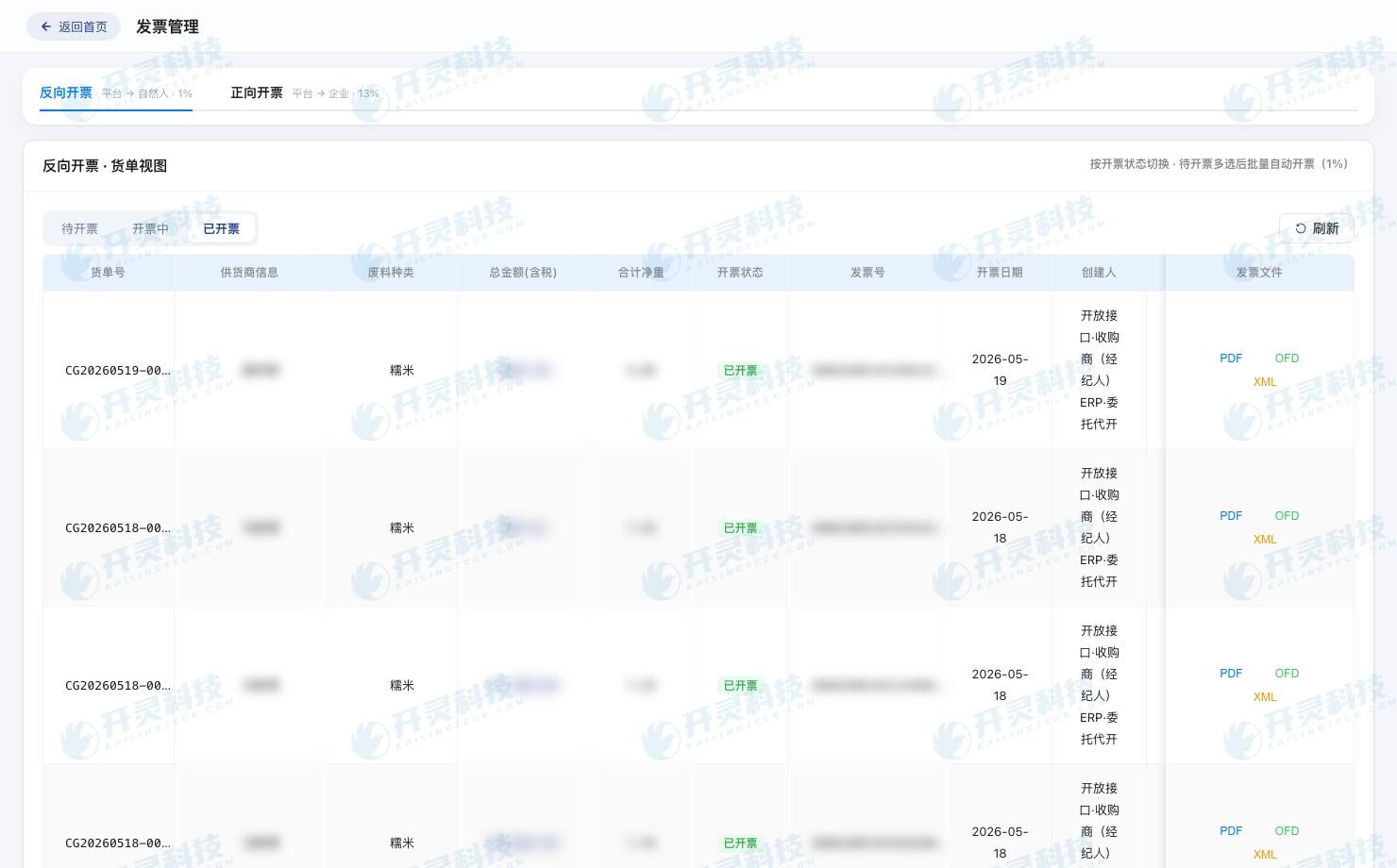
Agricultural product acquisition invoice delivery note
The invoicing result should be written back to the farmer and the source purchase batch. If multiple batches of the same household are combined into one invoice, the invoice must still be splittable back to specific handovers and acceptances; if a batch is returned or the price adjusted, first check the original invoice and payment status, then handle subsequent invoice and payment changes according to the actual business. Placing the invoice, quarantine materials, weighing records, and bank receipts under the same number allows future spot checks to trace from one invoice to the physical source, rather than finding only a pile of unrelated scans.
▍Five-flow integration aggregated by household, reviewed by batch
The five-stream integration of Kailing Technology's agricultural product purchase invoicing system is an internal enterprise evidence method that organizes self-production certification, purchase agreements, goods business, tax invoices, and fund payments under the same business. In livestock scenarios, the viewing entry point can be the farmer or the animal batch: the former shows all purchases and payments over a period, while the latter shows the source, quarantine, acceptance, invoice, and settlement of one delivery. Quarantine compliance and tax compliance each have independent requirements; system archiving facilitates inspection but must not merge the two types of judgment into one "passed."
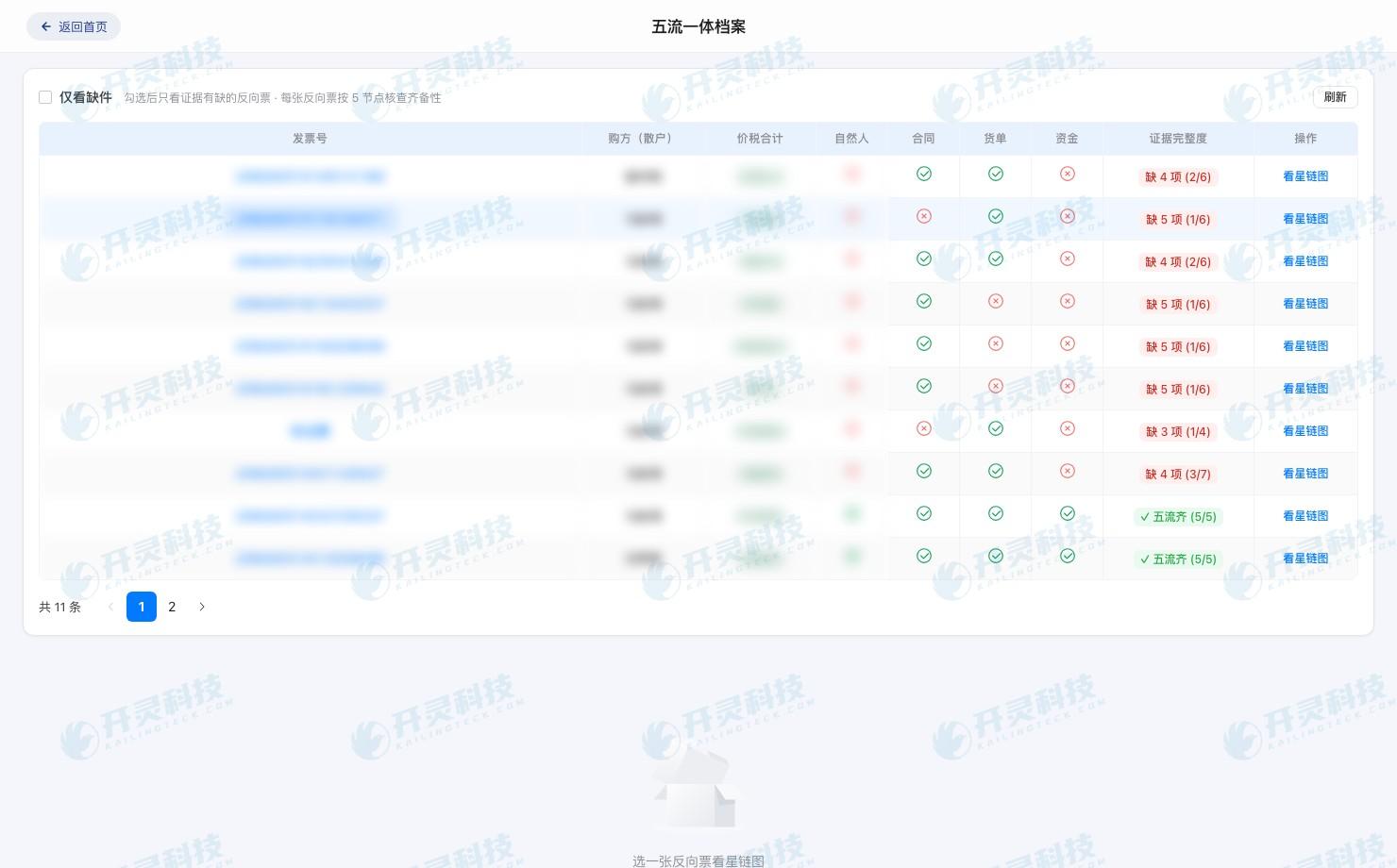
Five-flow evidence archiving
Three groups of samples can be used for go-live acceptance: multiple households loaded in the same vehicle, different entry and return quantities of pigs, and a temporary change in the farmer's payment account. For each group, trace back from both receiving and invoice payment to check whether anomalies are isolated separately and whether the original handover materials can still be retained. The pricing rules for cattle, pigs, and sheep do not need to be completely identical, but the bottom line of attribution by farmer and evidence retention by batch should be consistent.
▍FAQ
Q: If pigs from multiple households arrive in the same vehicle, can a unified invoice be issued to the driver?
A: The seller cannot be determined solely by the transporter. The animal source, quantity, settlement, and invoice attribution of each farmer should be checked separately.
Q: Does having an animal quarantine certificate prove self-production?
A: No. Quarantine materials explain the epidemic prevention and quarantine matters to which they apply; the self-produced attribute still needs to be verified in combination with the farmer's production and the facts of the current transaction.
Q: Should invoicing be based on head count or live weight?
A: The invoice face and settlement should be based on the actual transaction between both parties and the confirmed pricing method, retaining the relationship among head count, weighing, and adjustments.
Q: Is the completeness score in the five-flow archive a tax conclusion?
A: No. It is a management indicator for enterprises to check material correlation; tax applicability still depends on the real business and current rules.
Make each farmer's live animal handover, settlement, and invoice payment have corresponding evidence. Learn about Kailing Technology agricultural product purchase invoice solution: https://www.kailingteck.com/fxncp/ .
As a national high-tech enterprise, Kailing Technology focuses on the digital and intelligent transformation of enterprise business-finance-tax and operations management, providing software products, system integration, implementation and delivery, and operational services for various government agencies, institutions, group enterprises, and SMEs.
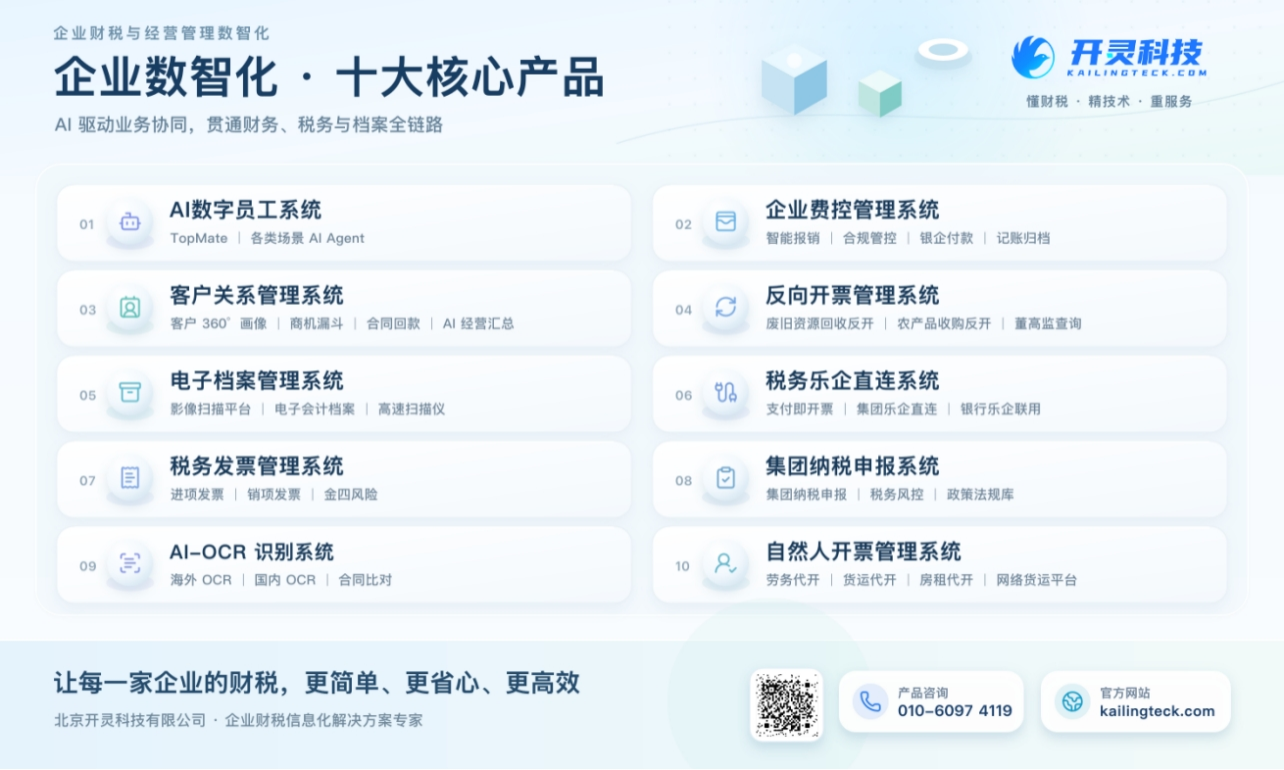
The company has now formed ten core product lines, including: AI digital employee system, enterprise expense control management system, customer relationship management system, reverse invoicing management system, invoice issuance for individuals management system, electronic archives management system, tax fully digitalized e-invoice Leqi system, tax invoice management system, group tax filing system, and AI OCR recognition system. It is committed to connecting enterprise business, finance, tax, funds, and archive data to help customers improve operational efficiency, business-finance-tax compliance capabilities, and digital management levels.
If you have any business-finance-tax digital transformation needs, welcome to contact us. Beijing Kailing Technology will serve you wholeheartedly.
Keywords: Livestock purchase invoice, Kailing Technology agricultural product purchase invoice, live cattle/pig/sheep purchase, farmer self-production, five flows in one
As a comprehensive business-finance-tax digitalization solution service provider, Kailing Technology provides business-finance-tax management digital transformation products and operational services for various government agencies, institutions, and large, medium, and small enterprises. The product line includes: solutions for sales contract management system, procurement contract management system, fully digitalized Leqi interface project, automatic output invoicing system, reverse invoicing system, invoice issuance for individuals system, employee expense control and reimbursement system, input VAT invoice management system, supply chain collaborative reconciliation system, image AI OCR recognition system, automatic financial bookkeeping system, electronic accounting archives system, etc., comprehensively driving the digitalization process across various fields.
Consultation Hotline: 18513895936 / 010-60974119 Location: Beijing