
How do website inquiries and marketing event leads enter the CRM? Kailing Technology's AI-CRM system receives, assigns, and converts them into sales opportunities in a unified way
Someone leaves a message on the website, an exhibition yields a box of business cards, and an existing customer raises a new need. If these sit separately in form backends, personal WeChat, and Excel, sales can hardly judge whom to contact first. Kailing Technology's AI-CRM system groups these sources into a "pending opportunity assignment" queue, supporting profile creation, owner recommendation, and first-contact time limit management. In actual deployment, source fields, deduplication, interfaces, and manual acceptance rules must be designed together, and invalid, duplicate, and overdue leads must all have explainable handling outcomes.

▍First unify the receiving fields so that the source is not lost during handover
Information density differs between website inquiries and exhibition business cards. Website forms can record the inquiry page, the customer's industry, a needs summary, and contact details; exhibition records should add the event name, the person spoken with, products of interest, and on-site commitments; additional needs from existing customers should be linked to the existing profile and owner. These lead types need not be filled into identical forms, but once in the CRM they must have unified source, time, customer, contact, need, and processing status.
The intake stage must also distinguish "new customer" from "new need from an existing customer." The customer list is managed one file per company, with duplicate checks by unified social credit code; customer details include source, contacts, opportunities, contracts, and follow-up records. If a new lead matches an existing customer, first confirm whether it is the same entity, then add an opportunity under the original customer, so sales does not see two unrelated customer files. Business card recognition or AI completion is only an aid; important fields still require human verification.
Website forms, event QR codes, phone calls, and manual imports can feed into the same entry point, but automatic synchronization between systems depends on actual interfaces and authorization. If an event platform cannot be directly connected for now, marketing staff can batch import using a standard template and retain the original source. Whether automatic or manual, the receipt time, handler, duplicate determination, and failure reason should be retained, to prevent "import successful" from masking missed orders. For duplicate imports, the original batch number should also be retained, to help detect the same person entered multiple times or leads incorrectly overwritten.
▍Assign opportunities by region and customer ownership so responsibility falls to a specific salesperson
The "pending opportunity assignment" page of Kailing Technology AI-CRM shows three source types: exhibitions, website inquiries, and new needs from existing customers. After marketing creates the customer and generates the opportunity, the record enters the pending assignment queue and is assigned to the sales department by region; within the same region, assignment rotates by industry experience and current opportunity count; new opportunities from existing customers go directly to the original owner. The workbench retains a reassignment entry point and first-contact reminders, so managers can handle exceptions based on real business situations.
Assignment rules should be calibrated against the enterprise's reality. Regional division, industry experience, workload, and key account ownership may conflict with one another, so priorities and manual reassignment permissions should be clarified. For example, cross-regional group customers can be led by headquarters sales, with local colleagues collaborating on local projects; important channel leads may also be handled by a designated team. The recommended owner is not the final judgment, and the assignment process needs to record why reassignment occurred and who approved it.
If first contact times out, the lead can enter a reclaim and reassignment process. During implementation, define exceptions such as working days, holidays, invalid numbers, and customers who proactively agree to be contacted later, to prevent mechanical countdowns from causing fake calls. The goal of CRM is to ensure needs are not forgotten and, when sales resources are limited, to handle inquiries with real time sensitivity first.
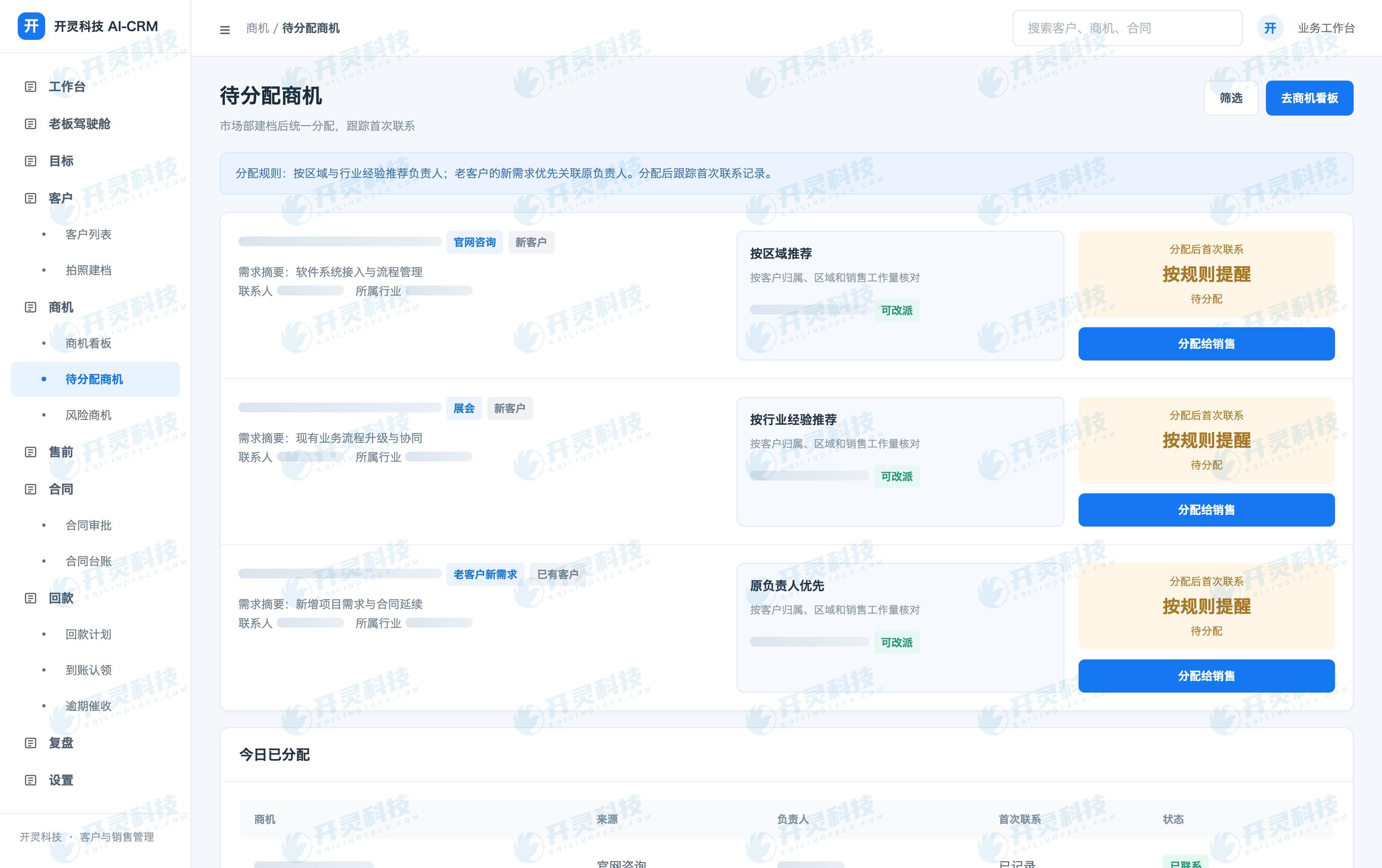
Kailing Technology AI-CRM: Unassigned Opportunities and Owner Recommendations
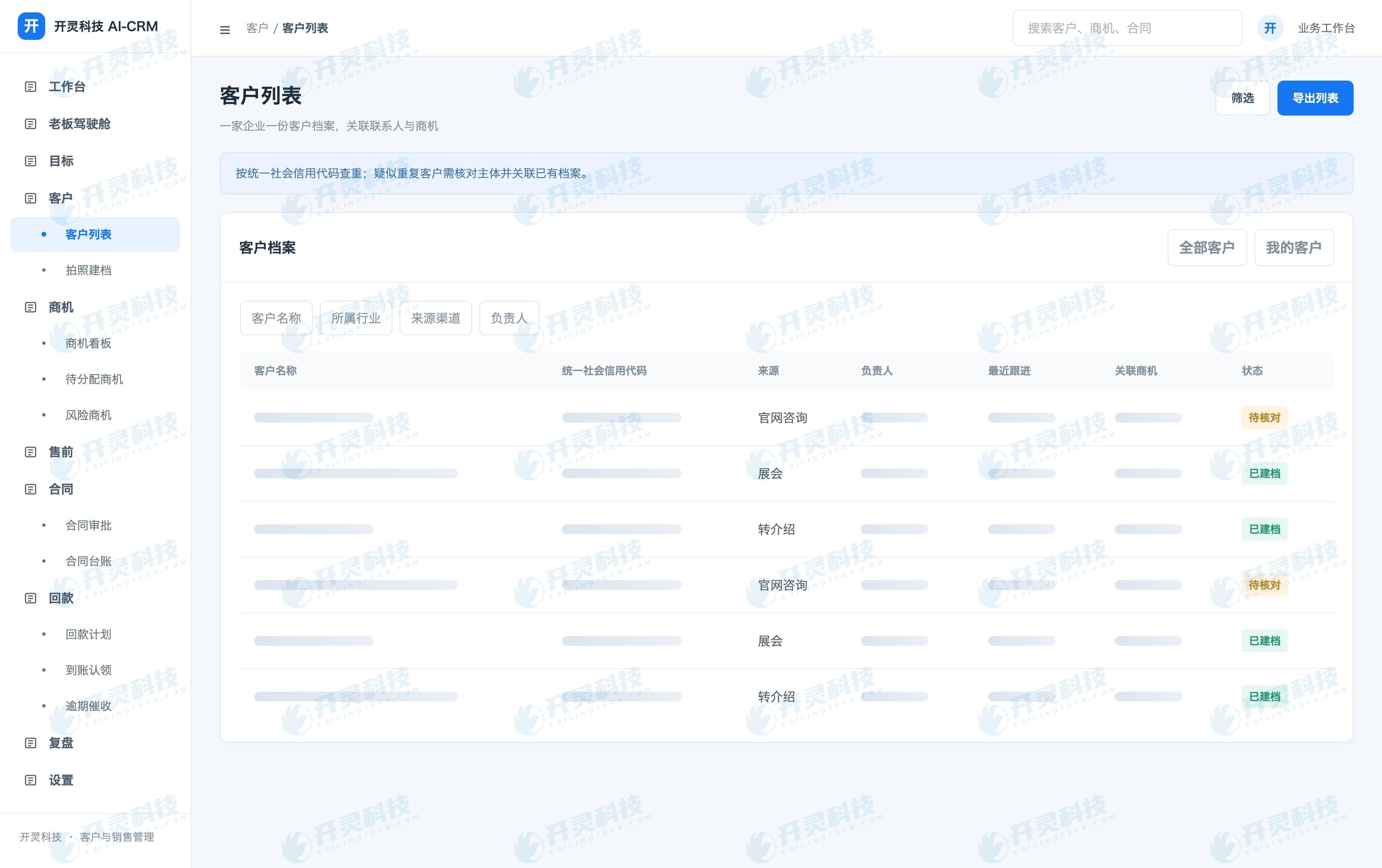
Kailing Technology AI-CRM: Customer list and entity deduplication
▍From lead to opportunity, there must be qualification standards and next actions
Not every lead needs to enter sales forecasting immediately. Marketing first judges whether the company is in a target industry, whether the need matches a product, and whether the contact is reachable; sales then confirms the problem, project scope, procurement timing, budget, and decision participants in the first conversation. Records with incomplete information can enter a nurturing pool or a pending-supplement status; they must not be filled directly with high-value opportunities just to inflate conversion numbers.
The opportunity board shows the stage and the required items to complete before advancing, and the opportunity details include a follow-up timeline, to-dos, and risk reminders. After a salesperson takes over, they should record the first contact conclusion and the next appointment; only when a genuine project opportunity exists should they complete the owner, expected signing time, and stage evidence. This way marketing can see lead quality, and managers can distinguish "assigned," "contacted," "valid opportunity," and "signed."
Returned or invalid leads should also have their reasons recorded: duplicate, out of service scope, not purchasing for now, contact invalid, or needs long-term nurturing. Marketing can adjust website content and event targets accordingly; sales are not repeatedly disturbed by duplicate invalid information. Fields and automation actions must also be configured according to the enterprise's existing processes and accepted through duplicate, invalid, and returned samples. If the return reason only has "other," marketing cannot distinguish product mismatch, contact failure, and postponed purchase, and subsequent improvements lose their basis.
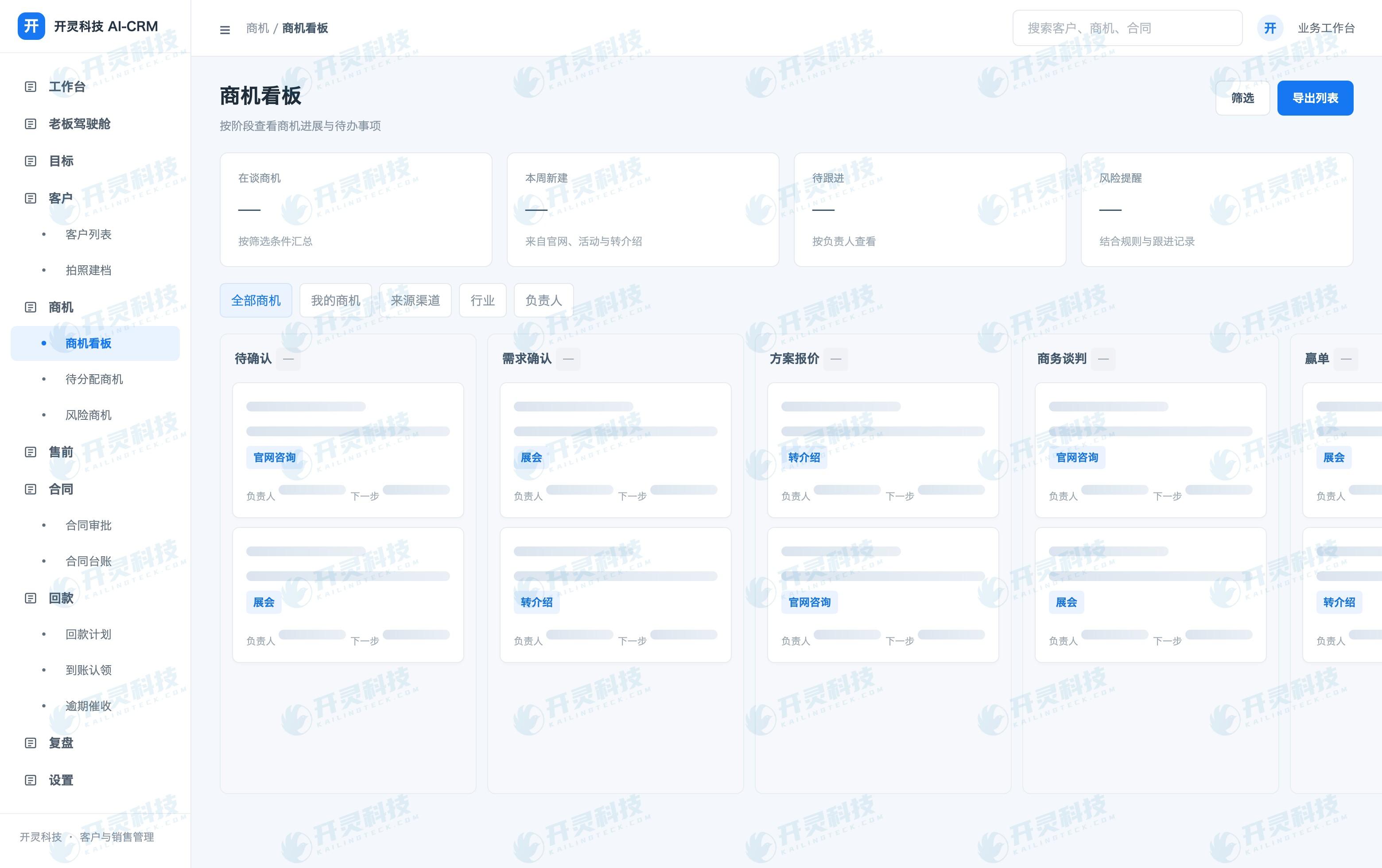
Kailing Technology AI-CRM: Opportunity Stage Board
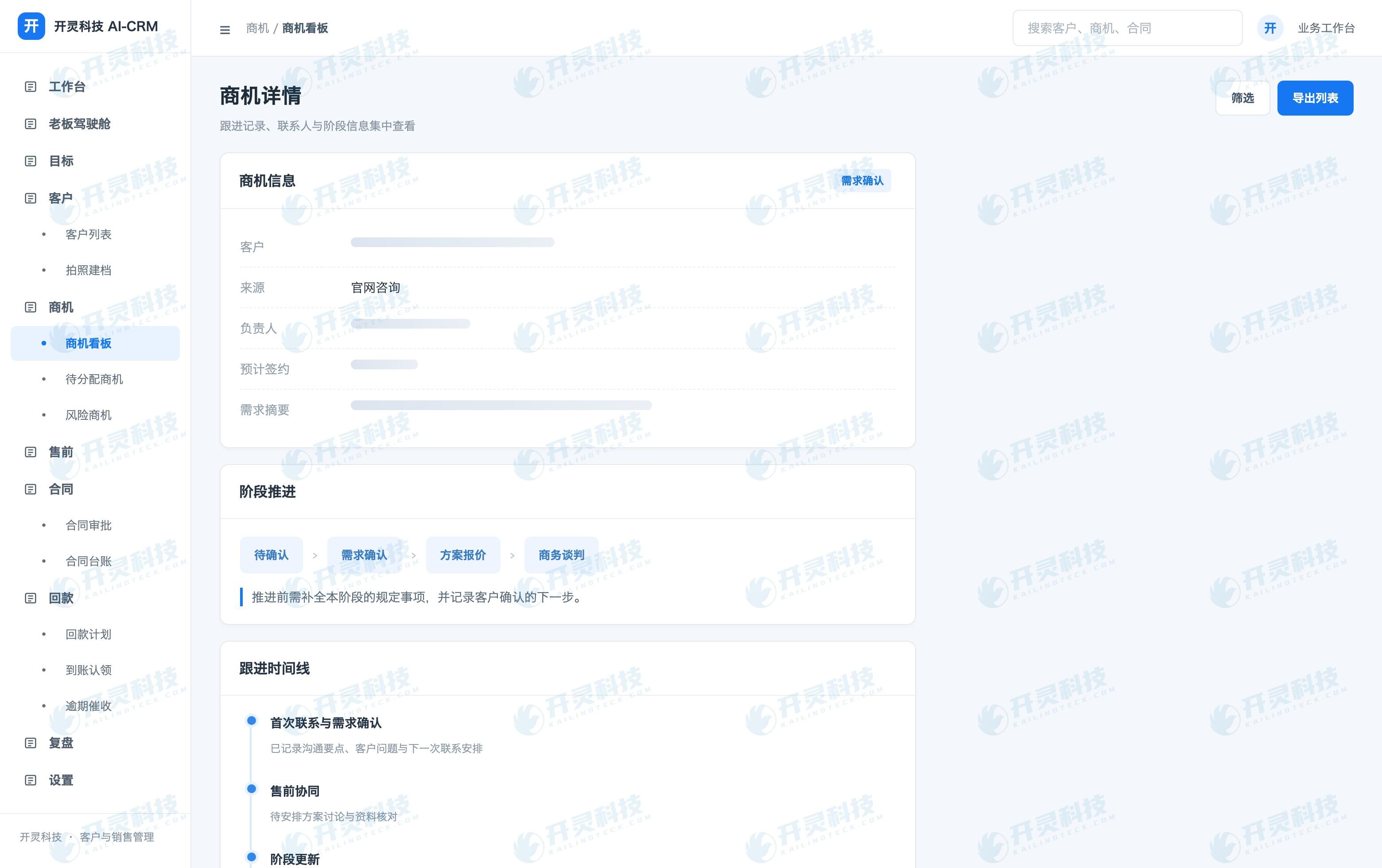
Kailing Technology AI-CRM: Opportunity details and follow-up timeline
▍Use abnormal samples to verify whether unified receiving is truly reliable
During acceptance, it is recommended to simulate at least four situations: the same enterprise first attends an event and then inquires on the website; an old customer's new need is submitted by another contact; an event import lacks contact information; and a website form interface fails and is later re-uploaded. Check one by one whether duplicate files are created, whether sources are merged, whether the owner is correct, and whether unassigned records are left unhandled. For source conflicts, multiple touchpoints can be retained; there is no need to force overwrite to a single channel.
The value of unified reception in Kailing Technology's AI-CRM system lies in bringing marketing leads into a clear customer and opportunity structure and handing responsibility and next actions to sales. True "unification" should be visible in test documents: who provided the lead, why it was assigned to whom, when first contact occurred, and which opportunity it later became. Only when both pages and interfaces pass acceptance can leads be considered to have entered a manageable sales process.
After go-live, sampling can be conducted periodically by channel: draw a business card from an event sign-in sheet and see whether it has a CRM record; draw a message from website submission logs and check the receiving time and first contact; find an opportunity in the CRM marked as an exhibition source and verify the original event and need. Managers should not look only at the total number of opportunities, but also at the duplicate rate, assignment backlog, overdue non-contact, and return reasons. When anomalies are found, first change the receiving and assignment rules, and then consider adding more automation. Set escalation reminders for records that remain unclaimed for a long time and retain manual handling opinions, so that system missed orders can be distinguished from business choices.
▍FAQ
Q: Can exhibition business cards be directly counted as sales opportunities?
A: The enterprise, contact, need, and communication conclusion should be completed first, and then judged according to qualification standards; the number of scans does not equal the number of opportunities.
Q: What should be done if the same customer inquires twice, once from the website and once from an event?
A: First check for duplicates and link them to the same customer file, retain both touchpoints, and handle them separately under the same need or different needs.
Q: How can the first-contact time limit be set?
A: The time limit can be determined based on the enterprise's working hours, lead priority, and assignment mechanism; after timeout, reminders, recovery, or reassignment can be carried out according to agreed rules.
Q: Will website forms automatically enter the system?
A: It is necessary to check the form, authorization, interface, and exception retry plan, and accept the receiving and assignment results through real test inquiries.
Put official website and event leads into a trackable sales queue. Learn about Kailing Technology AI-CRM system: www.kailingteck.com .
As a national high-tech enterprise, Kailing Technology focuses on the digital and intelligent transformation of enterprise business-finance-tax and operations management, providing software products, system integration, implementation and delivery, and operational services for various government agencies, institutions, group enterprises, and SMEs.
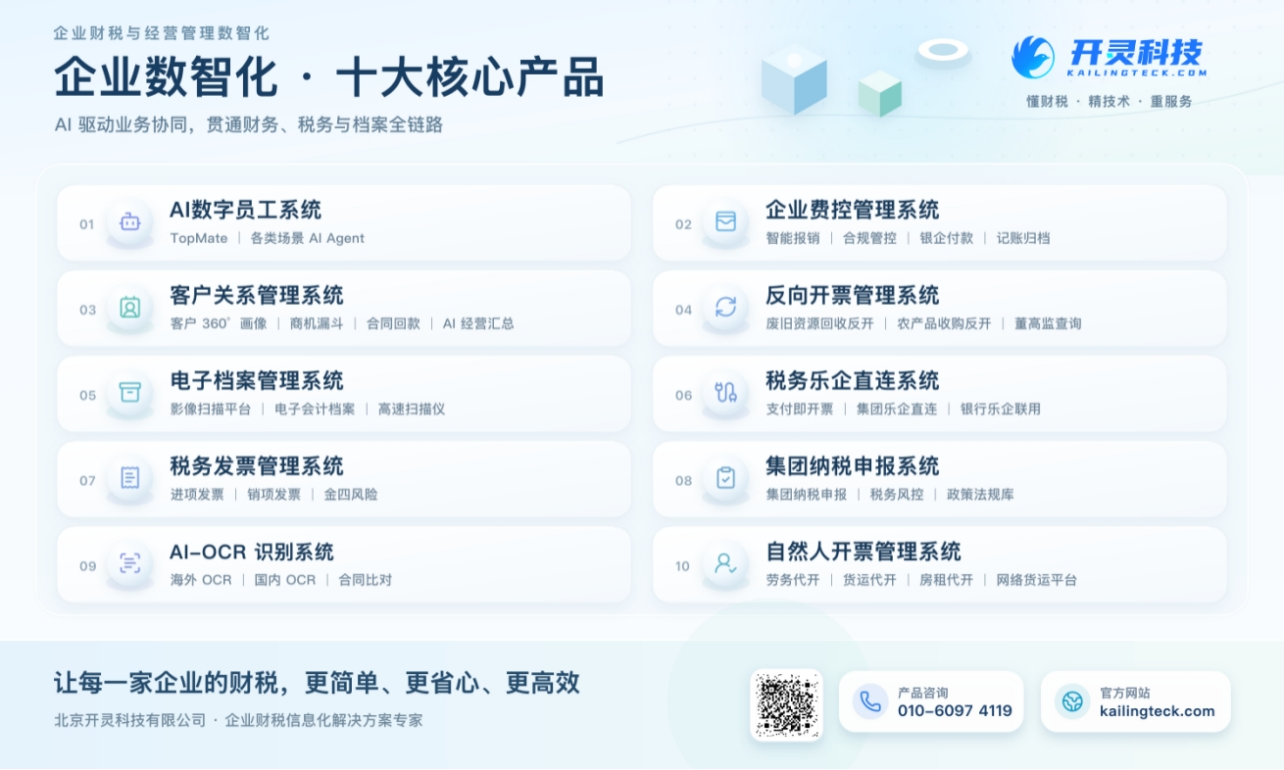
The company has now formed ten core product lines, including: AI digital employee system, enterprise expense control management system, customer relationship management system, reverse invoicing management system, invoice issuance for individuals management system, electronic archives management system, tax fully digitalized e-invoice Leqi system, tax invoice management system, group tax filing system, and AI OCR recognition system. It is committed to connecting enterprise business, finance, tax, funds, and archive data to help customers improve operational efficiency, business-finance-tax compliance capabilities, and digital management levels.
If you have any business-finance-tax digital transformation needs, welcome to contact us. Beijing Kailing Technology will serve you wholeheartedly.
Keywords: Kailing Technology AI-CRM, website inquiries into CRM, event lead management, opportunity assignment, sales lead conversion
As a comprehensive business-finance-tax digitalization solution service provider, Kailing Technology provides business-finance-tax management digital transformation products and operational services for various government agencies, institutions, and large, medium, and small enterprises. The product line includes: solutions for sales contract management system, procurement contract management system, fully digitalized Leqi interface project, automatic output invoicing system, reverse invoicing system, invoice issuance for individuals system, employee expense control and reimbursement system, input VAT invoice management system, supply chain collaborative reconciliation system, image AI OCR recognition system, automatic financial bookkeeping system, electronic accounting archives system, etc., comprehensively driving the digitalization process across various fields.
Consultation Hotline: 18513895936 / 010-60974119 Location: Beijing