
A pile of sales to-dos, key customers followed up by no one, easy to lose deals? Kailing Technology AI-CRM to-do graded push to WeCom and DingTalk ensures no missed follow-ups
The sales team never lacks to-dos to handle every day. What they lack is breaking down this pile of to-dos clearly: which are key customers that must be acted on today, which can wait, and who should take over which. Many salespeople are not lazy; rather, their to-dos rely entirely on memory, sticky notes, and flipping through Excel. Key customers and ordinary matters are mixed in one long list, so the important ones get drowned out, the near-due ones are followed up by no one, and deals quietly slip away. Kailing Technology AI-CRM's approach to this is not to "list a few more reminders," but to run to-dos as a pipeline with mechanisms—getting each of the four stages of "source, grading, outreach, closure" right is what truly prevents missed follow-ups. This article breaks it down: where to-dos come from, how they are graded, where they are pushed, and how they are closed.
▍1. Where do to-dos come from: five types of items automatically aggregated, not relying on people to remember
The premise of graded to-dos is that the to-dos must first be "complete." If some items are not captured by the system from the start, no matter how finely they are later classified, they are still missed. Kailing Technology AI-CRM does not require salespeople to manually enter to-dos; instead, it automatically generates them from the real-time status of each module — customers, opportunities, contracts, and collections — mainly grouped into five categories:
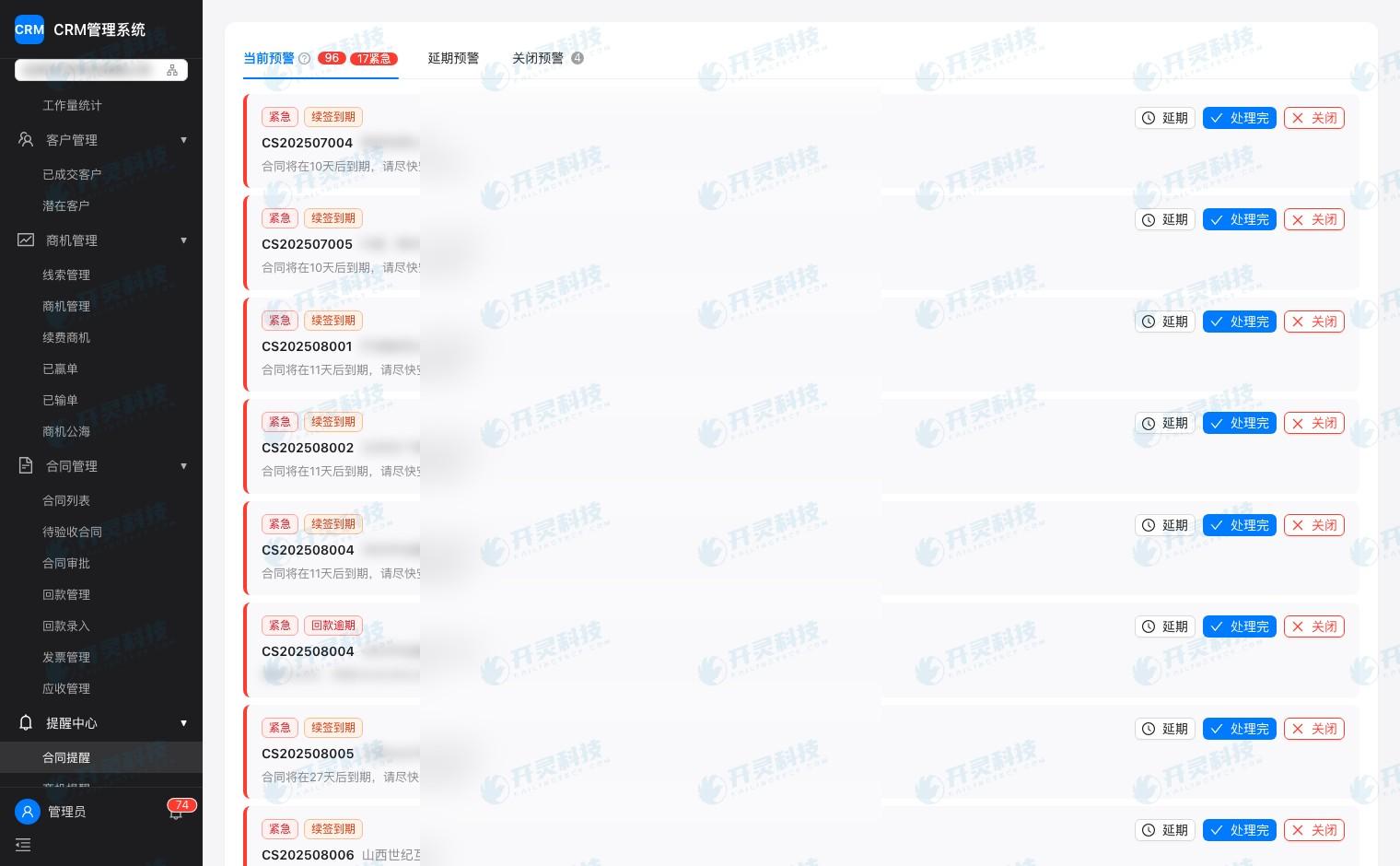
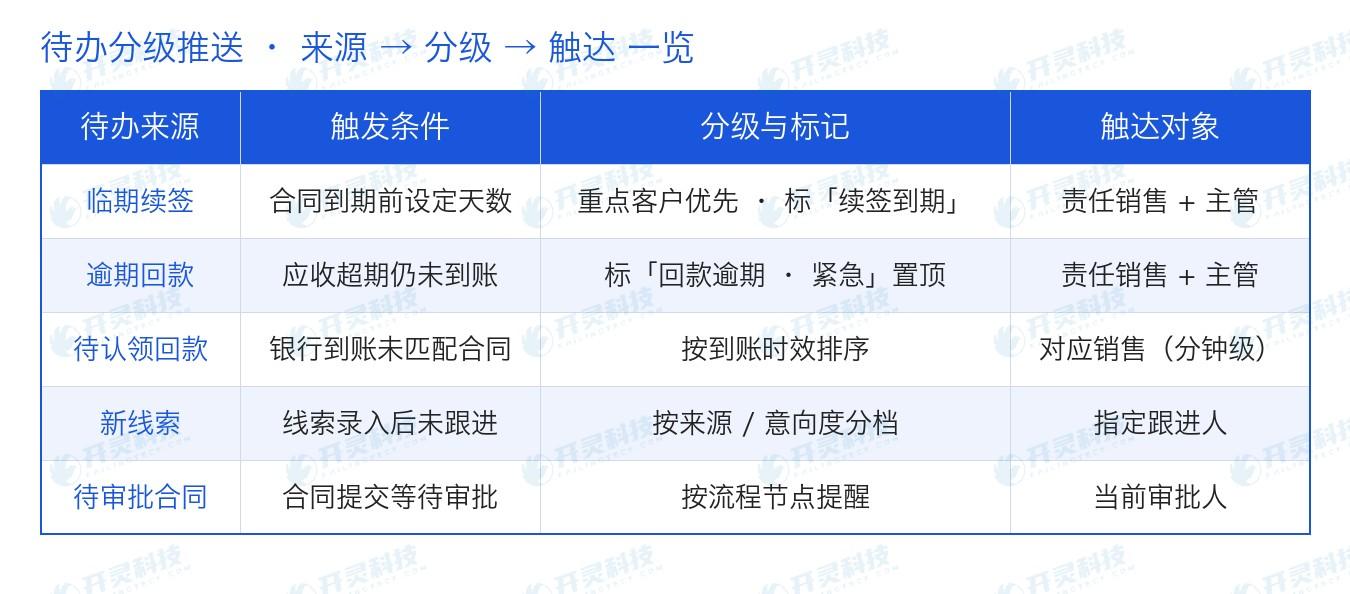
· Upcoming renewal: A certain number of days before contract expiration, the system automatically triggers a renewal to-do based on signing information, marking "renewal due" to prevent old customers from being lost due to no follow-up upon expiration.
· Overdue payments: If accounts receivable have not arrived by the agreed date, a collection to-do is automatically generated and marked "Overdue Collection", pulling the receivable out of the ledger for proactive follow-up.
· Payments pending claim: Payments received in bank statements but not yet matched to contracts enter the pending claim queue, awaiting confirmation of attribution by the corresponding salesperson.
· New leads to follow up: If no follow-up action occurs after a lead is entered, the system prompts the designated follower to take over promptly, preventing leads from going cold in the public pool.
· Contracts pending approval: After a contract is submitted, it is at a node in the approval process, reminding the current approver to handle it and preventing the process from getting stuck at a certain step.
These five types of to-dos all correspond to nodes where "problems arise if not handled." They are no longer scattered in each salesperson's notebooks and spreadsheets, but are uniformly gathered into the reminder center, forming a structured list that can be sorted and pushed by the system—this is the foundation for all subsequent grading and pushing.
▍II. How to prioritize: rank by key customers and urgency, don't let the important ones drown
Once the to-dos are all gathered, what really determines "whether a deal will be lost" is ranking. A list without priorities is essentially no list at all — a salesperson's attention is limited. If key customer renewals and overdue large receivables are listed together with an ordinary lead and spread out in entry-time order, they are easily skipped over. The grading logic of Kailing Technology AI-CRM is to let the system think through "which one to act on first" on behalf of the salesperson.
Prioritization considers two dimensions at once: first, customer weight—key customers and existing customers nearing renewal are placed first, because a single oversight with such customers often costs far more than a new lead; second, urgency—overdue payments and items nearing expiry are marked "urgent" and pinned to the top, handling first those whose cost grows the longer they are delayed. With both dimensions combined, the system pushes "important and urgent" items to the top of the list and sinks "can wait" items below, so key customers are no longer buried in a pile of miscellaneous tasks. The table below shows how the four main types of to-dos map from source to priority level and then to the contact target:
▍III. Where to push: WeCom, DingTalk, Feishu, to the person at the right time
After grading, the next step is "delivery." To-do items listed in the system that sales must log in to view are still passive in nature—truly effective reminders actively find the person. Kailing Technology AI-CRM seamlessly connects with WeCom, DingTalk, Feishu, and other office tools that sales use every day, pushing graded to-do items directly to the responsible person, with no need to open an additional system to monitor them.
· To person: Each to-do is bound to a clear responsible salesperson. Items such as overdue collections and near-expiry renewals are also copied to supervisors, so responsibility falls on a specific person rather than being sent to a group no one claims.
· To time: Push at the time point when processing is due: remind before expiry for upcoming renewals, push immediately upon overdue for overdue payments, letting sales act within the window when there is still time.
· To channel: The team pushes to WeCom if you use WeCom, to DingTalk if you use DingTalk, and to Feishu if you use Feishu, so sales can pick up to-dos within their existing workflow without changing usage habits.
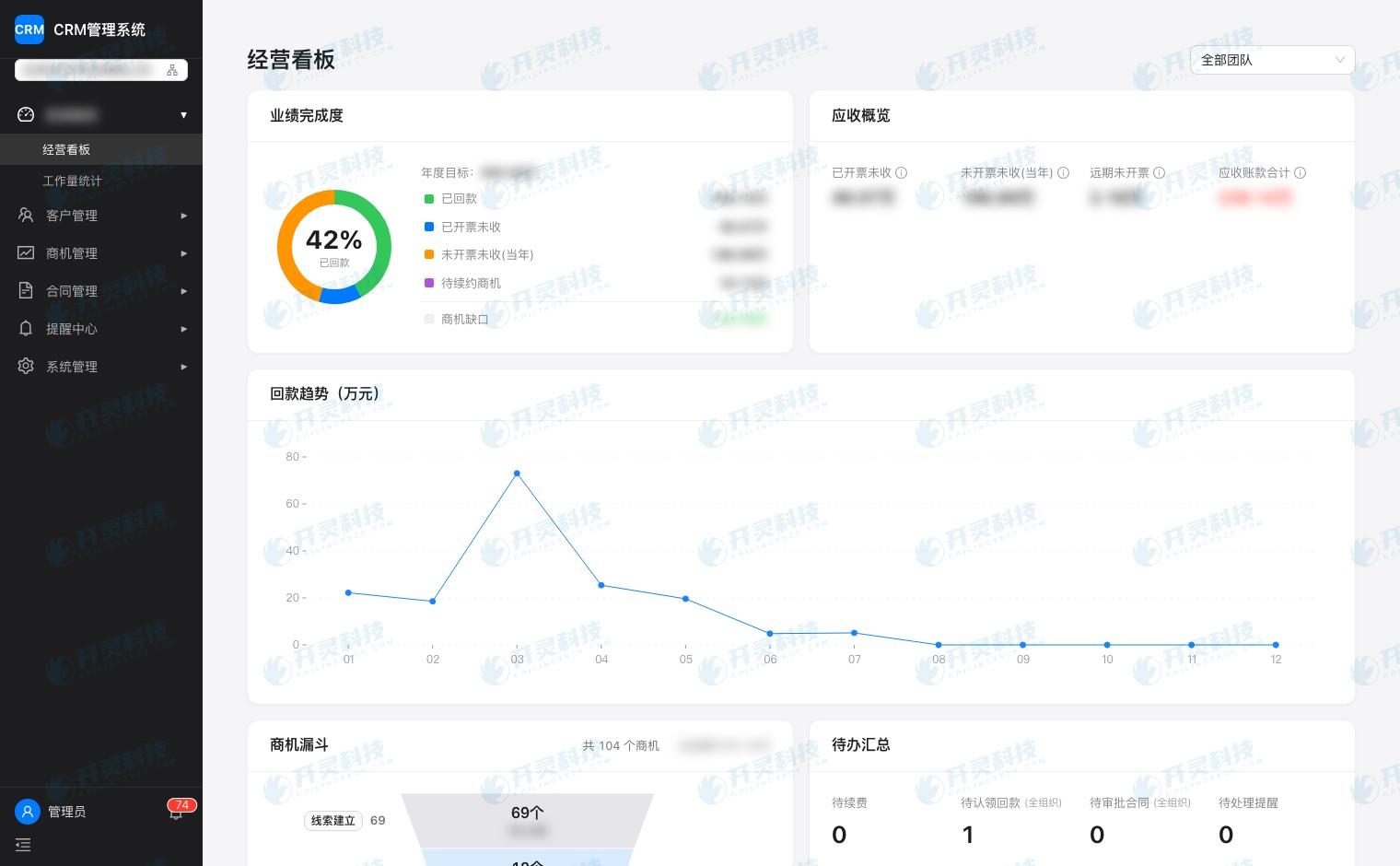
At the same time, the business dashboard summarizes all to-dos by category as "pending renewal, pending claim of receivables, pending contract approval, pending handling reminders," allowing managers to see the overall to-do distribution and backlog of the team at a glance, and also trace the processing status of each item along the reminders.
▍IV. How to close the loop: resolved, deferred, closed, with automatic reminders for missed follow-ups
Pushing in place does not equal getting things done. The last link of the to-do mechanism is closure—every to-do must have a clear destination, rather than being left unattended after pushing. In Kailing Technology AI-CRM, after sales receives a to-do, they can perform three operations on it:
· Processed: Follow-up is completed and payment has arrived; mark it as handled, remove the to-do from the list, and leave a follow-up record for traceability.
· Extension: If the customer is temporarily unavailable or the approval is still in progress, a postponement can be set, and the system will remind again at the new time point, avoiding "leave it for now" turning into "forgot about it."
· Closed: Manually close items confirmed as no longer requiring follow-up to keep the list clean, so that genuine to-dos are not disturbed by invalid entries.
The most critical part is the fallback: for to-dos that have neither been handled, nor extended, nor closed, the system won't let them simply sink—it automatically reminds again and keeps following up until there is a clear resolution. In this way, "missed follow-ups" are blocked at the mechanism level—not by relying on sales reps' conscientiousness, but by the system repeatedly surfacing items that haven't been closed out. The contract's installment payment nodes are also connected to the same logic: receivables due are automatically reminded, and collections no longer rely on people's memory.
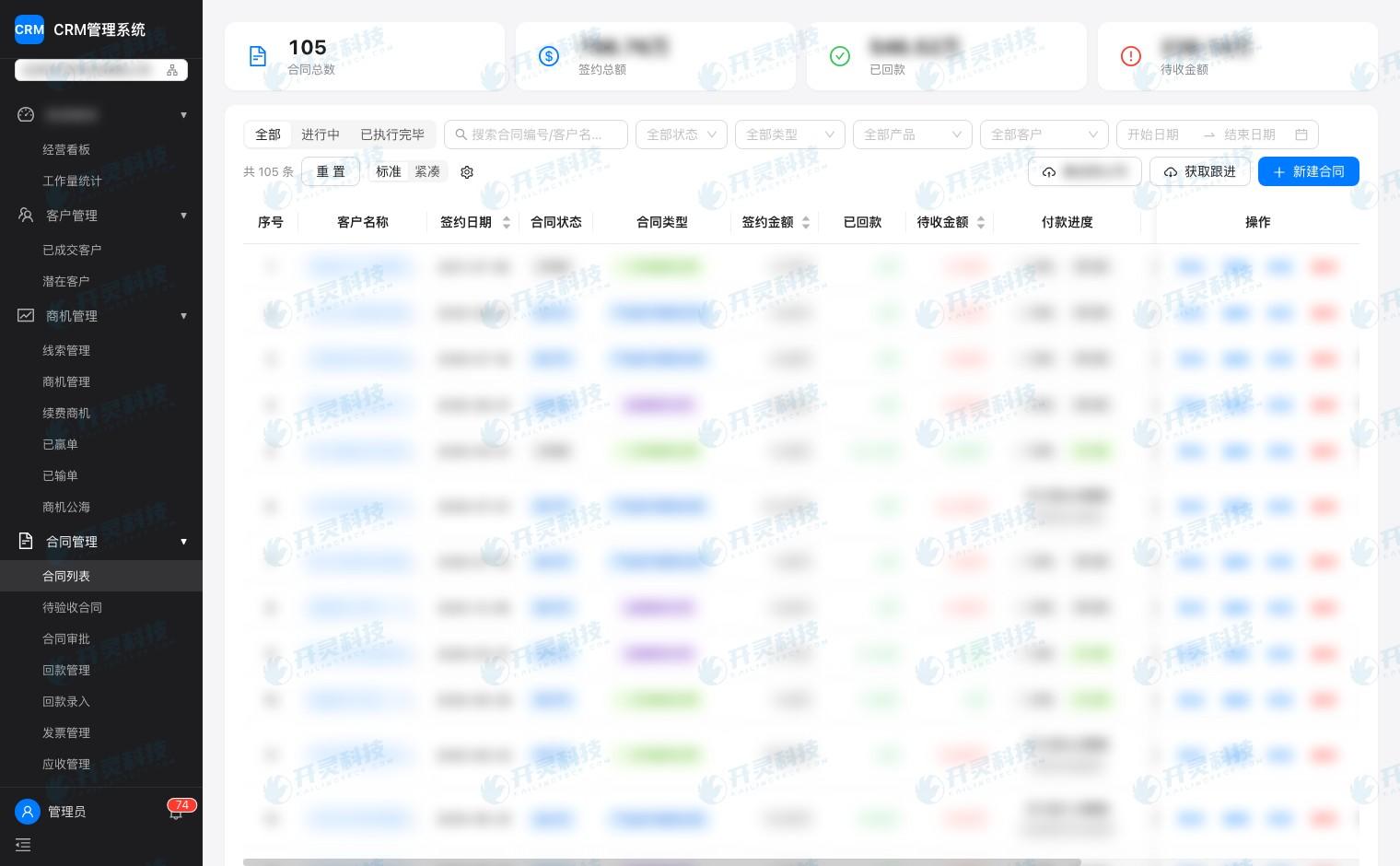
From source to grading, from outreach to closed loop, each of the four stages is done right, so the to-do list is no longer just a long list that is "done once listed," but a mechanism that can reliably catch key customers. This is also the core problem Kailing Technology's AI-CRM aims to solve: ensuring that every matter that should be followed up is pushed to the right person at the right time, and ultimately has a clear result.
▍FAQ
Q: With too many to-dos, will tiering make things more chaotic instead?
A: No. The purpose of grading is precisely to address "too many and too chaotic" — the system automatically sorts by customer weight and urgency, pushing important and urgent items to the top and deferring those that can wait. Sales sees a list already prioritized, rather than a flat pile of items.
Q: Our team uses DingTalk, not WeCom; can it still be pushed?
A: Yes. The system seamlessly connects with mainstream office tools such as WeCom, DingTalk, and Feishu. It pushes to whichever tool the team uses, so sales can receive to-dos within their existing workflow without switching systems.
Q: How are priorities distinguished between key customers and ordinary matters?
A: The system looks at two dimensions at the same time: customer weight (key customers and existing customers nearing renewal are prioritized) and urgency (overdue and near-expiry items are marked urgent and pinned to the top). The two are combined to determine the order, ensuring key customers are not drowned out by ordinary matters.
Q: What happens if a to-do is pushed but the salesperson does not handle it?
A: The system provides a fallback mechanism: to-dos that are neither processed nor postponed or closed will automatically be reminded again and continuously followed up until there is a clear disposition, avoiding reliance on individual initiative to prevent missed follow-ups and lost orders.
Q: Does this to-do mechanism require additional sales entry?
A: Basically none. To-dos are automatically generated from the real-time status of the customer, opportunity, contract, and collection modules, and sales mainly receives, follows up, and marks disposition rather than manually maintaining a to-do list.
Learn about Kailing TechnologyAI-CRM Graded to-do push, so key customers are no longer left unattended → www.kailingteck.com 。
As a comprehensive business-finance-tax digitalization solution service provider, Kailing Technology provides business-finance-tax management digital transformation products and operational services for various government agencies, institutions, and large, medium, and small enterprises. The product line includes:
Solutions for businesses including sales contract management system, procurement contract management system, fully digitalized Leqi interface project, output automatic invoicing system, reverse invoicing system, invoice issuance for individuals system, employee expense control and reimbursement system, input VAT invoice management system, supply chain collaborative reconciliation system, image OCR recognition system, automatic financial bookkeeping system, and electronic accounting archives system, comprehensively driving the digitalization process across various fields.
If you have any business-finance-tax digital transformation needs, welcome to contact us. Beijing Kailing Technology will serve you wholeheartedly.
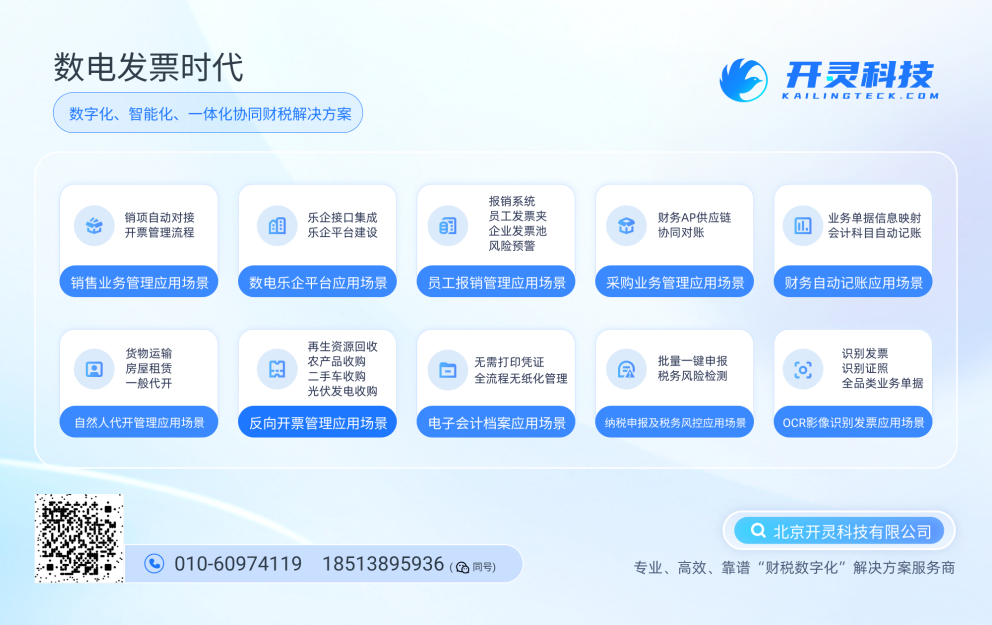
As a comprehensive business-finance-tax digitalization solution service provider, Kailing Technology provides business-finance-tax management digital transformation products and operational services for various government agencies, institutions, and large, medium, and small enterprises. The product line includes: solutions for sales contract management system, procurement contract management system, fully digitalized Leqi interface project, automatic output invoicing system, reverse invoicing system, invoice issuance for individuals system, employee expense control and reimbursement system, input VAT invoice management system, supply chain collaborative reconciliation system, image AI OCR recognition system, automatic financial bookkeeping system, electronic accounting archives system, etc., comprehensively driving the digitalization process across various fields.
Consultation Hotline: 18513895936 / 010-60974119 Location: Beijing