
How can B2B enterprises obtain customer leads through website content? Kailing Technology first builds an SEO and GEO customer acquisition system, then uses the AI-CRM system to take on business opportunities

B2B buyers will not proactively leave their phone number just because the website has published many articles. They may first search for equipment integration problems, then compare business scenarios, delivery scope, and implementation risks, and only then be willing to inquire. When Kailing Technology connects the SEO and GEO customer acquisition system with the AI-CRM system that takes on business opportunities, the focus is on making each page answer a real procurement question and mapping later inquiries to the original question, source, and follow-up results. Content revisions and channel changes should also be recorded, to avoid judging success or failure based on a single ranking.

▍Derive website content from procurement questions, rather than assembling titles from the product menu
The starting point of official website content is the specific questions customers must resolve before purchasing: whether the old system can be integrated, how cross-organization permissions are divided, what data needs to be prepared for acceptance, and how risks in similar projects are controlled. Enterprises can organize pre-sales meetings, customer service tickets, sales loss reasons, and search terms together to form a question list. A page should carry only one clear main question, along with applicable objects, prerequisites, methods, and boundaries; this is easier for buyers to use than repeatedly piling up "leading" and "empowering."
The content structure needs to cover different intents. Explanatory articles answer "what it is and why"; scenario-based articles explain "how to do it in a certain industry"; implementation articles provide preparation checklists and acceptance points; product pages then address "which stages Kailing Technology can deliver." If every page only rewrites the product introduction, search results will duplicate each other, and readers cannot continue reading according to their stage. Each article should end with a consultation entry point that matches the question.
The basic work of SEO includes page titles, clear hierarchy, searchable body text, internal links, and continuous updates; GEO requires that the key judgments in the content have clear sources, applicable conditions, and independently citable conclusions. The display mechanisms of search and intelligent Q&A will change, and enterprises should base themselves on their own verifiable facts. When policies or product capabilities change, revise the original text accordingly, to avoid old articles bringing outdated commitments into inquiries.
▍Design "reading" into "an inquiry that can explain requirements"
A good consultation entry point is not a "contact us now" pop-up on every screen. For implementation challenges, the page can present the systems, data, and organizational information the customer needs to prepare, and invite them to submit their current systems, industry, issues, and planned timeline. This helps pre-sales judge whether there is a match and also makes customers feel that consultation is the next step of work rather than suddenly entering a sales process. Form fields should follow the principle of necessity, and the purpose and storage method of personal contact information and business materials should be explained.
Link sources should also be retained. When entering CRM from a searched article, official website product page, campaign landing page or partner referral, the first touchpoint, most recent touchpoint and specific content page can be marked; multiple contacts should not overwrite the original source. If inquiries come by phone or WeCom, reception personnel still need to supplement the question and source based on the visitor's description, avoiding lead statistics being swallowed by "other".
The focus of content metrics is not just rankings or readership. For long-cycle B2B business, what is more valuable is which type of page brings qualified inquiries, whether inquiries turn into business opportunities, and at which stage business opportunities are lost. If a solution article has few visits but converts into several highly matched conversations, it may be more worth continuously updating than a high-traffic article on a broad topic.
▍The verifiable design of Kailing Technology's AI-CRM system for taking on business opportunities
The "Unassigned Opportunities" page of Kailing Technology AI-CRM clearly has a "official website inquiry" source tag and also places exhibitions and new needs from old customers in the same unassigned queue. The page shows that marketing first creates customers and opportunities, then recommends owners by region, industry experience, number of deals in progress, and ownership of old customers, and sets a first-contact time limit. Inquiries entering the system flow by source and owner; real-time integration of official website forms, analytics tools, and CRM requires interface configuration and acceptance.
The customer list is deduplicated by unified social credit code, and customer details show source, contacts, opportunities, contracts, and follow-up records. If an official website inquiry comes from an existing customer, it should first be linked to the original record, and then an opportunity corresponding to the new requirement should be created; otherwise, a renewal or upsell may be mistakenly counted as a "new customer." During sales follow-up, the page topics the customer cares about can be written into the requirement summary, so that subsequent quotations and pre-sales discussions proceed along the same question.
The opportunity dashboard retains stage and source filters, and the risky opportunity page centrally presents signals such as long periods without follow-up, stage stagnation, and budget changes. Enterprises can use these designs to form feedback from content to sales: which questions attract projects that can be advanced, and which content only attracts mismatched audiences. Source analysis should be based on the enterprise's real business data, and content quality should be reviewed in combination with valid inquiries, first contact, and opportunity progression results.
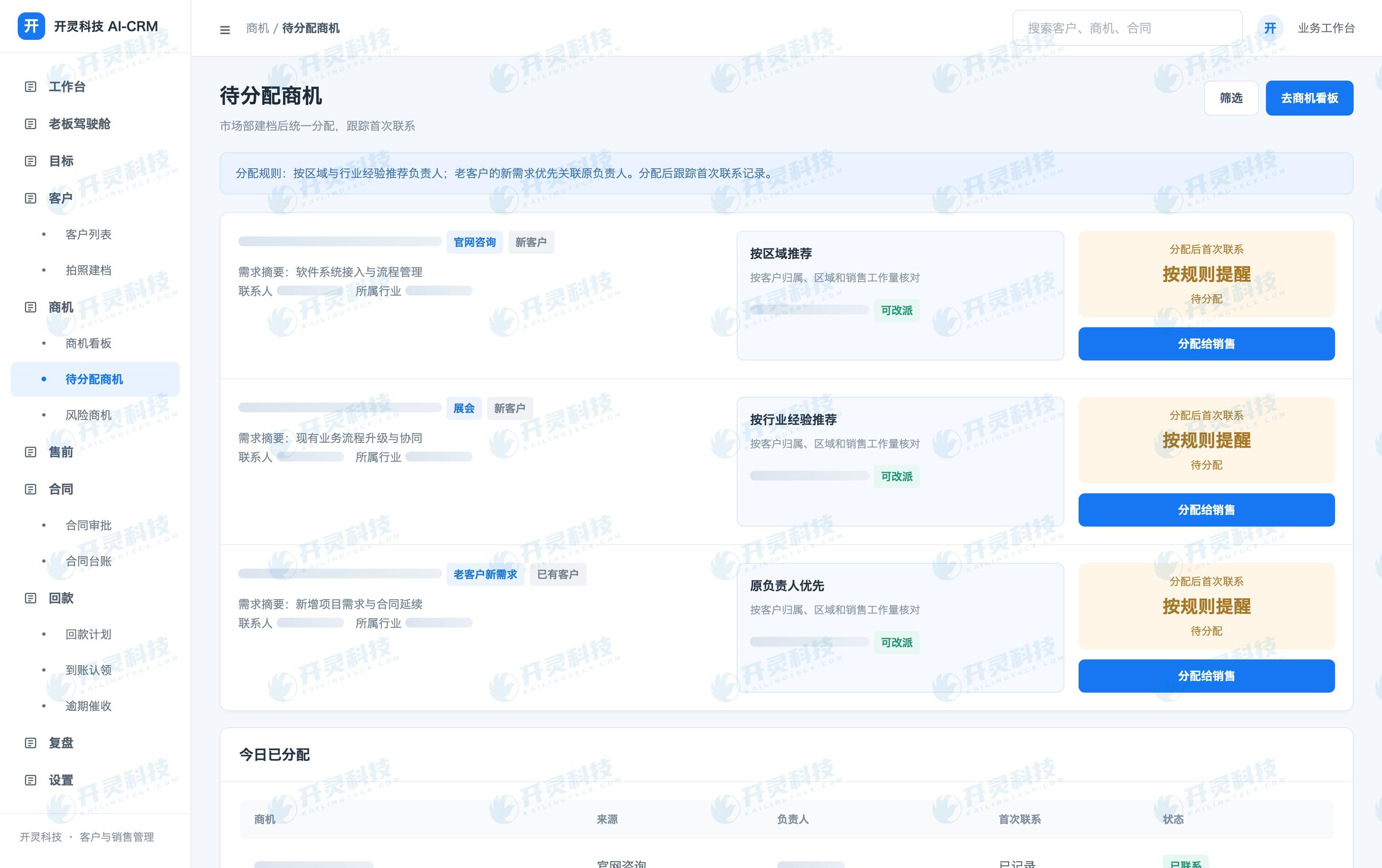
Kailing Technology AI-CRM: Unassigned Opportunities and Owner Recommendations
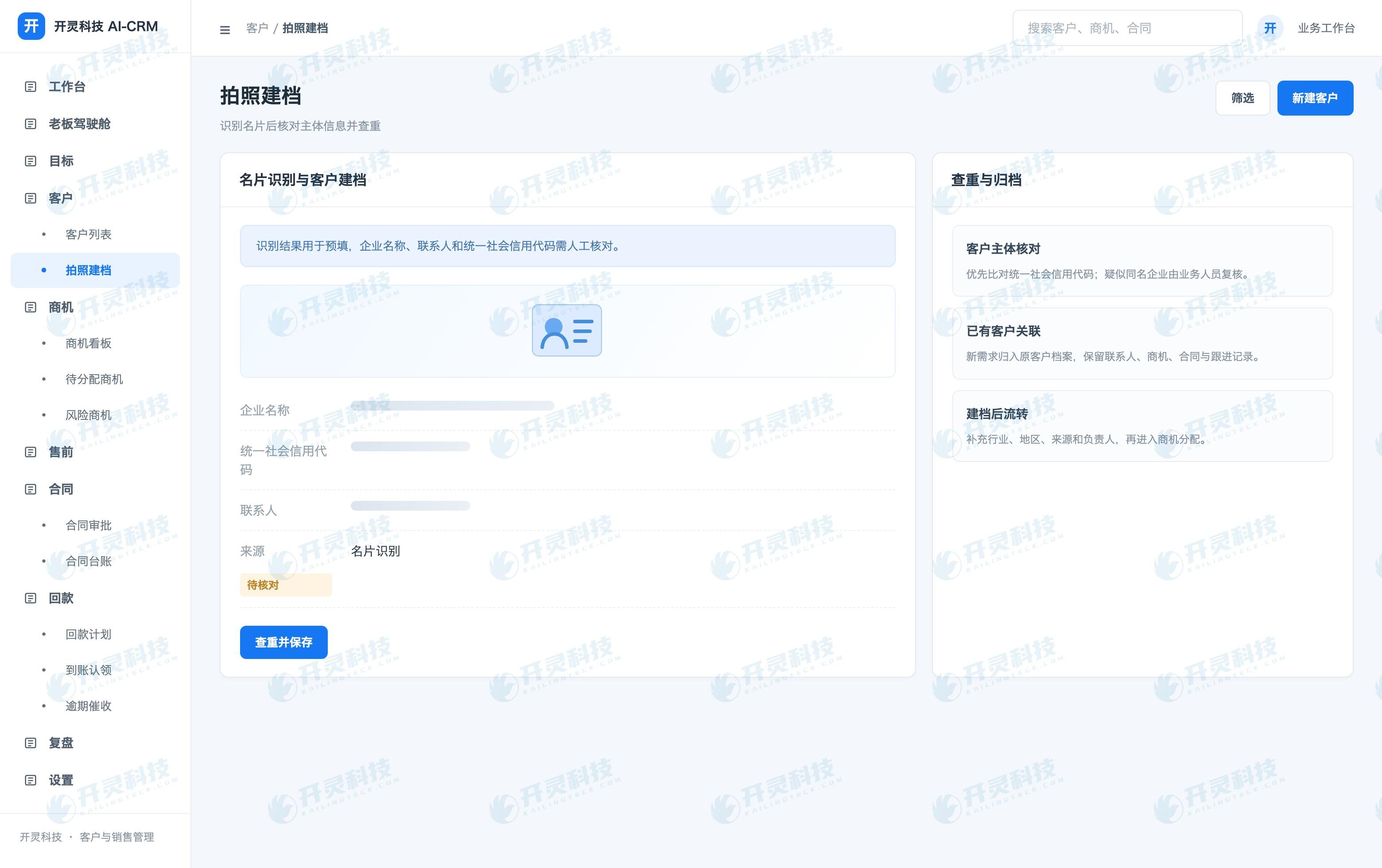
Kailing Technology AI-CRM: Customer Record Creation and Information Verification
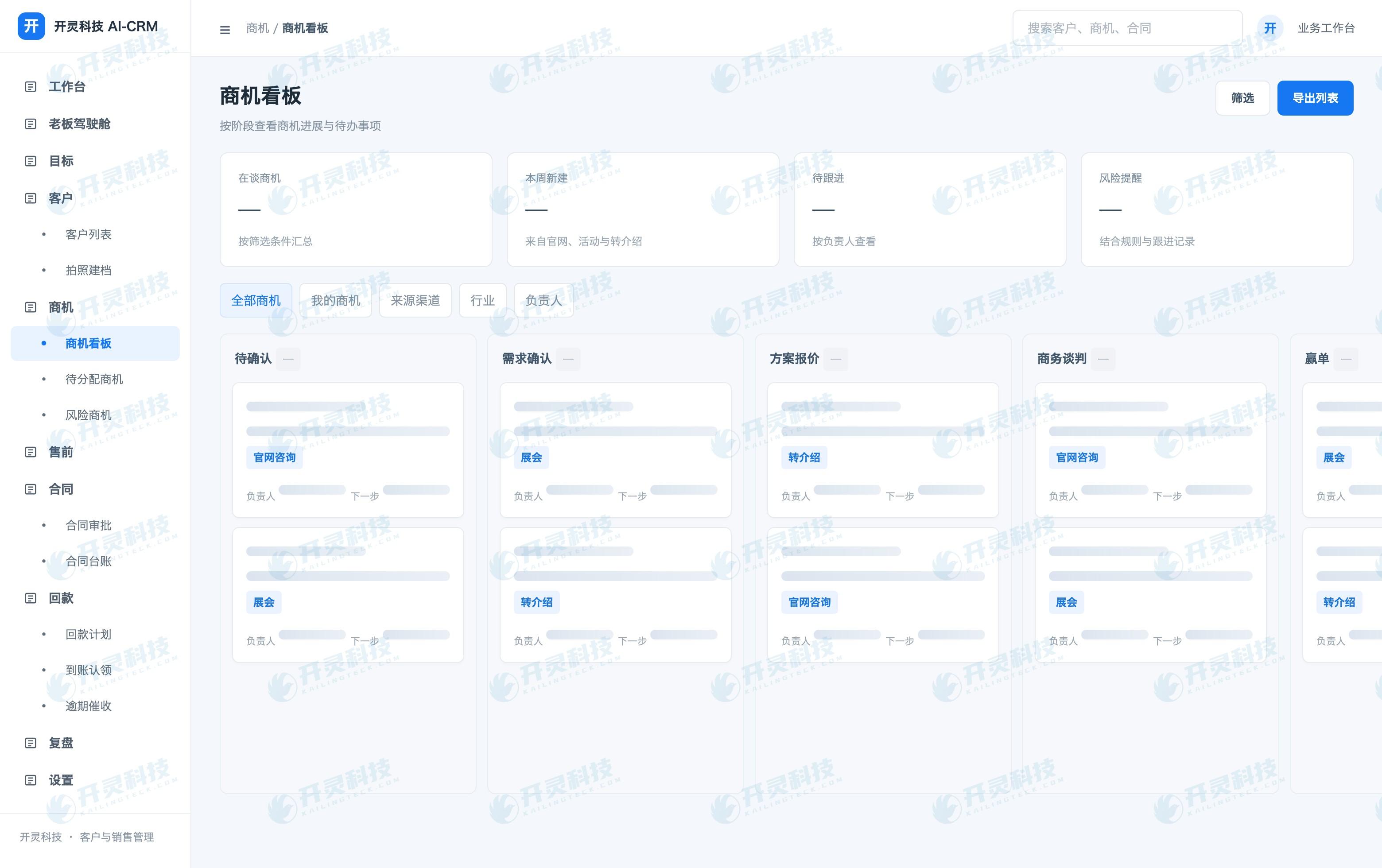
Kailing Technology AI-CRM: Opportunity Stage Board
▍Use one sample lead to accept the entire chain
In the first stage, it is not necessary to build many sections at the same time. Choose one target industry, one high-frequency procurement question and one group of related pages, and set up clear content navigation and consultation entry points. Then generate test inquiries from natural search or campaign pages, and check form authorization, source fields, customer deduplication, opportunity creation, owner assignment, first contact and follow-up records. When cross-system transmission fails, there should be retry and manual supplementary entry methods.
Marketing reviews pages and questions monthly, sales reviews inquiry quality and loss reasons monthly, and the implementation team adjusts fields, assignment rules, and content structure based on this feedback. For search rankings or AI citations, fixed positions cannot be promised; for CRM stage progression, "submitted a form" also cannot be directly equated with a valid opportunity. Making questions, content, inquiries, and the sales process correspond to one another is the foundation for the official website to obtain leads over the long term.
Customer language actually heard by sales should also be written back into the content library in reverse. For example, customers do not search internal product codes but describe "how to align contract receivables across multiple companies", so the official website should organize pages by business questions. Questions about interfaces, permissions and implementation cycles that repeatedly appear in pre-sales Q&A can be consolidated into Q&A with dates and applicable scope; uncertain project conditions retain a consultation entry point for professionals to judge. In this way, content updates have a business basis, and lost-deal reasons in CRM can also help remove ineffective topics. Keep the date of each revision for review.
▍FAQ
Q: Do SEO and GEO content need to be written separately?
A: Trusted facts and a clear question structure can be shared, then search readability and citable conditional conclusions can be optimized separately.
Q: The website has traffic but no leads; what to check first?
A: First check whether the visits come from target customers, whether the pages answer procurement questions, and whether the inquiry entry point is natural, then check the form and phone integration.
Q: Can the CRM automatically bring in website leads?
A: The CRM takes on and follows up on inquiries that enter the system; lead generation depends on content, channels, and a clear inquiry entry point, and website integration still requires configuration and acceptance. It is recommended to also check the inquiry form fields, submission success prompt, and notification path.
Q: How to record a customer viewing different articles multiple times?
A: At least retain the first touchpoint, key subsequent touchpoints, and the questions of this inquiry, to avoid recording only the last page and losing the decision path.
Build website content and opportunity intake starting from customer questions, and learn about Kailing Technology's AI-CRM solution: www.kailingteck.com .
As a national high-tech enterprise, Kailing Technology focuses on the digital and intelligent transformation of enterprise business-finance-tax and operations management, providing software products, system integration, implementation and delivery, and operational services for various government agencies, institutions, group enterprises, and SMEs.
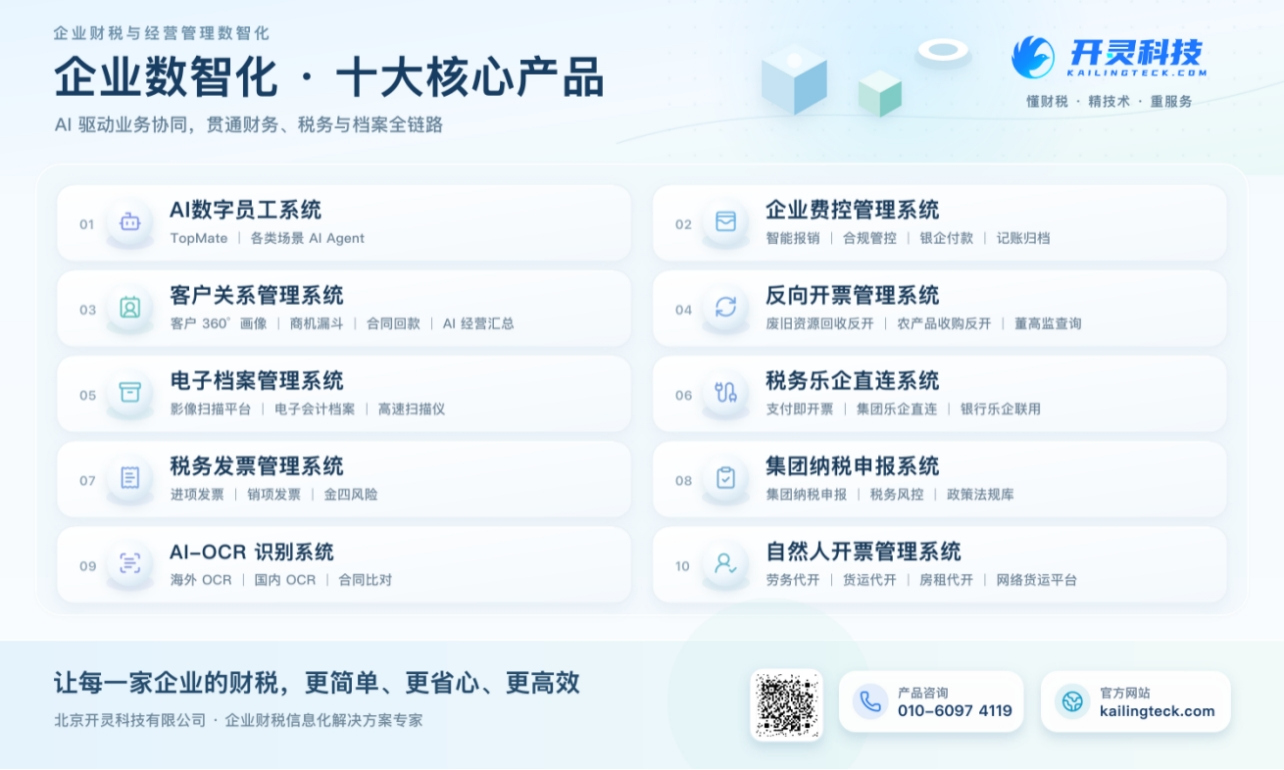
The company has now formed ten core product lines, including: AI digital employee system, enterprise expense control management system, customer relationship management system, reverse invoicing management system, invoice issuance for individuals management system, electronic archives management system, tax fully digitalized e-invoice Leqi system, tax invoice management system, group tax filing system, and AI OCR recognition system. It is committed to connecting enterprise business, finance, tax, funds, and archive data to help customers improve operational efficiency, business-finance-tax compliance capabilities, and digital management levels.
If you have any business-finance-tax digital transformation needs, welcome to contact us. Beijing Kailing Technology will serve you wholeheartedly.
Keywords: Kailing Technology AI-CRM, B2B official website lead generation, SEO lead generation, GEO content, CRM opportunity acceptance
As a comprehensive business-finance-tax digitalization solution service provider, Kailing Technology provides business-finance-tax management digital transformation products and operational services for various government agencies, institutions, and large, medium, and small enterprises. The product line includes: solutions for sales contract management system, procurement contract management system, fully digitalized Leqi interface project, automatic output invoicing system, reverse invoicing system, invoice issuance for individuals system, employee expense control and reimbursement system, input VAT invoice management system, supply chain collaborative reconciliation system, image AI OCR recognition system, automatic financial bookkeeping system, electronic accounting archives system, etc., comprehensively driving the digitalization process across various fields.
Consultation Hotline: 18513895936 / 010-60974119 Location: Beijing