
Where can enterprises start when implementing AI digital employees? Kailing Technology outlines the paths of WorkBuddy, Doubao Office, and self-built platforms
Enterprises trying AI digital employees often hesitate between "first give employees an office assistant" and "directly take over business processes." The two goals differ in investment and risk. Kailing Technology recommends first finding a role task with clear deliverables, then choosing the WorkBuddy, Doubao Office, or enterprise self-built platform path based on data sensitivity, cross-system actions, and management responsibility; the basis for choice is the task, not whether the product name is popular.

▍First limit the pilot task to one piece of work that can be accepted
"Have everyone use AI" is hard to accept, whereas "every week, reconcile the expense data from three systems and generate a departmental variance report" clearly defines input, processing, output, and responsible persons. Pilots can first select tasks that are high-frequency, relatively stable in rules, and easy to manually review, such as meeting minutes organization, policy Q&A, expense report pre-review, or cross-system data retrieval. Do not have tools directly execute payments, modify master data, or send bulk external notifications at the start.
The digital employee knowledge foundation of Kailing Technology distinguishes nine categories of tasks by nature of work, covering knowledge Q&A, review and gatekeeping, cross-system processing, business analysis, anomaly monitoring, material collection, content generation, as well as coordination and proactive communication. During selection, it is not necessary to cover all nine categories at once; just specify what this position "will read, what it can change, and to whom exceptions are handed over." If it only answers policy clauses, the tool should focus on knowledge retrieval; if approval opinions are to be written back to business systems, interfaces, permissions, and operation logs must be verified.
The same task can be designed with two trial-run stages: first AI generates suggestions and employees confirm item by item; after stabilization, low-risk steps are automated while high-risk actions continue to require manual approval. When comparing, record manual steps saved, rework rate, exception handling time, and deliverable quality; do not use untested "how many times better" claims as a procurement basis.
▍Ready-made office assistants are suitable for lightweight starts by individuals and teams
Tencent officially positions WorkBuddy as a full-scenario AI office workbench, publicly stating that it can break down tasks in natural language, call tools, generate files, and let users review the process and results. The official introduction of the Doubao desktop version emphasizes Q&A, writing, screenshot-based questions, translation, and document processing within commonly used software. Within approved material scope, enterprises can use these ready-made tools to practice information organization, first drafts, research, and lightweight analysis, quickly learning which work employees will actually hand over to AI.
Ready-made tools are quick to get started with, but that does not mean they naturally satisfy the permission rules of all business systems. Pilot leaders should confirm account ownership, accessible files, how external services process data, how outputs are reviewed, and how tasks and materials are handed over after employees leave. When customer privacy, original contracts, and financial details are involved, the usable version and input scope should be selected according to enterprise regulations; public web pages and demo data can be tested separately from sensitive materials.
The specific enterprise edition capabilities and terms of use of WorkBuddy and Doubao may change, and projects should verify the official current descriptions. Kailing Technology can help enterprises advance pilots from "individuals know how to use it" to "the team has standards": forming task descriptions, prompt or skill templates, review checklists, and exception handling records, then deciding whether deeper system integration is needed.
▍When cross-system role tasks enter a self-built platform, define permission boundaries first
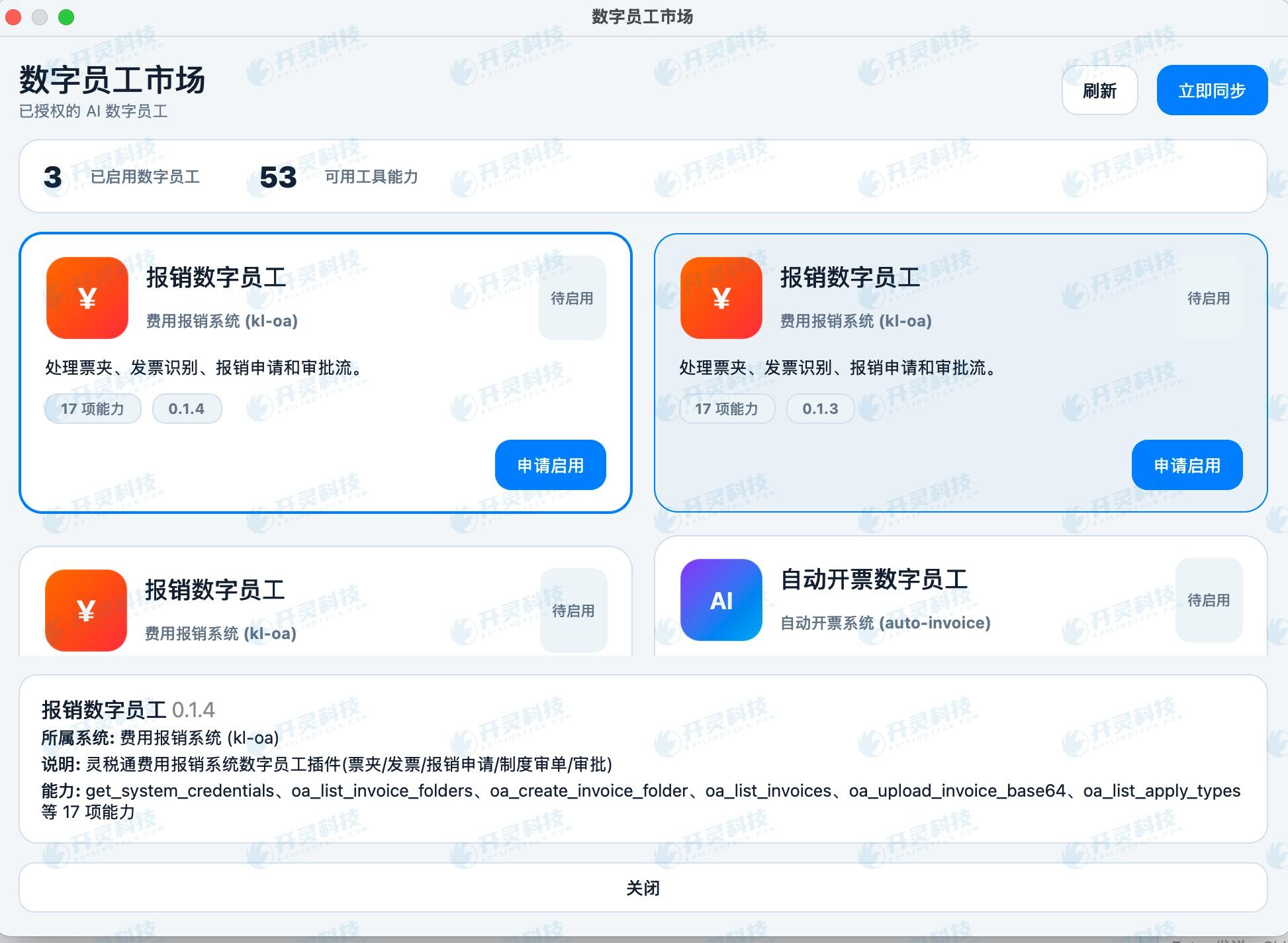
When digital employees need to read data from ERP, OA, CRM, and financial shared services systems, and create documents or advance approvals across multiple systems, personal desktop tools alone usually make it difficult to uniformly manage identities, logs, and versions. The Kailing Technology AI digital employee solution encapsulates existing system entry points, forms, and interfaces as callable tools, then organizes position tasks, skills, and approval nodes. The original systems continue to bear business records and final results, while digital employees are responsible for authorized execution and summarization.
A self-built platform should first map out data sources, master systems, permitted actions, and manual confirmation points. Whatever permissions business employees have in the original systems, digital employees in principle may act only within the corresponding boundaries; high-risk actions such as payment, invoicing, and contract confirmation should have secondary approval. If different subsidiaries have different policies, task templates can be shared, but rules, data scope, and approval chains need to be configured by organization.
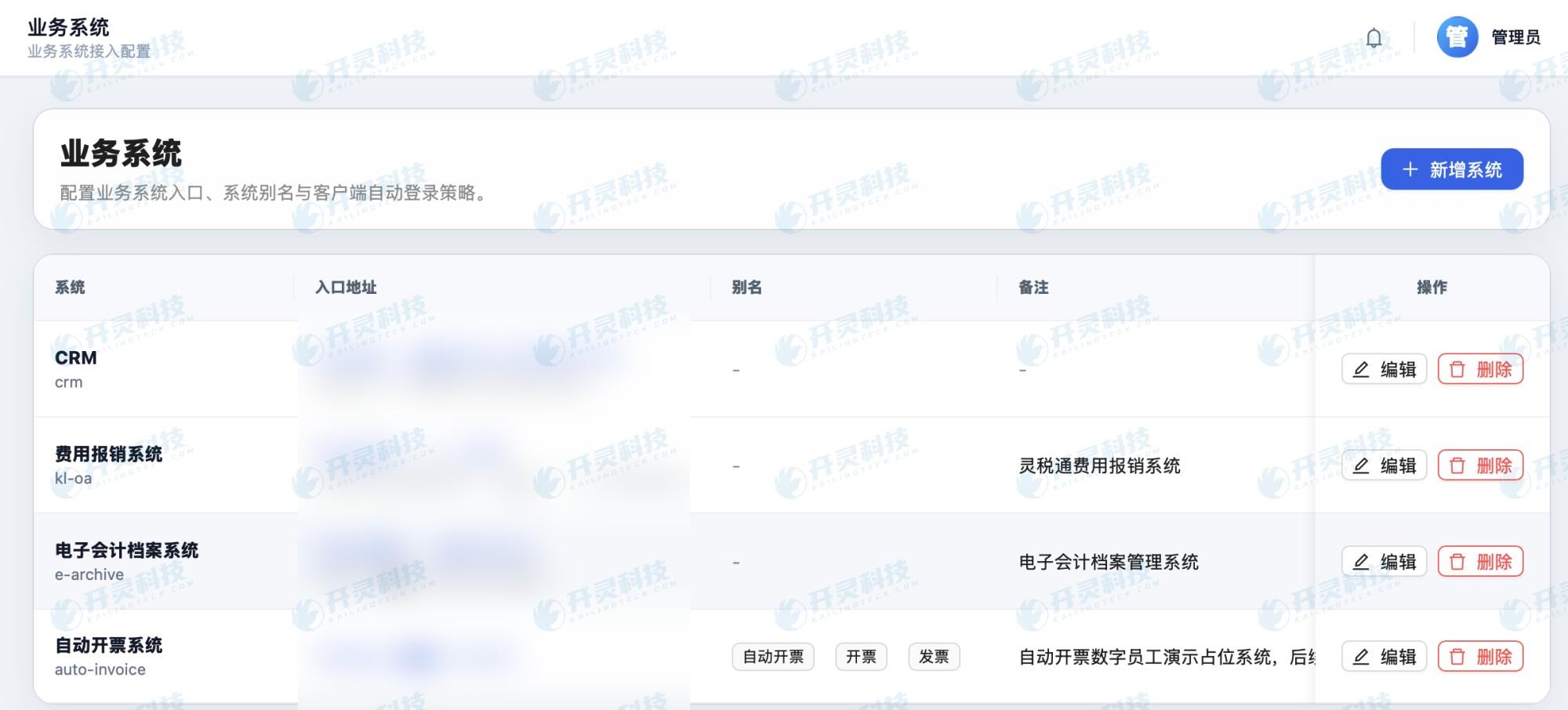
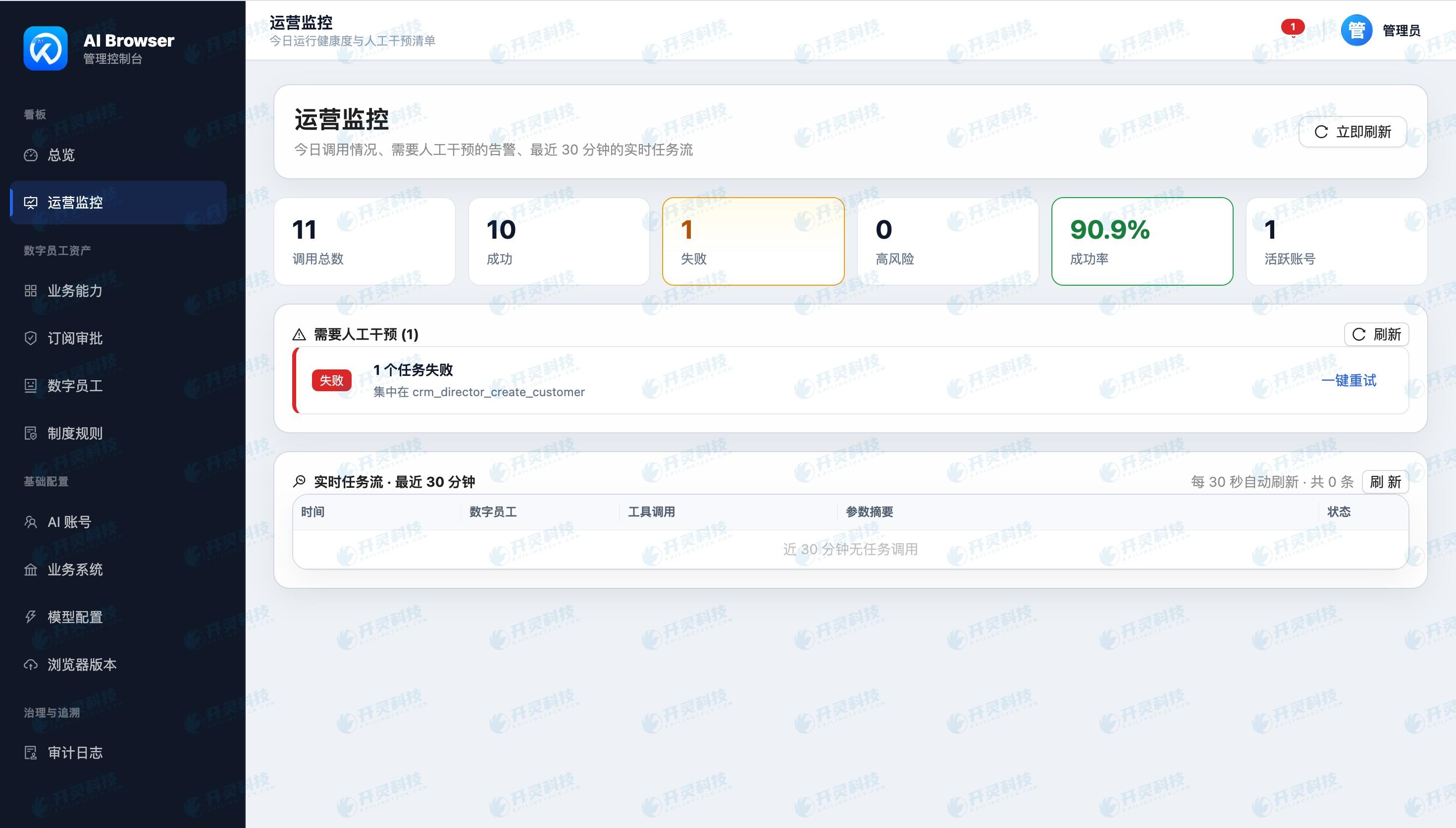
The administrator side of the knowledge foundation includes business system registration, employee AI accounts, authorization, and operations monitoring; the digital employee marketplace is used to select and assign position capabilities. These interface materials illustrate the organizational method of the Kailing solution and should not be understood as any single enterprise having completed all integrations. Whether self-building is cost-effective depends on the number of positions and systems to be reused, internal control requirements, and long-term operations and maintenance resources.
▍The three paths can progress step by step, but acceptance criteria must be unified
You can first use an office assistant to verify whether employees are willing to hand over repetitive work, then use a controlled digital employee to run through a specific process, and finally consolidate mature capabilities into the platform. Each step should retain the same types of metrics: whether the task was completed, whether the result was adopted, how long manual review took, and whether exceptions can be traced. If personal tools can already solve low-risk problems, there is no need to add a platform for the sake of "self-building"; only when multiple departments repeatedly connect to the same set of systems does the platform's reuse value gradually emerge.
Before procurement and implementation, arrange three types of tests: normal samples, samples with missing data, and samples that violate permissions or policies. The AI digital employee should be able to explain why it did not continue execution and hand the task back to the appropriate role, rather than "trying its best to guess" a result. Only by clarifying who is responsible for business rules, who is responsible for system interfaces, and who is responsible for final approval can it move from demonstration to daily work.
▍Turn selection discussions into pilot materials and responsible persons
Before launch, the business owner prepares a job task description stating the original manual steps, required materials, deliverable format, permitted data levels, and the three most common types of exceptions. The IT owner lists accessible systems, interfaces, and account authorization methods, and information security staff confirm the boundaries within which external tools may be used. The three parties jointly select a revocable pilot task, first run desensitized samples from real work, and then decide whether to expand the scope.
At the end of the pilot, compare the actual implementation workload of the three paths, not just software subscription prices. Ready-made assistants may require manual copy-paste and individual training, while a self-built platform requires interfaces, permissions, monitoring, and continuous maintenance; both may be suitable. If results need to be written back to business systems over the long term, the evaluation focus shifts to stability, auditing, and cross-position reuse. Kailing Technology can provide a phased implementation plan accordingly, preserving the option to upgrade or exit.
▍FAQ
Q: Can WorkBuddy or Doubao directly replace an enterprise-level digital employee platform?
A: It depends on the task. Personal data organization and lightweight office work can start with ready-made tools; cross-system batch processing and unified auditing require separate verification of permissions and platform capabilities.
Q: What task should be chosen for the first pilot?
A: Prioritize tasks that are high-frequency, have clear rules, can be manually reviewed, and have clear deliverables.
Q: Is a self-built platform necessarily more secure?
A: Not necessarily. Security depends on deployment, permissions, data flows, logs, and operations and maintenance policies, and must be verified item by item.
Q: Is pilot success judged only by hours saved?
A: Also consider output accuracy, manual rework, exception handling, and whether it can be stably reused.
Start with one acceptance-checkable job task and learn about Kailing Technology's AI digital employee implementation plan: https://www.kailingteck.com/de/ .
As a national high-tech enterprise, Kailing Technology focuses on the digital and intelligent transformation of enterprise business-finance-tax and operations management, providing software products, system integration, implementation and delivery, and operational services for various government agencies, institutions, group enterprises, and SMEs.
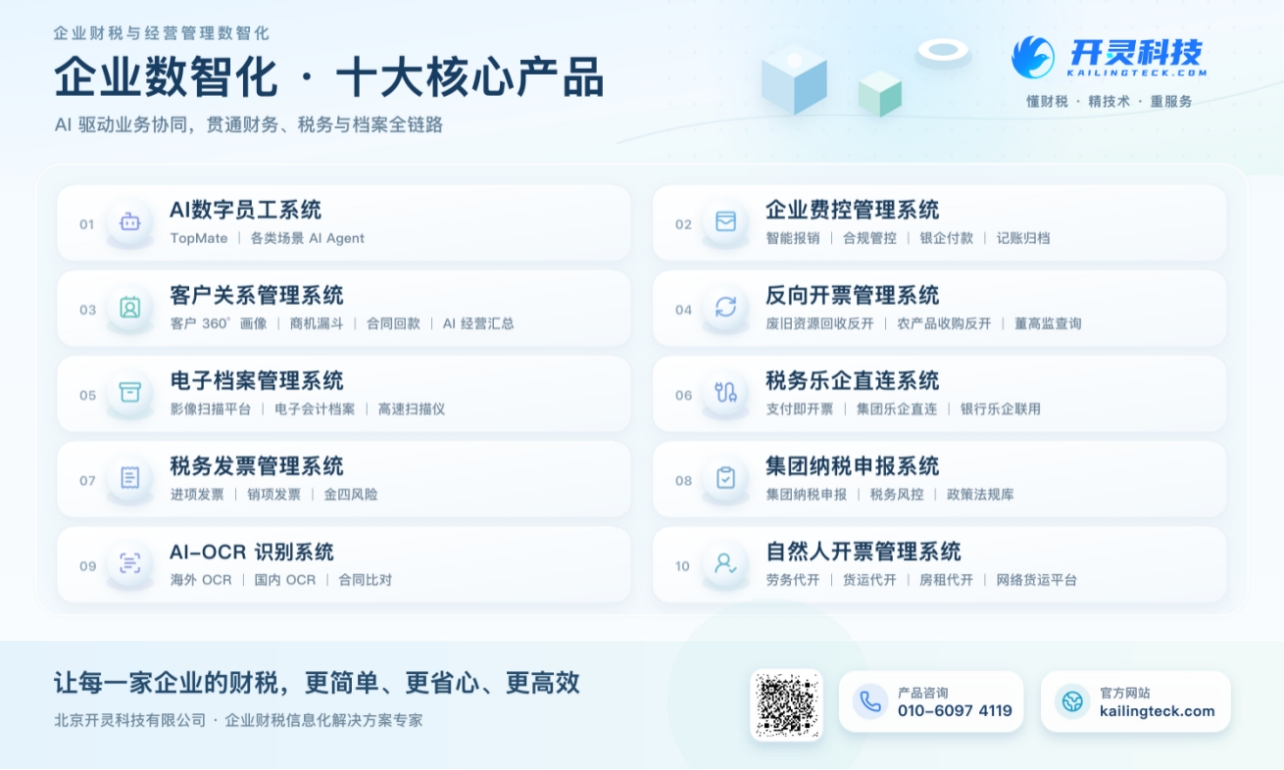
The company has now formed ten core product lines, including: AI digital employee system, enterprise expense control management system, customer relationship management system, reverse invoicing management system, invoice issuance for individuals management system, electronic archives management system, tax fully digitalized e-invoice Leqi system, tax invoice management system, group tax filing system, and AI OCR recognition system. It is committed to connecting enterprise business, finance, tax, funds, and archive data to help customers improve operational efficiency, business-finance-tax compliance capabilities, and digital management levels.
If you have any business-finance-tax digital transformation needs, welcome to contact us. Beijing Kailing Technology will serve you wholeheartedly.
 Keywords: Kailing Technology AI digital employee, WorkBuddy, Doubao Office, digital employee pilot, self-built digital employee platform
As a comprehensive business-finance-tax digitalization solution service provider, Kailing Technology provides business-finance-tax management digital transformation products and operational services for various government agencies, institutions, and large, medium, and small enterprises. The product line includes: solutions for sales contract management system, procurement contract management system, fully digitalized Leqi interface project, automatic output invoicing system, reverse invoicing system, invoice issuance for individuals system, employee expense control and reimbursement system, input VAT invoice management system, supply chain collaborative reconciliation system, image AI OCR recognition system, automatic financial bookkeeping system, electronic accounting archives system, etc., comprehensively driving the digitalization process across various fields.
Consultation Hotline: 18513895936 / 010-60974119 Location: Beijing