
Sales order follow-up relies on memory for customer information, and scattered follow-ups always lose deals? Kailing Technology AI-CRM daily work summary to-do automatic reminders
At 8:30 in the morning, Mr. Zhang walks into the company, makes a cup of coffee, and opens WeCom—before he has time to flip through notebooks or spreadsheets, a list of "what to do today" is already sitting in the chat window: several customers are nearing renewal, several payments have reached the day they should be chased, and a new lead from last night is waiting to be claimed. This list was not compiled by him staying up late, but by Kailing TechnologyAI-CRM It was automatically summarized while he was resting. Mr. Zhang's day thus begins with "having a clear picture in mind," rather than with "being unable to remember whom to follow up with today."
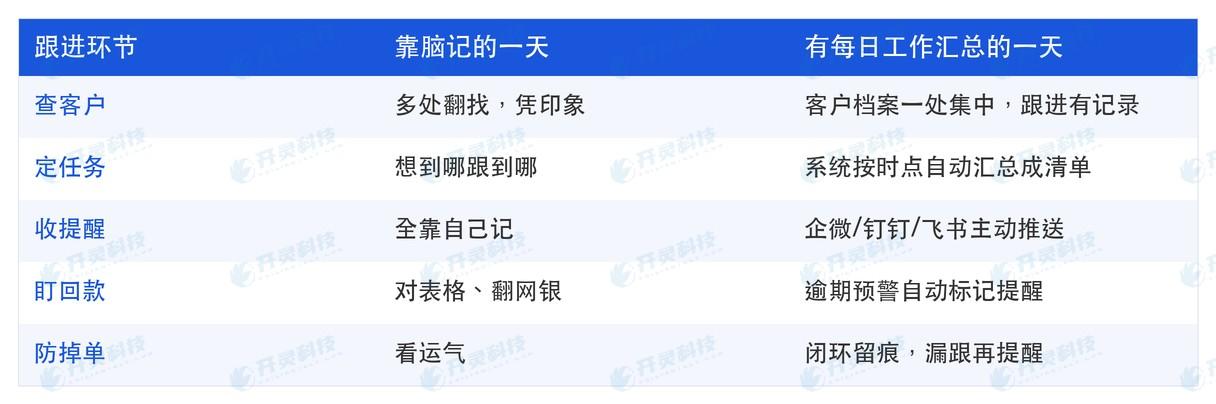
For many salespeople, the start of a day often looks quite different: customer information is scattered across business cards, chat records, Excel, and their memory; follow-ups rely entirely on memory, and there is no proactive reminder mechanism, so deals quietly slip away as they follow up. They slip away very quietly—not taken by competitors, but forgotten by oneself. This article follows the thread of "how a salesperson's day begins" to see how an AI daily work summary turns a chaotic start into a checklist that can be followed.
▍1. Dropped orders are mostly not a capability problem, but a "can't remember" problem
If you review the deals that were not closed, you will find that the reasons are often surprisingly plain: it is not that the customer does not want to buy, but that sales did not appear at the right time. Breaking these "surprises" apart, there are only three things happening repeatedly.
· Customer information is scattered: The same customer's information is scattered across WeChat, business card holders, quotations, and several spreadsheets. To find a complete follow-up record, one has to flip back and forth in several places, and over time simply relies on impressions.
· Follow-up relies on memory: Juggling dozens of clients at once, remembering who is due for a follow-up, whose contract is about to expire, and which payment needs chasing—all relying on memory. When busy, the least urgent but most important tasks are often the first to be forgotten.
· Lack of proactive reminders: No person and no system reminds you at the right moment to "follow up with this one," and by the time you remember, the customer may already have signed with someone else.
When these three things stack up, the result is "things keep falling through the cracks." The problem is not with any one salesperson, but with the entire team pressing the matter of follow-up onto personal memory and self-discipline. Kailing Technology's AI-CRM approach is straightforward: since memory is unreliable, stop making people remember, and turn what should be followed up into a list that the system can calculate, push, and track.
▍II. Kailing Technology AI-CRM's daily work summary is "calculated" by the system
This daily work summary is not for sales to fill in tasks themselves, nor for supervisors to assign work, but is automatically generated by the system based on the real status of customers, opportunities, contracts, and payments. Sales only need to faithfully record follow-ups in the system, and the remaining summary work is done by it in the background.
It watches several types of things that "come due": follow-up nodes for customer follow-ups, the stage a business opportunity is in, the receivable time for installment contract payments, and whether payments are received on schedule. Anything approaching or past its time point is picked out and summarized into the "to-do summary" on the business dashboard—pending renewals, pending payment claims, pending contract approvals, pending reminders, all clear at a glance. Sales no longer have to ask themselves in the morning "what should I do today"; the dashboard has already laid out the answer for them.
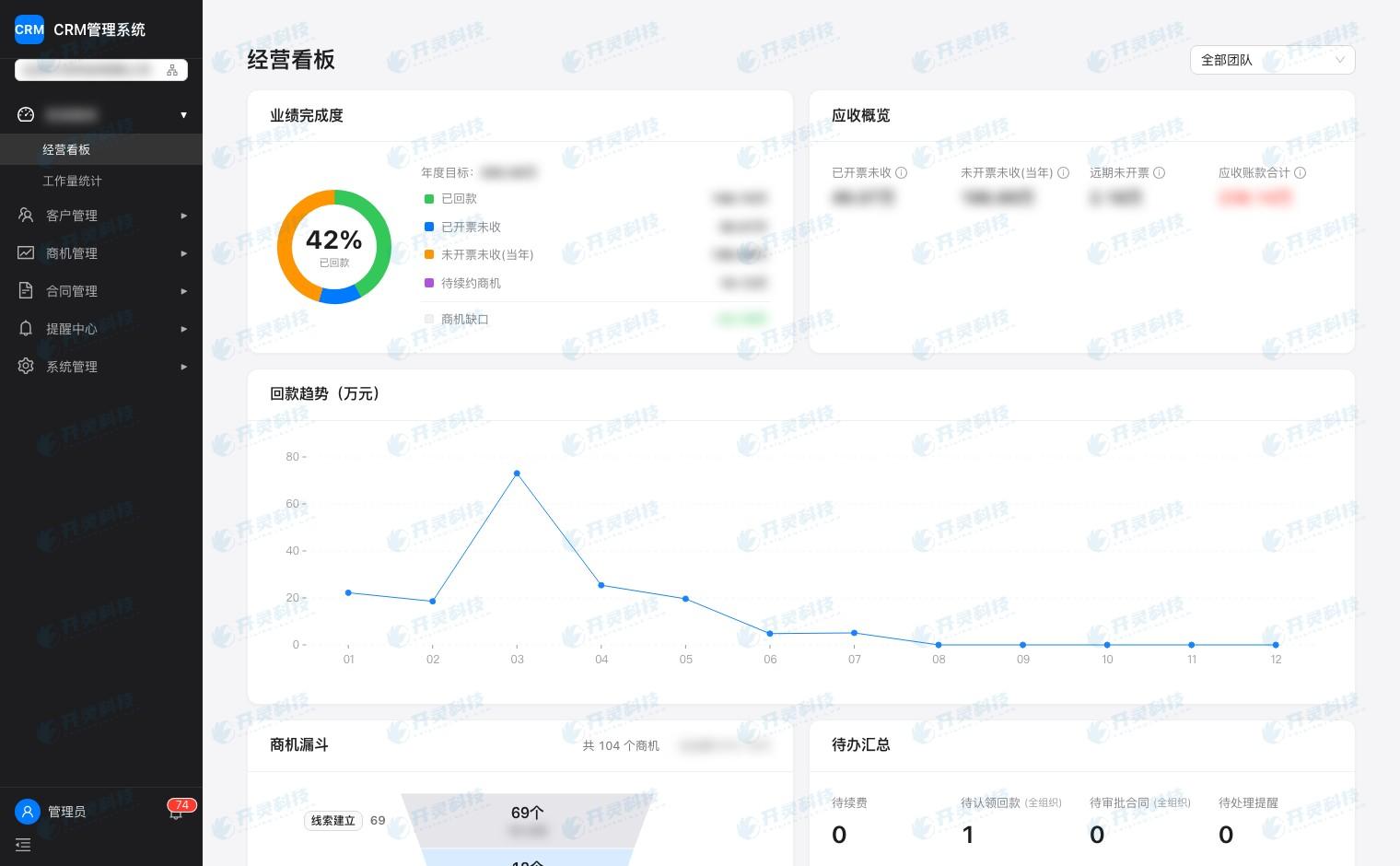
More critically, this summary is updated every day. What was processed yesterday automatically disappears, and what newly arrives today is automatically added, so it is always a "valid for the day" list, rather than a to-do pile that grows older and more numbing the longer it is viewed.
▍III. The list, pushed to the group you are already using
No matter how good the list is, if sales still have to proactively open the system to look at it, it is back to relying on self-discipline. Therefore, Kailing Technology AI-CRM pushes this summary directly into the tools sales use every day—WeCom, DingTalk, Feishu. Whichever group you work in, the reminder appears there. Sales do not need to change their habits; they just need to act according to the pushed message.
The reminder center is the "source" of this push. It specifically watches the two types of time points most prone to problems: renewal due warnings and payment overdue warnings, and tags them with "urgent," "renewal due," and "payment overdue" labels so you can see at a glance which one to follow up on first. Once handled, you can mark it complete; if you cannot follow up for the time being, you can postpone it; if it is no longer needed, you can close it—every reminder has a clear destination instead of just popping up and disappearing.
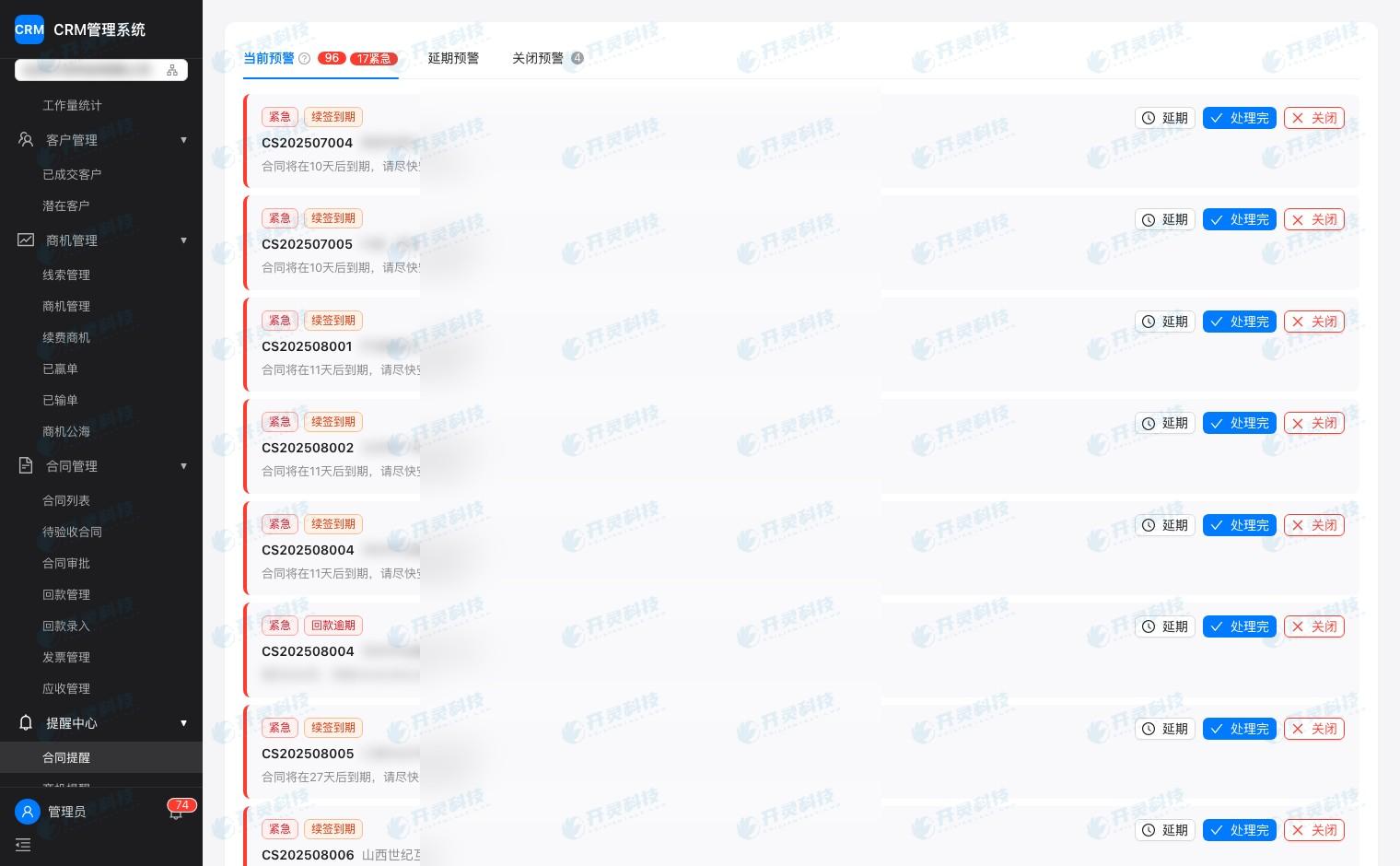
This statement is actually what the daily work summary most wants to accomplish. Once follow-up leaves individual memory and lands on the system's checklist, it no longer depends on whether someone is in good shape or busy today, but becomes a standard action that anyone can pick up and track at any time.
▍IV. Follow up per the list, record every follow-up, and close the loop without omissions
After sales follow the list through one round, the actions do not end. Every call, every visit, every quotation is written back into the follow-up records of the customer file, leaving behind time and content. The next time this customer is opened, where the last follow-up got to, what was discussed, and what to do next are all clear, without having to piece it together from memory.
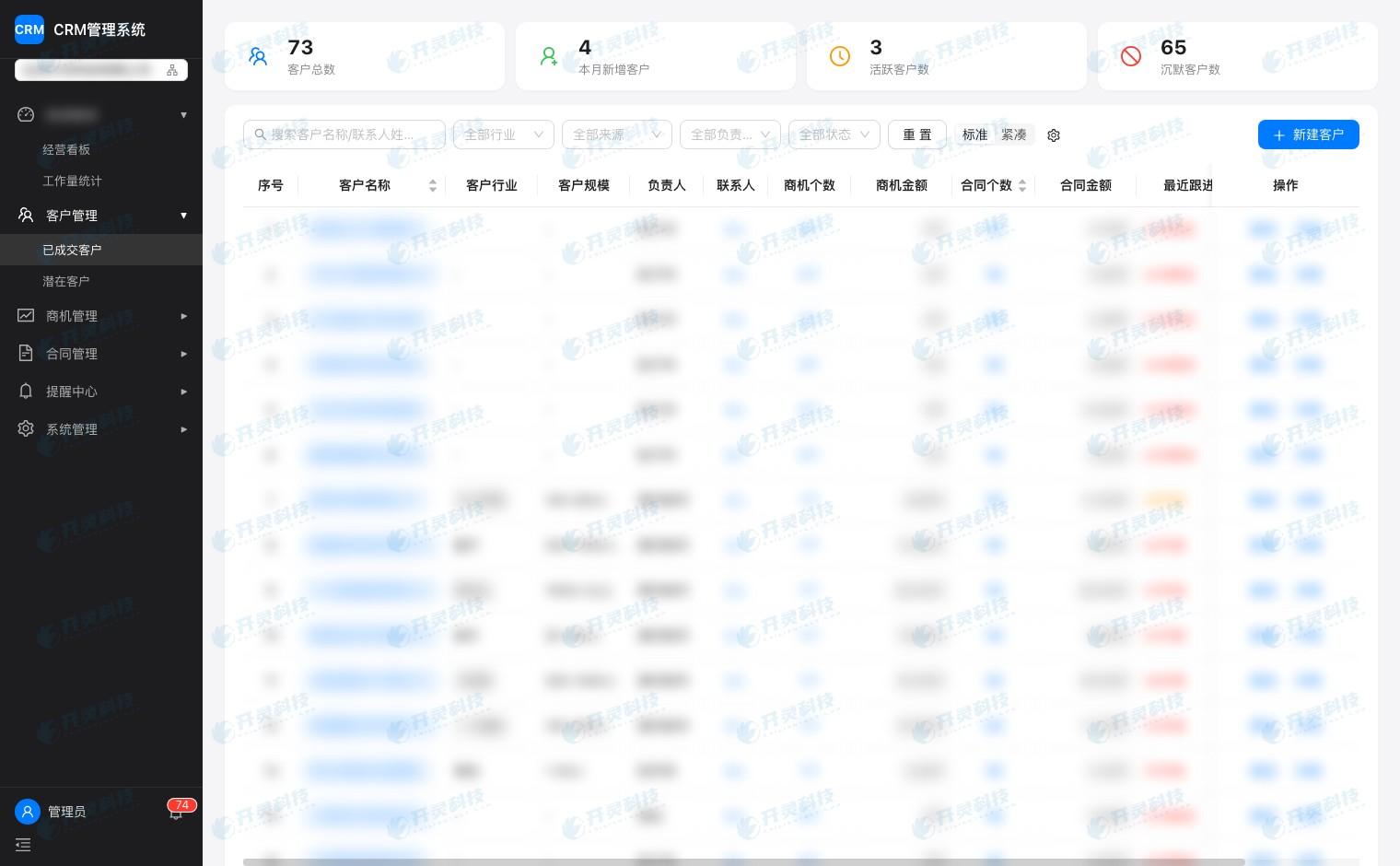
Once follow-up has records, the closed loop is truly closed. From customer file creation, to opportunity advancement, to contract signing, to payment collection, to near-expiry renewal, the status of each step is connected in the system. When the previous step moves, the to-dos and reminders for the next step update accordingly. Sales will not lose context because the follow-up person changed, and supervisors can see at any time where each line has progressed. What Kailing Technology AI-CRM wants to give teams is exactly this sense of certainty: what should be followed up will not be missed, and what has been followed up leaves traces. Losing deals changes from "depending on luck" to "depending on process."
Look back at that cup of coffee at 8:30 a.m.—it has not changed; what has changed is the checklist beside you while drinking it. The start of the day shifts from "can't remember" to "follow the list," freeing sales attention from "don't forget" and letting it truly go into communication with customers. This small change in how the day begins, accumulated over time, often makes the difference in closing rates.
▍FAQ
Q: Do sales staff need to maintain the daily work summary themselves?
A: No additional maintenance is needed. Sales only need to truthfully record daily follow-ups into Kailing Technology AI-CRM. The system will automatically generate daily to-dos based on the status of customers, opportunities, contracts, and payments. Summaries and reminders are all completed by the system.
Q: Can reminders be pushed to the office tools we currently use?
A: Yes. The system supports integration with mainstream collaboration tools such as WeCom, DingTalk, and Feishu. To-dos and alerts are pushed to the groups commonly used by sales, with no need to log in to the system separately to check.
Q: How are renewal expiration and overdue payments discovered?
A: The reminder center continuously monitors contract renewal time points and receivable collection time points. When approaching or overdue, it automatically generates alerts and labels them as "renewal due," "payment overdue," "urgent," etc., for prioritized handling.
Q: If the follow-up person changes, will previous customer information be lost?
A: No. Follow-up records are all retained in the customer profile; the new owner can see the complete historical follow-ups and latest status, so context is not lost during handover.
Want a salesperson's day to start with a list? Welcome to learn about Kailing TechnologyAI-CRMsystem:www.kailingteck.com。
As a comprehensive business-finance-tax digitalization solution service provider, Kailing Technology provides business-finance-tax management digital transformation products and operational services for various government agencies, institutions, and large, medium, and small enterprises. The product line includes:
Solutions for businesses including sales contract management system, procurement contract management system, fully digitalized Leqi interface project, output automatic invoicing system, reverse invoicing system, invoice issuance for individuals system, employee expense control and reimbursement system, input VAT invoice management system, supply chain collaborative reconciliation system, image OCR recognition system, automatic financial bookkeeping system, and electronic accounting archives system, comprehensively driving the digitalization process across various fields.
If you have any business-finance-tax digital transformation needs, welcome to contact us. Beijing Kailing Technology will serve you wholeheartedly.
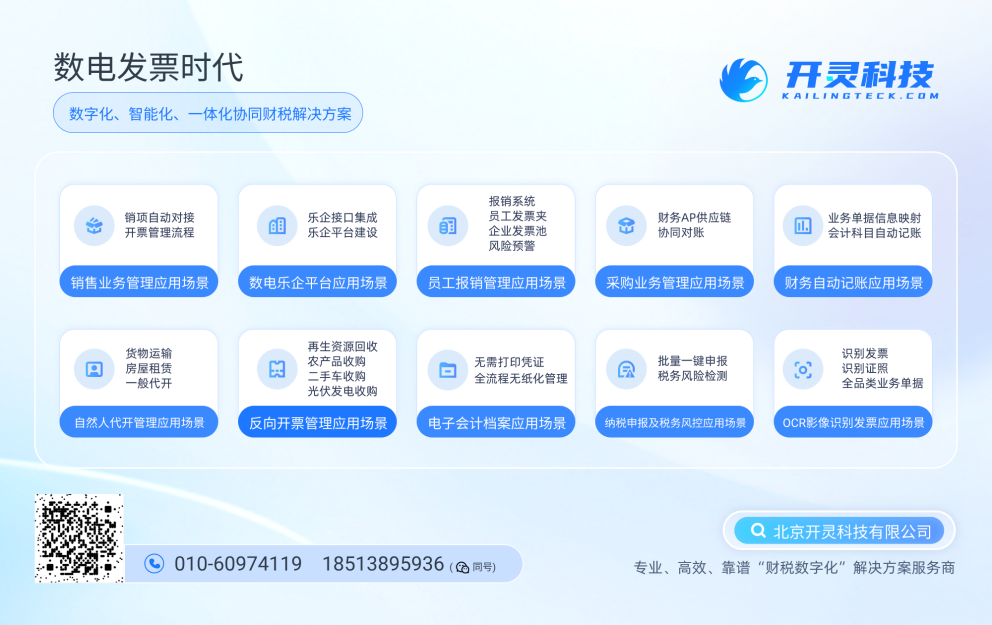
As a comprehensive business-finance-tax digitalization solution service provider, Kailing Technology provides business-finance-tax management digital transformation products and operational services for various government agencies, institutions, and large, medium, and small enterprises. The product line includes: solutions for sales contract management system, procurement contract management system, fully digitalized Leqi interface project, automatic output invoicing system, reverse invoicing system, invoice issuance for individuals system, employee expense control and reimbursement system, input VAT invoice management system, supply chain collaborative reconciliation system, image AI OCR recognition system, automatic financial bookkeeping system, electronic accounting archives system, etc., comprehensively driving the digitalization process across various fields.
Consultation Hotline: 18513895936 / 010-60974119 Location: Beijing