
With existing ERP and weighbridge, is an acquisition platform still needed? Kailing Technology agricultural product purchase reverse invoicing system links materials by order
At Wednesday's procurement review meeting, the warehouse manager opened a 'received' record in the ERP, and the weighbridge computer could also find the net weight of the same vehicle; when finance prepared to issue an agricultural product purchase invoice, they could not find which agricultural producer this batch of goods corresponded to, which self-produced materials were used, how the settlement price was formed, or which account the payment would go to. All three systems had data, yet a complete set of purchase materials could not be assembled on the desktop.
Such conflicts show that what enterprises often lack is not another standalone software system, but a layer of business orchestration operating around the purchase order. The Kailing Technology agricultural product purchase reverse invoicing system uses a unique business number to connect farmer profiles, ERP procurement, weighbridge receiving, settlement payment, invoice status, and five-flow archives, allowing existing systems to continue doing their own work while organizing scattered actions into a complete, queryable, and write-back-capable chain.

▍First take one procurement invoice for a two-way penetration test
The meeting did not continue comparing system names, but instead randomly selected an already-issued purchase invoice. Finance traced forward from the document: who the actual agricultural producer was, which period the self-produced materials corresponded to, when the vehicle entered, how gross weight, tare weight, and net weight were recorded, who confirmed the category and grade, how the settlement amount was calculated, and which transaction the bank receipt fell under. Each time a manual search or verbal inquiry was needed, a connection breakpoint was marked.
Next, the weighbridge room traces forward from the raw weighing record. The operator enters the vehicle and time to check whether this weighing formed a purchase order, whether it references the correct farmer, whether acceptance and warehousing were completed, and whether payment and invoicing tasks were generated. If the ERP, weighbridge, and financial systems can only display results separately, the project team puts the missing linked fields, status write-backs, and exception actions on the orchestration checklist.
Bidirectional testing quickly yields construction decisions: links where the existing system can already perform complete round-trip queries along the business number are directly retained; links requiring manual guessing of names, amounts, and dates for association are connected to the orchestration layer; paper materials are scanned and attached to the original order. The enterprise determines the scope accordingly, avoiding rebuilding mature functions.
▍The orchestration layer lets ERP continue to manage procurement, inventory, and financial results
The organization, materials, procurement, inventory, payables, and general ledger in ERP continue to serve as the enterprise's operational foundation. The procurement platform receives necessary master data and, after on-site business confirmation, returns procurement results, settlement amounts, and invoice-payment status to ERP. Warehouse personnel view inbound receipts in the familiar inventory module, and finance completes accounting in payables and the general ledger, so both sides do not need to maintain two sets of accounting results.
The orchestration layer focuses on supplementing the front-end relationships unique to agricultural procurement: agricultural producer profiles, self-produced business materials, broker delivery explanations, one-truck-multiple-household allocation, measurement and grading, and on-site images. When the purchaser selects a farmer, it calls the reviewed profile; when the inspector confirms the goods, it references the same business number, so the procurement result received by ERP carries a clear source.
When the supplier master file in ERP undergoes organizational adjustment, the interface updates subsequent business according to the mapping relationship; completed procurement orders retain the version at that time. The procurement manager views inbound and payable data for the same material at month-end, and by clicking the source number can return to the farmer, goods receipt, and settlement process, so the business ledger and financial results form a continuous path.
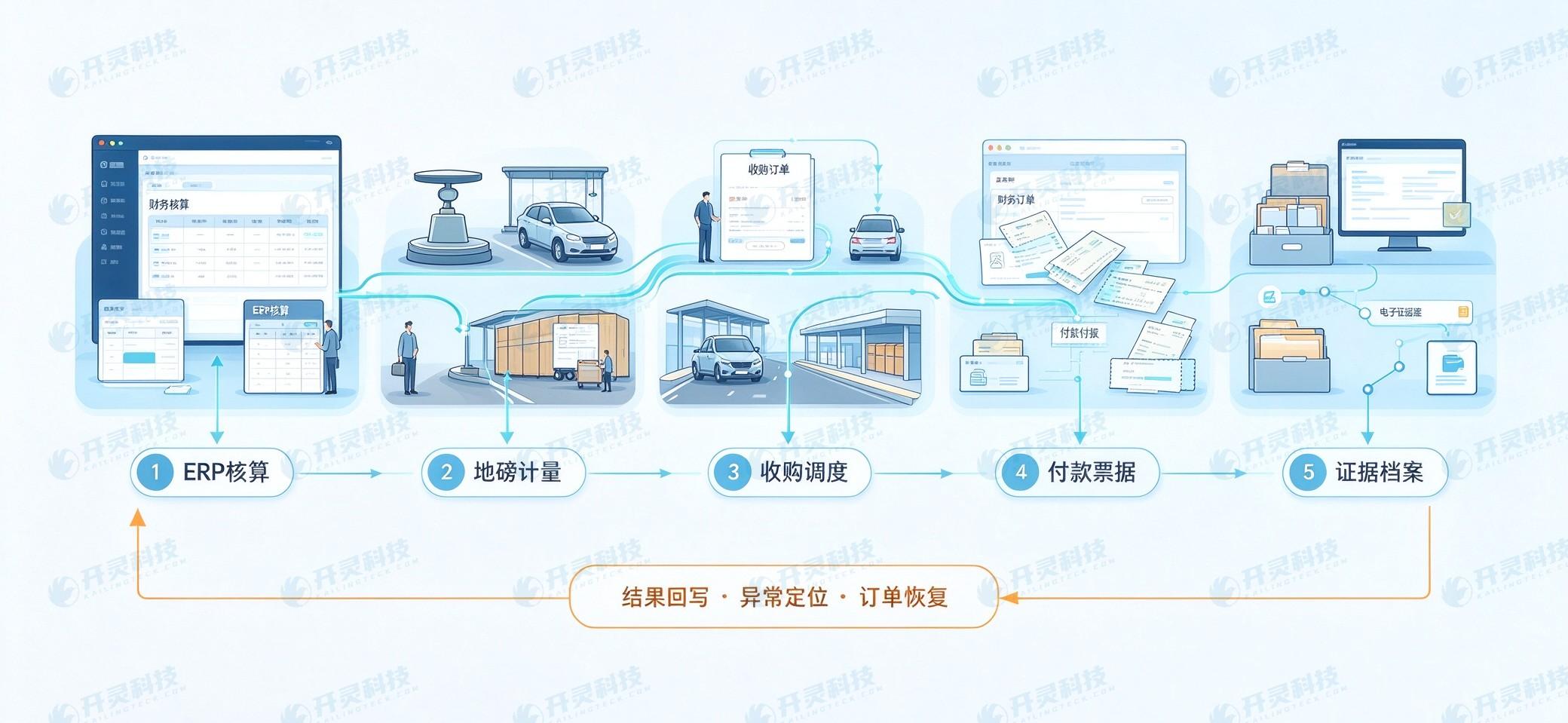
Responsibility boundaries of ERP, weighbridge, and procurement platform
▍The weighbridge provides weight, and the procurement order explains price and attribution
After the vehicle enters the site, the weighbridge transmits the device, time, license plate, gross weight, tare weight, and net weight to the purchase order. On-site personnel then supplement the category, grade, impurity deduction, unit price, farmer relationship, and acceptance images, and the system uses these elements to form the settleable quantity and amount. The weighbridge room sees the raw measurement, procurement sees the cargo evaluation, and finance sees the source of the amount; the three roles work around the same document.
When one truck contains goods from multiple farmers, the operator first records the allocation basis, then splits weight and amount into the corresponding details; when the same farmer delivers in batches, multiple weighbridge tickets can be consolidated into one settlement. The system retains the before-and-after relationships of each split, merge, and adjustment, and finance can drill down to the original weight when opening the summary task.
For sites where equipment cannot be directly connected temporarily, weighbridge ticket files can be imported or entered under control according to the project plan, with original evidence attached as well. Weight corrections are initiated by on-site positions, with reasons stated and review completed, and the confirmed version is then pushed to the settlement and invoicing queues, preventing finance from directly changing on-site facts at the back end.
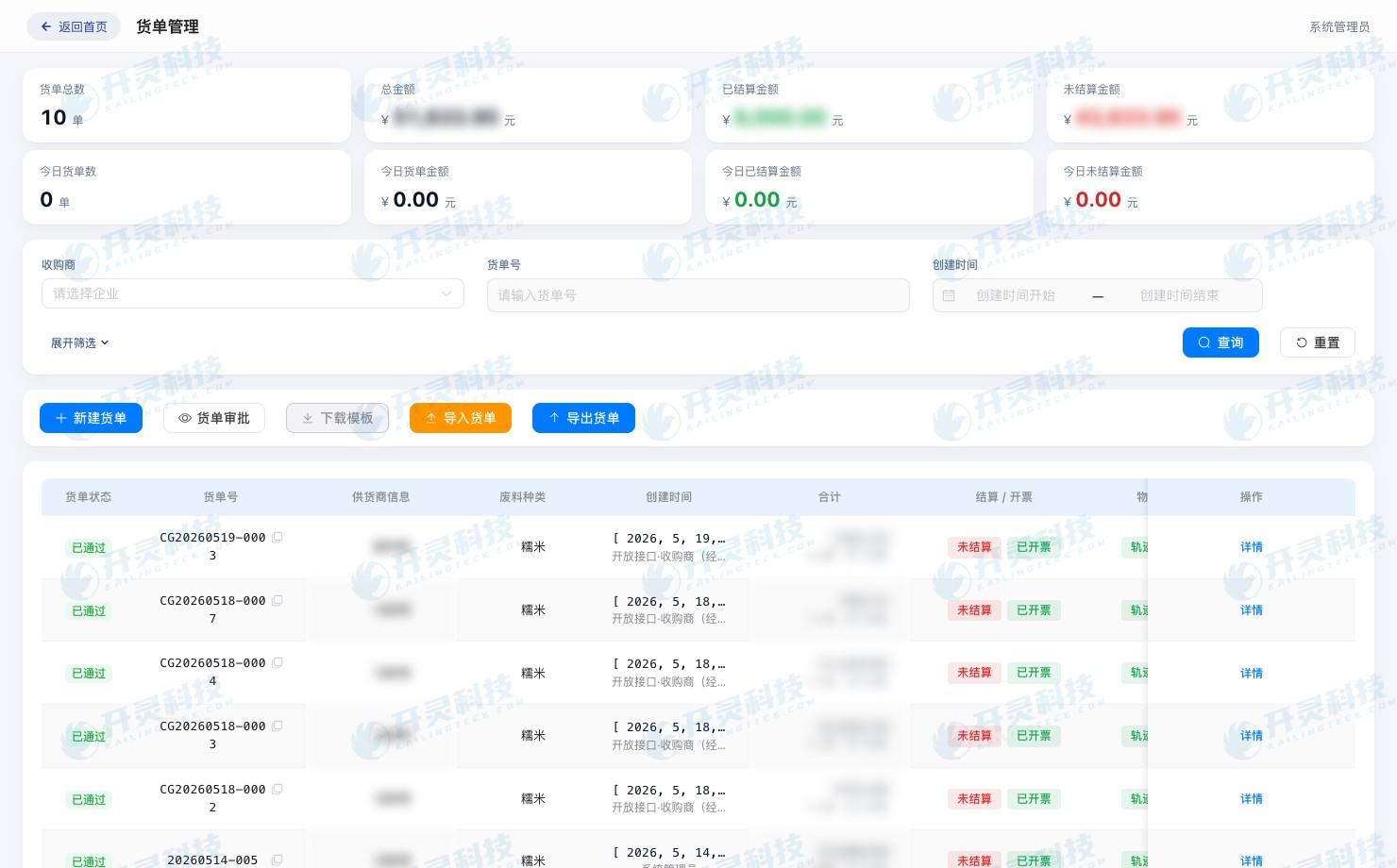
Agricultural product receipt linked to weighbridge data (information desensitized)
▍Kailing Technology generates payment and procurement invoice tasks by order
Once the farmer profile, receipt inspection, and settlement confirmation are all in place, the business number enters the pending payment and pending invoicing queues. The system reads the farmer, goods, amount, and receiving account from the confirmed data and generates the corresponding tasks; finance can directly view the source materials during verification without copying the weighbridge numbers into the invoicing page again.
After the enterprise pays online, the bank processing result and receipt are returned to the original purchase order; invoice statuses such as issued successfully, processing, failed, or red-ink reversal are also written back to the same number. Employees entering from any end—ERP procurement records, bank statements, or invoice entry—can find the corresponding relationships on the other ends, closing the business that was 'present in every system but unfindable when combined' at meetings.
When one payment covers multiple procurement orders, or one invoice aggregates multiple details, the platform saves the item-by-item allocation relationship. When payment returns, price adjustments, returns, or red reversals occur, abnormal tasks affect only the related details, and normal records continue to be processed. Finance sees the specific reason and next action, and procurement can also receive the processing result from the original order.
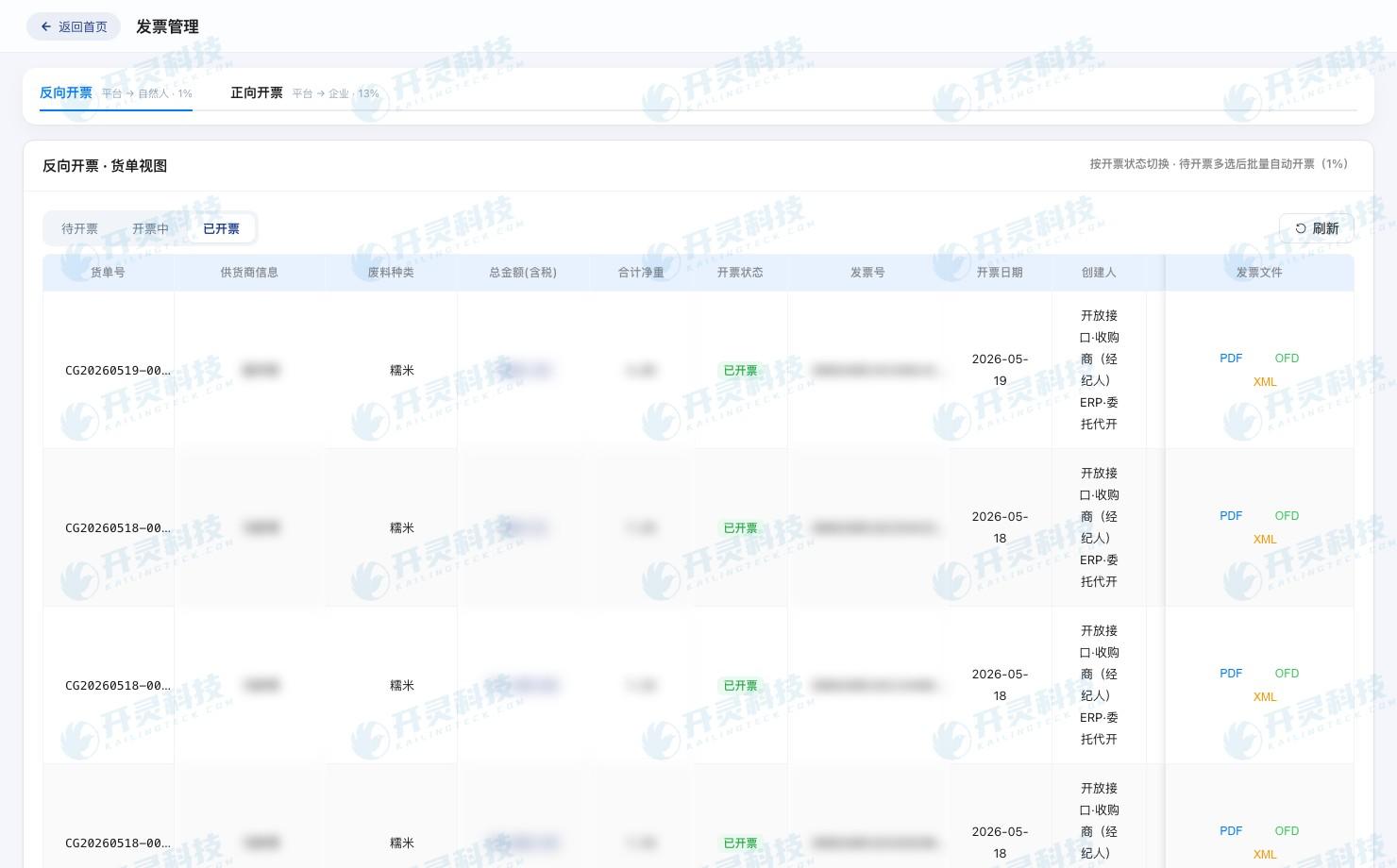
Procurement order generates invoice task and writes back (information desensitized)
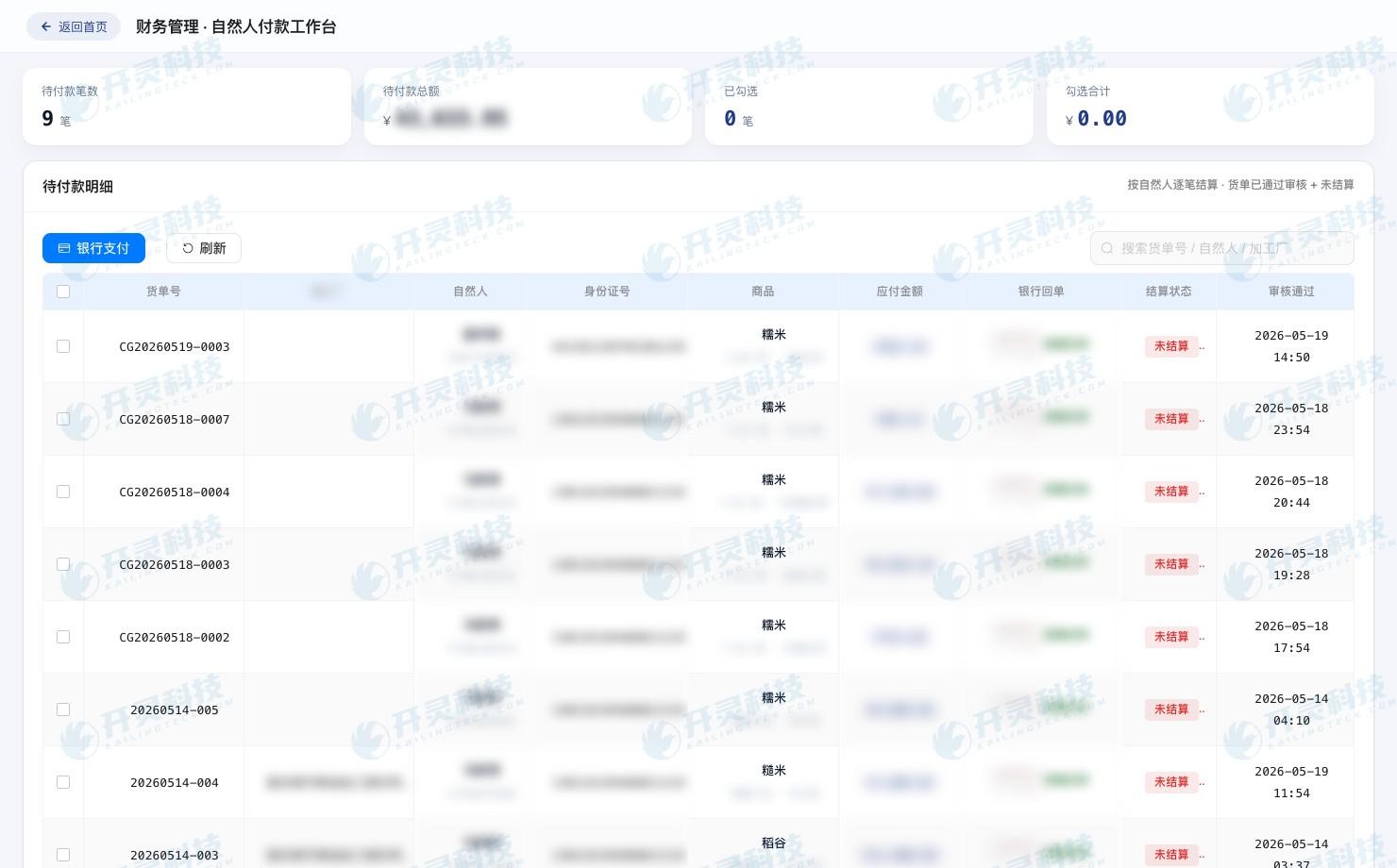
Payment results linked to the original purchase order (information desensitized)
▍Five-flow archives gather dispersed materials into a single-invoice view
ERP saves procurement, inventory, and financial results; the weighbridge saves original weight, equipment, and weighing time; payment and invoice channels return their respective processing statuses; the orchestration layer maintains a unified procurement number, source references, key snapshots, and task status. Each system continues to keep its own original records, and documents are connected by numbers and write-back relationships.
Finance clicks the business number from the ERP goods receipt, and the platform opens the farmer profile, weighing, and quality inspection records; entering from the weighbridge record, they can continue to view settlement, invoice, and payment; reverse lookup from bank receipt or invoice status returns to the corresponding ERP document number and original weighbridge ticket. One query penetrates along business relationships, eliminating repeated entry of the same field into multiple systems.
When weight is adjusted, the correction action is initiated from the weighbridge or the receiving source document; when payment fails, the status returns to the original purchase order to form a pending task; when a red-letter reversal occurs, the invoice relationship and ERP result are updated in sync. This kind of document orchestration returns problems to the node that produced them and also lets finance clearly see what each system is responsible for recording and what it passes downstream.
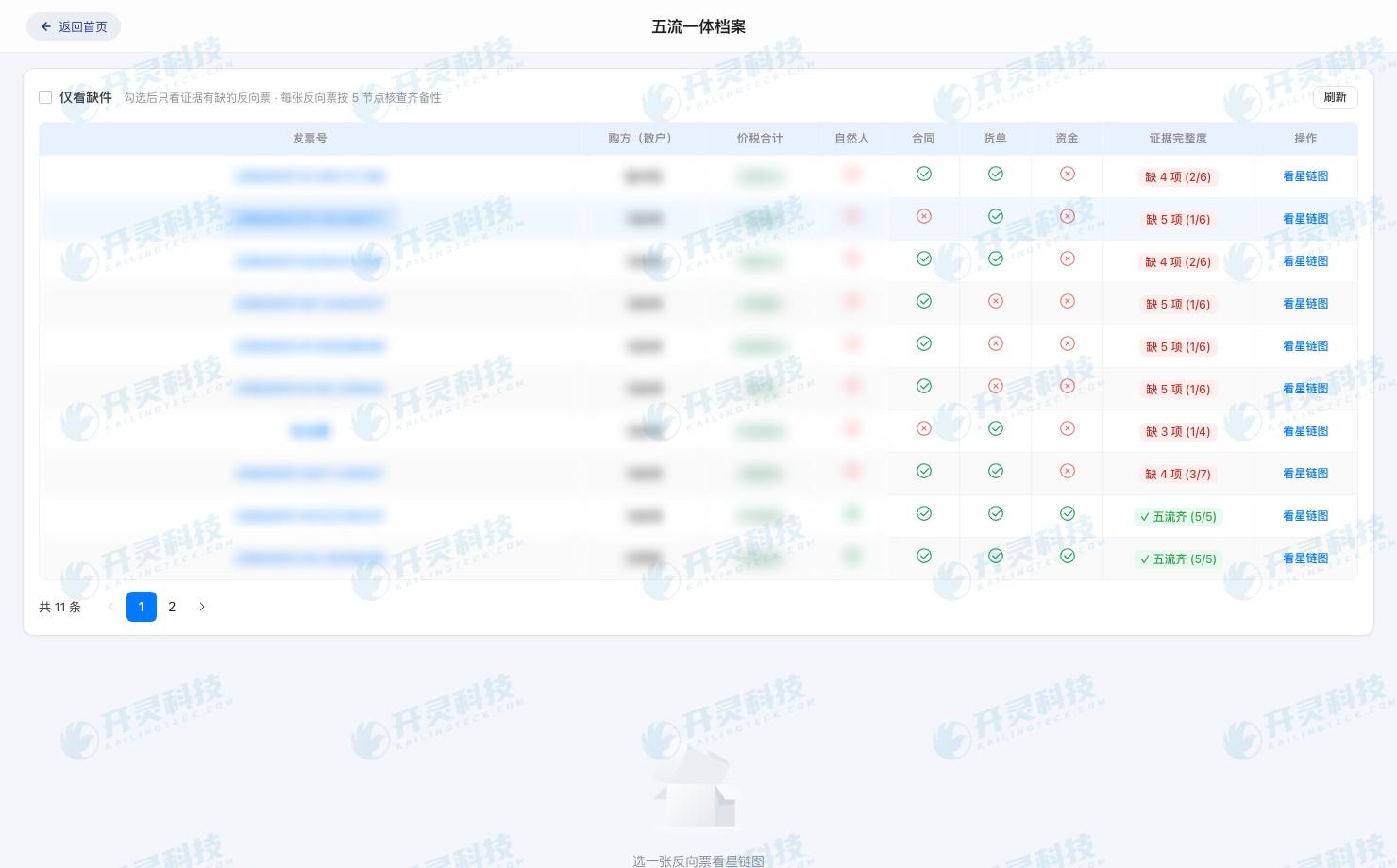
Single-invoice five-flow evidence penetration query (information desensitized)
▍Three types of current situations correspond to three implementation scopes
For the first type of enterprise, ERP already covers procurement, inventory, and payables, and weighbridge data can be obtained reliably; the gaps are concentrated in farmer profiles, invoicing, and status queries. The project can adopt lightweight orchestration, retain the existing main process, and supplement business numbers, document interfaces, and single-document queries.
For the second type of enterprise, on-site materials are scattered across paper forms and spreadsheets, and the financial system is relatively mature. The project first builds the procurement front end and evidence layer, so that farmers, weighing, acceptance, and settlement are formed per document, then pushes confirmation results to ERP. The third type of enterprise has multiple legal entities, multiple sites, and multiple legacy systems; it can first pilot at a typical site, then gradually unify master data, interfaces, and exception queues.
During acceptance, the project team operates one by one with samples of normal purchasing, one truck with multiple households, weight adjustment, payment return, and red-letter reversal. The pass criteria are written as observable results: data is entered only once, the source can be drilled down, the status can be written back, exceptions have a clear handler, and historical versions can be explained. On this basis, Kailing Technology positions the platform as a connection layer and orchestration layer, so that the enterprise's existing investments truly work together.
▍FAQ
Q: Will the procurement platform replace ERP?
A: The platform orchestrates around farmers, receipt, payment, invoicing, and evidence relationships, while ERP continues to manage procurement, inventory, payables, and accounting; the two sides exchange confirmation results through business numbers.
Q: Which actions can be eliminated after direct weighbridge connection?
A: After completing project interface integration, the system can obtain equipment, time, and weight, reducing transcription; category, grade, impurity deduction, farmer attribution, and acceptance results are confirmed by on-site positions in the procurement order.
Q: Do all materials need to be copied to the platform?
A: Necessary fields, file indexes, and key snapshots can be saved, while the original system continues to keep its own data; the single-invoice view is responsible for organizing sources and status.
Q: How to determine whether to only do an interface or build an orchestration platform?
A: First use invoices and weighbridge tickets for a two-way penetration test. When gaps are concentrated in the invoicing channel, use a lightweight interface; when farmers, sites, invoices and payments, and archives are dispersed, build a complete orchestration chain.
First use one purchase invoice for a penetration test, then decide between an interface or a platform. Learn about the Kailing Technology solution: https://www.kailingteck.com/fxncp/ .
As a national high-tech enterprise, Kailing Technology focuses on the digital and intelligent transformation of enterprise business-finance-tax and operations management, providing software products, system integration, implementation and delivery, and operational services for various government agencies, institutions, group enterprises, and SMEs.
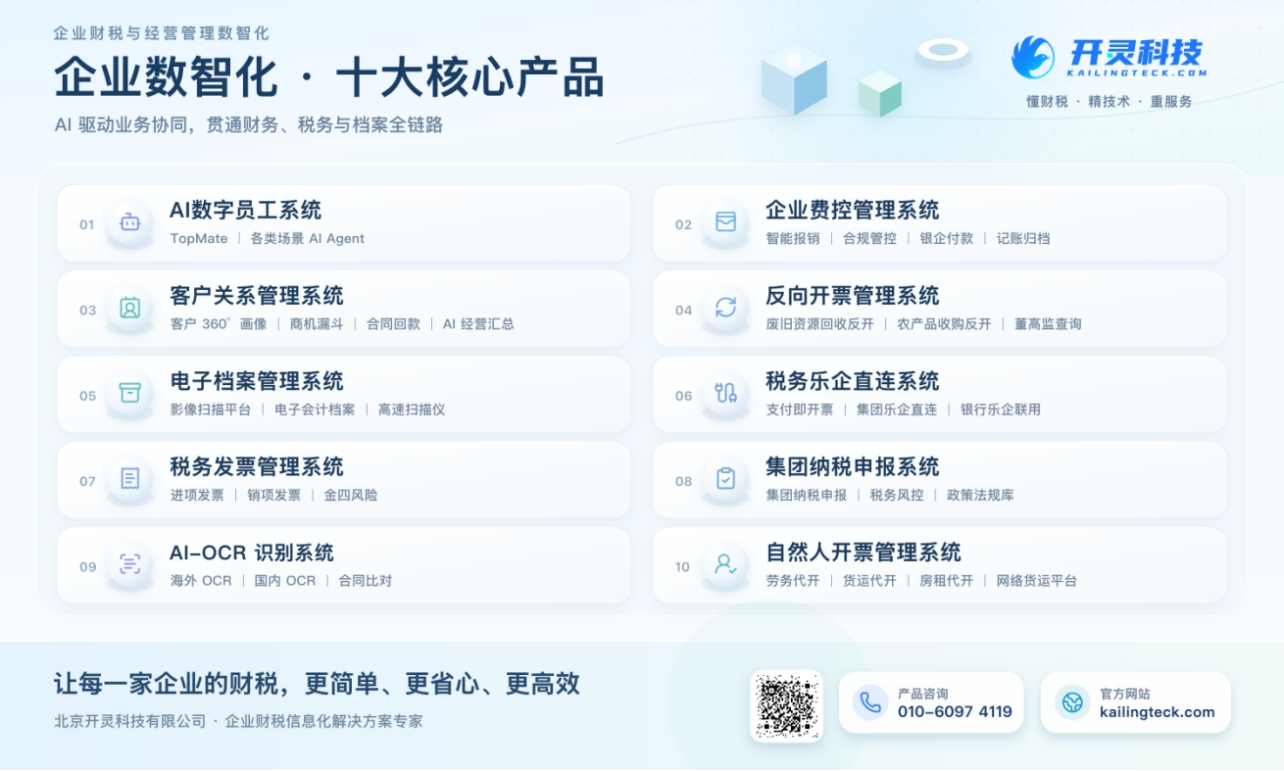
The company has now formed ten core product lines, including: AI digital employee system, enterprise expense control management system, customer relationship management system, reverse invoicing management system, invoice issuance for individuals management system, electronic archives management system, tax fully digitalized e-invoice Leqi system, tax invoice management system, group tax filing system, and AI OCR recognition system. It is committed to connecting enterprise business, finance, tax, funds, and archive data to help customers improve operational efficiency, business-finance-tax compliance capabilities, and digital management levels.
If you have any business-finance-tax digital transformation needs, welcome to contact us. Beijing Kailing Technology will serve you wholeheartedly.
Keywords: Agricultural product purchase platform, ERP weighbridge integration, agricultural product purchase reverse invoicing system, single-invoice penetration, five-flow evidence
As a comprehensive business-finance-tax digitalization solution service provider, Kailing Technology provides business-finance-tax management digital transformation products and operational services for various government agencies, institutions, and large, medium, and small enterprises. The product line includes: solutions for sales contract management system, procurement contract management system, fully digitalized Leqi interface project, automatic output invoicing system, reverse invoicing system, invoice issuance for individuals system, employee expense control and reimbursement system, input VAT invoice management system, supply chain collaborative reconciliation system, image AI OCR recognition system, automatic financial bookkeeping system, electronic accounting archives system, etc., comprehensively driving the digitalization process across various fields.
Consultation Hotline: 18513895936 / 010-60974119 Location: Beijing