
What functions does an expense control system have? Kailing Technology's Lingdong Reimbursement covers invoices, approval, payment, vouchers, and electronic archiving
The main functions of an expense control system can be understood by user role: employees need convenient invoice collection and less form filling, managers need budgets and approval rules, finance needs authenticity verification, duplication checks, and exception review, cashiers need accurate payment and receipts, and accounting personnel need vouchers and electronic archives. Only by placing these capabilities on one business chain can one judge whether the system truly reduces repetitive work.
Kailing Technology Lingdong Reimbursement covers invoice collection, automatic order generation, budget and approval, invoice verification, bank-enterprise payment, voucher generation, and electronic archiving. When selecting functions, enterprises should not just count the number of menus; they should take one normal reimbursement form and several abnormal documents and run them from beginning to end to confirm whether information can be transmitted continuously.

▍See the main functional modules of an expense control system in one chart
Expense control functions are not independent building blocks. Data collected from invoices must enter reimbursement forms, budgets and expense standards must take effect at submission and approval, approval results must drive payment, receipts and document fields must continue to generate vouchers, and finally source files and processing records must be archived. If any handover interface requires re-entry, efficiency losses and error risks will return.
Kailing Technology places the six core capabilities of Lingdong Reimbursement in the same view. Enterprises can use this to build their own verification checklist, then add scenarios according to multi-organization, travel, corporate expenses, and system integration conditions.
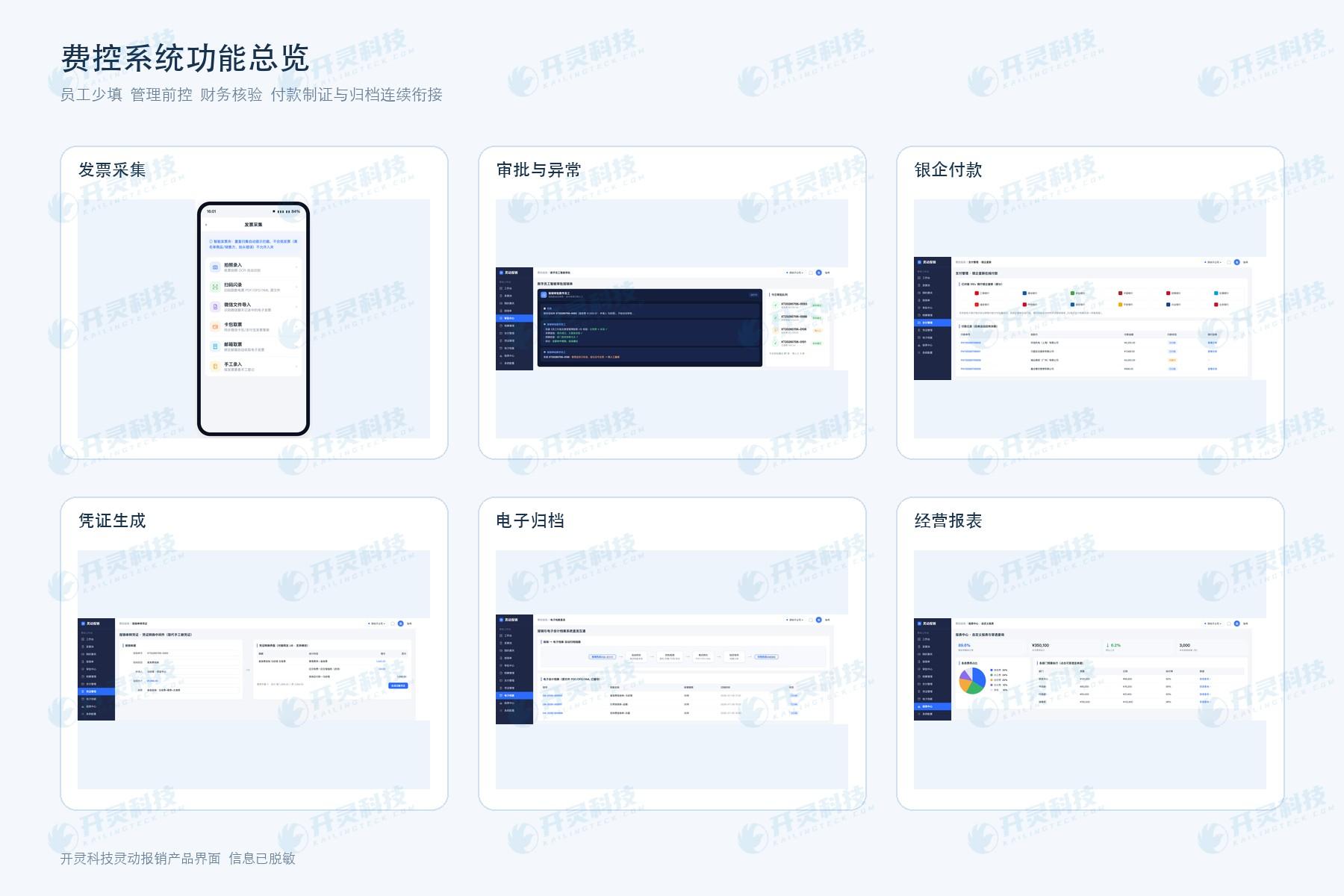
Kailing Technology Lingdong Reimbursement function overview (product interface information has been desensitized)
▍The employee side turns invoices into data that can continue to flow
Employees' most direct experience comes from entering invoices and filling out forms. Lingdong Reimbursement supports collecting invoices through mobile phones, web pages, scan-to-flash-entry, WeChat card packages, chat files, and email, and recognizes VAT invoices, fully digitalized e-invoices, passenger transport tickets, and many other types of documents. The system brings invoice fields into the personal invoice pool and gives a prompt when the same invoice is collected repeatedly.
After employees check the invoice folder, the system can generate the basic information of the reimbursement form based on the invoice content. Employees still need to be responsible for business information such as expense purpose, project, and allocation, but they do not need to repeatedly copy numbers, dates, and amounts. The real experience improvement comes from "filling in less" and "prompting earlier," rather than moving the original paper form onto the mobile screen as is.
Scan-to-record can obtain actually usable e-invoice source files from the Electronic Tax Bureau, facilitating subsequent bookkeeping and archiving. Different invoice types yield different file formats; enterprises should save according to what is actually obtained, and cannot require every invoice to have PDF, OFD, and XML simultaneously.
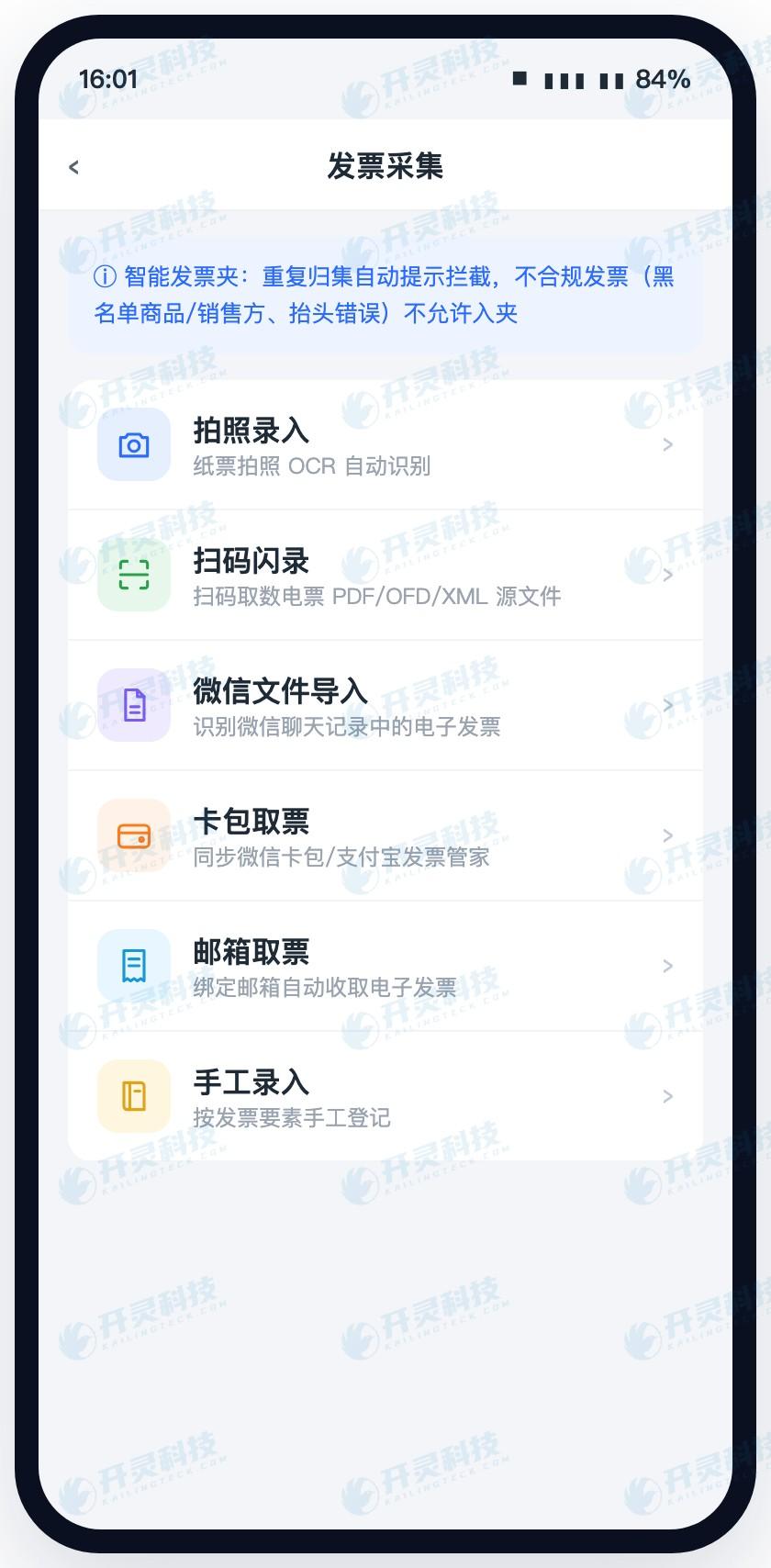
Multi-channel invoice collection entry points on the employee side (information has been desensitized)
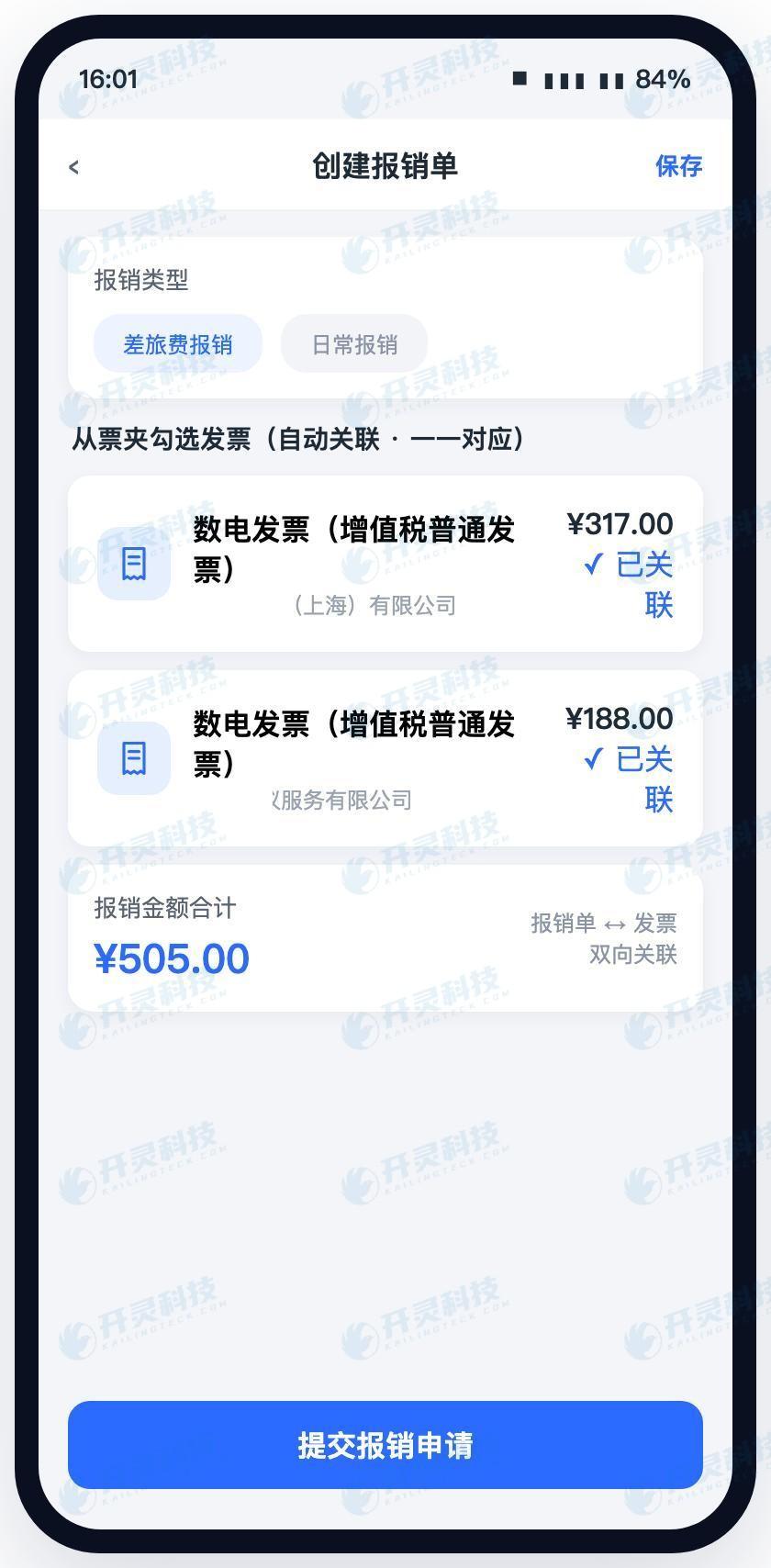
Generate a reimbursement form from the invoice folder and associate invoices (information desensitized)
▍The management side makes budget standards and approval processes work together
The management end must first express organization and rules. Different legal entities, departments, and projects within a group may use different expense standards, approval authorities, and payment accounts. The system distinguishes data scope through multi-organization and permission configuration, and then determines which fields are mandatory and who approves different amounts or expense types through form and approval workflow designers.
Budget control should work together with the application and reimbursement stages. Enterprises must clarify when it is occupied, when it is released, how it is restored after rejection, and how it is handled across periods. Approvers should not only see the application amount, but also be able to view the budget balance, expense standards, historical occupation, and related attachments.
Process configuration needs to leave room for exceptions. Temporary projects, special travel, or cross-organization expenses may not be suitable for hard-coding into a single fixed route. The system can automatically send documents matching rules to the corresponding approver and retain manual explanations and authorization records.
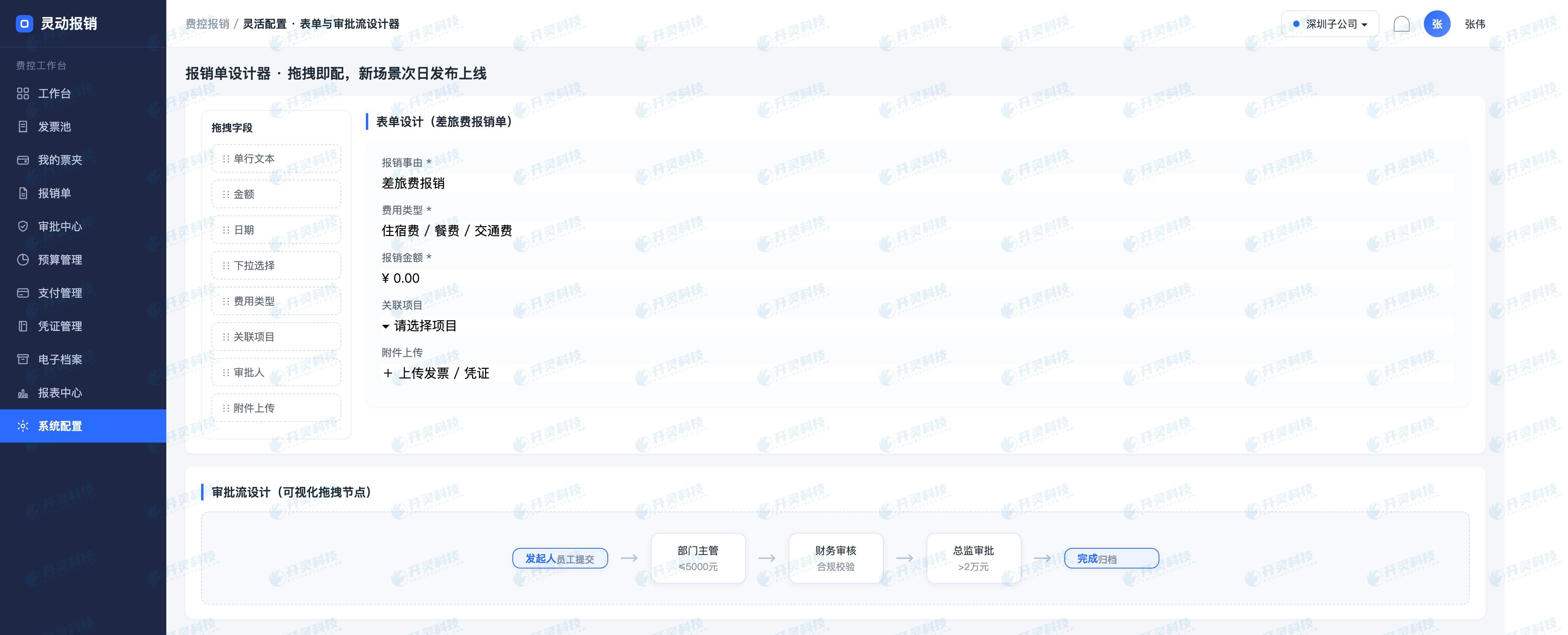
Reimbursement form and approval workflow configuration interface (information has been desensitized)
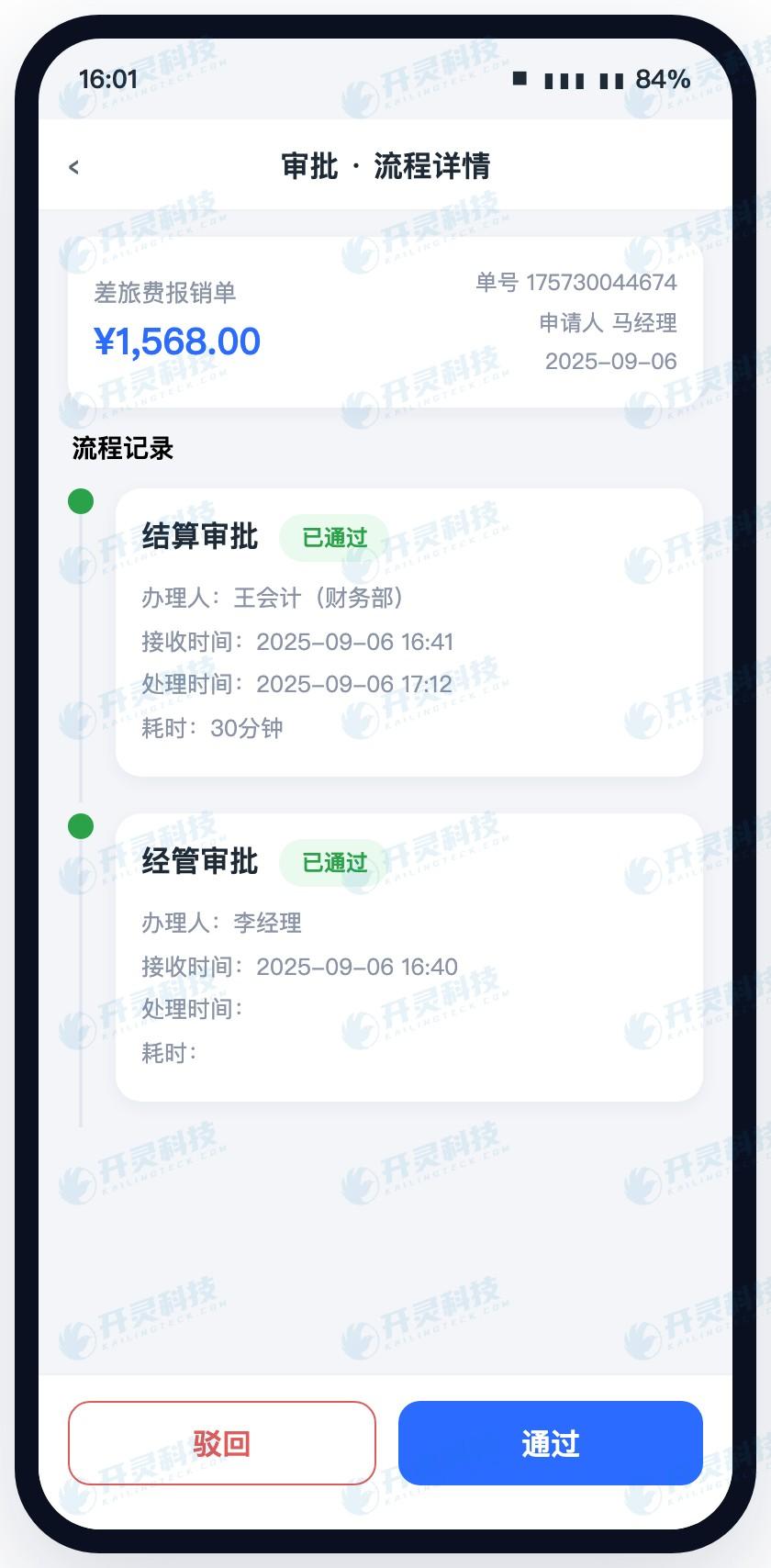
Mobile approval and process status viewing (information has been desensitized)
▍The finance side handles invoice risks before business exceptions
The finance end can verify invoice title, tax number, number, electronic seal, and invoice information, and identify issues such as duplicate reimbursement and inconsistent titles. After an invoice initiates reimbursement, the corresponding status is locked, reducing the same document being occupied multiple times or undergoing unexplained changes during processing.
Rule-based review is suitable for handling clear, repetitive checks, such as required fields, amount relationships, invoice duplication checks, and standard validation. Questions such as whether the business is reasonable, why the contracting party and payee are inconsistent, and whether over-standard cases have been authorized require judgment by personnel with authority. Lingdong Reimbursement's digital employees can assist review according to enterprise rules, and when exceptions are hit, hand over the reason and original order to a human.
This division of labor shifts finance from flipping through invoices one by one to centrally handling exceptions. The system should not only show a red "failed" status, but also indicate which item is inconsistent, who needs to supplement it, and how to re-verify after supplementation.
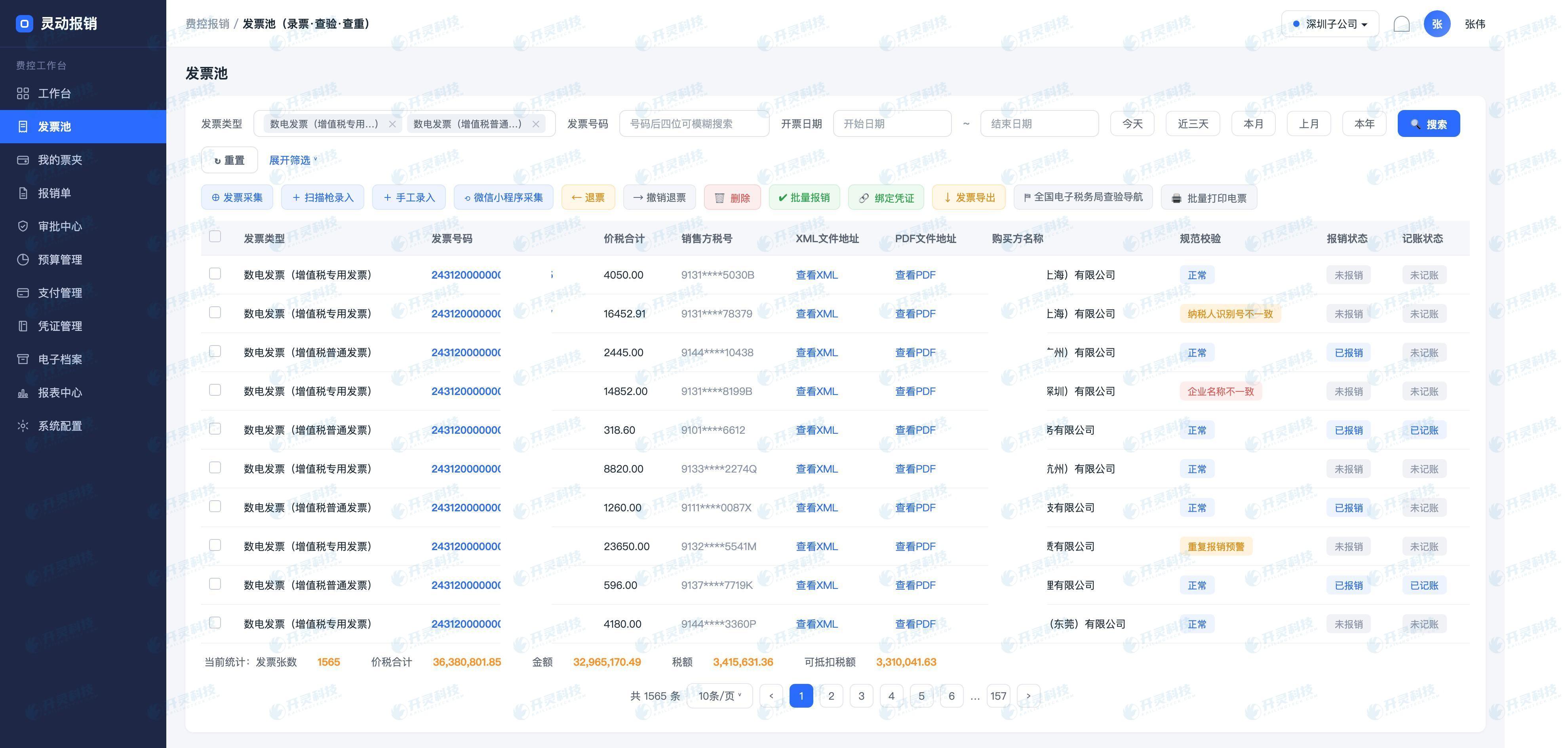
Invoice verification, duplicate checking, and reimbursement status management (information has been desensitized)
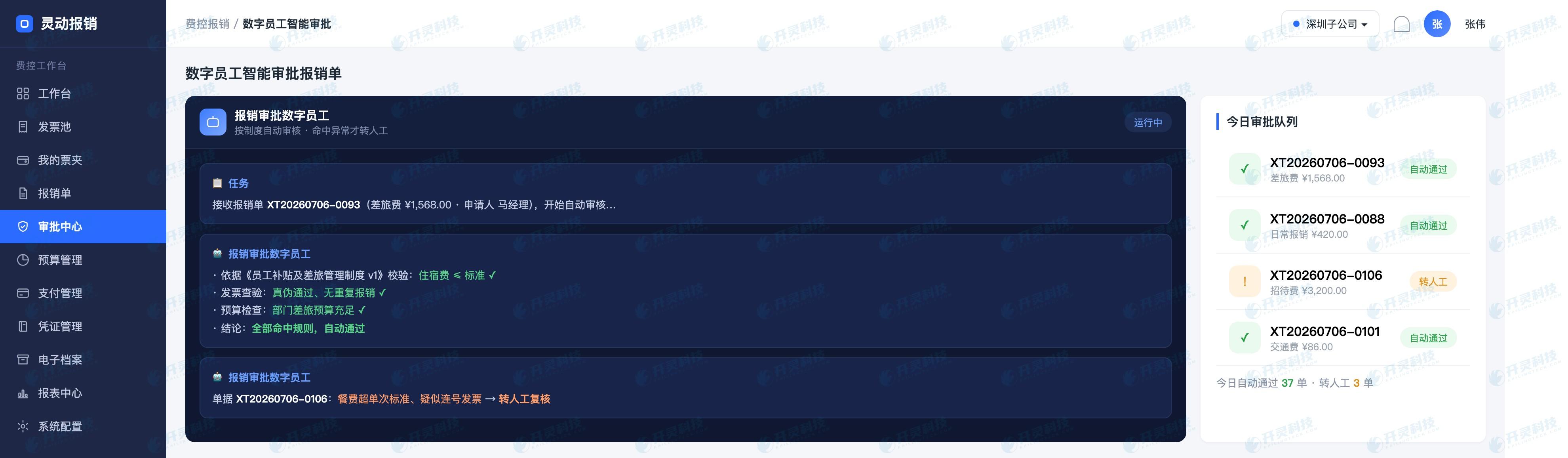
Digital employees review according to rules and forward exceptions (information has been desensitized)
▍The cashier and accounting side carry approval results through to payment and booking
Approval passing only indicates that organizational authorization is complete; it does not mean the payment has been made. Cashiers can export payment files according to bank requirements or initiate online payments through bank-enterprise direct connection. After the bank returns a success, failure, or processing status, the system writes back to the original order; successful receipts are linked to the reimbursement form, and failed tasks retain the reason and enter processing.
Accounting personnel can use voucher conversion middleware to map fields such as organization, expense type, cost center, project, and tax amount to financial software. Mapping rules need to be validated using the enterprise's current accounts and accounting dimensions, not just by looking at a demo voucher.
After posting, reimbursement forms, invoice source files, approval records, payment receipts, and voucher relationships can be synchronized to the electronic accounting archive system. System connections reduce repetitive organization, but the archiving scope, four-property testing, and retention periods still need to be configured according to the rules applicable to the enterprise.
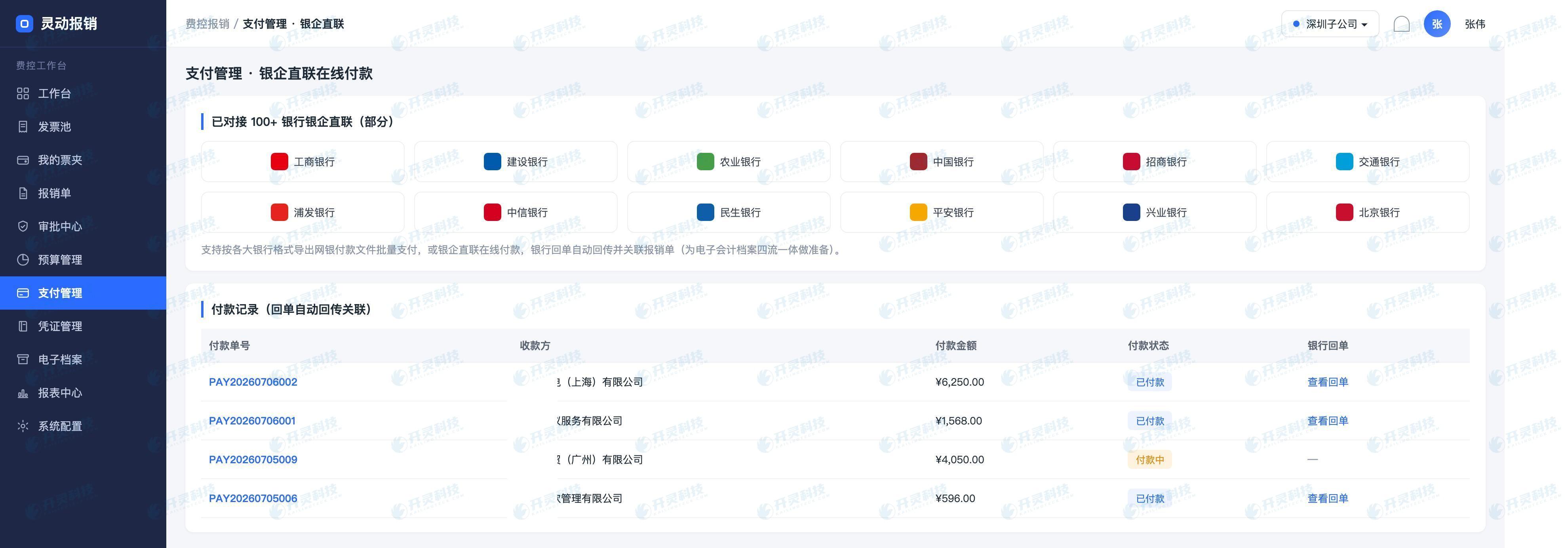
Bank-enterprise direct connection payment and receipt matching (information has been desensitized)
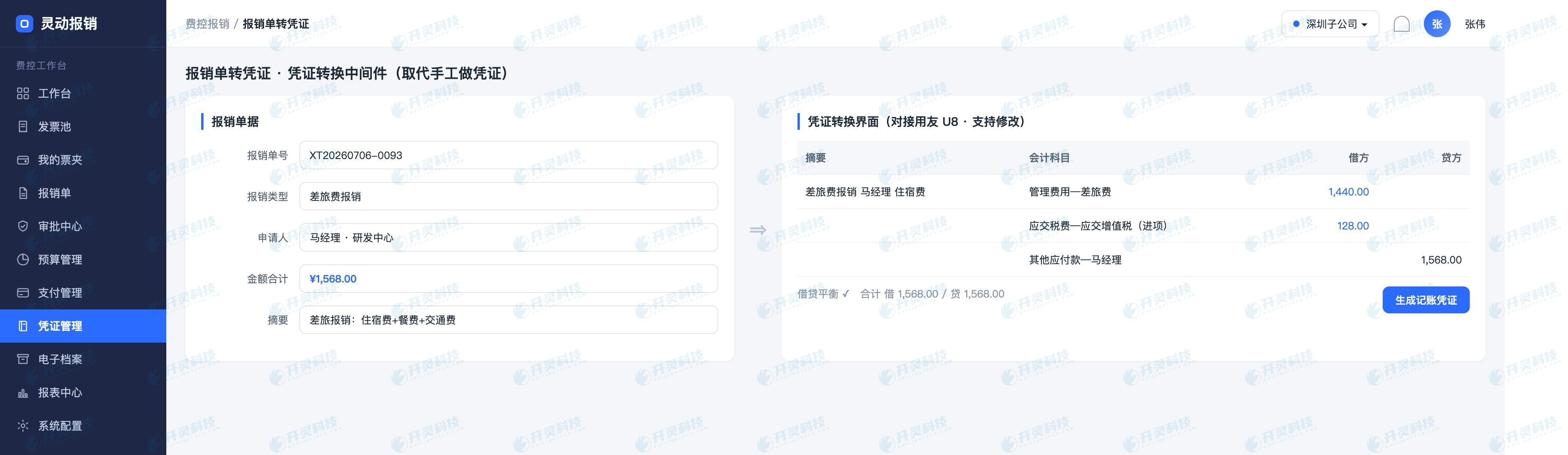
Conversion of reimbursement business fields to accounting vouchers (information has been desensitized)
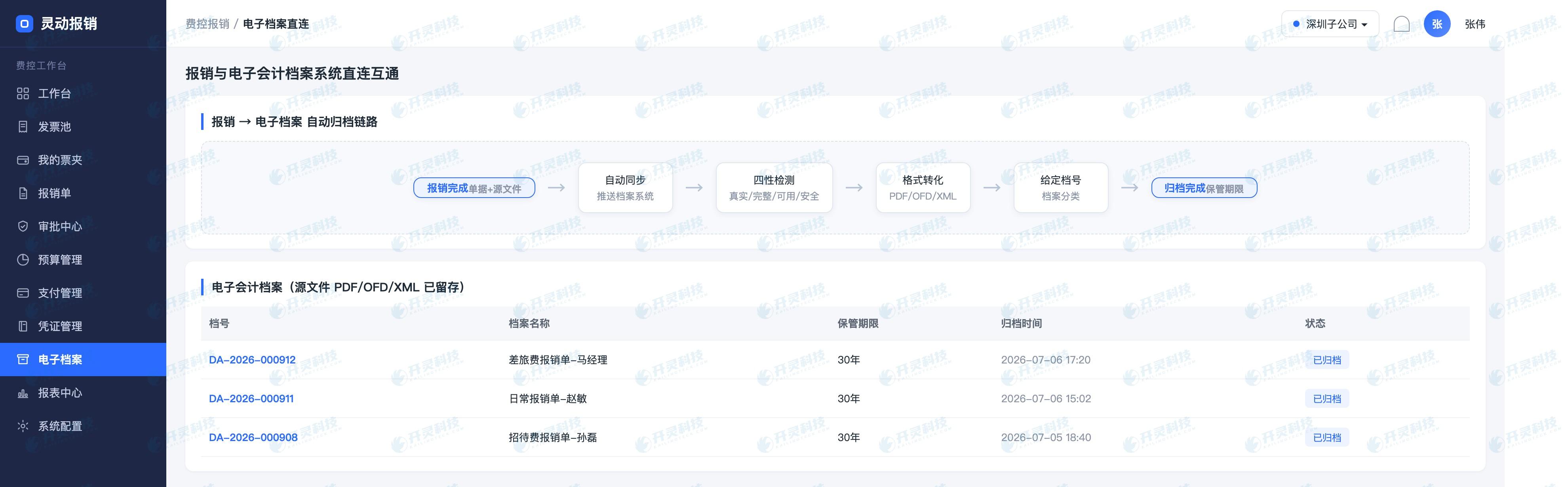
Automatic linkage between reimbursement materials and electronic archives (information has been desensitized)
▍When choosing functions, look at the complete process rather than the number of menus
Both systems may list "budget, OCR, approval, payment, voucher," but the actual depth of processing differs. During selection, the same set of samples can be prepared: normal business travel, duplicate invoices, above-standard accommodation, cross-organization projects, returned payments, interface timeouts and red-letter invoices. Observe item by item where the system intercepts, who can handle it, and whether the result is written back.
Master data and interfaces must also be verified. If organizations, personnel, suppliers, projects, and accounts are maintained by different systems, the synchronization direction and exception mechanisms must be clearly defined. Only when the employee side, management side, finance side, cashier, and accounting truly use the same business relationship will the feature list become a management capability that can be implemented.
When handing over tested functions, employees, approvers, finance, cashiers, and accounting personnel can each log in to their corresponding end and verify the status of the same reimbursement form as seen from different roles. When an employee sees "approved," finance should not have already defaulted to successful payment; after the cashier receives the receipt, accounting personnel should be able to obtain the corresponding document and journal entry fields. This cross-role verification is better at discovering breakpoints than separately trying a single menu.
▍FAQ
Q: Does an expense control system necessarily include business travel booking?
A: Different products have different scopes. Enterprises should distinguish business travel booking, expense application, reimbursement and accounting capabilities, and verify interfaces and data relationships according to the actual procurement scope.
Q: Does accurate OCR recognition mean invoice review is complete?
A: It does not mean that. OCR mainly extracts information from the face of the invoice; authenticity verification, duplicate checking, header validation, business reasonableness and tax treatment still require other rules or manual judgment.
Q: What is the difference between payment functions and online banking?
A: The expense control system connects approval forms with payment tasks, and online banking completes the actual fund transfer. The key is whether the payment result and receipt can return to the original business.
Q: Are systems with more functions more suitable for group enterprises?
A: Not necessarily. Groups should pay more attention to whether the organizational model, rule configuration, interfaces, permissions and operations capabilities can cover actual scenarios.
Use real documents to verify the complete handover among employees, management, finance, and accounting, and learn about Lingdong Reimbursement: https://www.kailingteck.com/feikong/ .
As a national high-tech enterprise, Kailing Technology focuses on the digital and intelligent transformation of enterprise business-finance-tax and operations management, providing software products, system integration, implementation and delivery, and operational services for various government agencies, institutions, group enterprises, and SMEs.
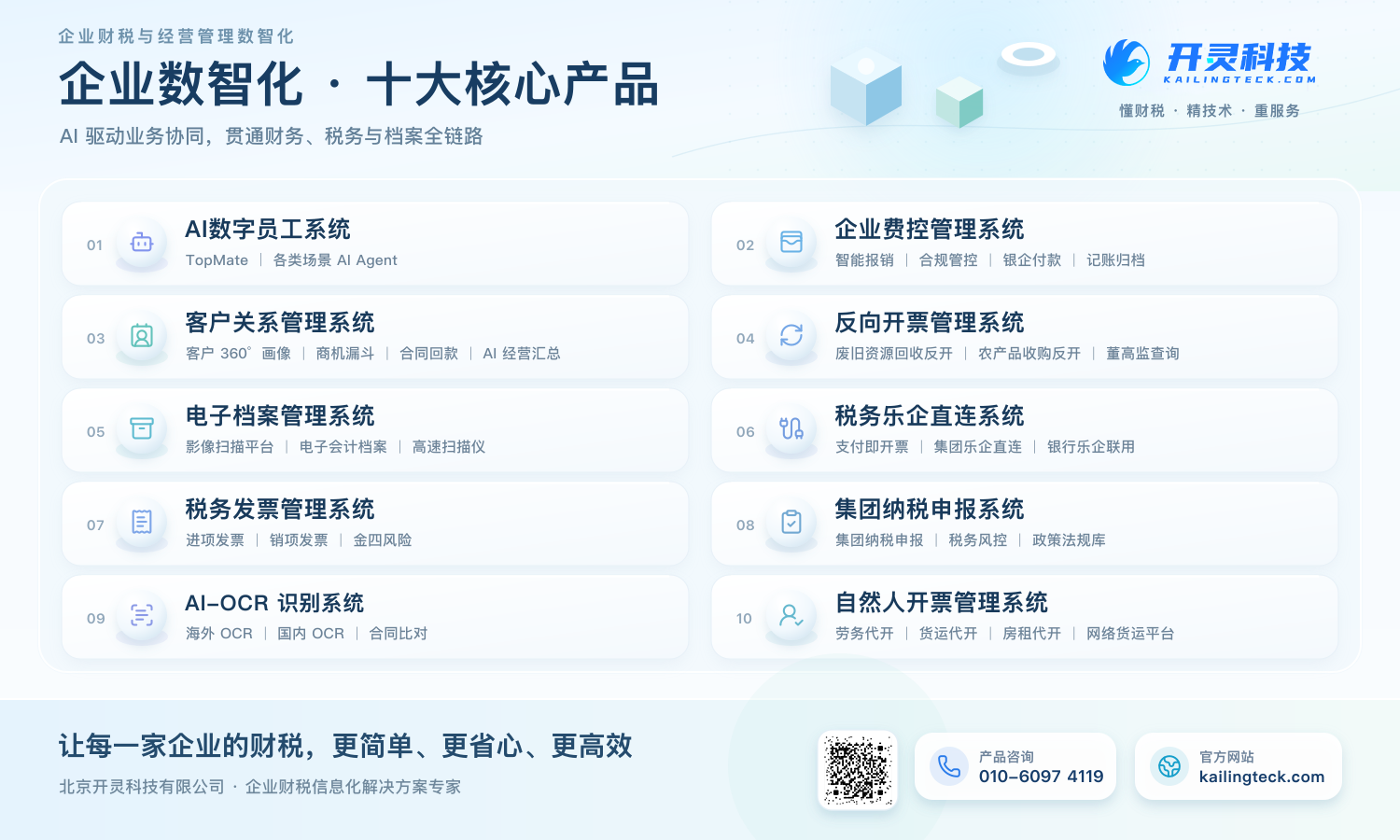
The company has now formed ten core product lines, including: AI digital employee system, enterprise expense control management system, customer relationship management system, reverse invoicing management system, invoice issuance for individuals management system, electronic archives management system, tax fully digitalized e-invoice Leqi system, tax invoice management system, group tax filing system, and AI OCR recognition system. It is committed to connecting enterprise business, finance, tax, funds, and archive data to help customers improve operational efficiency, business-finance-tax compliance capabilities, and digital management levels.
If you have any business-finance-tax digital transformation needs, welcome to contact us. Beijing Kailing Technology will serve you wholeheartedly.
Keywords: What functions does an expense control system have, invoice collection, expense approval, bank-enterprise payment, automatic vouchers, electronic archiving, Lingdong Reimbursement
As a comprehensive business-finance-tax digitalization solution service provider, Kailing Technology provides business-finance-tax management digital transformation products and operational services for various government agencies, institutions, and large, medium, and small enterprises. The product line includes: solutions for sales contract management system, procurement contract management system, fully digitalized Leqi interface project, automatic output invoicing system, reverse invoicing system, invoice issuance for individuals system, employee expense control and reimbursement system, input VAT invoice management system, supply chain collaborative reconciliation system, image AI OCR recognition system, automatic financial bookkeeping system, electronic accounting archives system, etc., comprehensively driving the digitalization process across various fields.
Consultation Hotline: 18513895936 / 010-60974119 Location: Beijing