
How to choose electronic records management system software? Stop stepping into the pit of auditors rummaging through everything
How to choose electronic records management system software? Stop stepping into the pit of auditors rummaging through everything
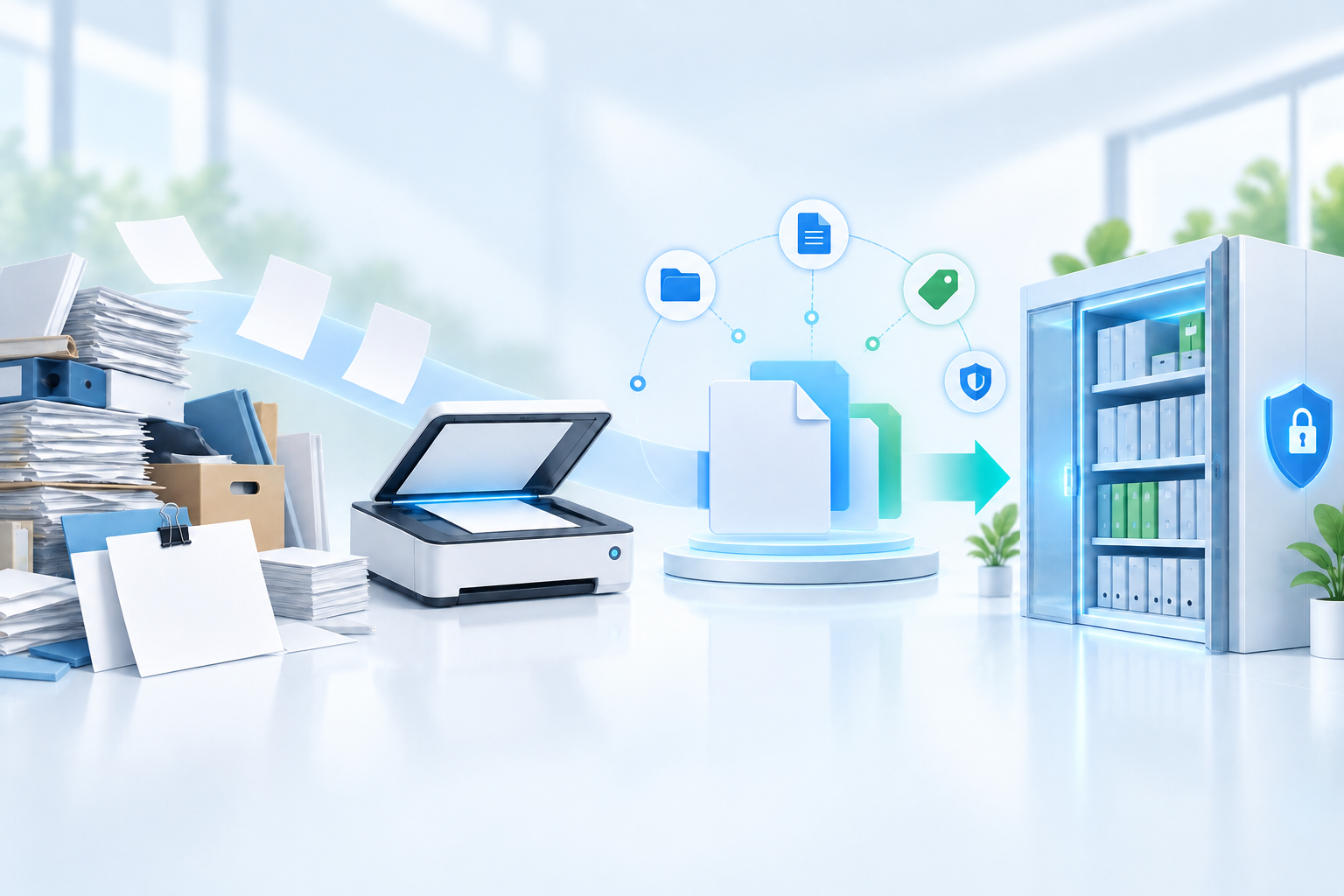
A cabinet full of paper vouchers, electronic invoices scattered across email and various systems, and when an audit comes the whole company helps search for a reimbursement form from two years ago - this is the real daily life of finance in many small and medium-sized enterprises. The problem is not whether materials are retained, but that they are retained in a scattered way, cannot be found, and have unclear sources. The solution is not to buy a few more filing cabinets, but to manage archives with source, relationships, and responsibility from the moment they are created. The Kailing Technology electronic accounting archive management system is designed around the main line of voucher scan to store, recognize to archive, and link to compile.
The value of archives is not in how much is stored, but in whether they can be opened when needed and whether their source can be clearly explained. |
▍1. What is the difference between electronic records management system software and cloud drives or scanned document folders?
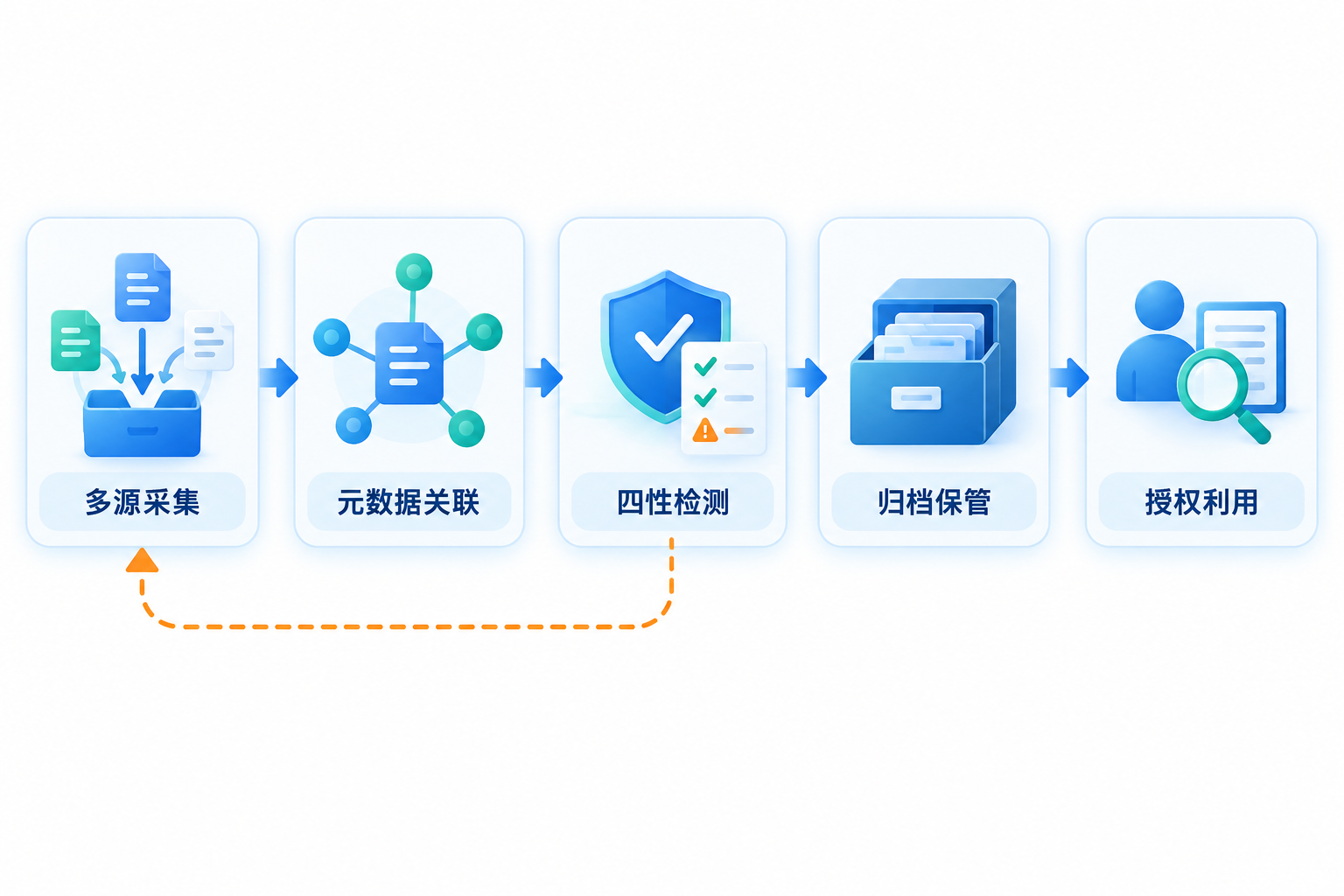
Many people think that scanning vouchers into PDFs and storing them on a shared drive counts as electronic archives, but that is far from enough. Cloud drives only handle "storage," not "source, relationships, responsibility." Duplicate file names, chaotic versions, and inability to find the corresponding business documents are the norm. A true electronic accounting archive management system does more than store files. Based on"Specification for Electronic Accounting Archive Management" (DA/T 94-2022), during selection, attention should be paid to capabilities such as archiving electronic accounting materials and metadata, authenticity, integrity, usability, and security testing, classification and association, preservation, and use. The system can record material sources and assist in associating business when enterprise authorization, interfaces, and rule configurations meet conditions; whether it is complete, accurate, and can be archived still needs to be reviewed according to institutional rules.
▍2. Scanning means entering the repository, recognition means archiving: what makes this possible?
"Scanning means archiving" cannot be understood as automatic compliance once scanning is complete. After invoices, contracts, licenses, and financial documents are scanned, AI OCR can assist in extracting candidate fields, and then personnel verify the original documents, recognition results, metadata, classification, and associations; only after passing the corresponding checks, approvals, and archiving rules can they enter electronic accounting archives. The system can reduce duplicate entry and promote collection along with business operations, but "recognition" does not equal "booking" or "archiving," nor can it replace accounting judgment, approval, and archival responsibility.
▍3. What to do when the four-property test fails? Do not bypass the prompt and force archiving
When the four-property test for electronic archives fails, first determine which category of requirement the failure occurred in, then supplement materials, repair files, or verify the source. Do not directly bypass the prompt to complete archiving. A missing attachment, a file that cannot be opened, insufficient source information, and suspicious findings from a security check are completely different problems and should not receive the same treatment. The Kailing Technology electronic accounting archive management system helps staff locate problems through test details and status management, giving pending archives a clear remediation path. Testing is not meant to add another obstacle, but to avoid discovering only when materials are truly needed that they cannot be explained or opened.
▍4. Which hard indicators should be focused on during selection?
First, look at collection capability: whether it can connect to multiple sources such as reimbursement, ERP, and tax digital accounts, rather than only supporting manual upload. Second, look at association capability: whether vouchers, invoices, contracts, and approval forms can be automatically assembled into files and mutually corroborated. Third, look at testing and traceability: whether the four-property test is traceable and whether operations have logs. Fourth, look at long-term usability: whether formats and metadata can still be opened years later. The system's interface scope and data mapping with business systems such as reimbursement, input VAT invoice management, and output invoicing should also be evaluated. Only when interface authorization, data validation, accounting treatment, metadata, and archiving rules all meet requirements can relevant materials be collected according to process; invoicing or recognition itself does not automatically mean booked, archived, or a complete evidence chain has been formed.
Keywords: electronic records management system software, electronic accounting archive management system, accounting electronic archive system, metadata association, electronic archive four-property test, AI OCR assisted recognition, long-term preservation, Kailing Technology
As a comprehensive business-finance-tax digitalization solution service provider, Kailing Technology provides business-finance-tax management digital transformation products and operational services for various government agencies, institutions, and large, medium, and small enterprises. The product line includes: solutions for sales contract management system, procurement contract management system, fully digitalized Leqi interface project, automatic output invoicing system, reverse invoicing system, invoice issuance for individuals system, employee expense control and reimbursement system, input VAT invoice management system, supply chain collaborative reconciliation system, image AI OCR recognition system, automatic financial bookkeeping system, electronic accounting archives system, etc., comprehensively driving the digitalization process across various fields.
Consultation Hotline: 18513895936 / 010-60974119 Location: Beijing