
Logistics companies temporarily use individual drivers during peak season; how to process freight invoices in batches? Kailing Technology's freight invoice issuance system for individuals connects to TMS orders
When logistics companies temporarily use individual drivers during peak season and process freight invoices in batches, they should first confirm the real transport relationship, then make drivers, TMS waybills, transport records, and payment evidence correspond to one another. Kailing Technology's freight invoice issuance system for individuals can connect relevant data around real transport business and organize invoice applications and result returns under applicable processing conditions. What batch processing improves is collaboration capability, not the omission of fact verification for each transport job.
▍For the extra waybills in peak season, first find the actual carrier
When temporary capacity comes in, dispatch first focuses on whether vehicles can arrive on time, while finance needs to know who the freight is actually settled to. If driver contact information, vehicle information, and the actual carriage relationship are not organized in time and are supplemented only after the business is completed, people often have to repeatedly check between dispatch sheets, chat records, and payment applications.
The person driving the vehicle is not necessarily the person undertaking transport services as an individual. The actual contract may belong to a transport enterprise, an individual industrial and commercial household, or another entity, and should be handled according to the real relationship. You cannot uniformly switch to the invoice issuance for individuals path just because the on-site contact is an individual, and you certainly cannot force different businesses into one model by changing names.
For businesses that genuinely apply to personal transport services, basic identity materials, necessary transport qualifications, and corresponding authorizations should be confirmed according to actual requirements. Regions, invoice types, and processing conditions need to be verified in advance, to avoid discovering after peak-season freight is already awaiting settlement that the designed channel does not apply.
▍The order number in TMS is the business anchor for batch management
Waybills recorded in the transport management system can show each transport arrangement, but finance still needs to confirm whether the corresponding task was actually completed and what the settlement scope is. Origin and destination information, goods and transport records, proof of receipt or other completion evidence should be associated with one another according to business needs, not just exported as a table containing names and amounts.
Kailing Technology freight individual invoicing system can connect to business data such as TMS orders and organize processing in combination with transport and fund information. Enterprises should clarify where fields are obtained, which data has been confirmed, and which still needs supplementation, so that batch lists preserve the origin of each transport.
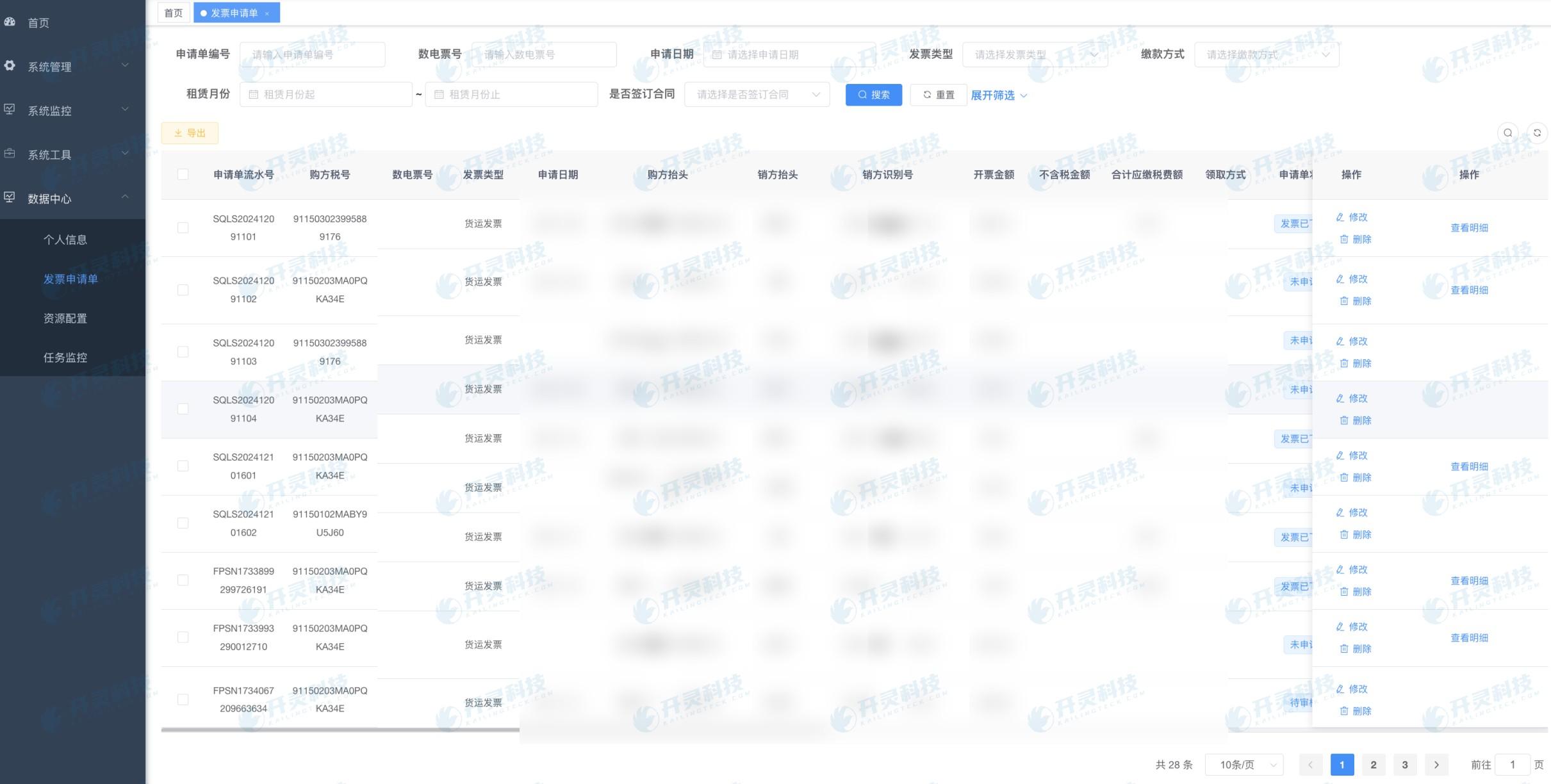
When the same driver completes multiple transportation tasks in one day, or the same business is settled in multiple installments, linkage is especially important. A driver-based summary view can be provided, but the underlying waybills and settlement details should still be retained. Personnel totals facilitate communication, while waybill relationships help explain each expense. Together they support subsequent invoicing and verification.
▍Kailing Technology freight invoice issuance for individuals solution isolates exceptions first, then organizes batches
Before batch processing, confirmed information can be used to distinguish processable matters from matters pending supplementation. Businesses with incomplete identity materials, questionable waybill ownership, insufficient evidence of transport completion, or amounts requiring review should have clear to-dos and should not be mixed into the entire batch and passed downward together.
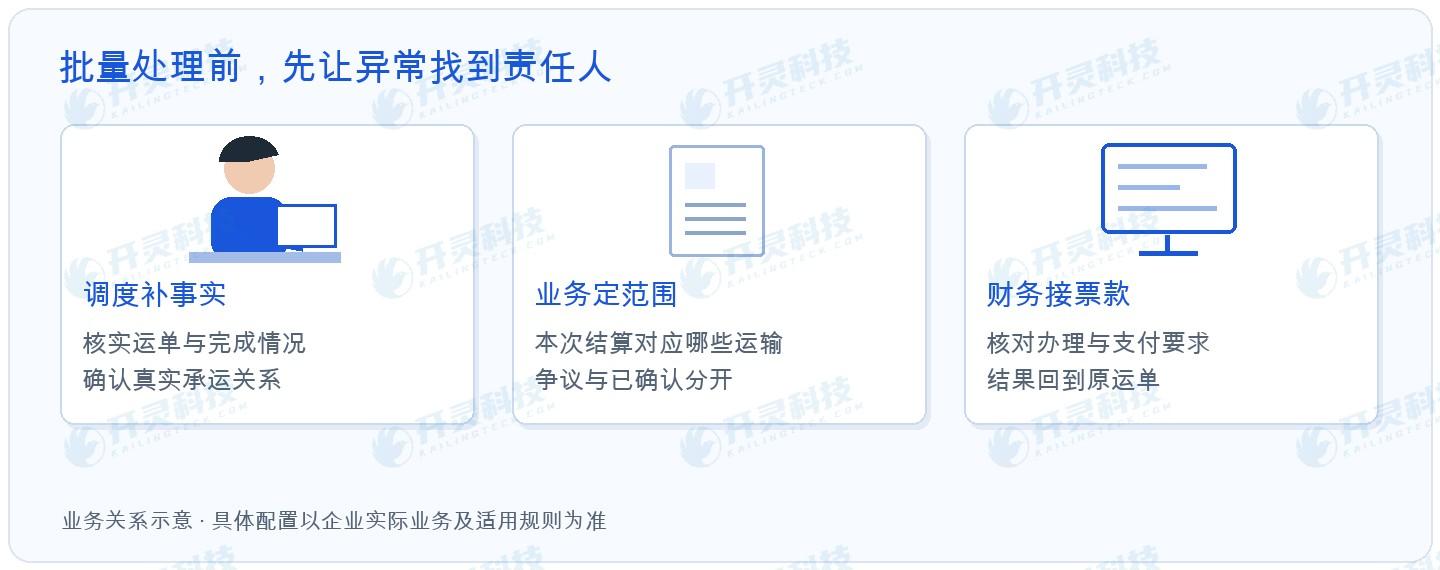
This is not about letting enterprises ignore exceptions, but about advancing business that already meets the conditions according to applicable arrangements while assigning responsible persons to pending items. Dispatch supplements transport details, business owners confirm the settlement scope, and finance verifies payment and invoice requirements; only when each handles its part clearly does batch efficiency have a reliable foundation.
Materials such as transport trajectories should also be understood in light of the real situation. The existence of data does not automatically prove that all services are real, and a temporary lack of data should not be generated out of thin air by the system. Matters requiring supplementary explanation should be handled according to actual management and processing requirements; the role of platform collection is to present evidence, not to manufacture it.
▍Drivers complete confirmation on their phones, but enterprises still need to retain complete links
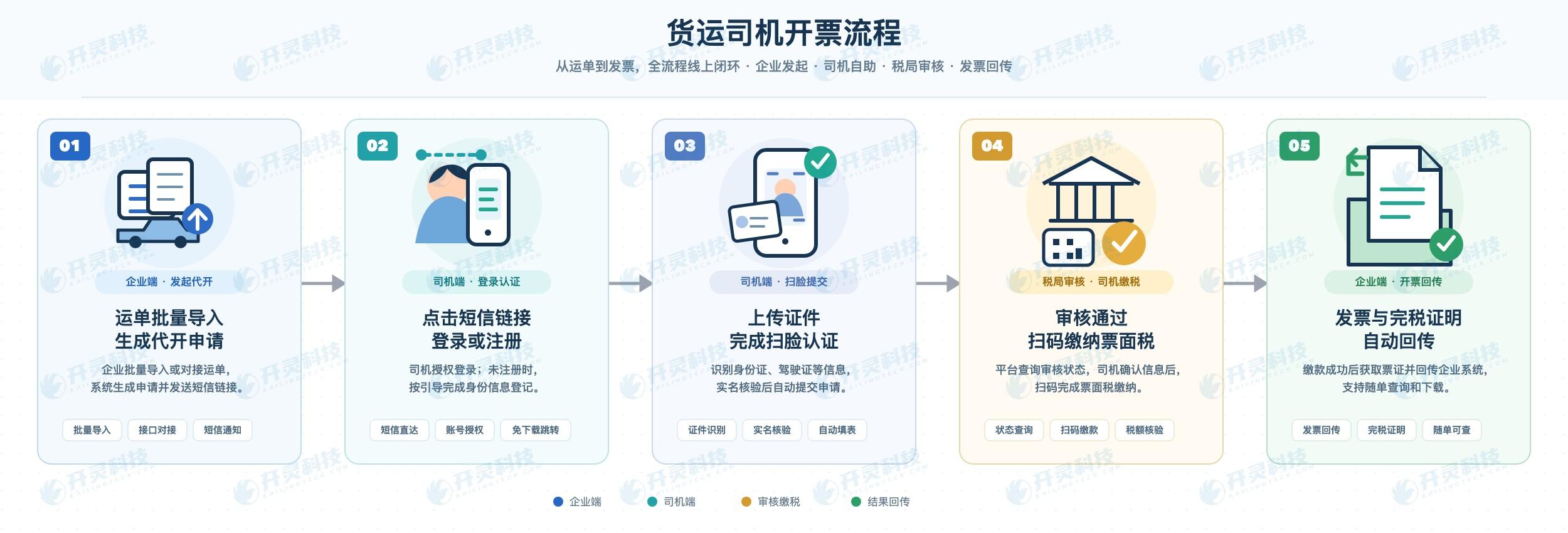
The applicable processing channel may require drivers to perform identity verification, application confirmation, or other necessary operations. The specific method should be determined according to local rules and service capabilities; it cannot be promised that all regions can complete all matters with the same single operation.
For drivers, clear application content is important. Which waybills it corresponds to, what service it is, and what relationship it has to the agreed settlement should be understandable; for enterprises, driver confirmation should return to the original business list and not become a material detached from TMS. What both parties share is the same real transport, not two sets of applications that do not recognize each other.
Access to personal information and transportation records should also be restricted according to job needs. Dispatchers, finance staff, and technical maintenance staff each have their own responsibilities. All identity information does not need to be opened to all operators just for batch processing. Efficiency improvements should be designed together with appropriate information protection.
▍When invoice results return to the waybill, payment requires fewer repeated follow-ups
After processing is completed, invoices and related statuses should be linkable back to the corresponding driver, waybill, or settlement batch. When finance finds an invoice, it knows which services it corresponds to; when dispatch views transportation records, it can also understand subsequent processing progress, reducing repeated questions such as "Has the invoice for this order come back yet?"
Payment and invoicing still need to be checked separately. The formation of an invoice does not mean freight has actually been received, and fund payment does not mean invoice processing has been completed. When an interface return is unclear, first query existing results, then decide whether to retry or handle manually, to avoid batch operations amplifying the risk of duplicate applications.
If transport settlement is adjusted, the affected waybills and invoices should be identified and handled according to the real business and applicable requirements. Do not delete old batches and re-import a single summary table, mixing already paid, already invoiced, and pending supplementary materials together. Preserving historical relationships is the foundation for smooth reconciliation after peak season ends.
▍After peak season, temporary capacity records can become a more orderly cooperation working file
Enterprises can organize commonly used carrier information based on real cooperation, but each new business still needs to verify the current identity, qualifications, and transportation relationship. Reusing unchanged information over the long term reduces entry, while continuously confirming changes helps avoid historical records being carried over unconditionally.
You can also review the most common missing items in batch processing. If receipt confirmation is always later than the settlement application, improve the business handover; if driver information is repeatedly supplemented, explain the required materials in advance; if invoice status is difficult to return, improve the interface or query entry. Real efficiency improvement comes from these specific steps being continuously connected well.
The application direction of Kailing Technology freight individual invoicing system is to bring temporarily added capacity into clear business management as well. Transport is dispatched as usual, materials are collected at appropriate nodes, and finance can process based on complete relationships. A busy peak season no longer necessarily means a large-scale month-end bookkeeping catch-up.
Material requirements for drivers can also be explained before undertaking transport. Clarify which are provided by the enterprise system and which require the individual's cooperation, to avoid adding unclear requirements only after transport ends, making it easier for both parties to arrange subsequent processing.
▍FAQ: Q&A on freight handling for temporary drivers
Q: If the contact is an individual, can an invoice be issued for an individual?
A: Not necessarily. You should verify the entity that actually carries the goods and provides the service. Transportation undertaken by an enterprise or another entity cannot be arbitrarily changed to an individual business.
Q: If a few waybills in a batch have incomplete documents, must everything stop?
A: They can be grouped and processed according to actual rules, with pending items and responsible persons clearly identified. Business that already meets conditions and business that still needs verification should be distinguished, and should not be concealed or let through together.
Q: After batch invoicing, does TMS need to save invoice links?
A: Queryable links should be retained through interfaces or other appropriate means, so that transportation, settlement, and invoices can locate each other and processing results do not become isolated data again.
Peak season adds transport capacity, and the relationship among waybills, drivers, and invoice payments should keep up too. Learn about Kailing Technology freight individual invoicing: https://www.kailingteck.com/huoyun/ .
As a national high-tech enterprise, Kailing Technology focuses on the digital and intelligent transformation of enterprise business-finance-tax and operations management, providing software products, system integration, implementation and delivery, and operational services for various government agencies, institutions, group enterprises, and SMEs.
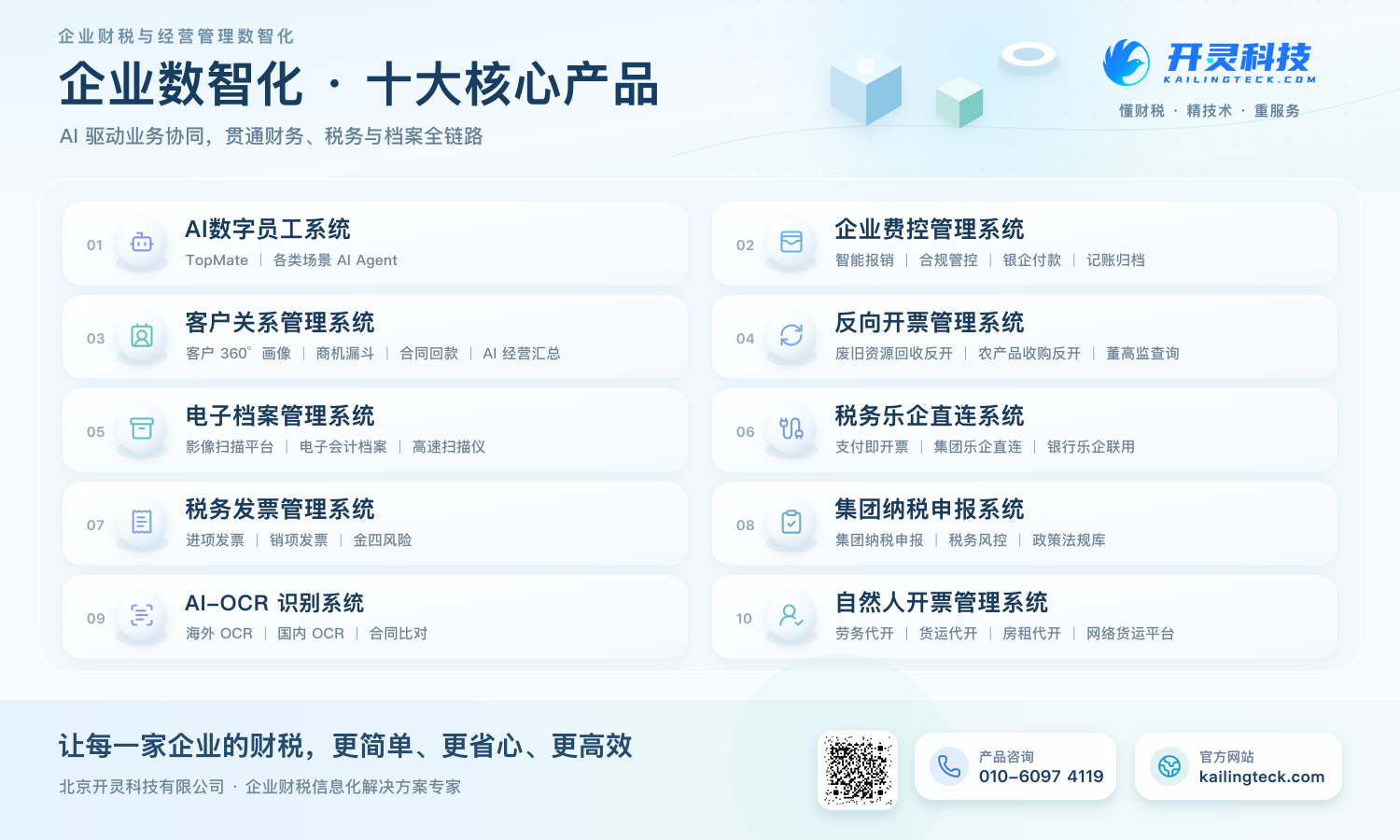
The company has now formed ten core product lines, including: AI digital employee system, enterprise expense control management system, customer relationship management system, reverse invoicing management system, invoice issuance for individuals management system, electronic archives management system, tax fully digitalized e-invoice Leqi system, tax invoice management system, group tax filing system, and AI OCR recognition system. It is committed to connecting enterprise business, finance, tax, funds, and archive data to help customers improve operational efficiency, business-finance-tax compliance capabilities, and digital management levels.
If you have any business-finance-tax digital transformation needs, welcome to contact us. Beijing Kailing Technology will serve you wholeheartedly.
Keywords: Freight invoice issuance system for individuals, individual driver freight invoices, TMS orders, logistics freight invoicing, peak season driver settlement
As a comprehensive business-finance-tax digitalization solution service provider, Kailing Technology provides business-finance-tax management digital transformation products and operational services for various government agencies, institutions, and large, medium, and small enterprises. The product line includes: solutions for sales contract management system, procurement contract management system, fully digitalized Leqi interface project, automatic output invoicing system, reverse invoicing system, invoice issuance for individuals system, employee expense control and reimbursement system, input VAT invoice management system, supply chain collaborative reconciliation system, image AI OCR recognition system, automatic financial bookkeeping system, electronic accounting archives system, etc., comprehensively driving the digitalization process across various fields.
Consultation Hotline: 18513895936 / 010-60974119 Location: Beijing