
What should a multi-legal-entity group do when travel standards differ across regions? Kailing Technology Lingdong Reimbursement configures forms, processes, and permissions by organization.
When travel standards differ across a multi-legal-entity group, the reimbursement entry point and basic management can be unified while forms, processes, permissions, and applicable rules are configured by organization. Kailing Technology Lingdong Reimbursement helps the group preserve each entity's differences on a shared platform, so employees do not have to repeatedly search for different entry points, and finance does not have to abandon its own company's management requirements just to unify the system. What needs to be unified is the collaboration foundation, not compressing all expense standards into the same number.
▍Headquarters wants full visibility, branches want to follow their own rules
Group finance wants to grasp expense conditions in a timely manner, while branches face different regions, business types, and management arrangements. If each uses independent spreadsheets, headquarters aggregation is laborious; if only one unified form and approval path is allowed, local teams may have to supplement explanations outside the system.
This set of contradictions can be resolved in layers. Expense categories, necessary data, and summary criteria can first establish common agreements, while specific travel standards, approval responsibilities, and visibility scope are configured according to organizational needs. A common foundation lets the group understand the data, and organizational rules let employees handle matters realistically.
The key is to clarify which differences have a policy basis and which are merely historical habits. Reasonable differences should be expressed, and duplicate and unnecessary fields can be organized. Group digitalization is not about hiding differences, but about giving differences names, applicable objects, and someone responsible for maintaining them.
▍Kailing Technology Agile Reimbursement puts the organization into daily processing
Lingdong reimbursement supports multi-organization management and configurable business processes. After employees enter the platform, they should be able to identify which entity this document belongs to and use the corresponding form and approval arrangement; when finance views the document, it can also understand which set of rules applies, rather than seeing only an expense detail without organizational context.
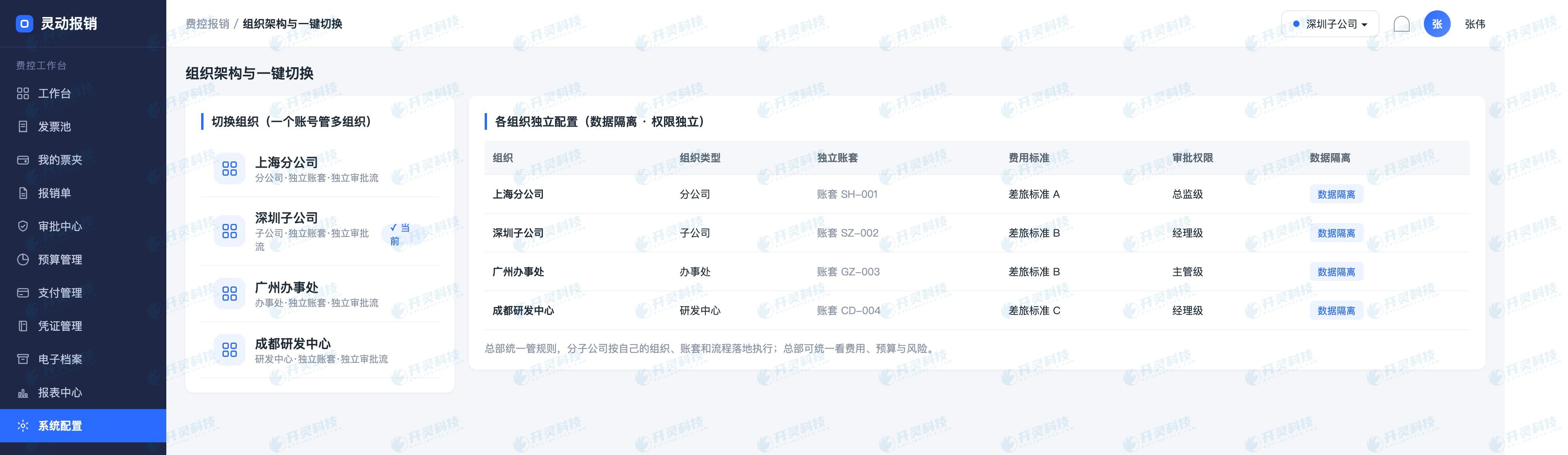
Organization information affects not only reimbursement limits, but also invoice titles, payment arrangements, voucher mapping, and data permissions. During implementation, these connections should be confirmed around actual business so that the entity remains identifiable throughout the process and is not replaced by a group-wide generic name at some step.
A unified entry point can also reduce the burden of switching for employees. Employees become familiar with the basic ways to submit, supplement materials, and query results, without having to learn several completely different operations due to organizational differences; fields and rules that need to change are handled by configuration. A familiar experience and accurate attribution can coexist on the same platform.
▍When travel rules change, let old and new policies each have their scope of application
After an enterprise adjusts its travel management policy, it needs to clarify when it applies from, which personnel and business it covers, and how documents already in progress are handled. It cannot simply change backend parameters and assume that all reimbursements submitted in the past should adopt the new rules.
Policy versions and corresponding applicability information can be retained, so reviewers know what the current documents are judged against. Historical records are retained according to the handling confirmed at the time, and new business is executed according to the new arrangement. Special transition matters are confirmed by finance and business, avoiding a situation where system changes make employees feel the standard moves suddenly during processing.
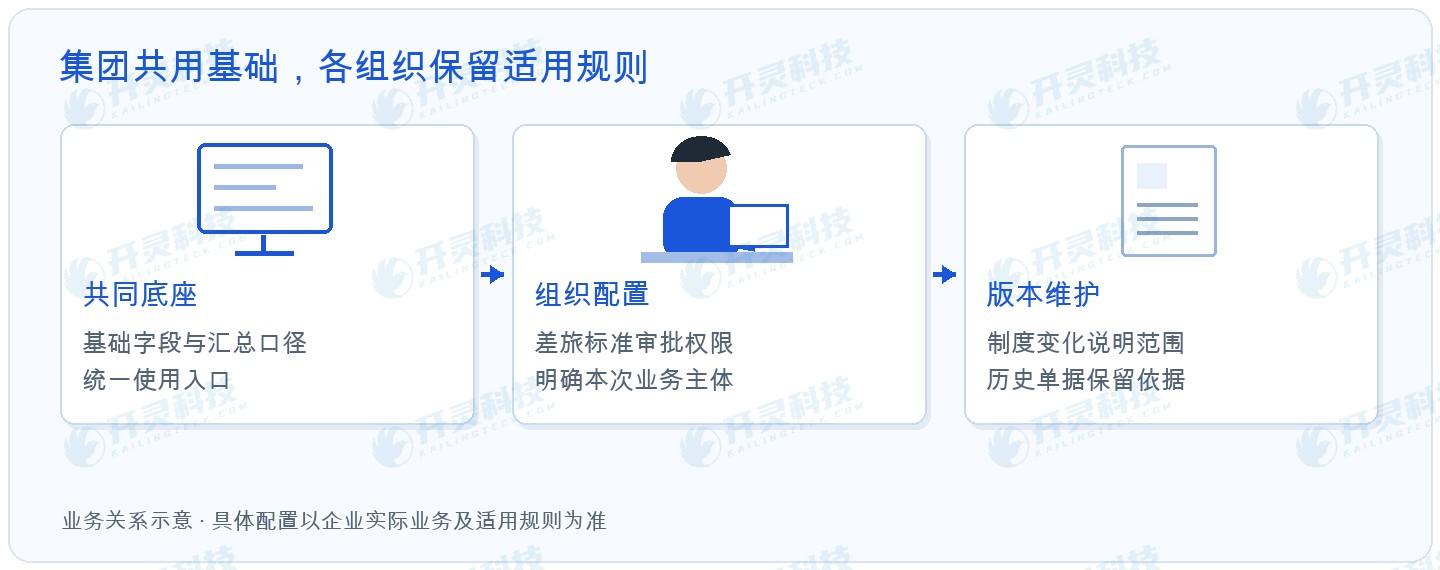
Rule maintenance responsibilities should also be clear. Headquarters maintains common fields and group management requirements, each entity confirms its own organization's specific standards, and technical or system administrators execute approved configurations. Separating policy-making from system operation prevents a one-time convenience change from becoming an unconfirmed management policy.
▍For employees working across organizations, document attribution is more worth verifying than personnel attribution
An employee may undertake tasks for different projects or entities. Which company a login account belongs to is not necessarily enough to determine who bears each expense. Document attribution should be confirmed based on the actual business, internal enterprise arrangements, and relevant basis. All expenses cannot be fixed to one default entity just for convenience.
When intra-group expense sharing is involved, it also needs to be handled according to enterprise accounting and business management requirements. The system can provide fields and a basis for association, but it cannot decide on its own which legal entity bears the expense, and it certainly cannot cancel the necessary boundaries of materials and responsibilities between entities just because the platform is unified.
For employees, form prompts can help reduce mistaken selections. Clearly display the current organization and key header information so the handler can confirm before submission; when special arrangements arise, there is a clear consulting position, so they do not have to guess the handling relationship between companies. What the system reduces is selection difficulty, not silently shifting responsibility to the person filling out the form.
▍Group reports can aggregate, and each company can also explain its own data
One practical benefit of a unified platform is that basic data does not need to be manually pieced together by each organization at month-end. But reports still need to state scope and criteria, for example whether expenses are observed by business occurrence, reimbursement processing, or fund payment. Centralized data does not automatically make all statistical meanings the same.
Headquarters can view summaries within the authorized scope, while each entity retains the corresponding details and processing responsibility. When a change needs to be questioned, it is possible to return from the summary to the business document and understand the expense type, organizational ownership, and approval background. In this way, headquarters communication does not have to rely only on branches explaining the numbers again.
Permission design should support this layered reading. The summary view that group managers need does not mean all employees can browse other companies' personnel expenses; the processing permissions of shared service roles should also cover their actual responsibilities. Letting each layer see the information it needs makes unified management easier for every organization to accept.
▍Rollout does not have to cover all legal entities at once
The group can first select organizations with clear rules and good business cooperation conditions to sort out a common foundation, then incorporate the real differences of other entities into the configuration. What is replicated is the form framework and collaboration method, not an entire set of unconfirmed standards. Each time a new entity is added, related settings such as organization, accounts, permissions, and vouchers should be checked.
During rollout, the most common reasons for employee mistaken selections and returns can be collected. If multiple companies encounter the same confusion, improve the common entry point; if the problem comes from a particular organization's special policy, adjust within the corresponding scope. This feedback method helps the group continuously optimize while avoiding small-scope changes affecting all users.
Kailing Technology Lingdong Reimbursement's multi-organization capability provides groups with a foundation for differentiated management on a unified platform. Headquarters obtains comparable information, each company retains necessary rules, and employees complete their own tasks at familiar entry points. Only then can expense control construction move from "unified launch" to sustained usability.
▍FAQ: Q&A on travel management for multiple legal entities
Q: If the same platform is used, must the same travel standards be adopted?
A: Not necessarily. Basic fields and process capabilities can be unified while applicable rules are maintained by organization, provided the differences have a clear basis and are appropriately confirmed.
Q: If an employee transfers to another company, should old documents be migrated along with them?
A: Historical business attribution should not be changed merely because of personnel adjustments. The original entity and the basis used at the time should be retained, and new business should be determined according to the actual arrangement.
Q: Can headquarters view all organization details?
A: It should be configured according to authorization and management responsibilities. Group aggregation needs to be considered together with the protection of personal or other entity data. All data should not be opened to all headquarters accounts by default.
Retain each company's real rules within a unified entry point. Learn about Kailing Technology's Lingdong Reimbursement multi-organization management: https://www.kailingteck.com/feikong/.
As a national high-tech enterprise, Kailing Technology focuses on the digital and intelligent transformation of enterprise business-finance-tax and operations management, providing software products, system integration, implementation and delivery, and operational services for various government agencies, institutions, group enterprises, and SMEs.
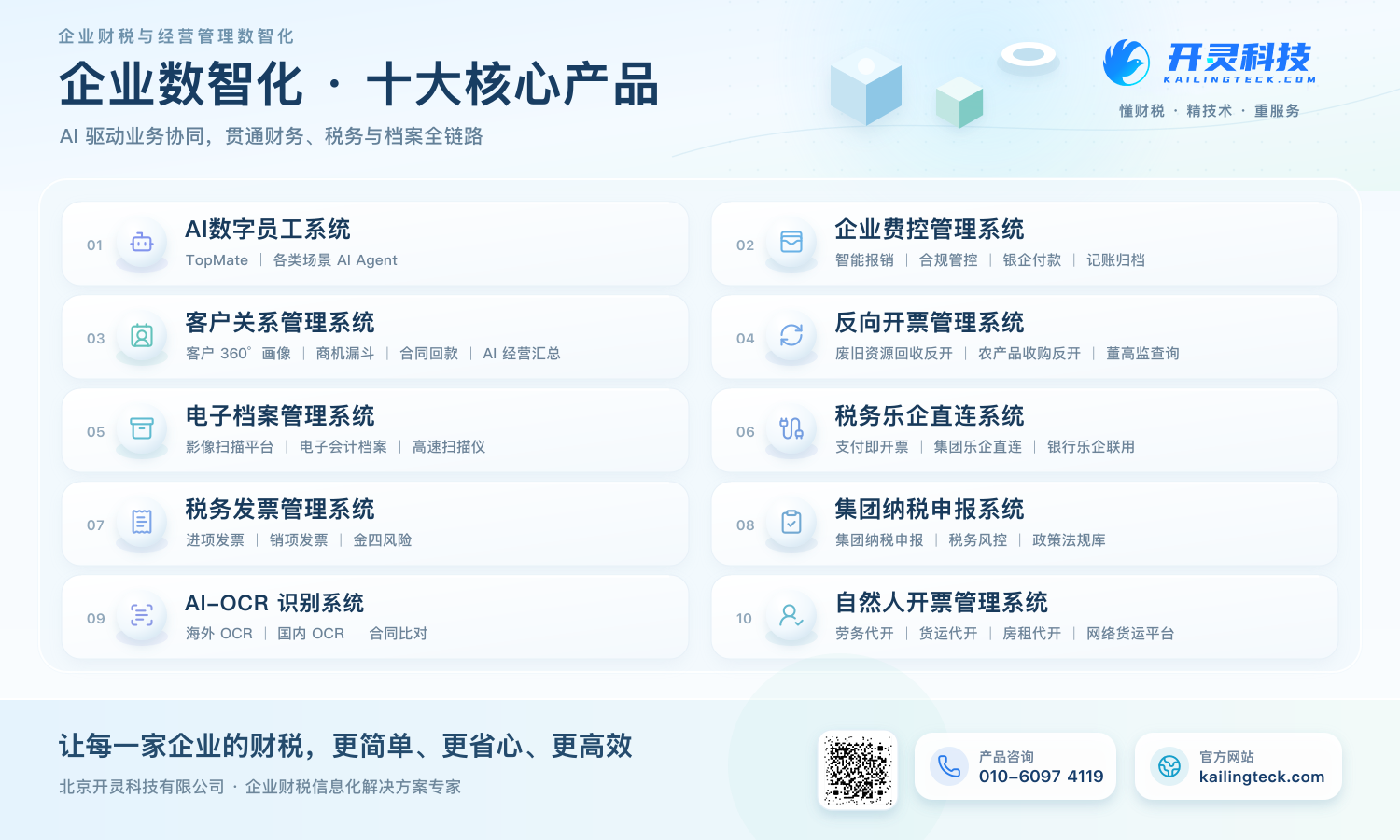
The company has now formed ten core product lines, including: AI digital employee system, enterprise expense control management system, customer relationship management system, reverse invoicing management system, invoice issuance for individuals management system, electronic archives management system, tax fully digitalized e-invoice Leqi system, tax invoice management system, group tax filing system, and AI OCR recognition system. It is committed to connecting enterprise business, finance, tax, funds, and archive data to help customers improve operational efficiency, business-finance-tax compliance capabilities, and digital management levels.
If you have any business-finance-tax digital transformation needs, welcome to contact us. Beijing Kailing Technology will serve you wholeheartedly.
Keywords: Lingdong reimbursement, multi-entity expense control, travel standards, group reimbursement system, organization-specific permissions
As a comprehensive business-finance-tax digitalization solution service provider, Kailing Technology provides business-finance-tax management digital transformation products and operational services for various government agencies, institutions, and large, medium, and small enterprises. The product line includes: solutions for sales contract management system, procurement contract management system, fully digitalized Leqi interface project, automatic output invoicing system, reverse invoicing system, invoice issuance for individuals system, employee expense control and reimbursement system, input VAT invoice management system, supply chain collaborative reconciliation system, image AI OCR recognition system, automatic financial bookkeeping system, electronic accounting archives system, etc., comprehensively driving the digitalization process across various fields.
Consultation Hotline: 18513895936 / 010-60974119 Location: Beijing