
How can hotel checkout, OTA orders, and scenic area refunds be handled uniformly? Kailing Technology's cultural tourism automatic invoicing solution synchronizes transactions, red-letter reversals, and delivery
Hotel checkout, OTA orders, and scenic area refunds can be managed uniformly in terms of transactions and invoice results, but they cannot share one set of invoicing logic that ignores entity and refund status. Kailing Technology's cultural tourism automatic invoicing solution connects business systems around actual consumption, sales relationships, and subsequent changes, helping front desk, customer service, and finance handle different scenarios. After the journey ends, related invoices may still need further querying or correction, and the original order relationship should be retained.
▍At hotel check-out, what the guest wants to take away is a bill that can be clearly explained
During a stay, different items such as room charges, other consumption, deposits, and refunds may occur. Check-out settlement needs to explain which items are actual consumption and which are only temporarily collected or returned funds. If only the final payment amount is used as the basis for all invoicing, it may be impossible to explain the relationship between previous payments and this settlement.
Hotel business systems should provide actual consumption and confirmation results, and the invoicing step should verify necessary information accordingly. When guests adjust the number of nights, cancel a certain consumption, or settle separately, the related changes should enter traceable records. The front desk does not need to verbally recount the entire stay to finance, and finance can understand the scope corresponding to the current invoice.
For customers, a smooth experience means less repeated filling in of information and less waiting for backend inquiries; for hotels, it means every confirmed consumption can find a corresponding record. Convenience comes from the connection of business data, not from temporarily piecing together a total amount manually at the end of settlement.
▍The OTA entry point brings orders but does not directly determine who issues the invoice
A consumer booking through a platform does not mean the platform is necessarily the seller of all services. The specific cooperation, payment collection, and settlement arrangements between hotels and platforms may follow different models. The invoicing entity should be determined based on the actual services and transaction relationships, not merely on which app the order appears in.
The platform order number and the hotel's internal records need to correspond stably. Customer service uses platform information to find accommodation business, the front desk queries invoices based on internal orders, and finance verifies settlement and actual sales; each position should be able to find the same transaction. Different systems can retain their own numbers, but the association cannot rely only on names and approximate dates.
When platform rescheduling, cancellation, or partial refunds occur, the impact on the actual service and invoice should be identified at the same time. A changed platform status does not mean all handling on the hotel side is automatically completed; conversely, when the hotel completes a business adjustment, it also needs to let the relevant channels know the new queryable result. Only when all parties confirm a clear scope is it less likely that customers will be sent back and forth between the platform and the hotel.
▍For scenic area ticket refunds, refunds and ticket changes should be tracked separately
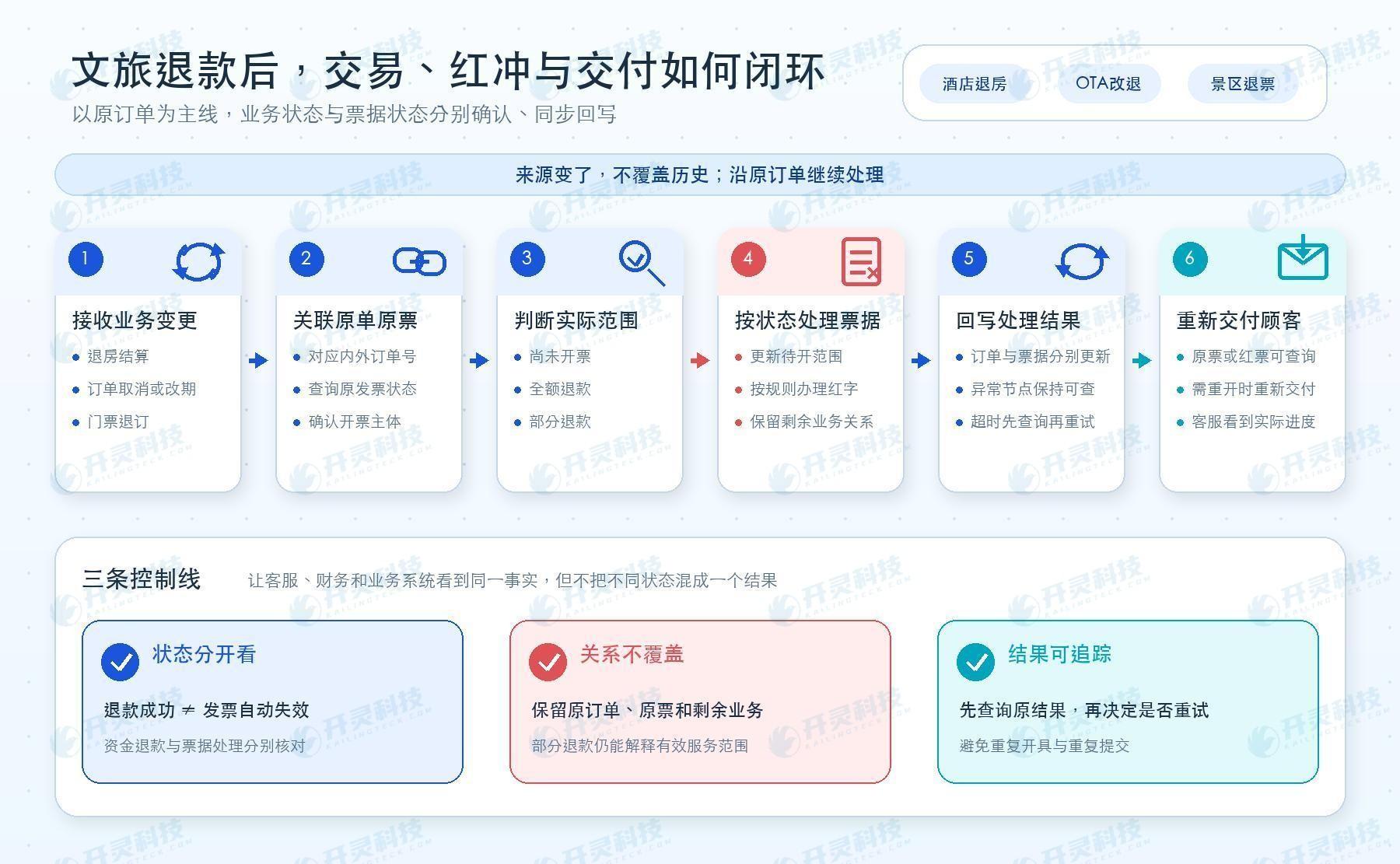
Ticket cancellation, partial changes in the number of people, or other refund situations all need to return to the original order to determine the actual refund scope. Fund refunds and invoice handling such as red-letter reversal are interrelated, but they have their own processing conditions and results; one side showing success cannot be assumed to mean the other side has ended synchronously.
If the original invoice has not yet been issued, it should be handled according to the confirmed business status; if an invoice already exists, subsequent matters should be handled according to applicable rules. The system should let customer service see which step it is currently stuck at, so they can explain to the visitor, rather than uniformly displaying an ambiguous "processing."
For partial refunds, it is especially important to preserve the relationship between the remaining valid business and the original invoice. Directly deleting the original order and then creating a new record will make it difficult to correspond the original payment and historical invoice, and may also make different entry points mistakenly think this is a new transaction that has never been processed.
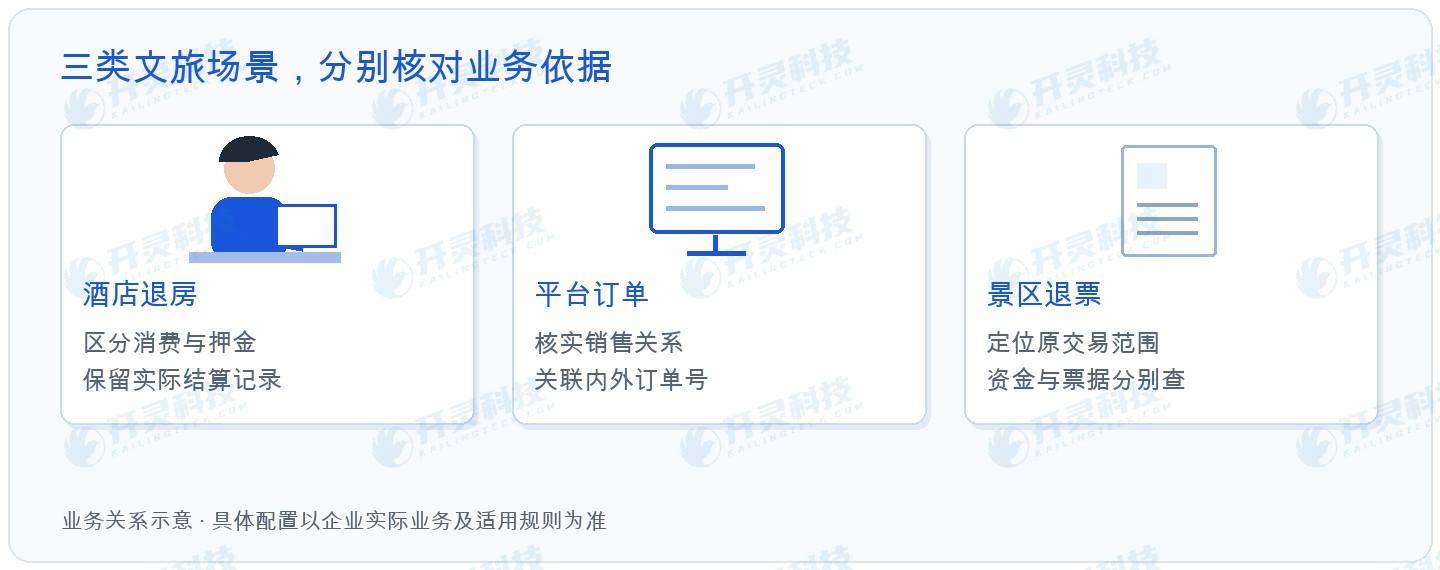
▍Kailing Technology cultural tourism automatic invoicing solution lets three types of scenarios share necessary capabilities
Hotels, platform orders, and scenic area ticketing can share capabilities such as entity configuration, invoice query, result delivery, and exception management while retaining their respective business sources and settlement characteristics. Unified management does not mean all businesses must be triggered at the same moment, nor does it mean all revenue uses the same tax treatment.
Kailing Technology can integrate with cultural tourism enterprises' existing systems, pass confirmed transactions to the applicable invoicing service, and return invoice results to the relevant business entry points. The specific integration method, channel capabilities, and construction scope should be confirmed based on the project's current situation. Enterprises' existing hotel or ticketing systems can continue to fulfill their original responsibilities; the key is to give cross-system information linkage a basis.
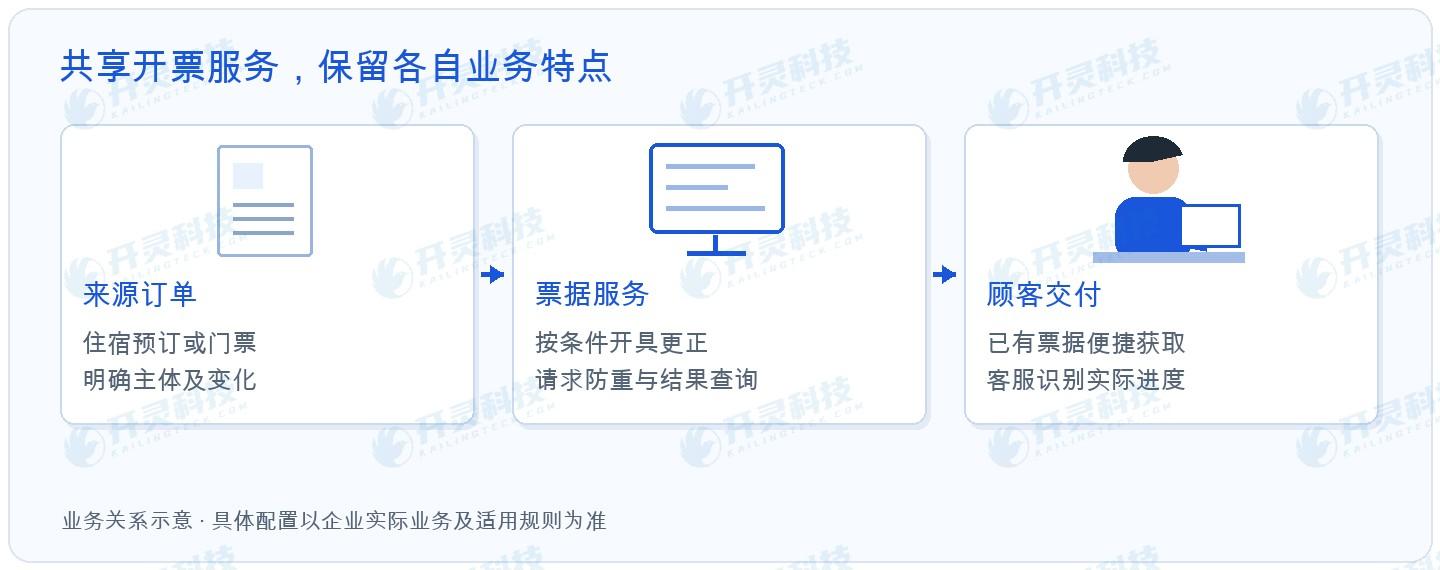
Request deduplication should also be considered across entry points. If a tourist submits on a mobile phone and then asks the front desk to handle the same transaction, the backend needs to identify the existing request and invoice; when the network times out, the original processing result should be queried before deciding subsequent actions. Reducing duplicate issuance protects business records and prevents customers from receiving multiple invoices that are difficult to explain to each other.
▍Customer service transfers one fewer inquiry, finance pieces together the context one fewer time
When the front desk or customer service receives "I did not receive the invoice," they should first know whether the invoice has already been generated. If it is only a sending or downloading issue, they should help obtain the existing result; if there is an abnormality in issuance, it should be transferred to the corresponding handling. Separating delivery from invoicing helps reduce the habit of using reapplication to solve all problems.
Finance needs to trace from invoices back to transaction evidence, including entity, order scope, settlement changes, and necessary confirmation information. If the original records are not overwritten, subsequent personnel can explain why the current amount differs from the initial booking, which parts had refunds, and which services remain valid.
This shared information also helps peak-season collaboration. Temporarily added customer service personnel do not need to memorize all backend paths; as long as they see clear business statuses at authorized entry points, they can complete replies and transfers suitable for them. Technical details are handled by the corresponding positions, and customers still receive consistent service.
▍From high-frequency customer complaints, find what is more worth connecting first
Cultural tourism enterprises can first sort out the most common invoice inquiries: where guests repeatedly fill in information, which platform statuses are difficult to synchronize, and which refunds always require manual case-by-case tracing. Prioritizing these specific problems is closer to business value than trying to fit all functions into one big picture from the start.
As data relationships gradually become clear, enterprises can also accumulate scenario-based operating instructions. The front desk knows what to check after checkout settlement, customer service knows how to locate OTA changes, and scenic area personnel know which invoice status to monitor after a refund. Different positions each use their own working language while jointly relying on the same business facts.
Continuously maintaining entity and channel configurations is equally important. After cooperation model adjustments or the onboarding of new stores or scenic areas, the corresponding relationships should be re-verified rather than directly copying old configurations. The system can reuse capabilities, but real transaction differences still need to be accurately expressed.
▍FAQ: Cultural tourism invoice collaboration Q&A
Q: If the OTA collected the money, must the accommodation invoice be issued by the OTA?
A: It should be judged based on the actual service and cooperative transaction relationship. The payment entry point alone cannot determine the seller; the roles of the hotel and the platform need to be verified.
Q: After the scenic area refund is completed, does the original invoice automatically become invalid?
A: It cannot be understood this way. The actual status of the invoice should be checked, and the corresponding handling should be completed according to applicable rules; fund refunds and invoice changes need to be verified separately.
Q: Can hotels and scenic areas reuse the same platform?
Q: Shared invoicing and management capabilities can be evaluated, but business sources, entities, expense nature, and change rules should be configured by category and cannot simply follow the same logic.
Make invoice services after the journey smooth as well. Learn about Kailing Technology's coordinated automatic invoicing solution for hotels and scenic areas: https://www.kailingteck.com/xiaoxiang/ .
As a national high-tech enterprise, Kailing Technology focuses on the digital and intelligent transformation of enterprise business-finance-tax and operations management, providing software products, system integration, implementation and delivery, and operational services for various government agencies, institutions, group enterprises, and SMEs.
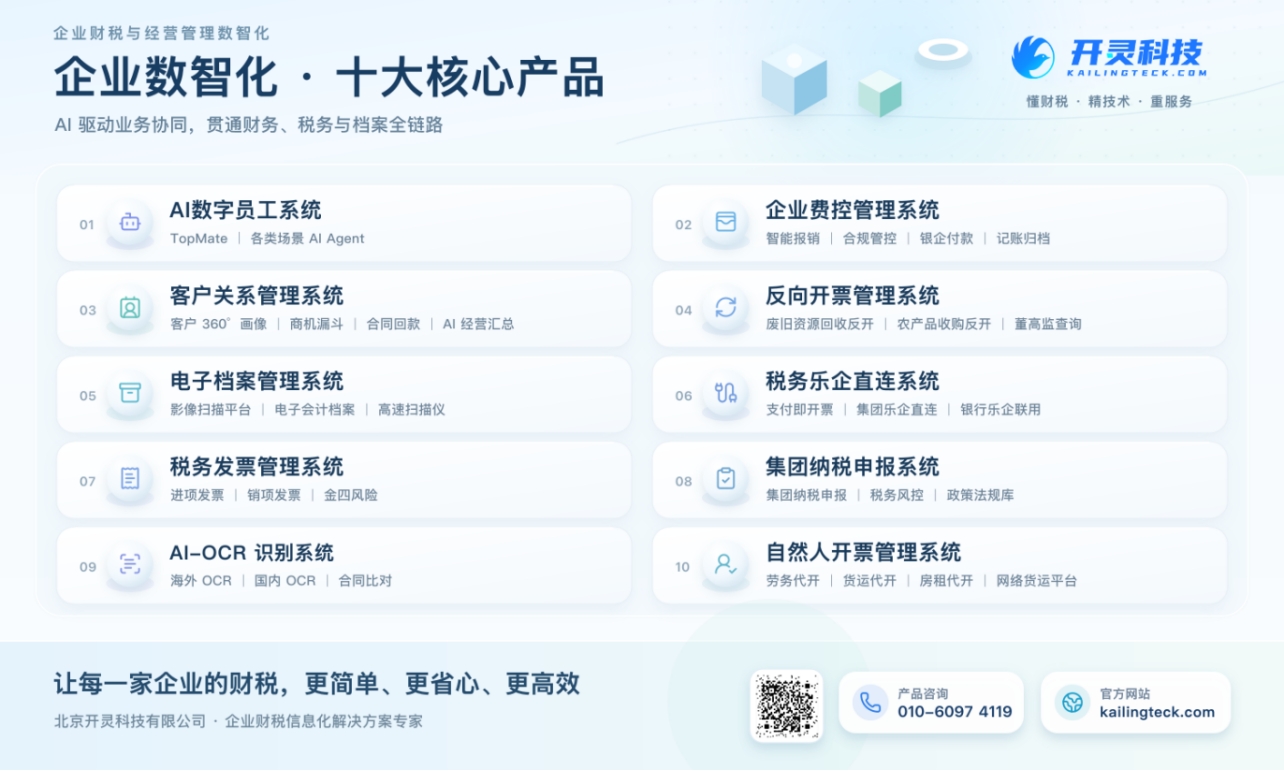
The company has now formed ten core product lines, including: AI digital employee system, enterprise expense control management system, customer relationship management system, reverse invoicing management system, invoice issuance for individuals management system, electronic archives management system, tax fully digitalized e-invoice Leqi system, tax invoice management system, group tax filing system, and AI OCR recognition system. It is committed to connecting enterprise business, finance, tax, funds, and archive data to help customers improve operational efficiency, business-finance-tax compliance capabilities, and digital management levels.
If you have any business-finance-tax digital transformation needs, welcome to contact us. Beijing Kailing Technology will serve you wholeheartedly.
Keywords: Cultural tourism automatic invoicing, hotel checkout invoicing, OTA order invoices, scenic area refund red-letter reversal, invoicing upon transaction
As a comprehensive business-finance-tax digitalization solution service provider, Kailing Technology provides business-finance-tax management digital transformation products and operational services for various government agencies, institutions, and large, medium, and small enterprises. The product line includes: solutions for sales contract management system, procurement contract management system, fully digitalized Leqi interface project, automatic output invoicing system, reverse invoicing system, invoice issuance for individuals system, employee expense control and reimbursement system, input VAT invoice management system, supply chain collaborative reconciliation system, image AI OCR recognition system, automatic financial bookkeeping system, electronic accounting archives system, etc., comprehensively driving the digitalization process across various fields.
Consultation Hotline: 18513895936 / 010-60974119 Location: Beijing